

Micah 6 · Value 18 of 41 · Featured Study
Justice
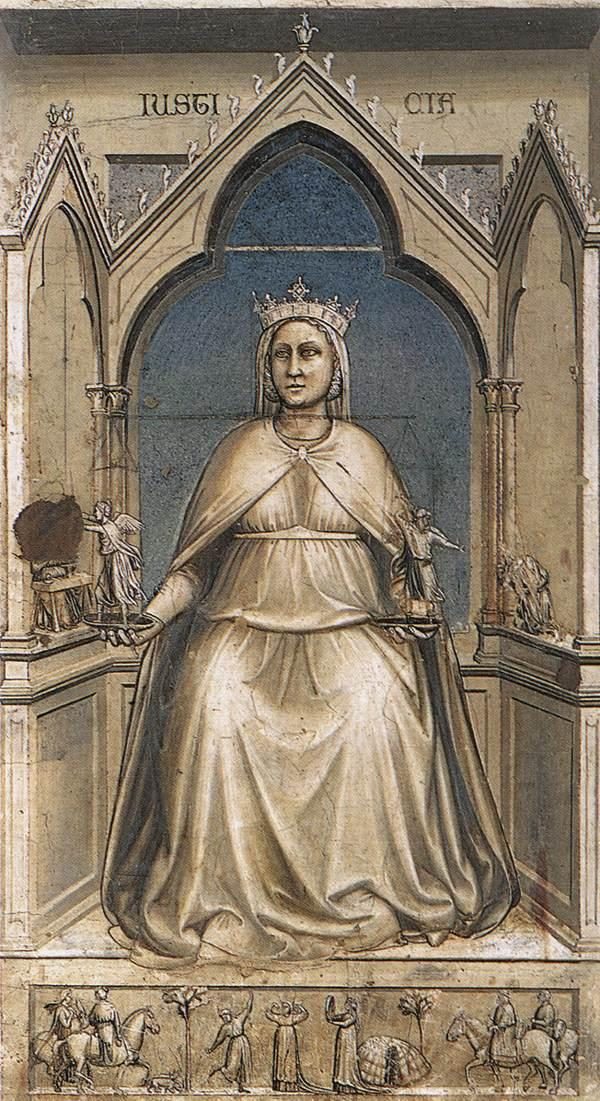
Justice is the right that God does and requires of His people in court, in trade and toward the weak.
Through Jeremiah the LORD says that He exercises justice and righteousness on the earth.
He has shown you, O man, what is good. And what does the LORD require of you but to act justly, to love mercy, and to walk humbly with your God?
Summary
Scripture calls God the Judge of all the earth, and it says that righteousness and justice are the foundation of His throne. He gave Israel judges, honest scales and laws to protect the widow, the orphan, the foreigner and the poor. When kings and courts failed, the prophets charged them with taking bribes and crushing the needy. Jesus named justice among the weightier matters of the law, and Paul writes that at the cross God shows Himself just while He justifies the one who believes.
- God loves justice, and every command to do justice rests on His own character.
- The law forbids partiality in court toward the rich and toward the poor alike.
- Scripture names the bribe, the false scale and withheld wages as injustice the LORD detests.
- God has appointed a day on which He will judge the world by Jesus.
What Justice Is
Two Hebrew words and two Greek words carry what Scripture means by justice.
What does Scripture mean when it says that the LORD loves justice, and what does it ask of the people who belong to Him? This study of justice answers from the text in order. It gives the four Hebrew and Greek words and the key texts with their words. It shows the ground of justice in God and in Christ, the commands, the people who judged rightly, the practice and the opposite. It then tells the stories, names the voices and sets out three questions on which readers disagree. Eight studies take each part further.
Mishpat, justice
The Hebrew noun mishpat (H4941) covers both a verdict given in court and what a person may rightly claim. A psalm says of God, “The mighty King loves justice.”
Tsedaqah, righteousness
The Hebrew noun tsedaqah (H6666) names what is right and is often set beside mishpat: “The LORD executes righteousness and justice for all the oppressed.”
Dikaiosyne, righteousness
The lexicon lists justice among the senses of the Greek noun dikaiosyne (G1343), as in the rider called Faithful and True: “With righteousness He judges and wages war.”
Krisis, judgment
The lexicon notes that the Greek noun krisis (G2920) can carry the sense of mishpat, as when Matthew quotes Isaiah of the Servant: “He will proclaim justice to the nations.”
Mishpat, justice, Tsedaqah, righteousness, Dikaiosyne, righteousness, Krisis, judgment, The Words Mishpat and Tsedaqah, the study in brief
The Key Texts, from Abraham to the Song of the Lamb
Mishpat and tsedaqah stand together in 46 verses, and the key texts carry justice from Genesis to Revelation.
Law
Far be it from You to do such a thing—to kill the righteous with the wicked, so that the righteous and the wicked are treated alike. Far be it from You! Will not the Judge of all the earth do what is right?”
Abraham pleads for Sodom on the ground that the Judge of all the earth does what is right.
Law
Do not accept a bribe, for a bribe blinds those who see and twists the words of the righteous.
The law of the courts names what a bribe does to those who judge.
Exodus 23:8BSB
Law
You must not pervert justice; you must not show partiality to the poor or favoritism to the rich; you are to judge your neighbor fairly.
Leviticus sets this rule among the laws of holiness, three verses before the command to love your neighbor.
Law
Pursue justice, and justice alone, so that you may live, and you may possess the land that the LORD your God is giving you.
Moses gives the judges of every town one thing to pursue.
Wisdom
Endow the king with Your justice, O God, and the son of the king with Your righteousness.
The psalm asks God to give the king His own justice before the king judges anyone.
Psalm 72:1BSB
Wisdom
Defend the cause of the weak and fatherless; uphold the rights of the afflicted and oppressed.
God charges the judges of the earth to take up the cause of the weak.
Psalm 82:3BSB
Wisdom
Justice executed is a joy to the righteous, but a terror to the workers of iniquity.
The proverb shows justice done as joy to one man and terror to another.
Prophets
Learn to do right; seek justice and correct the oppressor. Defend the fatherless and plead the case of the widow.”
Isaiah calls Judah to learn to do right for the fatherless and the widow.
Isaiah 1:17BSB
Prophets
This is what the LORD says: Administer justice and righteousness. Rescue the victim of robbery from the hand of his oppressor. Do no wrong or violence to the foreigner, the fatherless, or the widow. Do not shed innocent blood in this place.
Jeremiah carries the LORD's charge to the king in his own palace.
Prophets
But let justice roll on like a river, and righteousness like an ever-flowing stream.
Amos sets a river of justice against the feasts the LORD refused.
Amos 5:24BSB
Revelation
and they sang the song of God’s servant Moses and of the Lamb: “Great and wonderful are Your works, O Lord God Almighty! Just and true are Your ways, O King of the nations!
The song of Moses and of the Lamb praises the ways of God as just and true.
Exodus 23:8, Leviticus 19:15, Deuteronomy 16:20, Psalm 72:1, Psalm 82:3, Proverbs 21:15, Isaiah 1:17, Jeremiah 22:3 and 2 more
Where Scripture Commands Justice
The law, the prophets and the apostles command justice where power sits: in the court, the house and the church.
The law told Israel, “You shall not deny justice to the poor in their lawsuits” (Exodus 23:6). It set a curse on the one “who withholds justice from the foreigner, the fatherless, or the widow,” and all the people were to answer it with Amen (Deuteronomy 27:19).
After the exile the LORD of Hosts gave the same charge again through Zechariah: “Administer true justice. Show loving devotion and compassion to one another. Do not oppress the widow or the fatherless, the foreigner or the poor” (Zechariah 7:9 to 10).
James carried the charge into the church: “My brothers, as you hold out your faith in our glorious Lord Jesus Christ, do not show favoritism” (James 2:1).
This is what the LORD says: “Maintain justice and do what is right, for My salvation is coming soon, and My righteousness will be revealed.Isaiah joins the command to keep justice to the promise that God's salvation is near.
Masters, supply your slaves with what is right and fair, since you know that you also have a Master in heaven.Paul gives masters the command to treat their slaves with what is right and fair.
Isaiah 56:1, Colossians 4:1, To Act Justly, to Love Mercy, and to Walk Humbly, the study in brief
Justice Rests on the Justice of God
Scripture shows God just before it asks justice of anyone.
The song of Moses calls the LORD the Rock: “His work is perfect; all His ways are just” (Deuteronomy 32:4). The psalms and the prophets say that He loves justice. A psalm says, “The LORD loves righteousness and justice” (Psalm 33:5). Through Isaiah He says, “For I, the LORD, love justice” (Isaiah 61:8).
He judges as He commands His judges to judge. Moses calls Him the God “showing no partiality and accepting no bribe. He executes justice for the fatherless and widow, and He loves the foreigner” (Deuteronomy 10:17 to 18). The psalm says, “He executes justice for the oppressed and gives food to the hungry” (Psalm 146:7).
Therefore the LORD longs to be gracious to you; therefore He rises to show you compassion, for the LORD is a just God. Blessed are all who wait for Him.Isaiah sets the LORD's compassion and His justice in one verse.
The Judge, the study in brief
Christ and Justice
His reading at Nazareth, His woes on the Pharisees, His suffering and His cross each show what justice is.
At Nazareth He read from Isaiah the work He came to do, and the reading named the poor, the captives and the oppressed.
“The Spirit of the Lord is on Me, because He has anointed Me to preach good news to the poor. He has sent Me to proclaim liberty to the captives and recovery of sight to the blind, to release the oppressed,Jesus reads in the synagogue at Nazareth the charge He takes as His own.
Woe to you, scribes and Pharisees, you hypocrites! You pay tithes of mint, dill, and cumin. But you have disregarded the weightier matters of the law: justice, mercy, and faithfulness. You should have practiced the latter, without neglecting the former.Jesus pronounces woe on teachers who tithe their herbs and leave mercy and faithfulness undone.
Luke gives the same woe in other words: “you disregard justice and the love of God” (Luke 11:42).
When He suffered unjustly, “He did not retaliate; when He suffered, He made no threats, but entrusted Himself to Him who judges justly” (1 Peter 2:23). Paul writes that God presented Him “as the atoning sacrifice through faith in His blood, in order to demonstrate His righteousness” (Romans 3:25).
He did this to demonstrate His righteousness at the present time, so as to be just and to justify the one who has faith in Jesus.The verse closes Paul's account of the atoning sacrifice he names in the verse before it.
The Father “has assigned all judgment to the Son” (John 5:22). Paul writes that “we must all appear before the judgment seat of Christ” (2 Corinthians 5:10).
Jubilee, the study in brief
Who Did Justice
Five people of the Bible are remembered by name for judging rightly.
She sat under the Palm of Deborah, “where the Israelites would go up to her for judgment.”
Judges 4:5In his old age he asked the people, “From whose hand have I accepted a bribe and closed my eyes?” and they answered that he had wronged no one.
1 Samuel 12:3 to 4He told the judges he set in the cities of Judah, “you are not judging for man, but for the LORD.”
2 Chronicles 19:6He said of his days of honour, “justice was my robe and my turban,” and “I took up the case of the stranger.”
Job 29:14 to 16Through Jeremiah the LORD said of Josiah, the father of King Jehoiakim, “He administered justice and righteousness,” and “He took up the cause of the poor and needy.”
Jeremiah 22:15 to 16
Jehoshaphat, Job, Josiah
The Practice of Justice
Scripture names eight practices of justice, each in the words of the verse that gives it.
- 1Hear small and great alike“Show no partiality in judging; hear both small and great alike. Do not be intimidated by anyone, for judgment belongs to God.”Deuteronomy 1:17
- 2Refuse the bribe“Do not deny justice or show partiality. Do not accept a bribe, for a bribe blinds the eyes of the wise and twists the words of the righteous.”Deuteronomy 16:19
- 3Keep honest scales“You shall maintain honest scales and weights, an honest ephah, and an honest hin.”Leviticus 19:36
- 4Speak for the voiceless“Open your mouth for those with no voice, for the cause of all the dispossessed.”Proverbs 31:8
- 5Take no more than is due“Collect no more than you are authorized,” John told the tax collectors who came to be baptized.Luke 3:13
- 6Restore what was taken“If a man steals an ox or a sheep and slaughters or sells it, he must repay five oxen for an ox and four sheep for a sheep.”Exodus 22:1
- 7Shelter the one who flees“Do not return a slave to his master if he has taken refuge with you.”Deuteronomy 23:15
- 8Leave vengeance to God“Do not avenge yourselves, beloved, but leave room for God’s wrath.”Romans 12:19
Refuse the bribe, Keep honest scales, Speak for the voiceless, Take no more than is due, Restore what was taken, Shelter the one who flees, Leave vengeance to God
What Stands Against Justice
The bribe, the false scale, the verdict turned upside down and the wage held back stand against justice in Scripture.
Micah charged the rulers of Jerusalem that “Her leaders judge for a bribe” (Micah 3:11). Hosea says, “A merchant loves to defraud with dishonest scales in his hands” (Hosea 12:7). Proverbs calls acquitting the guilty and condemning the righteous “detestable to the LORD” (Proverbs 17:15).
Amos named Israel's sin as selling people: “they sell the righteous for silver and the needy for a pair of sandals” (Amos 2:6). Jeremiah pronounced woe on the one “who makes his countrymen serve without pay, and fails to pay their wages” (Jeremiah 22:13), and James wrote that withheld wages “are crying out against you” (James 5:4).
Psalms
“How long will you judge unjustly and show partiality to the wicked? Selah
God asks the judges how long they will judge unjustly.
Psalm 82:2BSB
Prophets
Woe to those who enact unjust statutes and issue oppressive decrees, to deprive the poor of fair treatment and withhold justice from the oppressed of My people, to make widows their prey and orphans their plunder.
Isaiah pronounces woe on those who write unjust laws to rob the poor.
Prophets
Therefore the law is paralyzed, and justice never goes forth. For the wicked hem in the righteous, so that justice is perverted.
Habakkuk complains that the law is paralyzed and justice perverted.
Habakkuk 1:4BSB
Prophets
“Then I will draw near to you for judgment. And I will be a swift witness against sorcerers and adulterers and perjurers, against oppressors of the widowed and fatherless, and against those who defraud laborers of their wages and deny justice to the foreigner but do not fear Me,” says the LORD of Hosts.
Malachi names the employer who cheats his workers among those God will judge.
Malachi 3:5BSB
Isaiah 10:1 to 2, Habakkuk 1:4, Malachi 3:5
Psalm 82:2, Isaiah 10:1 to 2, Habakkuk 1:4, Malachi 3:5, Just Weights, the study in brief
Justice in the Stories of the Bible
Five stories tell of a prophet, a wise king, a stolen vineyard, a widow and a tax collector.
Nathan before David2 Samuel 12
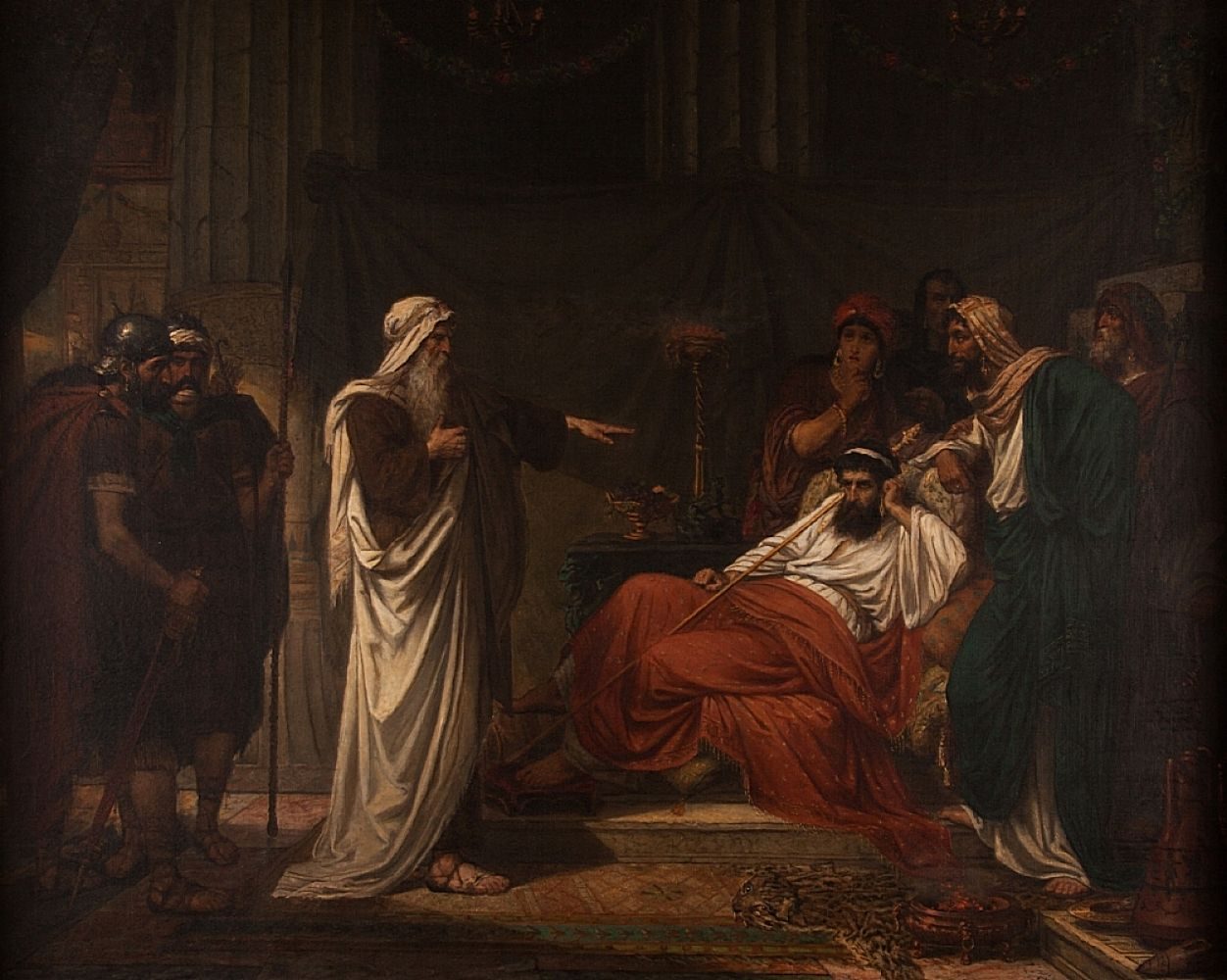
After David took Uriah's wife and had Uriah killed, the LORD sent Nathan to him with a case. A rich man had taken a poor man's one ewe lamb to feed a guest. David ruled that the man “deserves to die” and “must pay for the lamb four times over.” Nathan answered, “You are that man!” David confessed, “I have sinned against the LORD” (2 Samuel 12:5 to 13).
Read the story of Nathan before David 9 sections, 8 verses set out
Solomon and the two mothers1 Kings 3
Two women came before King Solomon, each claiming one living baby. He called for a sword and ordered the child cut in two. The true mother “yearned with compassion for her son” and gave him up, and the king gave him to her. “When all Israel heard of the judgment the king had given, they stood in awe of him” (1 Kings 3:28).
Naboth's vineyard1 Kings 21
Naboth would not sell King Ahab “the inheritance of my fathers.” Jezebel wrote letters in Ahab's name, and the elders of his town seated two scoundrels to testify against him. He was stoned, and Ahab went down to take the vineyard. Elijah met him in the vineyard with the word of the LORD, which charged him with murder and the seizing of land (1 Kings 21:19).
The persistent widowLuke 18
Jesus told of a judge “who neither feared God nor respected men” and a widow who kept coming to him with one plea: “Give me justice against my adversary.” For a while he refused, then he gave way so that she would stop wearing him out. Jesus told the parable so that His disciples would pray and not lose heart (Luke 18:1 to 8).
Zacchaeus repays fourfoldLuke 19
Zacchaeus, a chief tax collector in Jericho, received Jesus into his house. He stood and said, “Look, Lord, half of my possessions I give to the poor, and if I have cheated anyone, I will repay it fourfold.” Fourfold was the measure the law set for a stolen sheep. Jesus answered, “Today salvation has come to this house” (Luke 19:8 to 9).
Solomon and the two mothers (1 Kings 3), Naboth's vineyard (1 Kings 21), The persistent widow (Luke 18), Zacchaeus repays fourfold (Luke 19)
Justice in the Church's History
Five accounts tell of a bishop who barred an emperor, a student who sat down by the road, a former slave-ship captain, an African author and a member of Parliament.
Ambrose and Theodosiusthe fourth century
Theodoret's Ecclesiastical History (book 5, chapter 17, translated by Blomfield Jackson, 1892) tells that after a riot at Thessalonica the emperor's anger “slew innocent and guilty together,” and that “No trial preceded the sentence.” Ambrose barred Theodosius from the church, telling him “there is one Lord and Sovereign of mankind.” Eight months later the emperor signed a law delaying sentences of death by thirty days and did penance. Theodoret wrote decades later.
Thomas Clarkson1785
Clarkson wrote in his History of the Abolition of the African Slave-Trade (1808, volume 1, chapter 7) that in the summer of 1785, riding home after writing a prize essay on slavery, he sat down by the road at Wades Mill. There he resolved that “it was time some person should see these calamities to their end.” On 22 May 1787 the committee for abolition first met.
John Newton1788
Newton had once been the master of slave ships. In Thoughts upon the African Slave Trade (London, 1788) he made a public confession, writing that he had been “an active instrument, in a business at which my heart now shudders” (the spelling normalised from the 1788 print). His title page carried the words of Jesus, “do to others as you would have them do to you” (Matthew 7:12).
Olaudah Equiano1789
Equiano told in his Interesting Narrative (London, 1789, volume 1, chapter 2) of brothers sold apart at a slave sale. He asked, “O, ye nominal Christians! might not an African ask you, learned you this from your God, who says unto you, Do unto all men as you would men should do unto you?” The account is his own.
William Wilberforce1787
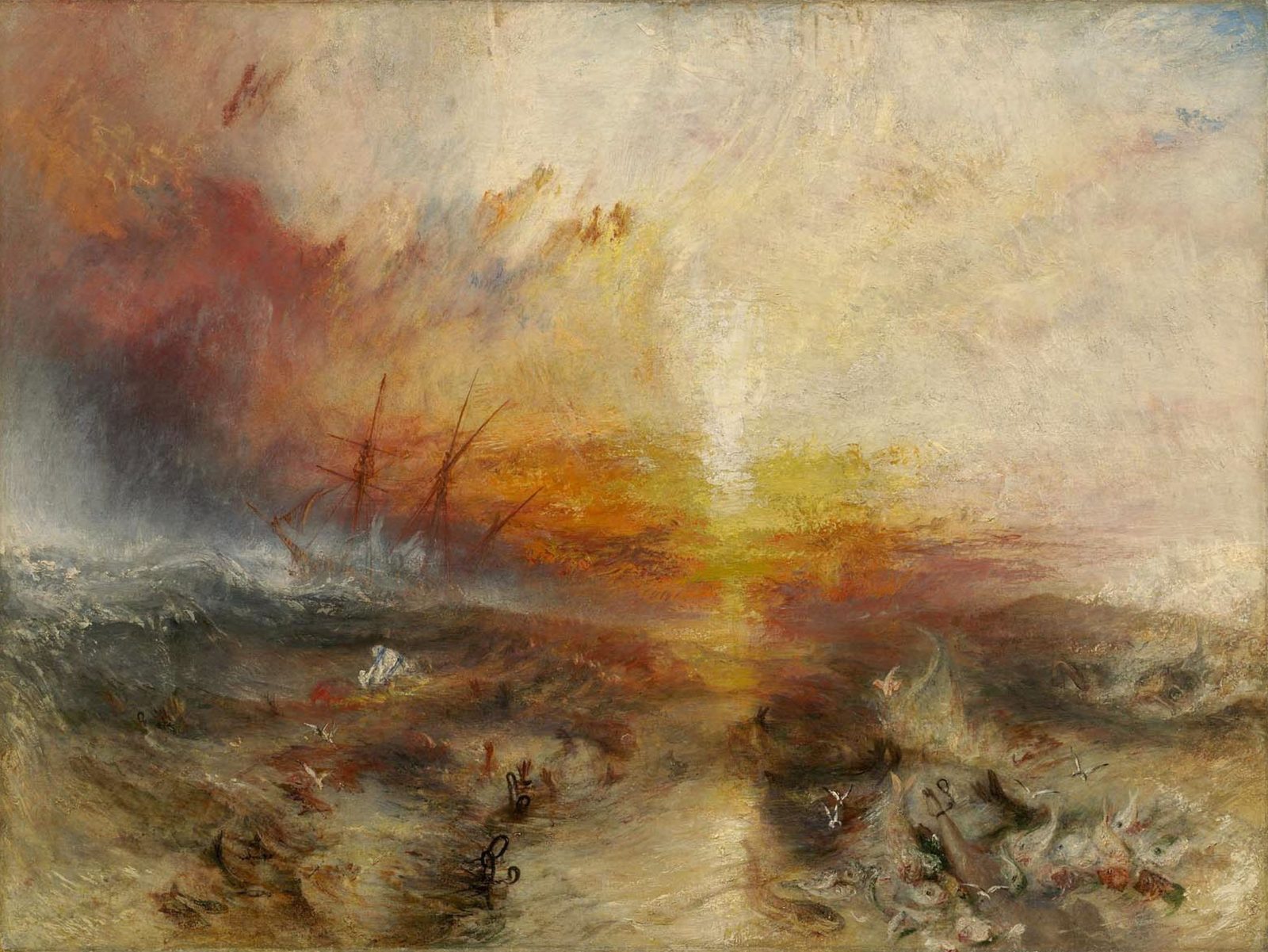
On 28 October 1787 Wilberforce wrote in his journal, “God Almighty has set before me two great objects, the suppression of the slave trade and the reformation of manners.” His sons printed it in his Life (1838, volume 1, page 149). He first moved the question in the Commons on 12 May 1789, and the Act ending the British slave trade received the royal assent on 25 March 1807.
Read the story of Wilberforce and the slave trade 8 sections, 7 verses set out
Thomas Clarkson (1785), John Newton (1788), Olaudah Equiano (1789), William Wilberforce (1787)
Voices on Justice, by Century
Six quotations from the fifth century to the thirteenth, each under the line it teaches.
died 420 · Jerome
LETTER 79.1
A fifth-century reading: a judge weighs each case on its merits, whatever the wealth of the one who brings it.
The quotation1 quotation
“‘You shall not be partial to the poor,’ a precept given lest under pretext of showing pity we should judge an unjust judgment. For each individual is to be judged not by his personal importance but by the merits of his case. His wealth need not stand in the way of the rich man, if he makes a good use of it; and poverty of itself can be no recommendation to the poor if in the midst of squalor and want he fails to stay away from wrongdoing.”
Jerome · LETTER 79.1 · on Leviticus 19:15Patristic
died 428 · Theodore of Mopsuestia
COMMENTARY ON MICAH 6:6-8
A fifth-century reading: Micah sends the worshipper back to the fair judgment Moses commanded.
The quotation1 quotation
“Forget about burnt offerings, countless sacrifices and oblations of firstborn, he is saying. If you are concerned to appease the divinity, practice what God ordered you in the beginning through Moses. What in fact is that? To deliver fair judgment and decision in all cases …”
Theodore of Mopsuestia · Commentary on Micah 6:6-8 · on Micah 6:8Patristic
died 542 · Caesarius of Arles
SERMONS 13.2
A sixth-century reading: a judge who takes a bribe gains money and may lose his soul.
The quotation1 quotation
“Those who hear cases should decide them justly and not accept bribes at the expense of the innocent, ‘for gifts blind the hearts of the wise and change the words of the just.’ Otherwise, while they are acquiring money, they may lose their soul. No …”
Caesarius of Arles · SERMONS 13.2 · on Deuteronomy 16:19Patristic
died 735 · Bede
Commentary on the Catholic Epistles
An eighth-century reading: the withheld wages of the workers cry out against the proud.
The quotation1 quotation
“Behold, the wages of the workers who have reaped your fields, which were withheld by you, cry out. How great is the iniquity of the proud, who, although they have sufficient wealth, not only disdain to welcome and refresh the poor coming everywhere, but also …”
Bede · Commentary on the Catholic Epistles · on James 5:4Patristic
died 1107 · Theophylact of Ohrid
Catena Aurea by Aquinas
A twelfth-century reading: to judge a neighbour justly comes from love for him.
The quotation1 quotation
“For because they despised God, treating sacred things with indifference, He commands them to have love to God; but by judgment He implies the love of our neighbour. For when a man judges his neighbour justly, it proceeds from his love to him.”
Theophylact of Ohrid · Catena Aurea by Aquinas · on Luke 11:42Patristic
died 1274 · Bonaventure
Collationes de Decem Praeceptis, Collation 1
A thirteenth-century reading: the commandments of justice are sweet to the just and bitter to a perverse will.
The quotation1 quotation
“The commandments of God contain nothing burdensome, but rather they are sweet. ‘It is joy to the just to do judgment,’ that is, justice. But we see that to an infected palate sweet food seems bitter; similarly, to a man of perverse will the commandments …”
Bonaventure · Collationes de Decem Praeceptis, Collation 1 · on Proverbs 21:15Patristic
Caesarius of Arles, Bede, Theophylact of Ohrid, Bonaventure
How Justice Has Been Taught
Augustine in the fifth century and Thomas Aquinas in the thirteenth taught what a kingdom is without justice and what justice gives.
Augustine taught that a kingdom without justice is a band of robbers.1 paragraph
Augustine wrote in The City of God (book 4, chapter 4, translated by Marcus Dods, 1887), “Justice being taken away, then, what are kingdoms but great robberies? For what are robberies themselves, but little kingdoms?” He told of a captured pirate who answered Alexander the Great. The pirate said that “because I do it with a petty ship, I am called a robber, while you who does it with a great fleet are styled emperor.”
Thomas Aquinas taught that justice gives each person what is due to him.2 paragraphs
Thomas Aquinas defined justice in the Summa Theologiae, in the English Dominican translation of 1920. He called it “a habit whereby a man renders to each one his due by a constant and perpetual will.”
Of the cross Aquinas wrote, “That man should be delivered by Christ's Passion was in keeping with both His mercy and His justice.”
Eight Studies of Justice
Each study takes one part of justice into more depth.
The texts
4 studies
- Passages and psalms · 10 verses set outAmos and the Courts at the Gate
Amos 5 is a funeral lament over Israel that names the sins of its court at the city gate.
- Passages and psalms · 12 verses set outTo Act Justly, to Love Mercy, and to Walk Humbly
In Micah 6 the LORD brings a case against His people, a worshipper asks what offering will please Him, and the prophet answers with three requirements.
- Passages and psalms · 4 verses set outJust Weights
Leviticus, Deuteronomy, Proverbs and four prophets treat the weight and the measure of the market as matters of justice.
- Symbols and words · 10 verses set outThe Widow, the Orphan & the Stranger
Scripture names these three together from Exodus 22 to James 1, and God takes the place of the relative each one lacks.
- Passages and psalms · 10 verses set outAmos and the Courts at the Gate
The stories
2 studies
- Stories · 8 verses set outNathan Before David
Second Samuel 12 tells of a prophet's case at court, a king's confession and the death of his son.
- Stories · 7 verses set outWilberforce and the Slave Trade
William Wilberforce was the parliamentary head of the campaign against the British slave trade, which a committee began in London in 1787.
- Stories · 8 verses set outNathan Before David
The words
1 study
- Symbols and words · 12 verses set outThe Words Mishpat and Tsedaqah
Mishpat and tsedaqah are the Hebrew nouns that English Bibles render justice and righteousness, and Scripture often joins them in one verse.
- Symbols and words · 12 verses set outThe Words Mishpat and Tsedaqah
The practice
1 study
- Books of the Bible · 18 verses set outWeights, Measures, and Money in Scripture
The cubit, the ephah, the shekel and the denarius, with the ratios Scripture states and the modern values the finds give.
- Books of the Bible · 18 verses set outWeights, Measures, and Money in Scripture
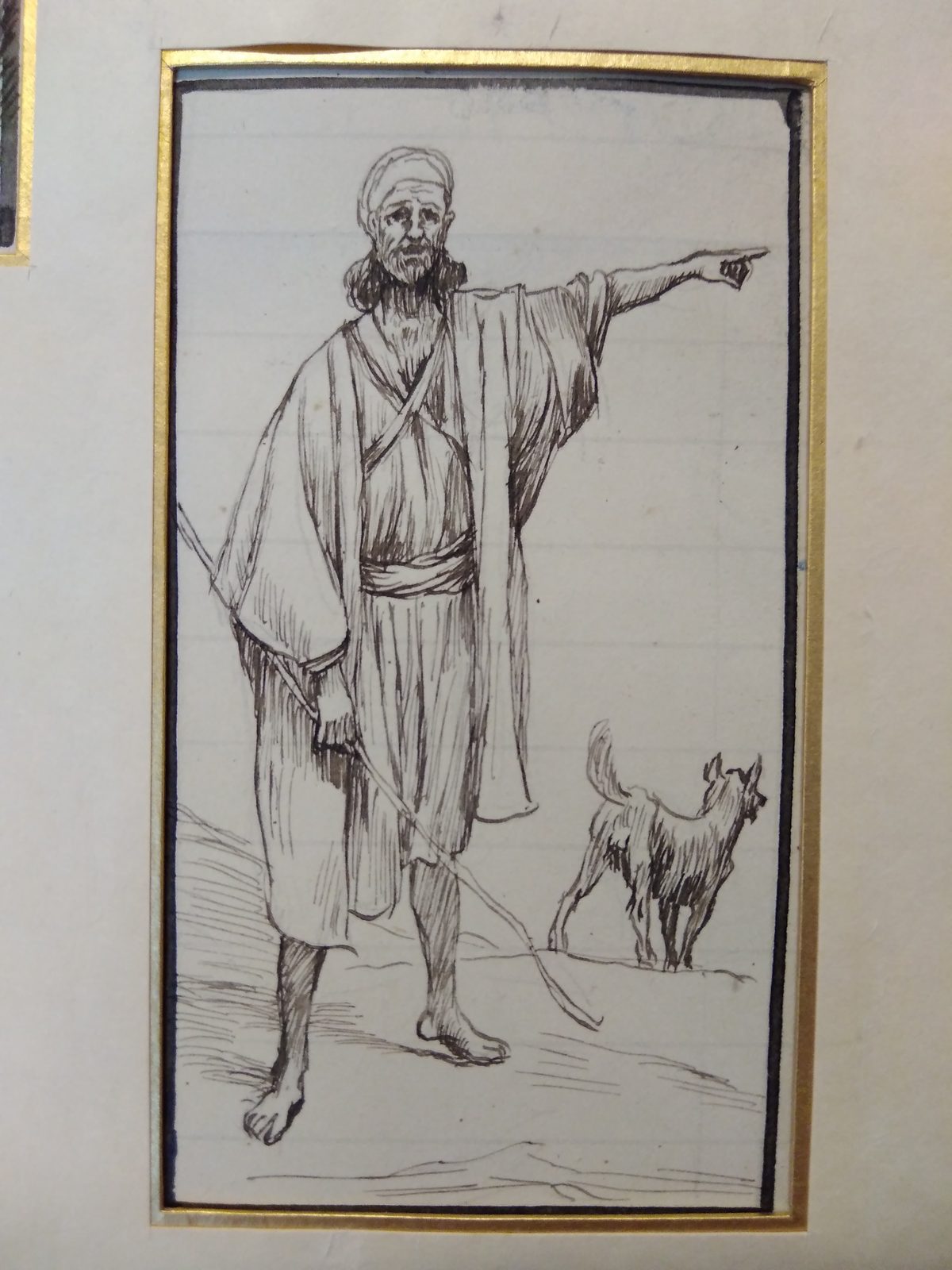
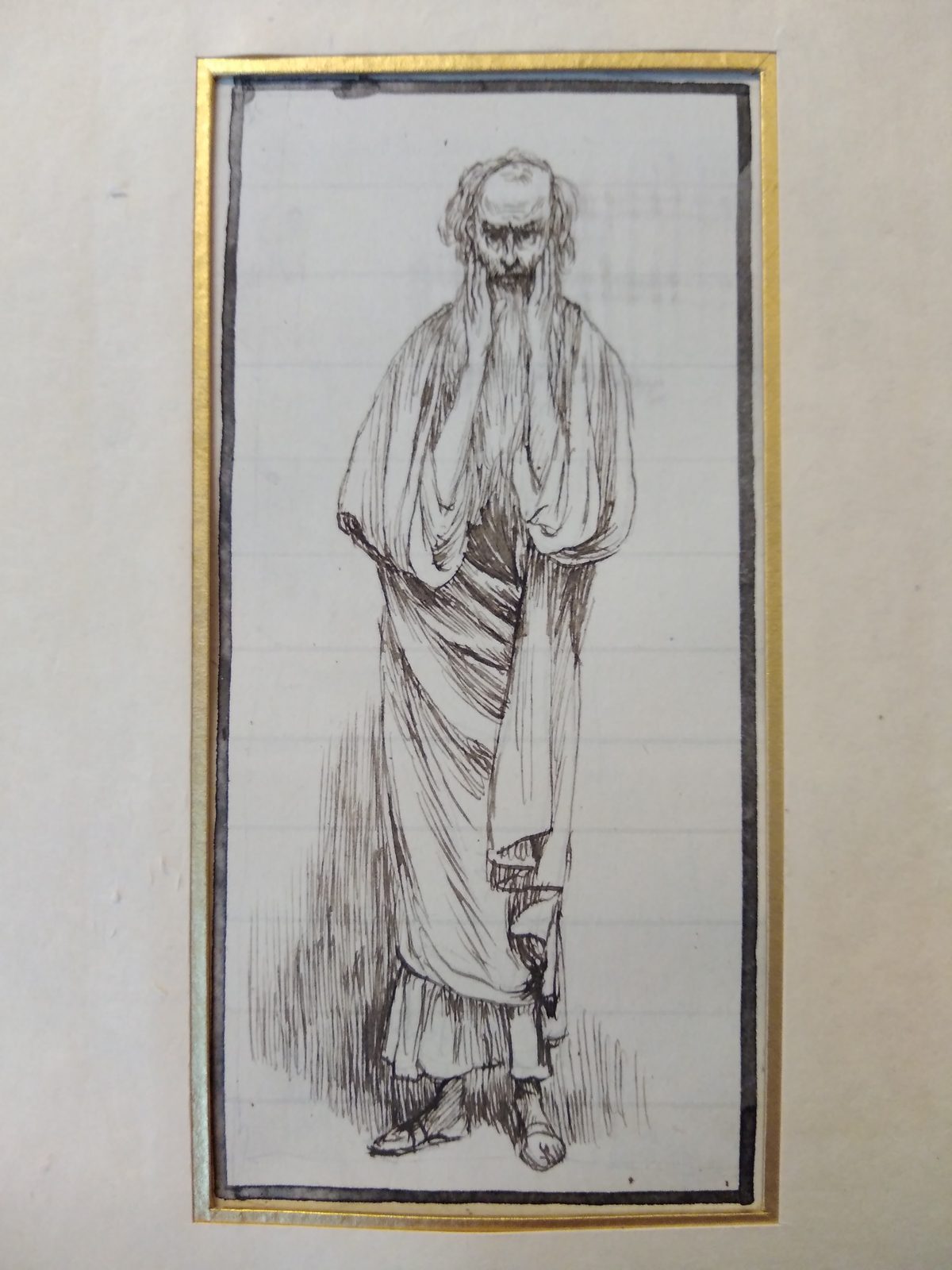
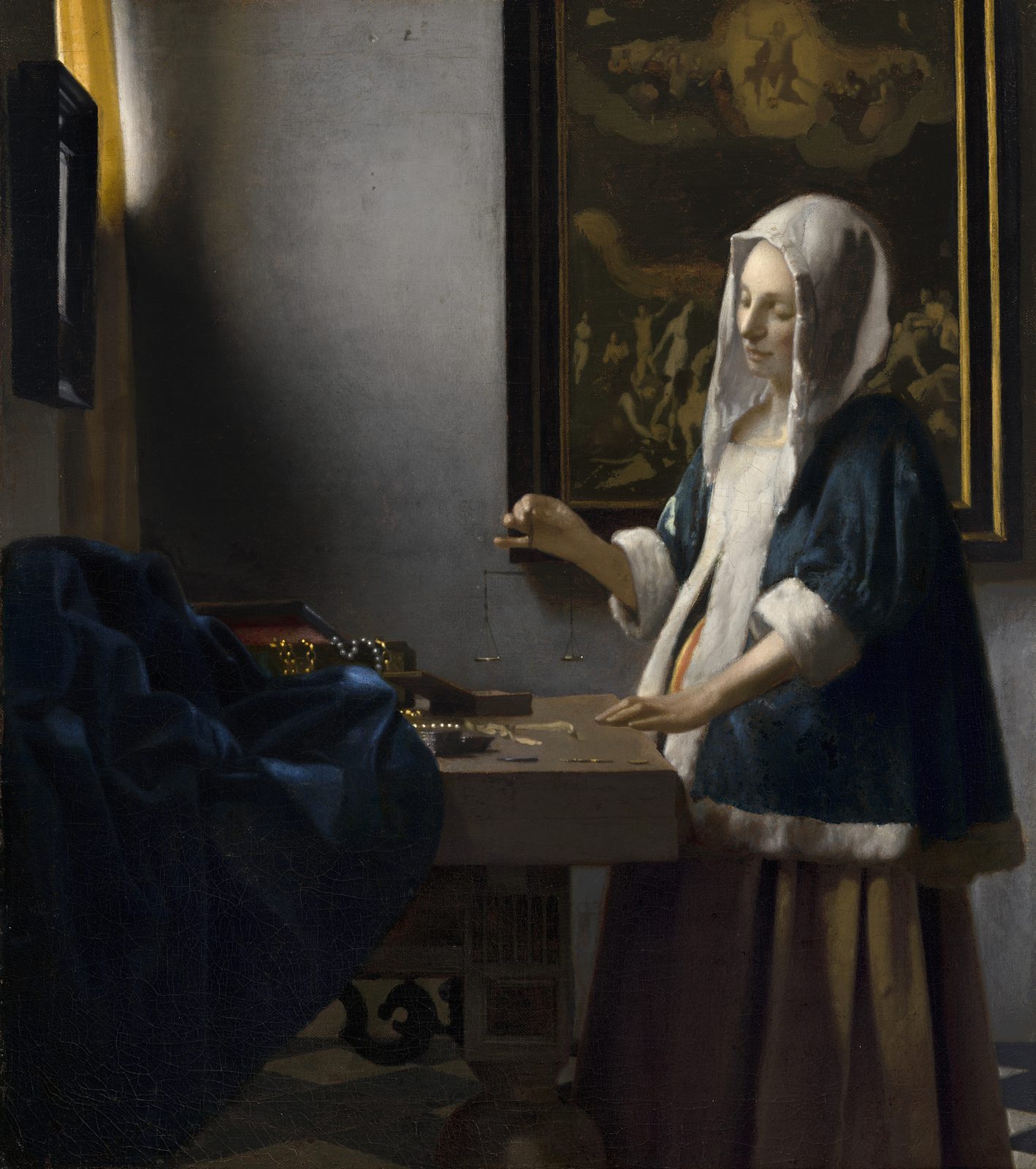
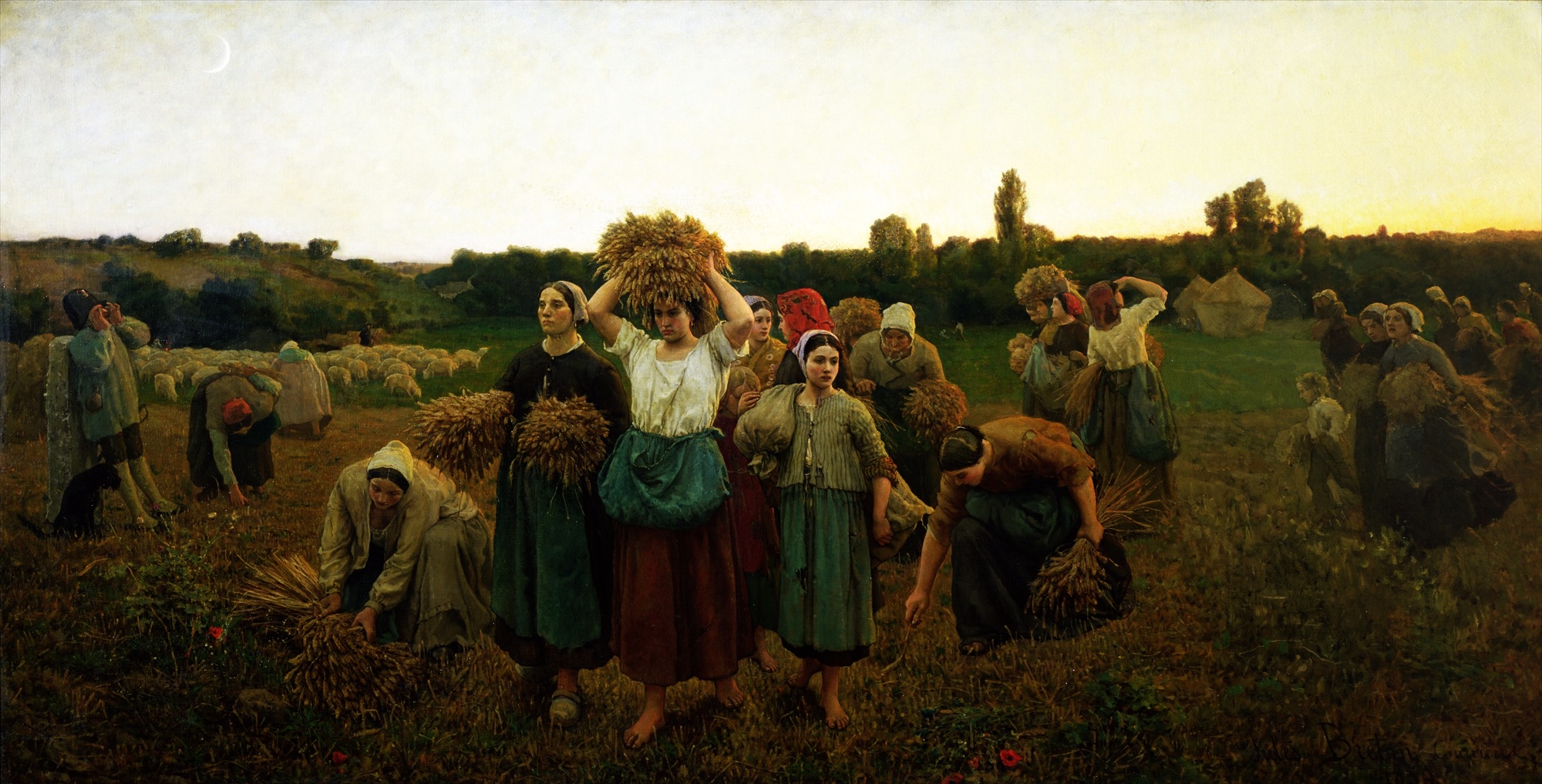

To Act Justly, to Love Mercy, and to Walk Humbly, Just Weights, The Widow, the Orphan & the Stranger, Nathan Before David, Wilberforce and the Slave Trade, The Words Mishpat and Tsedaqah, Weights, Measures, and Money in Scripture
Where Readers Disagree
Six readings answer three questions, each with its holder, the work that argues it and the objection raised against it.
What justice gives
Read the debate on an eye for an eye 12 sections, 14 verses set out
| Reading | Held by | Work | Objection |
|---|---|---|---|
| Each person his due, the penalty included | Thomas Aquinas (Scholastic) | Aquinas, Summa Theologiae II-II question 58 article 1 (English Dominican translation, 1920) | The prophets speak of justice mostly as the rescue of the poor, which a frame of due penalty can underweight. |
| Plenty for the one who serves and the reward of his labour | John Chrysostom (Patristic) | Chrysostom, Homilies on Colossians, homily 10, on Colossians 4:1 | The same law that restores also punishes (Exodus 21:12; Deuteronomy 19:21), and Paul keeps wrath as God's own (Romans 12:19). |
Whether the judge may lean toward the poor
Read the study of the widow, the orphan and the stranger 9 sections, 10 verses set out
| Reading | Held by | Work | Objection |
|---|---|---|---|
| No, each case is judged on its merits | Jerome (Patristic) | Jerome, Letter 79, section 1, on Leviticus 19:15 | Psalm 82 charges the judges to defend the cause of the weak and fatherless, which asks them to take the side of those with no advocate. |
| The judge must defend the needy against the wealthy who offer bribes | Charles Spurgeon (Baptist) | Spurgeon, The Treasury of David, volume 4 (1874), on Psalm 82:3 | The law says, “do not show favoritism to a poor man in his lawsuit” (Exodus 23:3), so defence of the poor cannot bend the verdict. |
What Scripture says of the slave trade
Read the story of Wilberforce and the slave trade 8 sections, 7 verses set out
| Reading | Held by | Work | Objection |
|---|---|---|---|
| The law of Moses allowed the purchase of slaves, so the trade is lawful | Raymund Harris (Proslavery argument of 1788) | Harris, Scriptural Researches on the Licitness of the Slave-Trade (Liverpool, 1788), from Leviticus 25:44 to 46 | The Atlantic trade began in kidnapping, and the law punished with death whoever kidnaps a man and sells him (Exodus 21:16). |
| It breaks the rule of doing to others as you would have them do to you | John Newton (Anglican) | Newton, Thoughts upon the African Slave Trade (London, 1788), with Matthew 7:12 on its title page | The law of Moses and the household codes regulate slavery and do not forbid it, which The Bible and Slavery sets out at full strength. |
Sources
Scripture is the Berean Standard Bible.
- STEP Bible, Translators Brief lexicon of Extended Strongs for Hebrew and for Greek (Tyndale House, Cambridge), CC BY 4.0, with the Greek brief lexicon based on Abbott-Smith (1922)
- Theodoret, Ecclesiastical History, book 5, chapter 17, translated by Blomfield Jackson, 1892.
- Thomas Clarkson, The History of the Rise, Progress, and Accomplishment of the Abolition of the African Slave-Trade by the British Parliament (London, 1808), volume 1, chapters 7 and 10.
- John Newton, Thoughts upon the African Slave Trade (London: J. Buckland and J. Johnson, 1788)
- Olaudah Equiano, The Interesting Narrative of the Life of Olaudah Equiano, or Gustavus Vassa, the African (London, printed for the author, 1789), volume 1, chapter 2.
- Robert Isaac Wilberforce and Samuel Wilberforce, The Life of William Wilberforce (London: John Murray, 1838), volume 1, page 149, and volume 3, pages 298 to 302.
- Raymund Harris, Scriptural Researches on the Licitness of the Slave-Trade (Liverpool: H. Hodgson, 1788)
- Augustine of Hippo, The City of God, book 4, chapter 4, translated by Marcus Dods, 1887.
- Thomas Aquinas, Summa Theologiae, II-II question 58 article 1 and III question 46 article 1, English Dominican translation, 1920.
- John Chrysostom, Homilies on Colossians, homily 10, on Colossians 4:1.
- Theodore of Mopsuestia, Commentary on Micah, on Micah 6:6 to 8.
- Jerome, Letter 79, section 1, on Leviticus 19:15.
- Caesarius of Arles, Sermons, sermon 13, section 2, on Deuteronomy 16:19.
- Theophylact of Ohrid, on Luke 11:42, as the Catena Aurea gives him.
- Bede, Commentary on the Catholic Epistles, on James 5:4.
- Bonaventure, Collations on the Ten Commandments (1257), collation 1, on Proverbs 21:15.
- Charles Spurgeon, The Treasury of David, volume 4 (1874), on Psalm 82:3.
Keep Studying
Studies8
In this value8
People and groups27
Show the next 6 titles
Places1
Symbols2
Doctrines10