
Matthew 26:42
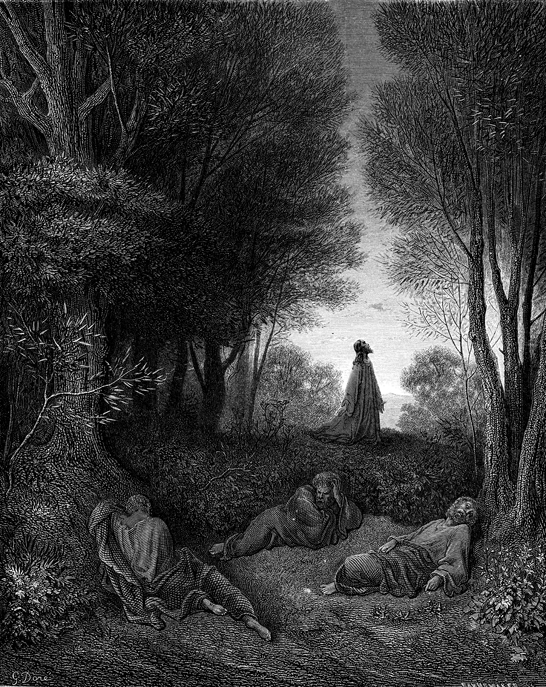
in Matthew 26A second time He went away and prayed, “My Father, if this cup cannot pass unless I drink it, may Your will be done.”
BSB
The same verse in ASV and KJV ▾
ASV
Again a second time he went away, and prayed, saying, My Father, if this cannot pass away, except I drink it, thy will be done.
KJV
He went away again the second time, and prayed, saying, O my Father, if this cup may not pass away from me, except I drink it, thy will be done.
⋯
This verse in Matthew 26
Commentary
16 notes on this verseO my Father, if this cup may not pass away from me - If it be not possible - to redeem fallen man, unless I drink this cup, unless I suffer death for them; thy will be done - I am content to suffer whatever may be requisite to accomplish the great design. In this address the humanity of Christ most evidently appears; for it was his humanity alone that could suffer; and if it did not appear that he had felt these sufferings, it would have been a presumption that he had not suffered, and consequently made no atonement.
This site's exposition
thy will be done
on Matthew 26:42-44
He went away again the second time, and prayed, saying, O my Father, if this cup may not pass away from me, except I drink it, thy will be done repeats the first prayer with a slight but real shift, the conditional now narrowed from if it be possible to an acceptance that the cup will not pass unless he drinks it. He came and found them asleep again, for their eyes were heavy shows the pattern repeating, and he left them, and went away again, and prayed the third time, saying the same words completes a threefold prayer the commentators read as deliberate and thorough rather than repetitive for its own sake. Luke's Gospel adds an angel strengthening him and sweat as it were great drops of blood, a physical sign of the anguish this threefold prayer carried.
The record, by era
The Church Fathers5 voices
There were, I conclude, two ways in which this cup of Passion might pass from the Lord. If He should drink it, it would pass away from Him, and afterwards from the whole race of mankind also; if He should not drink it, it would perhaps pass from Him, but from men it would not pass. He would fain therefore that it should so pass from Him as that He should not at all taste its bitterness, yet only if it were possible, saving the righteousness of God. If it were not possible, He was rather willing to drink it, that so it might pass from Him, and from the whole race of mankind rather than against His Father's will shun the drinking thereof.
The fact that, after returning and finding them asleep, he first reproves them, secondly is silent and thirdly orders them to rest, can be explained in this way: First, after the resurrection, he scolded them for scattering and for being apprehensive and restless; second, once the Holy Spirit had been sent, he came and found them sleeping, since their eyes were too heavy for them to discern the freedom of the gospel—having been held back by the love of the law for some time, their faith was still sleeping; and third, with the return of his radiance, he restored them to restfulness and peace of mind.
Otherwise, He bare in His own body all the infirmities of us His disciples who should suffer, and nailed to His cross all wherein we are distressed; and therefore that cup cannot pass from Him, unless He drink it, because we cannot suffer, except by His passion.
(Serm. 58, 5.) This speech of the Head is the health of the whole body, this saying is instruction to the faithful, animates the confessor, crowns the martyr. For who could vanquish the hatred of the world, or the whirlwind of temptations, or the terrors of the persecutors, if Christ did not in all and for all say to the Father, Thy will be done. Let all the sons of the Church then utter this prayer, that when the pressure of some mighty temptation lies upon them, they may embrace endurance of the suffering, disregarding its terrors.
(Verse 42.) Again, for the second time, he went away and prayed, saying: Father, if this chalice cannot pass away, unless I drink it, let your will be done. He prays for the second time, that if Nineveh cannot be saved in any other way, unless the gourd withers, let the will of the Father be done, which is not contrary to the will of the Son, as he himself said through the prophet: To do your will, O God, I desired (Ps. 39:9).
9 more voices on this verse
The Church Fathers3 voices
That He prays for this a second and a third time, comes of the feelings belonging to human frailty, through which also He feared death, thus giving assurance that He was truly made man. For in Scripture when any thing is repeated a second and third time, that is the greatest proof of its truth and reality; as, for example, when Joseph says to Pharaoh, And for that thou sawedst it twice, it is proof of the thing being established by God. (Gen. 41:32.)
A commentator
John ChrysostomHomily on the Gospel of Matthew 83 · Written in the 5th century.
proposed
And again He prayed in the same way, saying, "Father, if this cannot pass from me except I drink it, Thy will be done," showing here, that He fully harmonizes with God's will, and that we must always follow this, and seek after it.
Or otherwise; He prays a second time that if Nineveh, or the Gentile world, cannot be saved unless the gourd, i. e. the Jews, be withered, His Father's will may be done, which is not contrary to the Son's will, who Himself speaks by the Prophet, I am content to do thy will, O God. (Ps. 40:8.)
The Medieval Church3 voices
He went away again the second time, and prayed, saying, O My Father, if this cup can not pass away from Me, except I drink it, Thy will be done. And He came and found them asleep again: for their eyes were heavy. And He …
Again the second time, he went and prayed. Here he prays a second time. According to Chrysostom, he prays a second time for this reason: to show more firmly the truth of human nature; hence in Gen. 41:32: what thou didst see the second time …
Or, The Lord prayed thrice, to teach us to pray for pardon of sins past, defence against present evil, and provision against future perils, and that we should address every prayer to Father, Son, and Holy Spirit, and that our spirit, soul, and body should be kept in safety.
The Puritans and the Awakening1 voice
He went away again the second time,.... To the same place as before, or at some little distance; after he had reproved his disciples for their sleeping, and had exhorted them to watchfulness and prayer, suggesting the danger they were liable to, and the condition they were in: and prayed, saying, O my Father, if this cup may not pass away from me except I drink it, thy will be done.
The Nineteenth Century2 voices
The verses we have now read describe what is commonly called Christ’s agony at Gethsemane. It is a passage which undoubtedly contains deep and mysterious things. We ought to read it with reverence and wonder, for there is much in it which we cannot fully comprehend. Why do we find our Lord so “sorrowful and very heavy,” as he is here described? What are we to make of his words, “My soul is exceeding sorrowful even unto death.”
The verses we have now read describe what is commonly called Christ’s agony at Gethsemane. It is a passage which undoubtedly contains deep and mysterious things. We ought to read it with reverence and wonder, for there is much in it which we cannot fully comprehend. Why do we find our Lord so “sorrowful and very heavy,” as he is here described? What are we to make of his words, “My soul is exceeding sorrowful even unto death.” Why do we see him going apart from his disciples, and falling on his face, and crying to his Father with strong cries, and thrice repeated prayer? Why is the almighty Son of God, who had worked so many miracles, so heavy and disquieted? Why is Jesus, who came into the world to die, so like one ready to faint at the approach of death? Why is all this? There is but one reasonable answer to these questions: the weight that pressed down our Lord’s soul was not the fear of death and its pains. Thousands have endured the most agonizing sufferings of body, and died without a groan, and so, no doubt, might our Lord. But the real weight that bowed down the heart of Jesus was the weight of the sin of the world, which seems to have now pressed down upon him with peculiar force: it was the burden of our guilt imputed to him, which was now laid on him, as on the head of the scapegoat. How great that burden must have been no human heart can conceive! It is known only to God. Well may the Greek Litany speak of the “unknown sufferings of Christ.” The words of Scott on this subject are probably correct: “Christ at this time endured as much misery of the same kind with that of condemned spirits, as could possibly consist with a pure conscience, perfect love of God and man, and an assured confidence of a glorious event.”
The words behind it
21 Greek wordsEvery Greek word of this verse in the order it stands, with what it means and the door to its own study. The last column counts the times a word stands in the whole Bible: the rarer the word, the more the places it appears belong together.
| Greek | Sound | Meaning | Word study | In the Bible |
|---|---|---|---|---|
| Πάλιν | palin | Again | G3825 → | 139 times |
| ἐκ | ek | for | G1537 → | 911 times |
| δευτέρου | deuterou | a second time | G1208 → | 43 times |
| ἀπελθὼν | apelthon | having gone away | G565 → | 115 times |
| προσηύξατο | proseuxato | He prayed | G4336 → | 85 times |
| λέγων· | legon | saying; | G3004 → | 1325 times |
| πάτερ | pater | Father | G3962 → | 410 times |
| μου, | mou | of Mine, | G3165 → | 1936 times |
| εἰ | ei | if | G1487 → | 508 times |
| οὐ | ou | not | G3756 → | 1664 times |
| δύναται | dunatai | is possible | G1410 → | 207 times |
| τοῦτο | touto | this | G3778 → | 1381 times |
| παρελθεῖν | parelthein | to pass | G3928 → | 29 times |
| ἐὰν | ean | only | G1437 → | 352 times |
| μὴ | me | unless | G3361 → | 1066 times |
| αὐτὸ | auto | it | G846 → | 5565 times |
| πίω, | pio | I shall drink, | G4095 → | 72 times |
| γενηθήτω | genetheto | [then] should be [done] | G1096 → | 667 times |
| τὸ | to | the | G3588 → | 19766 times |
| θέλημά | thelema | will | G2307 → | 62 times |
| σου. | sou | of You. | G4771 → | 2973 times |
ΠάλινAgain
palinG3825 →139 times
ἐκfor
ekG1537 →911 times
δευτέρουa second time
deuterouG1208 →43 times
ἀπελθὼνhaving gone away
apelthonG565 →115 times
προσηύξατοHe prayed
proseuxatoG4336 →85 times
λέγων·saying;
legonG3004 →1325 times
πάτερFather
paterG3962 →410 times
μου,of Mine,
mouG3165 →1936 times
εἰif
eiG1487 →508 times
οὐnot
ouG3756 →1664 times
δύναταιis possible
dunataiG1410 →207 times
τοῦτοthis
toutoG3778 →1381 times
παρελθεῖνto pass
pareltheinG3928 →29 times
ἐὰνonly
eanG1437 →352 times
μὴunless
meG3361 →1066 times
αὐτὸit
autoG846 →5565 times
πίω,I shall drink,
pioG4095 →72 times
γενηθήτω[then] should be [done]
genethetoG1096 →667 times
τὸthe
toG3588 →19766 times
θέλημάwill
thelemaG2307 →62 times
σου.of You.
souG4771 →2973 times
A shaded row is a word that stands 400 times or fewer in the Bible.
The walk
8 stopsEach card is a verse this one points to, and under it the verses that one points to in turn. Where several paths arrive at the same place, that place is listed first: the text keeps returning to it.
Through
Hebrews 4:15For we do not have a high priest who is unable to sympathize with our weaknesses, but we have one who was tempted in every way that we are, yet was without sin.
it leads to
- Hebrews 2:17–18
For this reason He had to be made like His brothers in every way, so that He might become a merciful and faithful high priest in service to God, in order to make atonement…
- 2 Corinthians 5:21
God made Him who knew no sin to be sin on our behalf, so that in Him we might become the righteousness of God.
- Isaiah 53:4–5
Surely He took on our infirmities and carried our sorrows; yet we considered Him stricken by God, struck down and afflicted.
- 1 John 3:5
But you know that Christ appeared to take away sins, and in Him there is no sin.
- 1 Peter 2:22
“He committed no sin, and no deceit was found in His mouth.”
- Hebrews 2:17–18
Through
Matthew 26:39Going a little farther, He fell facedown and prayed, “My Father, if it is possible, let this cup pass from Me. Yet not as I will, but as You will.”
it leads to
- John 6:38
For I have come down from heaven, not to do My own will, but to do the will of Him who sent Me.
- Philippians 2:8
And being found in appearance as a man, He humbled Himself and became obedient to death—even death on a cross.
- Luke 22:41–42
And He withdrew about a stone’s throw beyond them, where He knelt down and prayed,
- John 6:38
Where this verse is studied
On this page
Studies15
On this verse
On this chapter
- Angelology
- Archaeology and the Bible (the Evidence Ledger)
- Peter's Denial: Matthew 26 · Mark 14 · Luke 22 · John 18
- The Son of Man: Daniel 7:13-14
- The Blood
- The Bride & the Jewish Wedding
- The Cleansing of the Temple: John 2 · Matthew 21
- The Father's Will
- The Lord's Supper
- The Right Hand
- The Shepherd
- The Sword
- The Tree
- The Vine & the Vineyard
About Matthew
This page draws on 15 works. Open the list of works
This page draws on Adam Clarke, Commentary on the Bible; Hilary of Poitiers, Commentary on Matthew 31.11; Hilary of Poitiers, Catena Aurea by Aquinas; J.C. Ryle, Expository Thoughts on the Gospels: Matthew; Jamieson, Fausset & Brown, Commentary Critical and Explanatory on the Whole Bible; Jerome, Commentary on Matthew; Jerome, Catena Aurea by Aquinas; John Chrysostom, Catena Aurea by Aquinas; John Chrysostom, Homily on the Gospel of Matthew 83; John Gill, Exposition of the New Testament (1746-1748); Leo the Great, Catena Aurea by Aquinas; Origen of Alexandria, Catena Aurea by Aquinas; Rabanus Maurus, Catena Aurea by Aquinas; Theophylact of Ohrid, Commentary on Matthew and Thomas Aquinas, Commentary on Matthew.