
Genesis 41:45
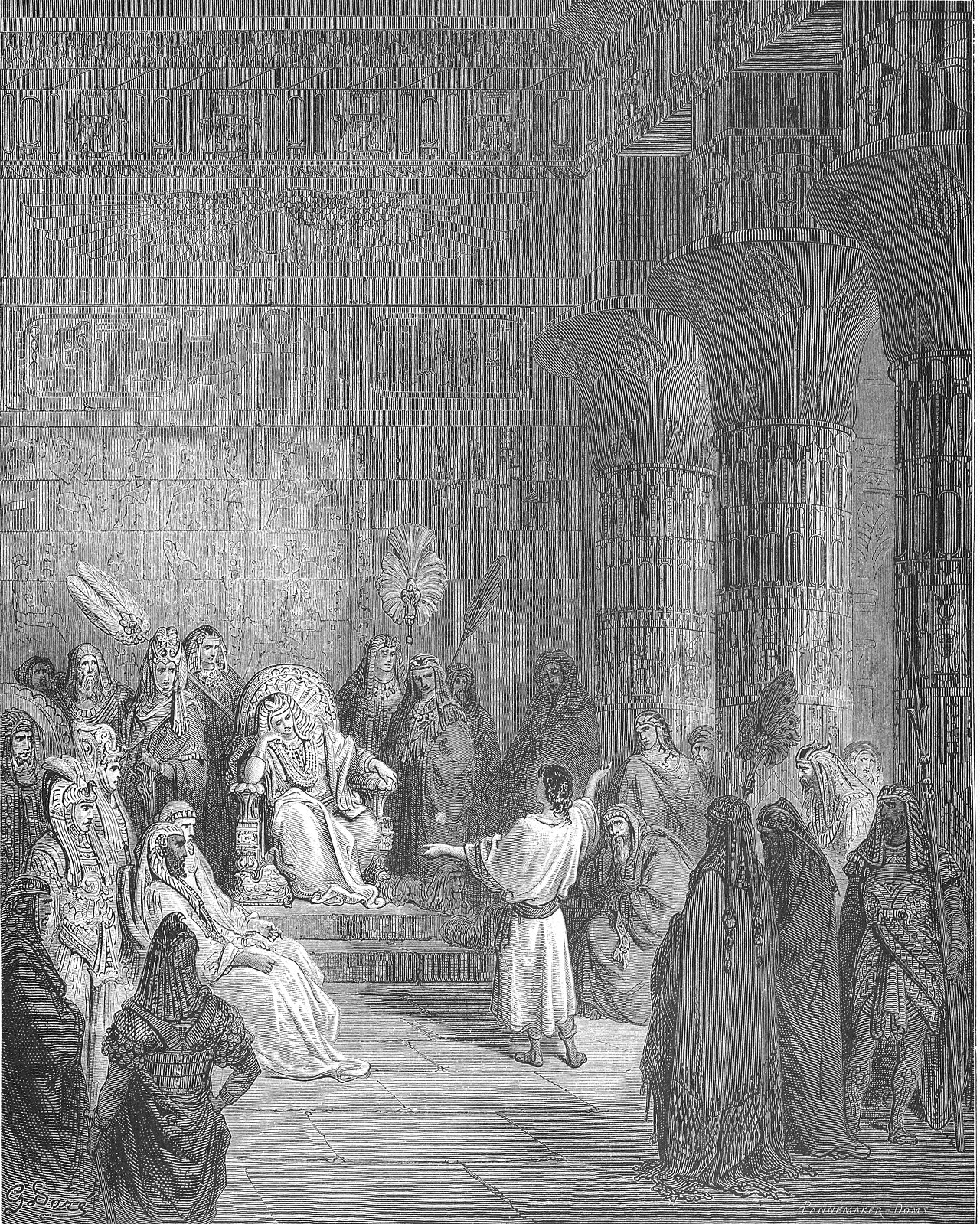
in Genesis 41Pharaoh gave Joseph the name Zaphenath-paneah, and he gave him Asenath daughter of Potiphera, priest of On, to be his wife. And Joseph took charge of all the land of Egypt.
BSB
The same verse in ASV and KJV ▾
ASV
And Pharaoh called Joseph’s name Zaphenath-paneah; and he gave him to wife Asenath, the daughter of Poti-phera priest of On. And Joseph went out over the land of Egypt.
KJV
And Pharaoh called Joseph’s name Zaphnath–paaneah; and he gave him to wife Asenath the daughter of Poti–pherah priest of On. And Joseph went out over all the land of Egypt.
⋯
This verse in Genesis 41
Commentary
6 notes on this verseAnd Pharaoh called Joseph's name Zaphnathpaaneah,.... Which, according to the paraphrase of Onkelos, signifies one to whom hidden things are revealed; or, as Jonathan, a revealer of secrets; and so most of the Jewish writers explain it; and which seems to be given him from his interpreting Pharaoh's dreams, and revealing what was hereafter to come to pass.
This site's exposition
without your permission
on Genesis 41:44-45
Pharaoh gives him an Egyptian throne name and an Egyptian wife, Asenath daughter of Potiphera, priest of On, which is Heliopolis and the centre of Egypt's sun worship. Gill records that the Jewish writers took the new name to mean a revealer of secrets, and Jamieson reads the marriage as tying Joseph to a family of high rank. Two tribes of Israel come from this priest's daughter.
The record, by era
The Church Fathers2 voices
(Verse 45) And Pharaoh called Joseph's name Saphaneth Phanee, and he gave him Aseneth, the daughter of Potiphera, priest of Heliopolis, as his wife. Although this name sounds like the revealer of hidden things in Hebrew, because it is Egyptian, it must have its own meaning in that language. Therefore, it is interpreted in the Egyptian language as Saphaneth Phanee, or as the Seventy wished to translate it, Psomthom-Phanech, the Savior of the world, because he delivered the world from impending famine. It should be noted, however, that the Lord once took the daughter of His owner as a wife, who was the high priest of Heliopolis in that place. For it is not right for the priests of that idol to be without eunuchs, so that the suspicion regarding what we have already said may be confirmed.
Verse 7. "And the overseer of the eunuchs imposed names upon them, calling Daniel Belteshazzar (Balthasar), and Hananiah Shadrach, and Mishael Meshach, and Azariah Abednego." It was not only the overseer or master of the eunuchs (as others have rendered it, the "chief-eunuch") who changed the names of saints, but also Pharaoh called Joseph in Egypt Somtonphanec (Genesis 41:45), for neither of them wished them to have Jewish names in the land of captivity. Wherefore the prophet says in the Psalm: "How shall we sing the Lord's song in a strange land?" (Psalm 137:4).
The Nineteenth Century2 voices
Zaphnath-paaneah - The meaning of this title is as little known as that of abrech in the preceding verse. Some translate it, The revealer of secrets; others, The treasury of glorious comfort. St. Jerome translates the whole verse in the most arbitrary manner. Vertitque nomen ejus, et vocavit eum, lingua Aegyptiaca, Salvatorem mundi. “And he changed his name, and called him in the Egyptian language, The savior of the world.” None of the Asiatic versions acknowledge this extraordinary gloss, and it is certainly worthy of no regard.
A commentator
Jamieson, Fausset & Brown1802–1910
Commentary Critical and Explanatory on the Whole Bible (1871)
Zaphnath-paaneah--variously interpreted, "revealer of secrets"; "saviour of the land"; and from the hieroglyphics, "a wise man fleeing from pollution"--that is, adultery. gave him to wife Asenath, the daughter of--His naturalization was completed by this alliance with a family of high distinction.
The words behind it
21 Hebrew wordsEvery Hebrew word of this verse in the order it stands, with what it means and the door to its own study. The last column counts the times a word stands in the whole Bible: the rarer the word, the more the places it appears belong together.
| Hebrew | Sound | Meaning | Word study | In the Bible |
|---|---|---|---|---|
| וַיִּקְרָ֨א | vaiyikra' | and he called | H7121 → | 733 times |
| פַרְעֹ֣ה | faroh | Pharaoh | H6547 → | 274 times |
| שֵׁם־ | shem- | [the] name of | H8034 → | 864 times |
| יוֹסֵף֮ | yosef | Joseph | H3130 → | 213 times |
| צָֽפְנַ֣ת | tzafenat | Zaphenath- | H6847 → | |
| פַּעְנֵחַ֒ | pa'neach | Paneah | H6847 → | |
| וַיִּתֶּן־ | vaiyiten- | and he gave | H5414 → | 2011 times |
| ל֣וֹ | lo | to <the> him | ||
| אֶת־ | ʾet- | <obj.> | H853 → | 10935 times |
| אָֽסְנַ֗ת | ʾasenat | Asenath | H621 → | 3 times |
| בַּת־ | bat- | [the] daughter of | H1323 → | 588 times |
| פּ֥וֹטִי | poti | Poti- | H6319 → | 6 times |
| פֶ֛רַע | fera' | -phera | H6319 → | 6 times |
| כֹּהֵ֥ן | kohen | [the] priest of | H3548 → | 750 times |
| אֹ֖ן | ʾon | On | H204 → | 4 times |
| לְאִשָּׁ֑ה | leishah | to a wife | H802 → | 781 times |
| וַיֵּצֵ֥א | vaiyetze' | and he went out | H3318 → | 1067 times |
| יוֹסֵ֖ף | yosef | Joseph | H3130 → | 213 times |
| עַל־ | ʾal- | over | H5921 → | 5755 times |
| אֶ֥רֶץ | ʾeretz | [the] land of | H776 → | 2504 times |
| מִצְרָֽיִם׃ | mitzrayim | Egypt | H4714 → | 641 times |
וַיִּקְרָ֨אand he called
vaiyikra'H7121 →733 times
פַרְעֹ֣הPharaoh
farohH6547 →274 times
שֵׁם־[the] name of
shem-H8034 →864 times
יוֹסֵף֮Joseph
yosefH3130 →213 times
צָֽפְנַ֣תZaphenath-
tzafenatH6847 →
פַּעְנֵחַ֒Paneah
pa'neachH6847 →
וַיִּתֶּן־and he gave
vaiyiten-H5414 →2011 times
ל֣וֹto <the> him
lo
אֶת־<obj.>
ʾet-H853 →10935 times
אָֽסְנַ֗תAsenath
ʾasenatH621 →3 times
בַּת־[the] daughter of
bat-H1323 →588 times
פּ֥וֹטִיPoti-
potiH6319 →6 times
פֶ֛רַע-phera
fera'H6319 →6 times
כֹּהֵ֥ן[the] priest of
kohenH3548 →750 times
אֹ֖ןOn
ʾonH204 →4 times
לְאִשָּׁ֑הto a wife
leishahH802 →781 times
וַיֵּצֵ֥אand he went out
vaiyetze'H3318 →1067 times
יוֹסֵ֖ףJoseph
yosefH3130 →213 times
עַל־over
ʾal-H5921 →5755 times
אֶ֥רֶץ[the] land of
ʾeretzH776 →2504 times
מִצְרָֽיִם׃Egypt
mitzrayimH4714 →641 times
A shaded row is a word that stands 400 times or fewer in the Bible.
The walk
8 stopsEach card is a verse this one points to, and under it the verses that one points to in turn. Where several paths arrive at the same place, that place is listed first: the text keeps returning to it.
Through
Genesis 14:18Then Melchizedek king of Salem brought out bread and wine—since he was priest of God Most High—
it leads to
- Psalms 110:4
The LORD has sworn and will not change His mind: “You are a priest forever in the order of Melchizedek.”
- Hebrews 6:20
where Jesus our forerunner has entered on our behalf. He has become a high priest forever in the order of Melchizedek.
- Hebrews 5:6
And in another passage God says: “You are a priest forever in the order of Melchizedek.”
- Hebrews 5:10
and was designated by God as high priest in the order of Melchizedek.
- Psalms 76:2
His tent is in Salem, His dwelling place in Zion.
- Psalms 110:4
Through
Exodus 2:16Now the priest of Midian had seven daughters, and they came to draw water and fill the troughs to water their father’s flock.
it leads to
- Exodus 3:1
Meanwhile, Moses was shepherding the flock of his father-in-law Jethro, the priest of Midian. He led the flock to the far side of the wilderness and came to Horeb, the mountain of God.
- Genesis 24:11
As evening approached, he made the camels kneel down near the well outside the town at the time when the women went out to draw water.
- 1 Samuel 9:11
And as they were climbing the hill to the city, they met some young women coming out to draw water and asked, “Is the seer here?”
- Exodus 3:1
Where this verse is studied
On this page
Studies1
About Genesis
Who and where
2 names in this verse with a page on the site.
This page draws on Adam Clarke, Commentary on the Bible; Jamieson, Fausset & Brown, Commentary Critical and Explanatory on the Whole Bible; Jerome, Hebrew Questions on Genesis; Jerome, St. Jerome, Commentary on Daniel, CHAPTER ONE; John Gill, Exposition of the Old Testament (1748-1763) and John Gill, Exposition of the Old Testament.