
Place
Haran
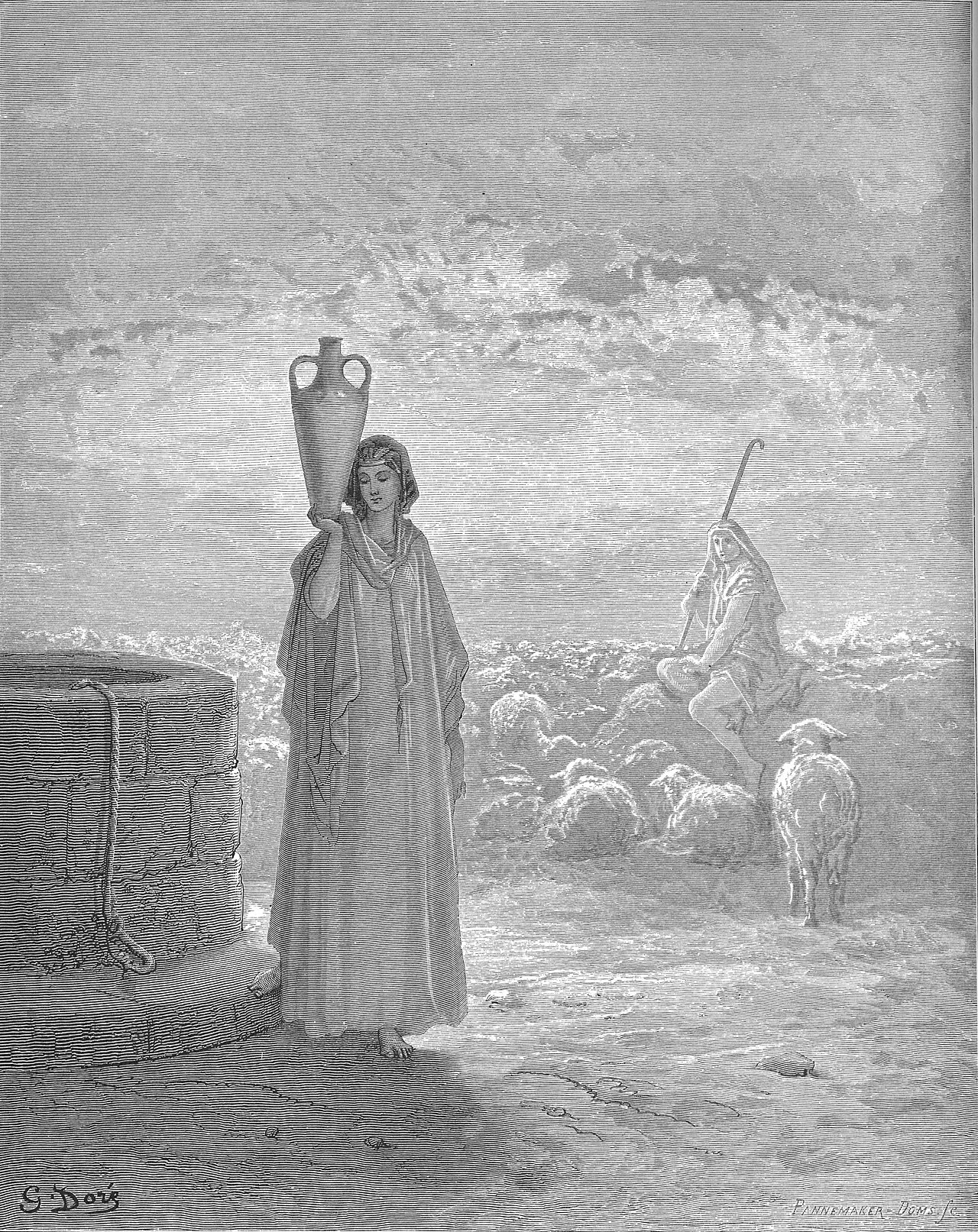
Gustave Doré, La Sainte Bible (Tours: Alfred Mame et fils, 1866). Public domain.
Summary
The city in upper Mesopotamia where Terah died and Abram received his call, where Jacob served Laban twenty years for his wives and flocks, and which the prophets later name among Assyria’s conquests.
- Haran is where the family that carries the promise kept its address for three generations.
- Abram was called out of Haran at seventy-five, and no patriarch after him ever settled there again.
- Jacob spent twenty years in this one town, and Genesis gives those years four chapters.
- Rebekah was fetched from here for Isaac, and Rachel and Leah came out of here with Jacob.
- Harran was a real city on the caravan road, an Assyrian provincial capital, and a great center of moon worship.
On this page
In Scripture
- Verses
- 19
- Books
- 7
Where it is
the country around it
- Coordinates
- 36.8639° N, 39.0322° Eopen the Atlas →
- Region
- Upper Mesopotamia
- Located: the gazetteer fixes one site
Not located: Egypt, Paddan-aram, Canaan, Assyria, Eden. The gazetteer records no location for them, so they are not marked.
Why Haran matters
What has been found
the evidence, and where it is disputed
Jacob at Haran, outlined
Genesis 27 to 31, in the order it happens
Read Genesis 27 to 31, in the order it happens
- Rebekah sends Jacob to her brotherGenesis 27:43So now, my son, obey my voice and flee at once to my brother Laban in Haran.
- Jacob leaves BeershebaGenesis 28:10Meanwhile Jacob left Beersheba and set out for Haran.
- A well in the field, and a large stone over itGenesis 29:2He looked and saw a well in the field, and near it lay three flocks of sheep, because the sheep were watered from this well. And a large stone covered the mouth of the well.
- Jacob rolls the stone away for RachelGenesis 29:10As soon as Jacob saw Rachel, the daughter of his mother’s brother Laban, with Laban’s sheep, he went up and rolled the stone away from the mouth of the well and watered his uncle’s sheep.
- Seven years that seemed but a few daysGenesis 29:20So Jacob served seven years for Rachel, yet it seemed but a few days because of his love for her.
- Morning came, and there was LeahGenesis 29:25When morning came, there was Leah! “What have you done to me?” Jacob said to Laban. “Wasn’t it for Rachel that I served you? Why have you deceived me?”
- Rachel given a week later, at the price of seven more yearsGenesis 29:28And Jacob did just that. He finished the week’s celebration, and Laban gave him his daughter Rachel as his wife.
- Rachel takes her father's household godsGenesis 31:19Now while Laban was out shearing his sheep, Rachel stole her father’s household idols.
- Twenty years, said to Laban's faceGenesis 31:41Thus for twenty years I have served in your household—fourteen years for your two daughters and six years for your flocks—and you have changed my wages ten times!
- The heap of witness, named in two languagesGenesis 31:47Laban called it Jegar-sahadutha, and Jacob called it Galeed.
The household gods Rachel carried out of Haran were still in the camp years later. Genesis 35:4 has Jacob bury all the foreign gods under the oak near Shechem before he goes up to Bethel.
Rachel and Leah: the full studyWhat happened here, in order
in the order the canon tells it
- Terah's household leaves Ur for Canaan and settles at HaranGenesis 11:31And Terah took his son Abram, his grandson Lot son of Haran, and his daughter-in-law Sarai the wife of Abram, and they set out from Ur of the Chaldeans for the land of Canaan. But when they arrived in Haran, they settled there.
- Terah dies in HaranGenesis 11:32Terah lived 205 years, and he died in Haran.
- Abram leaves Haran at seventy-fiveGenesis 12:4So Abram departed, as the LORD had directed him, and Lot went with him. Abram was seventy-five years old when he left Haran.
- Abraham's servant sets out for Nahor's hometownGenesis 24:10Then the servant took ten of his master’s camels and departed with all manner of good things from his master in hand. And he set out for Nahor’s hometown in Aram-naharaim.
- Isaac marries Rebekah of Paddan-aramGenesis 25:20and Isaac was forty years old when he married Rebekah, the daughter of Bethuel the Aramean from Paddan-aram and the sister of Laban the Aramean.
- The shepherds at the well say where they are fromGenesis 29:4“My brothers,” Jacob asked the shepherds, “where are you from?” “We are from Haran,” they answered.
- Another seven years served for RachelGenesis 29:30Jacob slept with Rachel as well, and indeed, he loved Rachel more than Leah. So he worked for Laban another seven years.
- Jacob prospers in HaranGenesis 30:43Thus Jacob became exceedingly prosperous. He owned large flocks, maidservants and menservants, and camels and donkeys.
- God tells Jacob to go homeGenesis 31:3Then the LORD said to Jacob, “Go back to the land of your fathers and to your kindred, and I will be with you.”
- Jacob crosses the EuphratesGenesis 31:21So he fled with all his possessions, crossed the Euphrates, and headed for the hill country of Gilead.
- Laban pursues for seven daysGenesis 31:23So he took his relatives with him, pursued Jacob for seven days, and overtook him in the hill country of Gilead.
- The gods carried out of Haran are buried at ShechemGenesis 35:4So they gave Jacob all their foreign gods and all their earrings, and Jacob buried them under the oak near Shechem.
- Israel's firstfruits confession begins with the wandering ArameanDeuteronomy 26:5and you are to declare before the LORD your God, “My father was a wandering Aramean, and he went down to Egypt few in number and lived there and became a great nation, mighty and numerous.
- Assyria's officer names Haran among the cities whose gods did not save them2 Kings 19:12Did the gods of the nations destroyed by my fathers rescue those nations—the gods of Gozan, Haran, and Rezeph, and of the people of Eden in Telassar?
- Haran listed among the merchants who traded with TyreEzekiel 27:23Haran, Canneh, and Eden traded with you, and so did the merchants of Sheba, Asshur, and Chilmad.
- Stephen preaches Abraham's stop at Haran and his call out of itActs 7:4So Abraham left the land of the Chaldeans and settled in Haran. After his father died, God brought him out of that place and into this land where you are now living.
Where it points
The voices
each quoted from the work named
Abraham left his country at God's command and he never went back. The proof of faith lies in perseverance. There is a sort of faith which runs well for a while, but it is soon ended and it does not obey the Truth of God. The Apostle tells us, however, that the people of God were not forced to continue because they could not return. Had they been mindful of the place from whence they came out, they might have found opportunities to return. Frequent opportunities came in their way. There was communication kept up between them and the old family house at Padan-Aram. They had news concerning the family house. More than that, there were messages exchanged—servants were sometimes sent. There was also a natural relationship kept up. Did not Rebekah come from there? And Jacob, one of the Patriarchs, was driven to go down into the land, but he could not stay there. He was always uneasy, until at last he stole away from Laban and came back to the proper life, the life that he had chosen—the life that God had commanded him to live—of a pilgrim and stranger in the land of promise.
thither were all the flocks gathered; and a stone, &c.--In Arabia, owing to the shifting sands and in other places, owing to the strong evaporation, the mouth of a well is generally covered, especially when it is private property. Over many is laid a broad, thick, flat stone, with a round hole cut in the middle, forming the mouth of the cistern.
My brethren, whence be ye? - The language of Laban and his family was Chaldee and not Hebrew; (see Gen 31:47); but from the names which Leah gave to her children we see that the two languages had many words in common, and therefore Jacob and the shepherds might understand each other with little difficulty. It is possible also that Jacob might have learned the Chaldee or Aramitish language from his mother, as this was his mother’s tongue.
4 more teachers on these versesMatthew Henry · Jerome · Albert Barnes
He had cheated his own father when he pretended to be Esau, and now his father-in-law cheated him. Herein, how unrighteous soever Laban was, the Lord was righteous; as Judges i. Even the righteous, if they take a false step, are sometimes thus recompensed on the earth.
He retained his affection for the land of Canaan, not only because it was the land of his nativity, and his father and mother were there, whom he longed to see, but because it was the land of promise; and, in token of his dependence upon the promise of it, though he sojourn in Haran he can by no means think of settling there.
The heap is called Galeed in the Hebrew language and Jegar-sahadutha in the Syriac language, both meaning 'witness heap'. Jacob called the heap 'Galeed' in Hebrew, and Laban called it 'Jegar-sahadutha' in the language of his people. For he was a Syrian, and had changed the ancient language of his parents to the language of the province in which he dwelt.
Haran - Harran, the Carrhae of the Greeks and Romans Gen 11:31, was among the earliest conquests of the Assyrians; being subject to them from the 12th century. Its conquest would have naturally followed that of Gozan (Gauzanitis, 2Ki 17:6), which lay between it and Assyria proper. Rezeph - Probably the Rozappa of the Assyrian inscriptions, a city in the neighborhood of Haran.
Haran in Scripture
19 verses name it, in 7 books
Open a book to read its mentions here. Text: Berean Standard Bible.
Old TestamentNew Testamentsegment width = share of mentions
Old Testament6 books · 17 mentions
Genesis11 mentions
- Genesis 11:26When Terah was 70 years old, he became the father of Abram, Nahor, and Haran.
- Genesis 11:27This is the account of Terah. Terah became the father of Abram, Nahor, and Haran. And Haran became the father of Lot.
- Genesis 11:28During his father Terah’s lifetime, Haran died in his native land, in Ur of the Chaldeans.
- Genesis 11:29And Abram and Nahor took wives for themselves. Abram’s wife was named Sarai, and Nahor’s wife was named Milcah; she was the daughter of Haran, who was the father of both Milcah and Iscah.
- Genesis 11:31And Terah took his son Abram, his grandson Lot son of Haran, and his daughter-in-law Sarai the wife of Abram, and they set out from Ur of the Chaldeans for the land of Canaan. But when they arrived in Haran, they settled there.
- Genesis 11:32Terah lived 205 years, and he died in Haran.
- Genesis 12:4So Abram departed, as the LORD had directed him, and Lot went with him. Abram was seventy-five years old when he left Haran.
- Genesis 12:5And Abram took his wife Sarai, his nephew Lot, and all the possessions and people they had acquired in Haran, and set out for the land of Canaan. When they came to the land of Canaan,
3 further mentions in Genesis, read them in the book.
Numbers1 mention
2 Kings1 mention
1 Chronicles2 mentions
Isaiah1 mention
New Testament1 book · 2 mentions
Acts2 mentions
- Acts 7:2And Stephen declared: “Brothers and fathers, listen to me! The God of glory appeared to our father Abraham while he was still in Mesopotamia, before he lived in Haran,
- Acts 7:4So Abraham left the land of the Chaldeans and settled in Haran. After his father died, God brought him out of that place and into this land where you are now living.
The account
Read the account as one telling
Common questions
Where was Haran, and where is it now?
Haran stood on the Balikh river in upper Mesopotamia, on the caravan road that ran from Assyria west toward Carchemish and the sea. The ruin field and the village beside it lie in Şanlıurfa province in southeastern Turkey, roughly 44 km southeast of Şanlıurfa itself. The Akkadian name behind it, harranu, means road, which is what the town was for.
Is Haran the city the same name as Haran the brother of Abram?
No, not in Hebrew. The brother who died in Ur is spelled with the letter he, and the city is spelled with the letter cheth. English spells both of them Haran and hides the difference. Genesis 11:31 uses both words in a single sentence, when Terah takes Lot son of Haran and settles in Haran.
Did Abram leave Haran before or after his father died?
Readers differ; the positions are named
Genesis 11:26 has Terah at seventy when his sons were born, Genesis 11:32 has him dying at 205, and Genesis 12:4 has Abram leaving at seventy-five, which puts the departure sixty years before Terah's death. Stephen says in Acts 7:4 that God brought Abraham out after his father died.
Three readings have been given. Adam Clarke holds that Genesis 11:26 gives the age at which Terah began fathering sons and that Abram, the youngest, was born when Terah was 130, which removes the conflict. Others point to the Samaritan Pentateuch, which reads 145 rather than 205 for Terah's age at death, and removes it another way. A rabbinic reading preserved in Genesis Rabbah, compiled in the Land of Israel around the fifth century AD, holds that Scripture reckons the ungodly as dead while they live. Jerome called it an unsolvable question. This page names the positions and leaves it there.
Did Jacob really wait fourteen years for Rachel?
He did not. Jacob agreed to seven years for Rachel, Laban gave him Leah in the dark, and when Jacob protested Laban told him to finish Leah's marriage week and then take Rachel as well, with the second seven years served afterward. Genesis 29:28 says Jacob did just that. Jerome states it plainly, that Rachel became his wife seven days after Leah rather than seven years.
Why did Rachel steal her father's household gods?
Readers differ; the positions are named
Genesis 31:19 records the theft and never explains it, and Genesis 31:35 records how she hid them. Some readers take it as attachment to what she grew up with, some as a way of stripping her father of what he trusted, and some point to tablets from Nuzi in which possession of household gods carried a claim on an estate. That last reading has been challenged, and the argument over it is set out further up this page.
What the text does say is that Laban called them my gods, that Jacob did not know they were in the camp, and that years later Jacob buried every foreign god in his household under the oak near Shechem.
Why is the region called Paddan-aram and Aram-naharaim as well as Haran?
The three names sit at different scales. Haran is the town. Paddan-aram is the district around it, the name Genesis uses for where Rebekah, Leah and Rachel came from. Aram-naharaim means Aram of the two rivers and names the wider country between the Euphrates and the Tigris. Genesis 24:10 sends Abraham's servant to Aram-naharaim, Genesis 25:20 calls Rebekah a daughter of Paddan-aram, and Genesis 27:43 and 29:4 put Laban at Haran.
Was Haran a center of moon worship, and does that matter for Abraham?
Yes to the first. Harran held the temple of the moon god Sin called Ehulhul, one of the two great centers of that cult, the other being Ur, and Nabonidus rebuilt the temple in the sixth century BC. As to whether it matters, Joshua 24:2 says Terah served other gods beyond the River, and Genesis has the family move from one moon-god city to another before Abram is called out of the second one. This page states the evidence and lets a reader see the shape of it, without turning a fact of geography into a claim the text does not make.
What happened to Haran after the Bible's story leaves it?
Readers differ; the positions are named
It kept going for two thousand years. Assyria held it as a provincial capital, and after Nineveh fell in 612 BC the last Assyrian king made his stand there until the Babylonians took it in 610 BC, which is the campaign Pharaoh Neco was marching to join when Josiah died at Megiddo. Under Rome it was Carrhae, where Crassus was defeated and killed in 53 BC.
The moon cult outlasted the empires, the Great Mosque was built in the eighth century AD over or beside the old temple site, and the city was wrecked and abandoned in the thirteenth century. What is inferred rather than proven is that the mosque stands on Ehulhul itself. The Nabonidus stelae reused in its fabric make it likely and no excavation has settled it.
Notable art
3 verified pieces depicting Haran
Sources cited
- OpenBible.info Bible Geocoding: Haranread 2026-08-20The coordinates on this page. Used under CC-BY with attribution to OpenBible.info.
- C. J. Gadd, "The Harran Inscriptions of Nabonidus", Anatolian Studies 8 (1958), 35 to 92The Nabonidus and Adad-guppi stelae, including the copy found reused in the pavement of the Great Mosque at Harran.
- Henri Pognon, Inscriptions sémitiques de la Syrie, de la Mésopotamie et de la région de Mossoul (Paris, 1907)The first Adad-guppi stele found at Harran.
- A. K. Grayson, Assyrian and Babylonian Chronicles (Locust Valley: J. J. Augustin, 1975)Chronicle 3, the fall of Nineveh chronicle, BM 21901. Harran taken in 610 BC and the failed attempt to retake it.
- Seton Lloyd and William Brice, "Harran", Anatolian Studies 1 (1951), 77 to 111The 1951 survey and site plan for the British Institute at Ankara.
- D. S. Rice, "Medieval Harran: Studies on its Topography and Monuments, I", Anatolian Studies 2 (1952), 36 to 84Rice's four seasons at the Great Mosque and citadel between 1951 and 1959.
- André Parrot and the Mari excavations at Tell Hariri from 1933Cited at archive level for the Mari references to Harran, its temple of the moon god, and the Balikh valley place names.
- E. A. Speiser, Genesis, Anchor Bible 1 (Garden City: Doubleday, 1964)The Nuzi reading of the customs in Genesis 29 to 31, cited for the position it argues.
- Thomas L. Thompson, The Historicity of the Patriarchal Narratives (Berlin: de Gruyter, 1974)The critique of the Nuzi parallels, cited for the position it argues.
- John Van Seters, Abraham in History and Tradition (New Haven: Yale University Press, 1975)The second critique, cited for the position it argues.
- M. J. Selman, "Comparative Customs and the Patriarchal Age", in A. R. Millard and D. J. Wiseman, eds., Essays on the Patriarchal Narratives (Leicester: IVP, 1980)The measured reply that concedes the over-reading and keeps the parallels that hold.
- Flavius Josephus, Antiquities of the Jews, Book 1Cited at book level on Terah, Haran and the move from Chaldea.
- Genesis RabbahCompiled in the Land of Israel around the fifth century AD. Cited for the rabbinic reading of the order of Abram's departure from Haran.
- Charles H. Spurgeon, The Metropolitan Tabernacle Pulpit, Sermon No. 3478: "Go Back? Never!"Public domain, CCEL edition. The sermon quoted on this page.
- Charles H. Spurgeon, The Metropolitan Tabernacle Pulpit, Sermon No. 2011: "Abram's Call, or Half-Way and All the Way" (1888)Public domain, CCEL edition. Spurgeon's sermon on Genesis 11:31, preaching Haran as the half-way stop. Named here so a reader can go to it.
- Matthew Henry, Commentary on the Whole Bible (1710)Public domain.
- Adam Clarke, Commentary on the Bible (1832)Public domain.
- Albert Barnes, Notes, Explanatory and Practical, on the Old and New Testaments (1832 to 1869)Public domain.
- John Gill, Exposition of the Old Testament (1748 to 1763)Public domain. His note on Ezekiel 27:23 identifies Haran with Carrhae and names the defeat of Crassus.
- Jamieson, Fausset & Brown, Commentary Critical and Explanatory on the Whole Bible (1871)Public domain.
- Jerome, Hebrew Questions on Genesis (c. AD 420)Public domain. Quoted on the heap of witness, and cited on the chronology of Genesis 12:4 and on the week between Leah and Rachel.
- John Chrysostom, Homilies on Acts (c. AD 407)Public domain. Homily 15 on Acts 7:2, quoted on this page.
- Cyril of Alexandria, Glaphyra on Genesis (c. AD 444)Public domain. Book 4 on Genesis 29, cited for the fifth-century reading of Rachel as a sheep of Christ.
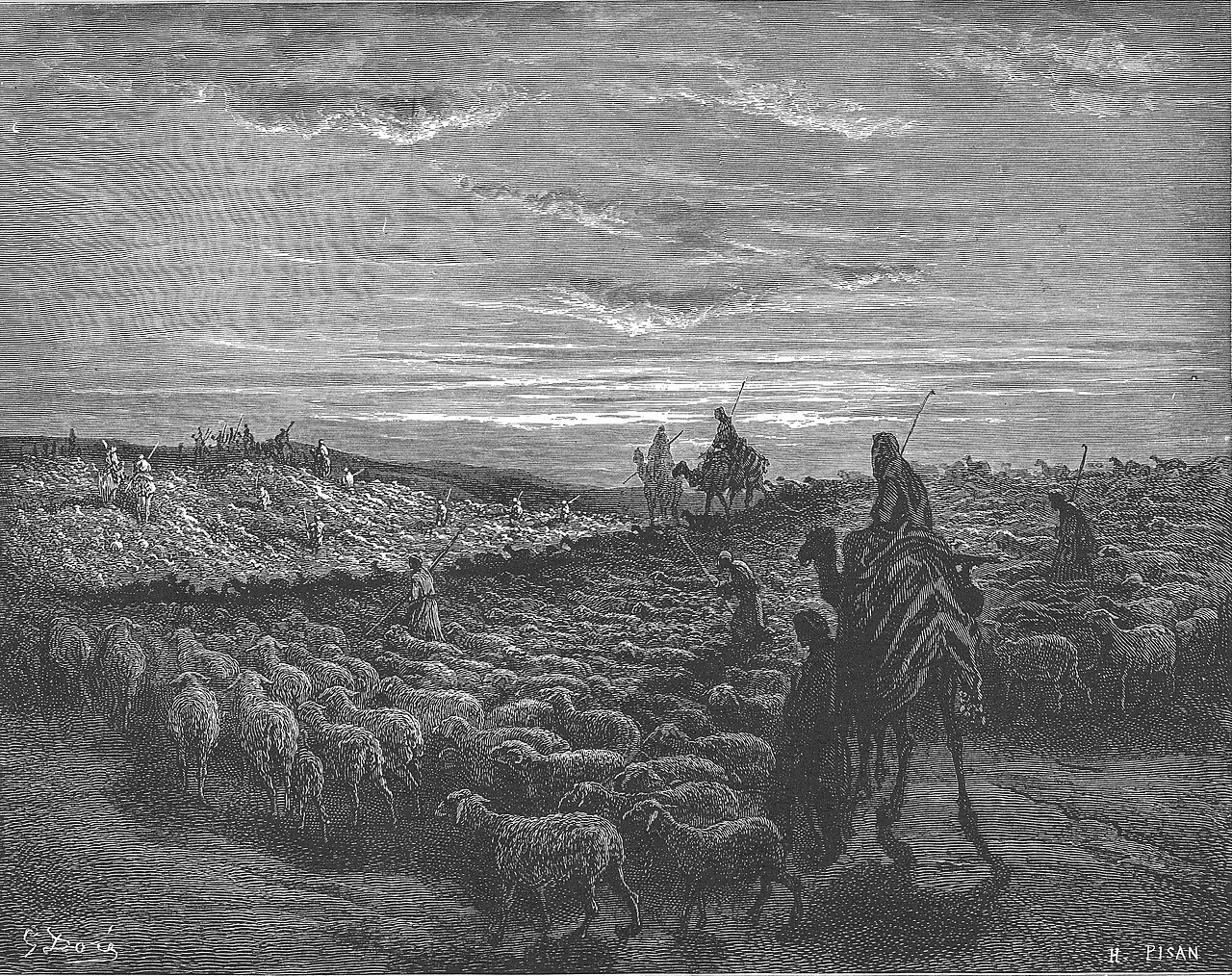
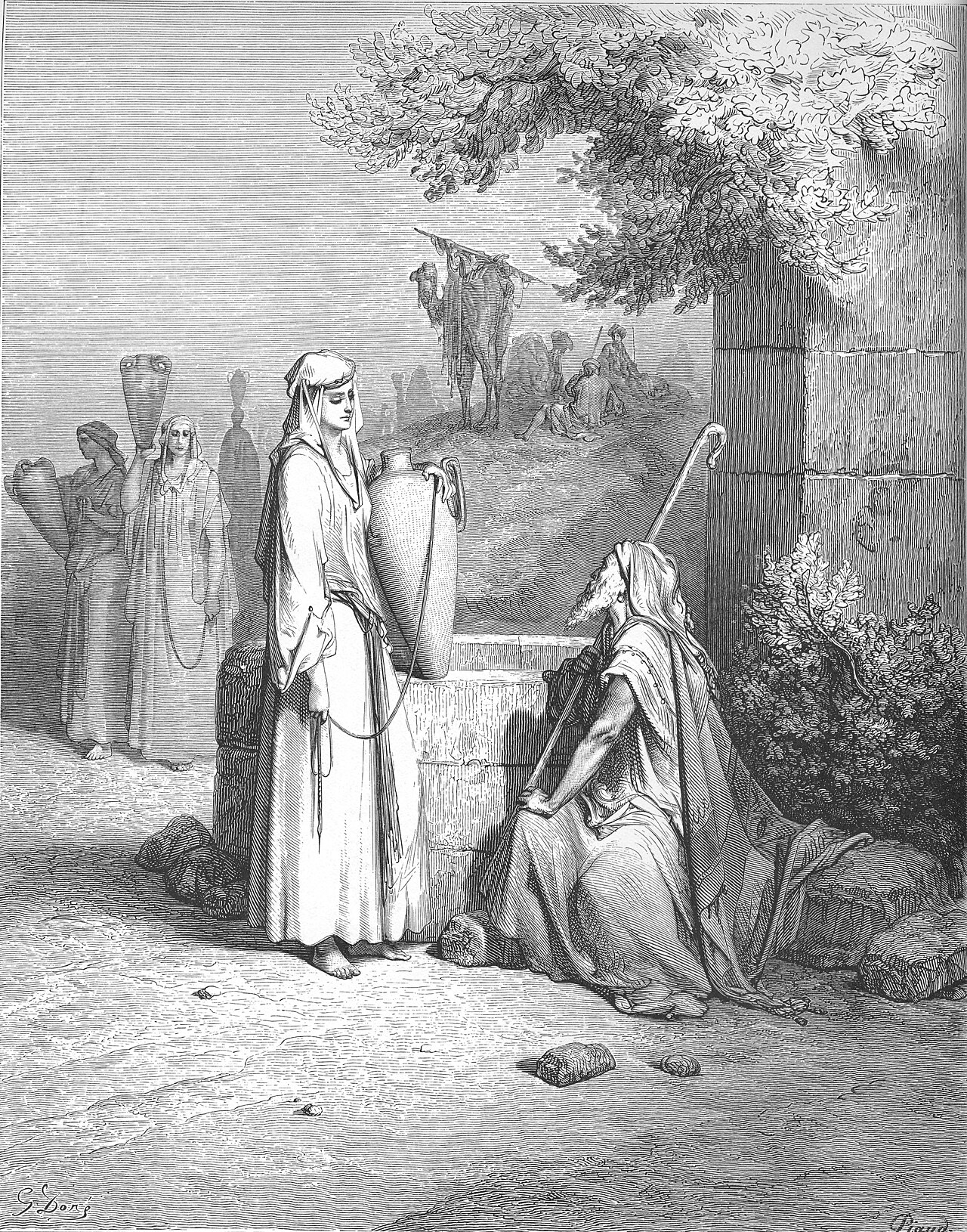
- Gustave Doré, La Sainte Bible (Tours: Alfred Mame et fils, 1866)Three of the engravings on this page. Public domain.
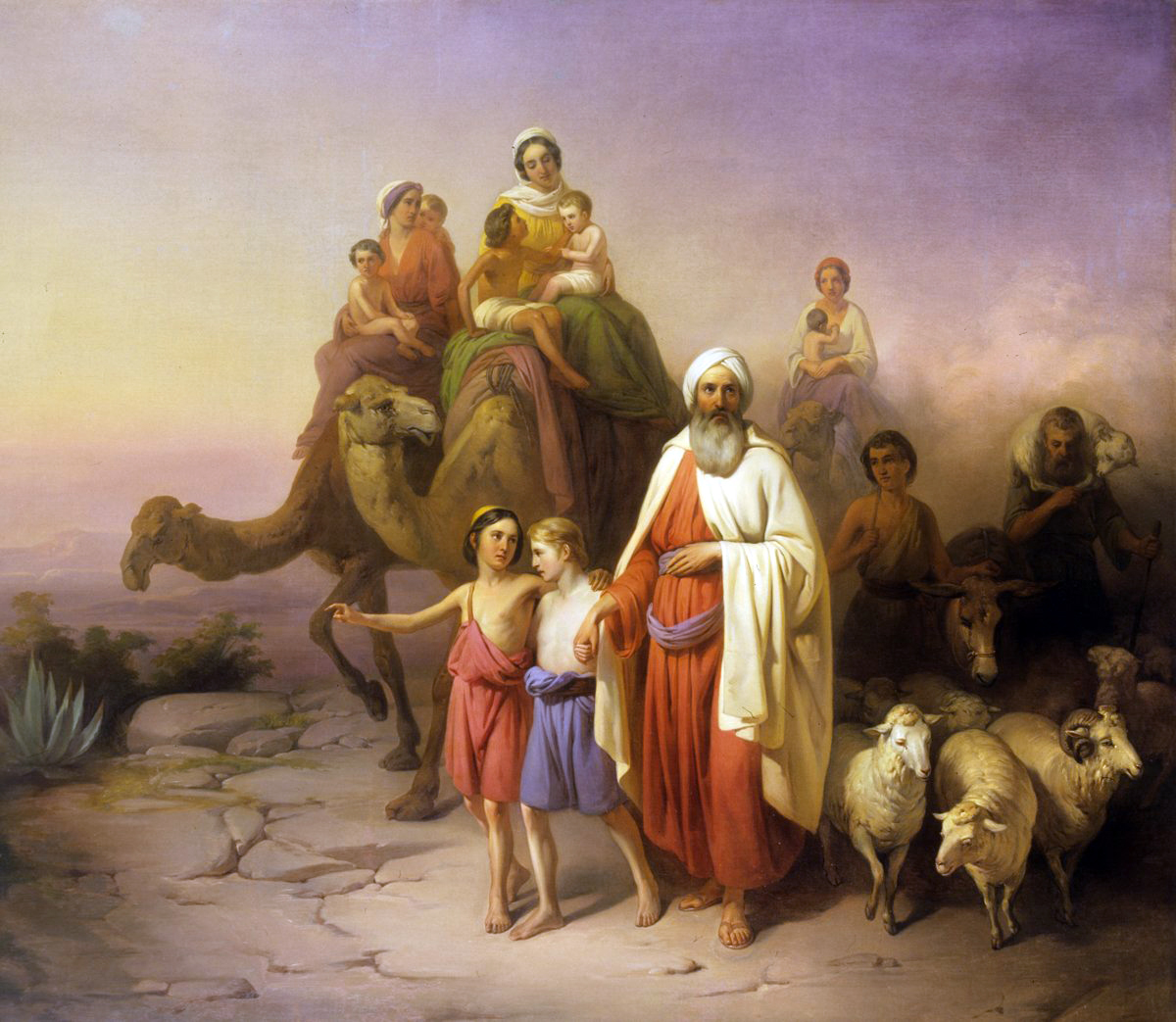
- József Molnár, The March of Abraham (1850)Public domain, via Wikimedia Commons.
Keep studying
On this page
Studies11
Doorway2
Keep this page