
John 4:39
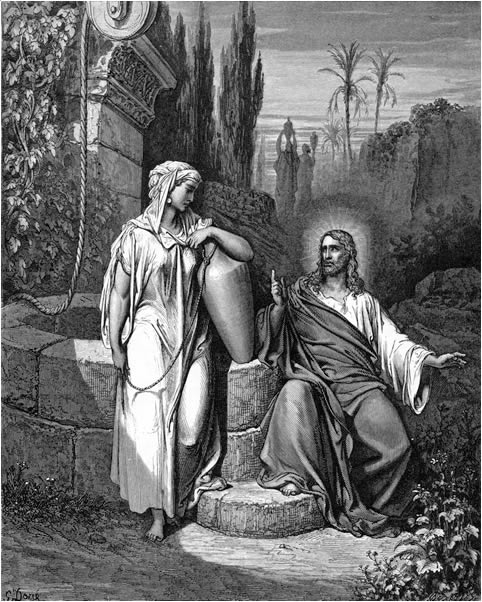
in John 4Many of the Samaritans from that town believed in Jesus because of the woman’s testimony, “He told me everything I ever did.”
BSB
The same verse in ASV and KJV ▾
ASV
And from that city many of the Samaritans believed on him because of the word of the woman, who testified, He told me all things that ever I did.
KJV
And many of the Samaritans of that city believed on him for the saying of the woman, which testified, He told me all that ever I did.
⋯
This verse in John 4
Commentary
19 notes on this verseA commentator
Albert Barnes1798–1870
Notes, Explanatory and Practical, on the Old and New Testaments (1832-1869)
And many of the Samaritans of that city believed on him, ... - There is seldom an instance of so remarkable success as this. From a single conversation, in circumstances, in a place, and with an individual little likely to be attended with such results, many sinners were converted; many believed on the testimony of the woman; many more came to hear, and believed because they heard him themselves. We should never despair of doing good in the most unpromising circumstances, and we should seize upon every opportunity to converse with sinners on the great subject of their souls’ salvation.
This site's exposition
because of the woman’s testimony
on John 4:39-40
Many in the town believe on the strength of her report alone. They then ask Jesus to stay, and a Jewish teacher accepts a Samaritan town's hospitality for two days. Her testimony carried them that far.
The record, by era
The Church Fathers5 voices
(Tr. xv. c. 33) So then they knew Christ first by report of another, afterwards by His own presence; which is still the case of those that are without the fold, and not yet Christians. Christ is announced to them by some charitable Christians, by the report of the woman, i. e. the Church; they come to Christ, they believe on Him, through the instrumentality of that woman; He stays withthem two days, i. e. gives them two precepts of charity. And thenceforth their belief is stronger. They believe that He is indeed the Saviour of the world.
"And many Samaritans of that city believed on Him, because of the saying of the woman, who testified, He told me all that ever I did. And when the Samaritans came to Him, they besought Him that He would tarry with them; and He tarried there two days. And many more believed because of His word; and said to the woman, Now we believe, not because of thy words; for we have heard Him ourselves, and we know that this is indeed the Saviour of the world." This also must be slightly noticed, for the lesson is come to an end. The woman first announced Him, and the Samaritans believed her testimony; and they besought Him to stay with them, and He stayed there two days, and many more believed. And when they had believed, they said to the woman, "Now we believe, not because of thy word; but we are come to know Him ourselves, and we know that this is indeed the Saviour of the world:" first by report, then by His presence. So it is to-day with them that are without, and are not yet Christians. Christ is made known to them by Christian friends; and just upon the report of that woman, that is, the Church, they come to Christ, they believe through this report. He stays with them two days, that is, gives them two precepts of charity; and many more believe, and more firmly believe, on Him, because He is in truth the Saviour of the world.
A commentator
Cyril of AlexandriaCommentary on the Gospel of John, Book 2 · Written before 444.
proposed
Israel is again hereby too condemned, and by the obedience of the Samaritans, is convicted of being alike reckless of knowing and harsh. For the Evangelist marvels much at the many who believed on Christ, saying, For the saying of the woman; although they who were instructed through the law to the knowledge hereof, neither received the words of Moses, nor acknowledged that they ought to believe the heraldings of the Prophets.
"Many of the Samaritans of that city believed on Him for the saying of the woman which testified, He told me all that ever I did." They perceived that the woman would not from favor have admired One who had rebuked her sins, nor to gratify another have paraded her own course of life. Let us then also imitate this woman, and in the case of our own sins not be ashamed of men, but fear, as is meet, God who now beholdeth what is done, and who hereafter punisheth those who do not now repent. At present we do the opposite of this, for we fear not Him who shall judge us, but shudder at those who do not in anything hurt us, and tremble at the shame which comes from them.
Nothing is worse than envy and malice, nothing more mischievous than vainglory; it is wont to mar ten thousand good things. So the Jews, who excelled the Samaritans in knowledge, and had been always familiar with the Prophets, were shown from this cause inferior to them. For these believed even on the testimony of the woman, and without having seen any sign, came forth beseeching Christ to tarry with them; but the Jews, when they had beheld His wonders, not only did not detain Him among them, but even drove Him away, and used every means to cast Him forth from their land, although His very Coming had been for their sake. The Jews expelled Him, but these even entreated Him to tarry with them. Was it not then rather fitting, tell me, that He should receive those who asked and besought Him, than that He should wait upon those who plotted against and repulsed Him, while to those who loved and desired to retain Him He gave not Himself? Surely this would not have been worthy of His tender care; He therefore both accepted them, and tarried with them two days. They desired to keep Him among them continually, (for this the Evangelist has shown by saying, that "they besought Him that He would tarry with them,") but this He endured not, but stayed with them only two days; and in these many more believed on Him.
12 more voices on this verse
The Medieval Church3 voices
The Samaritans believe based on the woman's word, reasonably judging by themselves that a woman would not have openly revealed her life before everyone to please another, if the one she proclaimed were not truly great and superior to many.
Here is touched upon the devotion of the Samaritans to believing, which was begun through the word of the woman: on account of which he says: "Now many of the Samaritans from that city believed in him." And the reason is added: "Because of the …
Above, the Lord foretold to the apostles the fruit to be produced among the Samaritans by the woman's witness. Now the Evangelist deals with this fruit. First, the fruit of the woman's witness is given. Secondly, the growth of this fruit produced by Christ (v …
The Puritans and the Awakening1 voice
And many of the Samaritans of that city,....
The Nineteenth Century8 voices
A commentator
J.C. Ryle1816–1900
Expository Thoughts on the Gospels: John (lightly modernized text, Grace Gems edition) (1869)
We have, for one thing, in these verses, an instructive pattern of zeal for the good of others. We read, that our Lord Jesus Christ declares, "My food is to do the will of him who sent me, and to finish his work." To do good was not merely duty and pleasure to Him. He counted it as His food and drink. Job, one of the holiest Old Testament saints, could say, that he esteemed God's word "more than his necessary food." (Job 23:12.) The Great Head of the New Testament Church went even further.
A commentator
Jamieson, Fausset & Brown1802–1910
Commentary Critical and Explanatory on the Whole Bible (1871)
These Samaritans were the foundation of the Church afterwards built up there. No miracle appears to have been wrought there (but unparalleled supernatural knowledge displayed): "we have heard Him ourselves" (Joh 4:42) sufficed to raise their faith to a point never attained by the Jews, and hardly as yet by the disciples--that He was "the Saviour of the world" [ALFORD].
THE most important question concerning any man living is this—is he a saved soul or not? It is of comparatively little consequence whether he is rich or poor, educated or uneducated, compared with this—is he among the living before God—or is he dead in sins? Is he pardoned or unpardoned? Is he a child of God or an heir of wrath? Is he walking in the darkness or has he passed into light? Therefore of all the days of a man's history the most important is the day in which he is born-again.
A commentator
J.C. Ryle1816–1900
Expository Thoughts on the Gospels: John (lightly modernized text, Grace Gems edition) (1869)
proposed
We have, for one thing, in these verses, an instructive pattern of zeal for the good of others. We read, that our Lord Jesus Christ declares, "My food is to do the will of him who sent me, and to finish his work." To do good was not merely duty and pleasure to Him. He counted it as His food and drink. Job, one of the holiest Old Testament saints, could say, that he esteemed God's word "more than his necessary food." (Job 23:12.) The Great Head of the New Testament Church went even further. He could say the same of God's work. Do we do any work for God? Do we try, however feebly, to set forward His cause on earth—to check that which is evil, to promote that which is good? If we do, let us never be ashamed of doing it with all our heart, and soul, and mind, and strength. Whatever our hand finds to do for the souls of others, let us do it with our might. (Eccles. 9:10.) The world may mock and sneer, and call us enthusiasts. The world can admire zeal in any service but that of God, and can praise enthusiasm on any subject but that of religion. Let us work on unmoved. Whatever men may say and think, we are walking in the steps of our Lord Jesus Christ. Let us, beside this, take comfort in the thought that Jesus Christ never changes. He that sat by the well of Samaria, and found it "food and drink" to do good to an ignorant soul, is always in one mind. High in heaven at God's right hand, He still delights to save sinners, and still approves zeal and labor in the cause of God. The work of the missionary and the evangelist may be despised and ridiculed in many quarters. But while man is mocking, Christ is well pleased! Thanks be to God, Jesus is the, same yesterday, and today, and forever. We have, for another thing, in these verses, strong encouragement held out to those who labor to do good to souls.
THE most important question concerning any man living is this—is he a saved soul or not? It is of comparatively little consequence whether he is rich or poor, educated or uneducated, compared with this—is he among the living before God—or is he dead in sins? Is he pardoned or unpardoned? Is he a child of God or an heir of wrath? Is he walking in the darkness or has he passed into light? Therefore of all the days of a man's history the most important is the day in which he is born-again. If the man is, indeed, saved, and a new man in Christ Jesus, he will look back upon the day of his regeneration as his chief birthday. His new birth is second in order of time, but he will always put it first in importance. His birth gave him his being, but his new birth secured his well-being. Being born first we might have descended into Hell, but, being born a second time we are assured of Heaven! If we were to observe those days with the greatest festivity which deserved best to be commemorated, we should certainly make high days and holidays of the days in which we looked to Jesus, and "found in Him our star, our sun." For this reason the circumstances which surround our new birth are to us among the most deeply interesting incidents of our own or any other human history. The details may be very simple. They may not suffice to make a biography, but still, to us, they are most important. We delight to think of the place where Jesus met with us, the Providence which brought us to the spot where we first heard the words which convicted us of sin.
A commentator
Charles Spurgeon1834–1892
The Metropolitan Tabernacle Pulpit, Sermon No. 2623: “How Faith Comes” (lightly modernized text, CCEL edition) · Written before 1892.
proposed
WHEREVER faith exists, it is the gift of God. It is a plant that never sprang up spontaneously from the soil of corrupt human nature. Whether it is little faith or great faith, it is equally of Divine origin, and wherever it is found— whether in the child of pious parents who was brought up with the utmost care, or in one who has lived all the former part of his life in the vilest sin—it is equally and alike the fruit of the Spirit and the effect of God's Grace.
A commentator
Charles Spurgeon1834–1892
The Metropolitan Tabernacle Pulpit, Sermon No. 2623: “How Faith Comes” (lightly modernized text, CCEL edition) · Written before 1892.
proposed
WHEREVER faith exists, it is the gift of God. It is a plant that never sprang up spontaneously from the soil of corrupt human nature. Whether it is little faith or great faith, it is equally of Divine origin, and wherever it is found— whether in the child of pious parents who was brought up with the utmost care, or in one who has lived all the former part of his life in the vilest sin—it is equally and alike the fruit of the Spirit and the effect of God's Grace. From this fact I gather great encouragement because, if it needs Divine power to implant faith in the heart that looks more favorable, it needs no more to implant and preserve it in the soul that appears most unprepared to receive it. Casting our eyes over the whole map of Palestine, we might have said that Samaria was probably as unlikely a place as any in the entire country in which we might expect to find followers of the Lord Jesus, for, at the very threshold of Christ's announcing Himself, there would be found this prejudice, that the Samaritans would not believe in a Jew. They would not even listen to a Jew, for, while the Jews had no dealings with the Samaritans, the Samaritans reciprocated the feeling and had no dealings with the Jews. Yet it was among the Samaritans, the members of the mongrel faith into which Judaism had deteriorated, that Christ was to find a large number of His followers! My Brothers, you will be wise to go, first, to those places where there seems to be least likelihood of conversions. You will often find that God judges not as man judges—"Man looks on the outward appearance"—but God, who reads the hearts of men, can see a certain readiness where we reckon that there is the most unreadiness! The Lord knows that the soil where the Seed of the Kingdom is sown may be in the best condition for fruitfulness even when we fancy that it cannot possibly yield us any return for our labor.
Many of the Samaritans - believed on him for the saying of the woman - This woman was the first apostle of Christ in Samaria! She went and told her fellow citizens that the Messiah was come; and gave for proof, that he had told her the most secret things she had ever done: see on Joh 4:29 (note). This word, which is twice repeated, in Joh 4:29 and here, strongly intimates that a more particular conversation had taken place, between our Lord and the Samaritan woman, than what is here related.
The words behind it
23 Greek wordsEvery Greek word of this verse in the order it stands, with what it means and the door to its own study. The last column counts the times a word stands in the whole Bible: the rarer the word, the more the places it appears belong together.
| Greek | Sound | Meaning | Word study | In the Bible |
|---|---|---|---|---|
| ἐκ | ek | Out of | G1537 → | 911 times |
| δὲ | de | now | G1161 → | 2765 times |
| τῆς | tes | the | G3588 → | 19766 times |
| πόλεως | poleos | city | G4172 → | 163 times |
| ἐκείνης | ekeines | that | G1565 → | 260 times |
| πολλοὶ | polloi | many | G4183 → | 367 times |
| ἐπίστευσαν | episteusan | believed | G4100 → | 237 times |
| εἰς | eis | in | G1519 → | 1755 times |
| αὐτὸν | auton | Him | G846 → | 5565 times |
| τῶν | ton | of the | G3588 → | 19766 times |
| Σαμαριτῶν | samariton | Samaritans | G4541 → | 9 times |
| διὰ | dia | because of | G1223 → | 664 times |
| τὸν | ton | the | G3588 → | 19766 times |
| λόγον | logon | word | G3056 → | 329 times |
| τῆς | tes | of the | G3588 → | 19766 times |
| γυναικὸς | gunaikos | woman | G1135 → | 211 times |
| μαρτυρούσης | marturouses | testifying | G3140 → | 76 times |
| ὅτι | hoti | that | G3754 → | 1292 times |
| εἶπέν | eipen | He told | G2036 → | 925 times |
| μοι | moi | me | G3165 → | 1936 times |
| πάντα | panta | all things | G3956 → | 1235 times |
| ἃ | ha | whatever | G3739 → | 1405 times |
| ἐποίησα. | epoiesa | I did. | G4160 → | 569 times |
ἐκOut of
ekG1537 →911 times
δὲnow
deG1161 →2765 times
τῆςthe
tesG3588 →19766 times
πόλεωςcity
poleosG4172 →163 times
ἐκείνηςthat
ekeinesG1565 →260 times
πολλοὶmany
polloiG4183 →367 times
ἐπίστευσανbelieved
episteusanG4100 →237 times
εἰςin
eisG1519 →1755 times
αὐτὸνHim
autonG846 →5565 times
τῶνof the
tonG3588 →19766 times
ΣαμαριτῶνSamaritans
samaritonG4541 →9 times
διὰbecause of
diaG1223 →664 times
τὸνthe
tonG3588 →19766 times
λόγονword
logonG3056 →329 times
τῆςof the
tesG3588 →19766 times
γυναικὸςwoman
gunaikosG1135 →211 times
μαρτυρούσηςtestifying
marturousesG3140 →76 times
ὅτιthat
hotiG3754 →1292 times
εἶπένHe told
eipenG2036 →925 times
μοιme
moiG3165 →1936 times
πάνταall things
pantaG3956 →1235 times
ἃwhatever
haG3739 →1405 times
ἐποίησα.I did.
epoiesaG4160 →569 times
A shaded row is a word that stands 400 times or fewer in the Bible.
The walk
8 stopsEach card is a verse this one points to, and under it the verses that one points to in turn. Where several paths arrive at the same place, that place is listed first: the text keeps returning to it.
Through
John 4:42They said to the woman, “We now believe not only because of your words; we have heard for ourselves, and we know that this man truly is the Savior of the world.”
it leads to
- 1 John 4:14
And we have seen and testify that the Father has sent His Son to be the Savior of the world.
- 1 John 5:20
And we know that the Son of God has come and has given us understanding, so that we may know Him who is true; and we are in Him who is true—in His Son…
- John 1:29
The next day John saw Jesus coming toward him and said, “Look, the Lamb of God, who takes away the sin of the world!
- 1 Timothy 4:10
To this end we labor and strive, because we have set our hope on the living God, who is the Savior of everyone, and especially of those who believe.
- Acts 4:12
Salvation exists in no one else, for there is no other name under heaven given to men by which we must be saved.”
- 1 John 4:14
Through
John 4:5So He came to a town of Samaria called Sychar, near the plot of ground that Jacob had given to his son Joseph.
it leads to
- Joshua 24:32
And the bones of Joseph, which the Israelites had brought up out of Egypt, were buried at Shechem in the plot of land that Jacob had purchased from the sons of Hamor, Shechem’s father,…
- Genesis 33:19
And the plot of ground where he pitched his tent, he purchased from the sons of Hamor, Shechem’s father, for a hundred pieces of silver.
- Genesis 48:22
And to you, as one who is above your brothers, I give the ridge of land that I took from the Amorites with my sword and bow.”
- Joshua 24:32
Where this verse is studied
On this page
Studies16
On this verse
About John
This page draws on 17 works. Open the list of works
This page draws on Adam Clarke, Commentary on the Bible; Albert Barnes, Notes, Explanatory and Practical, on the Old and New Testaments (1832-1869); Augustine of Hippo, Catena Aurea by Aquinas; Augustine of Hippo, Tractates on John 15; Bonaventure, Commentary on John, Chapter 4; Charles Spurgeon, The Metropolitan Tabernacle Pulpit, Sermon No. 1053: “Testimony And Experience” (lightly modernized text, CCEL edition); Charles Spurgeon, The Metropolitan Tabernacle Pulpit, Sermon No. 2623: “How Faith Comes” (lightly modernized text, CCEL edition); Cyril of Alexandria, Commentary on the Gospel of John, Book 2; J. C. Ryle, Expository Thoughts on the Gospels, John; J.C. Ryle, Expository Thoughts on the Gospels: John (lightly modernized text, Grace Gems edition); Jamieson, Fausset & Brown, Commentary Critical and Explanatory on the Whole Bible; John Chrysostom, Homily on the Gospel of John 34; John Chrysostom, Homily on the Gospel of John 35; John Gill, Exposition of the New Testament (1746-1748); Matthew Henry, Commentary on the Whole Bible; Theophylact of Ohrid, Commentary on John and Thomas Aquinas, Commentary on John.