
Genesis 41:2
in Genesis 41when seven cows, sleek and well-fed, came up from the river and began to graze among the reeds.
BSB
The same verse in ASV and KJV ▾
ASV
And, behold, there came up out of the river seven kine, well-favored and fat-fleshed; and they fed in the reed-grass.
KJV
And, behold, there came up out of the river seven well favoured kine and fatfleshed; and they fed in a meadow.
⋯
This verse in Genesis 41
Commentary
6 notes on this verse(Chapter 41, Verse 2) And behold, seven cows were coming up from the river, attractive to look at, well-fed and well-built, and they were grazing in the meadow. In Genesis it is written as Achi (Ἄχα), which is neither a Greek nor Latin word. Even in Hebrew it is corrupted: it is said to be Ahu (אָחוּ), which means 'in the marsh'.
This site's exposition
After two full years had passed
on Genesis 41:1-4
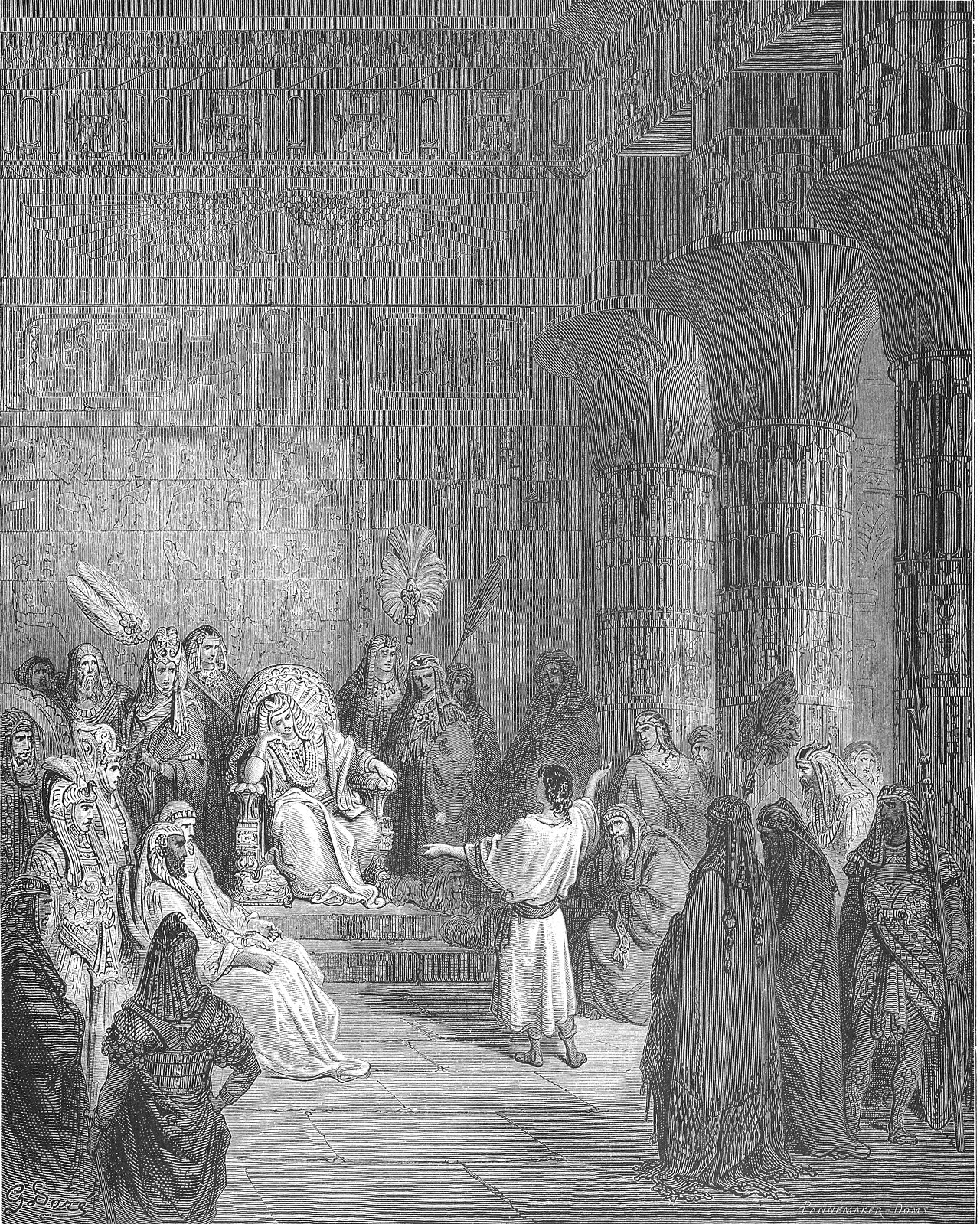
Two full years pass after the cupbearer forgets, and then Pharaoh dreams. He stands beside the Nile, which carried the whole food supply of the country. Jamieson notes that the ox stood in Egyptian picture writing for the earth and its food, so the dream strikes at the nation's life where it starts. Seven thin cows eat the seven well-fed ones and Pharaoh wakes.
This site's exposition
began to graze among the reeds
The cows rise out of the Nile itself, the river that watered every field in Egypt. Reeds translates an Egyptian loanword for the marsh grass along its banks. Job 8:11 uses the same word.
The record, by era
The Puritans and the Awakening2 voices
The maintenance of Jacob and his family in a time of famine; for the eyes of the Lord run to and fro through the earth, and direct the affairs of the children of men. In order to these, here is, I.
And, behold, there came up out of the river seven well favoured kine, and fatfleshed,.... Seven cows or heifers, sleek, fat, and plump, goodly to look at; these seemed in the dream, as if they came out of the river, because they were fed with the fruits of the earth, which the overflowing of the river Nile, and its canals, produced: and they fed in a meadow; adjoining to the river, where there was good pasture for them, and gives a reason of their being in so good a condition.
The Nineteenth Century1 voice
There came up out of the river seven well-favored kine - This must certainly refer to the hippopotamus or river horse, as the circumstances of coming up out of the river and feeding in the field characterize that animal alone. The hippopotamus is the well-known inhabitant of the Nile, and frequently by night comes out of the river to feed in the fields, or in the sedge by the river side.
How the passage was read
What the Jewish commentators add
On the verses either side of this one
BY THE ‘YE’OR’ (RIVER). With the exception of the Nile, none of the other rivers is called ye’or, a word signifying “canal,” because the entire country consists of artificially constructed canals, and the waters of the Nile.
This section is reception history: how the passage was read and kept in the Jewish tradition. Where a reading parts from an essential of the Christian faith, the section says so at that point.
Texts and citation data: Sefaria; each excerpt follows its version’s licence. 4 further sources are cited on this chapter that carry no English text this site may quote or only restate the verse.
The words behind it
12 Hebrew wordsEvery Hebrew word of this verse in the order it stands, with what it means and the door to its own study. The last column counts the times a word stands in the whole Bible: the rarer the word, the more the places it appears belong together.
| Hebrew | Sound | Meaning | Word study | In the Bible |
|---|---|---|---|---|
| וְהִנֵּ֣ה | vehineh | and there! | H2009 → | 843 times |
| מִן־ | min- | from | H4480 → | 1188 times |
| הַיְאֹ֗ר | hayor | the River | H2975 → | 65 times |
| עֹלֹת֙ | ʾolot | [were] coming up | H5927 → | 890 times |
| שֶׁ֣בַע | sheva' | seven | H7651 → | 394 times |
| פָּר֔וֹת | parot | cows | H6510 → | 26 times |
| יְפ֥וֹת | yefot | good looking of | H3303 → | 42 times |
| מַרְאֶ֖ה | mareh | appearance | H4758 → | 103 times |
| וּבְרִיאֹ֣ת | uveriot | and fat of | H1277 → | 13 times |
| בָּשָׂ֑ר | basar | flesh | H1320 → | 270 times |
| וַתִּרְעֶ֖ינָה | vatireinah | and they grazed | H7462 → | 177 times |
| בָּאָֽחוּ׃ | baachu | among the reed[s] | H260 → |
וְהִנֵּ֣הand there!
vehinehH2009 →843 times
מִן־from
min-H4480 →1188 times
הַיְאֹ֗רthe River
hayorH2975 →65 times
עֹלֹת֙[were] coming up
ʾolotH5927 →890 times
שֶׁ֣בַעseven
sheva'H7651 →394 times
פָּר֔וֹתcows
parotH6510 →26 times
יְפ֥וֹתgood looking of
yefotH3303 →42 times
מַרְאֶ֖הappearance
marehH4758 →103 times
וּבְרִיאֹ֣תand fat of
uveriotH1277 →13 times
בָּשָׂ֑רflesh
basarH1320 →270 times
וַתִּרְעֶ֖ינָהand they grazed
vatireinahH7462 →177 times
בָּאָֽחוּ׃among the reed[s]
baachuH260 →
A shaded row is a word that stands 400 times or fewer in the Bible.
The walk
5 stopsEach card is a verse this one points to, and under it the verses that one points to in turn. Where several paths arrive at the same place, that place is listed first: the text keeps returning to it.
Through
Isaiah 19:6The canals will stink; the streams of Egypt will trickle and dry up; the reeds and rushes will wither.
it leads to
- Isaiah 37:25
I have dug wells and drunk foreign waters. With the soles of my feet I have dried up all the streams of Egypt.”
- 2 Kings 19:24
I have dug wells and drunk foreign waters. With the soles of my feet I have dried up all the streams of Egypt.”
- Job 8:11
Does papyrus grow where there is no marsh? Do reeds flourish without water?
- Exodus 7:18
The fish in the Nile will die, the river will stink, and the Egyptians will be unable to drink its water.’”
- Exodus 2:3
But when she could no longer hide him, she got him a papyrus basket and coated it with tar and pitch. Then she placed the child in the basket and set it among the…
- Isaiah 37:25
Where this verse is studied
On this page
Studies1
About Genesis
This page draws on Adam Clarke, Commentary on the Bible; Jamieson, Fausset & Brown, Commentary Critical and Explanatory on the Whole Bible; Jerome, Hebrew Questions on Genesis; John Gill, Exposition of the Old Testament; John Gill, Exposition of the Old Testament (1748-1763) and John Wesley, Explanatory Notes upon the Old Testament.