
Genesis 1:16
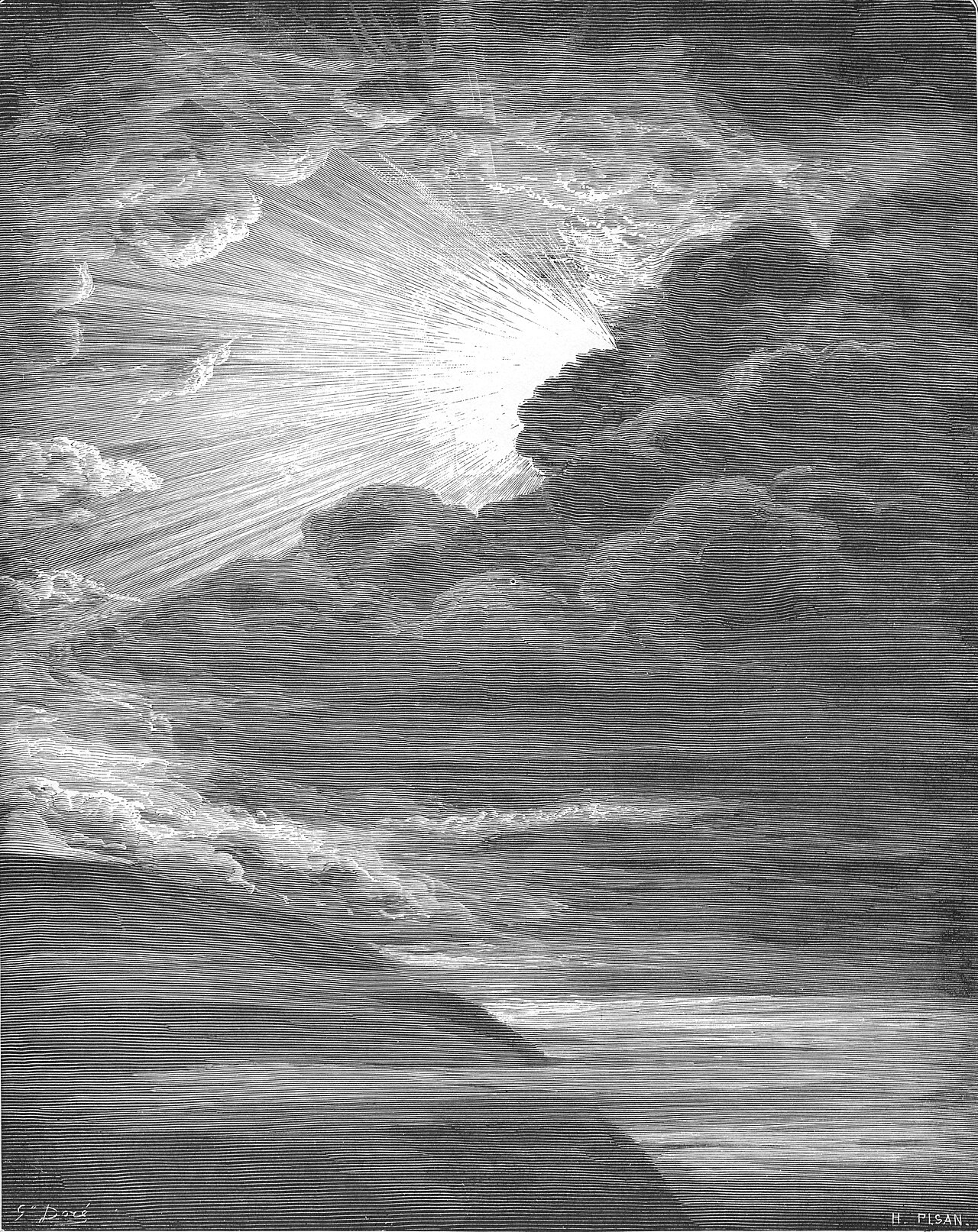
in Genesis 1God made two great lights: the greater light to rule the day and the lesser light to rule the night. And He made the stars as well.
BSB
The same verse in ASV and KJV ▾
ASV
And God made the two great lights; the greater light to rule the day, and the lesser light to rule the night: he made the stars also.
KJV
And God made two great lights; the greater light to rule the day, and the lesser light to rule the night: he made the stars also.
⋯
This verse in Genesis 1
Commentary
23 notes on this verseThis site's exposition
two great lights
on Genesis 1:16-19
Moses calls them the greater light and the lesser light. The ordinary Hebrew names for sun and moon were the names of gods in the nations around Israel, and this account leaves them out. God made the two great lights and set these lights in the expanse to rule the day and the night. Their light serves the earth He made.
The record, by era
The Church Fathers5 voices
10. See again another evident proof of its greatness. Although the heaven may be full of stars without number, the light contributed by them all could not disperse the gloom of night. The sun alone, from the time that it appeared on the horizon, while it was still expected and had not yet risen completely above the earth, dispersed the darkness, outshone the stars, dissolved and diffused the air, which was hitherto thick and condensed over our heads, and produced thus the morning breeze and the dew which in fine weather streams over the earth.
A commentator
Augustine of HippoTWO BOOKS ON GENESIS AGAINST THE MANICHAEANS 1.14.20-23 · Written in the 5th century.
proposed
The Manichaeans ask how it could be that the heavenly bodies, that is, the sun and the moon and the stars, were made on the fourth day. How could the three previous days have passed without the sun? For we now see that a day passes with the rising and setting of the sun, while night comes to us in the sun's absence when it returns to east from the other side of the world. We answer them that the previous three days could each have been calculated by as great a period of time as that through which the sun passes, from when it rises in the east until it returns again to the east.… This would be our answer if we were not held back by the words "and evening came and morning came," for we see that this cannot now take place without the movement of the sun. Hence we are left with the interpretation that in that period of time the divisions between the works were called evening because of the completion of the work that was done and morning because of the beginning of the work to come. Scripture says this after the likeness of human works, since they generally begin in the morning and end at evening.… [Then Scripture says, "And God set them in the firmament of the heavens to give light upon the earth, to rule over the day and over the night, and to divide the light from the darkness."] Again they ask, "How did God previously divide the light and the darkness if he made the heavenly bodies on this the fourth day?" Therefore these words, "to divide the light from the darkness," mean "to divide among themselves the light and the darkness, so that the day is given to the sun and the night to the moon and the other stars." The day and the night had already been distinguished but not yet in relation to the heavenly bodies.
To me, as I meditate and consider in my mind concerning the creation of this world in which we are kept enclosed, even such is the rapidity of that creation; as is contained in the book of Moses, which he wrote about its creation, and which is called Genesis. God produced that entire mass for the adornment of His majesty in six days; on the seventh to which He consecrated it . . . with a blessing. For this reason, therefore, because in the septenary number of days both heavenly and earthly things are ordered, in place of the beginning I will consider of this seventh day after the principle of all matters pertaining to the number of seven; and as far as I shall be able, I will endeavour to portray the day of the divine power to that consummation. In the beginning God made the light, and divided it in the exact measure of twelve hours by day and by night, for this reason, doubtless, that day might bring over the night as an occasion of rest for men's labours; that, again, day might overcome, and thus that labour might be refreshed with this alternate change of rest, and that repose again might be tempered by the exercise of day. On the fourth day He made two lights in the heaven, the greater and the lesser, that the one might rule over the day, the other over the night, Genesis 1:16-17 — the lights of the sun and moon and He placed the rest of the stars in heaven, that they might shine upon the earth, and by their positions distinguish the seasons, and years, and months, and days, and hours.
Just as the sun and the moon are said to be the great lights in the firmament of heaven, so also are Christ and the church in us. But since God also placed stars in the firmament, let us see what are also stars in us, that is, in the heaven of our heart. Moses is a star in us, which shines and enlightens us by his acts. And so are Abraham, Isaac, Jacob, Isaiah, Jeremiah, Ezekiel, David, Daniel, and all to whom the Holy Scriptures testify that they pleased God. For just as "star differs from star in glory" so also each of the saints, according to his own greatness, sheds his light upon us.
11. On its variations depends also the condition of the air, as is proved by sudden disturbances which often come after the new moon, in the midst of a calm and of a stillness in the winds, to agitate the clouds and to hurl them against each other; as the flux and reflux in straits, and the ebb and flow of the ocean prove, so that those who live on its shores see it regularly following the revolutions of the moon. The waters of straits approach and retreat from one shore to the other during the different phases of the moon; but, when she is new, they have not an instant of rest, and move in perpetual swaying to and fro, until the moon, reappearing, regulates their reflux. As to the Western sea, we see it in its ebb and flow now return into its bed, and now overflow, as the moon draws it back by her respiration and then, by her expiration, urges it to its own boundaries. I have entered into these details, to show you the grandeur of the luminaries, and to make you see that, in the inspired words, there is not one idle syllable. And yet my sermon has scarcely touched on any important point; there are many other discoveries about the size and distance of the sun and moon to which any one who will make a serious study of their action and of their characteristics may arrive by the aid of reason. Let me then ingenuously make an avowal of my weakness, for fear that you should measure the mighty works of the Creator by my words. The little that I have said ought the rather to make you conjecture the marvels on which I have omitted to dwell. We must not then measure the moon with the eye, but with the reason. Reason, for the discovery of truth, is much surer than the eye. Everywhere ridiculous old women's tales, imagined in the delirium of drunkenness, have been circulated; such as that enchantments can remove the moon from its place and make it descend to the earth. […]
17 more voices on this verse
The Church Fathers4 voices
9. The word great, if, for example we say it of the heaven of the earth or of the sea, may have an absolute sense; but ordinarily it has only a relative meaning, as a great horse, or a great ox. It is not that these animals are of an immoderate size, but that in comparison with their like they deserve the title of great. What idea shall we ourselves form here of greatness? Shall it be the idea that we have of it in the ant and in all the little creatures of nature, which we call great in comparison with those like themselves, and to show their superiority over them? Or shall we predicate greatness of the luminaries, as of the natural greatness inherent in them? As for me, I think so. If the sun and moon are great, it is not in comparison with the smaller stars, but because they have such a circumference that the splendour which they diffuse lights up the heavens and the air, embracing at the same time earth and sea. In whatever part of heaven they may be, whether rising, or setting, or in mid heaven, they appear always the same in the eyes of men, a manifest proof of their prodigious size. For the whole extent of heaven cannot make them appear greater in one place and smaller in another. Objects which we see afar off appear dwarfed to our eyes, and in measure as they approach us we can form a juster idea of their size. But there is no one who can be nearer or more distant from the sun. All the inhabitants of the earth see it at the same distance. Indians and Britons see it of the same size. The people of the East do not see it decrease in magnitude when it sets; those of the West do not find it smaller when it rises. If it is in the middle of the heavens it does not vary in either aspect. Do not be deceived by mere appearance, and because it looks a cubit's breadth, imagine it to be no bigger. […]
For on the third day the fruits were produced, and in order again that it might not be supposed that they were produced by the influence of the sun, it was not until their creation was finished, that He made the sun and the moon …
The word great, if, for example we say it of the heaven of the earth or of the sea, may have an absolute sense; but ordinarily it has only a relative meaning, as a great horse, or a great ox. It is not that these animals are of an immoderate size, but that in comparison with their like they deserve the title of great. What idea shall we ourselves form here of greatness? Shall it be the idea that we have of it in the ant and in all the little creatures of nature, which we call great in comparison with those like themselves, and to show their superiority over them? Or shall we predicate greatness of the luminaries, as of the natural greatness inherent in them? As for me, I think so. If the sun and moon are great, it is not in comparison with the smaller stars, but because they have such a circumference that the splendour which they diffuse lights up the heavens and the air, embracing at the same time earth and sea. In whatever part of heaven they may be, whether rising, or setting, or in mid heaven, they appear always the same in the eyes of men, a manifest proof of their prodigious size. For the whole extent of heaven cannot make them appear greater in one place and smaller in another. Objects which we see afar off appear dwarfed to our eyes, and in measure as they approach us we can form a juster idea of their size. But there is no one who can be nearer or more distant from the sun. All the inhabitants of the earth see it at the same distance. Indians and Britons see it of the same size. The people of the East do not see it decrease in magnitude when it sets; those of the West do not find it smaller when it rises. If it is in the middle of the heavens it does not vary in either aspect. Do not be deceived by mere appearance, and because it looks a cubit's breadth, imagine it to be no bigger.
Indeed Moses said, "God made the two great lights, the greater light to rule the day, and the lesser light to rule the night; and [ He made ] the stars."
The Medieval Church8 voices
A commentator
BonaventureCollations on the Hexaemeron, Collation 23 · Written in the 13th century.
proposed
GOD made the two great lights, the greater light to rule the day and the smaller one to rule the night, and He made the stars.
two great lights: As Chrysostom says, the two lights are called great, not so much with regard to their dimensions as to their influence and power. For though the stars be of greater bulk than the moon, yet the influence of the moon is more …
And he said, "And the lesser light to rule the night, and the stars; and he set them in the firmament of the heaven"; because although it happens sometimes that the moon and the major stars are seen in the day every month, it is …
God also made two great luminaries. We can understand the great luminaries not so much by comparison with others but by their role, as the heaven is great and the sea is great.
The greater light to rule the day, and the lesser light to rule the night, and the stars; and He set them in the firmament of the heaven.
A commentator
BonaventureCollations on the Hexaemeron, Collation 13 · Written in the 13th century.
proposed
The fourth allegory, concerning Sacred Scripture, is shown in Genesis: "God made the two great lights, the smaller light to rule the night," that is, the Old Testament, "and the greater one to rule the day," that is, the New Testament.
A commentator
BonaventureCollations on the Hexaemeron, Collation 14 · Written in the 13th century.
proposed
So let us say of Christ that He is the Tree of Life in the midst of Paradise, who is symbolized in four instances found in the first mystery, beginning with the words: "In the beginning God created," to the words: "The earth was corrupt."
A commentator
BonaventureCollations on the Hexaemeron, Collation 21 · Written in the 13th century.
proposed
GOD made the two great lights, etc. It has been said that contemplation consists in the delicious consideration of the heavenly Monarchy, the delicious consideration of the Church Militant, and the delicious consideration of the hierarchized human mind, or of [that mind] ordained in a …
The Puritans and the Awakening3 voices
And God made two great lights,.... This was his own work which he himself did, and not by another; and may be particularly observed to express the folly of idolaters in worshipping these luminaries which were the creations of God, and were placed by him in the heaven to serve some purposes on earth beneficial to men, but not to be worshipped. These two "great lights" are the sun and the moon; and they may well be called great, especially the former, for the diameter of the sun is reckoned to be about eight hundred thousand miles.
Those are most valuable that are most serviceable; and those are the greater lights, not that have the best gifts, but that humbly and faithfully do the most good with them.
(2.) The duty and wisdom of daily worshipping that God who made all these things, and made them to be that to us which they are. The revolutions of the day and night oblige us to offer the solemn sacrifice of prayer and praise every morning and evening.
The Nineteenth Century2 voices
And God made two great lights - Moses speaks of the sun and moon here, not according to their bulk or solid contents, but according to the proportion of light they shed on the earth. The expression has been cavilled at by some who are as devoid of mental capacity as of candour. “The moon,” say they, “is not a great body; on the contrary, it is the very smallest in our system.” Well, and has Moses said the contrary? He has said it is a great Light; had he said otherwise he had not spoken the truth.
A commentator
Jamieson, Fausset & Brown1802–1910
Commentary Critical and Explanatory on the Whole Bible (1871)
proposed
two great lights--In consequence of the day being reckoned as commencing at sunset--the moon, which would be seen first in the horizon, would appear "a great light," compared with the little twinkling stars; while its pale benign radiance would be eclipsed by the dazzling splendor of the sun; when his resplendent orb rose in the morning and gradually attained its meridian blaze of glory, it would appear "the greater light" that ruled the day. Both these lights may be said to be "made" on the fourth day--not created, indeed, for it is a different word that is here used, but constituted, appointed to the important and necessary office of serving as luminaries to the world, and regulating by their motions and their influence the progress and divisions of time.
w61-jfb-recut
The words behind it
18 Hebrew wordsEvery Hebrew word of this verse in the order it stands, with what it means and the door to its own study. The last column counts the times a word stands in the whole Bible: the rarer the word, the more the places it appears belong together.
| Hebrew | Sound | Meaning | Word study | In the Bible |
|---|---|---|---|---|
| וַיַּ֣עַשׂ | vaiyaas | and he made | H6213 → | 2628 times |
| אֱלֹהִ֔ים | ʾelohim | God | H430 → | 2601 times |
| אֶת־ | ʾet- | <obj.> | H853 → | 10935 times |
| שְׁנֵ֥י | shenei | [the] two | H8147 → | 768 times |
| הַמְּאֹרֹ֖ת | hameorot | the luminaries | H3974 → | 19 times |
| הַגְּדֹלִ֑ים | hagedolim | <the> great | H1419 → | 526 times |
| אֶת־ | ʾet- | <obj.> | H853 → | 10935 times |
| הַמָּא֤וֹר | hamaor | the luminary | H3974 → | 19 times |
| הַגָּדֹל֙ | hagadol | <the> great | H1419 → | 526 times |
| לְמֶמְשֶׁ֣לֶת | lememshelet | for [the] dominion of | H4475 → | |
| הַיּ֔וֹם | haiyom | the day | H3117 → | 2304 times |
| וְאֶת־ | veet | and <obj.> | H853 → | 10935 times |
| הַמָּא֤וֹר | hamaor | the luminary | H3974 → | 19 times |
| הַקָּטֹן֙ | hakaton | <the> small | H6996 → | 101 times |
| לְמֶמְשֶׁ֣לֶת | lememshelet | for [the] dominion of | H4475 → | |
| הַלַּ֔יְלָה | halaylah | the night | H3915 → | 233 times |
| וְאֵ֖ת | veet | and <obj.> | H853 → | 10935 times |
| הַכּוֹכָבִֽים׃ | hakokhavim | the stars | H3556 → | 37 times |
וַיַּ֣עַשׂand he made
vaiyaasH6213 →2628 times
אֱלֹהִ֔יםGod
ʾelohimH430 →2601 times
אֶת־<obj.>
ʾet-H853 →10935 times
שְׁנֵ֥י[the] two
sheneiH8147 →768 times
הַמְּאֹרֹ֖תthe luminaries
hameorotH3974 →19 times
הַגְּדֹלִ֑ים<the> great
hagedolimH1419 →526 times
אֶת־<obj.>
ʾet-H853 →10935 times
הַמָּא֤וֹרthe luminary
hamaorH3974 →19 times
הַגָּדֹל֙<the> great
hagadolH1419 →526 times
לְמֶמְשֶׁ֣לֶתfor [the] dominion of
lememsheletH4475 →
הַיּ֔וֹםthe day
haiyomH3117 →2304 times
וְאֶת־and <obj.>
veetH853 →10935 times
הַמָּא֤וֹרthe luminary
hamaorH3974 →19 times
הַקָּטֹן֙<the> small
hakatonH6996 →101 times
לְמֶמְשֶׁ֣לֶתfor [the] dominion of
lememsheletH4475 →
הַלַּ֔יְלָהthe night
halaylahH3915 →233 times
וְאֵ֖תand <obj.>
veetH853 →10935 times
הַכּוֹכָבִֽים׃the stars
hakokhavimH3556 →37 times
A shaded row is a word that stands 400 times or fewer in the Bible.
The walk
8 stopsEach card is a verse this one points to, and under it the verses that one points to in turn. Where several paths arrive at the same place, that place is listed first: the text keeps returning to it.
Through
Psalms 8:3When I behold Your heavens, the work of Your fingers, the moon and the stars, which You have set in place—
it leads to
- Genesis 1:1
In the beginning God created the heavens and the earth.
- Psalms 33:6
By the word of the LORD the heavens were made, and all the stars by the breath of His mouth.
- Psalms 104:19
He made the moon to mark the seasons; the sun knows when to set.
- Psalms 89:11
The heavens are Yours, and also the earth. The earth and its fullness You founded.
- Psalms 111:2
Great are the works of the LORD; they are pondered by all who delight in them.
- Genesis 1:1
Through
Psalms 148:5Let them praise the name of the LORD, for He gave the command and they were created.
it leads to
- Revelation 4:11
“Worthy are You, our Lord and God, to receive glory and honor and power, for You created all things; by Your will they exist and came to be.”
- Revelation 4:11
Through
Isaiah 40:26Lift up your eyes on high: Who created all these? He leads forth the starry host by number; He calls each one by name. Because of His great power and mighty strength, not one…
it leads to
- Colossians 1:16–17
For in Him all things were created, things in heaven and on earth, visible and invisible, whether thrones or dominions or rulers or authorities. All things were created through Him and for Him.
- Colossians 1:16–17
Through
Deuteronomy 4:19When you look to the heavens and see the sun and moon and stars—all the host of heaven—do not be enticed to bow down and worship what the LORD your God has apportioned to…
it leads to
- Romans 1:25
They exchanged the truth of God for a lie, and worshiped and served the creature rather than the Creator, who is forever worthy of praise! Amen.
- Romans 1:25
Where this verse is studied
On this page
Studies20
On this chapter
About Genesis
This page draws on 18 works. Open the list of works
This page draws on Adam Clarke, Commentary on the Bible; Augustine of Hippo, TWO BOOKS ON GENESIS AGAINST THE MANICHAEANS 1.14.20-23; Basil of Caesarea, Commentary (church-history corpus); Bede, Commentary on Genesis (Hexaemeron); Bonaventure, Collations on the Hexaemeron, Collation 23; Bonaventure, Collations on the Hexaemeron, Collation 13; Bonaventure, Collations on the Hexaemeron, Collation 14; Bonaventure, Collations on the Hexaemeron, Collation 21; Cosmas Indicopleustes, The Christian Topography, Book 10; Ephrem the Syrian, Commentary (church-history corpus); Jamieson, Fausset & Brown, Commentary Critical and Explanatory on the Whole Bible; John Calvin, Commentary on Genesis; John Gill, Exposition of the Old Testament; John Gill, Exposition of the Old Testament (1748-1763); Matthew Henry, Commentary on the Whole Bible; Origen of Alexandria, HOMILIES ON GENESIS 1.7; Thomas Aquinas, Commentary (church-history corpus) and Victorinus of Pettau, On the Creation of the World.