

Learn · How to study
How to Study the Bible
This whole site is built to be studied on, not just read: every chapter opens with a study rail, every word links to its Hebrew or Greek root, every hard question gets its own honest page. This page names the method behind all of it: the three moves of real Bible study, genre-aware reading rules, how a word study runs start to finish, how cross-references actually work, and the house hermeneutic that governs every page MannaFest builds. Where the Lenses gallery shows you every motion this site offers, this page is the method you can now run on your own, on any page, for the rest of your life.
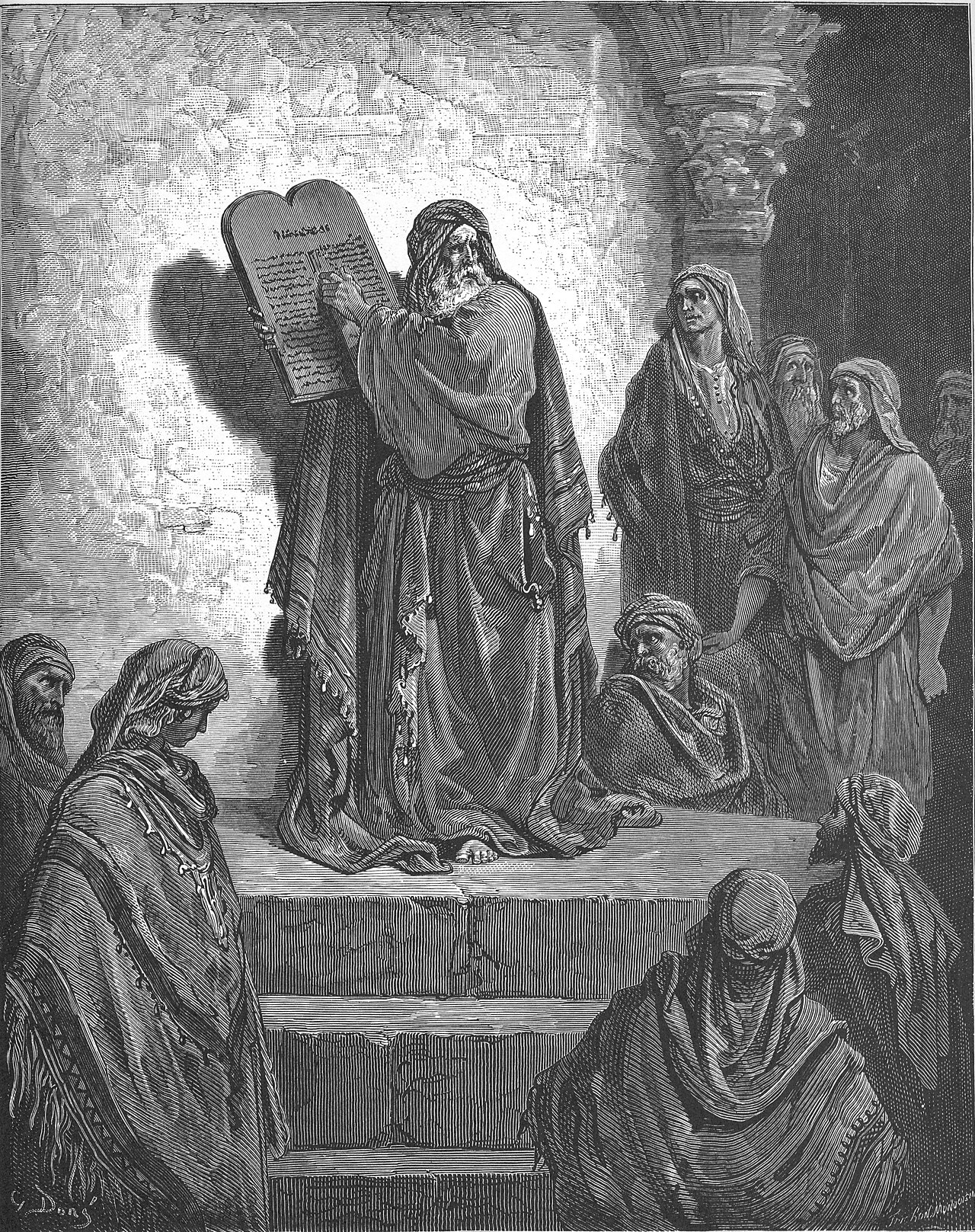
Gustave Doré, Ezra Reads the Law to the People (1866) — Public domain, via Wikimedia Commons
Summary
This page teaches the method behind every MannaFest page: the three moves of Bible study, genre-aware reading rules, how to run a word study, how cross-references work, and the site's own Christ-centered hermeneutic with its guardrails.
- The three moves, observe, interpret, apply, run in that order every time, each anchored to a verse.
- Seven genres, narrative, law, poetry, prophecy, gospel, epistle, apocalyptic, each get their own reading rule and a worked example.
- A full word study is walked start to finish, using chesed in Ruth 1:16.
- Cross-references are a starting list to test against context, never a finished argument.
- The site's own hermeneutic holds a literal-grammatical-historical floor with Christ-in-every-text typology on top, guarded so a type must be confirmed by the New Testament itself.
The Three Moves
observation, interpretation, application, in that order, every time
- IObserve2 Timothy 2:15
“Make every effort to present yourself approved to God, an unashamed workman who accurately handles the word of truth.”
Before a text can be applied it has to be seen, slowly, on its own terms. Who is speaking, to whom, in what situation, using which words. The Bereans made this a daily discipline: they “examin[ed] the scriptures daily, whether these things were so” (Acts 17:11), checking even an apostle's preaching against the text itself.
- IIInterpretNehemiah 8:8
“So they read from the Book of the Law of God, explaining it and giving insight, so that the people could understand what was being read.”
Observation asks what the text says; interpretation asks what it means, in its own context, before it is turned toward ours. Ezra's Levites model the whole discipline in one verse: read it plainly, then give the sense.
- IIIApplyJames 1:22
“Be doers of the word, and not hearers only. Otherwise, you are deceiving yourselves.”
A meaning correctly found and never lived is a study that stopped halfway. MannaFest's own goal is the John Standard (shallow enough for a child, deep enough to swim in for a lifetime) and no page on this site is finished at the point of understanding; it is finished at the point of obedience.
In His Own Words — Matthew Henry on 2 Timothy 2:15
“Workmen that are unskilful, or unfaithful, or lazy, have need to be ashamed; but those who mind their business, and keep to their work, are workmen that need not be ashamed. It is rightly to divide the word of truth. Not to invent a new gospel, but rightly to divide the gospel that is committed to their trust.”
Matthew Henry, Commentary on the Whole Bible (1710), on 2 Timothy 2:15 — public domain
No Verse Means Anything Alone
who, to whom, why, and where it sits: ask before you decide what it means
Literary context
What comes right before and after: a verse is a sentence in a paragraph, not a floating slogan.
Historical context
Who wrote it, to whom, when, and into what real situation: every chapter page carries this.
Canonical context
Where the book sits in the whole story: a threads page or a featured study often traces exactly this.
“Let those that read and preach the word learn also to deliver themselves distinctly, as those who understand what they say and are affected with it themselves, and who desire that those they speak to may understand it, retain it, and be affected with it likewise. It is a snare for a man to devour that which is holy.”
Matthew Henry, Commentary on the Whole Bible (1710), on Nehemiah 8:8 — public domain
Genre Decides How to Read, Never Whether It Happened
the Bible is one book made of many kinds of writing: each kind has its own reading rule
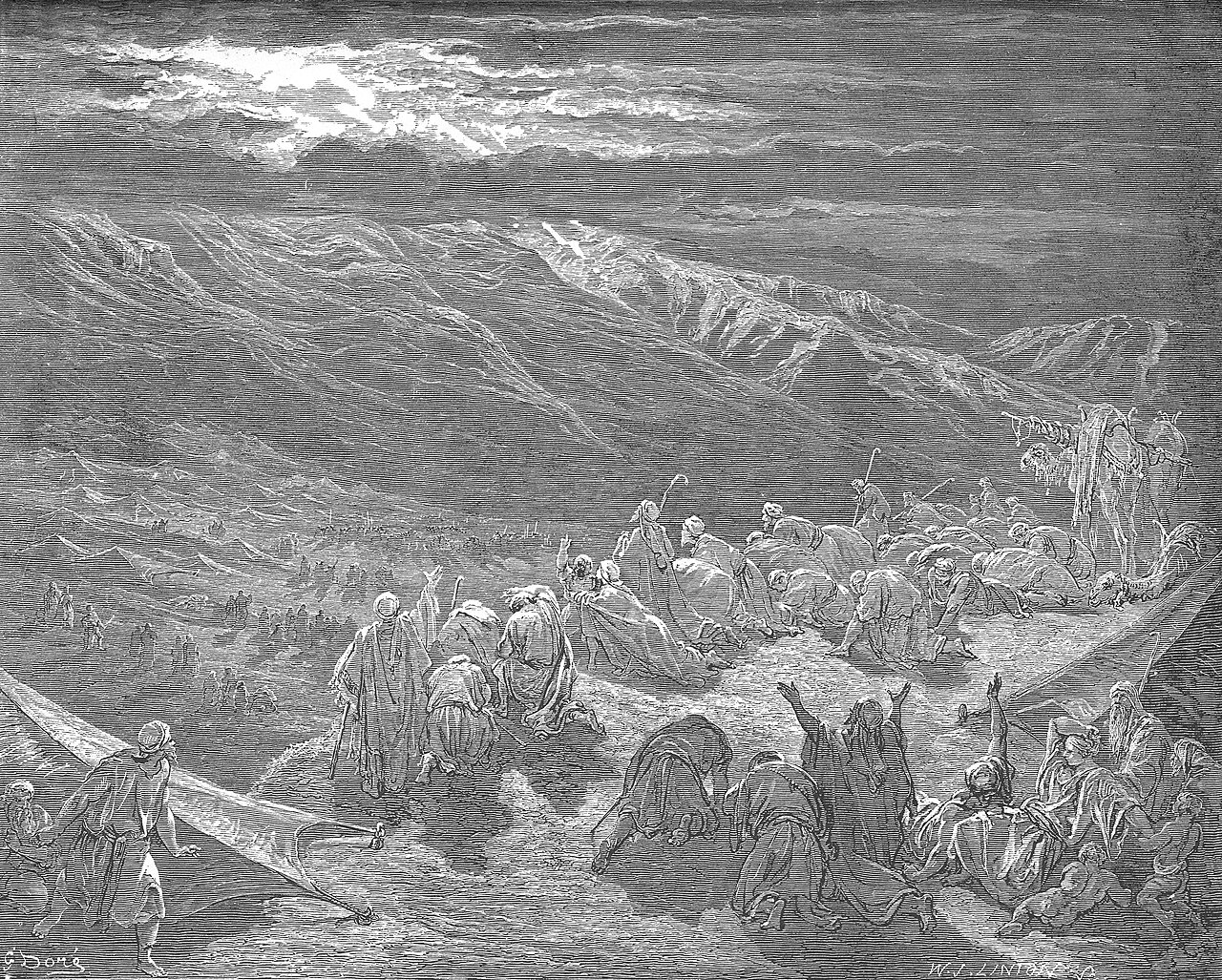
Seven kinds of writing sit inside one book, and each one asks to be read on its own terms before it is applied. Law is the clearest case: it was covenant stipulation spoken to Israel at a real mountain, in a real moment, which is exactly why the first question to ask of any command is what kind of command it is, before asking what to do with it.
Narrative
Read for what happened before what it means. The history is the floor the meaning stands on, not a costume for a moral.
The Judges Cycle: a narrative pattern named, not imposed →Law
Covenant stipulation given to a specific people at Sinai. Ask first which commands are moral (still binding), civil (Israel's polity), or ceremonial (fulfilled in Christ), then apply.
Leviticus 19:18: the moral command Jesus himself reaffirms →Poetry & Wisdom
Built on parallelism, not prose logic. A proverb states a general rule of thumb, not an unconditional promise with your name on it.
Psalms 119:105: a lamp, not a formula →Prophecy
An oracle spoken to a real audience first: read the near horizon before reaching for the far one, and hold both without collapsing either.
The Day of the LORD: the site's own near/far telescoping, worked in full →Gospel
Eyewitness biography written to provoke a verdict about Jesus, not neutral reporting. Every gospel writer tells you why he wrote.
John 20:31: the gospel that names its own purpose →Epistle
Occasional letters, written to a real situation. Find the concrete problem being addressed before extracting the timeless principle underneath it.
Philemon: a whole letter that never leaves its occasion →Apocalyptic
Symbol decoded by the text itself wherever it offers a key. Let the vision interpret the vision before importing an outside chart.
Revelation 1:20: the text names its own symbols →“This pastor, bishop, or overseer, had the peculiar care over that flock… And the seven candlesticks are seven churches — How significant an emblem is this!”
John Wesley, Explanatory Notes upon the Bible (1765), on Revelation 1:20 — public domain
Genre informs how a text is read; it does not decide in advance whether a text is historical. Where Scripture presents narrative as history (Genesis 1–11 included, in the traditional and widely held reading), this guide receives it as history first (see Creation Week and The Fall), and lets apocalyptic and poetic genre govern its own imagery rather than the reverse.
A Word Study, Start to Finish
one Hebrew word, worked the way this site is built to work it
1. Notice the word in the reader
Every word in Ruth 1 links to its Hebrew root. Ruth’s famous vow to Naomi (1:16) turns on one word that keeps surfacing across the Old Testament’s covenant vocabulary.
2. Open the word page
chesed (H2617) (covenant loyalty, steadfast love) carries its dictionary gloss and every tagged occurrence in one place: the same word anchors Ruth’s loyalty, David and Jonathan’s covenant, and the Psalms’ recurring “steadfast love.”
3. Search wider, if needed
The full concordance holds every Strong’s entry in the Bible, searchable by gloss or number, for words the curated word pages haven’t reached yet.
Cross-References, Not Proof-Texts
every verse carries its own cross-reference floor: use it to test a reading, not to manufacture one
Open Romans 8:28 and the page carries its own cross-reference rail beneath the text, always on, drawn from the reference-data floor rather than hand-picked for the moment. A cross-reference earns its place only when its own context actually matches the point being made; the rail is a starting list to test, not a finished argument.
“Now these things happened to them as examples and were written down as warnings for us, on whom the fulfillment of the ages has come.”
1 Corinthians 10:11 (BSB)
Paul’s own word here is the New Testament’s explicit license for typology: Israel’s history is called types (Gk. typoi) written for later readers on purpose: the floor the next section builds on.
MannaFest's Own Method
the reading posture behind every page this site builds
The literal-grammatical-historical reading is the floor here, never the ceiling. Where the text presents narrative as history, this site receives it as history. Where it is poetry, law, or apocalyptic, the genre is honored on its own terms rather than forced into narrative shape. But the lens that governs every page above that floor is Christ in every text: the conviction that typology runs densely through Scripture’s narrative, numbers, names, and structure, and can be pursued with confidence rather than apologized for.
The pattern, in Jesus’ own hands
“Beginning from Moses and from all the prophets, he interpreted to them in all the scriptures the things concerning himself” (Luke 24:27). The risen Christ himself models canon-wide, Christ-centered reading on the road to Emmaus, then “opened he their mind, that they might understand the scriptures” (Luke 24:45).
Typology affirmed, with guardrails
Chuck Missler’s integrated-design hermeneutic treats this density of pattern as a deliberate feature of a divinely-authored text, not an interpreter’s convenience. The guardrails: a type is confirmed where the New Testament itself makes the connection explicit (as at 1 Cor 10:11 and Luke 24:27), the plain, grammatical-historical sense of a text is never overridden by a typological one, and no single reader’s pattern-finding stands in for the text’s own claim: “no prophecy of scripture is of private interpretation… men spake from God, being moved by the Holy Spirit” (2 Peter 1:20–21).
Contested readings are presented at full strength rather than flattened: see, for one worked example, how The Day of the LORD holds a near/far prophetic telescoping alongside the honest alternative reading. That is the method this whole site tries to run, page after page.
The Study-Mode Doors
six places to run the method: pick whichever motion the moment calls for
Read
Study mode: Scripture with the rail beside it
Featured
One thing, walked the whole way through
Lens
Every method this site offers, gathered in one gallery
Trails
Guided walks end to end, stop by stop
Themes
Browse Scripture by subject rather than by book
Word
The workbench: every Strong's entry, tagged occurrence by occurrence
Word studies
The Hebrew and Greek under this study, each word in its own room.
Keep studying
On this page
Studies4
Subjects1