
Genesis 1:13
in Genesis 1And there was evening, and there was morning—the third day.
BSB
The same verse in ASV and KJV ▾
ASV
And there was evening and there was morning, a third day.
KJV
And the evening and the morning were the third day.
⋯
This verse in Genesis 1
Commentary
4 notes on this verseThis site's exposition
according to its kind
on Genesis 1:11-13
The phrase runs through the chapter ten times, and it says that what God made reproduces along its own line. The seed-bearing plants and the fruit trees come on the third day. The earth brings them forth at God's word, and the seed is in the fruit.
This site's exposition
the third day
The third day holds two commands of God, one at verse 9 and one at verse 11. Land appears, and then it grows green. Basil of Caesarea read the second command as a law set in the ground, which gives it the power to bear fruit in every season.
The record, by era
The Church Fathers1 voice
But whose ages, if not the Creator's? For because ages consist of times, and times are made up of days, and months, and years; since also days, and months, and years are measured by suns, and moons, and stars, which He ordained for this purpose (for "they shall be," says He, "for signs of the months and the years"), it clearly follows that the ages belong to the Creator, and that nothing of what was fore-ordained before the ages can be said to be the property of any other being than Him who claims the ages also as His own.
The Puritans and the Awakening1 voice
And the evening and the morning were the third day.
How the passage was read
What the Jewish commentators add
On the verses either side of this one
This affirms the existence of the various kinds forever. There was no special day assigned for this command for vegetation alone, since it is not a unique work. The earth, whether it brings forth anything or is salt land, is one.
This section is reception history: how the passage was read and kept in the Jewish tradition. Where a reading parts from an essential of the Christian faith, the section says so at that point.
Texts and citation data: Sefaria; each excerpt follows its version’s licence. 7 further sources are cited on this chapter that carry no English text this site may quote or only restate the verse.
The words behind it
6 Hebrew wordsEvery Hebrew word of this verse in the order it stands, with what it means and the door to its own study. The last column counts the times a word stands in the whole Bible: the rarer the word, the more the places it appears belong together.
| Hebrew | Sound | Meaning | Word study | In the Bible |
|---|---|---|---|---|
| וַֽיְהִי־ | vayhi- | and there was | H1961 → | 3559 times |
| עֶ֥רֶב | ʾerev | evening | H6153 → | 134 times |
| וַֽיְהִי־ | vayhi- | and there was | H1961 → | 3559 times |
| בֹ֖קֶר | voker | morning | H1242 → | 214 times |
| י֥וֹם | yom | a day | H3117 → | 2304 times |
| שְׁלִישִֽׁי׃ פ | shelishi | third | H7992 → | 107 times |
וַֽיְהִי־and there was
vayhi-H1961 →3559 times
עֶ֥רֶבevening
ʾerevH6153 →134 times
וַֽיְהִי־and there was
vayhi-H1961 →3559 times
בֹ֖קֶרmorning
vokerH1242 →214 times
י֥וֹםa day
yomH3117 →2304 times
שְׁלִישִֽׁי׃ פthird
shelishiH7992 →107 times
A shaded row is a word that stands 400 times or fewer in the Bible.
Where this verse is studied
On this page
Studies40
On this chapter
- Adam
- The Bible and the Ancient Near East
- The Designer's Fingerprint
- The Numbers of Scripture
- The Covenants
- Creation and Evolution
Show the next 6 titles
About Genesis
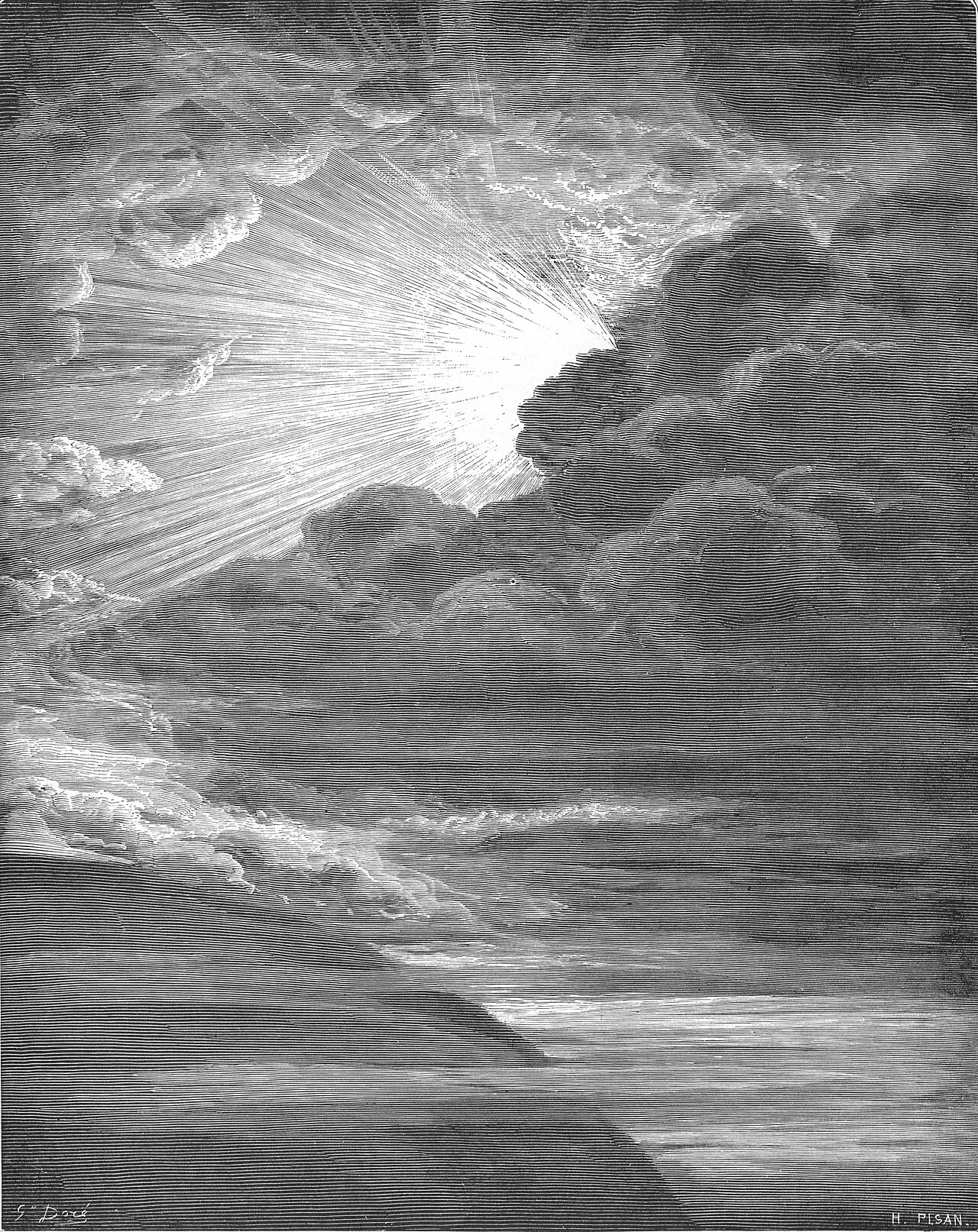
This page draws on Basil of Caesarea, HEXAEMERON 5.1; John Gill, Exposition of the Old Testament; John Gill, Exposition of the Old Testament (1748-1763); Matthew Henry, Commentary on the Whole Bible and Tertullian, Against Marcion Book V.