
Genesis 41:20
in Genesis 41Then the thin, ugly cows devoured the seven well-fed cows that were there first.
BSB
The same verse in ASV and KJV ▾
ASV
and the lean and ill-favored kine did eat up the first seven fat kine:
KJV
And the lean and the ill favoured kine did eat up the first seven fat kine:
⋯
This verse in Genesis 41
Commentary
2 notes on this verseThis site's exposition
I was standing on the bank of the Nile
on Genesis 41:17-21
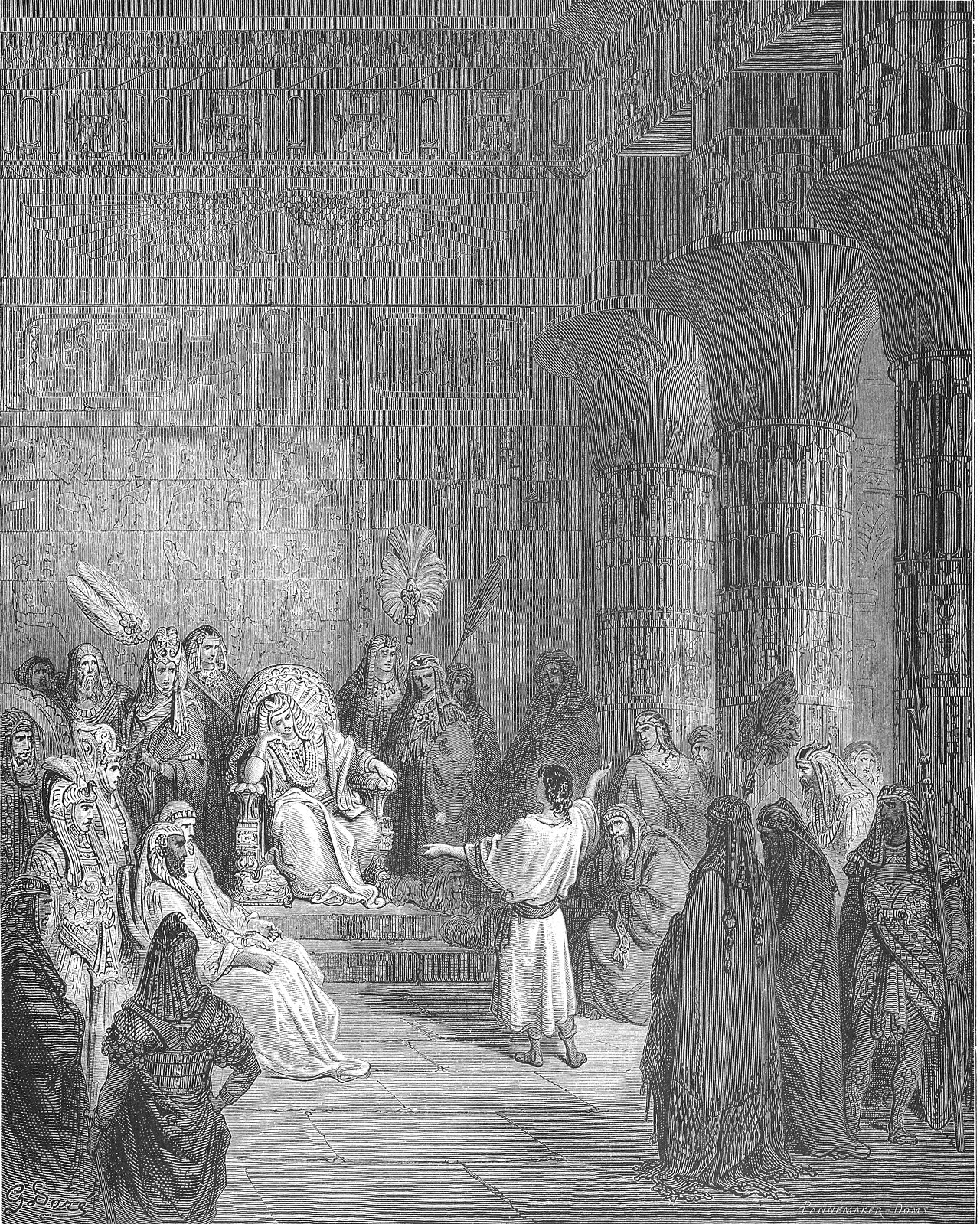
Pharaoh tells the first dream again, and the retelling runs longer than the telling, with Genesis printing both accounts in full. He adds that he never saw cows so ugly in all the land of Egypt, and that after the thin ones devoured the well-fed ones nobody could tell they had. The abundance will leave no mark behind.
The record, by era
The Puritans and the Awakening1 voice
And the lean and the ill favoured kine,.... The same as previously described; See Gill on Gen 41:4.
The words behind it
9 Hebrew wordsEvery Hebrew word of this verse in the order it stands, with what it means and the door to its own study. The last column counts the times a word stands in the whole Bible: the rarer the word, the more the places it appears belong together.
| Hebrew | Sound | Meaning | Word study | In the Bible |
|---|---|---|---|---|
| וַתֹּאכַ֙לְנָה֙ | vatokhalnah | and they ate | H398 → | 810 times |
| הַפָּר֔וֹת | haparot | the cows | H6510 → | 26 times |
| הָרַקּ֖וֹת | harakot | <the> thin | H7534 → | 3 times |
| וְהָרָע֑וֹת | veharaot | and <the> displeasing | H7451 → | 662 times |
| אֵ֣ת | ʾet | <obj.> | H853 → | 10935 times |
| שֶׁ֧בַע | sheva' | seven | H7651 → | 394 times |
| הַפָּר֛וֹת | haparot | the cows | H6510 → | 26 times |
| הָרִאשֹׁנ֖וֹת | harishonot | <the> former | H7223 → | 182 times |
| הַבְּרִיאֹֽת׃ | haberiot | <the> fat | H1277 → | 13 times |
וַתֹּאכַ֙לְנָה֙and they ate
vatokhalnahH398 →810 times
הַפָּר֔וֹתthe cows
haparotH6510 →26 times
הָרַקּ֖וֹת<the> thin
harakotH7534 →3 times
וְהָרָע֑וֹתand <the> displeasing
veharaotH7451 →662 times
אֵ֣ת<obj.>
ʾetH853 →10935 times
שֶׁ֧בַעseven
sheva'H7651 →394 times
הַפָּר֛וֹתthe cows
haparotH6510 →26 times
הָרִאשֹׁנ֖וֹת<the> former
harishonotH7223 →182 times
הַבְּרִיאֹֽת׃<the> fat
haberiotH1277 →13 times
A shaded row is a word that stands 400 times or fewer in the Bible.
Where this verse is studied
On this page
Studies1
About Genesis
This page draws on Adam Clarke, Commentary on the Bible; John Gill, Exposition of the Old Testament and John Gill, Exposition of the Old Testament (1748-1763).