
Genesis 24:20
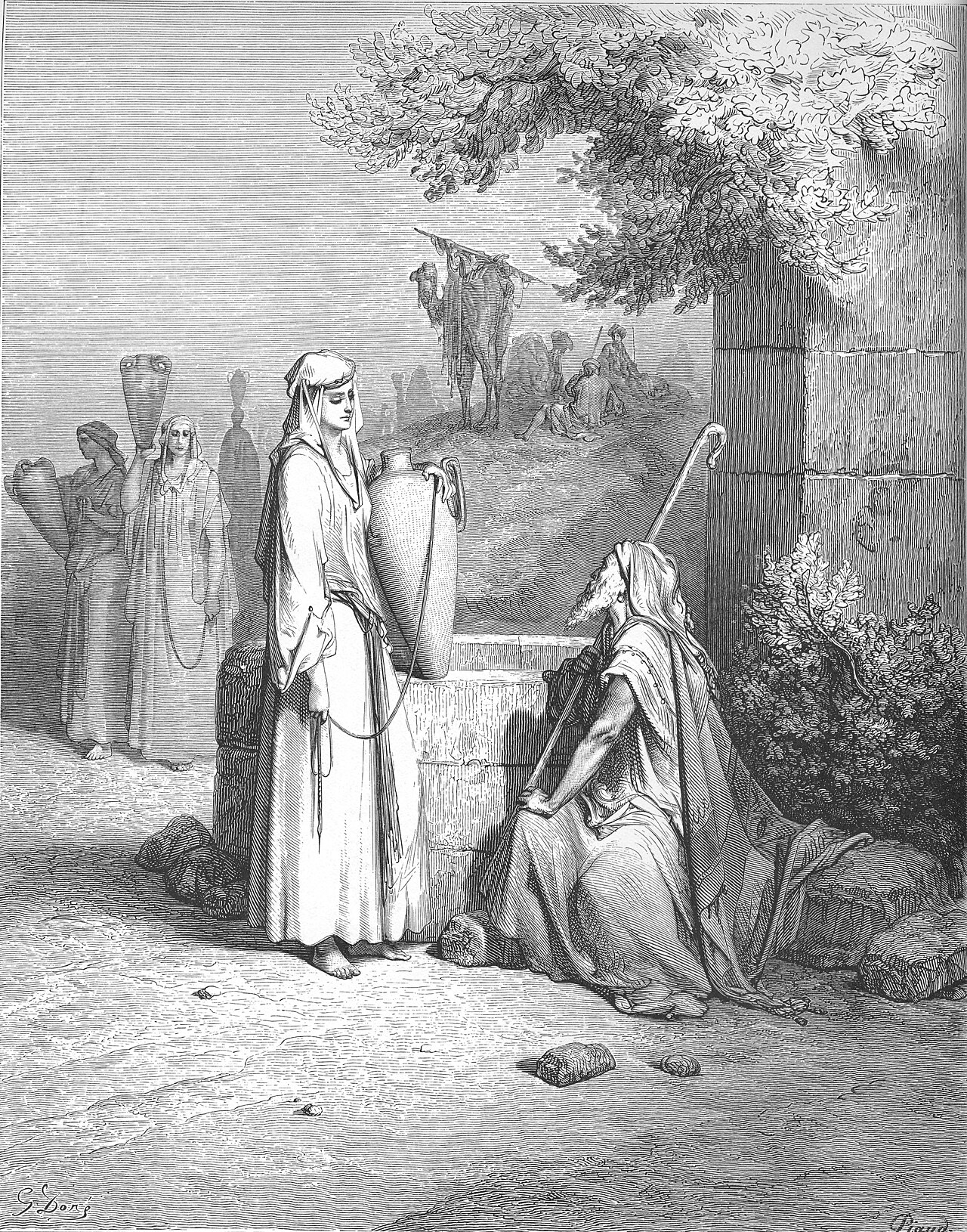
in Genesis 24And she quickly emptied her jar into the trough and ran back to the well to draw water, until she had drawn water for all his camels.
BSB
The same verse in ASV and KJV ▾
ASV
And she hasted, and emptied her pitcher into the trough, and ran again unto the well to draw, and drew for all his camels.
KJV
And she hasted, and emptied her pitcher into the trough, and ran again unto the well to draw water, and drew for all his camels.
⋯
This verse in Genesis 24
Commentary
9 notes on this verseBut when he has the desired success, he worships God, not the angel. Whatever benefit we have by the ministration of angels, all the glory must be given to the Lord of the angels, Rev. xxii.
This site's exposition
the servant ran to meet her
on Genesis 24:17-20
He runs, and after that every verb of action belongs to her. She lowered her jar, gave him a drink, emptied the jar into the trough, ran back to the well, and drew water for all his camels. She offers the camels before he asks, which is the thing he had prayed for. The work is counted in trips.
This site's exposition
emptied her jar into the trough
She runs back and forth to the well until every camel has drunk, and the servant does not help. Adam Clarke could not decide which to admire more, her kindness or what he called the apparently stupid indifference of the servant. The man's silence belongs to his test, as verse 21 explains.
The record, by era
The Church Fathers2 voices
Rebekah is found "at a well." Rebekah in turn finds Isaac "at a well." There she gazed upon his countenance for the first time. There "she dismounted from the camels." There she sees Isaac, who was pointed out to her by the servant. Do you think these are the only words related about wells?
The loving God, you see, granted the patriarch's prayers, sent his angel on ahead and saw to the outcome of all these events; everything turned out as the servant requested. Then when he saw the power of the patriarch's prayers in the event and chanced upon the maiden as he desired, he also saw her surpassing hospitality. "She hastened" the text goes on, remember, "to empty the water jar into the trough, and ran to draw more at the well, and watered all the camels." See her heightened enthusiasm. The verse "She hastened to empty the water jar into the trough and ran to the well" shows the maiden's indescribable enthusiasm in neither snubbing him as a stranger nor declining his request on the pretext of prudence but rather saying with great restraint, "Drink, sir." I ask you to consider how very proper, despite her tender years, was her modesty, her surpassing humility and the extremity of her hospitality. What riches, at any rate, do these qualities not far surpass? Are there treasures you would value more highly than these qualities? This is the greatest gift; this constitutes countless blessings, a treasure never expended.
The Puritans and the Awakening3 voices
Thus God swears his servants to their work, that, having sworn, they may perform it. Swearing being an ordinance, not peculiar to the church, but common to mankind, is to be performed by such signs as are the common usages of our country. God's angels are ministering spirits, sent forth, not only for the protection, but guidance of the heirs of promise, Heb. i, 14.
And she hasted and emptied her pitcher into the trough,....
And she hasted and emptied her pitcher into the trough,....
1 more voice on this verse
The Nineteenth Century1 voice
A commentator
Jamieson, Fausset & Brown1802–1910
Commentary Critical and Explanatory on the Whole Bible (1871)
proposed
Her comely appearance, her affable manners, her obliging courtesy in going down the steps to fetch water not only to him but to pour it into the trough for his camels, afforded him the most agreeable surprise. She was the very person his imagination had pictured, and he proceeded to reward her civility.
The words behind it
13 Hebrew wordsEvery Hebrew word of this verse in the order it stands, with what it means and the door to its own study. The last column counts the times a word stands in the whole Bible: the rarer the word, the more the places it appears belong together.
| Hebrew | Sound | Meaning | Word study | In the Bible |
|---|---|---|---|---|
| וַתְּמַהֵ֗ר | vatemaher | and she hurried | H4116 → | 68 times |
| וַתְּעַ֤ר | vatear | and she emptied | H6168 → | |
| כַּדָּהּ֙ | kadah | jar her | H3537 → | 18 times |
| אֶל־ | ʾel- | into | H413 → | 5510 times |
| הַשֹּׁ֔קֶת | hashoket | the watering channel | H8268 → | |
| וַתָּ֥רָץ | vatarotz | and she ran | H7323 → | 103 times |
| ע֛וֹד | od | again | H5750 → | 490 times |
| אֶֽל־ | ʾel- | to | H413 → | 5510 times |
| הַבְּאֵ֖ר | habeer | the well | H875 → | 38 times |
| לִשְׁאֹ֑ב | lisho | to draw water | H7579 → | 19 times |
| וַתִּשְׁאַ֖ב | vatishav | and she drew water | H7579 → | 19 times |
| לְכָל־ | lekhol | for all | H3605 → | 5413 times |
| גְּמַלָּֽיו׃ | gemalav | camels his | H1581 → | 54 times |
וַתְּמַהֵ֗רand she hurried
vatemaherH4116 →68 times
וַתְּעַ֤רand she emptied
vatearH6168 →
כַּדָּהּ֙jar her
kadahH3537 →18 times
אֶל־into
ʾel-H413 →5510 times
הַשֹּׁ֔קֶתthe watering channel
hashoketH8268 →
וַתָּ֥רָץand she ran
vatarotzH7323 →103 times
ע֛וֹדagain
odH5750 →490 times
אֶֽל־to
ʾel-H413 →5510 times
הַבְּאֵ֖רthe well
habeerH875 →38 times
לִשְׁאֹ֑בto draw water
lishoH7579 →19 times
וַתִּשְׁאַ֖בand she drew water
vatishavH7579 →19 times
לְכָל־for all
lekholH3605 →5413 times
גְּמַלָּֽיו׃camels his
gemalavH1581 →54 times
A shaded row is a word that stands 400 times or fewer in the Bible.
Where this verse is studied
About Genesis
This page draws on Adam Clarke, Commentary on the Bible; Jamieson, Fausset & Brown, Commentary Critical and Explanatory on the Whole Bible; John Chrysostom, HOMILIES ON GENESIS 48.16; John Gill, Exposition of the Old Testament (1748-1763); John Wesley, Explanatory Notes upon the Old Testament; Matthew Henry, Commentary on the Whole Bible and Origen of Alexandria, HOMILIES ON GENESIS 10.5.