
Romans 1:1 · Symbol · Servanthood
The Words Ebed and Doulos
The Hebrew ebed and the Greek doulos name a servant or a slave, and Scripture gives both words to those who serve God.
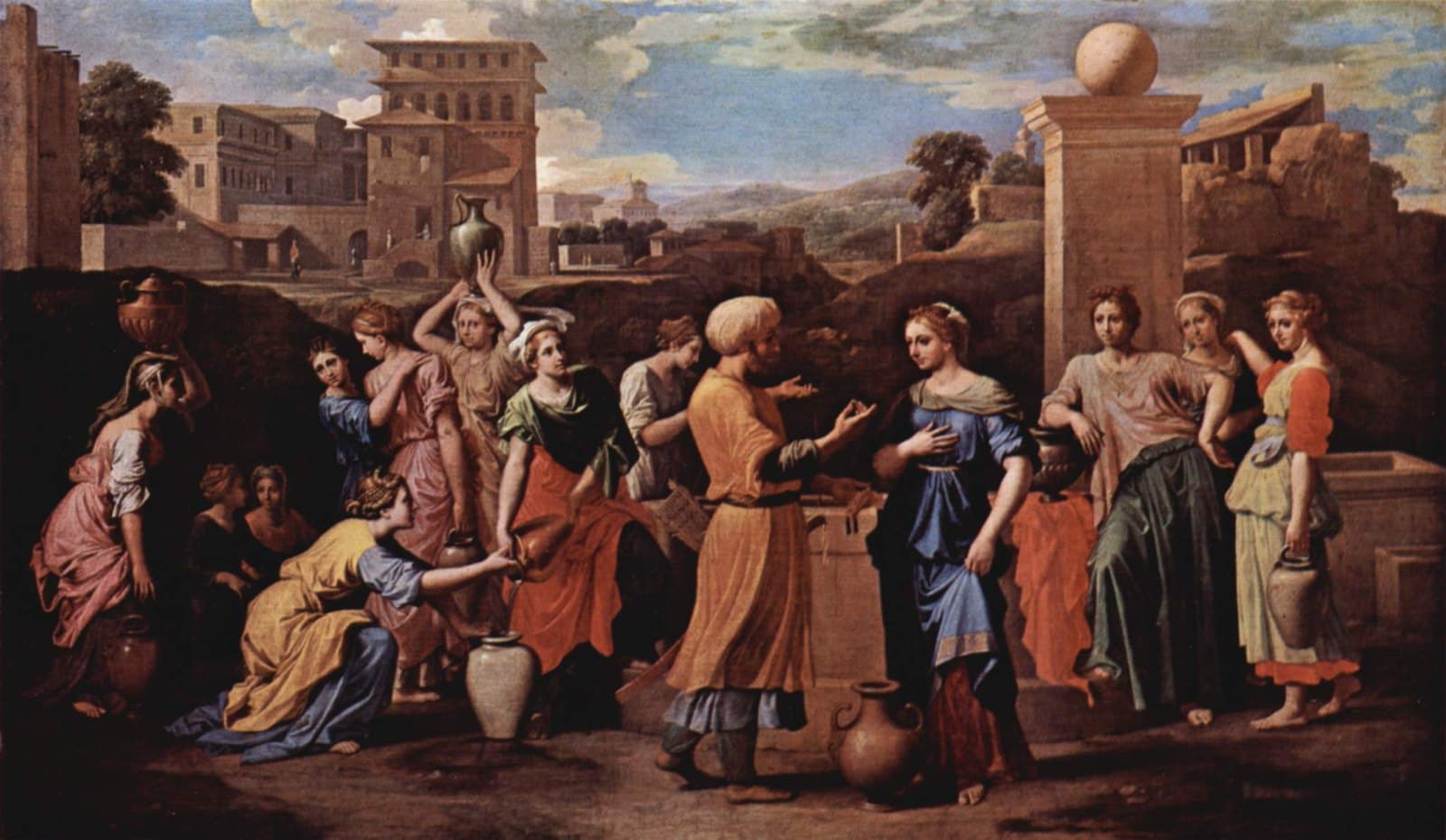
The man Abraham sent to find a wife for Isaac goes through all of Genesis 24 without a name, known only as the servant.
Paul, a servant of Christ Jesus, called to be an apostle, and set apart for the gospel of God—
- The word
- עֶבֶד (ebed), H5650
- First appears
- Genesis 9:25 “he said, “Cursed be Canaan! A servant of…”
Summary
Scripture uses the same two words for the lowest place in a household and for the highest service a person can give to God. Ebed first names Canaan under a curse, and doulos names both the slaves Paul writes to and Paul himself. Either word takes its honour from the master who is served.
- God gives the title of His servant to Moses, Joshua, David and the prophets.
- In Mark 10:44 Jesus uses doulos for the place His followers must take if they would be first.
- James, Peter, Jude and Paul each open a letter by calling themselves a doulos.
A Servant of Servants
The Hebrew noun begins in Scripture at the bottom of the ladder of rank.
The Words Ebed and Doulos is a word study of two nouns, one Hebrew and one Greek, and of the three companions that stand beside them in the text. It belongs to the value of servanthood, because the place these words name is the place Jesus asked His followers to take.
The question the study answers is how a word for the lowest standing became a title of honour for God's people. It counts where the words stand and follows ebed from the curse on Canaan to the title servant of the LORD. It reads Abraham's servant in Genesis 24 as the text gives him, and it sets out the two ways readers render doulos in English.
Noah's curse on Canaan doubles the noun to mark the lowest standing a man could hold among his brothers. The noun shares its root with the verb abad, to work or to serve, and Strong's dictionary of 1890 glosses ebed simply as a servant.
Where the Words Stand
The Hebrew noun leads the count, and the Greek word for a slave stands most in the Gospels.
Ebed stands in more than seven hundred verses, nearly six times as many as doulos.
| Word | Sense | Rows | Verses | Books with the most verses |
|---|---|---|---|---|
| Hebrew | ||||
| ebed, עֶבֶד, H5650, noun | servant or slave | 799 | 713 | 2 Samuel 85, Genesis 78, 1 Kings 65, 1 Samuel 56; 31 books in all |
| abad, עָבַד, H5647, verb | to serve | 288 | 261 | Deuteronomy 35, Jeremiah 30, Exodus 29, Genesis 22; 25 books in all |
| Greek | ||||
| doulos, δοῦλος, G1401, noun | slave | 129 | 120 | Matthew 30, Luke 27, Revelation 13, John 9; 21 books in all |
| diakonos, διάκονος, G1249, noun | servant | 29 | 27 | 2 Corinthians 4, Colossians 4, Matthew 3, John 3; 11 books in all |
| diakoneo, διακονέω, G1247, verb | to serve | 37 | 32 | Luke 7, Matthew 5, Mark 4, 2 Corinthians 3; 12 books in all |
The counts are those of the STEP Bible tagging, where a verse that uses a word twice holds two rows, and a printed concordance may differ by a few.
The Servant of the LORD
The law and the histories give the title to the people and to their leaders.
For the Israelites are My servants. They are My servants, whom I brought out of the land of Egypt. I am the LORD your God.The verse stands first because the law grounds the whole people's service in the exodus, which freed them from Egypt to serve the LORD.
So Moses the servant of the LORD died there in the land of Moab, as the LORD had said.The verse gives Moses the title at his death, the summary of his whole work.
John Wesley, in his Explanatory Notes upon the Old Testament (1765), wrote that Moses is so called “as a man eminently useful, who had served God's counsels in bringing Israel out of Egypt”. He added, “it was more his honour, to be the servant of the Lord, than to be king in Jeshurun.”
The same title marks Joshua at his death, “Joshua son of Nun, the servant of the LORD” (Joshua 24:29). God calls the king “My servant David” (2 Samuel 7:5), and through Jeremiah He speaks of “My servants the prophets” (Jeremiah 7:25).
Isaiah gives the title both to Israel, “But you, O Israel, My servant” (Isaiah 41:8), and to the Servant whom the LORD upholds (Isaiah 42:1).
Abraham's Servant
The longest chapter of Genesis tells its story through a servant.
So Abraham instructed the chief servant of his household, who managed all he owned, “Place your hand under my thigh,The verse stands first in the section because it gives the servant's rank in the house before the chapter gives his errand.
Ebed stands in fourteen verses of the chapter. When Laban's household set food before him, he introduced himself by his master, “I am Abraham's servant” (Genesis 24:34).
Adam Clarke, in his Commentary on the Bible (1832), judged that since this servant “is stated to have been the ruler over all that he had, it is very likely that Eliezer is meant”. Eliezer is the man Abram had named years earlier as the heir of his house, “Eliezer of Damascus” (Genesis 15:2).
Doulos in the New Testament
The New Testament gives the slave's word to apostles, to Christ and to every believer.
Paul opens Romans with doulos as his first title, before apostle, and he names himself and Timothy together as “servants of Christ Jesus” at the head of Philippians (Philippians 1:1). In Philippians 2:7 the same noun describes Christ, who emptied Himself, “taking the form of a servant”.
For he who was a slave when he was called by the Lord is the Lord’s freedman. Conversely, he who was a free man when he was called is Christ’s slave.The verse stands here because in one sentence Paul uses doulos of a slave's legal state and of every believer's standing before Christ.
The Berean text renders doulos as servant in three verses out of four.
| The Berean rendering | Verses | Where it stands |
|---|---|---|
| servant | 90 | Matthew 24:45, “the faithful and wise servant” |
| slave | 27 | Romans 6:17, “you once were slaves to sin” |
| another wording | 3 | Revelation 19:5, “all you who serve Him”; Acts 2:18, “My menservants”; Matthew 18:27, by a pronoun |
Slave or Servant of Christ?
Adam Clarke and the Berean translators answer the question in two ways.
The question is whether doulos, when an apostle uses it of himself before Christ, should be read in English as a slave or as a servant.
Doulos means a slave, wholly ownedAdam Clarke
On Romans 1:1 Adam Clarke (1832) wrote that “The word δουλος, which we translate servant, properly means a slave, one who is the entire property of his master”. He judged that “the servant, or, in the above sense, the slave of God, is higher than all”.
The objection: in Romans 1:1 the word stands beside “called to be an apostle” as a title of office, as the Old Testament gives the title servant of the LORD to Moses (Deuteronomy 34:5).
The sense of each verse decides the English wordThe translators of the Berean Standard Bible
The Berean Standard Bible renders the noun “a servant of Christ Jesus” in Romans 1:1 and “the slave of all” in Mark 10:44. It gives “Christ's slave” in 1 Corinthians 7:22, where Paul sets the word against a freedman.
The objection: one Greek word stands in all three verses, and two English words can hide from a reader that Paul's title and Jesus' rule in Mark 10:44 use the same noun.
A Title of Honour
The study ends with a saying of Jesus in Luke.
So you also, when you have done everything commanded of you, should say, ‘We are unworthy servants; we have only done our duty.’”The verse closes the study because the disciple's last word on his own service is that of an unworthy servant.
Sources
Scripture is the Berean Standard Bible.
- STEP Bible, Translators Amalgamated Hebrew Old Testament and Greek New Testament, the tagged texts (Tyndale House, Cambridge), CC BY 4.0.
- STEP Bible brief lexicon meanings (Tyndale House, Cambridge, CC BY 4.0), with the Strong's definitions (1890) the rows carry.
- John Wesley, Explanatory Notes upon the Old Testament (1765), on Deuteronomy 34:5.
- Adam Clarke, Commentary on the Bible (1832), on Genesis 24:2 and Romans 1:1.
Keep Studying
Studies1
People and groups11
Symbols6
Doctrines2