
Ezekiel 16:11
in Ezekiel 16I adorned you with jewelry, and I put bracelets on your wrists and a chain around your neck.
BSB
The same verse in ASV and KJV ▾
ASV
And I decked thee with ornaments, and I put bracelets upon thy hands, and a chain on thy neck.
KJV
I decked thee also with ornaments, and I put bracelets upon thy hands, and a chain on thy neck.
⋯
This verse in Ezekiel 16
Commentary
9 notes on this verse(Verse 11.) And I adorned you with ornaments. Now he lists the ornaments in general, which he enumerates in the following sections: bracelets and necklaces, earrings and crown, and other ornaments which he gave to Jerusalem, and it is said in Isaiah that she lost everything due to her own fault.
This site's exposition
Then washed I thee with water
on Ezekiel 16:9-14
The Lord himself washes, anoints, clothes and crowns the bride, fine linen and silk, gold and silver, until her renown for beauty spreads among the nations. The chapter is explicit about the source of it: it was perfect through my comeliness, which I had put upon thee. Henry reads the section as Israel's prosperity under David and Solomon, and Barnes adds that naming every ornament makes the coming betrayal weigh as heavily as it does; nothing here was self-made.
The record, by era
The Church Fathers3 voices
The priests are anointed with holy oil and are clothed with embroidered cloth and with silk. It means riches, which the people gained as a result of his providence, as much in spirit as in body.
When God gives us good works, He surrounds our hands with bracelets. Hence it is said that it is likened to the hands of the prophets (Hosea 13), and we often read in the hand of Haggai or Jeremiah and the rest (Haggai 1). In Job, the lip of the dragon is pierced by a bracelet, and all his venomous hisses, which are understood in perverse doctrines, are pierced by the circle of good works (Job 40).
It is true that a festival such as the birthday of Peter should be seasoned with more gladness than usual; still our merriment must not forget the limit set by Scripture, and we must not stray too far from the boundary of our wrestling ground. Your presents, indeed, remind me of the sacred volume, for in it Ezekiel decks Jerusalem with bracelets.
The Puritans and the Awakening2 voices
And I decked thee also with ornaments,....
We need not be particular in the application of these. Her wardrobe was well furnished with rich apparel; they had embroidered work to wear, shoes of fine badgers' skins, linen girdles, and silk veils, bracelets and necklaces, jewels and ear-rings, and even a beautiful crown, or coronet.
2 more voices on this verse
The Nineteenth Century2 voices
THE root of Israel's nation was originally a lone man whose family and dependants formed a small Bedouin tribe wandering throughout the plains of Canaan. God separated and selected Abraham, who was in no way distinct from others in his parentage, and declared that in him and in his seed should all the nations of the earth be blessed. When the tribe had somewhat multiplied, God found them in Egypt, a herd of slaves helplessly crushed beneath the foot of Pharaoh. They were sorely burdened with labors for which they received no reward.
THE root of Israel's nation was originally a lone man whose family and dependants formed a small Bedouin tribe wandering throughout the plains of Canaan. God separated and selected Abraham, who was in no way distinct from others in his parentage, and declared that in him and in his seed should all the nations of the earth be blessed. When the tribe had somewhat multiplied, God found them in Egypt, a herd of slaves helplessly crushed beneath the foot of Pharaoh. They were sorely burdened with labors for which they received no reward. They were without spirit to resent the oppressions of their taskmasters and without power to succeed had the energy been there. Yet God brought them out of Egypt. He led them through the wilderness, chased out powerful nations before them, settled them in the most fertile country and there multiplied them at such an extraordinary rate, and enriched and endowed them with such power that the little kingdom of Israel became famous among the nations of the earth! And in the days of Solomon its scepter was respected far and wide. The nations of the earth stood still and wondered how so small a monarchy had come to be so exceedingly rich and great. It was entirely through the favor of Jehovah that these great blessings had been received. He had a favor to Abraham's race. He revealed Himself to them and not to others. He chose them to be His people and made them the custodians of His Law. His worship was kept up among them and while they were faithful to Him they were a happy and a prosperous people whose renown went forth to Tarshish and the isles—and the excellence of whose laws and government was respected and admired even by such distant nations as those which were governed by the queen of the South. The beauty of the nation consisted entirely in what God had done for it—its comeliness was a comeliness which Jehovah had put upon it.
How the passage was read
What the Jewish commentators add
And I adorned you with ornaments E pare toy, and I adorned you. [Jonathan renders:] And I adorned you with the adornment of the words of the Torah, written on the two stone tablets.
3 more on this passage, in their own words ▾
And I clothed you with embroidered garments “And I clothed you with embroidered garments of the spoils of your enemies.”
And I put a nose ring on your nose [Jonathan renders:] And I placed the ark of My covenant among you.
And I dressed you in embroidered garments from your enemies' treasure, and placed a shoe of glory on your feet, and sanctified from among you the priests to be serving before Me in a linen turban, and the high priest in colored garments.
This section is reception history: how the passage was read and kept in the Jewish tradition. Where a reading parts from an essential of the Christian faith, the section says so at that point.
Texts and citation data: Sefaria; each excerpt follows its version’s licence. 3 further sources are cited on this chapter that carry no English text this site may quote or only restate the verse.
The words behind it
9 Hebrew wordsEvery Hebrew word of this verse in the order it stands, with what it means and the door to its own study. The last column counts the times a word stands in the whole Bible: the rarer the word, the more the places it appears belong together.
| Hebrew | Sound | Meaning | Word study | In the Bible |
|---|---|---|---|---|
| וָאֶעְדֵּ֖ךְ | vae'dekh | and I ornamented you | H5710 → | 10 times |
| עֶ֑דִי | ʾedi | ornament[s] | H5716 → | 14 times |
| וָאֶתְּנָ֤ה | vaetenah | and I put ! | H5414 → | 2011 times |
| צְמִידִים֙ | tzemidim | bracelets | H6781 → | |
| עַל־ | ʾal- | on | H5921 → | 5755 times |
| יָדַ֔יִךְ | yadayikh | hands your | H3027 → | 1618 times |
| וְרָבִ֖יד | veravid | and a chain | H7242 → | |
| עַל־ | ʾal- | on | H5921 → | 5755 times |
| גְּרוֹנֵֽךְ׃ | geronekh | neck your | H1627 → |
וָאֶעְדֵּ֖ךְand I ornamented you
vae'dekhH5710 →10 times
עֶ֑דִיornament[s]
ʾediH5716 →14 times
וָאֶתְּנָ֤הand I put !
vaetenahH5414 →2011 times
צְמִידִים֙bracelets
tzemidimH6781 →
עַל־on
ʾal-H5921 →5755 times
יָדַ֔יִךְhands your
yadayikhH3027 →1618 times
וְרָבִ֖ידand a chain
veravidH7242 →
עַל־on
ʾal-H5921 →5755 times
גְּרוֹנֵֽךְ׃neck your
geronekhH1627 →
A shaded row is a word that stands 400 times or fewer in the Bible.
The walk
8 stopsEach card is a verse this one points to, and under it the verses that one points to in turn. Where several paths arrive at the same place, that place is listed first: the text keeps returning to it.
Through
Genesis 41:42Then Pharaoh removed the signet ring from his finger, put it on Joseph’s finger, clothed him in garments of fine linen, and placed a gold chain around his neck.
it leads to
- Daniel 5:29
Then Belshazzar gave the command, and they clothed Daniel in purple, placed a gold chain around his neck, and proclaimed him the third highest ruler in the kingdom.
Reached by 2 separate paths from here.
- Daniel 5:7
The king called out for the enchanters, astrologers, and diviners to be brought in, and he said to these wise men of Babylon, “Whoever reads this inscription and tells me its interpretation will be…
- Esther 3:10
So the king removed the signet ring from his finger and gave it to Haman son of Hammedatha, the Agagite, the enemy of the Jews.
- Daniel 5:29
Through
Genesis 24:22And after the camels had finished drinking, he took out a gold ring weighing a beka, and two gold bracelets for her wrists weighing ten shekels.
it leads to
- Genesis 24:30
As soon as he saw the ring, and the bracelets on his sister’s wrists, and heard Rebekah’s words, “The man said this to me,” he went and found the man standing by the camels…
Reached by 2 separate paths from here.
- Ezekiel 16:11–12
I adorned you with jewelry, and I put bracelets on your wrists and a chain around your neck.
- Genesis 24:30
Through
Proverbs 1:9For they are a garland of grace on your head and a pendant around your neck.
it leads to
- Proverbs 4:9
She will set a garland of grace on your head; she will present you with a crown of beauty.”
- Genesis 41:42
Then Pharaoh removed the signet ring from his finger, put it on Joseph’s finger, clothed him in garments of fine linen, and placed a gold chain around his neck.
- Proverbs 4:9
Through
Genesis 24:47Then I asked her, ‘Whose daughter are you?’ She replied, ‘The daughter of Bethuel son of Nahor, whom Milcah bore to him.’ So I put the ring on her nose and the bracelets on…
it leads to
- Genesis 24:53
Then he brought out jewels of silver and gold, and articles of clothing, and he gave them to Rebekah. He also gave precious gifts to her brother and her mother.
Reached by 2 separate paths from here.
- Genesis 24:53
Where this verse is studied
On this page
About Ezekiel
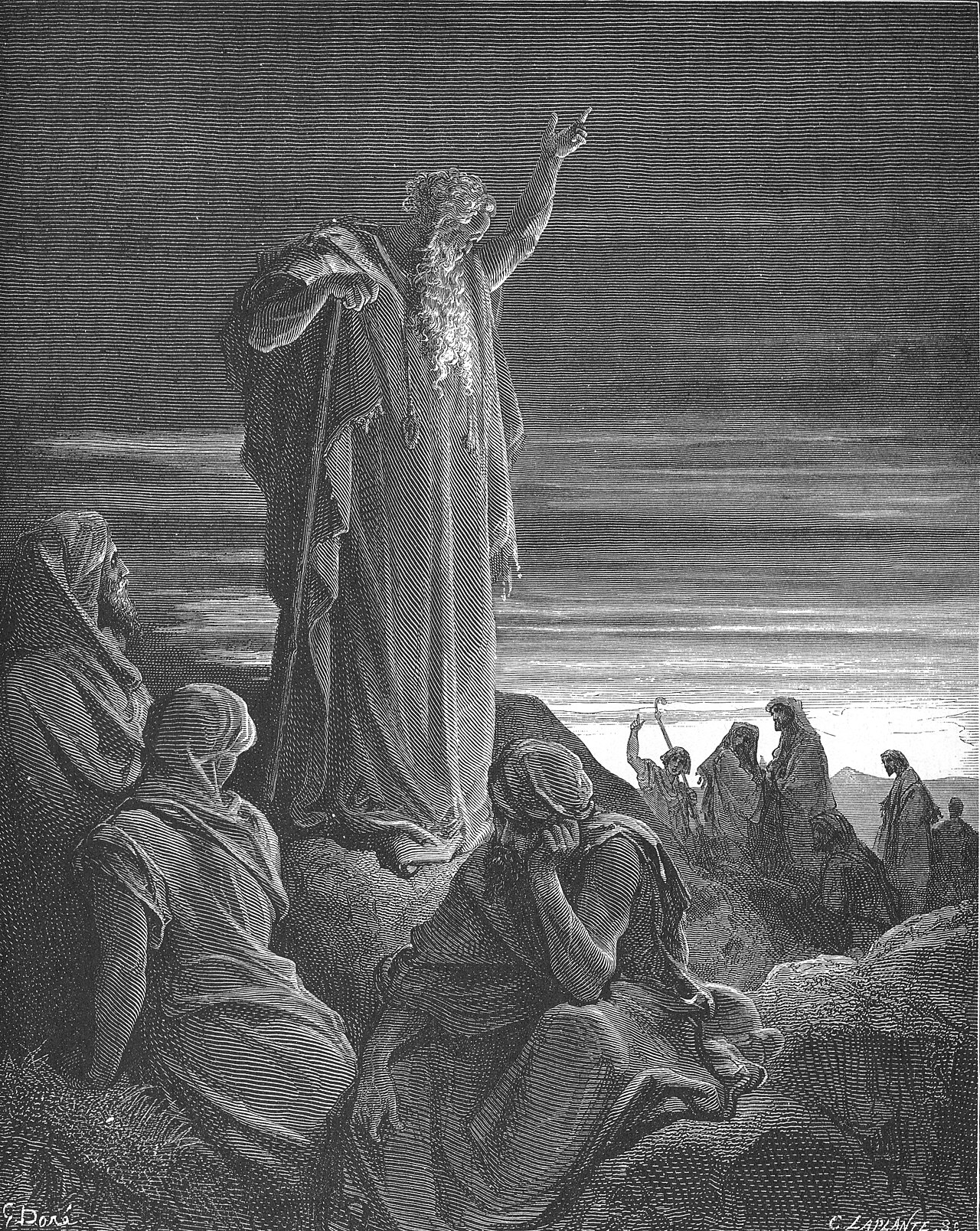
This page draws on Albert Barnes, Notes on the Old Testament; Charles Spurgeon, The Metropolitan Tabernacle Pulpit, Sermon No. 813: “The Privileged Man” (lightly modernized text, CCEL edition); Jerome, Commentary on Ezekiel; Jerome, LETTER 31.2; John Gill, Exposition of the Old Testament (1748-1763); Matthew Henry, Commentary on the Whole Bible and Theodoret of Cyrus, COMMENTARY ON EZEKIEL 5:16.