
Romanschapter 11
36 verses · Paul · AD 56 or 57 · Paul's letters
I ask then, did God reject His people? Certainly not! I am an Israelite myself, a descendant of Abraham, from the tribe of Benjamin.
Introduction
Paul, Paul's letters, Romans Overview.
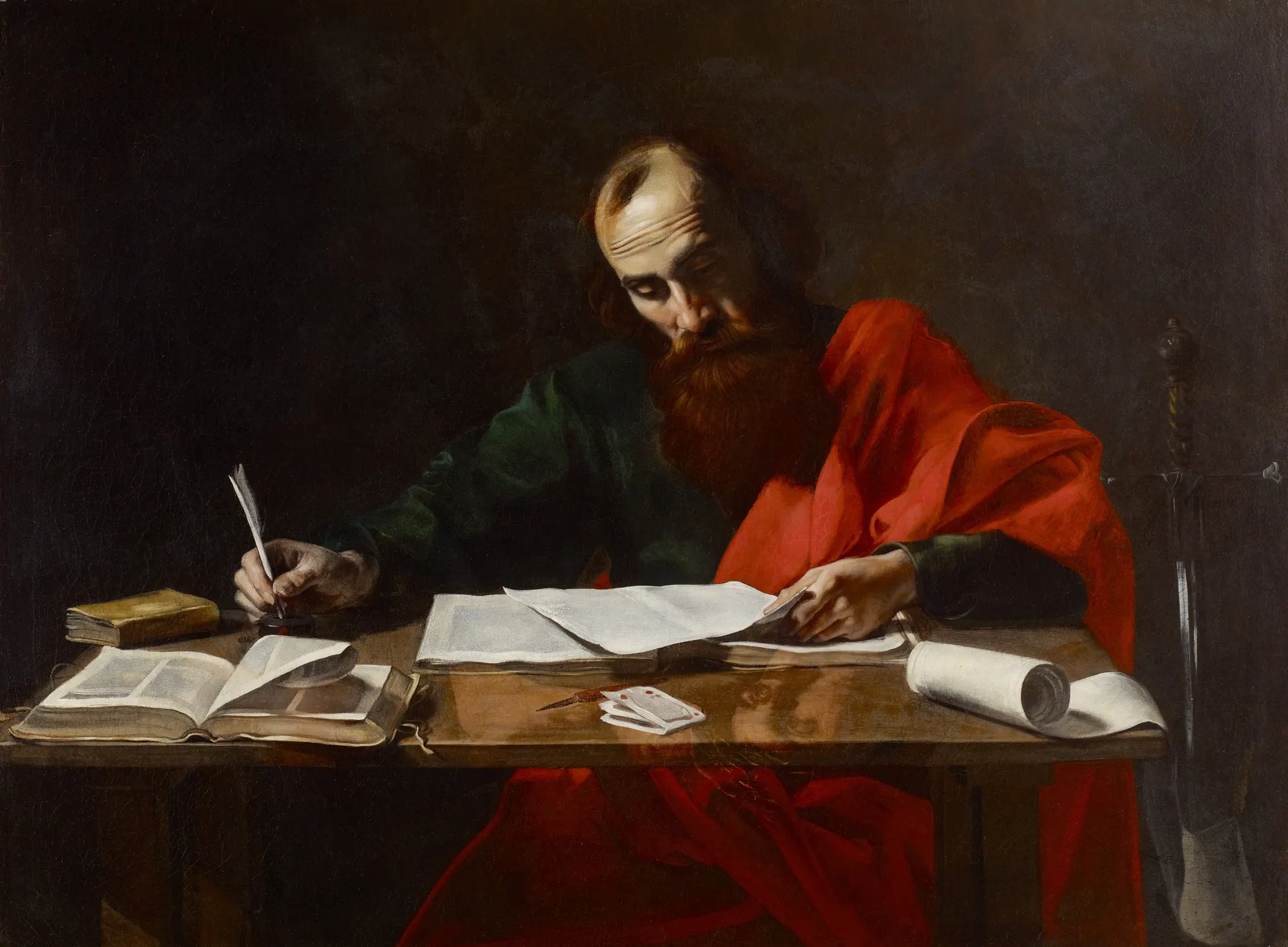
Paul wrote this letter to a church in Rome he had never visited, a congregation of Jews and Gentiles learning to live as one people. He wrote as a Jew who had watched most of his own nation turn away from the Messiah he preached. This chapter closes the long argument about Israel that began in chapter 9. Listen for the questions he puts to himself and the answers he gives at once. Listen also for a gardener's picture and the warning it carries for the newcomer. Hear how the argument ends, in worship.
Context
- Who
- Gentile-majority house churches in Rome whose Jewish members had recently come back from banishment.
- What
- The third chapter of Paul's argument on Israel, answering whether God has rejected His people and closing in praise.
- Where
- Written most likely from Corinth, in the Roman province of Achaia, to the believers at Rome.
- When
- About AD 57 on the usual dating, shortly before Paul carried the gift of the churches to Jerusalem, a date held with fair certainty.
- Why
- To show the believers in Rome that God keeps His word to Israel, and to warn Gentile believers against pride over Israel.
Historical context
The situation behind this chapter is a piece of Roman history. Around AD 49 the emperor Claudius expelled Jews from the city; the churches would have lost their Jewish members overnight and carried on for several years as Gentile congregations. After Claudius died in AD 54 the exiles began returning to find churches that had learned to run without them.
Show the rest of the historical context, 3 more paragraphs
That is the social nerve Paul is touching when he tells the branches not to boast over the branches that were broken off. It was not a theoretical temptation.
The olive tree image is agriculturally odd on purpose. Growers normally graft a cultivated shoot onto hardy wild rootstock, not the other way round, and Paul says outright that this grafting is contrary to nature. The Gentile branch has no grounds for feeling superior, it is the improbable one, supported by a root it did not grow.
Olive trees also lived for centuries and were the backbone of Mediterranean farming. Everyone knew you did not tear one up because a season went badly.
Significance
To Gentile believers this was a warning against arrogance: you do not support the root, the root supports you. Standing was by faith, and could be lost the same way the broken branches lost theirs.
Show the rest of the significance, 1 more paragraph
To Jewish believers it was a promise. Their people's stumbling was neither total, Paul himself was proof of a remnant, nor final. God's gifts and calling are irrevocable, and the chapter ends not in argument but in worship at the depth of God's wisdom.
The heads below are this chapter's scenes. The numbered points under each are its verses.
God Has Not Cast Off His People: A Remnant Remains
Romans 11:1-4
did God reject His people?: Paul answers whether God rejected His people with his flattest no, then points to himself, an Israelite of the tribe of Benjamin. Elijah thought he was the only one left, and God answered with seven thousand men He had kept for Himself.
Romans 11:1
“I say then, Hath--"Did" God cast away his people? God forbid--Our Lord did indeed announce that "the kingdom of God should be taken from Israel" (Mt 21:41); and when asked by the Eleven, after His resurrection, if He would at that time "restore the kingdom to Israel," His reply is a virtual admission that Israel was in some sense already out of covenant (Ac 1:9).”
Jamieson, Fausset & Brown · Commentary Critical and Explanatory on the Whole Bible (1871)reformed
3 more voices on this verseWhat preachers and commentators have said about this verse, in their own words.
Romans 11:1
“This objection is what he anticipates in this passage, and he so modifies what he had previously said respecting the repudiation of the Jews, that no one might think that the covenant formerly made with Abraham is now abrogated, or that God had so forgotten it that the Jews were now so entirely alienated from his kingdom, as the Gentiles were before the coming of Christ.”
John Calvin · Commentaries (1554)reformed
Romans 11:1
“Wisely, Paul does not make the plight of Israel appear worse than it is. Even though he says that the nation is struggling in its blindness, he manages to say something positive at this point.”
Cyril of Alexandria · written before 444 · Explanation of the Letter to the Romanspatristic
Romans 11:1
“I say then - This expression is to be regarded as conveying the sense of an objection. Paul, in the previous chapters, had declared the doctrine that all the Jews were to be rejected. To this a Jew might naturally reply, Is it to be believed, that God would cast off his people whom he had once chosen; to whom pertained the adoption, and the promises, and the covenant, and the numerous blessings conferred on a favorite people? It was natural for a Jew to make such objections.”
whom He foreknew: moves the question from Israel's failure to God's own knowledge of His people. Augustine reads foreknew here as predestined, and Barnes reads it as a purpose God formed for His people beforehand, as at Romans 8:29. Elijah is the witness called next.
Romans 11:2
“Wot--that is, "Know" ye not that the scripture saith of--literally, "in," that is, in the section which relates to Elias? how he maketh intercession--"pleadeth" against Israel--(The word "saying," which follows, as also the particle "and" before "digged down," should be omitted, as without manuscript authority).”
Jamieson, Fausset & Brown · Commentary Critical and Explanatory on the Whole Bible (1871)reformed
2 more voices on this verse
Romans 11:2
“For, in fact, knowing and foreknowing are the same thing with God, who knows or sees all things at once, from everlasting to everlasting. Know ye not - That in a parallel case, amidst a general apostasy, when Elijah thought the whole nation was fallen into idolatry, God "knew" there was "a remnant" of true worshippers.”
John Wesley · Explanatory Notes upon the New Testament (1755)evangelical
Romans 11:2
“God hath not cast away his people which he foreknew - God has not finally and irrecoverably rejected a people whom he has loved (or approved) so long, ὁν προεγνω, for this is evidently the meaning of the word in this place, as we have already seen, Rom 8:29, and is a very general meaning of the original verb ידע yada in Hebrew and γινωσκω in Greek; as I have had often occasion to notice in different parts of this work, and what none will deny who consults the original.”
Adam Clarke · Commentary on the Bible (1810-1826)evangelical
they have killed Your prophets: Elijah appealed against Israel in 1 Kings 19:10, and Barnes says Paul keeps the sense of the prophet's words. Gill traces the killing of the prophets to Jezebel's order at 1 Kings 18:4. Elijah thought himself the only one left.
Romans 11:3
“Lord, they have killed ... - This is taken from 1Ki 19:10. The quotation is not literally made, but the sense is preserved. This was a charge which Elijah brought against the whole nation; and the act of killing the prophets he regarded as expressive of the character of the people, or that they were universally given to wickedness. The fact was true that they had killed the prophets, etc.; 1Ki 18:4, 1Ki 18:13; but the inference which Elijah seems to have drawn from it, that there were no pious people in the nation, was not well founded.”
Cross references
Romans 11:3
- Quoting1 Kings 19:10“I have been very zealous for the LORD, the God of Hosts,” he replied, “but the Israelites have forsaken Your covenant, torn down Your altars, and killed Your prophets with the sword. I am the only one left, and they are seeking my life as well.”
'Lord, they have killed thy prophets' (Elijah's plea, 'the scripture saith of Elias')
the divine reply: renders chrematismos, a word Barnes finds nowhere else in the New Testament, meaning an answer given by God. Theodoret draws the lesson that Elijah knew nothing of the seven thousand until God told him. The hidden faithful outnumbered what the prophet could see.
Romans 11:4
“But what saith the answer of God - The answer which God made assured him that there were seven thousand, that is, several or many thousands; for so we must understand the word seven, a certain for an uncertain number. These had continued faithful to God; but, because of Jezebel’s persecution, they were obliged to conceal their attachment to the true religion; and God, in his providence, preserved them from her sanguinary rage.”
Adam Clarke · Commentary on the Bible (1810-1826)evangelical
Cross references
Romans 11:4
- Quoting1 Kings 19:18Nevertheless, I have reserved seven thousand in Israel—all whose knees have not bowed to Baal and whose mouths have not kissed him.”
'I have reserved... seven thousand men' (God's answer)
Romans 11:5-6
a remnant chosen by grace: At the present time a remnant stands, the Elijah pattern running in Paul's own day. Verse 6 guards its ground: grace and works cannot share the same footing without grace ceasing to be grace. The remnant is chosen by grace, and no longer by works.
Romans 11:5
“At this present time - In the time when the apostle wrote. Though the mass of the nation was to be rejected, yet it did not follow that all were to be excluded from the favor of God.”
1 more voice on this verse
Romans 11:5
“If then there was a remnant left under the Old Testament, when the displays of grace were less clear and the pourings out of the Spirit less plentiful, much more now under the gospel, when the grace of God, which bringeth salvation, appears more illustrious.-- A remnant, a few of many, a remnant of believing Jews when the rest were obstinate in their unbelief.”
Matthew Henry · Commentary on the Whole Bible (1707-1721)puritan
grace would no longer be grace: Gennadius says grace and works cannot share the ground of the remnant, since one must drive the other out. Diodorus of Tarsus explains why: grace shows the love of God who gives it, while works demand that God repay them.
Romans 11:6
“And he added: "But if by grace, then no longer of works." It must be known that the works which Paul rejects, and frequently censures, are not the works of righteousness which are commanded in the law, but those in which they who keep the law according to the flesh glory — that is, either circumcision of the flesh, or the rite of sacrifices, or the observance of sabbaths and new moons.”
Origen of Alexandria · written before 253 · Commentary on the Epistle to the Romanspatristic
2 more voices on this verse
Romans 11:6
“And if by grace, then is it no more of works,.... Upon election, being called "the election of grace", the apostle forms an argument, showing the contrariety and inconsistency of grace, and works, in that affair; proving, that it must be by the one or the other: and if by the one, then not by the other; and that these two cannot be mixed and blended together in this matter.”
Romans 11:6
“And if by grace - And let this very remnant of pious Jews, who have believed in Christ Jesus, know that they are brought in, precisely in the same way as God has brought in the Gentiles; the one having no more worthiness to plead than the other; both being brought in, and continued in by God’s free grace, and not by any observance of the Mosaic law.”
Adam Clarke · Commentary on the Bible (1810-1826)evangelical
Romans 11:7-10
What Israel was seeking, it failed to obtain: Israel failed to obtain what it sought, the elect obtained it, and the others were hardened. Verses 8 to 10 quote Deuteronomy 29:4, Isaiah 29:10 and Psalm 69:22-23 for that hardening, and verse 25 will call it partial.
Romans 11:7
“Israel tried to find righteousness in the type which was the law but did not obtain it. However, those who were sealed were elected and did obtain it on account of their belief, being justified by their faith. The rest were blinded, being hardened and rebellious.”
Cyril of Alexandria · written before 444 · Explanation of the Letter to the Romanspatristic
2 more voices on this verse
Romans 11:7
What then?--How stands the fact? Israel hath not obtained that which he seeketh for--better, "What Israel is in search of (that is, Justification, or acceptance with God--see on Ro 9:31); this he found not; but the election (the elect remnant of Israel) found it, and the rest were hardened," or judicially given over to the "hardness of their own hearts."
Jamieson, Fausset & Brown · Commentary Critical and Explanatory on the Whole Bible (1871)reformed
Romans 11:7
“They could neither see the light, nor feel the touch, of gospel grace. Blindness and hardness are expressive of the same senselessness and stupidity of spirit. They shut their eyes, and would not see; this was their sin: and then God, in a way of righteous judgment, blinded their eyes, that they could not see; this was their punishment.”
Matthew Henry · Commentary on the Whole Bible (1707-1721)puritan
a spirit of stupor: Paul joins Deuteronomy 29:4 to Isaiah 29:10, and Barnes hears Isaiah 6:9-10 behind both. Theophylact reads God gave as God permitted, while Adam Clarke reads it as a judgment on eyes Israel had already closed. The stupor reaches to this very day.
Romans 11:8
But a question is raised for us: how can it seem to be said worthily of the good God that he himself gave to the remainder of Israel eyes with which they should not see, and ears with which they should not hear? And see whether perhaps this is rather a recompense and the wage of unbelief, according to what we expounded in the earlier portions, where it is said that, because "they did not approve of having God in their knowledge, God delivered them over to a reprobate mind."
Origen of Alexandria · written before 253 · Commentary on the Epistle to the Romanspatristic
1 more voice on this verse
Romans 11:8
“God hath given them the spirit of slumber - As they had wilfully closed their eyes against the light, so God has, in judgment, given them up to the spirit of slumber. The very word and revelation of God, which should have awakened their consciences, and opened their eyes and ears, have had a very different effect; and because they did not receive the truth in the love thereof, that which would otherwise have been the savour of life unto life, has become the savour of death unto death; and this continues to the present day.”
Adam Clarke · Commentary on the Bible (1810-1826)evangelical
Cross references
Romans 11:8
- QuotingIsaiah 29:10“For the LORD has poured out on you a spirit of deep sleep. He has shut your eyes, O prophets; He has covered your heads, O seers.”
'God hath given them the spirit of slumber' (w/ Deu 29:4; 'as it is written')
David says it in Psalm 69:22, and Henry hears in the psalm the sufferings of Christ at the hands of His own people. Jamieson, Fausset and Brown take the table as Israel's good things become a snare and a trap to them. Their table became the trap.
Romans 11:9
“And he does likewise with those things which he declares to have been said through David. For he says: "And David says: Let their table become a snare, and a trap, and a stumbling block, and a recompense unto them. Let their eyes be darkened that they may not see, and bow down their back always." For as to what he says, "Let their table become a snare, and a trap, and a stumbling block" — "a trap" is not found written in the Psalm, neither in our copies of the Seventy Translators nor in those of the Hebrews.”
Origen of Alexandria · written before 253 · Commentary on the Epistle to the Romanspatristic
2 more voices on this verse
Romans 11:9
“And David saith-- (Ps 69:23), which in such a Messianic psalm must be meant of the rejecters of Christ. Let their table, &c.--that is, Let their very blessings prove a curse to them, and their enjoyments only sting and take vengeance on them.”
Jamieson, Fausset & Brown · Commentary Critical and Explanatory on the Whole Bible (1871)reformed
Romans 11:9
“And David saith ... - This quotation is made from Psa 69:22-23. This Psalm is repeatedly quoted as having reference to the events recorded in the New Testament. (See the note at Act 1:2.) This quotation is introduced immediately after one that undoubtedly refers to the Lord Jesus.”
Cross references
Romans 11:9
- QuotingPsalms 69:22“May their table become a snare; may it be a retribution and a trap.”
'Let their table be made a snare' ('David saith')
ConnectionsPsalms 69:22
Adam Clarke reads these lines as a declaration of what obstinate unbelief brings, and Thomas Aquinas calls them more a prediction than a wish. Theophylact saw the bent back in Israel's servitude under Rome. Verse 11 asks at once whether the fall is final.
Romans 11:10
“Let their eyes be darkened - All these words are declarative, and not imprecatory. God declares what will be the case of such obstinate unbelievers; their table, their common providential blessings, will become a snare, a trap, a stumbling block, and the means of their punishment.”
Adam Clarke · Commentary on the Bible (1810-1826)evangelical
1 more voice on this verse
Romans 11:10
“The apostle's object in making these quotations is to show that what he had been compelled to say of the then condition and prospects of his nation was more than borne out by their own Scriptures.”
Jamieson, Fausset & Brown · Commentary Critical and Explanatory on the Whole Bible (1871)reformed
Wild Olive Branches Grafted In
Romans 11:11-12
did they stumble so as to fall beyond recovery?: Paul refuses the reading that makes the stumble final. Their trespass brought salvation to the Gentiles, and the aim stated is to make Israel jealous, which runs Deuteronomy 32:21 in reverse. Verse 12 weighs their trespass against their fullness, which was still ahead when Paul wrote.
Romans 11:11
“God forbid; but--the supplement "rather" is better omitted. through their fall--literally, "trespass," but here best rendered "false step" [DE WETTE]; not "fall," as in our version. salvation is come to the Gentiles, to provoke them to jealousy--Here, as also in Ro 10:19 (quoted from De 32:21), we see that emulation is a legitimate stimulus to what is good.”
Jamieson, Fausset & Brown · Commentary Critical and Explanatory on the Whole Bible (1871)reformed
4 more voices on this verse
Romans 11:11
“Have they stumbled so as to fall - Totally and finally? No But by their fall - Or slip: it is a very soft word in the original. Salvation is come to the gentiles - See an instance of this, Acts xiii, 46.”
John Wesley · Explanatory Notes upon the New Testament (1755)evangelical
Romans 11:11
“Much more aptly would they have matched the Christian with the elder, and the Jew with the younger son, "according to the analogy of faith," if the order of each people as intimated from Rebecca's womb permitted the inversion: only that (in that case) the concluding paragraph would oppose them; for it will he fitting for the Christian to rejoice, and not to grieve, at the restoration of Israel, if it he true, (as it is), that the whole of our hope is intimately united with the remaining expectation of Israel.”
Tertullian · written before 220 · On Modestypatristic
Romans 11:11
“Have they stumbled that they should fall? - This is to be regarded as an objection, which the apostle proceeds to answer. The meaning is, is it the design of God that the Jews should totally and irrecoverably be cast off? Even admitting that they are now unbelieving, that they have rejected the Messiah, that they have stumbled, is it the purpose of God finally to exclude them from mercy? The expression to stumble is introduced because he had just mentioned a stumbling-stone.”
Romans 11:11
I say then, have they stumbled that they should fall?.... This is an objection, which the apostle takes from the mouth of an adversary; and the purport of it is, you say that the people of the Jews being blind, have stumbled at Christ and his Gospel, as was prophesied of them, and to which they were appointed; pray what were God's view and end in this? was it that they should fall and perish eternally? if it be so, is not this doing himself, what he forbids others, namely, "to put a stumblingblock before the blind?"
how much greater riches will their fullness bring!: Trespass renders paraptoma, the word Adam Clarke traces to the offense of Romans 5:15 to 18. John Wesley reads their fullness as the full conversion of Israel, which verses 23 to 26 take up. The argument runs from less to greater.
Romans 11:12
“Now if the fall of them - The English reader may imagine that, because fall is used in both these verses, the original word is the same. But their fall, and the fall of them, is παραπτωμα, the same word which we render offense, Rom 5:15, Rom 5:17, Rom 5:18, and might be rendered lapse. Whereas that they should fall (Rom 11:11) is, ινα πεσωσι. Now, πιπτω, to fall, is used in a sense so very emphatical as to signify being slain.”
Adam Clarke · Commentary on the Bible (1810-1826)evangelical
Romans 11:13-16
the apostle to the Gentiles: Paul addresses the Gentiles directly and names a Jewish aim for his Gentile work, to provoke his own people and save some. Verse 15 answers verse 12: their acceptance is life from the dead.
Romans 11:13
“For I speak to you Gentiles - What I am saying respecting the Jews, I say with reference to you who are Gentiles, to show you in what manner you have been admitted to the privileges of the people of God; to excite your gratitude; to warn you against abusing those mercies. etc. As Paul also was appointed to preach to them, he had a right to speak to them with authority.”
1 more voice on this verse
Romans 11:13
“I magnify my office - Far from being ashamed of ministering to the gentiles, I glory therein; the rather, as it may be a means of provoking my brethren to jealousy.”
John Wesley · Explanatory Notes upon the New Testament (1755)evangelical
provoke my own people to jealousy: Paul's own people are his kinsmen by birth, the ones he grieved over at Romans 9:3. Henry says this jealousy harms no one, for the blessings grow no smaller when more people share them. Clarke takes save some as hope for any of them.
Romans 11:14
“For this is what Paul also was doing, by teaching and instructing the Gentiles, whose apostle he was; nourishing the weak with herbs, feeding the little ones with milk, offering to the strong the stronger food of the word; and travailing again in birth with a mother's affection over those who erred and wavered in the faith and were reduced as it were to something abortive, until Christ should be formed in them: and through all these things, by glorifying the ministry of his apostleship, he was leading his own flesh — that is, his kinsmen according to the flesh…”
Origen of Alexandria · written before 253 · Commentary on the Epistle to the Romanspatristic
2 more voices on this verse
Romans 11:14
“Might save some of them - And yet all these were among the reprobate, or rejected; however, the apostle supposed that none of them were irrecoverably shut out from the Divine favor; and that some of them, by his preaching, might be disposed to receive salvation by Christ Jesus.”
Adam Clarke · Commentary on the Bible (1810-1826)evangelical
Romans 11:14
“In this emulation there needs no suspicion, undermining or countermining; for the church has room enough, and the new covenant grace and comfort enough, for us all. The blessings are not lessened by the multitudes of the sharers.-- And might save some of them. See what was Paul's business, to save souls; and yet the utmost he promises himself is but to save some.”
Matthew Henry · Commentary on the Whole Bible (1707-1721)puritan
life from the dead?: The rejection of Israel brings the reconciliation of the world, the phrase of 2 Corinthians 5:19. Adam Clarke compares their acceptance, life from the dead, to a close friend brought back from the gates of death.
Romans 11:15
“For if the casting away of them - If their rejection as the special people of God - their exclusion from their national privileges, on account of their unbelief. It is the same as “the fall of them;” Rom 11:12. Be the reconciling of the world - The word “reconciliation” καταλλαγή katallagē denotes commonly a pacification of contending parties; a removing the occasion of difference, so as again to be united; 1Co 7:11, “Let her remain unmarried, or be reconciled to her husband.” It is commonly applied to the reconciliation, or pacification, produced between man and God by the gospel.”
If the first part of the dough is holy: The first part of the dough was the portion of the harvest offered to God, and Barnes gives the Greek as aparche. John Chrysostom reads the firstfruits and the root as Abraham, Isaac and Jacob, and the holiness passes down.
Romans 11:16
“For if the first fruit be holy - As the consecrating the first fruits to God was the means of drawing down his blessing upon the rest, so the conversion of Abraham to the true faith, and the several Jews who have now embraced Christianity, are pledges that God will, in process of time, admit the whole Jewish nation into his favor again, so that they shall constitute a part of the visible Church of Christ.”
Adam Clarke · Commentary on the Bible (1810-1826)evangelical
3 more voices on this verse
Romans 11:16
And that the Saviour received first-fruits of those whom He was to save, Paul declared when he said, "And if the first-fruits be holy, the lump is also holy," teaching that the expression "first-fruits" denoted that which is spiritual, but that "the lump" meant us, that is, the animal Church, the lump of which they say He assumed, and blended it with Himself, inasmuch as He is "the leaven."
Irenaeus · written before 202 · Against Heresies Book Ipatristic
Romans 11:16
“For if the firstfruit be holy,.... Some by "the firstfruit" and "root" understand Christ, who is sometimes called, "the firstfruits of them that slept", 1Co 15:20, and "the root of Jesse and David", Isa 11:10, and indeed of all the righteous; and certain it is, that since he is holy, has all the holiness of his people in him, and is sanctification unto them, they shall be holy likewise; have it imparted to them in this life, and perfected in them in another: but this does not seem to agree with the apostle's argument.”
Romans 11:16
“Some by the first-fruits understand those of the Jews that were already converted to the faith of Christ and received into the church, who were as the first-fruits dedicated to God, as earnests of a more plentiful and sanctified harvest. A good beginning promises a good ending.”
Matthew Henry · Commentary on the Whole Bible (1707-1721)puritan
Romans 11:17-18
a wild olive shoot: The Gentile believer is grafted in among the natural branches, into a tree he did not plant. The stock is the covenant of the patriarchs. The root supports the branches, and verse 18 forbids the Gentile boast that the church has replaced Israel.
Romans 11:17
“Being a wild olive tree - Had the graft been nobler than the stock, yet its dependance on it for life and nourishment would leave it no room to boast against it. How much less, when, contrary to what is practiced among men, the wild olive tree is engrafted on the good!”
John Wesley · Explanatory Notes upon the New Testament (1755)evangelical
2 more voices on this verse
Romans 11:17
“This truth, therefore, [he declares], in order that we may not reject the engrafting of the Spirit while pampering the flesh. "But thou, being a wild olive-tree," he says, "hast been grafted into the good olive-tree, and been made a partaker of the fatness of the olive-tree.”
Irenaeus · written before 202 · Against Heresies Book 5.10.1patristic
Romans 11:17
“If some of the branches - The illustration here is taken from the practice of those who ingraft trees. The useless branches, or those which bear poor fruit, are cut off, and a better kind inserted. “If some of the natural descendants of Abraham, the holy root, are cast off because they are unfruitful, that is, because of unbelief and sin.” And thou - The word “thou” here is used to denote the Gentile, whom Paul was then particularly addressing.”
the root supports you: The Gentile branches owe the root everything. Jerome says that whenever he saw a synagogue he remembered the broken branches and feared to boast over them. Ambrosiaster says Israel's fall opened the way to the Gentiles and was never done for their sake.
Romans 11:18
“Boast not against the branches - While you are ready to acknowledge that you were included in the covenant made with Abraham, and are now partakers of the same blessings with him, do not exult over, much less insult, the branches, his present descendants, whose place you now fill up, according to the election of grace: for remember, ye are not the root, nor do ye bear the root, but the root bears you.”
Adam Clarke · Commentary on the Bible (1810-1826)evangelical
1 more voice on this verse
Romans 11:18
Believe me: as often as I see synagogues, I always have in my mind that which is said by the apostle, that we ought not to exult over the olive tree whose branches were broken, but to fear; since if the natural branches were cut off, how much more should we, who are grafted in from the wild olive, fear lest we become like our fathers, "a generation crooked and provoking, a generation which did not direct its heart, and whose spirit was not held faithful with God."
Jerome · written before 420 · Homily 11, on Psalm 77patristic
Romans 11:19-22
Paul lets the Gentile say that branches were broken off so he could be grafted in. Verse 20 grants the fact and breaks the pride, since both the breaking and the standing turn on faith.
Romans 11:19
“Thou wilt say then - Thou who art a Gentile. The branches were broken off ... - The Jews were rejected in order that the gospel might be preached to the Gentiles. This would seem to follow from what the apostle had said in Rom 11:11-12. Perhaps it might be said that there was some ground of exultation from the fact that God had rejected his ancient people for the sake of making a way open to admit the Gentiles to the church. The objection is, that the branches were broken off in order that others might be grafted in.”
1 more voice on this verse
Romans 11:19
“When you were stripped you were anointed with exorcised olive oil, from the topmost hairs of your head to the soles of your feet, and became partakers of the good olive tree, Jesus Christ. Cuttings from the wild olive tree, you were grafted into the good olive tree and became partakers of the richness of the true olive tree.”
Cyril of Jerusalem · written before 386 · The Mystagogical Lectures 2.3patristic
you stand by faith: Unbelief broke the branches and faith holds the grafted shoot, so both stand on the same ground. John Wesley calls faith God's free gift, which humbles its owner. Matthew Henry warns that a church long standing by faith can fall into unbelief.
Romans 11:20
“Well; because of unbelief, etc. - This statement is all true; but then, consider, why is it that they were cast out? Was it not because of their unbelief? And you stand by faith: you were made partakers of these blessings by faith; be not high-minded; let this humble, not exalt you in your own estimation; for if the blessings were received by faith, consequently not by works; and if not by works, you have no merit; and what you have received is through the mere mercy of God.”
Adam Clarke · Commentary on the Bible (1810-1826)evangelical
2 more voices on this verse
Romans 11:20
“They were broken off for unbelief, and thou standest by faith - Both conditionally, not absolutely: if absolutely, there might have been room to boast. By faith - The free gift of God, which therefore ought to humble thee.”
John Wesley · Explanatory Notes upon the New Testament (1755)evangelical
Romans 11:20
“Well--"Be it so, but remember that" because of unbelief they were broken off, and thou standest--not as a Gentile, but solely by faith--But as faith cannot live in those "whose soul is lifted up" (Hab 2:4).”
Jamieson, Fausset & Brown · Commentary Critical and Explanatory on the Whole Bible (1871)reformed
He will certainly not spare you either: The natural branches had the patriarchs behind them, and Matthew Henry notes that ancestry and long usage failed to secure them. The grafted branch has less claim than they had. Basil of Caesarea adds that the Judge will examine how each person used the grace given.
Romans 11:21
“For if God ... - If God did not refrain from rejecting the Jews who became unbelievers, assuredly he will not refrain from rejecting you in the same circumstances. It may be supposed that he will be quite as ready to reject the ingrafted branches, as to cast off those which belonged to the parent stock. The situation of the Gentiles is not such as to give them any security over the condition of the rejected Jew.”
2 more voices on this verse
Romans 11:21
“For if these men of old time, who preceded us in the gifts [bestowed upon them], and for whom the Son of God had not yet suffered, when they committed any sin and served fleshly lusts, were rendered objects of such disgrace, what shall the men of the present day suffer, who have despised the Lord's coming, and become the slaves of their own lusts?”
Irenaeus · written before 202 · Irenaeus Against Heresies Book 4patristic
Romans 11:21
“Prescription, long usage, the faithfulness of their ancestors, would not secure them. It was in vain to plead, though they insisted much upon it, that they were Abraham's seed, Matt. iii. It is true they were the husbandmen to whom the vineyard was first let out; but, when they forfeited it, it was justly taken from them, Matt. xxi.”
Matthew Henry · Commentary on the Whole Bible (1707-1721)puritan
the kindness and severity of God: Severity renders apotomia, which Barnes traces to the gardener's word for cutting off decayed branches. Matthew Henry could recall no other place where Scripture ascribes severity to God. Clement of Alexandria reads the kindness as faith in Christ.
Romans 11:22
“Behold therefore the goodness - The exclamation, Behold the goodness of God! is frequent among the Jewish writers, when they wish to call the attention of men to particular displays of God’s mercy, especially towards those who are singularly unworthy. See several instances in Schoettgen.”
Adam Clarke · Commentary on the Bible (1810-1826)evangelical
1 more voice on this verse
Romans 11:22
“God laid righteousness to the line and judgment to the plummet, and dealt with them according to their sins. Severity is a word that sounds harshly; and I do not remember that it is any where else in scripture ascribed to God; and it is here applied to the unchurching of the Jews.”
Matthew Henry · Commentary on the Whole Bible (1707-1721)puritan
Romans 11:23-24
God is able to graft them in again: The broken branches can be grafted in again, and the ground is the ability of God. Grafting a wild shoot into a cultivated tree went against nature, so restoring the natural branches to their own tree is the easier thing.
Romans 11:23
“And they also - The Jews. If they bide not ... - If they do not continue in willful obstinacy and rejection of the Messiah. As their unbelief was the sole cause of their rejection, so if that be removed, they may be again restored to the divine favor. For God is able ... - He has, (1) Power to restore them, to bring them back and replace them in his favor. (2) He has not bound himself utterly to reject them, and forever to exclude them.”
2 more voices on this verse
Romans 11:23
“The condition of their restoration is faith: If they abide not still in unbelief. So that nothing is to be done but to remove that unbelief that is the great obstacle; and God is able to take that away, though nothing less than an almighty power will do it, the same power that raised up Christ from the dead, Eph. i.”
Matthew Henry · Commentary on the Whole Bible (1707-1721)puritan
Romans 11:23
“Individual Jews have been at all times admissible, and have been admitted, to the Church through the gate of faith in the Lord Jesus. This is the "remnant, even at this present time, according to the election of grace," of which the apostle, in the first part of the chapter, had cited himself as one.”
Jamieson, Fausset & Brown · Commentary Critical and Explanatory on the Whole Bible (1871)reformed
contrary to nature: Wesley says a gardener grafts a fruitful branch into a wild stock, and here the wild shoot is grafted into the fruitful olive tree. Clarke adds that the wild olive bore no fruit. Ambrosiaster reads the olive tree as faith and the wild olive as wickedness.
Romans 11:24
“The olive tree, which is wild by nature - Which is κατα φυσιν, naturally, wild and barren; for that the wild olive bore no fruit is sufficiently evident from the testimony of the authors who have written on the subject; hence the proverb, Ακαρποτερος αγριππου· more unfruitful than the wild olive. Λακωνες γαρ αγριαν ελαιαν αγιππον καλουσι· for the Lacedemonians term the wild olive αγριππον. See Suidas. And hence Hesychius interprets αγριελαιος, the wild olive, (the word used here by St. Paul), by ακαρπος, unfruitful: and the reason given in Diogen. Proverb. Cent. ii. n.”
Adam Clarke · Commentary on the Bible (1810-1826)evangelical
2 more voices on this verse
Romans 11:24
“Contrary to nature - For according to nature, we graft the fruitful branch into the wild stock; but here the wild branch is grafted into the fruitful stock.”
John Wesley · Explanatory Notes upon the New Testament (1755)evangelical
Romans 11:24
“We must be cut off from the old stock, and be brought into union with a new root. Those that are grafted into the good olive-tree partake of the root and fatness of the olive. It is applicable to a saving union with Christ; all that are by a lively faith grafted into Christ partake of him as the branches of the root--receive from his fulness.”
Matthew Henry · Commentary on the Whole Bible (1707-1721)puritan
The Mystery: So All Israel Shall Be Saved
Romans 11:25-27
A hardening in part has come to Israel: The mystery has three clauses: a hardening in part, a full number of Gentiles coming in, and all Israel saved. Israel names the nation in both verses, and verse 26 quotes Isaiah 59:20, where the Deliverer is Christ.
Romans 11:25
“Such had been the calling of the gentiles: such was now the conversion of the Jews. Lest ye should be wise in your own conceits - Puffed up with your present advantages; dreaming that ye are the only church; or that the church of Rome cannot fail. Hardness in part is happened to Israel, till - Israel therefore is neither totally nor finally rejected.”
John Wesley · Explanatory Notes upon the New Testament (1755)evangelical
1 more voice on this verse
Romans 11:25
“Ignorant of this mystery - The word “mystery” means properly what is “concealed, hidden, or unknown.” And it especially refers, in the New Testament, to the truths or doctrines which God had reserved to himself, or had not before communicated. It does not mean, as with us often, that there was anything unintelligible or inscrutible in the nature of the doctrine itself, for it was commonly perfectly plain when it was made known.”
all Israel will be saved: Barnes reads and so as in this manner. Cyril of Alexandria holds that Israel will be saved in its own time, called at the end after the calling of the Gentiles.
Romans 11:26
“And so all Israel shall be saved - Being convinced by the coming of the gentiles. But there will be a still larger harvest among the gentiles, when all Israel is come in. The deliverer shall come - Yea, the deliverer is come; but not the full fruit of his coming.”
John Wesley · Explanatory Notes upon the New Testament (1755)evangelical
2 more voices on this verse
Romans 11:26
“And so all Israel shall be saved - Shall be brought into the way of salvation, by acknowledging the Messiah; for the word certainly does not mean eternal glory; for no man can conceive that a time will ever come in which every Jew then living, shall be taken to the kingdom of glory. The term saved, as applied to the Israelites in different parts of the Scripture, signifies no more than their being gathered out of the nations of the world, separated to God, and possessed of the high privilege of being his peculiar people.”
Adam Clarke · Commentary on the Bible (1810-1826)evangelical
Romans 11:26
“Jesus Christ is the great deliverer, which supposes mankind in a state of misery and danger. In Isaiah it is, the Redeemer shall come to Zion. There he is called the Redeemer; here the deliverer; he delivers in a way of redemption, by a price.”
Matthew Henry · Commentary on the Whole Bible (1707-1721)puritan
Cross references
Romans 11:26
- QuotingIsaiah 59:20“The Redeemer will come to Zion, to those in Jacob who turn from transgression,” declares the LORD.
'There shall come out of Sion the Deliverer' ('as it is written')
ConnectionsIsaiah 59:20
The covenant here is God's promise to take away the sins of Jacob, and Clarke says Paul shortens the words of Isaiah 59:20 and 21. Chrysostom sets the covenant in forgiveness, apart from circumcision and sacrifice. Aquinas calls it the new covenant.
Romans 11:28-29
loved on account of the patriarchs: Israel stands in two relations at once, enemies regarding the gospel and loved regarding election. Verse 29 grounds the love in God, whose gifts and call are irrevocable, the Greek ametameletos, never taken back. Jeremiah 31:35 to 37 gives the same guarantee by sun and moon.
Romans 11:28
“As concerning the Gospel - The unbelieving Jews, with regard to the Gospel which they have rejected, are at present enemies to God, and aliens from his kingdom, under his Son Jesus Christ, on account of that extensive grace which has overturned their peculiarity, by admitting the Gentiles into his Church and family: but with regard to the original purpose of election, whereby they were chosen and separated from all the people of the earth to be the peculiar people of God, they are beloved for the fathers’ sake; he has still favor in store for them on account of…”
Adam Clarke · Commentary on the Bible (1810-1826)evangelical
2 more voices on this verse
Romans 11:28
"According to the Gospel indeed they are enemies for your sake: but according to the election they are most dear for the sake of the fathers. For the gifts and the calling of God are without repentance. For as you also once did not believe God, but now have obtained mercy because of their unbelief: so these also have now not believed, that through the mercy shown to you they too may obtain mercy."
Origen of Alexandria · written before 253 · Commentary on the Epistle to the Romanspatristic
Romans 11:28
“Though, as concerning the gospel (namely, in the present dispensation of it), they are enemies to it for your sakes, that is, for the sake of the Gentiles, against whom they have such an antipathy; yet, when God's time shall come, this will wear off, and God's love to their fathers will be remembered. See a promise that points at this, Lev. xxvi.”
Matthew Henry · Commentary on the Whole Bible (1707-1721)puritan
God’s gifts and His call are irrevocable: Barnes gives the Greek for gifts as charisma, a gift of grace. Henry sets the verse beside 1 Samuel 15:11, where God regretted making Saul king. He finds no place where God takes back grace He has given.
Romans 11:29
“For the gifts - The favors or benefits which God bestows on men. The word χάρισμα charisma properly denotes any benefit which is conferred on another as a mere matter of favor, and not of reward; see Rom 5:15-16; Rom 6:23. Such are all the favors which God bestows on sinners including pardon, peace, joy, sanctification, and eternal life.”
Romans 11:30-32
you who formerly disobeyed God: Mercy ran to the Gentiles through Israel's disobedience, and it runs back to Israel through the mercy the Gentiles received. Verse 32 puts the whole account in one line, with everyone consigned to disobedience and mercy held out to everyone. The Greek verb sunkleio means to shut up together.
Romans 11:30
“For as ye in times past - The apostle pursues his argument in favor of the restoration of the Jews. As ye, Gentiles, in times past - for many ages back. Have not believed - Were in a state of alienation from God, yet not so as to be totally and for ever excluded, Have now obtained mercy - For ye are now taken into the kingdom of the Messiah; through their unbelief - by that method which, in destroying the Jewish peculiarity, and fulfilling the Abrahamic covenant, has occasioned the unbelief and obstinate opposition of the Jews.”
Adam Clarke · Commentary on the Bible (1810-1826)evangelical
1 more voice on this verse
Romans 11:30
“Paul shows that both Jews and Gentiles were guilty of the same thing and that they were likewise cleansed by one and the same grace.”
Cyril of Alexandria · written before 444 · Explanation of the Letter to the Romanspatristic
through the mercy shown to you: Jamieson, Fausset and Brown call this an entirely new idea. Theophylact reads it through the jealousy of verse 11, with Israel stirred to believe by the mercy the Gentiles received. Ambrosiaster adds that Paul recalls Gentile unbelief so the Gentiles will rejoice at Israel's return instead of mocking it.
Romans 11:31
“Even so have these--the Jews. now not believed--or, "now been disobedient" that through your mercy--the mercy shown to you. they also may obtain mercy--Here is an entirely new idea.”
Jamieson, Fausset & Brown · Commentary Critical and Explanatory on the Whole Bible (1871)reformed
1 more voice on this verse
Romans 11:31
“Even so have these ... - That is, the Jews. That through your mercy ... - The immediate effect of the unbelief of the Jews was to confer salvation on the Gentiles, or to open the way for the preaching of the gospel to them. But its remote effect would be to secure the preaching of the gospel again to the Jews.”
consigned everyone to disobedience: Augustine reads the verse of the Jews who would one day believe, and he denies that it removes all condemnation. John of Damascus reads consigned as God permitting disobedience, and Theodoret reads it as God convicting it. The purpose is mercy.
Romans 11:32
“And what he here says is that God's purpose was to shut each of these divisions of men to the experience first of an humbled, condemned state, without Christ, and then to the experience of His mercy in Christ.”
Jamieson, Fausset & Brown · Commentary Critical and Explanatory on the Whole Bible (1871)reformed
1 more voice on this verse
Romans 11:32
“Afterwards he permitted them to fall through unbelief, and took in the believing gentiles. And he did even this to provoke the Jews to jealousy, and so bring them also in the end to faith. This was truly a mystery in the divine conduct, which the apostle adores with such holy astonishment.”
John Wesley · Explanatory Notes upon the New Testament (1755)evangelical
O the Depth of the Riches: To Him Be the Glory
Romans 11:33-36
the depth of the riches: Eleven chapters of argument end in worship over the riches of God's wisdom and knowledge. His judgments are unsearchable and His ways untraceable, and the two questions come from Isaiah 40:13 and Job 41:11. God is source, channel and end of all things.
Romans 11:33
“The depth of the riches is described, ver. 35; the depth of wisdom, ver. 34; the depth of knowledge, in the latter part of this verse. Wisdom directs all things to the best end; knowledge sees that end. How unsearchable are his judgments - With regard to unbelievers.”
John Wesley · Explanatory Notes upon the New Testament (1755)evangelical
2 more voices on this verse
Romans 11:33
“O the depth ... - This passage should have been translated “O the depth of the riches, and of the wisdom, and of the knowledge of God.” The apostle has three subjects of admiration. Our translation, by the word “both” introduced here, confines it to two. The apostle wishes to express his admiration of the riches and the wisdom, and the knowledge of God. So the Syriac, Arabic, etc. Our translation has followed the Latin Vulgate. The word “depth” is applied in the Scriptures to anything vast and incomprehensible.”
Romans 11:33
“The "knowledge," then, points probably to the vast sweep of divine comprehension herein displayed; the "wisdom" to that fitness to accomplish the ends intended, which is stamped on all this procedure.”
Jamieson, Fausset & Brown · Commentary Critical and Explanatory on the Whole Bible (1871)reformed
Theophylact says God borrows wisdom from no counselor and is wise in Himself. Irenaeus says only the Word made man could make known the mind of the Father. The Lord took counsel from no one.
Romans 11:34
“For who hath known the mind of the Lord? - Who can pretend to penetrate the counsels of God, or fathom the reasons of his conduct? His designs and his counsels are like himself, infinite; and, consequently, inscrutable.”
Adam Clarke · Commentary on the Bible (1810-1826)evangelical
1 more voice on this verse
Romans 11:34
For in no other way could we have learned the things of God, unless our Master, existing as the Word, had become man. For no other being had the power of revealing to us the things of the Father, except His own proper Word. For what other person "knew the mind of the Lord," or who else "has become His counsellor?"
Irenaeus · written before 202 · Against Heresies Book Vpatristic
Cross references
Romans 11:34
- QuotingIsaiah 40:13“Who has directed the Spirit of the LORD, or informed Him as His counselor?”
'Who hath known the mind of the Lord?' (doxology)
No one puts God in his debt, as Clarke reads it. Origen says no one gives his Maker anything he did not first receive from Him. Prosper of Aquitaine calls salvation wholly free and so wholly to the glory of God.
Romans 11:35
“And in like manner also, "Or who has first given to him, and it shall be recompensed to him?" is to be understood. For no one has first bestowed anything upon his Maker: since even this very thing that he is, each one has received from his Creator.”
Origen of Alexandria · written before 253 · Commentary on the Epistle to the Romanspatristic
1 more voice on this verse
Romans 11:35
“Or who hath ... - The sentiment in this verse is found substantially in Job 41:11. “Who hath prevented me, that I should repay him.” The Hebrew word “prevented” means to anticipate, to go before; and God asks who has anticipated me; who has conferred favors on me before I have on him; who has thus laid me under obligation to him.” This is the sense in which the apostle uses the word here. Who has, by his services, laid God under obligation to recompense or pay him again?”
from Him and through Him and to Him: Ambrose says from Him is the origin of all things, through Him their continuing and to Him their end. Augustine and Origen hear the Trinity in the three phrases. Wesley calls the Amen the height of Paul's affection.
Romans 11:36
“For of him, etc. - This is so far from being the case, for εξ αυτου, of him, as the original designer and author; and δι’ αυτου, By him, as the prime and efficient cause; and εις αυτον, To him, as the ultimate end for the manifestation of his eternal glory and goodness, are all things in universal nature, through the whole compass of time and eternity. The Emperor Marcus Antoninus (εις ἑαυτον, lib. iv.) has a saying very much like this of St. Paul, which it is very probable he borrowed from this epistle to the Romans.”
Adam Clarke · Commentary on the Bible (1810-1826)evangelical
2 more voices on this verse
Romans 11:36
“To him - As the ultimate end, are all things. To him be the glory of his riches, wisdom, knowledge. Amen - A concluding word, in which the affection of the apostle, when it is come to the height, shuts up all.”
John Wesley · Explanatory Notes upon the New Testament (1755)evangelical
Romans 11:36
“MY text consists almost entirely of monosyllables, but it contains the loftiest of sublimities. Such a tremendous weight of meaning is concentrated here that an archangel's eloquence would fail to convey its teaching in all its glory to any finite minds, even if seraphs were his hearers. I will affirm that there is no man living who can preach from my text a sermon worthy of it.”
How this psalm is built
The form: An argument in three steps, a question, its answer and a conclusion, showing that the fall of the Jews reaches part of the nation and leaves a remnant, as Aquinas classes it.
The patterns in this chapter
| Device | What it does | Where to see it |
|---|---|---|
| The question and the answer at once | Twice Paul puts a question to himself with the words I ask then, at verses 1 and 11, and twice he answers at once with Certainly not. The first question asks whether God rejected His people and the second asks whether they fell beyond recovery. Thomas Aquinas sets out verse 1 in exactly that order: a question raised, an answer given, and a conclusion drawn.Thomas Aquinas, Commentary on Romans, on Romans 11:1. | Romans 11:1, Romans 11:11 |
| The chain of Scripture | The chapter quotes Scripture seven times: Elijah and the divine reply at verses 3 and 4, the spirit of stupor at verse 8, David at verses 9 and 10, the Deliverer from Zion at verses 26 and 27, and two questions at verses 34 and 35. Jamieson, Fausset and Brown hold that the quotations show Paul's account of his nation borne out by their own Scriptures.Jamieson, Fausset & Brown, Commentary Critical and Explanatory on the Whole Bible, 1871, on Romans 11:10. | Romans 11:3, Romans 11:4, Romans 11:8, Romans 11:9, Romans 11:26, Romans 11:34, Romans 11:35 |
| The olive tree | From verse 16 to verse 24 the argument is carried by one tree. The Berean text names the olive four times, the branches five times, and grafting six times, and it sets a root, natural branches broken off and a wild shoot grafted in. John Wesley notes that a gardener grafts the fruitful branch into the wild stock, and that here the wild branch is grafted into the fruitful stock.John Wesley, Explanatory Notes upon the New Testament, 1755, on Romans 11:24. | Romans 11:16, Romans 11:17, Romans 11:18, Romans 11:24 |
| The three depths | Verse 33 names three depths, of riches, of wisdom and of knowledge, and verses 34 and 35 ask the questions that answer them. John Wesley reads the order backward: the depth of riches is described at verse 35, the depth of wisdom at verse 34, and the depth of knowledge in the latter part of verse 33. Verse 36 closes with glory and Amen.John Wesley, Explanatory Notes upon the New Testament, 1755, on Romans 11:33. | Romans 11:33, Romans 11:34, Romans 11:35, Romans 11:36 |
The structure
8 more paragraphs on the patterns
Romans 11 is the third chapter of the unit on Israel that begins at 9:1, and Paul speaks in it throughout, turning at verse 13 to address the Gentiles directly. Chapter 10 ended with Israel as a people who heard the message and did not believe, which leaves open whether God has rejected them, and verse 1 asks exactly that. Verses 1 to 10 answer with a remnant chosen by grace and a hardening on the rest. Verses 11 to 24 show the purpose of the stumbling and carry it through the olive tree. Verses 25 to 32 name the mystery, a hardening in part until the full number of the Gentiles has come in, and end on mercy for all. Verses 33 to 36 turn the argument into praise. Chapter 12 opens on account of God's mercy, taking up the word on which this chapter ends.
The debate
The readers divide over all Israel at verse 26. Theodoret of Cyrus reads it as all who believe, Jews and Gentiles together (INTERPRETATION OF THE LETTER TO THE ROMANS, on Romans 11:26), and Augustine of Hippo reads it as the elect from both peoples (LETTER 149, on Romans 11:26). The objection is that Israel in verse 25 is the nation hardened in part, and the reading that makes Israel the church gives one word two referents in two verses. Cyril of Alexandria holds that Israel will be saved in its own time and called at the end, after the calling of the Gentiles (EXPLANATION OF THE LETTER TO THE ROMANS, on Romans 11:26). John Wesley reads the hardening of verse 25 as neither total nor final (Explanatory Notes upon the New Testament, 1755, on Romans 11:25).
The firstfruits and the root of verse 16 are read two ways. John Chrysostom takes both as Abraham, Isaac and Jacob, the patriarchs and the prophets (Homily on Romans 19, on Romans 11:16). Theodore of Mopsuestia takes the firstfruits as Christ and the root as Abraham (PAULINE COMMENTARY FROM THE GREEK CHURCH, on Romans 11:16).
The Old Testament in the chapter
Verses 3 and 4 come from 1 Kings 19, and Albert Barnes places verse 3 at 1 Kings 19:10. Verse 8 joins Isaiah 29:10 and Deuteronomy 29:4, and verses 9 and 10 quote Psalm 69:22 and 23, both on the reading of Barnes. Verses 26 and 27 quote Isaiah 59:20 and 21, which Adam Clarke notes Paul has greatly abridged. Verse 34 is Isaiah 40:13, and Barnes finds the sense of verse 35 in Job 41:11.
Where to go deeper
The remnant has its own page at /featured/the-remnant, and the tree of verses 16 to 24 at /featured/israel-and-the-olive-tree. The question of Israel's future stands at /featured/why-god-is-not-finished-with-israel and /featured/covenant-vs-dispensational, and election at /featured/predestination-and-election. Elijah's contest stands at /featured/elijah-carmel, and the offering of verse 16 at /featured/firstfruits.
Keep studying
Studies29
- The Remnant: she'erith
- Abraham
- The Armor of God
- Baal and the religion of Canaan
- Covenant Theology and Dispensationalism
- Elijah the Tishbite
Show the next 6 titles
- Little Faith and Great Faith
- God and the Nations, from Abraham to the New Jerusalem
- Hagar and Sarah: the Allegory
- Hard Questions in the Old Testament
- Hope in the Cell
- The Kindness of God Leads to Repentance
Show the next 6 titles
Places1
Words12
Sources for this chapter
The summary
Jamieson, Fausset & Brown, Commentary Critical and Explanatory; John Calvin, Commentaries; John Wesley, Explanatory Notes Upon the New Testament and Matthew Henry, Complete Commentary.
The form and classifications
John Calvin, Commentaries, on Romans 11:1; Origen of Alexandria, COMMENTARY ON THE EPISTLE TO THE ROMANS, on Romans 11:1 and Thomas Aquinas, Commentary on Romans, on Romans 11:1.
The exposition
Adam Clarke, Commentary on the Bible; Albert Barnes; Ambrose of Milan, The Six Days of Creation 1.5.19; Ambrosiaster, COMMENTARY ON PAUL'S EPISTLES; Augustine of Hippo; Basil of Caesarea, HOMILY 20; Charles Hodge, Commentary on the Epistle to the Romans; Clement of Alexandria, The Instructor Book 1; Cyril of Alexandria, EXPLANATION OF THE LETTER TO THE ROMANS; Diodorus of Tarsus, PAULINE COMMENTARY FROM THE GREEK CHURCH; Frederic Godet, Commentary on St. Paul's Epistle to the Romans; Gennadius of Constantinople, PAULINE COMMENTARY FROM THE GREEK CHURCH; Irenaeus, Against Heresies Book V; Jamieson, Fausset & Brown, Commentary Critical and Explanatory on the Whole Bible; Jerome, Homily 11, on Psalm 77; John Calvin, Commentary on the Epistle to the Romans; John Chrysostom; John Damascene, ORTHODOX FAITH 4.19; John Gill, Exposition of the New Testament (1746-1748); John Wesley, Explanatory Notes upon the New Testament; Matthew Henry, Commentary on the Whole Bible; Origen of Alexandria, COMMENTARY ON THE EPISTLE TO THE ROMANS; Prosper of Aquitaine, GRACE AND FREE WILL 10; Robert Haldane, Exposition of the Epistle to the Romans; Theodore of Mopsuestia, PAULINE COMMENTARY FROM THE GREEK CHURCH; Theodoret of Cyrus, INTERPRETATION OF THE LETTER TO THE ROMANS; Theophylact of Ohrid, Commentary on Romans and Thomas Aquinas, Commentary on Romans.