
1 Samuel 16:13
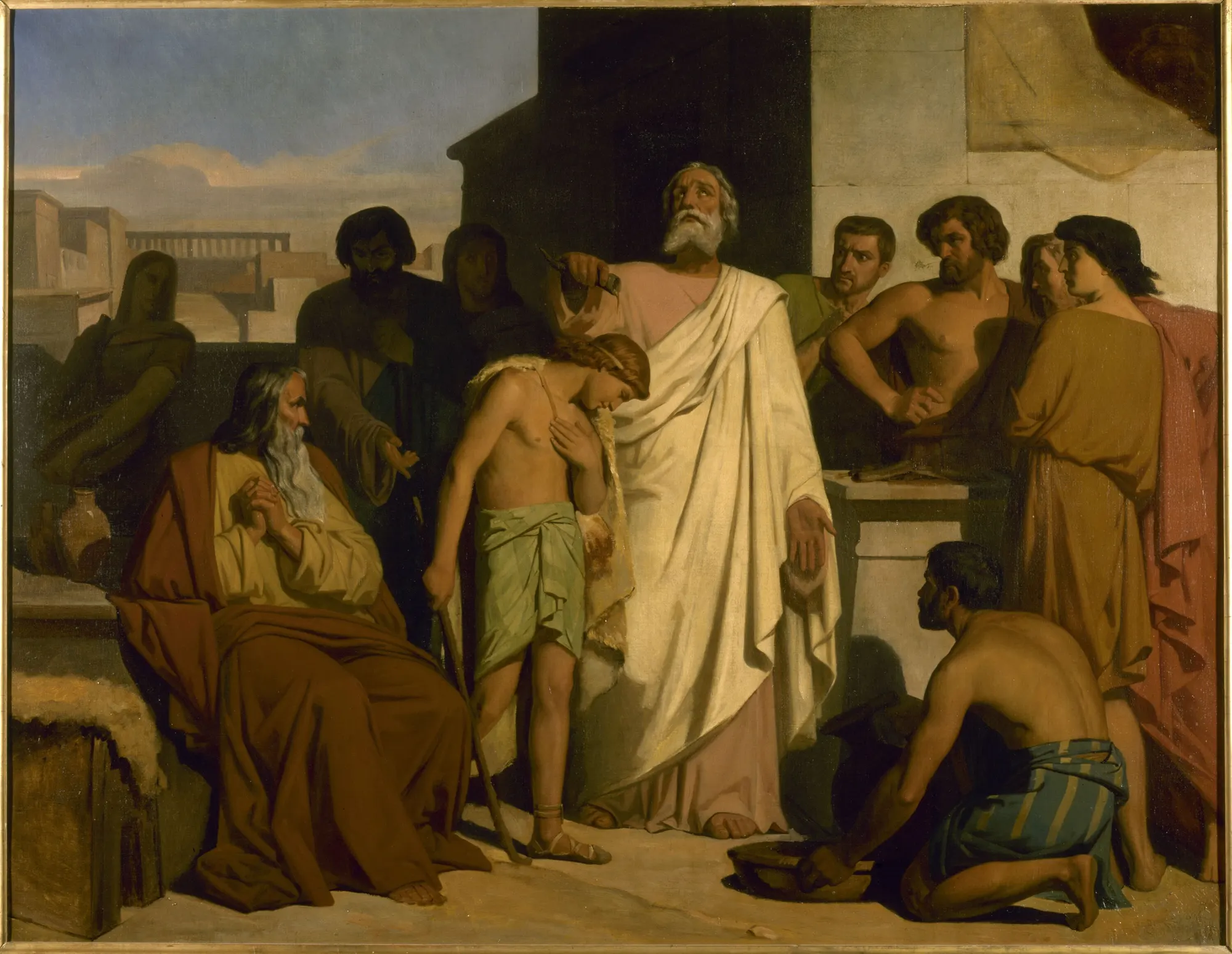
in 1 Samuel 16So Samuel took the horn of oil and anointed him in the presence of his brothers, and the Spirit of the LORD rushed upon David from that day forward. Then Samuel set out and went to Ramah.
BSB
The same verse in ASV and KJV ▾
ASV
Then Samuel took the horn of oil, and anointed him in the midst of his brethren: and the Spirit of Jehovah came mightily upon David from that day forward. So Samuel rose up, and went to Ramah.
KJV
Then Samuel took the horn of oil, and anointed him in the midst of his brethren: and the Spirit of the Lord came upon David from that day forward. So Samuel rose up, and went to Ramah.
⋯
This verse in 1 Samuel 16
Commentary
11 notes on this verseA commentator
Albert Barnes1798–1870
Notes, Explanatory and Practical, on the Old and New Testaments (1832-1869)
The Spirit ... came upon David - The exact phrase used of the Judges and Saul. See 1Sa 10:6, note; Jdg 3:10, note; Jdg 6:34, note; Jdg 11:29, note; Jdg 14:18, note; Jdg 15:14, note.
This site's exposition
So Samuel took the horn of oil and anointed him in the presence of his brothers
Samuel anoints David "in the presence of his brothers," and the Spirit of the LORD rushes upon him from that day forward. Bethlehem, where Ruth's story ended on the name David, is where that name receives the oil. Samuel's part is finished, and he returns to Ramah.
The record, by era
The Church Fathers1 voice
So clearly holy David was filled with heavenly inspiration, and not through human actions, the birth of twins, angels, visions, a dream, a cloud and a voice from heaven, or any other way of that kind. As the first book of Kings [Samuel] says of …
The Medieval Church4 voices
A commentator
Gregory the DialogistCommentary on 1 Kings, Book 6, Chapter 3 · Written before 604.
proposed
19. The horn of oil is lifted up, so that the entire life of the pontiff may be shown to be spiritual. The horn of oil is lifted up, so that in that excellent liquid the master of the Church may strive to be a man of great mercy. The head of the king is anointed with oil, because he ought to shine upon the lampstand through the flame of the word. The horn receives oil, so that by rebuking he may cleanse, and by showing compassion he may draw others through gentleness.
So Samuel took the horn of oil and anointed him, etc. The prophet received the task of proclaiming the glory of the true king, and said: "You have loved righteousness and hated wickedness; therefore God has anointed you" (Psalm 44). He who was conceived of …
Samuel arose and went to Ramah. Having completed the duty of anointing, Samuel returned home; for now, with the coming of the Lord who was foretold to come, the proclamations of the prophets were silenced. For the Law and the prophets prophesied until John (Matthew …
A commentator
Gregory the DialogistCommentary on 1 Kings, Book 6, Chapter 3 · Written before 604.
proposed
Lofty indeed, nay most lofty, is this virtue of perfect conduct, yet it is perfectly accomplished by many. Great indeed is this sublimity, yet holy Church possesses many who are sublime. For from the time she rejected the Synagogue, she raised up holy Church to an innumerable height of virtue. Rightly therefore it is said: "And the Spirit of the Lord was directed upon David from that day forward." The day indeed is faith in the Redeemer, in which holy Church is illuminated and the rejected Synagogue is cast down in wondrous blindness. On that day, therefore, the Holy Spirit is directed upon David, because his grace is taken from the Synagogue and given to the elect of holy Church. For he is directed because he abandons those and takes up these. But he is directed on the day because he who is not illuminated in faith in the Redeemer cannot have the Spirit directing himself within him. The Spirit, therefore, is directed on the day because he is given to those who possess the light of faith. Moreover, he is directed upon David because only holy Church receives him, which is the body of the Redeemer. But since, with God as author, we have completed the things we proposed to treat from the Book of Kings, the supreme and almighty Spirit must be entreated that he who brought forth his words through whomever he willed may grant both to the writer and to the reader the disposition of virtue. Amen.
4 more voices on this verse
The Puritans and the Awakening3 voices
Not that he was at present invested with the royal power, but it was entailed upon him, to come to him in due time. (2.) A divine communication of gifts and graces, to fit him for the government, and make him a type of him who was to be the Messiah, the anointed One, who received the Spirit, not by measure, but without measure.
Then Samuel took the horn of oil,....
This would abundantly satisfy him that his election was of God. The best evidence of our being predestinated to the kingdom of glory is our being sealed with the Spirit of promise, and our experience of a work of grace in our own hearts.
The Nineteenth Century1 voice
The Spirit of the Lord came upon David - God qualified him to be governor of his people, by infusing such graces as wisdom, prudence, counsel, courage, liberality, and magnanimity.
How the passage was read
What the Jewish commentators add
And a spirit of Adonoy passed over. A spirit of strength. 7 Targum renders ‘a spirit of prophecy.’
This section is reception history: how the passage was read and kept in the Jewish tradition. Where a reading parts from an essential of the Christian faith, the section says so at that point.
Texts and citation data: Sefaria; each excerpt follows its version’s licence. 6 further sources are cited on this chapter that carry no English text this site may quote or only restate the verse.
The words behind it
21 Hebrew wordsEvery Hebrew word of this verse in the order it stands, with what it means and the door to its own study. The last column counts the times a word stands in the whole Bible: the rarer the word, the more the places it appears belong together.
| Hebrew | Sound | Meaning | Word study | In the Bible |
|---|---|---|---|---|
| וַיִּקַּ֨ח | vaiyikach | and he took | H3947 → | 966 times |
| שְׁמוּאֵ֜ל | shemuel | Samuel | H8050 → | 141 times |
| אֶת־ | ʾet- | <obj.> | H853 → | 10935 times |
| קֶ֣רֶן | keren | [the] horn of | H7161 → | 76 times |
| הַשֶּׁ֗מֶן | hashemen | <the> oil | H8081 → | 193 times |
| וַיִּמְשַׁ֣ח | vaiyimshach | and he anointed | H4886 → | 70 times |
| אֹתוֹ֮ | ʾoto | <obj.> him | H853 → | 10935 times |
| בְּקֶ֣רֶב | bekerev | in [the] midst of | H7130 → | 227 times |
| אֶחָיו֒ | ʾechav | brothers his | H251 → | 630 times |
| וַתִּצְלַ֤ח | vatitzlach | and it rushed | H6743 → | 65 times |
| רֽוּחַ־ | ruach- | [the] spirit of | H7307 → | 378 times |
| יְהוָה֙ | yahweh | Yahweh | H3068 → | 6520 times |
| אֶל־ | ʾel- | to | H413 → | 5510 times |
| דָּוִ֔ד | david | David | H1732 → | 999 times |
| מֵהַיּ֥וֹם | mehaiyom | from the day | H3117 → | 2304 times |
| הַה֖וּא | hahu' | <the> that | H1931 → | 1879 times |
| וָמָ֑עְלָה | vamaelah | and on -wards | H4605 → | 140 times |
| וַיָּ֣קָם | vaiyakom | and he arose | H6965 → | 628 times |
| שְׁמוּאֵ֔ל | shemuel | Samuel | H8050 → | 141 times |
| וַיֵּ֖לֶךְ | vaiyelekh | and he went | H1980 → | 1546 times |
| הָרָמָֽתָה׃ ס | haramatah | <the> Ramah towards | H7414 → | 36 times |
וַיִּקַּ֨חand he took
vaiyikachH3947 →966 times
שְׁמוּאֵ֜לSamuel
shemuelH8050 →141 times
אֶת־<obj.>
ʾet-H853 →10935 times
קֶ֣רֶן[the] horn of
kerenH7161 →76 times
הַשֶּׁ֗מֶן<the> oil
hashemenH8081 →193 times
וַיִּמְשַׁ֣חand he anointed
vaiyimshachH4886 →70 times
אֹתוֹ֮<obj.> him
ʾotoH853 →10935 times
בְּקֶ֣רֶבin [the] midst of
bekerevH7130 →227 times
אֶחָיו֒brothers his
ʾechavH251 →630 times
וַתִּצְלַ֤חand it rushed
vatitzlachH6743 →65 times
רֽוּחַ־[the] spirit of
ruach-H7307 →378 times
יְהוָה֙Yahweh
yahwehH3068 →6520 times
אֶל־to
ʾel-H413 →5510 times
דָּוִ֔דDavid
davidH1732 →999 times
מֵהַיּ֥וֹםfrom the day
mehaiyomH3117 →2304 times
הַה֖וּא<the> that
hahu'H1931 →1879 times
וָמָ֑עְלָהand on -wards
vamaelahH4605 →140 times
וַיָּ֣קָםand he arose
vaiyakomH6965 →628 times
שְׁמוּאֵ֔לSamuel
shemuelH8050 →141 times
וַיֵּ֖לֶךְand he went
vaiyelekhH1980 →1546 times
הָרָמָֽתָה׃ ס<the> Ramah towards
haramatahH7414 →36 times
A shaded row is a word that stands 400 times or fewer in the Bible.
The walk
8 stopsEach card is a verse this one points to, and under it the verses that one points to in turn. Where several paths arrive at the same place, that place is listed first: the text keeps returning to it.
Through
Hebrews 1:9You have loved righteousness and hated wickedness; therefore God, Your God, has anointed You above Your companions with the oil of joy.”
it leads to
- Psalms 45:7
You have loved righteousness and hated wickedness; therefore God, your God, has anointed you above your companions with the oil of joy.
- Psalms 23:5
You prepare a table before me in the presence of my enemies. You anoint my head with oil; my cup overflows.
- Isaiah 61:3
to console the mourners in Zion—to give them a crown of beauty for ashes, the oil of joy for mourning, and a garment of praise for a spirit of despair. So they will be…
- Psalms 45:7
Through
1 Samuel 10:6Then the Spirit of the LORD will rush upon you, and you will prophesy with them; and you will be transformed into a different person.
it leads to
- 1 Samuel 10:10
When Saul and his servant arrived at Gibeah, a group of prophets met him. Then the Spirit of God rushed upon him, and he prophesied along with them.
Reached by 2 separate paths from here.
- Numbers 11:25
Then the LORD came down in the cloud and spoke to him, and He took some of the Spirit that was on Moses and placed that Spirit on the seventy elders. As the Spirit…
Reached by 2 separate paths from here.
- Judges 3:10
The Spirit of the LORD came upon him, and he became Israel’s judge and went out to war. And the LORD delivered Cushan-rishathaim king of Aram into the hand of Othniel, who prevailed against…
Reached by 2 separate paths from here.
- 1 Samuel 10:10
Through
John 3:34For the One whom God has sent speaks the words of God, for God gives the Spirit without limit.
it leads to
- Acts 10:38
how God anointed Jesus of Nazareth with the Holy Spirit and with power, and how Jesus went around doing good and healing all who were oppressed by the devil, because God was with Him.
- Matthew 12:18
“Here is My Servant, whom I have chosen, My beloved, in whom My soul delights. I will put My Spirit on Him, and He will proclaim justice to the nations.
- Acts 10:38
Where this verse is studied
On this page
Studies14
What the record shows
1 entry- David — attested in contemporary inscriptionundisputed
Tel Dan Stele ('House of David'/bytdwd); Mesha Stele line 31 (restored, contested)
Biblical figure (King of Judah/Israel (dynastic founder), ca. 1010-970 BC) identified in extra-biblical epigraphy.
Counterpoint: Philip R. Davies, Niels Peter Lemche, and Thomas Thompson argued that bytdwd on the Tel Dan stele is a place name rather than a royal house, partly because the letters run together with no word divider. Most epigraphers now read 'House of David,' and the Mesha Stele line 31 parallel remains a contested restoration.
About 1 Samuel
Who and where
3 names in this verse with a page on the site.
- PersonUnited MonarchyDavidSecond king of united Israel, shepherd-turned-monarch, ancestor of the Messiah, and traditional author of many Psalms.
- PersonJudges to monarchySamuelAsked of God by Hannah and lent to the LORD at Shiloh; the last judge and first of the prophets after Moses, who anointed both Sau…
- PlaceHill country of EphraimRamahSamuel's home town, the seat of his circuit as judge, the place David fled to, and the prophet's burial place.
This page draws on 9 works. Open the list of works
This page draws on Adam Clarke, Commentary on the Bible; Albert Barnes, Notes, Explanatory and Practical, on the Old and New Testaments (1832-1869); Albert Barnes, Notes on the Old Testament; Bede, Commentary on Samuel; Cassiodorus, EXPOSITION OF THE PSALMS, PREFACE 1; Gregory the Dialogist, Commentary on 1 Kings, Book 6, Chapter 3; John Gill, Exposition of the Old Testament (1748-1763); Matthew Henry, Commentary on the Whole Bible and W. G. Blaikie, The First Book of Samuel (Expositor's Bible).