
1 Samuel 1:19
in 1 Samuel 1The next morning Elkanah and Hannah got up early to bow in worship before the LORD, and then returned home to Ramah. And Elkanah had relations with his wife Hannah, and the LORD remembered her.
BSB
The same verse in ASV and KJV ▾
ASV
And they rose up in the morning early, and worshipped before Jehovah, and returned, and came to their house to Ramah. And Elkanah knew Hannah his wife; and Jehovah remembered her;
KJV
And they rose up in the morning early, and worshipped before the Lord, and returned, and came to their house to Ramah: and Elkanah knew Hannah his wife; and the Lord remembered her.
⋯
This verse in 1 Samuel 1
Commentary
9 notes on this verseFor the peace-offerings typified Christ's mediation, as well as the sin-offerings: since by this not only atonement is made for sin, but an answer to our prayers obtained. Give him - That is, consecrate him to God's service in his temple. No razor - That is, he shall be a perpetual Nazarite.
This site's exposition
the LORD remembered her
on 1 Samuel 1:19-20
The verse answers the vow in four words, “the LORD remembered her”. The boy's name ties him to the request that produced him: “Because I have asked for him from the LORD”. The root behind asked is the root of Saul's name, a play the narrator lets stand without comment.
The record, by era
The Medieval Church5 voices
A commentator
Gregory the DialogistCommentary on 1 Kings, Book 1, Chapter 1 · Written before 604.
proposed
37. But what does it mean that above it is said singularly of Anna alone: "The woman went on her way," but now in the plural: "They rose in the morning," unless that she is understood to descend with her husband? And because the husband of holy Church is the Redeemer of the human race, who had already ascended to heaven when he was leaving that same Judea overwhelmed by the darkness of its unbelief, how can what is said about Anna and her husband Elkanah now be understood as a type of Christ and the Church—that they rose together in the morning and returned equally to their city? But since we have already said that the city of Ramatha designates the heavenly homeland, how does this apply to holy Church, which did not ascend to the heavenly homeland immediately when it ceased from preaching to the Jews? But because the Lord, rising from the dead, speaks through teachers sent out in preaching, saying: "Behold, I am with you all days, even to the consummation of the world" (Matt. 28:20), it is not absurd that holy Church is understood to rise and return with him. For he who never abandons his elect through spiritual presence both remains with those who stand and departs with those who go away. We said that Ramatha designates the heavenly homeland, but we did not say that it can signify nothing else. What else, then, does it signify in this place, except the fulfillment of prophecy in the calling of the Gentiles? For Ramatha is said to mean "vision consummated," as we have already said. And what is the now-fulfilled calling of the Gentiles, except the consummated vision of the prophets? For he was asserting a vision, but not yet consummated, who was still proclaiming about the future what he had seen, saying: "All nations whatsoever you have made shall come and shall adore before you, O Lord" (Ps. 85:9). […]
And they rose early in the morning, and worshiped, etc. The growth of the increasing Church is shown. At first, Anna rises alone to pray, and the hour at which she prayed is not expressed; now having received the blessing of the priest, she rises …
And they returned, and came, etc. Ramatha is interpreted as height. Therefore, having completed prayer, to obtain what we ask for, so that after the grievous barrenness of an unfruitful mind, we may be able to bring forth the buds of virtues for consecration to …
Therefore, Elkanah knew his wife, etc. The Lord had mercy on enriching the Church of the nations through His grace, and having sent the seed of His word through preachers, He commanded all the ends of the earth to remember and turn to Him.
A commentator
Gregory the DialogistCommentary on 1 Kings, Book 1, Chapter 2 · Written before 604.
proposed
(Moral Exposition) After the multiplication of prayers with his wife Anna, to adore in the morning is among the great gifts of virtues to preserve the virtue of humility; and because the soul which is still weighed down by this burden of corruption cannot stand longer in that sublime vision, they are fittingly reported to have returned to their own city.
2 more voices on this verse
The Puritans and the Awakening2 voices
And they rose up in the morning early,....
Every day they were there, even that which was fixed for their journey home, they worshipped God; and they rose up early to do it. It is good to begin the day with God. Let him that is the first have the first.
The words behind it
17 Hebrew wordsEvery Hebrew word of this verse in the order it stands, with what it means and the door to its own study. The last column counts the times a word stands in the whole Bible: the rarer the word, the more the places it appears belong together.
| Hebrew | Sound | Meaning | Word study | In the Bible |
|---|---|---|---|---|
| וַיַּשְׁכִּ֣מוּ | vaiyashkimu | and they rose early | H7925 → | 65 times |
| בַבֹּ֗קֶר | vaboker | in the morning | H1242 → | 214 times |
| וַיִּֽשְׁתַּחֲווּ֙ | vaiyishtachavu | and they bowed down | H7812 → | 172 times |
| לִפְנֵ֣י | lifnei | <to> before | H6440 → | 2123 times |
| יְהוָ֔ה | yahweh | Yahweh | H3068 → | 6520 times |
| וַיָּשֻׁ֛בוּ | vaiyashuvu | and they returned | H7725 → | 1056 times |
| וַיָּבֹ֥אוּ | vaiyavou | and they went | H935 → | 2568 times |
| אֶל־ | ʾel- | to | H413 → | 5510 times |
| בֵּיתָ֖ם | beitam | house their | H1004 → | 2046 times |
| הָרָמָ֑תָה | haramatah | <the> Ramah towards | H7414 → | 36 times |
| וַיֵּ֤דַע | vaiyeda' | and he knew | H3045 → | 945 times |
| אֶלְקָנָה֙ | ʾelkanah | Elkanah | H511 → | 21 times |
| אֶת־ | ʾet- | <obj.> | H853 → | 10935 times |
| חַנָּ֣ה | chanah | Hannah | H2584 → | 13 times |
| אִשְׁתּ֔וֹ | ʾishto | wife his | H802 → | 781 times |
| וַיִּֽזְכְּרֶ֖הָ | vaiyizkereha | and he remembered her | H2142 → | 230 times |
| יְהוָֽה׃ | yahweh | Yahweh | H3068 → | 6520 times |
וַיַּשְׁכִּ֣מוּand they rose early
vaiyashkimuH7925 →65 times
בַבֹּ֗קֶרin the morning
vabokerH1242 →214 times
וַיִּֽשְׁתַּחֲווּ֙and they bowed down
vaiyishtachavuH7812 →172 times
לִפְנֵ֣י<to> before
lifneiH6440 →2123 times
יְהוָ֔הYahweh
yahwehH3068 →6520 times
וַיָּשֻׁ֛בוּand they returned
vaiyashuvuH7725 →1056 times
וַיָּבֹ֥אוּand they went
vaiyavouH935 →2568 times
אֶל־to
ʾel-H413 →5510 times
בֵּיתָ֖םhouse their
beitamH1004 →2046 times
הָרָמָ֑תָה<the> Ramah towards
haramatahH7414 →36 times
וַיֵּ֤דַעand he knew
vaiyeda'H3045 →945 times
אֶלְקָנָה֙Elkanah
ʾelkanahH511 →21 times
אֶת־<obj.>
ʾet-H853 →10935 times
חַנָּ֣הHannah
chanahH2584 →13 times
אִשְׁתּ֔וֹwife his
ʾishtoH802 →781 times
וַיִּֽזְכְּרֶ֖הָand he remembered her
vaiyizkerehaH2142 →230 times
יְהוָֽה׃Yahweh
yahwehH3068 →6520 times
A shaded row is a word that stands 400 times or fewer in the Bible.
The walk
8 stopsEach card is a verse this one points to, and under it the verses that one points to in turn. Where several paths arrive at the same place, that place is listed first: the text keeps returning to it.
Through
Mark 1:35Early in the morning, while it was still dark, Jesus got up and slipped out to a solitary place to pray.
it leads to
- Luke 6:12
In those days Jesus went out to the mountain to pray, and He spent the night in prayer to God.
- Luke 5:16
Yet He frequently withdrew to the wilderness to pray.
- Luke 22:39–46
Jesus went out as usual to the Mount of Olives, and the disciples followed Him.
- Ephesians 6:18
Pray in the Spirit at all times, with every kind of prayer and petition. To this end, stay alert with all perseverance in your prayers for all the saints.
- Luke 6:12
Through
Genesis 21:1Now the LORD attended to Sarah as He had said, and the LORD did for Sarah what He had promised.
it leads to
- Psalms 12:6
The words of the LORD are flawless, like silver refined in a furnace, like gold purified sevenfold.
- Genesis 18:10
Then the LORD said, “I will surely return to you at this time next year, and your wife Sarah will have a son!” Now Sarah was behind him, listening at the entrance to the…
- Genesis 18:14
Is anything too difficult for the LORD? At the appointed time I will return to you—in about a year—and Sarah will have a son.”
- Genesis 17:19
But God replied, “Your wife Sarah will indeed bear you a son, and you are to name him Isaac. I will establish My covenant with him as an everlasting covenant for his descendants after…
- Psalms 12:6
Where this verse is studied
On this page
Studies13
On this verse
About 1 Samuel
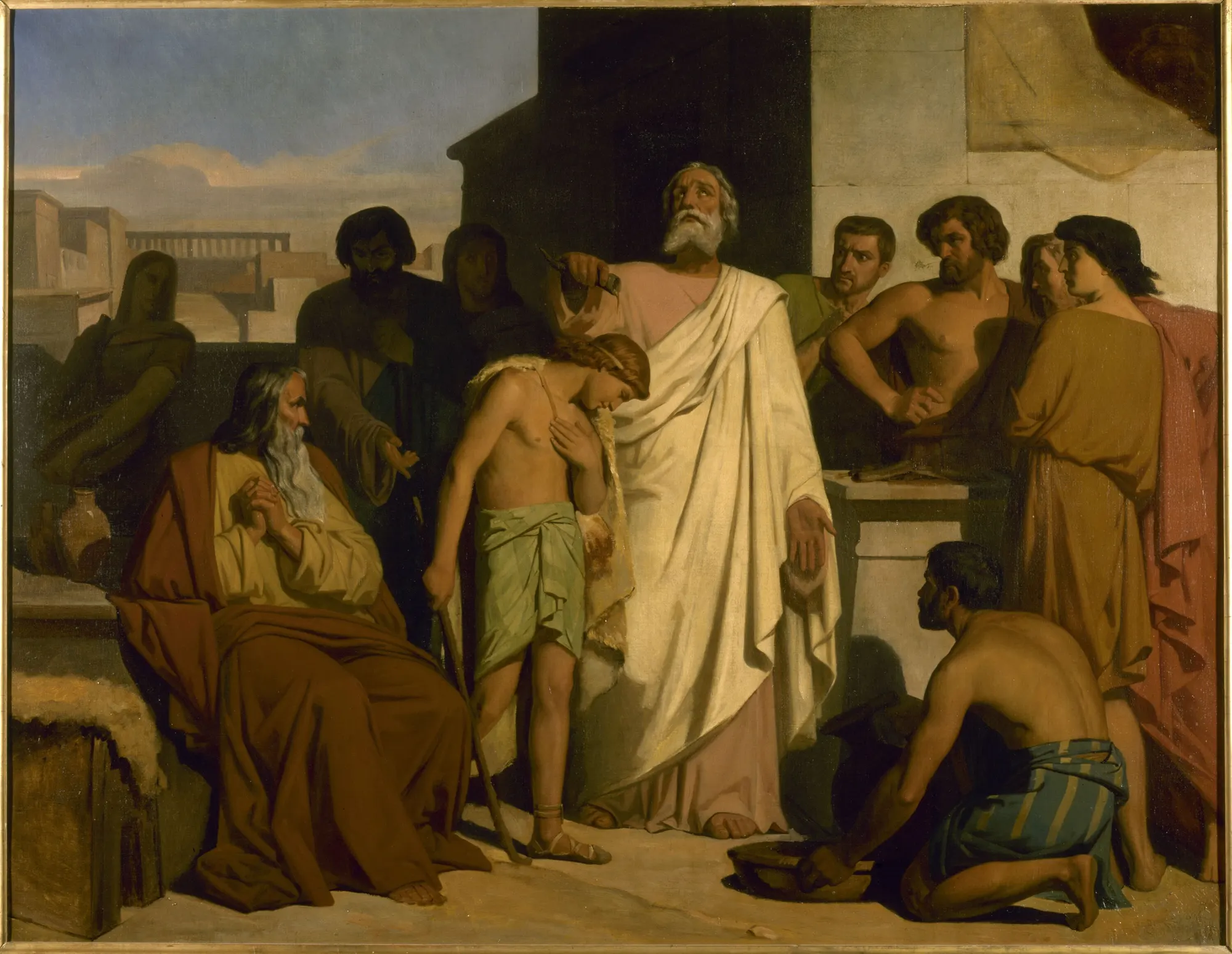
Who and where
2 names in this verse with a page on the site.
- PersonJudges to monarchyHannahThe barren wife who wept at Shiloh, vowed her son to the LORD, and sang the song of reversal — "he raiseth up the poor out of the…
- PlaceHill country of EphraimRamahSamuel's home town, the seat of his circuit as judge, the place David fled to, and the prophet's burial place.
This page draws on Bede, Commentary on Samuel; Gregory the Dialogist, Commentary on 1 Kings, Book 1, Chapter 1; Gregory the Dialogist, Commentary on 1 Kings, Book 1, Chapter 2; John Gill, Exposition of the Old Testament (1748-1763); John Wesley, Explanatory Notes upon the Old Testament; Keil and Delitzsch, Biblical Commentary on the Books of Samuel and Matthew Henry, Commentary on the Whole Bible.