
Exodus 17:12
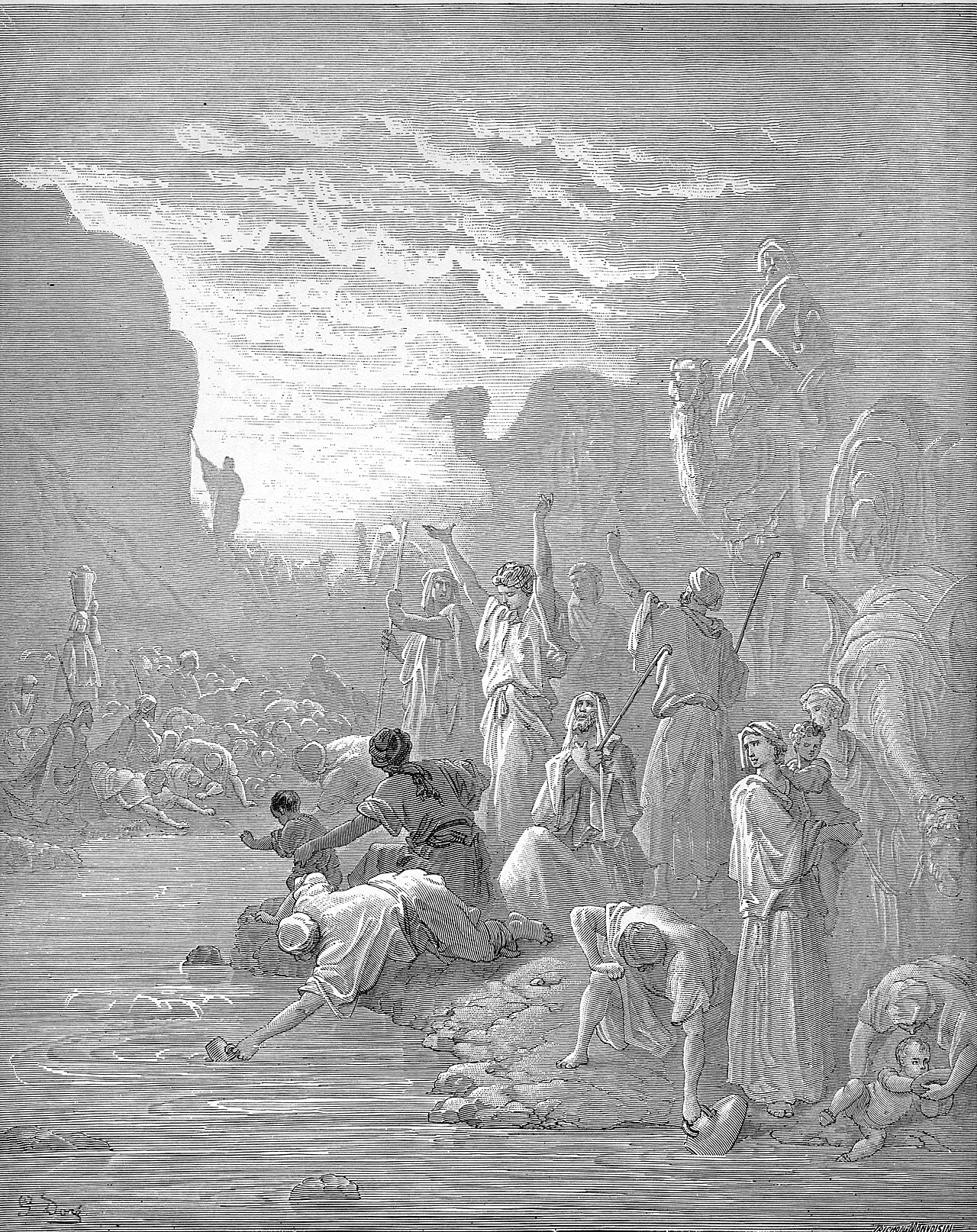
in Exodus 17When Moses’ hands grew heavy, they took a stone and put it under him, and he sat on it. Then Aaron and Hur held his hands up, one on each side, so that his hands remained steady until the sun went down.
BSB
The same verse in ASV and KJV ▾
ASV
But Moses’ hands were heavy; and they took a stone, and put it under him, and he sat thereon; and Aaron and Hur stayed up his hands, the one on the one side, and the other on the other side; and his hands were steady until the going down of the sun.
KJV
But Moses’ hands were heavy; and they took a stone, and put it under him, and he sat thereon; and Aaron and Hur stayed up his hands, the one on the one side, and the other on the other side; and his hands were steady until the going down of the sun.
⋯
This verse in Exodus 17
Commentary
14 notes on this verseA commentator
Albert Barnes1798–1870
Notes, Explanatory and Practical, on the Old and New Testaments (1832-1869)
Until the going down of the sun - The length of this first great battle indicates the strength and obstinacy of the assailants. It was no mere raid of Bedouins, but a deliberate attack of the Amalekites, who had been probably thoroughly trained in warfare by their struggles with Egypt.
This site's exposition
when Moses held up his hand
on Exodus 17:11-13
The battle rises and falls with the hand on the hill rather than with the fighting in the valley, and the verse says it twice so the reader cannot miss it. What the raised hand means has been read two ways, as a banner lifted to rally the men, and as the posture of prayer, which is how the Targum renders it and how John Gill reports the older Jewish readers. A stone is put under Moses and two men hold his arms steady until sundown, so the thing the day turns on is the thing that gives out first. Joshua wins the field with the edge of the sword, and the account still gives him the credit by name.
This site's exposition
his hands remained steady until the sun went down
Steady translates emunah, the Hebrew noun used elsewhere for faithfulness, as at Habakkuk 2:4. Albert Barnes takes the length of the fight, a full day to sundown, as a mark of Amalek's strength, a people he thinks were trained by wars with Egypt. He calls it a deliberate attack.
The record, by era
The Church Fathers5 voices
See how the type was "given by Moses," but the "Truth came by Jesus Christ." Again, when the Amalekites warred in Mount Sinai, the hands of Moses were supported, being stayed up by Aaron and Hur standing on either side of him; but when Christ came, He of Himself stretched forth His Hands upon the Cross. Hast thou observed how the type "was given," but "the Truth came"?
But, to come now to Moses, why, I wonder, did he merely at the time when Joshua was battling against Amalek, pray sitting with hands expanded, when, in circumstances so critical, he ought rather, surely, to have commended his prayer by knees bent, and hands beating his breast, and a face prostrate on the ground; except it was that there, where the name of the Lord Jesus was the theme of speech—destined as he was to enter the lists one day singly against the devil—the figure of the cross was also necessary, [that figure] through which Jesus was to win the victory?
For it was not because Moses so prayed that the people were stronger, but because, while one who bore the name of Jesus (Joshua) was in the forefront of the battle, he himself made the sign of the cross. For who of you knows not that the prayer of one who accompanies it with lamentation and tears, with the body prostrate, or with bended knees, propitiates God most of all? But in such a manner neither he nor any other one, while sitting on a stone, prayed. Nor even the stone symbolized Christ, as I have shown.
For it was not without design that the prophet Moses, when Hur and Aaron upheld his hands, remained in this form until evening. For indeed the Lord remained upon the tree almost until evening, and they buried Him at eventide; then on the third day He rose again.
See how the type was "given by Moses," but the "Truth came by Jesus Christ." Again, when the Amalekites warred in Mount Sinai, the hands of Moses were supported, being stayed up by Aaron and Hur standing on either side of him; but when Christ came, He of Himself stretched forth His Hands upon the Cross. Hast thou observed how the type "was given," but "the Truth came"?
6 more voices on this verse
The Church Fathers2 voices
Moses showed this when his hands became so heavy that Joshua the son of Nun could hardly hold them up. For that reason the people conquered when they performed works not carelessly but with full consideration and virtue—not with faltering souls nor with a wavering disposition but with the stability of a firm mind.
When Moses' hands were lifted up Amalek was conquered; when they came down a little he grew strong. The sailyards of ships and the ends of the sailyards move about in the form of our cross. The very birds, too, when they are borne to …
The Medieval Church1 voice
When Moses sat on the stone, it prefigured the law resting on the church. But this law had heavy hands, because it did not deal mercifully with those who were sinners but treated them with extreme harshness. "Aaron" means "mountain of strength," and "Hur" means "fire." Who is meant by "mountain of strength"? Our Redeemer, of whom the prophet said, "It shall come to pass in the latter days that the mountain of the house of the Lord shall be established as the highest of the mountains." And who is prefigured by "fire" but the Holy Spirit, of whom our Redeemer said, "I have come to cast fire upon the earth"? Aaron and Hur support the heavy hands of Moses and make them lighter by their support. Similarly the "Mediator between God and men," coming with the fire of the Holy Spirit, revealed that the heavy commandments of the law, which cannot be borne when taken literally, become more tolerable for us when they are understood spiritually. It is as if he made the hands of Moses light when he changed the weight of the law's commandments into the strength that comes from confession.
The Puritans and the Awakening3 voices
No doubt it was a great encouragement to the people to see Joshua before them in the field of battle and Moses above them upon the top of the hill: Christ is both to us--our Joshua, the captain of our salvation who fights our battles, and our Moses, who, in the upper world, ever lives making intercession, that our faith fail not.
But Moses's hands were heavy,....
The strongest arm will fail with being long extended; it is God only whose hand is stretched out still. We do not find that Joshua's hands were heavy in fighting, but Moses's hands were heavy in praying. The more spiritual any service is the more apt we are to fail and flag in it.
How the passage was read
What the Jewish commentators add
AND HIS HANDS WERE ‘EMUNAH’. This means that they remained steadily uplifted. The usage of the word is similar to the expressions: ‘va’amanah’ (And a sure) ordinance concerning the singers, as every day required; 465 Nehemiah:23. And yet for all this we make ‘amanah’ (a sure) covenant, 466 Ibid.,:1.
2 more on this passage, in their own words ▾
By way of the plain meaning of Scripture, when Moses was compelled to lower his hands because of weariness, he saw that Amalek prevailed. He then commanded Aaron and Hur to support them, and thus he would not lower them again.
There is no difference between va-yachalosh. Which is an efol. (discomfited or weakened) and va-yechelash. Which is an efal.
This section is reception history: how the passage was read and kept in the Jewish tradition. Where a reading parts from an essential of the Christian faith, the section says so at that point.
Texts and citation data: Sefaria; each excerpt follows its version’s licence. 2 further sources are cited on this chapter that carry no English text this site may quote or only restate the verse.
The words behind it
23 Hebrew wordsEvery Hebrew word of this verse in the order it stands, with what it means and the door to its own study. The last column counts the times a word stands in the whole Bible: the rarer the word, the more the places it appears belong together.
| Hebrew | Sound | Meaning | Word study | In the Bible |
|---|---|---|---|---|
| וִידֵ֤י | videi | and [the] hands of | H3027 → | 1618 times |
| מֹשֶׁה֙ | mosheh | Moses | H4872 → | 765 times |
| כְּבֵדִ֔ים | kevedim | [were] heavy | H3515 → | 41 times |
| וַיִּקְחוּ־ | vaiyikchu- | and they took | H3947 → | 966 times |
| אֶ֛בֶן | ʾeven | a stone | H68 → | 273 times |
| וַיָּשִׂ֥ימוּ | vaiyasimu | and they put [it] | H7760 → | 584 times |
| תַחְתָּ֖יו | tachtav | under him | H8478 → | 505 times |
| וַיֵּ֣שֶׁב | vaiyeshev | and he sat | H3427 → | 1079 times |
| עָלֶ֑יהָ | ʾaleiha | on it | H5921 → | 5755 times |
| וְאַהֲרֹ֨ן | veaharon | and Aaron | H175 → | 347 times |
| וְח֜וּר | vechur | and Hur | H2354 → | 15 times |
| תָּֽמְכ֣וּ | tamekhu | they supported | H8551 → | |
| בְיָדָ֗יו | veyadav | <in> hands his | H3027 → | 1618 times |
| מִזֶּ֤ה | mizeh | from this | H2088 → | 1180 times |
| אֶחָד֙ | ʾechad | one | H259 → | 971 times |
| וּמִזֶּ֣ה | umizeh | and from this | H2088 → | 1180 times |
| אֶחָ֔ד | ʾechad | one | H259 → | 971 times |
| וַיְהִ֥י | vayhi | and it was | H1961 → | 3559 times |
| יָדָ֛יו | yadav | hands his | H3027 → | 1618 times |
| אֱמוּנָ֖ה | ʾemunah | [were] steadiness | H530 → | |
| עַד־ | ʾad- | until | H5704 → | 1261 times |
| בֹּ֥א | bo' | went | H935 → | 2568 times |
| הַשָּֽׁמֶשׁ׃ | hashamesh | the sun | H8121 → | 134 times |
וִידֵ֤יand [the] hands of
videiH3027 →1618 times
מֹשֶׁה֙Moses
moshehH4872 →765 times
כְּבֵדִ֔ים[were] heavy
kevedimH3515 →41 times
וַיִּקְחוּ־and they took
vaiyikchu-H3947 →966 times
אֶ֛בֶןa stone
ʾevenH68 →273 times
וַיָּשִׂ֥ימוּand they put [it]
vaiyasimuH7760 →584 times
תַחְתָּ֖יוunder him
tachtavH8478 →505 times
וַיֵּ֣שֶׁבand he sat
vaiyeshevH3427 →1079 times
עָלֶ֑יהָon it
ʾaleihaH5921 →5755 times
וְאַהֲרֹ֨ןand Aaron
veaharonH175 →347 times
וְח֜וּרand Hur
vechurH2354 →15 times
תָּֽמְכ֣וּthey supported
tamekhuH8551 →
בְיָדָ֗יו<in> hands his
veyadavH3027 →1618 times
מִזֶּ֤הfrom this
mizehH2088 →1180 times
אֶחָד֙one
ʾechadH259 →971 times
וּמִזֶּ֣הand from this
umizehH2088 →1180 times
אֶחָ֔דone
ʾechadH259 →971 times
וַיְהִ֥יand it was
vayhiH1961 →3559 times
יָדָ֛יוhands his
yadavH3027 →1618 times
אֱמוּנָ֖ה[were] steadiness
ʾemunahH530 →
עַד־until
ʾad-H5704 →1261 times
בֹּ֥אwent
bo'H935 →2568 times
הַשָּֽׁמֶשׁ׃the sun
hashameshH8121 →134 times
A shaded row is a word that stands 400 times or fewer in the Bible.
The walk
8 stopsEach card is a verse this one points to, and under it the verses that one points to in turn. Where several paths arrive at the same place, that place is listed first: the text keeps returning to it.
Through
Ephesians 6:18Pray in the Spirit at all times, with every kind of prayer and petition. To this end, stay alert with all perseverance in your prayers for all the saints.
it leads to
- 1 Thessalonians 5:17
Pray without ceasing.
- Colossians 4:2
Devote yourselves to prayer, being watchful and thankful,
- Philippians 4:6
Be anxious for nothing, but in everything, by prayer and petition, with thanksgiving, present your requests to God.
- 1 Timothy 2:1
First of all, then, I urge that petitions, prayers, intercessions, and thanksgiving be offered for everyone—
- Jude 1:20
But you, beloved, by building yourselves up in your most holy faith and praying in the Holy Spirit,
- 1 Thessalonians 5:17
Through
Isaiah 35:3Strengthen the limp hands and steady the feeble knees!
it leads to
- Job 4:3–4
Surely you have instructed many, and have strengthened their feeble hands.
Reached by 2 separate paths from here.
- Hebrews 12:12
Therefore strengthen your limp hands and weak knees.
- Job 4:3–4
Through
Hebrews 12:12Therefore strengthen your limp hands and weak knees.
it leads to
- Isaiah 35:3
Strengthen the limp hands and steady the feeble knees!
- Isaiah 35:3
Where this verse is studied
About Exodus
Who and where
2 names in this verse with a page on the site.
This page draws on 13 works. Open the list of works
This page draws on Albert Barnes, Notes, Explanatory and Practical, on the Old and New Testaments (1832-1869); Albert Barnes, Notes, Explanatory and Practical, on the Old and New Testaments; Ambrose of Milan, LETTER 7 (37).33; Charles Spurgeon, The Metropolitan Tabernacle Pulpit, Sermon No. 712: War With Amalek; Gregory the Dialogist, Forty Gospel Homilies, Homily 33; John Chrysostom, HOMILIES ON THE GOSPEL OF JOHN 14; John Gill, Exposition of the Old Testament; John Gill, Exposition of the Old Testament (1748-1763); Justin Martyr, Dialogue with Trypho, Chapter XC; Justin Martyr, Dialogue with Trypho, Chapter XCVII; Matthew Henry, Commentary on the Whole Bible; Maximus of Turin, SERMON 45.3 and Tertullian, ANSWER TO THE JEWS 10.10.