

John 14 · Value 13 of 41 · Featured Study
Peace
Peace in Scripture is the welfare God gives, peace with Him through Christ, and peace among people that His children are sent to make.
King Joram met Jehu with the question “Have you come in peace, Jehu?” (2 Kings 9:22).
Peace I leave with you; My peace I give to you. I do not give to you as the world gives. Do not let your hearts be troubled; do not be afraid.
- Anchor text
- John 14:25 to 31 “…everything I have told you. Peace I…”
- Its opposite
- Strife and the false peace that says all is well
- Hold in memory
- John 14:27, Romans 12:18
Summary
Peace in Scripture starts with God and moves outward to people. The prophets looked for a ruler of whose government and peace “there will be no end” (Isaiah 9:7), and the New Testament finds Him in Jesus. He left His own peace with His disciples on the night before He died, and Paul calls Him our peace.
- God is called the God of peace, and every true peace comes from Him.
- Peace with God is a standing made once through the blood of Christ's cross.
- Peace is part of the fruit the Holy Spirit grows in believers.
- A peace announced where sin is left alone is the false peace the prophets condemned.
What Peace Is
The Hebrew and Greek words name welfare, the peace offering, peace itself and the peacemaker.
Peace runs through Scripture from the blessing of Israel's priests to the greetings that close the apostles' letters. Israel greeted and blessed with the word, the prophets promised it, and Jesus gave it as His own. This study of peace asks what Scripture means by the word, where peace comes from, and how God's people are to have it and make it. It gives the words, the key texts, the ground of peace in God, Christ and peace, the people who made peace, its practice and its opposite. It ends with the stories, the voices and the questions on which readers disagree.
Shalom, welfare and peace
236 uses in the canon
The Hebrew noun shalom (H7965) is the Old Testament's word for peace in greeting, in blessing and in covenant. Jeremiah's letter to the exiles renders it prosperity: “Seek the prosperity of the city to which I have sent you as exiles.”
Shelem, the peace offering
87 uses in the canon
The Hebrew noun shelem (H8002) names the peace offering and stands 87 times, 30 of them in Leviticus. Its law opens, “If one’s offering is a peace offering and he offers an animal from the herd.”
Eirene, peace
91 uses in the canon
The Greek noun eirene (G1515) stands 91 times, most often in Luke, and in the Greek Old Testament it carries the range of shalom. Jesus used it in Israel's old farewell: “Go in peace and be free of your affliction.”
Eirenopoios, peacemaker
1 use in the canon
The Greek eirenopoios (G1518) stands once in the New Testament, where Jesus says that peacemakers “will be called sons of God.”
Shalom, welfare and peace, Shelem, the peace offering, Eirene, peace, Eirenopoios, peacemaker, The Words Shalom and Eirene, the study in brief
The Key Texts of Peace
The Law, the psalms, the prophets, the Gospels and the letters each name peace as God's gift.
Law
‘May the LORD bless you and keep you; may the LORD cause His face to shine upon you and be gracious to you; may the LORD lift up His countenance toward you and give you peace.’
The priests were to close every blessing of Israel by asking the LORD for this gift.
Wisdom
The LORD gives His people strength; the LORD blesses His people with peace.
The psalm of the thunderstorm ends with the LORD giving His people strength and peace.
Psalm 29:11BSB
Wisdom
Loving devotion and faithfulness have joined together; righteousness and peace have kissed.
The psalm pictures God's salvation as righteousness and peace meeting in one embrace.
Psalm 85:10BSB
Prophets
For unto us a child is born, unto us a son is given, and the government will be upon His shoulders. And He will be called Wonderful Counselor, Mighty God, Everlasting Father, Prince of Peace.
Isaiah gives the child born to rule on David's throne the name Prince of Peace.
Isaiah 9:6BSB
Prophets
The work of righteousness will be peace; the service of righteousness will be quiet confidence forever.
Isaiah makes peace the work that righteousness produces.
Isaiah 32:17BSB
Gospels
“Glory to God in the highest, and on earth peace to men on whom His favor rests!”
The angels announce peace on earth on the night Jesus is born.
Luke 2:14BSB
Epistles
But the fruit of the Spirit is love, joy, peace, patience, kindness, goodness, faithfulness, gentleness, and self-control. Against such things there is no law.
Paul sets peace among the fruit of the Spirit, over against the works of the flesh he has just listed.
Psalm 29:11, Psalm 85:10, Isaiah 9:6, Isaiah 32:17, Luke 2:14, Galatians 5:22 to 23
Peace Rests on the God of Peace
Scripture names God the LORD of peace and the God of peace, and binds His people to Him by a covenant of peace.
When the angel of the LORD called Gideon, the LORD told him, “Peace be with you. Do not be afraid, for you will not die” (Judges 6:23). Gideon “built an altar to the LORD there and called it The LORD Is Peace” (Judges 6:24).
Paul uses the same name of God at the close of his letters. He writes, “The God of peace be with all of you” (Romans 15:33), and “The God of peace will soon crush Satan under your feet” (Romans 16:20). Hebrews calls Him “the God of peace, who through the blood of the eternal covenant brought back from the dead our Lord Jesus” (Hebrews 13:20).
Through Isaiah the LORD promised, “My covenant of peace will not be broken” (Isaiah 54:10).
Scripture speaks of peace with God, made by the cross, and of the peace of God, which keeps those who trust Him.
| Text | The Berean words |
|---|---|
| Peace with God, made through the cross | |
| Romans 5:1 | “since we have been justified through faith, we have peace with God through our Lord Jesus Christ” |
| 2 Corinthians 5:19 | “God was reconciling the world to Himself in Christ, not counting men’s trespasses against them” |
| Ephesians 2:14 | “For He Himself is our peace, who has made the two one and has torn down the dividing wall of hostility” |
| Colossians 1:20 | “and through Him to reconcile to Himself all things, whether things on earth or things in heaven, by making peace through the blood of His cross” |
| The peace of God, which keeps those who trust Him | |
| Philippians 4:7 | “And the peace of God, which surpasses all understanding, will guard your hearts and your minds in Christ Jesus” |
| Colossians 3:15 | “Let the peace of Christ rule in your hearts, for to this you were called as members of one body” |
| 2 Thessalonians 3:16 | “Now may the Lord of peace Himself give you peace at all times and in every way” |
| Isaiah 26:3 | “You will keep in perfect peace the steadfast of mind, because he trusts in You” |
Philippians 4:7, Colossians 3:15, 2 Thessalonians 3:16, Isaiah 26:3
A table of eight texts in two groups of four, each with its Berean words., The Peace That Surpasses All Understanding, the study in brief
Christ and Peace
Jesus gave peace to a woman He forgave, set His disciples' peace in Himself, won peace by His death and spoke it over them when He rose.
He sent the forgiven away in peaceLuke 7
Jesus was dining at a Pharisee's house when “a sinful woman from that town” came with an alabaster jar of perfume (Luke 7:37). She wet His feet with her tears, and He told her that her sins were forgiven.
And Jesus told the woman, “Your faith has saved you; go in peace.”
Luke 7:50BSB Jesus ties the peace He gives the woman to the faith that has saved her.
Read the page on Jesus 33 sections, 35 verses set out
He taught that His people have peace in HimJohn 16
On the night before He died, Jesus told the eleven that they would be scattered, each to his own home, and would leave Him all alone (John 16:32).
I have told you these things so that in Me you may have peace. In the world you will have tribulation. But take courage; I have overcome the world!”
John 16:33BSB Jesus sets peace in Himself against the tribulation His disciples will meet in the world.
Read the study of My Peace I Give to You 8 sections, 7 verses set out
He made peace by His deathIsaiah 53
Paul tells Gentile believers that “you who once were far away have been brought near through the blood of Christ” (Ephesians 2:13). Isaiah had foretold that peace in his chapter on the servant of the LORD.
But He was pierced for our transgressions, He was crushed for our iniquities; the punishment that brought us peace was upon Him, and by His stripes we are healed.
Isaiah 53:5BSB Isaiah names peace as what the servant's punishment won for others.
Read the story of the Crucifixion 12 sections, 12 verses set out
He greeted His disciples with peace when He roseJohn 20
On the evening of the day He rose, the disciples were together “with the doors locked for fear of the Jews” (John 20:19). Jesus came and stood among them and showed them His hands and His side.
Again Jesus said to them, “Peace be with you. As the Father has sent Me, so also I am sending you.”
John 20:21BSB Jesus joins His second greeting of peace to the sending of His disciples.
Read the story of the Empty Tomb 12 sections, 10 verses set out
He taught that His people have peace in Him (John 16), He made peace by His death (Isaiah 53), He greeted His disciples with peace when He rose (John 20)
Isaiah 53:5, John 20:21
Who Made Peace
Four people of the Bible made peace with a kinsman, a besieging army, two quarrelling men and a master.

When his herdsmen quarrelled with Lot's, he said, “Please let there be no contention between you and me,” and let Lot choose his land first.
Genesis 13:8 to 9The wise woman of Abel
When Joab besieged her city to take the rebel Sheba, she persuaded the people to cut off Sheba's head and throw it over the wall, and the army withdrew.
2 Samuel 20:21 to 22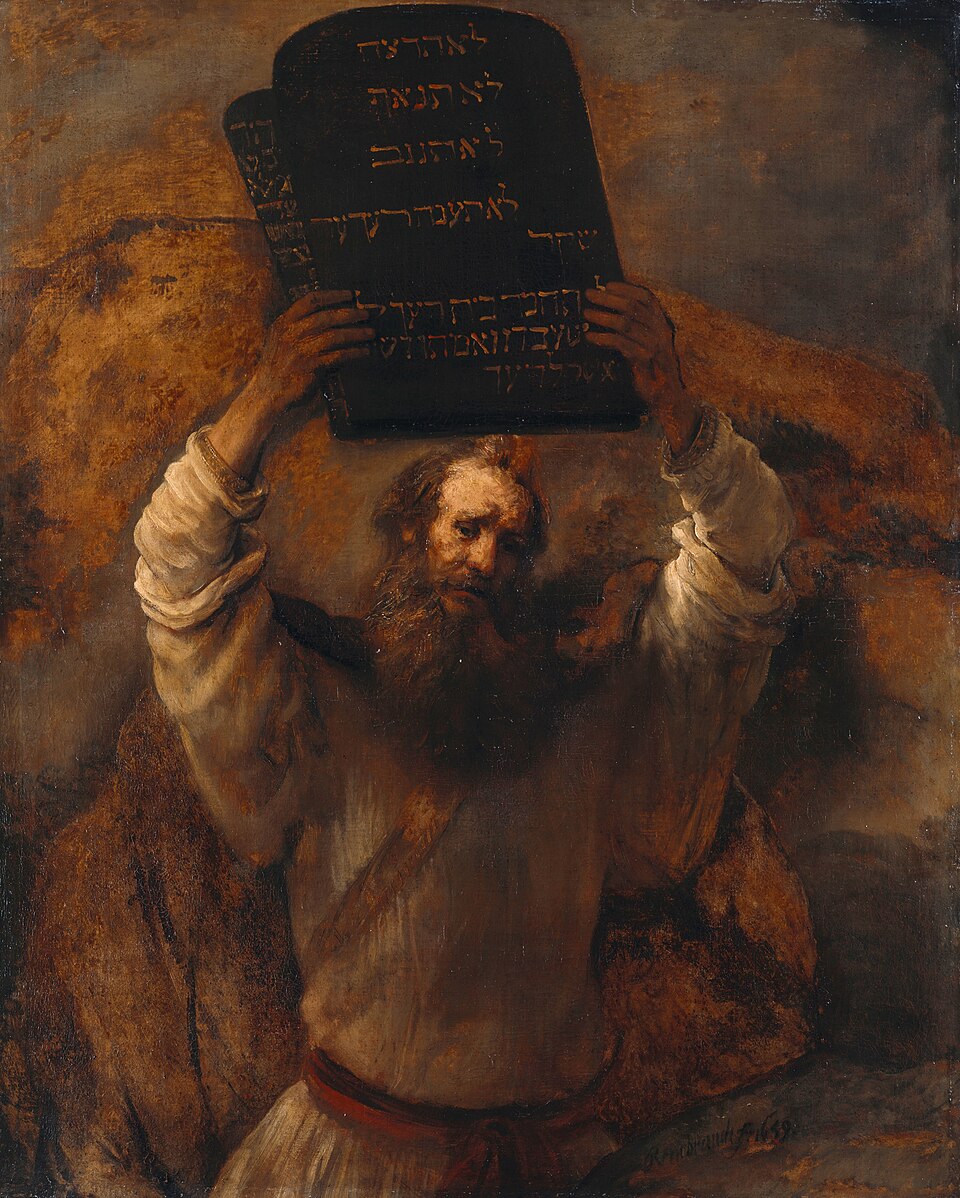
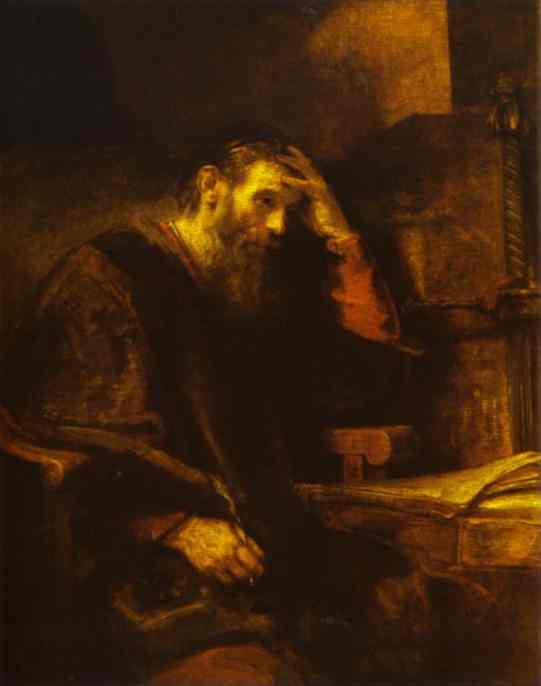
He sent the runaway slave Onesimus back to Philemon “no longer as a slave, but better than a slave, as a beloved brother.”
Philemon 1:16
Moses, Paul
The Practice of Peace
Scripture names seven practices of peace, each in the words of the verse that gives it.
- 1Seek it and pursue it“Turn away from evil and do good; seek peace and pursue it.”Psalm 34:14
- 2Do your part“If it is possible on your part, live at peace with everyone.”Romans 12:18
- 3Pursue it with holiness“Pursue peace with everyone, as well as holiness, without which no one will see the Lord.”Hebrews 12:14
- 4Choose what builds up“So then, let us pursue what leads to peace and to mutual edification.”Romans 14:19
- 5Be reconciled before you worship“First go and be reconciled to your brother; then come and offer your gift.”Matthew 5:24
- 6Keep the unity“with diligence to preserve the unity of the Spirit through the bond of peace.”Ephesians 4:3
- 7Sow it“Peacemakers who sow in peace reap the fruit of righteousness.”James 3:18
Do your part, Pursue it with holiness, Choose what builds up, Be reconciled before you worship, Keep the unity, Sow it
What Stands Against Peace
Scripture names a false peace that hides sin, the restlessness of the wicked and the quarrels that come from within.
The prophets charged Israel's priests and prophets with a false peace. Jeremiah said they were “saying, ‘Peace, peace,’ when there is no peace at all” (Jeremiah 6:14). Paul warned the church that “while people are saying, ‘Peace and security,’ destruction will come upon them suddenly” (1 Thessalonians 5:3).
James traces the conflicts and quarrels of the church to “the passions at war within you” (James 4:1).
But the wicked are like the storm-tossed sea, for it cannot be still, and its waves churn up mire and muck. “There is no peace,” says my God, “for the wicked.”Isaiah compares the wicked to a sea that cannot rest and says the LORD gives them no peace.
As Jesus approached Jerusalem and saw the city, He wept over it and said, “If only you had known on this day what would bring you peace! But now it is hidden from your eyes. For the days will come upon you when your enemies will barricade you and surround you and hem you in on every side. They will level you to the ground—you and the children within your walls. They will not leave one stone on another, because you did not recognize the time of your visitation from God.”Jesus weeps over Jerusalem because the city did not know the way to its own peace, and He foretells its fall.
Isaiah 57:20 to 21, Luke 19:41 to 44
Peace in the Stories of the Bible
Four stories tell of wells given up, brothers reconciled, a raid turned back and a storm stilled.
Isaac gives up his wellsGenesis 26
The herdsmen of Gerar quarrelled with Isaac's herdsmen over two wells he had dug, and he named them Esek and Sitnah (Genesis 26:20 to 21). Later Abimelech came from Gerar to make a covenant with him. Isaac “prepared a feast for them”, and the next morning he “sent them on their way, and they left him in peace” (Genesis 26:30 to 31).
He moved on from there and dug another well, and they did not quarrel over it. He named it Rehoboth and said, “At last the LORD has made room for us, and we will be fruitful in the land.”
Genesis 26:22BSB The third well gives Isaac room in the land without a quarrel.
Jacob and EsauGenesis 33
Jacob had taken his brother's blessing by deceit and fled from his anger. Twenty years later he came home afraid of Esau and sent gifts ahead of him. He “bowed to the ground seven times as he approached his brother” (Genesis 33:3). Afterward he pressed his gift on Esau and told him that seeing his face was “like seeing the face of God” (Genesis 33:10).
Esau, however, ran to him and embraced him, threw his arms around his neck, and kissed him. And they both wept.
Genesis 33:4BSB Esau's embrace answers twenty years of fear with a brother's welcome.
Abigail meets David1 Samuel 25
Nabal refused food to David's men, and about four hundred of them strapped on their swords (1 Samuel 25:13). His wife Abigail loaded donkeys with bread, wine, meat, grain, raisins and figs and went out to meet David on the road (1 Samuel 25:18). David “accepted from her hand what she had brought him” and said, “Go home in peace” (1 Samuel 25:35).
Blessed is your discernment, and blessed are you, because today you kept me from bloodshed and from avenging myself by my own hand.
1 Samuel 25:33BSB David blesses Abigail because she kept him from avenging himself by his own hand.
Read the study of Abigail 9 sections, 17 verses set out
Jesus stills the stormMark 4
A violent windstorm swamped the disciples' boat while Jesus slept on a cushion in the stern. The disciples woke Him and asked whether He cared that they were perishing (Mark 4:38). He rebuked the wind and the sea, and the wind died down, and it was perfectly calm (Mark 4:39).
“Why are you so afraid?” He asked. “Do you still have no faith?”
Mark 4:40BSB Jesus turns from the calmed sea to the fear of His disciples.
Read the study of Jesus Stills the Storm 8 sections, 7 verses set out
Jacob and Esau (Genesis 33), Abigail meets David (1 Samuel 25), Jesus stills the storm (Mark 4)
1 Samuel 25:33, Mark 4:40
Peace in the Church's History
Three accounts tell of a French synod of 989 that limited private war, Friends who renounced outward weapons in 1660, and a hymn written after a shipwreck in 1873.
The Peace and the Truce of God989 to 1179
The Synod of Charroux in 989, under Archbishop Gunbald of Bordeaux, laid anathema on anyone who robbed a peasant or a poor person of a sheep, ox, ass, cow, goat or pig, or attacked an unarmed clergyman. The Truce of God followed. The council of Elne in 1027 forbade fighting “from Saturday night until Monday morning”, and canon 21 of the council of 1179 extended the truce to the whole Church. Charles Moeller wrote in 1912 that these were efforts “to limit the scourge of private war without suppressing it outright”.
The Quaker declaration1660
George Fox and other Friends presented a declaration to Charles II “upon the 21st day of the 11th Month, 1660”. They wrote, “Our principle is, and our practices have always been, to seek peace and ensue it”, and they denied “all outward wars and strife, and fightings with outward weapons, for any end, or under any pretense whatsoever”. The same declaration asked the magistrates to keep their swords “for sinners and transgressors, to keep them down”.
Horatio Spafford1873
The Psalter Hymnal Handbook reports that the Ville du Havre “collided with the English ship Lochearn on November 22 and sank in just twelve minutes”. Horatio Spafford's wife was saved and his daughters died, and she cabled him “Saved alone”. The handbook says that Spafford wrote the text of the hymn “It Is Well with My Soul” near the place where the ship went down, and that text and tune were published in Gospel Hymns No. 2 in 1876.
The Quaker declaration (1660), Horatio Spafford (1873)
Voices on Peace, by Century
Seven quotations from the second century to the nineteenth, each under the line it teaches.
died 202 · Irenaeus
Irenaeus Against Heresies Book 5
A second-century reading: peace is part of the fruit of the Spirit, and the one who bears that fruit is saved through the Spirit.
The quotation1 quotation
“And then, again, he proceeds to tell us the spiritual actions which vivify a man, that is, the engrafting of the Spirit; thus saying, ‘But the fruit of the Spirit is love, joy, peace, long-suffering, goodness, benignity, faith, meekness, continence, chastity: against these there is no law.’ As, therefore, he who has gone forward to the better things, and has brought forth the fruit of the Spirit, is saved altogether because of the communion of the Spirit; so also he who has continued in the aforesaid works of the flesh, being truly reckoned as carnal, because he did not receive the Spirit of God, shall not have power to inherit the kingdom of heaven.”
Irenaeus · Irenaeus Against Heresies Book 5 · on Galatians 5:22Patristic
died 220 · Tertullian
Against Marcion Book V
A third-century reading: peace can be made only with the God against whom we once were at war.
The quotation1 quotation
“It is a distinction of dispensations, not of gods. He enjoins those who are justified by faith in Christ and not by the law to have peace with God. With what God? Him whose enemies we have never, in any dispensation, been? Or Him against whom we have rebelled, both in relation to His written law and His law of nature? Now, as peace is only possible towards Him with whom there once was war, we shall be both justified by Him, and to Him also will belong the Christ, in whom we are justified by faith, and through whom alone God's enemies can ever be reduced to peace.”
Tertullian · Against Marcion Book V · on Romans 5:1Patristic
died 386 · Cyril of Jerusalem
Catechetical Lecture 13:33
A fourth-century reading: Christ made peace by the blood of His cross for people who were God's enemies through sin.
The quotation1 quotation
“These things the Saviour endured, and made peace through the Blood of His Cross, for things in heaven, and things in earth. For we were enemies of God through sin, and God had appointed the sinner to die. There must needs therefore have happened one of two things; either that God, in His truth, should destroy all men, or that in His loving-kindness He should cancel the sentence. But behold the wisdom of God; He preserved both the truth of His sentence, and the exercise of His loving-kindness. Christ took our sins in His body on the tree, that we by His death might die to sin, and live unto righteousness. Of no small account was He who died for us; He was not a literal sheep; He was not a mere man; He was more than an Angel; He was God made man. The transgression of sinners was not so great as the righteousness of Him who died for them; the sin which we committed was not so great as the righteousness which He wrought who laid down His life for us,—who laid it down when He pleased, and took it again when He pleased.”
Cyril of Jerusalem · Catechetical Lecture 13:33 · on Colossians 1:20Patristic
died 407 · John Chrysostom
Homily on Romans IX
A fourth-century reading: to have peace with God is to keep the peace already given and to go back to sin no more.
The quotation1 quotation
“What does ‘Let us have peace’ mean? Some say, ‘Let us not be at variance, through a peevish obstinacy for bringing in the Law.’ But to me he seems to be speaking now of our conversation. For after having said much on the subject of faith, he had set it before righteousness which is by works, to prevent any one from supposing what he said was a ground for listlessness, he says, ‘let us have peace,’ that is, let us sin no more, nor go back to our former estate. For this is making war with God. And ‘how is it possible,’ saith one, ‘to sin no more?’ How was the former thing possible? For if when liable for so many sins we were freed from all by Christ, much more shall we be able through Him to abide in the estate wherein we are. For it is not the same thing to receive peace when there had been none, and to keep it when it has been given, since to acquire surely is harder than to keep. Yet nevertheless the more difficult hath been made easy, and carried out into effect. That which is the easier thing then will be what we shall easily succeed in, if we cling to Him who hath wrought even the other for us.”
John Chrysostom · Homily on Romans IX · on Romans 5:1Patristic
1509 to 1564 · John Calvin
Commentaries
A sixteenth-century reading: peace with God is the proper fruit of the righteousness of faith, and it ends the soul's unrest.
The quotation1 quotation
“He had said before, that faith is abolished, if righteousness is sought by works; and in this case perpetual inquietude would disturb miserable souls, as they can find nothing substantial in themselves: but he teaches us now, that they are rendered quiet and tranquil, when we have obtained righteousness by faith, we have peace with God; and this is the peculiar fruit of the righteousness of faith.”
John Calvin · Commentaries · on Romans 5:1Reformed
1662 to 1714 · Matthew Henry
Commentary on the Whole Bible
An eighteenth-century reading: the gospel brings peace with God, with ourselves and with one another.
The quotation1 quotation
“It is styled the gospel of peace because it brings all sorts of peace, peace with God, with ourselves, and with one another. It may also be meant of that which prepares for the entertainment of the gospel, namely, repentance. With this our feet must be shod: for by living a life of repentance we are armed against temptations to sin, and the designs of our great enemy.”
Matthew Henry · Commentary on the Whole Bible · on Ephesians 6:15Puritan
1834 to 1892 · Charles Spurgeon
The Treasury of David, Vol. 2
A nineteenth-century reading: the man of peace comes to an end of peace, however rough his way.
The quotation1 quotation
“Mark the perfect man, and behold the upright. After having watched with surprise the downfall of the wicked, give your attention to the sincerely godly man, and observe the blessed contrast. Good men are men of mark, and are worth our study. Upright men are marvels of grace, and worth beholding. For the end of that man is peace. The man of peace has an end of peace. Peace without end comes in the end to the man of God. His way may be rough, but it leads home.”
Charles Spurgeon · The Treasury of David, Vol. 2 · on Psalm 37:37
Cyril of Jerusalem, John Chrysostom, John Calvin, Matthew Henry, Charles Spurgeon
How Peace Has Been Taught
Augustine in the fifth century, Aquinas in the thirteenth and the Imitation of Christ in the fifteenth taught what peace is and where peacemaking begins.
Augustine defined peace as the tranquillity of order.1 paragraph
In the City of God (book 19, chapter 13, translated by Marcus Dods, 1887) Augustine called “the tranquillity of order” the peace of all things. He wrote that peace with God is “the well-ordered obedience of faith to eternal law”, and that peace between people is “well-ordered concord”.
Aquinas taught that peace is the proper act of charity.1 paragraph
Thomas Aquinas asked in the Summa Theologiae (second part of the second part, question 29, English Dominican translation, 1920) whether peace and concord are the same. He answered that “Peace includes concord and adds something thereto” (article 1), and he held that “there is no other virtue except charity whose proper act is peace” (article 4).
The Imitation of Christ taught that peacemaking begins with a peace kept within.1 paragraph
The Imitation of Christ, ascribed to Thomas à Kempis, counsels its reader to keep himself in peace first (book 2, chapter 3, translated by William Benham). Only then, it says, will he be able to make peace among others.
Where the Science Speaks
Nine published papers stand beside Scripture as corroboration, never as its ground.
Ottaviani and others (2016) pooled 60 studies of healthy people that measured worry and rumination against the body's stress responses.
Peace and the Nervous System, the study in brief
The Studies of Peace
Each study takes one part of peace into more depth.
The texts
3 studies
- Passages and psalms · 7 verses set outBlessed Are the Peacemakers
Matthew 5:9 is the seventh of the eight blessings with which Jesus opens the Sermon on the Mount.
- Passages and psalms · 7 verses set outMy Peace I Give to You
Jesus spoke these words to His disciples on the night before His death, in the discourse that John records in chapters 14 to 16.
- Passages and psalms · 5 verses set outThe Peace That Surpasses All Understanding
The passage closes the body of Paul's letter to the Philippians.
- Passages and psalms · 7 verses set outBlessed Are the Peacemakers
The stories
1 study
- Stories · 7 verses set outJesus Stills the Storm
On the Sea of Galilee a windstorm swamped the disciples' boat and dropped to a perfect calm at Jesus' word.
- Stories · 7 verses set outJesus Stills the Storm
The words
1 study
- Symbols and words · 12 verses set outThe Words Shalom and Eirene
Shalom and eirene run through Scripture from greetings and blessings to the peace made through the cross.
- Symbols and words · 12 verses set outThe Words Shalom and Eirene
The practice
1 study
- Debates · 14 verses set outWar and Peace: Just War and Christian Nonresistance
Deuteronomy 20 opens with the LORD's promise in verse 1, sends four kinds of men home in verses 5 to 8, and devotes six nations in verses 16 to 18.
- Debates · 14 verses set outWar and Peace: Just War and Christian Nonresistance
The science
1 study
- Doctrines · 8 verses set outPeace and the Nervous System
Psalm 4:8 names a sleep without fear, and nine published papers describe the body under strain and at rest.
- Doctrines · 8 verses set outPeace and the Nervous System
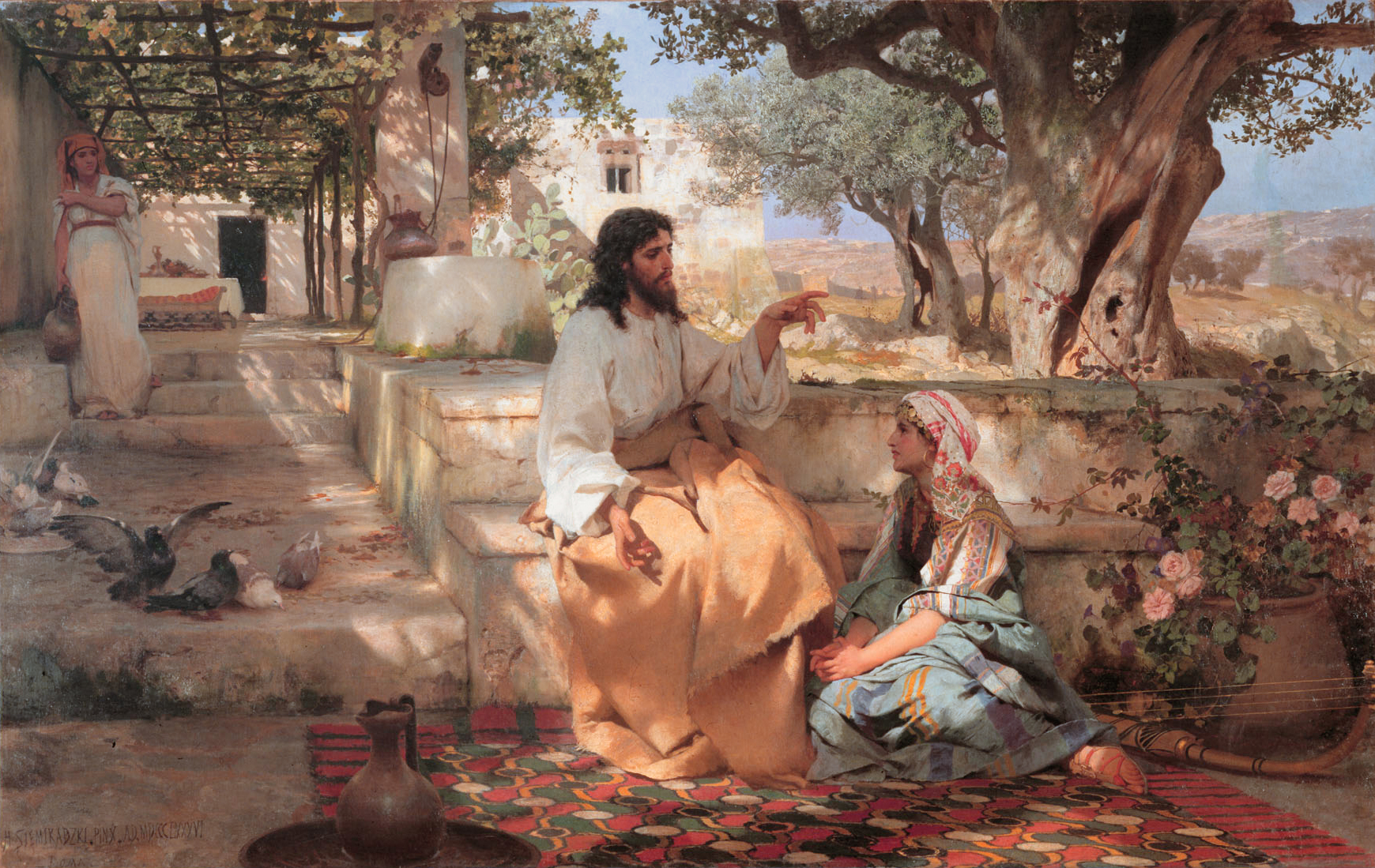
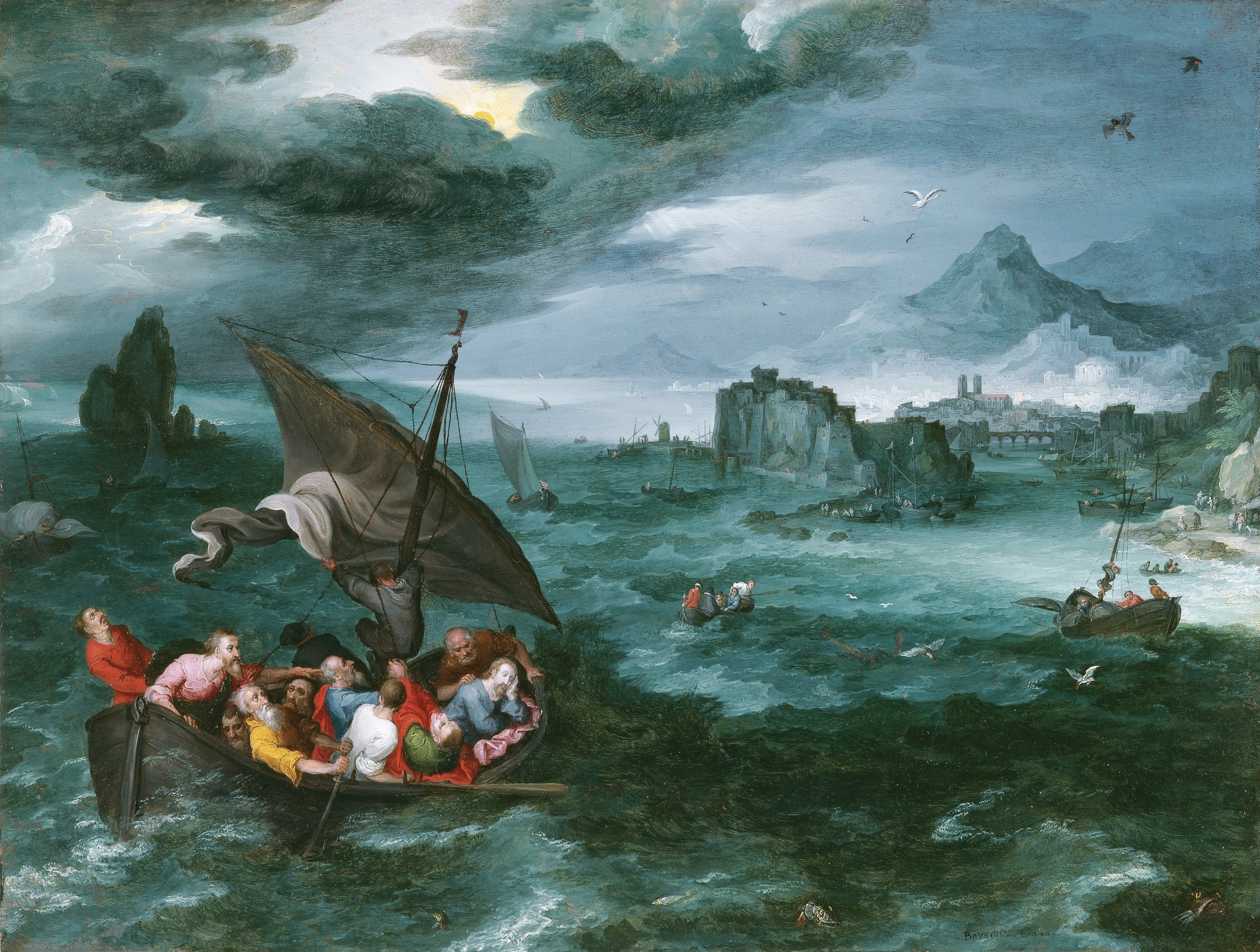
My Peace I Give to You, The Peace That Surpasses All Understanding, Jesus Stills the Storm, The Words Shalom and Eirene, War and Peace: Just War and Christian Nonresistance, Peace and the Nervous System
Where Readers Disagree
Six readings answer three questions, each with its holders, the work that argues it and the objection raised against it.
Whether Christians may bear the sword
Read the debate on War and Peace 11 sections, 14 verses set out
| Reading | Held by | Work | Objection |
|---|---|---|---|
| The promise of swords beaten into plowshares does not make all war unlawful | Matthew Henry (English Presbyterian) | Henry, Commentary on the Whole Bible (1710), on Isaiah 2:4 | Jesus told Peter to put his sword back in its place, “For all who draw the sword will die by the sword” (Matthew 26:52). |
| The sword belongs to the magistrate, and Christ's people renounce it | The Swiss Brethren at Schleitheim; George Fox and the Friends of 1660 (Anabaptist; Quaker) | The Schleitheim Confession (1527), article 6, translated by John C. Wenger (1945); A Declaration from the Harmless and Innocent People of God, called Quakers (1660) | Matthew Henry answered that Isaiah 2:4 “does not make all war absolutely unlawful among Christians”. |
What the peace of Philippians 4:7 is
Read the study of the Peace That Surpasses All Understanding 7 sections, 5 verses set out
| Reading | Held by | Work | Objection |
|---|---|---|---|
| A guard over the heart, whether or not calm is felt | Jamieson, Fausset and Brown (Scottish Presbyterian commentary) | Jamieson, Fausset and Brown, Commentary Critical and Explanatory (1871), on Philippians 4:7 | Paul says this peace surpasses all understanding, which names something the believer comes to know. |
| A tranquillity of the whole soul that the believer senses | Bonaventure (Franciscan) | Bonaventure, Breviloquium, part 5 (1257) | Paul's verb is will guard, a soldier's word, so the verse speaks of what God does for the heart more than of what the heart feels. |
Who the peacemakers are
Read the study of Blessed Are the Peacemakers 8 sections, 7 verses set out
| Reading | Held by | Work | Objection |
|---|---|---|---|
| Those who first make peace within their own hearts | Jerome; Thomas à Kempis (Patristic; Devotio Moderna) | Jerome on Matthew 5:9, as the Catena Aurea prints him (1841 translation); The Imitation of Christ, book 2, chapter 3 | Chrysostom answered that Christ “requires besides this something more, namely, that we should set at one again others, who are at strife”. |
| Those who reconcile others who are at strife | John Chrysostom (Patristic) | Chrysostom, Homilies on the Gospel of Matthew, homily 15, on Matthew 5:9 | Jerome, as the Catena Aurea prints him, held that peacemakers make peace “first within their own hearts, then between brethren at variance”. |
Sources
Scripture is the Berean Standard Bible.
- STEP Bible, Translators Brief lexicon of Extended Strongs for Hebrew and for Greek (Tyndale House, Cambridge), CC BY 4.0, with the Greek brief lexicon based on Abbott-Smith (1922)
- Augustine of Hippo, The City of God, book 19, chapter 13, translated by Marcus Dods, Nicene and Post-Nicene Fathers, first series, volume 2 (Buffalo: Christian Literature Publishing, 1887)
- Thomas Aquinas, Summa Theologiae, II-II question 29, articles 1 and 4, English Dominican translation, second edition (1920)
- Thomas à Kempis, The Imitation of Christ, book 2, chapter 3, translated by William Benham.
- The decrees of the Synod of Charroux (989), in Paul Halsall, ed., Internet Medieval Sourcebook, Peace of God.
- Charles Moeller, Truce of God, The Catholic Encyclopedia, volume 15 (New York: Robert Appleton, 1912)
- George Fox and others, A Declaration from the Harmless and Innocent People of God, called Quakers (London, 1660)
- Psalter Hymnal Handbook, note on Horatio G. Spafford's hymn of 1873.
- The Schleitheim Confession (1527), article 6, translated by John C. Wenger, Mennonite Quarterly Review 19, no. 4 (October 1945): 247 to 253.
- C. Ottaviani and others, Physiological concomitants of perseverative cognition: a systematic review and meta-analysis, Psychological Bulletin 142(3): 231 to 259 (2016)
- Irenaeus, Against Heresies, book 5, on Galatians 5:22 (Ante-Nicene Fathers, volume 1)
- Tertullian, Against Marcion, book 5, on Romans 5:1 (Ante-Nicene Fathers, volume 3)
- Cyril of Jerusalem, Catechetical Lecture 13, section 33, on Colossians 1:20 (Nicene and Post-Nicene Fathers, second series, volume 7)
- John Chrysostom, Homilies on Romans, homily 9, on Romans 5:1 (Nicene and Post-Nicene Fathers, first series, volume 11)
- John Chrysostom, Homilies on the Gospel of Matthew, homily 15, on Matthew 5:9 (Nicene and Post-Nicene Fathers, first series, volume 10)
- John Calvin, Commentary on the Epistle to the Romans, on Romans 5:1.
- Matthew Henry, Commentary on the Whole Bible (1710), on Ephesians 6:15 and Isaiah 2:4.
- Charles Spurgeon, The Treasury of David, volume 2 (1870), on Psalm 37:37.
- Thomas Aquinas, Catena Aurea on the Gospel of Matthew (English translation, Oxford, 1841), printing Jerome on Matthew 5:9.
- Robert Jamieson, A. R. Fausset and David Brown, Commentary Critical and Explanatory on the Whole Bible (1871), on Philippians 4:7.
- Bonaventure, Breviloquium, part 5 (1257), in a modern English translation.
Keep Studying
In this value7
People and groups21