
Matthew 26:12
in Matthew 26By pouring this perfume on Me, she has prepared My body for burial.
BSB
The same verse in ASV and KJV ▾
ASV
For in that she poured this ointment upon my body, she did it to prepare me for burial.
KJV
For in that she hath poured this ointment on my body, she did it for my burial.
⋯
This verse in Matthew 26
Commentary
14 notes on this verse(Verse 12.) For she has poured this ointment on my body, to bury me. What you perceive as a waste of ointment is actually a burial ritual. It is not surprising that she has given me the sweet smell of her faith, as I am about to shed my blood for her.
This site's exposition
she hath wrought a good work
on Matthew 26:10-13
When Jesus understood it, he said unto them, Why trouble ye the woman? for she hath wrought a good work upon me defends the anointing against the disciples' complaint by naming it good rather than merely permissible. Ye have the poor always with you; but me ye have not always states a plain fact of timing rather than a dismissal of care for the poor, which the rest of his own teaching never relaxes. For in that she hath poured this ointment on my body, she did it for my burial reads the act, whether the woman intended it so or not, as an anointing for death, and the promise that this gospel shall be preached in the whole world, and this that she hath done told for a memorial of her, secures her a permanent place in the story Matthew is telling.
The record, by era
The Church Fathers4 voices
The ointment with an agreeable odor represents what the faithful do for God. This very work of the faithful of God, which is ointment, becomes something else for the good of humanity—for instance, almsgiving, visits to the sick, welcoming strangers, humility, gentleness, pardon, and so forth. These are things that benefit human beings. He who does them to Christians anoints the Lord's feet with ointment, for they are the Lord's feet with which he will always walk.… This is the ointment which also anoints Christ's head and flows down over his whole body, that is, it pours down on the whole church. This is the precious ointment that fills the whole house with its odor, that is, the church of Christ. This is the work that is proper not for penitents but for the preeminently holy people. Certainly the teaching necessary for people which feeds those who are poor in spiritually good things or those who are perhaps weak in avoiding sin—this is the plain ointment with which the Lord's feet are anointed. However, the knowledge of the true faith which pertains to God alone—this is the precious ointment that anoints God, Christ's head.
The Lord answers that there is abundant time in which they may show their care for the poor, but that salvation cannot be extended to the Gentiles but by obedience to His command, if, that is, by the pouring out of this woman's ointment they are buried together with Him, because regeneration can only be given to those who are dead in the profession of baptism.
It was the custom among this people to embalm the bodies of the dead with divers spices, to the end that they might be kept from corruption as long as possible. And as this woman was desirous of embalming the Lord's dead Body, and would not be able because she would be anticipated by His resurrection, it was therefore arranged by Divine Providence that she should anoint the Lord's living Body. This then is what He says, In that she hath poured, that is, By anointing My living Body she shows forth My death and burial.
A commentator
John ChrysostomHomily on the Gospel of Matthew 80 · Written in the 5th century.
proposed
But though they thus thought, He knowing her intention suffers her. For indeed great was her reverence, and unspeakable her zeal; wherefore of this exceeding condescension, He permitted the oil to be poured even on His head. For if He refused not to become man, and to be borne in the womb, and to be fed at the breast, why marvellest thou, if He doth not utterly reject this? For like as the Father suffered a savor of meat, and smoke, even so did He the harlot, accepting, as I have already said, her intention. For Jacob too anointed a pillar to God, and oil was offered in the sacrifices, and the priests were anointed with ointment. But the disciples not knowing her purpose found fault unseasonably, and by the things they laid to her charge, they show the woman's munificence. For saying, that it might have been sold for three hundred pence, they showed how much this woman had spent on the ointment, and how great generosity she had manifested. Wherefore He also rebuked them, saying, "Why trouble ye the woman?" And He adds a reason, as it was His will again to put them in mind of His passion, "For she did it," He said, "for my burial." And another reason. "For ye have the poor always with you, but me ye have not always;" and, "Wheresoever the gospel shall be preached, that shall be told also which this woman hath done." Seest thou how again He declares beforehand the going forth unto the Gentiles, in this way also consoling them for His death, if after the cross His power was so to shine forth, that the Gospel should be spread abroad in every part of the earth. Who then is so wretched as to set his face against so much truth? For lo! […]
The Medieval Church1 voice
For in that she hath poured this myrrh on My Body, she did it for My burial. Verily I say unto you, Wheresoever this Gospel shall be preached in the whole world, there shall also this, that this woman hath done, be told for a …
7 more voices on this verse
The Medieval Church1 voice
And what did she do? For she, in pouring this ointment upon my body, hath done it for my burial. But what is this? Did she intend to bury Christ? No. But, as Augustine says, the Holy Spirit, just as he moves to speaking, so …
The Puritans and the Awakening3 voices
She hath done it for my burial - As it were for the embalming of my body. Indeed this was not her design: but our Lord puts this construction upon it, to confirm thereby what he had before said to his disciples, concerning his approaching death. This Gospel - That is, this part of the Gospel history.
This was as it were the embalming of his body; because the doing of that after his death would be prevented by his resurrection, it was therefore done before; for it was fit that it should be done some time, to show that he was still the Messiah, even when he seemed to be triumphed over by death.
For in that she hath poured this ointment,.... Which was so very precious, and cost so much, upon my body: for being poured on his head, it ran down all over his body.
The Nineteenth Century3 voices
She did it for my burial - Or, She hath done it to embalm me - ενταφιασαι με. The Septuagint use ενταφιαϚης for the person whose office it was to embalm, Gen 50:2, and ενταφιαζω for the Hebrew הנט which signifies to prepare with spices, or aromatics, Gen 50:3. Our Lord took this opportunity to tell them, once more, that he was shortly to die.
We now approach the closing scene of our Lord Jesus Christ’s earthly ministry. Hitherto we have read of his sayings and doings: we are now about to read of his sufferings and death. Hitherto we have seen him as the Great Prophet; we are now about to see him as the great High Priest. It is a portion of Scripture which ought to be read with peculiar reverence and attention. The place we on we stand is holy ground.
We now approach the closing scene of our Lord Jesus Christ’s earthly ministry. Hitherto we have read of his sayings and doings: we are now about to read of his sufferings and death. Hitherto we have seen him as the Great Prophet; we are now about to see him as the great High Priest. It is a portion of Scripture which ought to be read with peculiar reverence and attention. The place we on we stand is holy ground. Here we see how the seed of the woman bruised the serpent’s head; here we see the great sacrifice to which all the sacrifices of the Old Testament had long pointed; here we see how the blood was shed which “cleanseth from all sin” ( 1 John 1:8 ), and the Lamb slain who “taketh away the sin of the world” ( John 1:29 ). We see in the death of Christ the great mystery revealed, how God can be just, and yet justify the ungodly. No wonder that all the four Gospels contain a full account of this wonderful event: on other points in our Lord’s history, we often find that when one evangelist speaks the other three are silent; but when we come to the crucifixion, we find it minutely described by all four. In the verses we have now read let us first observe how careful our Lord is to call the attention of his disciples to his own death. He said to them, “Ye know, that after two days is the feast of the passover—and the Son of Man is betrayed to be crucified.” The connection of these words with the preceding chapter is exceedingly striking. Our Lord had just been dwelling on his own second coming in power and glory at the end of the world; he had been describing the last judgment and all its awful accompaniments; he had been speaking of himself as the judge before whose throne all nations would be gathered. Then at once, without pause or interval, he goes on to speak of his crucifixion.
The words behind it
15 Greek wordsEvery Greek word of this verse in the order it stands, with what it means and the door to its own study. The last column counts the times a word stands in the whole Bible: the rarer the word, the more the places it appears belong together.
| Greek | Sound | Meaning | Word study | In the Bible |
|---|---|---|---|---|
| βαλοῦσα | balousa | In pouring | G906 → | 121 times |
| γὰρ | gar | for | G1063 → | 1039 times |
| αὕτη | haute | this [woman] | G3778 → | 1381 times |
| τὸ | to | <the> | G3588 → | 19766 times |
| μύρον | muron | fragrant oil | G3464 → | |
| τοῦτο | touto | this | G3778 → | 1381 times |
| ἐπὶ | epi | on | G1909 → | 883 times |
| τοῦ | tou | the | G3588 → | 19766 times |
| σώματός | somatos | body | G4983 → | 142 times |
| μου | mou | of Mine | G3165 → | 1936 times |
| πρὸς | pros | for | G4314 → | 700 times |
| τὸ | to | <the> | G3588 → | 19766 times |
| ἐνταφιάσαι | entaphiasai | to bury | G1779 → | |
| με | me | Me | G3165 → | 1936 times |
| ἐποίησεν.¶ | epoiesen | she did [it]. | G4160 → | 569 times |
βαλοῦσαIn pouring
balousaG906 →121 times
γὰρfor
garG1063 →1039 times
αὕτηthis [woman]
hauteG3778 →1381 times
τὸ<the>
toG3588 →19766 times
μύρονfragrant oil
muronG3464 →
τοῦτοthis
toutoG3778 →1381 times
ἐπὶon
epiG1909 →883 times
τοῦthe
touG3588 →19766 times
σώματόςbody
somatosG4983 →142 times
μουof Mine
mouG3165 →1936 times
πρὸςfor
prosG4314 →700 times
τὸ<the>
toG3588 →19766 times
ἐνταφιάσαιto bury
entaphiasaiG1779 →
μεMe
meG3165 →1936 times
ἐποίησεν.¶she did [it].
epoiesenG4160 →569 times
A shaded row is a word that stands 400 times or fewer in the Bible.
The walk
8 stopsEach card is a verse this one points to, and under it the verses that one points to in turn. Where several paths arrive at the same place, that place is listed first: the text keeps returning to it.
Through
Mark 14:8She has done what she could to anoint My body in advance of My burial.
it leads to
- 2 Corinthians 8:12
For if the eagerness is there, the gift is acceptable according to what one has, not according to what he does not have.
- 2 Corinthians 8:12
Through
Mark 16:1When the Sabbath was over, Mary Magdalene, Mary the mother of James, and Salome bought spices so they could go and anoint the body of Jesus.
it leads to
- Luke 23:56
Then they returned to prepare spices and perfumes. And they rested on the Sabbath, according to the commandment.
- Matthew 28:1–10
After the Sabbath, at dawn on the first day of the week, Mary Magdalene and the other Mary went to see the tomb.
- John 20:1–10
Early on the first day of the week, while it was still dark, Mary Magdalene went to the tomb and saw that the stone had been removed from the entrance.
- Mark 15:40
And there were also women watching from a distance. Among them were Mary Magdalene, Mary the mother of James the younger and of Joses, and Salome.
- Luke 23:56
Through
2 Chronicles 16:14And he was buried in the tomb that he had cut out for himself in the City of David. They laid him on a bier that was full of spices and various blended perfumes;…
it leads to
- Mark 16:1
When the Sabbath was over, Mary Magdalene, Mary the mother of James, and Salome bought spices so they could go and anoint the body of Jesus.
Reached by 2 separate paths from here.
- Genesis 50:2
And Joseph directed the physicians in his service to embalm his father Israel. So they embalmed him,
- 2 Chronicles 21:19
This continued day after day until two full years had passed. Finally, his intestines came out because of his disease, and he died in severe pain. And his people did not make a fire…
- Mark 16:1
Where this verse is studied
On this page
Studies15
On this verse
On this chapter
- Angelology
- Archaeology and the Bible (the Evidence Ledger)
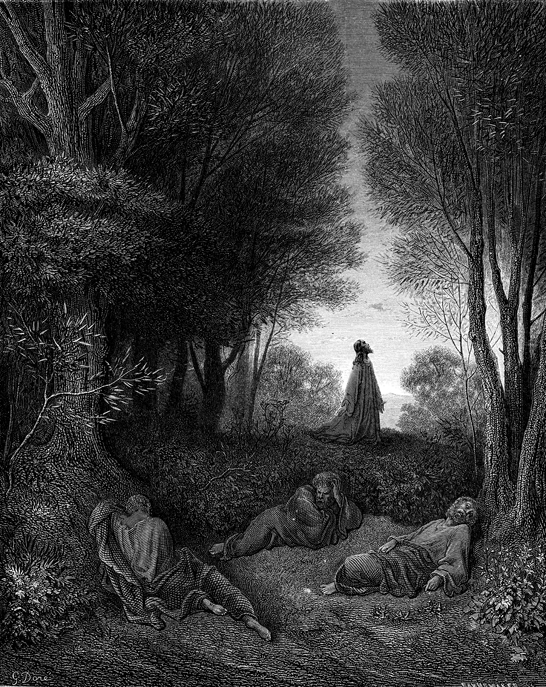
- Gethsemane (The Garden Called the Oil Press)
- Peter's Denial: Matthew 26 · Mark 14 · Luke 22 · John 18
- The Blood
- The Bride & the Jewish Wedding
- The Cleansing of the Temple: John 2 · Matthew 21
- The Father's Will
- The Lord's Supper
- The Right Hand
- The Shepherd
- The Sword
- The Tree
- The Vine & the Vineyard
About Matthew
This page draws on 13 works. Open the list of works
This page draws on Adam Clarke, Commentary on the Bible; Albert Barnes, Notes, Explanatory and Practical, on the Gospels; Hilary of Poitiers, Catena Aurea by Aquinas; J.C. Ryle, Expository Thoughts on the Gospels: Matthew; Jerome, Commentary on Matthew; John Chrysostom, Homily on the Gospel of Matthew 80; John Gill, Exposition of the New Testament (1746-1748); John Wesley, Explanatory Notes upon the New Testament; Matthew Henry, Commentary on the Whole Bible; Origen of Alexandria, COMMENTARY ON MATTHEW 77; Remigius of Rheims, Catena Aurea by Aquinas; Theophylact of Ohrid, Commentary on Matthew and Thomas Aquinas, Commentary on Matthew.