
Genesis 24:23
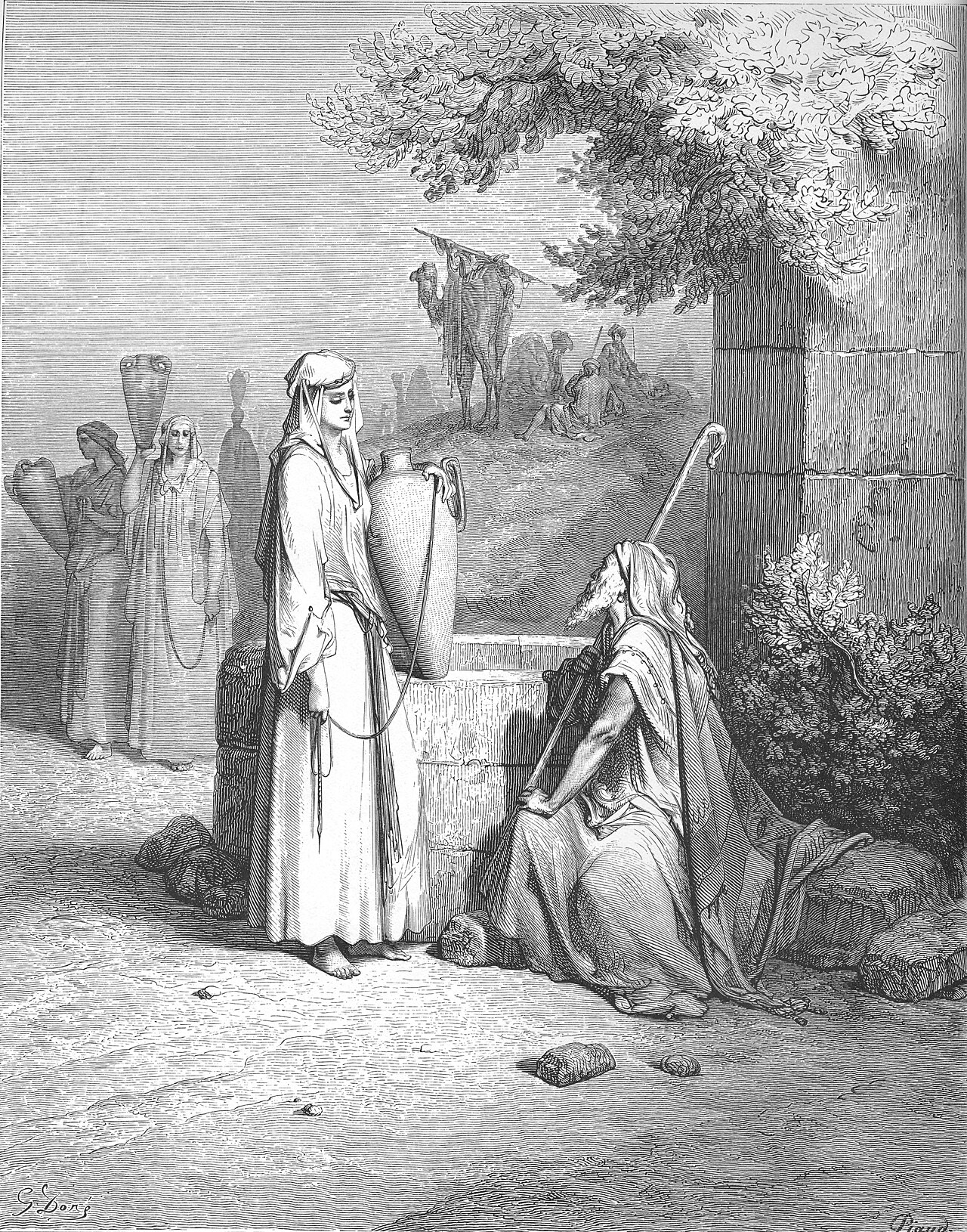
in Genesis 24“Whose daughter are you?” he asked. “Please tell me, is there room in your father’s house for us to spend the night?”
BSB
The same verse in ASV and KJV ▾
ASV
and said, Whose daughter art thou? tell me, I pray thee. Is there room in thy father’s house for us to lodge in?
KJV
And said, Whose daughter art thou? tell me, I pray thee: is there room in thy father’s house for us to lodge in?
⋯
This verse in Genesis 24
Commentary
7 notes on this verseNote, Providence sometimes wonderfully directs those that by faith and prayer seek direction from heaven in the choice of suitable yoke-fellows: happy marriages those are likely to be that are made in the fear of God; and these, we are sure, are made in heaven.
This site's exposition
the man watched her silently
on Genesis 24:21-23
He says nothing while she works, watching to see if the LORD had brought the errand off. When the camels have finished he puts a gold ring and two gold bracelets on her. He has asked nothing about her family yet. Only then does he ask whose daughter she is, and whether there is room in her father's house.
This site's exposition
Please tell me, is there room
The first question tests the sign against Abraham's condition, that the wife come from his own kindred. Matthew Henry saw providence here directing those who seek guidance by faith and prayer in the choice of a spouse. Her answer settles the matter.
The record, by era
The Puritans and the Awakening4 voices
But when he has the desired success, he worships God, not the angel. Whatever benefit we have by the ministration of angels, all the glory must be given to the Lord of the angels, Rev. xxii.
Thus God swears his servants to their work, that, having sworn, they may perform it. Swearing being an ordinance, not peculiar to the church, but common to mankind, is to be performed by such signs as are the common usages of our country. God's angels are ministering spirits, sent forth, not only for the protection, but guidance of the heirs of promise, Heb. i, 14.
And said,....
Note, Providence sometimes wonderfully directs those that by faith and prayer seek direction from heaven in the choice of suitable yoke-fellows: happy marriages those are likely to be that are made in the fear of God; and these, we are sure, are made in heaven.
The words behind it
13 Hebrew wordsEvery Hebrew word of this verse in the order it stands, with what it means and the door to its own study. The last column counts the times a word stands in the whole Bible: the rarer the word, the more the places it appears belong together.
| Hebrew | Sound | Meaning | Word study | In the Bible |
|---|---|---|---|---|
| וַיֹּ֙אמֶר֙ | vaiyomer | and he said | H559 → | 5305 times |
| בַּת־ | bat- | daughter of | H1323 → | 588 times |
| מִ֣י | mi | whom? | H4310 → | 423 times |
| אַ֔תְּ | ʾat | [are] you | H859 → | 1094 times |
| הַגִּ֥ידִי | hagidi | tell | H5046 → | 370 times |
| נָ֖א | na' | please | H4994 → | 404 times |
| לִ֑י | li | to <the> me | ||
| הֲיֵ֧שׁ | hayesh | ¿ [is] there | H3426 → | 140 times |
| בֵּית־ | beit- | [the] house of | H1004 → | 2046 times |
| אָבִ֛יךְ | ʾavikh | father your | H1 → | 1212 times |
| מָק֥וֹם | makom | room | H4725 → | 401 times |
| לָ֖נוּ | lanu | for <the> us | ||
| לָלִֽין׃ | lalin | to stay [the] night | H3885 → | 84 times |
וַיֹּ֙אמֶר֙and he said
vaiyomerH559 →5305 times
בַּת־daughter of
bat-H1323 →588 times
מִ֣יwhom?
miH4310 →423 times
אַ֔תְּ[are] you
ʾatH859 →1094 times
הַגִּ֥ידִיtell
hagidiH5046 →370 times
נָ֖אplease
na'H4994 →404 times
לִ֑יto <the> me
li
הֲיֵ֧שׁ¿ [is] there
hayeshH3426 →140 times
בֵּית־[the] house of
beit-H1004 →2046 times
אָבִ֛יךְfather your
ʾavikhH1 →1212 times
מָק֥וֹםroom
makomH4725 →401 times
לָ֖נוּfor <the> us
lanu
לָלִֽין׃to stay [the] night
lalinH3885 →84 times
A shaded row is a word that stands 400 times or fewer in the Bible.
Where this verse is studied
About Genesis
This page draws on Adam Clarke, Commentary on the Bible; John Gill, Exposition of the Old Testament; John Gill, Exposition of the Old Testament (1748-1763); John Wesley, Explanatory Notes upon the Old Testament and Matthew Henry, Commentary on the Whole Bible.