
Genesis 24:15
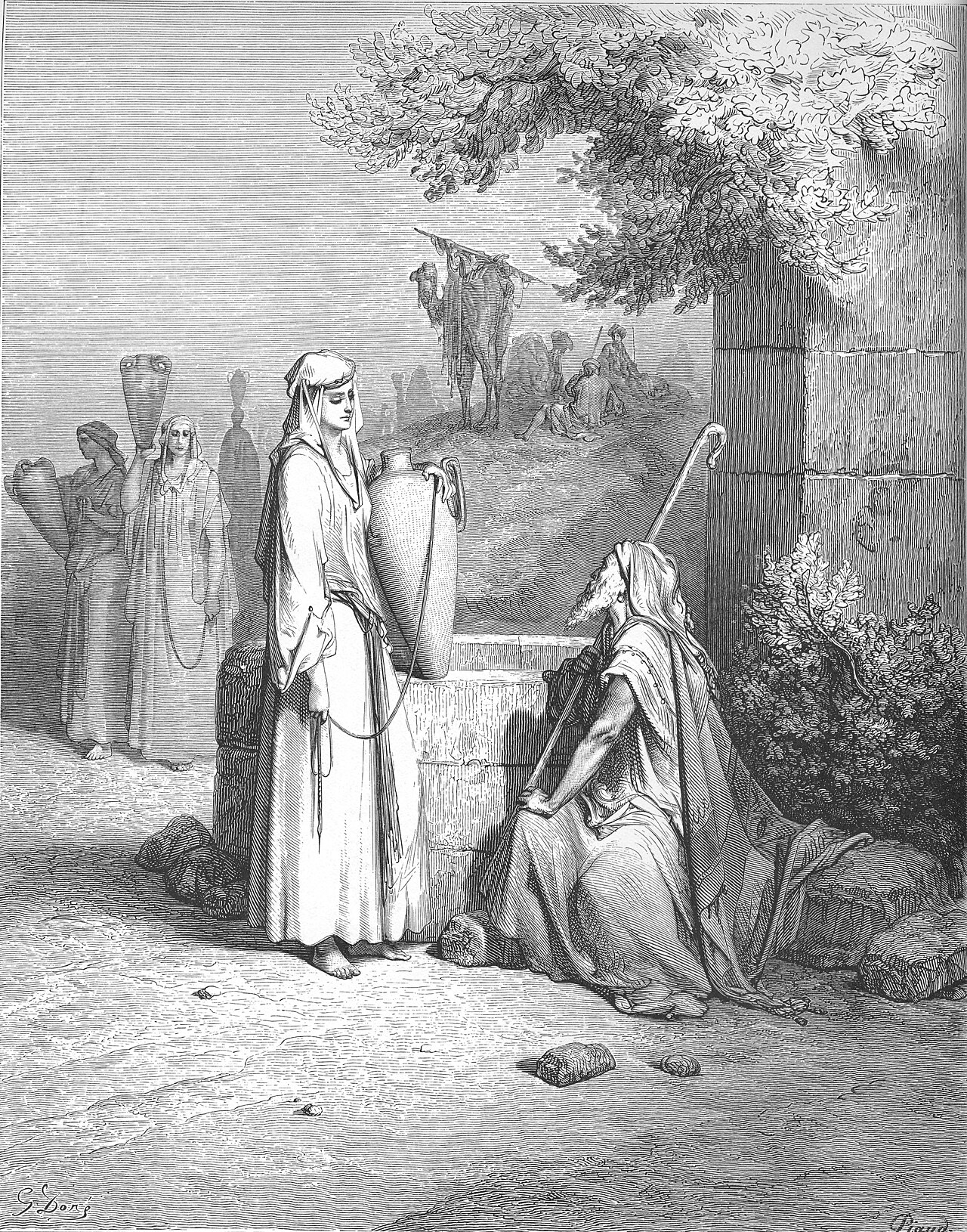
in Genesis 24Before the servant had finished praying, Rebekah came out with her jar on her shoulder. She was the daughter of Bethuel son of Milcah, the wife of Abraham’s brother Nahor.
BSB
The same verse in ASV and KJV ▾
ASV
And it came to pass, before he had done speaking, that, behold, Rebekah came out, who was born to Bethuel the son of Milcah, the wife of Nahor, Abraham’s brother, with her pitcher upon her shoulder.
KJV
And it came to pass, before he had done speaking, that, behold, Rebekah came out, who was born to Bethuel, son of Milcah, the wife of Nahor, Abraham’s brother, with her pitcher upon her shoulder.
⋯
This verse in Genesis 24
Commentary
13 notes on this verseRebekah came to the wells daily; she drew water daily. And because she spent time at the wells daily, therefore, she could be found by Abraham's servant and be united in marriage with Isaac.Do you think these are tales and that the Holy Spirit tells stories in the Scripture? This is instruction for souls and spiritual teaching which instructs and teaches you to come daily to the wells of the Scripture, to the waters of the Holy Spirit, and always to draw water and carry home a full vessel just as also holy Rebekah used to do.
This site's exposition
Before the servant had finished praying
on Genesis 24:15-16
The answer arrives before the prayer is finished. Her whole descent is given in the sentence that introduces her, daughter of Bethuel, whose mother was Milcah, the wife of Abraham's brother Nahor. The reader knows she is inside the family before the servant does. She goes down to the spring and back up without a word to the stranger beside it.
The record, by era
The Church Fathers2 voices
But you say perhaps, if the servant represents the prophetic word, how is he given a drink by Rebekah, to whom he rather ought to give a drink?Consider therefore whether it may be as follows. Although, on the one hand, the Lord Jesus is "the bread of life," and he himself feeds the hungry souls, on the other hand, he admits that he hungers when he says, "I was hungry, and you gave me to eat." Again, on the one hand, although he is "the living water" and gives drink to all who thirst, on the other hand, he says to the Samaritan woman, "Give me to drink." So also, although the prophetic word gives drink to the thirsting, it is nevertheless said to be given a drink by these when it receives the exercises and vigilances of the zealous. A soul such as this, then, which does all things patiently, which is so eager and is undergirded with so much learning, which has been accustomed to draw streams of knowledge from the depths, can be united in marriage with Christ. Unless therefore you come daily to the wells, unless you daily draw water, not only will you not be able to give a drink to others, but also you yourself also will suffer "a thirst for the Word of God." Hear also the Lord saying in the Gospels, "Let him who thirsts come and drink." But, as I see it, "you neither hunger nor thirst after justice," and how will you be able to say, "As the deer pants after the fountains of water, so my soul pants after you, O God. My soul has thirsted after the living God; when shall I come and appear before his presence"?
Now, dearly beloved, let us briefly see, as far as we can, what these facts mean. When blessed Abraham directed his servant to take a wife for his son, he portrayed an image of God the Father.
The Puritans and the Awakening3 voices
God, in his providence, doth sometimes wonderfully own the prayer of faith, and gratify the innocent desires of his praying people even in little things, that he may shew the extent of his care, and may encourage them at all times, to seek him, and trust in him; yet we must take heed of being over bold in prescribing to God, lest the event should weaken our faith rather than strengthen it.
But when he has the desired success, he worships God, not the angel. Whatever benefit we have by the ministration of angels, all the glory must be given to the Lord of the angels, Rev. xxii.
), as it is written ( Isa. lxv. 24 ), While they are yet speaking, I will hear. Though we are backward to pray, God is forward to hear prayer.
quarantine:debris (2026-07-29) — leading-punctuation+unbalanced-parens
6 more voices on this verse
The Puritans and the Awakening3 voices
God, in his providence, doth sometimes wonderfully own the prayer of faith, and gratify the innocent desires of his praying people even in little things, that he may shew the extent of his care, and may encourage them at all times, to seek him, and trust in him; yet we must take heed of being over bold in prescribing to God, lest the event should weaken our faith rather than strengthen it.
Thus God swears his servants to their work, that, having sworn, they may perform it. Swearing being an ordinance, not peculiar to the church, but common to mankind, is to be performed by such signs as are the common usages of our country. God's angels are ministering spirits, sent forth, not only for the protection, but guidance of the heirs of promise, Heb. i, 14.
And it came to pass, before he had done speaking,....
The Nineteenth Century3 voices
A commentator
Jamieson, Fausset & Brown1802–1910
Commentary Critical and Explanatory on the Whole Bible (1871)
proposed
Her comely appearance, her affable manners, her obliging courtesy in going down the steps to fetch water not only to him but to pour it into the trough for his camels, afforded him the most agreeable surprise. She was the very person his imagination had pictured, and he proceeded to reward her civility.
A commentator
Jamieson, Fausset & Brown1802–1910
Commentary Critical and Explanatory on the Whole Bible (1871)
proposed
Her comely appearance, her affable manners, her obliging courtesy in going down the steps to fetch water not only to him but to pour it into the trough for his camels, afforded him the most agreeable surprise. She was the very person his imagination had pictured, and he proceeded to reward her civility.
Behold, Rebekah came out - How admirably had the providence of God adapted every circumstance to the necessity of the case, and so as in the most punctual manner to answer the prayer which his servant had offered up!
How the passage was read
What the Jewish commentators add
WHO WAS BORN TO BETHUEL THE SON OF MILCAH THE WIFE OF NAHOR, ABRAHAM’s BROTHER. Because Nahor also had children from his concubine Reumah, 113 Above,:24. they always described the lineage of Bethuel by saying that he was the son of Milcah who was the mistress of the household.
1 more on this passage, in their own words ▾
Rashi comments: “She is fit for him since she is charitable and worthy of admission into the house of Abraham.
This section is reception history: how the passage was read and kept in the Jewish tradition. Where a reading parts from an essential of the Christian faith, the section says so at that point.
Texts and citation data: Sefaria; each excerpt follows its version’s licence. 3 further sources are cited on this chapter that carry no English text this site may quote or only restate the verse.
The words behind it
20 Hebrew wordsEvery Hebrew word of this verse in the order it stands, with what it means and the door to its own study. The last column counts the times a word stands in the whole Bible: the rarer the word, the more the places it appears belong together.
| Hebrew | Sound | Meaning | Word study | In the Bible |
|---|---|---|---|---|
| וַֽיְהִי־ | vayhi- | and it was | H1961 → | 3559 times |
| ה֗וּא | hu' | he | H1931 → | 1879 times |
| טֶרֶם֮ | terem | not yet | H2962 → | 56 times |
| כִּלָּ֣ה | kilah | he had finished | H3615 → | 208 times |
| לְדַבֵּר֒ | ledaber | to speak | H1696 → | 1141 times |
| וְהִנֵּ֧ה | vehineh | and there! | H2009 → | 843 times |
| רִבְקָ֣ה | rivkah | Rebekah | H7259 → | 30 times |
| יֹצֵ֗את | yotzet | [was] coming out | H3318 → | 1067 times |
| אֲשֶׁ֤ר | ʾasher | who | H834 → | 5497 times |
| יֻלְּדָה֙ | yuledah | she had been born | H3205 → | 496 times |
| לִבְתוּאֵ֣ל | livtuel | to Bethuel | H1328 → | 10 times |
| בֶּן־ | ben- | [the] son of | H1121 → | 4930 times |
| מִלְכָּ֔ה | milkah | Milcah | H4435 → | 11 times |
| אֵ֥שֶׁת | ʾeshet | [the] wife of | H802 → | 781 times |
| נָח֖וֹר | nachor | Nahor | H5152 → | 18 times |
| אֲחִ֣י | ʾachi | [the] brother of | H251 → | 630 times |
| אַבְרָהָ֑ם | ʾavraham | Abraham | H85 → | 175 times |
| וְכַדָּ֖הּ | vekhadah | and jar her | H3537 → | 18 times |
| עַל־ | ʾal- | [was] on | H5921 → | 5755 times |
| שִׁכְמָֽהּ׃ | shikhmah | shoulder her | H7926 → | 21 times |
וַֽיְהִי־and it was
vayhi-H1961 →3559 times
ה֗וּאhe
hu'H1931 →1879 times
טֶרֶם֮not yet
teremH2962 →56 times
כִּלָּ֣הhe had finished
kilahH3615 →208 times
לְדַבֵּר֒to speak
ledaberH1696 →1141 times
וְהִנֵּ֧הand there!
vehinehH2009 →843 times
רִבְקָ֣הRebekah
rivkahH7259 →30 times
יֹצֵ֗את[was] coming out
yotzetH3318 →1067 times
אֲשֶׁ֤רwho
ʾasherH834 →5497 times
יֻלְּדָה֙she had been born
yuledahH3205 →496 times
לִבְתוּאֵ֣לto Bethuel
livtuelH1328 →10 times
בֶּן־[the] son of
ben-H1121 →4930 times
מִלְכָּ֔הMilcah
milkahH4435 →11 times
אֵ֥שֶׁת[the] wife of
ʾeshetH802 →781 times
נָח֖וֹרNahor
nachorH5152 →18 times
אֲחִ֣י[the] brother of
ʾachiH251 →630 times
אַבְרָהָ֑םAbraham
ʾavrahamH85 →175 times
וְכַדָּ֖הּand jar her
vekhadahH3537 →18 times
עַל־[was] on
ʾal-H5921 →5755 times
שִׁכְמָֽהּ׃shoulder her
shikhmahH7926 →21 times
A shaded row is a word that stands 400 times or fewer in the Bible.
The walk
8 stopsEach card is a verse this one points to, and under it the verses that one points to in turn. Where several paths arrive at the same place, that place is listed first: the text keeps returning to it.
Through
Isaiah 65:24Even before they call, I will answer, and while they are still speaking, I will hear.
it leads to
- 1 John 5:14–15
And this is the confidence that we have before Him: If we ask anything according to His will, He hears us.
Reached by 2 separate paths from here.
- Daniel 10:12
“Do not be afraid, Daniel,” he said, “for from the first day that you purposed to understand and to humble yourself before your God, your words were heard, and I have come in response…
- Mark 11:24
Therefore I tell you, whatever you ask for in prayer, believe that you have received it, and it will be yours.
- Isaiah 58:9
Then you will call, and the LORD will answer; you will cry out, and He will say, ‘Here I am.’ If you remove the yoke from your midst, the pointing of the finger and…
- Psalms 91:15
When he calls out to Me, I will answer him; I will be with him in trouble. I will deliver him and honor him.
- 1 John 5:14–15
Through
Psalms 65:2O You who listen to prayer, all people will come to You.
it leads to
- Jeremiah 29:12–13
Then you will call upon Me and come and pray to Me, and I will listen to you.
- Isaiah 65:24
Even before they call, I will answer, and while they are still speaking, I will hear.
- Isaiah 66:23
From one New Moon to another and from one Sabbath to another, all mankind will come to worship before Me,” says the LORD.
- Jeremiah 29:12–13
Where this verse is studied
On this page
Studies4
About Genesis
Who and where
1 name in this verse with a page on the site.
This page draws on 9 works. Open the list of works
This page draws on Adam Clarke, Commentary on the Bible; Caesarius of Arles, SERMON 85.3; Jamieson, Fausset & Brown, Commentary Critical and Explanatory on the Whole Bible; John Calvin, Commentary on Genesis; John Gill, Exposition of the Old Testament (1748-1763); John Wesley, Explanatory Notes upon the Old Testament; Matthew Henry, Commentary on the Whole Bible; Origen of Alexandria, HOMILIES ON GENESIS 10.2 and Origen of Alexandria, HOMILIES ON GENESIS 10.3.