
Acts 1:3
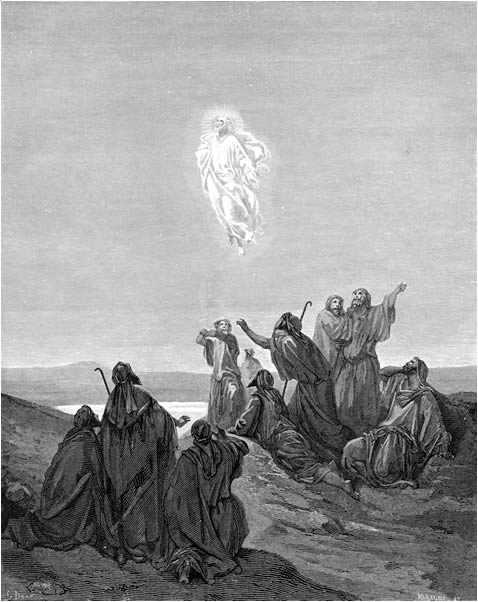
in Acts 1After His suffering, He presented Himself to them with many convincing proofs that He was alive. He appeared to them over a span of forty days and spoke about the kingdom of God.
BSB
The same verse in ASV and KJV ▾
ASV
to whom he also showed himself alive after his passion by many proofs, appearing unto them by the space of forty days, and speaking the things concerning the kingdom of God:
KJV
To whom also he shewed himself alive after his passion by many infallible proofs, being seen of them forty days, and speaking of the things pertaining to the kingdom of God:
⋯
This verse in Acts 1
Commentary
22 notes on this verseAfter these points, Celsus proceeds to bring against the Gospel narrative a charge which is not to be lightly passed over, saying that "if Jesus desired to show that his power was really divine, he ought to have appeared to those who had ill-treated him, and to him who had condemned him, and to all men universally." For it appears to us also to be true, according to the Gospel account, that He was not seen after His resurrection in the same manner as He used formerly to show Himself — publicly, and to all men.
This site's exposition
In my first book, O Theophilus
on Acts 1:1-3
Luke opens his second volume by naming his first, the Gospel, as the book about all that Jesus began to do and to teach, so Acts presents itself as the continuation of that work. Theophilus has no title here, where Luke 1:3 calls him most excellent. The forty days run from the resurrection to the ascension, and the risen Christ's subject through them is the kingdom of God, the kingdom the disciples ask about in verse 6.
This site's exposition
many convincing proofs
Albert Barnes calls the resurrection the fact on which the gospel was established, so Luke states its evidence at the start of Acts. Origen grants that the risen Jesus did not show Himself publicly to all, and Oecumenius explains that a crowd would have taken Him for a ghost. The forty days, Wesley notes, held many separate meetings.
The record, by era
The Church Fathers5 voices
For whose sake did he not appear to all, but only to the apostles? Because it would have seemed like a ghost [φάντασμα] to the many, who did not know the secret of the mystery. For even if the disciples themselves did not believe at …
From this we learn that even after the resurrection Jesus was teaching the disciples.
The Passover affords a more than usually solemn day for baptism; when, withal, the Lord's passion, in which we are baptized, was completed. Nor will it be incongruous to interpret figuratively the fact that, when the Lord was about to celebrate the last Passover, He said to the disciples who were sent to make preparation, "You will meet a man bearing water." He points out the place for celebrating the Passover by the sign of water. After that, Pentecost is a most joyous space for conferring baptisms; wherein, too, the resurrection of the Lord was repeatedly proved among the disciples [Acts 1:3], and the hope of the advent of the Lord indirectly pointed to, in that, at that time, when He had been received back into the heavens [Acts 1:9], the angels told the apostles that "He would so come, as He had withal ascended into the heavens;" [Acts 1:11] at Pentecost, of course. But, moreover, when Jeremiah says, "And I will gather them together from the extremities of the land in the feast-day," he signifies the day of the Passover and of Pentecost, which is properly a "feast-day." However, every day is the Lord's; every hour, every time, is apt for baptism: if there is a difference in the solemnity, distinction there is none in the grace.
Now, by manifest miracles during forty days in their sight, the Lord confirmed the faith of those whom he bade to be his witnesses to the ends of the earth in its wide boundary. The wonders of creation could not conceal God. What proof [of …
"To whom also He shewed Himself alive." Having first spoken of the Ascension, he adverts to the Resurrection; for since thou hast been told that "He was taken up," therefore, lest thou shouldest suppose Him to have been taken up by others, he adds, "To whom He shewed Himself alive." For if He shewed Himself in the greater, surely He did in the minor circumstance. Seest thou, how casually and unperceived he drops by the way the seeds of these great doctrines? "Being seen of them during forty days." He was not always with them now, as He was before the Resurrection. For the writer does not say "forty days," but, "during forty days." He came, and again disappeared; by this leading them on to higher conceptions, and no longer permitting them to stand affected towards Him in the same way as before, but taking effectual measures to secure both these objects, that the fact of His Resurrection should be believed, and that He Himself should be ever after apprehended to be greater than man. At the same time, these were two opposite things; for in order to the belief in His Resurrection, much was to be done of a human character, and for the other object, just the reverse. Nevertheless, both results have been effected, each when the fitting time arrived. But why did He appear not to all, but to the Apostles only? Because to the many it would have seemed a mere apparition, inasmuch as they understood not the secret of the mystery. For if the disciples themselves were at first incredulous and were troubled, and needed the evidence of actual touch with the hand, and of His eating with them, how would it have fared in all likelihood with the multitude? […]
14 more voices on this verse
The Church Fathers4 voices
For this He then remained forty days on earth, furnishing in this length of time the sure evidence of their seeing Him in His own proper Person, that they might not suppose that what they saw was a phantom. And not content with this, He added also the evidence of eating with them at their board: as to signify this, the writer adds, "And being at table with them, He commanded." And this circumstance the Apostles themselves always put forth as an infallible token of the Resurrection; as where they say, "Who did eat and drink with Him." And what did He, when appearing unto them those forty days? Why, He conversed with them, says the writer, "concerning the kingdom of God." For, since the disciples both had been distressed and troubled at the things which already had taken place, and were about to go forth to encounter great difficulties, He recovered them by His discourses concerning the future.
After that, Pentecost is a most joyous space for conferring baptisms; wherein, too, the resurrection of the Lord was repeatedly proved among the disciples, and the hope of the advent of the Lord indirectly pointed to, in that, at that time, when He had been received back into the heavens, the angels told the apostles that "He would so come, as He had withal ascended into the heavens; " at Pentecost, of course.
Jesus was taken up, so that no one would think that this happened by the power of another, and he immediately brought also the authority from his own power; to whom he also presented himself alive. Showing that same one as both having suffered and …
He said it was forty days, not in consecutive days; for he did not spend time with them continuously, as before the passion, but intermittently, at once preparing for them a more longing appearance of himself, and at the same time revealing a more exalted …
The Medieval Church4 voices
In order to raise us to hope, he ascended to the heavenly glory which we hope for. But because hope does not arise except from faith in future immortality, therefore he did not ascend immediately, but with an interval of forty days interposed, in which …
A commentator
BonaventureCollations on the Hexaemeron, Collation 1 · Written in the 13th century.
proposed
And this is the reasoning Christ used, during forty days appearing to them. "Did not the Christ have to suffer these things before entering into His glory?" Concerning this central position, John writes: "When it was late, Jesus came and stood in their midst and …
Having spoken first about the ascension, he then speaks also about the resurrection. Since you heard that He ascended, lest you think that He was taken up by others, Luke added: "to whom He also presented Himself alive"; because if He stood before them having …
Appearing to them during forty days and speaking of the kingdom of God, and eating with them, etc. To strengthen the faith in his resurrection, the Lord often appeared alive to the apostles after his passion, took food, and displayed the same flesh which he …
The Puritans and the Awakening4 voices
Being seen by them forty days - That is, many times during that space. And speaking of the things pertaining to the kingdom of God - Which was the sum of all his discourses with them before his passion also.
quarantine:scripture (2026-07-29) — scripture-overlap:84%@v2-7
To whom also he showed himself alive after his passion,....
He had given them a general idea of that kingdom, and the certain time it should be set up in the world (in his parable, Mark xiii .), but here he instructed them more in the nature of it, as a kingdom of grace in this world and of glory in the other, and opened to them that covenant which is the great charter by which it is incorporated.
With a particular narrative of Christ's ascension into heaven, his disciples' discourse with him before he ascended, and the angels' discourse with them after he ascended,
The Nineteenth Century2 voices
A commentator
Albert Barnes1798–1870
Notes, Explanatory and Practical, on the Old and New Testaments (1832-1869)
He showed himself - The resurrection of Jesus was the great fact on which the truth of the gospel was to be established. Hence, the sacred writers so often refer to it, and establish it by so many arguments. As the fact of his resurrection lay at the foundation of all that Luke was about to record in his history, it was of importance that he should state clearly the sum of the evidence of it in the beginning of his work. After his passion - After he suffered, referring particularly to his death as the consummation of his sufferings.
To whom - he showed himself alive - by many infallible proofs - Πολλοις τεκμηριοις; by many proofs of such a nature, and connected with such circumstances, as to render them indubitable; for this is the import of the Greek word τεκμηριον. The proofs were such as these: 1. Appearing to several different persons at different times. 2. His eating and drinking with them. 3. His meeting them in Galilee according to his own appointment. 4. His subjecting his body to be touched and handled by them. 5. His instructing them in the nature and doctrines of his kingdom. 6. His appearing to upwards of five hundred persons at once, 1Co 15:6. And, 7. Continuing these public manifestations of himself for forty days. The several appearances of Jesus Christ, during the forty days of his sojourning with his disciples, between his resurrection and ascension, are thus enumerated by Bishop Pearce: The first was to Mary Magdalene, and the other Mary, Mat 28:1-9. The second, to the two disciples on their way to Emmaus, Luk 24:15. The third, to Simon Peter, Luk 24:34. The fourth, to ten of the apostles, Thomas being absent, Luk 24:36, and Joh 20:19. (All these four appearances took place on the day of his resurrection.) The fifth was to the eleven disciples, Thomas being then with them, Joh 20:26. The sixth, to seven of the apostles in Galilee, at the sea of Tiberias, Joh 21:4. The seventh, to James, 1Co 15:7, most probably in Jerusalem, and when Jesus gave an order for all his apostles to assemble together, as in Act 1:4. The eighth, when they were assembled together, and when he led them unto Bethany, Luk 24:50, from whence he ascended to heaven. But see the note on Joh 21:14, for farther particulars. Pertaining to the kingdom of God - Whatever concerned the doctrine, discipline, and establishment of the Christian Church.
The words behind it
25 Greek wordsEvery Greek word of this verse in the order it stands, with what it means and the door to its own study. The last column counts the times a word stands in the whole Bible: the rarer the word, the more the places it appears belong together.
| Greek | Sound | Meaning | Word study | In the Bible |
|---|---|---|---|---|
| οἷς | hois | to those | G3739 → | 1405 times |
| καὶ | kai | also | G2532 → | 9120 times |
| παρέστησεν | parestesen | He presented | G3936 → | 41 times |
| ἑαυτὸν | he'auton | Himself | G1438 → | 322 times |
| ζῶντα | zonta | alive | G2198 → | 139 times |
| μετὰ | meta | after | G3326 → | 461 times |
| τὸ | to | the | G3588 → | 19766 times |
| παθεῖν | pathein | suffering | G3958 → | 42 times |
| αὐτὸν | auton | of Him | G846 → | 5565 times |
| ἐν | en | with | G1722 → | 2738 times |
| πολλοῖς | pollois | many | G4183 → | 367 times |
| τεκμηρίοις, | tekmeriois | proofs, | G5039 → | |
| δι᾽ | di᾽ | during | G1223 → | 664 times |
| ἡμερῶν | hemeron | days | G2250 → | 389 times |
| τεσσεράκοντα | tesserakonta | forty | G5062 → | 21 times |
| ὀπτανόμενος | optanomenos | appearing | G3700 → | 54 times |
| αὐτοῖς | autois | to them | G846 → | 5565 times |
| καὶ | kai | and | G2532 → | 9120 times |
| λέγων | legon | speaking | G3004 → | 1325 times |
| τὰ | ta | the [things] | G3588 → | 19766 times |
| περὶ | peri | concerning | G4012 → | 332 times |
| τῆς | tes | the | G3588 → | 19766 times |
| βασιλείας | basileias | kingdom | G932 → | 162 times |
| τοῦ | tou | <the> | G3588 → | 19766 times |
| θεοῦ. | theou | of God. | G2316 → | 1312 times |
οἷςto those
hoisG3739 →1405 times
καὶalso
kaiG2532 →9120 times
παρέστησενHe presented
parestesenG3936 →41 times
ἑαυτὸνHimself
he'autonG1438 →322 times
ζῶνταalive
zontaG2198 →139 times
μετὰafter
metaG3326 →461 times
τὸthe
toG3588 →19766 times
παθεῖνsuffering
patheinG3958 →42 times
αὐτὸνof Him
autonG846 →5565 times
ἐνwith
enG1722 →2738 times
πολλοῖςmany
polloisG4183 →367 times
τεκμηρίοις,proofs,
tekmerioisG5039 →
δι᾽during
di᾽G1223 →664 times
ἡμερῶνdays
hemeronG2250 →389 times
τεσσεράκονταforty
tesserakontaG5062 →21 times
ὀπτανόμενοςappearing
optanomenosG3700 →54 times
αὐτοῖςto them
autoisG846 →5565 times
καὶand
kaiG2532 →9120 times
λέγωνspeaking
legonG3004 →1325 times
τὰthe [things]
taG3588 →19766 times
περὶconcerning
periG4012 →332 times
τῆςthe
tesG3588 →19766 times
βασιλείαςkingdom
basileiasG932 →162 times
τοῦ<the>
touG3588 →19766 times
θεοῦ.of God.
theouG2316 →1312 times
A shaded row is a word that stands 400 times or fewer in the Bible.
The walk
8 stopsEach card is a verse this one points to, and under it the verses that one points to in turn. Where several paths arrive at the same place, that place is listed first: the text keeps returning to it.
Through
1 John 1:1That which was from the beginning, which we have heard, which we have seen with our own eyes, which we have gazed upon and touched with our own hands—this is the Word of life.
it leads to
- Acts 4:20
For we cannot stop speaking about what we have seen and heard.”
- John 20:27
Then Jesus said to Thomas, “Put your finger here and look at My hands. Reach out your hand and put it into My side. Stop doubting and believe.”
- 1 John 4:14
And we have seen and testify that the Father has sent His Son to be the Savior of the world.
- John 1:1–18
In the beginning was the Word, and the Word was with God, and the Word was God.
- Luke 24:39
Look at My hands and My feet. It is I Myself. Touch Me and see—for a spirit does not have flesh and bones, as you see I have.”
- Acts 4:20
Through
John 20:26Eight days later, His disciples were once again inside with the doors locked, and Thomas was with them. Jesus came and stood among them and said, “Peace be with you.”
it leads to
- John 20:19
It was the first day of the week, and that very evening, while the disciples were together with the doors locked for fear of the Jews, Jesus came and stood among them. “Peace be…
Reached by 2 separate paths from here.
- Isaiah 54:10
Though the mountains may be removed and the hills may be shaken, My loving devotion will not depart from you, and My covenant of peace will not be broken,” says the LORD, who has…
- John 20:19
Through
Acts 13:31and for many days He was seen by those who had accompanied Him from Galilee to Jerusalem. They are now His witnesses to our people.
it leads to
- Luke 24:48
You are witnesses of these things.
- Luke 24:48
Where this verse is studied
On this page
Studies12
About Acts
This page draws on 16 works. Open the list of works
This page draws on Adam Clarke, Commentary on the Bible; Albert Barnes, Notes, Explanatory and Practical, on the Old and New Testaments (1832-1869); Arator, ON THE ACTS OF THE APOSTLES 1; Bede, Commentary on Acts; Bonaventure, Breviloquium; Bonaventure, Collations on the Hexaemeron, Collation 1; J. A. Alexander, The Acts of the Apostles Explained; John Chrysostom, Homily on Acts 1; John Gill, Exposition of the New Testament (1746-1748); John Wesley, Explanatory Notes upon the New Testament; Matthew Henry, Commentary on the Whole Bible; Oecumenius, Commentary on Acts; Origen of Alexandria, Contra Celsum, Book II, Chapter 63; Tertullian, On Baptism, Chapter 19; Tertullian, On Baptism and Theophylact of Ohrid, Commentary on Acts.