
1 Samuel 15:3
in 1 Samuel 15Now go and attack the Amalekites and devote to destruction all that belongs to them. Do not spare them, but put to death men and women, children and infants, oxen and sheep, camels and donkeys.’”
BSB
The same verse in ASV and KJV ▾
ASV
Now go and smite Amalek, and utterly destroy all that they have, and spare them not; but slay both man and woman, infant and suckling, ox and sheep, camel and ass.
KJV
Now go and smite Amalek, and utterly destroy all that they have, and spare them not; but slay both man and woman, infant and suckling, ox and sheep, camel and ass.
⋯
This verse in 1 Samuel 15
Commentary
9 notes on this verseA commentator
Albert Barnes1798–1870
Notes, Explanatory and Practical, on the Old and New Testaments (1832-1869)
Utterly destroy - Rather, “devote to destruction” (Lev 27:28 note). When a city or people were thus made cherem, everything living was to be destroyed, and no part of the spoil fall to the conquerors (compare 1Sa 15:21). The valuables were put into the sacred treasury.
This site's exposition
The LORD sent me to anoint you king over His people Israel
on 1 Samuel 15:1-3
Samuel reminds Saul that his crown came by anointing, so obedience is the condition of the office. The command reaches back to Exodus 17:14 to 16, where the LORD swore war with Amalek for the ambush on the way from Egypt, and to Deuteronomy 25:17 to 19. The words "devote to destruction" render the Hebrew herem, a ban that spares nothing, and set the standard for every later verse.
This site's exposition
devote to destruction all that belongs to them
Albert Barnes reads the ban by Leviticus 27:28. Every living thing under it died, and no share of the spoil went to the soldiers, which left Saul's army nothing to keep at verse 9. John Wesley answers the hardest clause, the children and infants, by naming God the Lord of every life, who may call it back when He wills.
The record, by era
The Medieval Church2 voices
Do not spare them, but kill, etc. From man to woman, from the perfected work of sin to carnal thought, namely the filthy mother and nurse of wicked offspring. The infant and the suckling, the very beginnings and purpose of nefarious action, which a recent …
A commentator
Gregory the DialogistCommentary on 1 Kings, Book 6, Chapter 1 · Written before 604.
proposed
What does it mean when he says: "Hear the voice of the Lord," unless that those who wish to live chastely must keep subtle watch against the deceits of the spirit of fornication? As if to say: Do not cease to consider with how many snares he prepares to subject the elect to himself. And therefore he did not say: "I have recounted how he resisted Israel," but: "Hear the voice of the Lord. I have recounted how he resisted Israel."
The Puritans and the Awakening3 voices
Slay, &c. - Which was not unjust, because God is the supreme Lord of life, and can require his own when he pleaseth; infants likewise are born in sin, and therefore liable to God's wrath. Their death also was rather a mercy than a curse, as being the occasion of preventing their sin and punishment.
The longer judgment is delayed many times the more severe it is when it comes. God chooses out instruments to do his work that are fittest for it. This was bloody work, and therefore Saul who was a rough and severe man must do it.
Now go and smite Amalek,....
1 more voice on this verse
The Nineteenth Century1 voice
Slay both man and woman - Nothing could justify such an exterminating decree but the absolute authority of God. This was given: all the reasons of it we do not know; but this we know well, The Judge of all the earth doth right. This war was not for plunder, for God commanded that all the property as well as all the people should be destroyed.
The words behind it
26 Hebrew wordsEvery Hebrew word of this verse in the order it stands, with what it means and the door to its own study. The last column counts the times a word stands in the whole Bible: the rarer the word, the more the places it appears belong together.
| Hebrew | Sound | Meaning | Word study | In the Bible |
|---|---|---|---|---|
| עַתָּה֩ | ʾatah | now | H6258 → | 433 times |
| לֵ֨ךְ | lekh | go | H1980 → | 1546 times |
| וְהִכִּֽיתָ֜ה | vehikitah | and you will attack | H5221 → | 499 times |
| אֶת־ | ʾet- | <obj.> | H853 → | 10935 times |
| עֲמָלֵ֗ק | ʾamalek | Amalek | H6002 → | 39 times |
| וְהַֽחֲרַמְתֶּם֙ | vehacharamtem | and you will totally destroy | H2763 → | 52 times |
| אֶת־ | ʾet- | <obj.> | H853 → | 10935 times |
| כָּל־ | kol- | all | H3605 → | 5413 times |
| אֲשֶׁר־ | ʾasher- | that | H834 → | 5497 times |
| ל֔וֹ | lo | [belongs] to <the> it | ||
| וְלֹ֥א | velo' | and not | H3808 → | 5168 times |
| תַחְמֹ֖ל | tachmol | you must have compassion | H2550 → | 41 times |
| עָלָ֑יו | ʾalav | on it | H5921 → | 5755 times |
| וְהֵמַתָּ֞ה | vehematah | and you will put to death | H4191 → | 839 times |
| מֵאִ֣ישׁ | meish | from a man | H376 → | 1663 times |
| עַד־ | ʾad- | unto | H5704 → | 1261 times |
| אִשָּׁ֗ה | ʾishah | a woman | H802 → | 781 times |
| מֵֽעֹלֵל֙ | meolel | from a child | H5768 → | |
| וְעַד־ | vead- | and unto | H5704 → | 1261 times |
| יוֹנֵ֔ק | yonek | a suckling-child | H3243 → | 33 times |
| מִשּׁ֣וֹר | mishor | from an ox | H7794 → | 79 times |
| וְעַד־ | vead- | and unto | H5704 → | 1261 times |
| שֶׂ֔ה | seh | a sheep | H7716 → | 47 times |
| מִגָּמָ֖ל | migamal | from a camel | H1581 → | 54 times |
| וְעַד־ | vead- | and unto | H5704 → | 1261 times |
| חֲמֽוֹר׃ ס | chamor | a donkey | H2543 → | 96 times |
עַתָּה֩now
ʾatahH6258 →433 times
לֵ֨ךְgo
lekhH1980 →1546 times
וְהִכִּֽיתָ֜הand you will attack
vehikitahH5221 →499 times
אֶת־<obj.>
ʾet-H853 →10935 times
עֲמָלֵ֗קAmalek
ʾamalekH6002 →39 times
וְהַֽחֲרַמְתֶּם֙and you will totally destroy
vehacharamtemH2763 →52 times
אֶת־<obj.>
ʾet-H853 →10935 times
כָּל־all
kol-H3605 →5413 times
אֲשֶׁר־that
ʾasher-H834 →5497 times
ל֔וֹ[belongs] to <the> it
lo
וְלֹ֥אand not
velo'H3808 →5168 times
תַחְמֹ֖לyou must have compassion
tachmolH2550 →41 times
עָלָ֑יוon it
ʾalavH5921 →5755 times
וְהֵמַתָּ֞הand you will put to death
vehematahH4191 →839 times
מֵאִ֣ישׁfrom a man
meishH376 →1663 times
עַד־unto
ʾad-H5704 →1261 times
אִשָּׁ֗הa woman
ʾishahH802 →781 times
מֵֽעֹלֵל֙from a child
meolelH5768 →
וְעַד־and unto
vead-H5704 →1261 times
יוֹנֵ֔קa suckling-child
yonekH3243 →33 times
מִשּׁ֣וֹרfrom an ox
mishorH7794 →79 times
וְעַד־and unto
vead-H5704 →1261 times
שֶׂ֔הa sheep
sehH7716 →47 times
מִגָּמָ֖לfrom a camel
migamalH1581 →54 times
וְעַד־and unto
vead-H5704 →1261 times
חֲמֽוֹר׃ סa donkey
chamorH2543 →96 times
A shaded row is a word that stands 400 times or fewer in the Bible.
The walk
8 stopsEach card is a verse this one points to, and under it the verses that one points to in turn. Where several paths arrive at the same place, that place is listed first: the text keeps returning to it.
Through
Numbers 24:20Then Balaam saw Amalek and lifted up an oracle, saying: “Amalek was first among the nations, but his end is destruction.”
it leads to
- Exodus 17:14
Then the LORD said to Moses, “Write this on a scroll as a reminder and recite it to Joshua, because I will utterly blot out the memory of Amalek from under heaven.”
- Exodus 17:8
After this, the Amalekites came and attacked the Israelites at Rephidim.
- Exodus 17:14
Through
Numbers 31:17So now, kill all the boys, as well as every woman who has had relations with a man,
it leads to
- Judges 21:11–12
This is what you are to do: Devote to destruction every male, as well as every female who has had relations with a man.”
- Deuteronomy 20:16–18
However, in the cities of the nations that the LORD your God is giving you as an inheritance, you must not leave alive anything that breathes.
- Deuteronomy 7:2
and when the LORD your God has delivered them over to you to defeat them, then you must devote them to complete destruction. Make no treaty with them and show them no mercy.
- Judges 21:11–12
Through
1 Samuel 22:19He also put to the sword Nob, the city of the priests, with its men and women, children and infants, oxen, donkeys, and sheep.
it leads to
- James 2:13
For judgment without mercy will be shown to anyone who has not been merciful. Mercy triumphs over judgment.
- Nehemiah 11:32
in Anathoth, Nob, Ananiah,
- 1 Samuel 21:1
Then David came to Nob, to Ahimelech the priest. And when Ahimelech met David, he trembled and asked him, “Why are you alone? Why is no one with you?”
- James 2:13
Where this verse is studied
About 1 Samuel
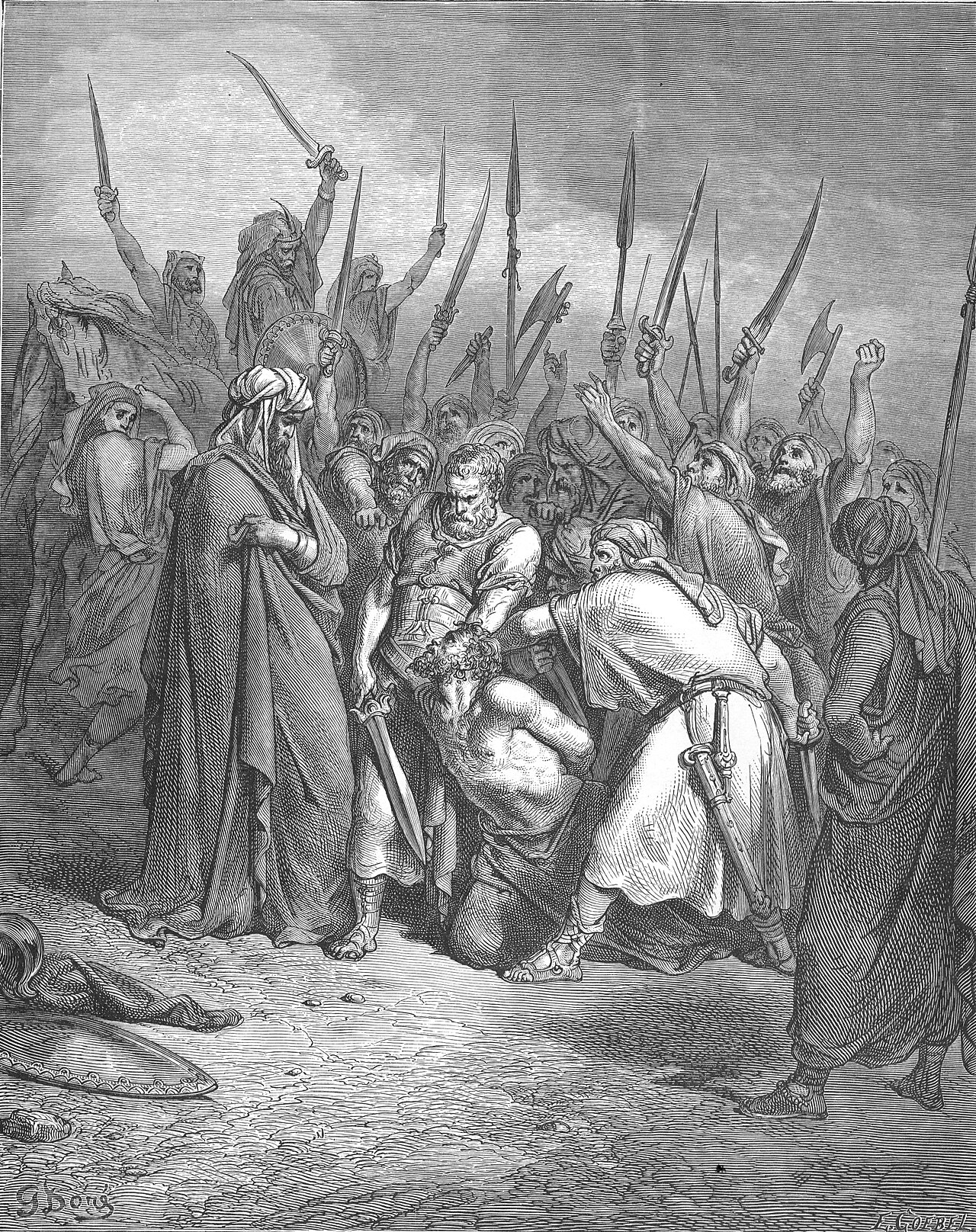
This page draws on Adam Clarke, Commentary on the Bible; Albert Barnes, Notes, Explanatory and Practical, on the Old and New Testaments (1832-1869); Bede, Commentary on Samuel; Gregory the Dialogist, Commentary on 1 Kings, Book 6, Chapter 1; John Gill, Exposition of the Old Testament (1748-1763); John Wesley, Explanatory Notes upon the Old Testament; Keil and Delitzsch, Biblical Commentary on the Books of Samuel and Matthew Henry, Commentary on the Whole Bible.