
1 Samuel 15:9
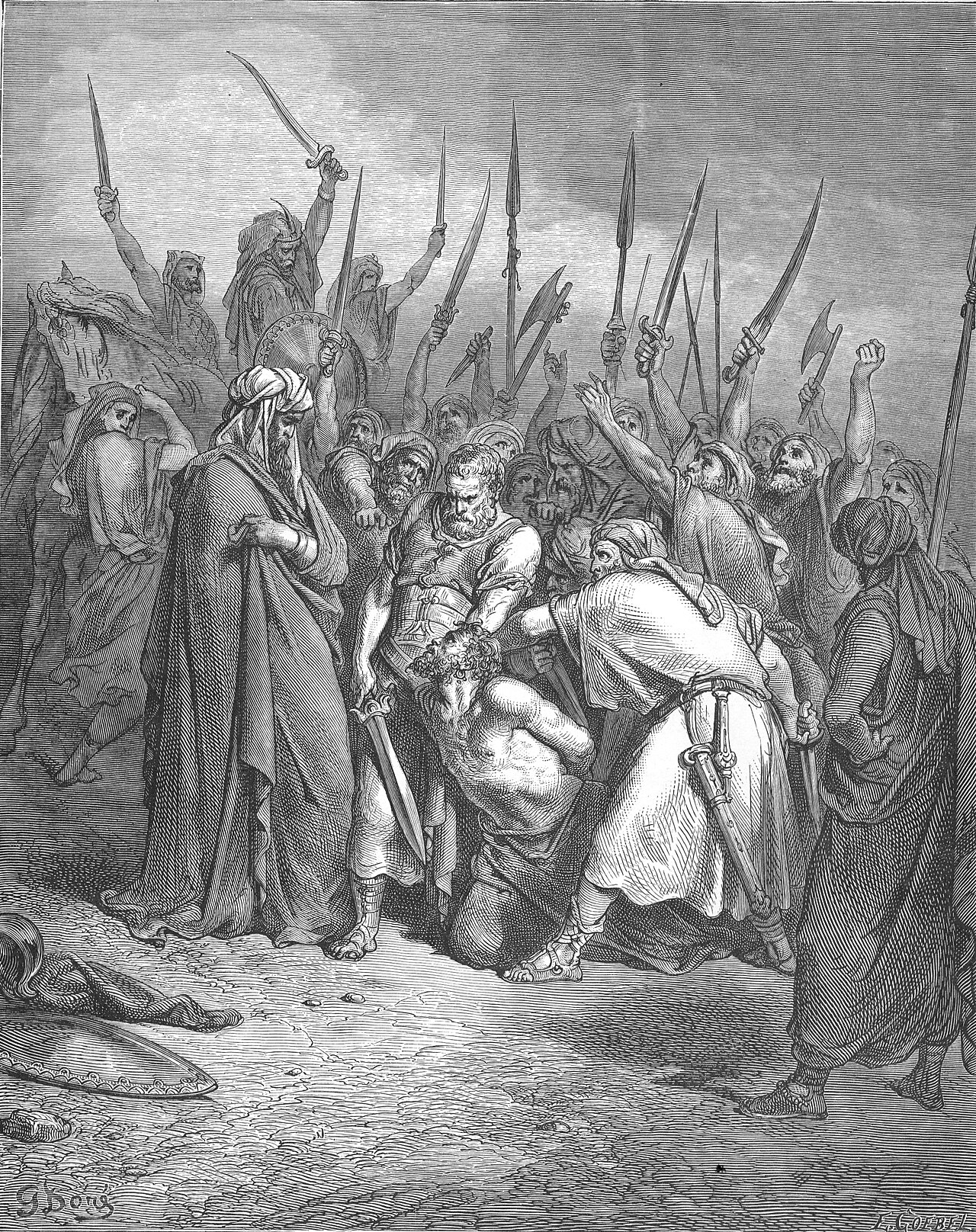
in 1 Samuel 15Saul and his troops spared Agag, along with the best of the sheep and cattle, the fat calves and lambs, and the best of everything else. They were unwilling to destroy them, but they devoted to destruction all that was despised and worthless.
BSB
The same verse in ASV and KJV ▾
ASV
But Saul and the people spared Agag, and the best of the sheep, and of the oxen, and of the fatlings, and the lambs, and all that was good, and would not utterly destroy them: but everything that was vile and refuse, that they destroyed utterly.
KJV
But Saul and the people spared Agag, and the best of the sheep, and of the oxen, and of the fatlings, and the lambs, and all that was good, and would not utterly destroy them: but every thing that was vile and refuse, that they destroyed utterly.
⋯
This verse in 1 Samuel 15
Commentary
7 notes on this verseA commentator
Albert Barnes1798–1870
Notes, Explanatory and Practical, on the Old and New Testaments (1832-1869)
The fatlings - The present Hebrew text cannot be so rendered. It can only mean “the second best” (compare the margin), i. e., sheep of the age to cut or shed the two teeth, sheep in their prime. But it is probable that the reading is corrupt, and that “fat or dainty bits” is the true reading.
This site's exposition
Saul struck down the Amalekites all the way from Havilah to Shur
on 1 Samuel 15:7-9
Saul carries the campaign from Havilah to Shur and takes Agag alive. Verse 9 states the failure plainly, since Saul and the troops spared Agag and "the best of the sheep and cattle." Barnes reads the sparing of Agag as a king’s calculation, a captive kept to be paraded.
This site's exposition
the fat calves and lambs
Albert Barnes reads the Hebrew behind the fat calves as the second best, sheep and cattle in their prime. He judges the reading probably corrupt, and dainty portions may be the first wording. Either way Saul and his troops spared the best by choice.
The record, by era
The Church Fathers1 voice
A commentator
Apostolic ConstitutionsCONSTITUTIONS OF THE HOLY APOSTLES 2.10 · Written before 380.
proposed
But he who does not consider these things, will, contrary to justice, spare him who deserves punishment; as Saul spared Agag, and Eli his sons, "who knew not the Lord." Such a one profanes his own dignity and that church of God which is in his parish. Such a one is esteemed unjust before God and holy men, as affording occasion of scandal to many of the newly baptized and to the catechumens; as also to the youth of both sexes, to whom a woe belongs, add "a millstone about his neck," and drowning, on account of his guilt. For, observing what a person their governor is, through his wickedness and neglect of justice they will grow skeptical, and, indulging the same disease, will be compelled to perish with him; as was the case of the people joining with Jeroboam, and those which were in the conspiracy with Korah.
The Medieval Church1 voice
A commentator
Gregory the DialogistCommentary on 1 Kings, Book 6, Chapter 2 · Written before 604.
proposed
1. King Saul, who had good beginnings but by no means persevered in the good things he had begun, is presented through the text of sacred History, so that in him we may see what is to be imitated and what is to be avoided. Thus indeed we also pick from badly cultivated fields, which rise up to harvest mixed with thorns. He truly knows how to gather well from them, who takes care to pick the ears of grain while striving to avoid the thorns.
The Puritans and the Awakening2 voices
22 And Samuel said, Hath the L ORD as great delight in burnt offerings and sacrifices, as in obeying the voice of the L ORD ? Behold, to obey is better than sacrifice, and to hearken than the fat of rams. 23 For rebellion is as the sin of witchcraft, and stubbornness is as iniquity and idolatry.
quarantine:scripture (2026-07-29) — scripture-overlap:93%@v22-23
And Saul and all the people spared Agag,....
The words behind it
24 Hebrew wordsEvery Hebrew word of this verse in the order it stands, with what it means and the door to its own study. The last column counts the times a word stands in the whole Bible: the rarer the word, the more the places it appears belong together.
| Hebrew | Sound | Meaning | Word study | In the Bible |
|---|---|---|---|---|
| וַיַּחְמֹל֩ | vaiyachmol | and he had compassion | H2550 → | 41 times |
| שָׁא֨וּל | shaul | Saul | H7586 → | 402 times |
| וְהָעָ֜ם | vehaam | and the people | H5971 → | 1873 times |
| עַל־ | ʾal- | on | H5921 → | 5755 times |
| אֲגָ֗ג | ʾagag | Agag | H90 → | 8 times |
| וְעַל־ | veal- | and on | H5921 → | 5755 times |
| מֵיטַ֣ב | meitav | [the] best of | H4315 → | |
| הַצֹּאן֩ | hatzon | the sheep | H6629 → | 274 times |
| וְהַבָּקָ֨ר | vehabakar | and the cattle | H1241 → | 183 times |
| וְהַמִּשְׁנִ֤ים | vehamishnim | and the second | H4932 → | 35 times |
| וְעַל־ | veal- | and on | H5921 → | 5755 times |
| הַכָּרִים֙ | hakarim | the lambs | H3733 → | |
| וְעַל־ | veal- | and on | H5921 → | 5755 times |
| כָּל־ | kol- | all | H3605 → | 5413 times |
| הַטּ֔וֹב | hatov | the good | H2896 → | 538 times |
| וְלֹ֥א | velo' | and not | H3808 → | 5168 times |
| אָב֖וּ | ʾavu | they were willing | H14 → | 54 times |
| הַחֲרִימָ֑ם | hacharimam | to totally destroy them | H2763 → | 52 times |
| וְכָל־ | vekhol | and all | H3605 → | 5413 times |
| הַמְּלָאכָ֛ה | hamelakhah | the property | H4399 → | |
| נְמִבְזָ֥ה | nemivzah | despised | H5240 → | |
| וְנָמֵ֖ס | venames | and worthless | H4549 → | |
| אֹתָ֥הּ | ʾotah | <obj.> it | H853 → | 10935 times |
| הֶחֱרִֽימוּ׃ פ | hecherimu | they totally destroyed | H2763 → | 52 times |
וַיַּחְמֹל֩and he had compassion
vaiyachmolH2550 →41 times
שָׁא֨וּלSaul
shaulH7586 →402 times
וְהָעָ֜םand the people
vehaamH5971 →1873 times
עַל־on
ʾal-H5921 →5755 times
אֲגָ֗גAgag
ʾagagH90 →8 times
וְעַל־and on
veal-H5921 →5755 times
מֵיטַ֣ב[the] best of
meitavH4315 →
הַצֹּאן֩the sheep
hatzonH6629 →274 times
וְהַבָּקָ֨רand the cattle
vehabakarH1241 →183 times
וְהַמִּשְׁנִ֤יםand the second
vehamishnimH4932 →35 times
וְעַל־and on
veal-H5921 →5755 times
הַכָּרִים֙the lambs
hakarimH3733 →
וְעַל־and on
veal-H5921 →5755 times
כָּל־all
kol-H3605 →5413 times
הַטּ֔וֹבthe good
hatovH2896 →538 times
וְלֹ֥אand not
velo'H3808 →5168 times
אָב֖וּthey were willing
ʾavuH14 →54 times
הַחֲרִימָ֑םto totally destroy them
hacharimamH2763 →52 times
וְכָל־and all
vekholH3605 →5413 times
הַמְּלָאכָ֛הthe property
hamelakhahH4399 →
נְמִבְזָ֥הdespised
nemivzahH5240 →
וְנָמֵ֖סand worthless
venamesH4549 →
אֹתָ֥הּ<obj.> it
ʾotahH853 →10935 times
הֶחֱרִֽימוּ׃ פthey totally destroyed
hecherimuH2763 →52 times
A shaded row is a word that stands 400 times or fewer in the Bible.
The walk
8 stopsEach card is a verse this one points to, and under it the verses that one points to in turn. Where several paths arrive at the same place, that place is listed first: the text keeps returning to it.
Through
Joshua 7:21When I saw among the spoils a beautiful cloak from Shinar, two hundred shekels of silver, and a bar of gold weighing fifty shekels, I coveted them and took them. They are hidden in…
it leads to
- James 1:15
Then after desire has conceived, it gives birth to sin; and sin, when it is full-grown, gives birth to death.
- 1 John 2:15–16
Do not love the world or anything in the world. If anyone loves the world, the love of the Father is not in him.
- Luke 12:15
And He said to them, “Watch out! Guard yourselves against every form of greed, for one’s life does not consist in the abundance of his possessions.”
- Psalms 119:37
Turn my eyes away from worthless things; revive me with Your word.
- James 1:15
Through
1 Samuel 15:3Now go and attack the Amalekites and devote to destruction all that belongs to them. Do not spare them, but put to death men and women, children and infants, oxen and sheep, camels and…
it leads to
- Numbers 24:20
Then Balaam saw Amalek and lifted up an oracle, saying: “Amalek was first among the nations, but his end is destruction.”
- Deuteronomy 20:16–18
However, in the cities of the nations that the LORD your God is giving you as an inheritance, you must not leave alive anything that breathes.
- Numbers 24:20
Through
2 Samuel 6:13When those carrying the ark of the LORD had advanced six paces, he sacrificed an ox and a fattened calf.
it leads to
- 1 Chronicles 15:15
And the Levites carried the ark of God on their shoulders with the poles, as Moses had commanded in accordance with the word of the LORD.
- 1 Kings 8:5
There, before the ark, King Solomon and the whole congregation of Israel who had assembled with him sacrificed so many sheep and oxen that they could not be counted or numbered.
- 1 Chronicles 15:15
Where this verse is studied
On this page
Studies16
On this verse
On this chapter
About 1 Samuel
Who and where
2 names in this verse with a page on the site.
- PersonUnited monarchySaulIsrael's first king, head and shoulders above the people; began in humility, ended in rejection — sparing what God devoted, consul…
- PersonEarly monarchyAgagKing of Amalek, spared by Saul against the express command — the partial obedience that cost Saul the kingdom; hewed in pieces bef…
This page draws on Albert Barnes, Notes, Explanatory and Practical, on the Old and New Testaments (1832-1869); Albert Barnes, Notes on the Old Testament; Apostolic Constitutions, CONSTITUTIONS OF THE HOLY APOSTLES 2.10; Gregory the Dialogist, Commentary on 1 Kings, Book 6, Chapter 2; John Gill, Exposition of the Old Testament (1748-1763); John Wesley, Explanatory Notes upon the Old Testament and Matthew Henry, Commentary on the Whole Bible.