
2 Kingschapter 17
41 verses · Jeremiah, by tradition · 6th century BC · History
Key verse
In the twelfth year of Ahaz king of Judah began Hoshea the son of Elah to reign in Samaria over Israel nine years.
It stands in Hoshea's treachery, three years of siege, and exile to Halah, verses 1 to 6.
The chapter
Chapter summary
Samaria falls. Hoshea sends to So king of Egypt and stops paying tribute; Shalmaneser besieges the city three years and takes it, and Israel is carried to Halah and Habor by the river of Gozan and the cities of the Medes. Then the narrator stops the chronicle and preaches the longest explanation in Kings: it happened because Israel sinned against the Jehovah who brought them out of Egypt. High places in every city, pillars and Asherim on every high hill, molten calves, the host of heaven, children passed through the fire, divination, and prophets sent again and again and not heard. Of the foreigners resettled there the verdict is exact: 'They feared Jehovah, and served their own gods.'
Context
History · Jeremiah · 2 Kings overview
The world behind this chapter
2 Kings 17The history
Hoshea's fatal move was to stop the annual tribute and send messengers to So, king of Egypt. Egypt was the standard alternative patron for small states trying to escape Assyria, and it delivered for none of them. The Assyrian answer was a three-year siege of a capital built on a steep isolated hill, which is why it took that long.
The rest of the history, and what it meant to them
Two Assyrian kings claim the city. Shalmaneser V began the siege and died about the time it ended. Sargon II, who took the throne in 722 BC, claims the conquest in his own annals and gives the number deported as 27,290. Both claims can stand together, one king starting the siege and the other finishing it and carrying out the deportation. The wording of Kings, which says only that the king of Assyria took Samaria, leaves the question open.
The resettlement is described with names. People were brought in from Babylon, Cuthah, Avva, Hamath and Sepharvaim and settled in the towns of Samaria. This was Assyrian standard practice: deport the leading population, import others, and a nation's identity dissolves within a generation.
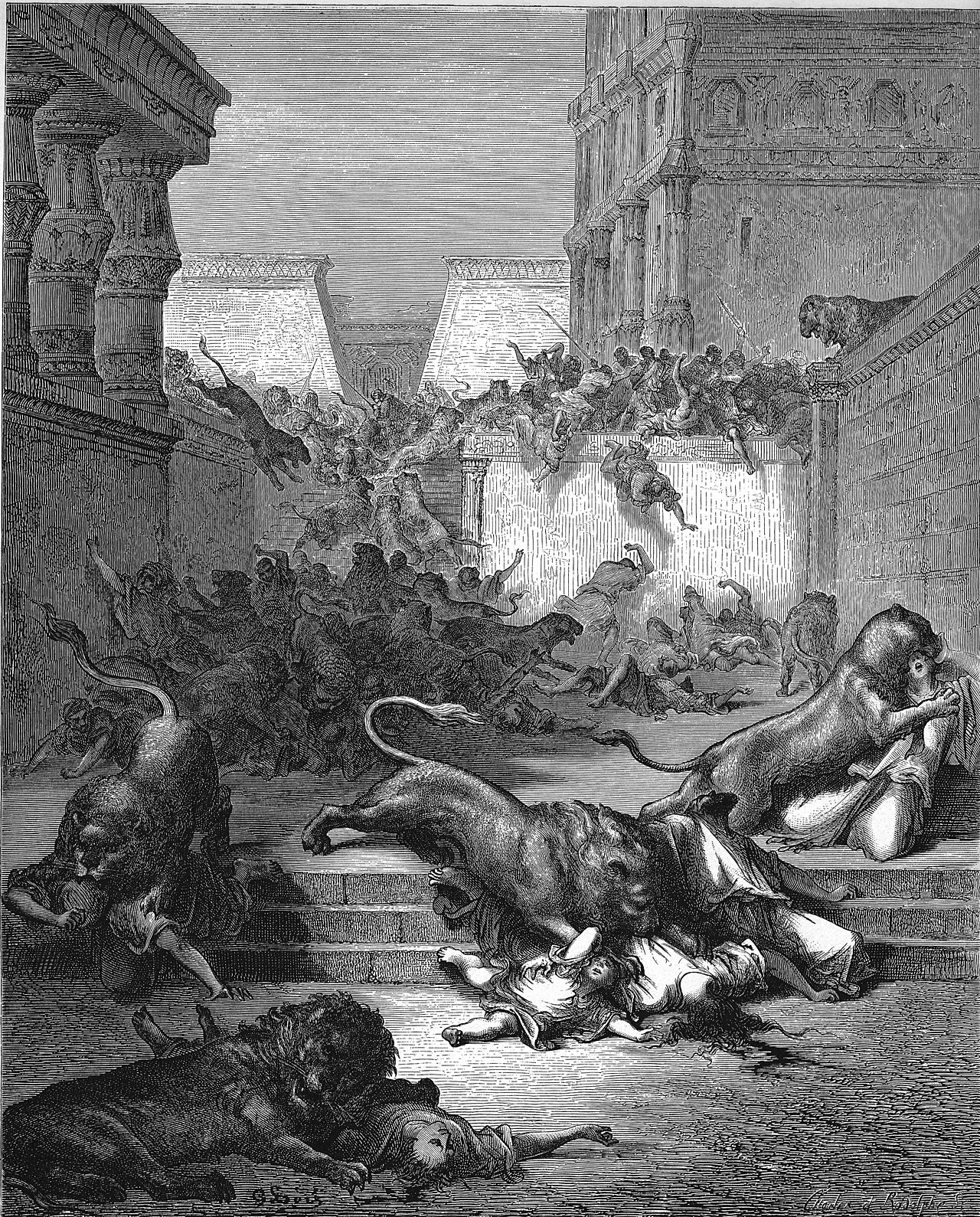
The lion attacks that followed were read by the settlers as the local god being offended, so a captured Israelite priest was sent back to Bethel to teach them. The result was a people who feared the LORD and served their own carved images at the same time. That mixture is the beginning of the long Samaritan question still live in the Gospels seven centuries later.
The centre of the chapter is the explanation rather than the battle. It is long and unsparing. They walked in the customs of the nations, built high places in every town from watchtower to fortified city, served idols, burned their children, used divination, and refused the prophets God sent again and again. The writer is answering the one question that mattered to his readers, which is how this happened.
What it meant to them
For the first hearers, ten tribes had just vanished from history. This chapter tells them the cause was two hundred years of warning refused rather than Assyrian strength.
The closing lines quietly turn the mirror. Judah also failed to keep the commandments. The south read this obituary knowing the writer could see the same road under their own feet.
Sources cited
- The Annals of Sargon II (Khorsabad inscriptions, 8th century BC)
- Edwin R. Thiele, The Mysterious Numbers of the Hebrew Kings
- John H. Walton, Victor H. Matthews and Mark W. Chavalas, The IVP Bible Background Commentary: Old Testament
Where the chapter sits
2 Kings 17 falls in Northern kingdom's fall (chapters 14–17). Jeroboam II's reign (Jonah contemporary); long catalogue of northern kings; Hoshea; Samaria besieged three years; the 722 BC Assyrian exile.
Samaria falls. The long sermon on why Israel fell; the Samaritans resettled; the signature verse.
Before it: Elijah's ascension; Elisha's ministry, chapters 1–13. After it: Hezekiah and the Assyrian crisis, chapters 18–20.
The whole shape of 2 Kings→The structure of this chapter
The heads below are this chapter's scenes. The numbered points under each are its verses.
A. Hoshea's treachery, three years of siege, and exile to Halah
1. (vv. 1-2)
2 Kings 17:1
“It was two years before Hoshea was acknowledged king of Israel, that is, in the fourth of Ahaz, and twentieth of Jotham. In the twelfth year of Ahaz his reign began to be tranquil and prosperous [CALMET].”
Jamieson, Fausset & Brown· Commentary Critical and Explanatory on the Whole Bible (1871)reformed
1 more voice on this verseWhat preachers and commentators have said about this verse, in their own words.
2 Kings 17:1
“To reign - He usurped the kingdom in Ahaz's fourth year; but either was not owned as king, by the generality of the people; or was not accepted and established in his kingdom, 'till Ahaz's twelfth year.”
John Wesley· Explanatory Notes upon the Old Testament (1765)evangelical
2 Kings 17:2
“Not as the kings of Israel that were before him - The repentance of a nation like that of an individual, may be “too late.” God is long-suffering; but after national sins have reached a certain height, after admonitions and warnings have been repeatedly rejected, after lesser punishments have failed - judgment begins to fall. Forces have been set in motion, which nothing but a miracle could stop; and God does not see fit to work a miracle in such a case. Compare Butler, ‘Analogy, ‘ Pt. I ch. 2 end.”
Hoshea the son of Elah: Hoshea reigns as the last king of the northern throne, and the historian allows him one comparative mercy: evil, but not as the kings of Israel that were before him. The judgment that follows in this chapter falls anyway, because national sin can reach a point where a milder king no longer turns it back. Nine dynasties and their kings stand behind him, and this chapter closes the account on all of them at once.
2. (vv. 3-4)
2 Kings 17:3
“Against him came up Shalmaneser king of Assyria,.... Which some take to be the same with Tiglathpileser, see 1Ch 5:26 but he rather seems to be his son; his name was to be found, as Josephus (w) relates, in the archives of the Tyrians, against whom he had an expedition; his name is Salmanassar in Metasthenes (x), who says he reigned seventeen years: and Hoshea became his servant, and gave him presents, to depart from him; he became tributary to him, and agreed to pay him a yearly tax. (w) Antiqu. l. 9. c. 14. sect.”
2 more voices on this verse
2 Kings 17:3
“Of Shalmaneser, the successor of Tiglath-pileser in the Assyrian Canon, we know little from Assyrian sources, since his records have been mutilated by his successors, the Sargonids, who were of a wholly different family. The archives of Tyre mention him as contemporary with, and warring against, a Tyrian king named Elulaeus. The expedition, referred to here, was probably in the first year of Shalmaneser (727 B.C.). Its main object was the reduction of Phoenicia, which had re-asserted its independence, but (except Tyre) was once more completely reduced.”
2 Kings 17:3
“Shalmaneser - The son, or successor of Tiglath-pileser. The ancient Hebrew writers made him the same with Sennacherib, who eight years after this time, invaded the kingdom of Judah; it being very frequent in the Eastern parts, for one man to be called by several names.”
John Wesley· Explanatory Notes upon the Old Testament (1765)evangelical
2 Kings 17:4
“Shalmaneser, incensed at this rebellion, proclaimed war against Israel. This was in the sixth year of Hoshea's reign. he had sent messengers to So, king of Egypt--the Sabaco of the classic historians, a famous Ethiopian who, for fifty years, occupied the Egyptian throne, and through whose aid Hoshea hoped to resist the threatened attack of the Assyrian conqueror.”
Jamieson, Fausset & Brown· Commentary Critical and Explanatory on the Whole Bible (1871)reformed
1 more voice on this verse
2 Kings 17:4
“Men get nothing by struggling with the net, but entangle themselves the more. That it was an utter destruction that came upon them. The king of Israel was made a prisoner; he was shut up and bound, being, it is probable, taken by surprise, before Samaria was besieged.”
Matthew Henry· Commentary on the Whole Bible (1707-1721)puritan
Shalmaneser king of Assyria: Shalmaneser receives tribute from Hoshea as a subject king, then finds him treating with So king of Egypt behind his back and withholding the yearly present. So is not identified further in the text, and readers name him variously as Osorkon of Egypt's Twenty-second Dynasty or the Egyptian city of Sais read as though it were a king's name; the identification stays open. The broken tribute is what turns a vassal into a prisoner, shut up and bound before Assyria ever reaches Samaria's gate.
3. (vv. 5-6)
2 Kings 17:5
“All the land - The second invasion of Shalmaneser (723 B.C., his fifth year), is here contrasted with the first, as extending to the whole country, whereas the first had afflicted only a part. Three years - From the fourth to the sixth of Hezekiah, and from the seventh to the ninth of Heshea; two years, therefore, according to our reckoning, but three, according to that of the Hebrews.”
1 more voice on this verse
2 Kings 17:5
“Three years it held out after the country was conquered, and no doubt a great deal of misery was endured at that time which is not particularly recorded; but the brevity of the story, and the passing of this matter over lightly, methinks, intimate that they were abandoned of God and he did not now regard the affliction of Israel, as sometimes as he had done.”
Matthew Henry· Commentary on the Whole Bible (1707-1721)puritan
2 Kings 17:6
“Took Samaria - According to the prophets Hosea, Hos 13:16, and Micah, Mic 1:6. He exercised great cruelties on this miserable city, ripping up the women with child, dashing young children against the stones, etc. etc. Carried Israel away into Assyria - What were the places to which the unfortunate Israelites were carried, or where their successors are now situated, have given rise to innumerable conjectures, dissertations, discourses, etc. Some maintain that they are found on the coast of Guinea; others, in America; the Indian tribes being the descendants of those carried away by the Assyrians.”
Adam Clarke· Commentary on the Bible (1810-1826)evangelical
2 more voices on this verse
2 Kings 17:6
“Carried Israel away, &c. - There, we have reason to think, after some time, they were so mingled with the nations, that they were lost, and the name of Israel was no more in remembrance.”
John Wesley· Explanatory Notes upon the Old Testament (1765)evangelical
2 Kings 17:6
“Chabor--is a river, and it is remarkable that there is a river rising in the central highlands of Assyria which retains this name Khabour unchanged to the present day. Gozan--("pasture") or Zozan, are the highlands of Assyria, which afford pasturage.”
Jamieson, Fausset & Brown· Commentary Critical and Explanatory on the Whole Bible (1871)reformed
besieged it three years: Assyria besieges Samaria three full years, and Kings never names which king finishes it, only the king of Assyria. Assyrian records credit the fall to Sargon II, who claims the conquest and the deportation on his own inscriptions though Shalmaneser V began the siege, a question the biblical text leaves open rather than resolves. The named places of exile, Halah, Habor by the river of Gozan, and the cities of the Medes, are real Assyrian resettlement districts, and the ten tribes scatter into them with no recorded return.
B. The long indictment: they walked in the statutes of the nations
1. (vv. 7-8)
2 Kings 17:7
“The reasons for which God suffered the Israelites to be deprived of their land and carried into captivity were: 1. their idolatries; 2. their rejection of the Law; 3. their disregard of the warning voices of prophets and seers.”
2 Kings 17:8
“And walked in the statutes of the heathen, whom the Lord cast out from before the children of Israel,.... Meaning the Canaanites, in whose idolatrous ways they walked, and whom they imitated; though their ejection out of the land should have been a warning to them, and they were the more inexcusable, as they were particularly cautioned against walking in them, Lev 18:3. and of the kings of Israel, which they had made; their laws and statutes, to worship the golden calves, and not go up to Jerusalem to worship.”
1 more voice on this verse
2 Kings 17:8
“Idolatry was worse in the Israelites than in other nations, since it argued not merely folly and a gross carnal spirit, but also black ingratitude Exo 20:2-3. The writer subdivides the idolatries of the Israelites into two classes, pagan and native - those which they adopted from the nations whom they drove out, and those which their own kings imposed on them.”
had sinned against the Lord their God: The historian steps back from narrative into explanation here, and verses 7 to 23 form the longest single editorial in the historical books. The sin is named at its root before any list of practices: Israel feared other gods, the very people the Lord had brought up out of Egypt, then walked in the statutes of the nations he had cast out before them. The Exodus itself becomes the ground of the charge, since the God who delivered them is the God they set aside.
2. (vv. 9-12)
2 Kings 17:9
“If in any place there was but the tower of the watchmen (a country tower that had no walls, but only a tower to shelter the watch in time of danger), or but a lodge for shepherds, it must be honoured with a high place, and that with an altar. If there was a fenced city, it must be further fortified with a high place.”
Matthew Henry· Commentary on the Whole Bible (1707-1721)puritan
2 more voices on this verse
2 Kings 17:9
“Literally, the words run thus - “And the children of Israel concealed (or ‘dissembled’) words which were not so concerning the Lord their God;” the true meaning of which probably is, the Israelites cloaked or covered their idolatry with the pretence that it was a worship of Yahweh: they glossed it over and dissembled toward God, instead of openly acknowledging their apostasy.”
2 Kings 17:9
“With the words "from watchtower to fortified city" [the Scripture] denounces the large number of their idols, that is, [there were] idols from border to border. The text refers to the "fortified city" as Jerusalem, but other [interpreters] say Antioch.”
Ishodad of Merv· written before 850· BOOKS OF SESSIONS 2 KINGS 16:15patristic
2 Kings 17:10
“And they set them up images and groves in every high hill, and under every green tree.”
1 more voice on this verse
2 Kings 17:10
“Images and groves - Images of different idols, and places for the abominable rites of Ashtaroth or Venus.”
Adam Clarke· Commentary on the Bible (1810-1826)evangelical
2 Kings 17:11
“The burning of incense was a common religious practice among the Egyptians and the Babylonians; and from the present passage we gather that the Canaanite nations practiced it as one of their ordinary sacred rites. The Israelites are frequently reproached with it Hos 2:13; Hos 4:13; Isa 65:3.”
2 Kings 17:12
“For they served idols,.... Baalim, as the Targum; dunghill gods, as the word signifies, as they are often called in Scripture; and Sterculius was one of the names of Saturn, an Heathen deity, which he had, as is supposed, by his finding out the method of making land fruitful with dung (i): whereof the Lord said unto them, ye shall not do this thing; see Exo 20:3. (i) Vid. Macrob. l. 1. c. 7. Lactant. de fals. Relig. l. 1. c. 20.”
the tower of the watchmen to the fenced city: Verses 9 to 12 catalogue the buildup by scale rather than by list: high places built in every city from the watchtower to the walled town, images and groves set on every high hill and under every green tree, incense burned in all of them. The idols are named only by category, because the point is saturation rather than inventory. The Lord had said plainly, ye shall not do this thing, and the chapter measures the distance between that one sentence and generations of practice covering the whole land.
3. (v. 13)
2 Kings 17:13
“Seers - To whom he declared his mind, by Revelations and visions, and by whom he published it, bearing witness, from heaven to their doctrine by eminent and glorious miracles.”
John Wesley· Explanatory Notes upon the Old Testament (1765)evangelical
testified against Israel, and against Judah: This verse is the chapter's own summary of centuries of prophetic ministry: the Lord testified against Israel, and against Judah, by all the prophets, and by all the seers, calling for one thing, turn ye from your evil ways. The warning named both kingdoms together, so the fall of the north in this chapter stands as Judah's own warning still open when chapter 25 closes the book on Jerusalem. The command asked for nothing new, keep my commandments and my statutes, the same law given to their fathers.
4. (vv. 14-15)
2 Kings 17:14
“Notwithstanding, they would not hear,.... Their instructions, advice, and admonitions, and obey them: but hardened their necks, like to the neck of their fathers, that did not believe in the Lord their God: as Terah and Nahor, who were idolaters; or rather, their fathers in the wilderness, that made and served the calf, and those that rebelled against Moses and Aaron; it is a metaphor taken from oxen, that will not submit their necks to the yoke, but draw back from it, or cast it off, see Act 7:51.”
1 more voice on this verse
2 Kings 17:14
“To “harden” or “stiffen the neck” is a common Hebrew expression significative of unbending obstinacy and determined self-will. See the marginal references.”
2 Kings 17:15
“As idols are “vanity” and “nothingness,” mere weakness and impotence, so idolators are “vain” and impotent. Their energies have been wasted, their time misspent; they have missed the real object of their existence; their whole life has been a mistake; and the result is utter powerlessness. Literally, the word rendered “vanity” seems to mean “breath” or “vapor” - a familiar image for nonentity. It occurs frequently in the prophets, and especially in Jeremiah (e. g. Jer 2:5; Jer 8:19; Jer 14:22, etc.).”
hardened their necks: They hardened their necks like their fathers before them who did not believe, a phrase running back to the wilderness generation, and stiff necked disobedience becomes this chapter's diagnosis across two centuries of kings. Verse 15 names the mechanism in one sentence: they followed vanity, and became vain, worship shaping the worshipper into the likeness of what is worshipped. Paul's argument in Romans 1, that those who exchange the truth for a lie are given over to what they chose, runs on the same logic this verse already states.
5. (vv. 16-17)
2 Kings 17:16
“This was the sin that did most easily beset them; this was, of all sins, most provoking to God: it was the spiritual adultery that broke the marriage-covenant, and was the inlet of all other wickedness. Hence it is again and again mentioned here as the sin that ruined them.”
Matthew Henry· Commentary on the Whole Bible (1707-1721)puritan
2 Kings 17:17
“And they caused their sons and their daughters to pass through the fire,....”
2 more voices on this verse
2 Kings 17:17
“Sold themselves to do evil - Abandoned themselves to the will of the devil, to work all iniquity with greediness.”
Adam Clarke· Commentary on the Bible (1810-1826)evangelical
2 Kings 17:17
“Compare 2Ki 16:3 note, and see Lev 20:2-5 note.”
worshipped all the host of heaven: Two calves recur here from Jeroboam's original pair at Bethel and Dan, now joined by a grove, the host of heaven, and Baal together, the whole catalogue of Canaanite and astral religion gathered in one verse. Worship of the host of heaven, the sun, moon and stars given honor due their Maker, is the same practice Josiah will later purge from the temple at 2 Ki 23:5. Passing sons and daughters through the fire names child sacrifice, forbidden at Lev 18:21 and 20:2, and the verdict already coming in verse 18 answers all of it together.
6. (v. 18)
2 Kings 17:18
“Removed them out of his sight - Banished them from the promised land, from the temple, and from every ordinance of righteousness, as wholly unworthy of any kind of good. None left but the tribe of Judah only - Under this name all those of Benjamin and Levi, and the Israelites, who abandoned their idolatries and joined with Judah, are comprised. It was the ten tribes that were carried away by the Assyrians.”
Adam Clarke· Commentary on the Bible (1810-1826)evangelical
none left but the tribe of Judah: The sentence falls in one verse, the Lord removed Israel out of his sight, and the phrase repeats across this chapter at verses 18, 20 and 23, a formula rather than a single remark. Only the tribe of Judah is left standing, and the text does not soften ten tribes gone in a single stroke that took generations of provocation to arrive at. Anger here is not sudden; it is the terminus of everything verses 7 to 17 have already described.
7. (vv. 19-20)
2 Kings 17:19
“Also Judah kept not the commandments of the Lord their God,.... But were infected with the idolatry of the ten tribes, and drawn into it by their example, and persisted therein, notwithstanding what befell the ten tribes; which are aggravations of the sins of them both, see Jer 3:7, but walked in the statutes of Israel which they made; worshipping the calves as they did, particularly in the times of Ahaz, he setting the example, see 2Ki 16:3.”
1 more voice on this verse
2 Kings 17:19
“This verse and the next are parenthetical. Here again, as in 2Ki 17:13, the writer is led on from his account of the sins and punishment of the Israelites to glance at the similar sins and similar punishment of the Jews. It was the worst reproach which could be urged against any Jewish king, that he “walked in the way of the kings of Israel” 2Ki 8:18; 2Ki 16:3; 2Ch 21:6; 2Ch 28:2. The Baal worship is generally the special sin at which the phrase is leveled; but the meaning here seems to be wider. Compare Mic 6:16.”
2 Kings 17:20
“All the seed of lsrael - The Jews, i. e. as well as the Israelites. God’s dealings with both kingdoms were alike. “Spoilers” were sent against each, time after time, before the final ruin came on them - against Israel, Pul and Tiglath-pileser 2Ki 15:19, 2Ki 15:29; 1Ch 5:26; against Judah, Sennacherib 2Ki 18:13-16, Esar-haddon 2Ch 33:11, and Nebuchadnezzar thrice.”
1 more voice on this verse
2 Kings 17:20
“All Israel - All the tribes of Israel: first, one part of them, and now the rest. But this extends not to every individual person of these tribes; for many of them removed into the kingdom of Judah, and were associated with them.”
John Wesley· Explanatory Notes upon the Old Testament (1765)evangelical
Judah kept not the commandments: Judah is not spared the verdict; the text turns the same charge on the surviving kingdom in one clause, Judah kept not the commandments of the Lord their God either. Verse 20 widens the word Israel to cover both kingdoms together, the Lord rejected all the seed of Israel, so the chapter refuses to let Judah read the north's fall as another people's story. The affliction and the delivery into the hand of spoilers describe Judah's own coming century as much as Israel's finished one.
8. (vv. 21-23)
2 Kings 17:21
“The strong expression “drave Israel” is an allusion to the violent measures whereto Jeroboam had recourse in order to stop the efflux into Judea of the more religious portion of his subjects 2Ch 11:13-16, the calling in of Shishak, and the permanent assumption of a hostile attitude toward the southern kingdom.”
1 more voice on this verse
2 Kings 17:21
“A great sin - So the worship of the calves is called, to meet with that idle conceit of the Israelites, who esteemed it a small sin, especially when they were forced to it by severe penalties; which yet he shews did not excuse it from being a sin, and a great sin too.”
John Wesley· Explanatory Notes upon the Old Testament (1765)evangelical
2 Kings 17:22
“For the children of Israel walked in all the sins of Jeroboam which he did,.... They observed his injunction, not to go to Jerusalem to worship, and they worshipped the calves he did: they departed not from them: in all succeeding reigns, until the time of their captivity.”
2 Kings 17:23
“Until the Lord removed Israel out of his sight,.... Suffered them to be carried captive into the land of Assyria: as he had said by all his servants the prophets; by Hosea, Amos, Micah, and others; see their prophecies, and also 1Ki 13:32, so was Israel carried away out of their own land to Assyria, unto this day; the time of the writing this book; nor have they returned unto our days, nearly 2,800 years later.”
1 more voice on this verse
2 Kings 17:23
“As he had said by all his servants the prophets - The writer refers not only to the extant prophecies of Moses (Lev 26:33; Deu 4:26-27; Deu 28:36, etc.), Ahijah the Shilohite (marginal reference), Hosea Hos 9:3, Hos 9:17, and Amos Amo 7:17, but also to the entire series of warnings and predictions which prophet after prophet in a long unbroken succession had addressed to the disobedient Israelites 2Ki 17:13 on their apostasy, and so leaving them wholly “without excuse” (see the 2Ki 17:13 note).”
rent Israel from the house of David: The chapter reaches back to the split itself: the Lord rent Israel from the house of David, Jeroboam was made king, and Jeroboam drave Israel from following the Lord and made them sin a great sin. This is the root of the refrain that names Jeroboam the man who made Israel to sin, repeated across both books from its first occurrence at 1 Ki 14:16 to its last, when Josiah burns the Bethel altar at 2 Ki 23:15. Every king of the north from Jeroboam to Hoshea is measured against this one cause, and verse 23 closes the account with the words unto this day, written from a vantage point still inside the exile.
C. Imported peoples, lions sent among them, and a mixed religion
1. (v. 24)
2 Kings 17:24
“The king of Assyria brought men from Babylon - He removed one people entirely, and substituted others in their place; and this he did to cut off all occasion for mutiny or insurrection; for the people being removed from their own land, had no object worthy of attention to contend for, and no patrimony in the land of their captivity to induce them to hazard any opposition to their oppressors.”
Adam Clarke· Commentary on the Bible (1810-1826)evangelical
2 more voices on this verse
2 Kings 17:24
“The Hebrews, however, call a guard somer, and thus they also hand on in their tradition that the Samaritans first received this name because the king of the Assyrians sent them to be guards of the land of Israel after the captivity, that is, that other Israel besides Judah, which was taken captive into Assyria because of their many sins.”
Origen of Alexandria· written before 253· COMMENTARY ON THE GOSPEL OF JOHN 20.321patristic
2 Kings 17:24
“Believing that he would adopt the best and simplest method for them, it is unlikely that he took the written law with him, and so gave origin to the Samaritan copy of the Pentateuch [DAVIDSON, Criticism]. Besides, it is evident from his being one of the exiled priests, and from his settlement at Beth-el, that he was not a Levite, but one of the calf-worshipping priests.”
Jamieson, Fausset & Brown· Commentary Critical and Explanatory on the Whole Bible (1871)reformed
brought men from Babylon: This verse holds the first occurrence of the word Babylon in Scripture, arriving not as conqueror but as a source of colonists for a land just emptied of its own people. The king of Assyria resettles Samaria with men from Babylon, Cuthah, Ava, Hamath, and Sepharvaim, five named origins for the population that becomes, in time, the Samaritans of the Gospels. One book later Babylon returns as the power that ends Judah itself, and Scripture's first mention of the name carries none of that later weight.
2. (vv. 25-26)
2 Kings 17:25
“The depopulation of the country, insufficiently remedied by the influx of foreigners, had the natural consequence of multiplying the wild beasts and making them bolder. Probably a certain number had always lurked in the jungle along the course of the Jordan Jer 49:19; Jer 50:44; and these now ventured into the hill country, and perhaps even into the cities. The colonists regarded their sufferings from the lions as a judgment upon them from “the god of the land” (2Ki 17:26; compare 1Ki 20:23 note).”
2 Kings 17:26
“The manner of the God of the land - משפט mishpat, the judgment; the way in which the God of the land is to be worshipped.”
Adam Clarke· Commentary on the Bible (1810-1826)evangelical
1 more voice on this verse
2 Kings 17:26
“Herein they shamed the Israelites, who were not so ready to hear the voice of God's judgments as they were, and who had not served the God of that land, though he was the God of their fathers and their great benefactor, and though they were well instructed in the manner of his worship.”
Matthew Henry· Commentary on the Whole Bible (1707-1721)puritan
the Lord sent lions among them: The new settlers do not fear the Lord, and the Lord sends lions among them, a judgment stated as plainly as any sent on Israel itself; the land answers to its God regardless of who now occupies it. The colonists read the lions as territorial rather than random and report it to the king of Assyria in the land's own theological terms, they know not the manner of the God of the land. Their solution will be political rather than converted; a priest is sent, but the fear that follows stays partial, as verse 33 will state outright.
3. (vv. 27-28)
2 Kings 17:27
“Carry one of the priests ...; let them go and dwell there, and let him teach - The double change of number is curious; but rise text needs no emendation. The priest would require to be accompanied by assistants, who would “go and dwell,” but would not be qualified to “teach.” The arcana of the worship would be known to none excepting the priests who had ministered at the two national sanctuaries of Dan and Bethel.”
2 Kings 17:28
“The priest sent to the colonists was not a true Yahweh-priest, but one of those who had been attached to the calf-worship, probably at Bethel. Hence, he would be willing to tolerate the mixed religion, which a true Yahweh-priest would have unsparingly condemned.”
Carry thither one of the priests: Assyria's solution is pragmatic rather than evangelistic: send back one priest of the calf religion Israel had practiced, and let him teach the newcomers the manner of the God of the land. That priest settles in the very city where Jeroboam had set up the golden calf two centuries before, so what the colonists learn is Israel's own corrupted worship, not the law given at Sinai. The chapter has already named this the root sin of the north, and now it becomes the seed of a second people's religion.
4. (vv. 29-31)
2 Kings 17:29
“The “Samaritans” here are the Israelites. The temples built by them at the high places 1Ki 12:31; 1Ki 13:32 had remained standing at the time of their departure. They were now occupied by the new-comers, who set up their own worship in the old sanctuaries.”
1 more voice on this verse
2 Kings 17:29
“Like other heathens, they combined His worship with that of their own gods; and as they formed a promiscuous society from different nations or provinces, a variety of idols was acknowledged among them.”
Jamieson, Fausset & Brown· Commentary Critical and Explanatory on the Whole Bible (1871)reformed
2 Kings 17:30
“The men of Babylon made Succoth-benoth - This, literally, signifies the tabernacles of the daughters or young women, and most evidently refers to those public prostitutions of young virgins at the temple of Melitta or Venus among the Babylonians. See at the end of the chapter, 2Ki 17:41 (note). From benoth it is probable that the word Venus came, the B being changed into V, as is frequently the case, and the th into s, benoth, Venos. The rabbins say that her emblem was a hen with her chickens; see Jarchi on the place.”
Adam Clarke· Commentary on the Bible (1810-1826)evangelical
2 more voices on this verse
2 Kings 17:30
“If we may credit the traditions of the Jewish doctors, they tell us that Succoth-Benoth was worshipped in a hen and chickens, Nergal in a cock, Ashima in a smooth goat, Nibhaz in a dog, Tartak in an ass, Adrammelech in a peacock, Anammelech in a pheasant. Our own tell us, more probably, that Succoth-Benoth (signifying the tents of the daughters ) was Venus.”
Matthew Henry· Commentary on the Whole Bible (1707-1721)puritan
2 Kings 17:30
“Succoth-benoth--that is, the "tents" or "booths of the daughters," similar to those in which the Babylonian damsels celebrated impure rites (Am 2:8). Nergal--The Jewish writers say this idol was in the form of a cock, and it is certain that a cock is often associated with a priest on the Assyrian monuments [LAYARD].”
Jamieson, Fausset & Brown· Commentary Critical and Explanatory on the Whole Bible (1871)reformed
2 Kings 17:31
“Nibhaz and Tartak are either gods of whom no other notice has come down to us, or intentional corruptions of the Babylonian names Nebo and Tir, the great god of Borsippa, who was the tutelar deity of so many Babylonian kings. The Jews, in their scorn and contempt of polytheism, occasionally and purposely altered, by way of derision, the names of the pagan deities. Anammelech is possibly an instance of the same contemptuous play upon words. Adrammelech, “the glorious king,” signifies the sun.”
1 more voice on this verse
2 Kings 17:31
“Adrammelech--supposed by some to be the same as Molech, and in Assyrian mythology to stand for the sun. It was worshipped in the form of a mule--others maintain in that of a peacock. Anammelech--worshipped in the form of a hare; others say in that of a goat.”
Jamieson, Fausset & Brown· Commentary Critical and Explanatory on the Whole Bible (1871)reformed
every nation made gods of their own: Every resettled nation keeps its own god inside the shrines the Samaritans had already built, and the text names them one by one, Succoth-benoth and Nergal from Babylon and Cuth, Ashima from Hamath, Nibhaz and Tartak from the Avites. The Sepharvites burn their own children to Adrammelech and Anammelech, the same child sacrifice already named against Israel at verse 17, now practiced by the very people brought in to replace them. The list reads like a small table of nations of gods, each import keeping its home religion rather than taking up the land's.
5. (vv. 32-33)
2 Kings 17:32
“So they feared the Lord,.... Worshipped the God of Israel in the manner they were taught: and made unto themselves of the lowest of them priests of the high places, which sacrificed for them in the houses of the high places; these were made after the manner of Jeroboam's priests, 1Ki 12:31, and were to sacrifice to the God of Israel in the high places, and temples built there; for otherwise they had, no doubt, priests of their own to sacrifice to their gods, and which they brought with them.”
2 more voices on this verse
2 Kings 17:32
“Of the lowest of them priests - One priest was not enough for this motley population; and, as the priesthood was probably neither respectable nor lucrative, it was only the lowest of the people who would enter into the employment.”
Adam Clarke· Commentary on the Bible (1810-1826)evangelical
2 Kings 17:32
“Sacrificed - Unto the true God: for as to the worship of their own gods, they needed no instruction, and would not permit a person of another religion to minister therein.”
John Wesley· Explanatory Notes upon the Old Testament (1765)evangelical
2 Kings 17:33
“They feared the Lord, and served their own gods,.... Worshipped both: after the manner of the nations whom they carried away from thence; the Israelites, whom they had carried captive from Samaria; they worshipped the Lord in their idols, as they did, who pretended to worship God in the calves; so they worshipped the supreme God in and by their idols, and made use of them as mediators with him.”
1 more voice on this verse
2 Kings 17:33
“Understand the passage thus: “They (the colonists) served their own gods after the manner of the nations from which they (the government) removed them,” i. e., after the manner of their own countrymen at home.”
made unto themselves of the lowest of them priests: The settlers add the Lord's worship without leaving their own, making priests of the high places from the lowest of themselves, the practice Jeroboam had introduced at 1 Ki 12:31, and offering sacrifice there alongside gods brought from five nations. Verse 33 states the result as a single sentence that becomes this people's whole religious character for the rest of Scripture, they feared the Lord, and served their own gods. This is the origin the Gospel of John assumes when Jesus meets a Samaritan woman at a well, background the narrative there does not need to explain.
D. They feared Jehovah, and served their graven images
1. (v. 34)
2 Kings 17:34
“They fear not the Lord - The new-comers in one sense feared Yahweh 2Ki 17:33, 2Ki 17:41. They acknowledged His name, admitted Him among their gods, and kept up His worship at the high place at Bethel according to the rites instituted by Jeroboam 2Ki 17:28. But in another sense they did not fear Him. To acknowledge Yahweh together with other gods is not really to acknowledge Him at all.”
2 more voices on this verse
2 Kings 17:34
“They fear not - Though they pretended to fear, and serve both the Lord and idols, yet in truth they did not, and do not fear or worship the Lord, but their own calves, or other vain inventions: and God will not accept that mongrel and false worship, which they pretend to give to the true God.”
John Wesley· Explanatory Notes upon the Old Testament (1765)evangelical
2 Kings 17:34
“Their religion was a strange medley or compound of the service of God and the service of idols. Such was the first settlement of the people, afterwards called Samaritans, who were sent from Assyria to colonize the land, when the kingdom of Israel, after having continued three hundred fifty-six years, was overthrown.”
Jamieson, Fausset & Brown· Commentary Critical and Explanatory on the Whole Bible (1871)reformed
the children of Jacob, whom he named Israel: Unto this day marks the writer's own present, a mixed worship still standing generations after the events it records. The verse names Jacob by his covenant name, Israel, the same renaming recorded at Gen 32:28, and sets the whole apparatus of statutes, ordinances, law and commandment against a people who keep none of it in full. The verse functions as a hinge, closing the historical report and opening the covenant recitation that follows.
2. (vv. 35-39)
2 Kings 17:35
“With whom the Lord had made a covenant,.... As he did at Sinai, 2Ki 17:15. and charged them, saying, ye shall not fear other gods, nor bow yourselves to them, nor serve them, nor sacrifice to them; all which is contained in the first and second commandments of the law.”
2 Kings 17:36
“But the Lord, which brought you up out of the land of Egypt, with a great power, and a stretched out arm,.... Which is observed, to show the obligations they lay under, in point of gratitude, to serve the Lord: him shall ye fear, and him shall ye worship, and to him shall ye do sacrifice: and him only, and not other gods; none but he being the object of religious fear and divine worship, and to whom sacrifices should be offered.”
1 more voice on this verse
2 Kings 17:36
“But the Lord - Jehovah, the supreme, self-existent, and eternal Being; author of all being and life. This was to be the sole object of their adoration. Who brought you up - This was a strong reason why they should adore Him only: he had saved them from the hands of their enemies, and he did it in such a way as to show his power to be irresistible; in such a Being they might safely confide. Him shall ye fear - Here is the manner in which he is to be worshipped.”
Adam Clarke· Commentary on the Bible (1810-1826)evangelical
2 Kings 17:37
“Which he wrote for you - It is worth observing here, first, that the author regards the whole Law as given to the Israelites in a written form; and secondly, that he looks on the real writer as God.”
2 Kings 17:38
“And the covenant that I have made with you, ye shall not forget,.... The law given at Mount Sinai; the first table of which chiefly concerned the worship of the one true and living God, and forbid the worship of any other, as follows: neither shall ye fear other gods; or make them the object of worship.”
2 Kings 17:39
“But the Lord your God ye shall fear,.... Or worship him, both internally and externally, according to his revealed will; for the fear of God includes both internal and external worship: and he shall deliver you out of the hand of all your enemies; that is, provided they feared and served him as he required, and it became them to do.”
nor bow yourselves to them, nor serve them: Verses 35 to 39 recite the Sinai covenant in the Lord's own remembered words, the same commandments given at Ex 20:2-5 restated as history rather than as new law, I brought you up out of the land of Egypt, him shall ye fear, and other gods you shall not serve. The recitation is long and repetitive on purpose, five verses circling one command, because the failure just described took the same command and broke it for generations without variation. Nothing new is asked here; the chapter states what was always required before it states, in the verses that follow, that it was never kept.
3. (vv. 40-41)
2 Kings 17:40
“So they did, and so did the nations that succeeded them. Well might the apostle ask, What then, Are we better than they? No, in no wise, for both Jews and Gentiles are all under sin, Rom. iii.”
Matthew Henry· Commentary on the Whole Bible (1707-1721)puritan
2 Kings 17:41
“‘So these nations feared the Lord and served their graven images, both their children, and their children’s children: as did their fathers, so do they unto this day.’’2 Kings 17:41. SO DO THEY unto this day,’ said the writer of the Book of Kings, who has long since passed away unto his fathers. Were he alive now he might say concerning the spiritual descendants of these Samaritans, ‘So do they unto this day.’ This base union of fearing God and serving other gods is by no means obsolete.”
1 more voice on this verse
2 Kings 17:41
“Their graven images - The Babylonians appear to have made a very sparing use of animal forms among their religious emblems. They represented the male Sun, Shamas, by a circle, plain or crossed; the female Sun, Anunit, by a six-rayed or eight-rayed star; Nebo by a single wedge or arrow-head, the fundamental element of their writing; the god of the atmosphere by a double or triple thunderbolt. The gods generally were represented under human forms.”
did not hearken: The chapter ends where it began, with a refusal, they did not hearken, but did after their former manner. Verse 41 gives the final verdict on the settlers in one sentence spanning generations, they feared the Lord, and served their graven images, both their children, and their children's children, the same divided worship handed down rather than resolved. The chapter that opened with Israel's exile closes with a replacement people practicing Israel's own unfinished repentance, unto this day.
This page carries no textual note on 2 Kings 17. Where this site has examined a place the manuscripts differ, the examination is in the manuscripts room. Every place this site examines →
Keep studying
On this page
Studies5
On this verse
On this book
Sources for this chapter
The summary
Jamieson, Fausset & Brown, Commentary Critical and Explanatory; John Wesley, Notes on the Old Testament and Matthew Henry, Complete Commentary.
The exposition
Adam Clarke, Commentary on the Bible; Albert Barnes, Notes on the Old Testament; Alfred Edersheim, Bible History: Old Testament; F. W. Farrar, The Second Book of Kings (Expositor's Bible); Jamieson, Fausset & Brown, Commentary Critical and Explanatory on the Whole Bible; John Gill, Exposition of the Old Testament; John Wesley, Explanatory Notes upon the Old Testament; Keil, The Books of the Kings and Matthew Henry, Commentary on the Whole Bible.