
2 Kings 17:41
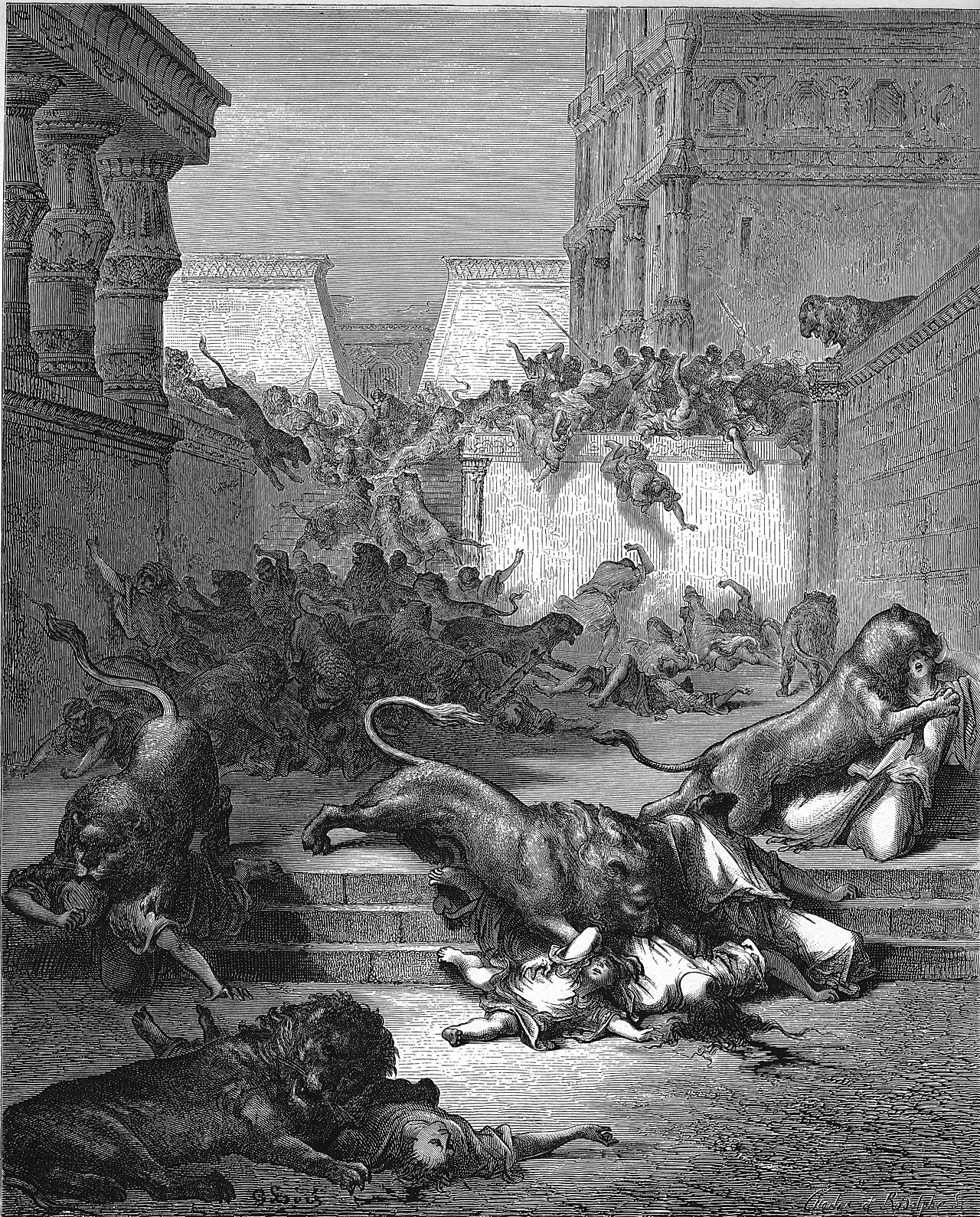
in 2 Kings 17So these nations worshiped the LORD but also served their idols, and to this day their children and grandchildren continue to do as their fathers did.
BSB
The same verse in ASV and KJV ▾
ASV
So these nations feared Jehovah, and served their graven images; their children likewise, and their children’s children, as did their fathers, so do they unto this day.
KJV
So these nations feared the Lord, and served their graven images, both their children, and their children’s children: as did their fathers, so do they unto this day.
⋯
This verse in 2 Kings 17
Commentary
7 notes on this verseA commentator
Albert Barnes1798–1870
Notes, Explanatory and Practical, on the Old and New Testaments (1832-1869)
Their graven images - The Babylonians appear to have made a very sparing use of animal forms among their religious emblems. They represented the male Sun, Shamas, by a circle, plain or crossed; the female Sun, Anunit, by a six-rayed or eight-rayed star; Nebo by a single wedge or arrow-head, the fundamental element of their writing; the god of the atmosphere by a double or triple thunderbolt. The gods generally were represented under human forms.
This site's exposition
they would not listen
on 2 Kings 17:40-41
The chapter ends where it began, with a refusal: they would not listen, and they persisted in their former customs. Verse 41 gives the verdict on the settlers in one sentence spanning generations. The chapter that opened with Israel's exile closes with a replacement people practicing Israel's own unfinished repentance.
The record, by era
The Puritans and the Awakening2 voices
Israel Subdued by Assyria. 1 In the twelfth year of Ahaz king of Judah began Hoshea the son of Elah to reign in Samaria over Israel nine years. 2 And he did that which was evil in the sight of the L ORD , but not as the kings of Israel that were before him.
quarantine:scripture (2026-07-29) — scripture-overlap:90%@v1-3
So these nations feared the Lord, and served their graven images,....
The Nineteenth Century3 voices
‘So these nations feared the Lord and served their graven images, both their children, and their children’s children: as did their fathers, so do they unto this day.’’2 Kings 17:41. SO DO THEY unto this day,’ said the writer of the Book of Kings, who has long since passed away unto his fathers. Were he alive now he might say concerning the spiritual descendants of these Samaritans, ‘So do they unto this day.’ This base union of fearing God and serving other gods is by no means obsolete.
‘So these nations feared the Lord and served their graven images, both their children, and their children’s children: as did their fathers, so do they unto this day.’’2 Kings 17:41. SO DO THEY unto this day,’ said the writer of the Book of Kings, who has long since passed away unto his fathers. Were he alive now he might say concerning the spiritual descendants of these Samaritans, ‘So do they unto this day.’ This base union of fearing God and serving other gods is by no means obsolete. Alas, it is too common everywhere, and to be met with where you might least expect it. From generation to generation there have been Mongrel Religionists, who have tried to please both God and the devil, and have been on both sides, or on either side, as their interest led them. Some of these wretched blenders are always hovering around every congregation, and my hope is that I may convince the consciences of some here present that they themselves are guilty, and that of them it might be said, as of these Assyrian immigrants, ‘They feared the Lord, and served their own gods.’ My sermon will by no means be an essay upon an extinct race, but it may be placed among ‘the present-day papers,’ for ‘so do they unto this day.’ He that hath ears to hear, let him hear, and to whomsoever the word shall apply let its rebuke be taken home, and through the teaching of the Holy Spirit may it produce decisive results. I. I shall first call your attention to THE NATURE OF THIS Mongrel Religion. It had its good and bad points, for it wore a double face. These people were not infidels. Far from it: ‘they feared the Lord.’ They did not deny the existence, or the power, or the rights of the great God of Israel, whose name is Jehovah.
So do they unto this day - This must have been written before the Babylonish captivity; because, after that time, none of the Israelites ever lapsed into idolatry. But this may chiefly refer to the heathenish people who were sent to dwell among the remains of the ten tribes. On these nations and the objects of their worship, I present my readers with the following extracts from Dodd and Parkhurst. 2Ki 17:30. The men of Babylon made Succoth-benoth. We have here an account of the idols which were consecrated by the different nations, transplanted by the king of Assyria to Samaria. It is difficult, however, and has afforded a large field for conjecture, to give any satisfactory account concerning them. The reader will find in Selden, Vossius, and Jurieu, much upon the subject. Succoth-benoth may be literally translated, The Tabernacles of the Daughters, or Young Women; or if Benoth be taken as the name of a female idol, from בנה to build up, procreate children, then the words will express the tabernacles sacred to the productive powers feminine. And, agreeably to this latter exposition, the rabbins say that the emblem was a hen and chickens. But however this may be, there is no room to doubt that these succoth were tabernacles wherein young women exposed themselves to prostitution in honor of the Babylonish goddess Melitta. Herodotus, (lib. i., c. 199), gives us a particular account of this detestable service. “Every young woman,” says he, “of the country of Babylon must once in her life sit at the temple of Venus, [whom he afterwards tells us the Assyrians called Melitta], and prostitute herself to some stranger. Those who are rich, and so disdain to mingle with the crowd, present themselves before the temple in covered chariots, attended by a great retinue. […]
The words behind it
22 Hebrew wordsEvery Hebrew word of this verse in the order it stands, with what it means and the door to its own study. The last column counts the times a word stands in the whole Bible: the rarer the word, the more the places it appears belong together.
| Hebrew | Sound | Meaning | Word study | In the Bible |
|---|---|---|---|---|
| וַיִּהְי֣וּ׀ | vaiyihyu | and they were | H1961 → | 3559 times |
| הַגּוֹיִ֣ם | hagoyim | the nations | H1471 → | 561 times |
| הָאֵ֗לֶּה | haeleh | <the> these | H428 → | 746 times |
| יְרֵאִים֙ | yereim | fearing | H3373 → | 64 times |
| אֶת־ | ʾet- | <obj.> | H853 → | 10935 times |
| יְהוָ֔ה | yahweh | Yahweh | H3068 → | 6520 times |
| וְאֶת־ | veet | and <obj.> | H853 → | 10935 times |
| פְּסִֽילֵיהֶ֖ם | pesileihem | idols their | H6456 → | |
| הָי֣וּ | hayu | they were | H1961 → | 3559 times |
| עֹֽבְדִ֑ים | ʾoedim | serving | H5647 → | 288 times |
| גַּם־ | gam- | also | H1571 → | 769 times |
| בְּנֵיהֶ֣ם׀ | beneihem | children their | H1121 → | 4930 times |
| וּבְנֵ֣י | uvenei | and [the] children of | H1121 → | 4930 times |
| בְנֵיהֶ֗ם | veneihem | children their | H1121 → | 4930 times |
| כַּאֲשֶׁ֨ר | kaasher | just as | H834 → | 5497 times |
| עָשׂ֤וּ | ʾasu | they did | H6213 → | 2628 times |
| אֲבֹתָם֙ | ʾavotam | fathers their | H1 → | 1212 times |
| הֵ֣ם | hem | they | H1992 → | 553 times |
| עֹשִׂ֔ים | ʾosim | [are] doing | H6213 → | 2628 times |
| עַ֖ד | ʾad | until | H5704 → | 1261 times |
| הַיּ֥וֹם | haiyom | the day | H3117 → | 2304 times |
| הַזֶּֽה׃ פ | hazeh | <the> this | H2088 → | 1180 times |
וַיִּהְי֣וּ׀and they were
vaiyihyuH1961 →3559 times
הַגּוֹיִ֣םthe nations
hagoyimH1471 →561 times
הָאֵ֗לֶּה<the> these
haelehH428 →746 times
יְרֵאִים֙fearing
yereimH3373 →64 times
אֶת־<obj.>
ʾet-H853 →10935 times
יְהוָ֔הYahweh
yahwehH3068 →6520 times
וְאֶת־and <obj.>
veetH853 →10935 times
פְּסִֽילֵיהֶ֖םidols their
pesileihemH6456 →
הָי֣וּthey were
hayuH1961 →3559 times
עֹֽבְדִ֑יםserving
ʾoedimH5647 →288 times
גַּם־also
gam-H1571 →769 times
בְּנֵיהֶ֣ם׀children their
beneihemH1121 →4930 times
וּבְנֵ֣יand [the] children of
uveneiH1121 →4930 times
בְנֵיהֶ֗םchildren their
veneihemH1121 →4930 times
כַּאֲשֶׁ֨רjust as
kaasherH834 →5497 times
עָשׂ֤וּthey did
ʾasuH6213 →2628 times
אֲבֹתָם֙fathers their
ʾavotamH1 →1212 times
הֵ֣םthey
hemH1992 →553 times
עֹשִׂ֔ים[are] doing
ʾosimH6213 →2628 times
עַ֖דuntil
ʾadH5704 →1261 times
הַיּ֥וֹםthe day
haiyomH3117 →2304 times
הַזֶּֽה׃ פ<the> this
hazehH2088 →1180 times
A shaded row is a word that stands 400 times or fewer in the Bible.
The walk
8 stopsEach card is a verse this one points to, and under it the verses that one points to in turn. Where several paths arrive at the same place, that place is listed first: the text keeps returning to it.
Through
Matthew 6:24No one can serve two masters: Either he will hate the one and love the other, or he will be devoted to the one and despise the other. You cannot serve both God and…
it leads to
- Joshua 24:15
But if it is unpleasing in your sight to serve the LORD, then choose for yourselves this day whom you will serve, whether the gods your fathers served beyond the Euphrates, or the gods…
Reached by 2 separate paths from here.
- 1 John 2:15–16
Do not love the world or anything in the world. If anyone loves the world, the love of the Father is not in him.
- Luke 16:13
No servant can serve two masters. Either he will hate the one and love the other, or he will be devoted to the one and despise the other. You cannot serve both God and…
- James 4:4
You adulteresses! Do you not know that friendship with the world is hostility toward God? Therefore, whoever chooses to be a friend of the world renders himself an enemy of God.
- 1 Timothy 6:9–10
Those who want to be rich, however, fall into temptation and become ensnared by many foolish and harmful desires that plunge them into ruin and destruction.
- Joshua 24:15
Through
1 Kings 18:21Then Elijah approached all the people and said, “How long will you waver between two opinions? If the LORD is God, follow Him. But if Baal is God, follow him.” But the people did…
it leads to
- Matthew 6:24
No one can serve two masters: Either he will hate the one and love the other, or he will be devoted to the one and despise the other. You cannot serve both God and…
- 1 Corinthians 10:21–22
You cannot drink the cup of the Lord and the cup of demons too; you cannot partake in the table of the Lord and the table of demons too.
- 2 Corinthians 6:14–16
Do not be unequally yoked with unbelievers. For what partnership can righteousness have with wickedness? Or what fellowship does light have with darkness?
- Matthew 6:24
Where this verse is studied
On this page
Studies11
About 2 Kings
This page draws on Adam Clarke, Commentary on the Bible; Albert Barnes, Notes, Explanatory and Practical, on the Old and New Testaments (1832-1869); Charles Spurgeon, The Metropolitan Tabernacle Pulpit, Sermon No. 1622: “Mongrel Religion” (lightly modernized text, CCEL edition); F. W. Farrar, The Second Book of Kings (Expositor's Bible); John Gill, Exposition of the Old Testament (1748-1763) and Matthew Henry, Commentary on the Whole Bible.