
Joshua 8:14
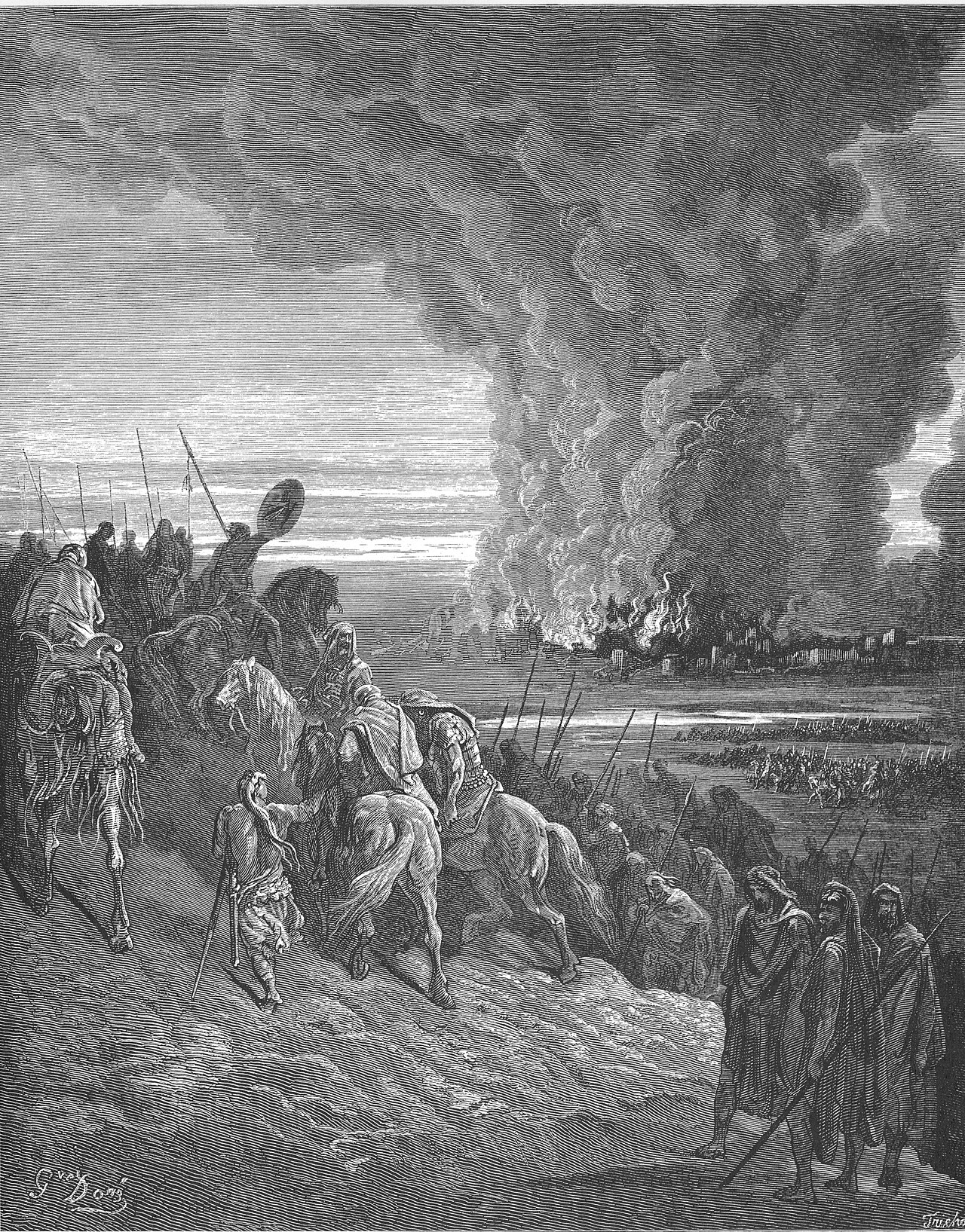
in Joshua 8When the king of Ai saw the Israelites, he hurried out early in the morning with the men of the city to engage them in battle at an appointed place overlooking the Arabah. But he did not know that an ambush had been set up against him behind the city.
BSB
The same verse in ASV and KJV ▾
ASV
And it came to pass, when the king of Ai saw it, that they hasted and rose up early, and the men of the city went out against Israel to battle, he and all his people, at the time appointed, before the Arabah; but he knew not that there was an ambush against him behind the city.
KJV
And it came to pass, when the king of Ai saw it, that they hasted and rose up early, and the men of the city went out against Israel to battle, he and all his people, at a time appointed, before the plain; but he wist not that there were liers in ambush against him behind the city.
⋯
This verse in Joshua 8
Commentary
6 notes on this verseA commentator
Albert Barnes1798–1870
Notes, Explanatory and Practical, on the Old and New Testaments (1832-1869)
At a time appointed - Rather, “at the place appointed,” i. e. some spot suitable for the drawing up of his men, which had been assigned beforehand. This was “before the plain,” i. e. it was at the entrance of the depressed tract of land which runs down to the Jordan valley, up which lay the route of the Israelites from Gilgal to Ai.
This site's exposition
the king of Ai saw
on Joshua 8:14-15
The king moves fast and early. Barnes reads the appointed time as an appointed place, ground fixed beforehand, which suits a king who had fought on that field before. Then comes the clause the chapter turns on, that he did not know of the ambush behind the city.
The record, by era
The Church Fathers1 voice
At first, we were overcome because of sins, and those who were living in Ai destroyed very many of us. Ai means chaos. But we know chaos to be the place or habitation of opposing powers, of which the devil is the king and chief. Against him, as Jesus [Joshua] comes, he divides the people into two parts; he stations some in the front and others in the rear, so they may come behind the enemies unexpectedly.
The Puritans and the Awakening3 voices
Before the plain - That is, towards or in sight of that plain or valley in which the Israelites were, that so they might put themselves in battle-array. Against him - The former success having made him secure, as is usual in such cases;
And it came to pass, when the king of Ai saw it,....
Some observe it as a remarkable instance of the power of God in making men blind to their own interest, and the things that belong to their peace, that he wist not that there were liers in wait against him. Those are most in danger who are least aware that they are so.
How the passage was read
What the Jewish commentators add
At the appointed time. At the time of day they had astrologically predicted previously, saying “at that time we will go out,” for they were sorcerers and diviners.
2 more on this passage, in their own words ▾
The people positioned. This positioning expresses readiness to wage war near the [city] wall. This is similar to what is said regarding Ben-Hadad, in I Melachim:12, (who said to his servants:) “Position yourselves against the city and they positioned themselves.”
Pretended to be stricken. This is an expression of נֶגַע, plague, or beating. They gave the appearance of being beaten before them.
This section is reception history: how the passage was read and kept in the Jewish tradition. Where a reading parts from an essential of the Christian faith, the section says so at that point.
Texts and citation data: Sefaria; each excerpt follows its version’s licence. 3 further sources are cited on this chapter that carry no English text this site may quote or only restate the verse.
The words behind it
26 Hebrew wordsEvery Hebrew word of this verse in the order it stands, with what it means and the door to its own study. The last column counts the times a word stands in the whole Bible: the rarer the word, the more the places it appears belong together.
| Hebrew | Sound | Meaning | Word study | In the Bible |
|---|---|---|---|---|
| וַיְהִ֞י | vayhi | and it was | H1961 → | 3559 times |
| כִּרְא֣וֹת | kirot | when saw | H7200 → | 1300 times |
| מֶֽלֶךְ־ | melekh- | [the] king of | H4428 → | 2525 times |
| הָעַ֗י | haai | <the> Ai | H5857 → | 40 times |
| וַֽיְמַהֲר֡וּ | vaymaharu | and they hurried | H4116 → | 68 times |
| וַיַּשְׁכִּ֡ימוּ | vaiyashkimu | and they rose early | H7925 → | 65 times |
| וַיֵּצְא֣וּ | vaiyetzeu | and they went out | H3318 → | 1067 times |
| אַנְשֵֽׁי־ | ʾanshei- | [the] men of | H582 → | 566 times |
| הָעִ֣יר | hair | the city | H5892 → | 1090 times |
| לִקְרַֽאת־ | likrat- | to meet | H7122 → | 139 times |
| יִ֠שְׂרָאֵל | yisrael | Israel | H3478 → | 2507 times |
| לַֽמִּלְחָמָ֞ה | lamilchamah | for <the> battle | H4421 → | 320 times |
| ה֧וּא | hu' | he | H1931 → | 1879 times |
| וְכָל־ | vekhol | and all | H3605 → | 5413 times |
| עַמּ֛וֹ | amo | people his | H5971 → | 1873 times |
| לַמּוֹעֵ֖ד | lamoed | to the appointed place | H4150 → | 223 times |
| לִפְנֵ֣י | lifnei | <to> before | H6440 → | 2123 times |
| הָֽעֲרָבָ֑ה | haaravah | the Arabah | H6160 → | 61 times |
| וְהוּא֙ | vehu' | and he | H1931 → | 1879 times |
| לֹ֣א | lo' | not | H3808 → | 5168 times |
| יָדַ֔ע | yada' | he knew | H3045 → | 945 times |
| כִּֽי־ | ki- | that | H3588 → | 4482 times |
| אֹרֵ֥ב | ʾorev | an ambush | H693 → | 41 times |
| ל֖וֹ | lo | for <the> him | ||
| מֵאַחֲרֵ֥י | meacharei | [was] <from> behind | H310 → | 715 times |
| הָעִֽיר׃ | hair | the city | H5892 → | 1090 times |
וַיְהִ֞יand it was
vayhiH1961 →3559 times
כִּרְא֣וֹתwhen saw
kirotH7200 →1300 times
מֶֽלֶךְ־[the] king of
melekh-H4428 →2525 times
הָעַ֗י<the> Ai
haaiH5857 →40 times
וַֽיְמַהֲר֡וּand they hurried
vaymaharuH4116 →68 times
וַיַּשְׁכִּ֡ימוּand they rose early
vaiyashkimuH7925 →65 times
וַיֵּצְא֣וּand they went out
vaiyetzeuH3318 →1067 times
אַנְשֵֽׁי־[the] men of
ʾanshei-H582 →566 times
הָעִ֣ירthe city
hairH5892 →1090 times
לִקְרַֽאת־to meet
likrat-H7122 →139 times
יִ֠שְׂרָאֵלIsrael
yisraelH3478 →2507 times
לַֽמִּלְחָמָ֞הfor <the> battle
lamilchamahH4421 →320 times
ה֧וּאhe
hu'H1931 →1879 times
וְכָל־and all
vekholH3605 →5413 times
עַמּ֛וֹpeople his
amoH5971 →1873 times
לַמּוֹעֵ֖דto the appointed place
lamoedH4150 →223 times
לִפְנֵ֣י<to> before
lifneiH6440 →2123 times
הָֽעֲרָבָ֑הthe Arabah
haaravahH6160 →61 times
וְהוּא֙and he
vehu'H1931 →1879 times
לֹ֣אnot
lo'H3808 →5168 times
יָדַ֔עhe knew
yada'H3045 →945 times
כִּֽי־that
ki-H3588 →4482 times
אֹרֵ֥בan ambush
ʾorevH693 →41 times
ל֖וֹfor <the> him
lo
מֵאַחֲרֵ֥י[was] <from> behind
meachareiH310 →715 times
הָעִֽיר׃the city
hairH5892 →1090 times
A shaded row is a word that stands 400 times or fewer in the Bible.
The walk
8 stopsEach card is a verse this one points to, and under it the verses that one points to in turn. Where several paths arrive at the same place, that place is listed first: the text keeps returning to it.
Through
2 Peter 2:3In their greed, these false teachers will exploit you with deceptive words. The longstanding verdict against them remains in force, and their destruction does not sleep.
it leads to
- 2 Corinthians 2:17
For we are not like so many others, who peddle the word of God for profit. On the contrary, in Christ we speak before God with sincerity, as men sent from God.
- Deuteronomy 32:35
Vengeance is Mine; I will repay. In due time their foot will slip; for their day of disaster is near, and their doom is coming quickly.”
- Romans 16:18
For such people are not serving our Lord Christ, but their own appetites. By smooth talk and flattery they deceive the hearts of the naive.
- 1 Thessalonians 2:5
As you know, we never used words of flattery or any pretext for greed. God is our witness!
- Jude 1:15
to execute judgment on everyone, and to convict all the ungodly of every ungodly act of wickedness and every harsh word spoken against Him by ungodly sinners.”
- 2 Corinthians 2:17
Through
Matthew 24:39And they were oblivious, until the flood came and swept them all away. So will it be at the coming of the Son of Man.
it leads to
- John 3:20
Everyone who does evil hates the Light, and does not come into the Light for fear that his deeds will be exposed.
- Matthew 24:37
As it was in the days of Noah, so will it be at the coming of the Son of Man.
- Acts 13:41
‘Look, you scoffers, wonder and perish! For I am doing a work in your days that you would never believe, even if someone told you.’”
- John 3:20
Where this verse is studied
About Joshua
This page draws on Albert Barnes, Notes, Explanatory and Practical, on the Old and New Testaments (1832-1869); Albert Barnes, Notes on the Old Testament; John Gill, Exposition of the Old Testament (1748-1763); John Wesley, Explanatory Notes upon the Old Testament; Matthew Henry, Commentary on the Whole Bible and Origen of Alexandria, HOMILIES ON JOSHUA 8.2.