
Genesis 2:22
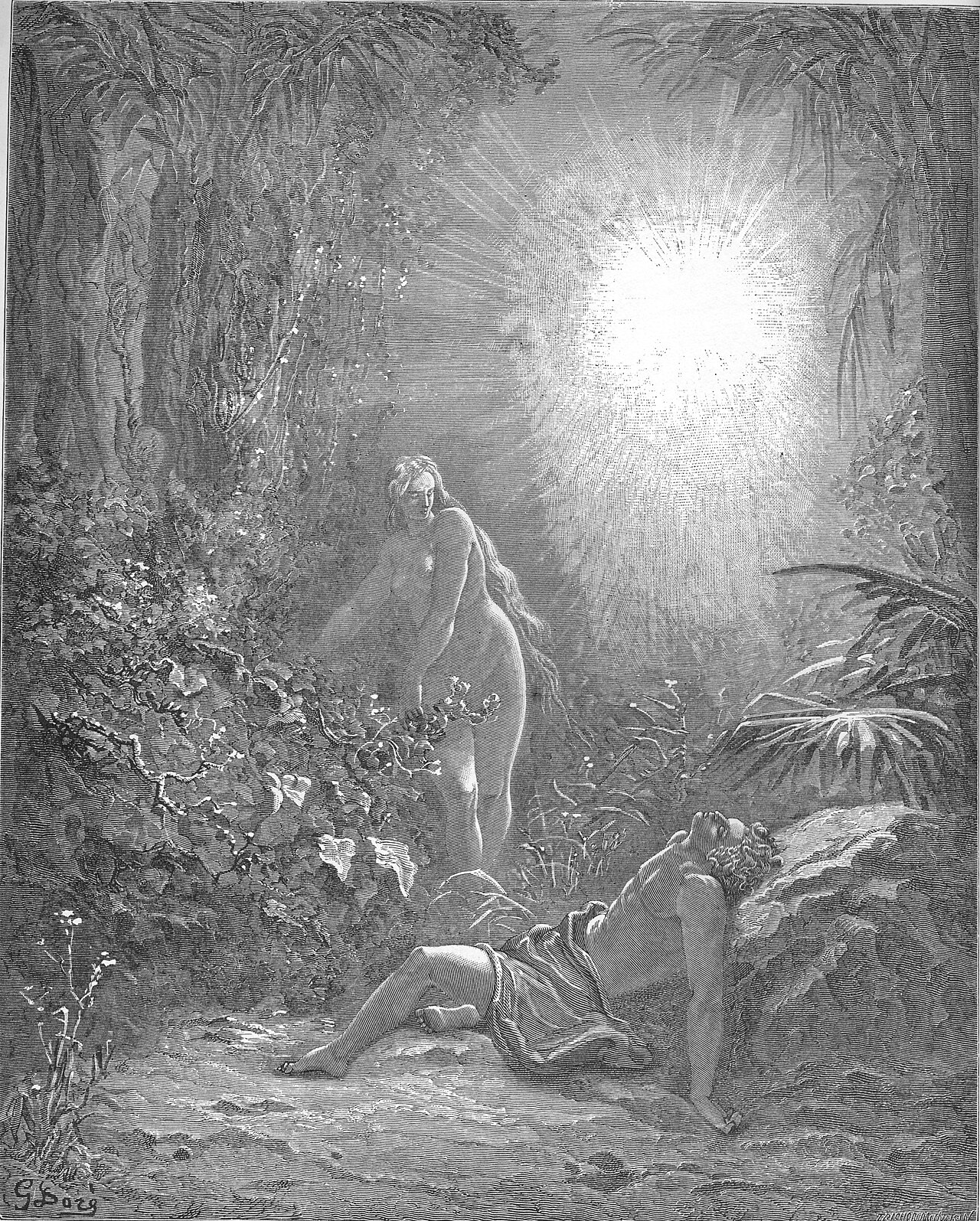
in Genesis 2And from the rib that the LORD God had taken from the man, He made a woman and brought her to him.
BSB
The same verse in ASV and KJV ▾
ASV
and the rib, which Jehovah God had taken from the man, made he a woman, and brought her unto the man.
KJV
And the rib, which the Lord God had taken from man, made he a woman, and brought her unto the man.
⋯
This verse in Genesis 2
Commentary
17 notes on this verse"God took a rib from the side of Adam and made it into a woman." Here Scripture said aedificavit ("built"). The concept of building intends to denote the construction of a great house; consequently Adam's rib fashioned into a woman signifies, by apostolic authority, Christ and the church, and that is why Scripture said he formed (aedificavit) a woman from the rib. We have heard about the first Adam; let us come now to the second Adam and see how the church is made (aedificatur) from his side.
This site's exposition
a deep sleep
on Genesis 2:21-22
The LORD God takes a rib from the man's side while he sleeps. The Hebrew verb in verse 22 is banah, the word for building, and Jerome read the church built out of the side of the second Adam. Genesis itself says none of that. She was made while the man slept.
This site's exposition
He made a woman
The LORD God brought the woman to the man, as He had brought the beasts and birds in verse 19, and here the search for a suitable helper ends. Albert Barnes left open whether Adam knew what was done while he slept. His next words show he saw what she was.
The record, by era
The Church Fathers5 voices
A commentator
Philo of Alexandria-20–50
QUESTIONS AND ANSWERS ON GENESIS, I · Written before 50.
proposed
(25) What the rib is which God took from the man whom he had formed out of the earth, and which he made into a woman? [Gen 2:21-22] The letter of this statement is plain enough; for it is expressed according to a symbol of …
A commentator
Augustine of HippoTWO BOOKS ON GENESIS AGAINST THE MANICHAEANS 2.11.15 · Written in the 5th century.
proposed
Scripture says that the woman was made as man's helper so that by spiritual union she might bring forth spiritual offspring, that is, the good works of divine praise, while he rules and she obeys. He is ruled by wisdom; she, by the man. For Christ is the head of the man, and the man is the head of the woman.
A commentator
Augustine of HippoON THE LITERAL INTERPRETATION OF GENESIS 9.5.9 · Written in the 5th century.
proposed
Now suppose the woman was not made for the man to be his helper in begetting children, then how would she be able to help him? It would hardly be the case that she would be made to till the earth with him, for there was not yet any labor required to make her help necessary. In any case, if there were any such need, a male helper would be better, and the same could be said of the comfort of another's presence if Adam were perhaps weary of solitude. How much more agreeably could two male friends, rather than a man and a woman, enjoy companionship and conversation in a life shared together. And if they had to make an arrangement in their common life for one to command and the other to obey in order to make sure that opposing wills would not disrupt the peace of the household, there would have been proper rank to assure this, since one would be created first and the other second, and this would be further reinforced if the second were made from the first, as was the case with the woman. Surely no one will say that God was able to make from the rib of the man only a woman and not also a man if he had wished to do so. Consequently, I do not see in what sense the woman was made as a helper for the man if not for the sake of bearing children.
Not without significance, too, is the fact that woman was made out of the rib of Adam. She was not made of the same earth with which he was formed, in order that we might realize that the physical nature of both man and woman is identical and that there was one source for the propagation of the human race. For that reason, neither was man created together with a woman, nor were two men and two women created at the beginning, but first a man and after that a woman. God willed it that human nature be established as one. Thus from the very inception of the human stock he eliminated the possibility that many disparate natures should arise. He said, "Let us make him a helper like himself." We understand that to mean a helper in the generation of the human family—a really good helper. If we take the word helper in a good sense, then the woman's co-operation turns out to be something of major import in the process of generation, just as the earth by receiving, confining and fostering the seed causes it to grow and produce fruit in time. In that respect, therefore, woman is a good helper even though in a position of lesser strength. We find examples of this in our own experience. We see how people in high and important offices often enlist the help of people who are below them in rank and esteem.
"The Lord cast a stillness on Adam and he slept; He took one of his ribs and closed up the flesh in its place. And the Lord made the rib that He had taken from Adam into a woman, and He brought her to Adam."
9 more voices on this verse
The Church Fathers4 voices
That man, awake, anointed with splendor, and who did not yet know sleep, fell on the earth naked and slept. It is likely that Adam saw in his dream what was done to him as if he were awake.
Of whom in the beginning was Eve begotten? What mother conceived her, the motherless? But the Scripture says that she was born out of Adam's side. Is Eve then born out of man's side without a mother, and is a child not to be born without a father, of a virgin's womb? This debt of gratitude was due to men from womankind: for Eve was begotten of Adam and not conceived of a mother, but as it were brought forth of man alone.
The apostle Paul testifies that this passage has both a plain and an allegorical meaning. Discussing it in his letter to the Ephesians, he asserts, "This is a great mystery, but I speak concerning Christ and the church."
Even in the beginning, when woman was made from a rib in the side of the sleeping man, that had no less a purpose than to symbolize prophetically the union of Christ and his church. Adam's sleep was a mystical foreshadowing of Christ's death, and when his dead body hanging from the cross was pierced by the lance, it was from his side that there issued forth that blood and water that, as we know, signifies the sacraments by which the church is built up. "Built" is the very word the Scripture uses in connection with Eve: "He built the rib into a woman." … So too St. Paul speaks of "building up the body of Christ," which is his church. Therefore woman is as much the creation of God as man is. If she was made from the man, this was to show her oneness with him; and if she was made in the way she was, this was to prefigure the oneness of Christ and the church.
The Medieval Church3 voices
A commentator
BonaventureCollationes de Septem Donis, Collation 6 · Written in the 13th century.
proposed
"The Lord cast a deep sleep upon Adam, and when he had fallen asleep, he took one of his ribs" and made a woman "and brought her to Adam." And why, while he slept, did He take one of his ribs?
And He brought her to Adam. And Adam said: This now is bone of my bones, and flesh of my flesh. Because when the living creatures of the earth and all the birds were brought to Adam, he found none like himself among them.
The woman was formed from the side of the man as a companion and help for immaculate propagation. In that state the body was such that from it there would be a seminal separation for the propagation of offspring through the assistance of the female …
The Puritans and the Awakening2 voices
(2.) The commencement of the kingdom of grace, in the sanctification of the sabbath day, ver. 3. He rested on that day, and took a complacency in his creatures, and then sanctified it, and appointed us on that day to rest and take a complacency in the Creator; and his rest is in the fourth commandment made a reason for ours after six days labour.
quarantine:anchor (2026-07-29) — cites-ver-3-anchored-18-25
And the rib, which the Lord God had taken from man, made he woman,....
The words behind it
13 Hebrew wordsEvery Hebrew word of this verse in the order it stands, with what it means and the door to its own study. The last column counts the times a word stands in the whole Bible: the rarer the word, the more the places it appears belong together.
| Hebrew | Sound | Meaning | Word study | In the Bible |
|---|---|---|---|---|
| וַיִּבֶן֩ | vaiyiven | and he built | H1129 → | 376 times |
| יְהוָ֨ה | yahweh | Yahweh | H3068 → | 6520 times |
| אֱלֹהִ֧ים׀ | ʾelohim | God | H430 → | 2601 times |
| אֶֽת־ | ʾet- | <obj.> | H853 → | 10935 times |
| הַצֵּלָ֛ע | hatzela' | the rib | H6763 → | |
| אֲשֶׁר־ | ʾasher- | which | H834 → | 5497 times |
| לָקַ֥ח | lakach | he had taken | H3947 → | 966 times |
| מִן־ | min- | from | H4480 → | 1188 times |
| הָֽאָדָ֖ם | haadam | the man | H120 → | 551 times |
| לְאִשָּׁ֑ה | leishah | into a woman | H802 → | 781 times |
| וַיְבִאֶ֖הָ | vayvieha | and he brought her | H935 → | 2568 times |
| אֶל־ | ʾel- | to | H413 → | 5510 times |
| הָֽאָדָֽם׃ | haadam | the man | H120 → | 551 times |
וַיִּבֶן֩and he built
vaiyivenH1129 →376 times
יְהוָ֨הYahweh
yahwehH3068 →6520 times
אֱלֹהִ֧ים׀God
ʾelohimH430 →2601 times
אֶֽת־<obj.>
ʾet-H853 →10935 times
הַצֵּלָ֛עthe rib
hatzela'H6763 →
אֲשֶׁר־which
ʾasher-H834 →5497 times
לָקַ֥חhe had taken
lakachH3947 →966 times
מִן־from
min-H4480 →1188 times
הָֽאָדָ֖םthe man
haadamH120 →551 times
לְאִשָּׁ֑הinto a woman
leishahH802 →781 times
וַיְבִאֶ֖הָand he brought her
vayviehaH935 →2568 times
אֶל־to
ʾel-H413 →5510 times
הָֽאָדָֽם׃the man
haadamH120 →551 times
A shaded row is a word that stands 400 times or fewer in the Bible.
The walk
8 stopsEach card is a verse this one points to, and under it the verses that one points to in turn. Where several paths arrive at the same place, that place is listed first: the text keeps returning to it.
Through
Proverbs 18:22He who finds a wife finds a good thing and obtains favor from the LORD.
it leads to
- Proverbs 31:10–31
A wife of noble character, who can find? She is far more precious than rubies.
Reached by 2 separate paths from here.
- Proverbs 19:14
Houses and wealth are inherited from fathers, but a prudent wife is from the LORD.
- Proverbs 12:4
A wife of noble character is her husband’s crown, but she who causes shame is like decay in his bones.
- Ecclesiastes 9:9
Enjoy life with your beloved wife all the days of the fleeting life that God has given you under the sun—all your fleeting days. For this is your portion in life and in your…
- 1 Corinthians 7:2
But because there is so much sexual immorality, each man should have his own wife, and each woman her own husband.
- Proverbs 31:10–31
Through
Hebrews 13:4Marriage should be honored by all and the marriage bed kept undefiled, for God will judge the sexually immoral and adulterers.
it leads to
- Genesis 2:24
For this reason a man will leave his father and mother and be united to his wife, and they will become one flesh.
- Proverbs 5:15–23
Drink water from your own cistern, and running water from your own well.
- 1 Corinthians 7:2–16
But because there is so much sexual immorality, each man should have his own wife, and each woman her own husband.
- Genesis 2:24
Where this verse is studied
On this page
Studies16
On this chapter
About Genesis
This page draws on 18 works. Open the list of works
This page draws on Albert Barnes, Notes, Explanatory and Practical, on the Old and New Testaments (1832-1869); Ambrose of Milan, On Paradise; Augustine of Hippo, TWO BOOKS ON GENESIS AGAINST THE MANICHAEANS 2.11.15; Augustine of Hippo, ON THE LITERAL INTERPRETATION OF GENESIS 9.5.9; Augustine of Hippo, City of God 22.17; Bede, Commentary on Genesis (Hexaemeron); Bonaventure, Collationes de Septem Donis, Collation 6; Bonaventure, Breviloquium, Part 2, Chapter 10; Cyril of Jerusalem, Catechetical Lecture 12:29; Ephrem the Syrian, Commentary (church-history corpus); Ephrem the Syrian, COMMENTARY ON GENESIS 2.12; Jerome, HOMILIES 66; Jerome, Homilies 66; John Gill, Exposition of the Old Testament; John Gill, Exposition of the Old Testament (1748-1763); John Wesley, Explanatory Notes upon the Old Testament; Philo of Alexandria, QUESTIONS AND ANSWERS ON GENESIS, I and Quodvultdeus, BOOK OF PROMISES AND PREDICTIONS OF GOD 1.3.