
Exodus 20:19
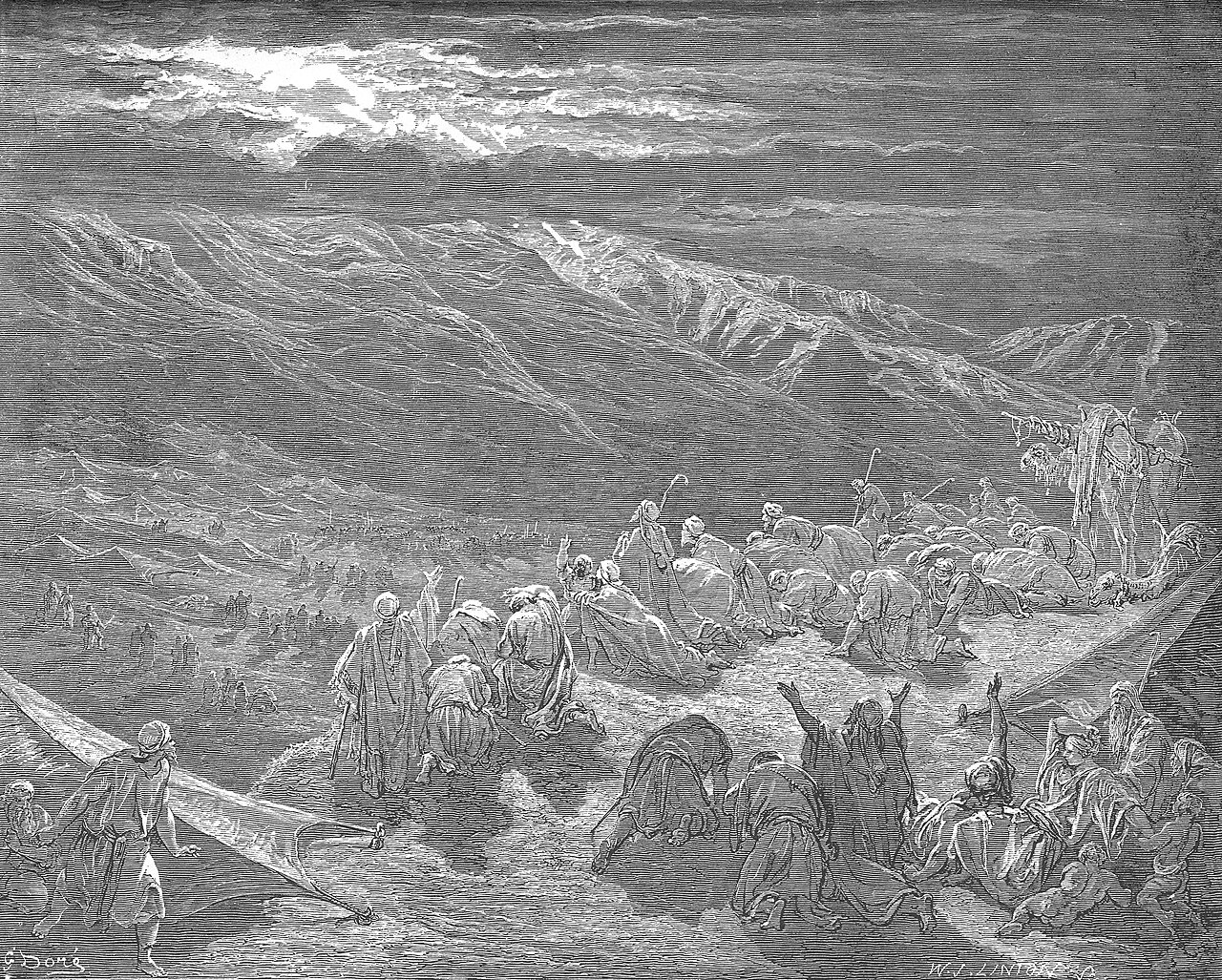
in Exodus 20“Speak to us yourself and we will listen,” they said to Moses. “But do not let God speak to us, or we will die.”
BSB
The same verse in ASV and KJV ▾
ASV
And they said unto Moses, Speak thou with us, and we will hear; but let not God speak with us, lest we die.
KJV
And they said unto Moses, Speak thou with us, and we will hear: but let not God speak with us, lest we die.
⋯
This verse in Exodus 20
Commentary
9 notes on this verseOnce God tried the expedient of speaking to the children of men immediately, but it was found that they could not bear it; it rather drove men from God than brought them to him, and, as it proved in the issue, though it terrified them, it did not deter them from idolatry, for soon after this they worshipped the golden calf.
This site's exposition
all the people saw the thunderings
on Exodus 20:18-19
The people see the thunder and the trumpet and move back, and their request is that Moses stand between them and the voice. Deuteronomy 5:28 records God's answer, that they have well said all that they have spoken, and Deuteronomy 18:15 to 18:18 meets the request with the promise of a prophet like unto Moses from among their brethren. Peter applies that promise to Christ at Acts 3:22, so the New Testament reads this moment of fear as the origin of a promise.
This site's exposition
Speak to us yourself and we will listen
Hebrews 12:19 recalls the plea, hearers who begged that the voice of God stop speaking to them. Matthew Henry sets it beside the calf. The terror of the voice from the mountain, he notes, made the people stand at a distance and still left them ready to worship gods of gold within forty days.
The record, by era
The Church Fathers1 voice
But notice how it happened there and how it happened here. There, the people stood a long way off; there was an atmosphere of dread, not of love. I mean, they were so terrified that they said to Moses, "Speak to us yourself, and do not let the Lord speak to us, lest we die." So God came down, as it is written, on Sinai in fire; but he was terrifying the people who stood a long way off, and "writing with his finger on stone," not on the heart.Here, however, when the Holy Spirit came, the faithful were gathered together as one; and he didn't terrify them on a mountain but came in to them in a house. There came a sudden sound, indeed, from heaven, as of a fierce squall rushing upon them; it made a noise, but nobody panicked. You have heard the sound, now see the fire too, because each was there on the mountain also, both fire and sound; but there, there was smoke as well, here, though, the fire was clear. "There appeared to them," Scripture says, you see, "divided tongues, as of fire." Terrifying them from a long way off? Far from it. Because "it settled upon each one of them, and they began to talk in languages, as the Spirit gave them utterance." Hear a person speaking a language, and understand the Spirit writing not on stone but on the heart.
The Puritans and the Awakening3 voices
To prove them, to try how they would like dealing with God immediately, without a mediator, and so to convince them how admirably well God had chosen for them, in putting Moses into that office. Ever since Adam fled, upon hearing God's voice in the garden, sinful man could not bear either to speak to God or hear from him immediately.
quarantine:near-duplicate (2026-07-29) — near-dup(70%, 2 voices)
And they said unto Moses,....
Once God tried the expedient of speaking to the children of men immediately, but it was found that they could not bear it; it rather drove men from God than brought them to him, and, as it proved in the issue, though it terrified them, it did not deter them from idolatry, for soon after this they worshipped the golden calf.
The Nineteenth Century1 voice
And all the people saw the thunderings, and the lightnings, and the noise of the trumpet, and the mountain smoking: and when the people saw it, they removed, and stood afar off. And they said unto Moses, Speak thou with us, and we will hear: but let not God speak with us, lest we die. And Moses said unto the people, Fear not: for God is come to prove you, and that His fear may be before your faces, that ye sin not."’Exodus 20:18-20. THE GIVING of the law was glorious with pomp of power. The blaze of splendor was intended to impress the people with it sense of the authority of the law, by letting them see the greatness of the Lawgiver. It was meet that with great solemnity the law of the Most High should be proclaimed, that Israel might have a holy reverence for its commands. This terrible grandeur may also have been intended to suggest to the people the condemning force of the law. Not with sweet sound of harp, nor with the song of angels, was the law given; but with an awful voice from amid a terrible burning. Not in itself is the law condemnatory; for if there could have been life by any law, it would have been by this law: but by reason of man's sinfulness, the law worketh wrath; and to indicate this, it was made public with accompaniments of fear and death: the battalions of Omnipotence marshaled upon the scene; the dread artillery of God, with awful salvos, adding emphasis to every syllable. The tremendous scene at Sinai was also in some respects a prophecy, if not a rehearsal, of the Day of Judgment. If the giving of the law, while it was yet unbroken, was attended with such a display of awe-inspiring power, what will that day be when the Lord shall, with flaming fire, take vengeance on those who have willfully broken His law? To us, that day at Horeb is a type of the action of the law in our nature: thus doth the law deal with our consciences and hearts.
1 more voice on this verse
The Nineteenth Century1 voice
And all the people saw the thunderings, and the lightnings, and the noise of the trumpet, and the mountain smoking: and when the people saw it, they removed, and stood afar off. And they said unto Moses, Speak thou with us, and we will hear: but let not God speak with us, lest we die. And Moses said unto the people, Fear not: for God is come to prove you, and that His fear may be before your faces, that ye sin not."’Exodus 20:18-20. THE GIVING of the law was glorious with pomp of power.
The words behind it
13 Hebrew wordsEvery Hebrew word of this verse in the order it stands, with what it means and the door to its own study. The last column counts the times a word stands in the whole Bible: the rarer the word, the more the places it appears belong together.
| Hebrew | Sound | Meaning | Word study | In the Bible |
|---|---|---|---|---|
| וַיֹּֽאמְרוּ֙ | vaiyomeru | and they said | H559 → | 5305 times |
| אֶל־ | ʾel- | to | H413 → | 5510 times |
| מֹשֶׁ֔ה | mosheh | Moses | H4872 → | 765 times |
| דַּבֵּר־ | daber- | speak | H1696 → | 1141 times |
| אַתָּ֥ה | ʾatah | you | H859 → | 1094 times |
| עִמָּ֖נוּ | ʾimanu | with us | H5973 → | 1050 times |
| וְנִשְׁמָ֑עָה | venishmaah | so let us listen | H8085 → | 1159 times |
| וְאַל־ | veal- | and may not | H408 → | 724 times |
| יְדַבֵּ֥ר | yedaber | he speak | H1696 → | 1141 times |
| עִמָּ֛נוּ | ʾimanu | with us | H5973 → | 1050 times |
| אֱלֹהִ֖ים | ʾelohim | God | H430 → | 2601 times |
| פֶּן־ | pen- | lest | H6435 → | 133 times |
| נָמֽוּת׃ | namut | we should die | H4191 → | 839 times |
וַיֹּֽאמְרוּ֙and they said
vaiyomeruH559 →5305 times
אֶל־to
ʾel-H413 →5510 times
מֹשֶׁ֔הMoses
moshehH4872 →765 times
דַּבֵּר־speak
daber-H1696 →1141 times
אַתָּ֥הyou
ʾatahH859 →1094 times
עִמָּ֖נוּwith us
ʾimanuH5973 →1050 times
וְנִשְׁמָ֑עָהso let us listen
venishmaahH8085 →1159 times
וְאַל־and may not
veal-H408 →724 times
יְדַבֵּ֥רhe speak
yedaberH1696 →1141 times
עִמָּ֛נוּwith us
ʾimanuH5973 →1050 times
אֱלֹהִ֖יםGod
ʾelohimH430 →2601 times
פֶּן־lest
pen-H6435 →133 times
נָמֽוּת׃we should die
namutH4191 →839 times
A shaded row is a word that stands 400 times or fewer in the Bible.
The walk
8 stopsEach card is a verse this one points to, and under it the verses that one points to in turn. Where several paths arrive at the same place, that place is listed first: the text keeps returning to it.
Through
Exodus 33:20But He added, “You cannot see My face, for no one can see Me and live.”
it leads to
- John 1:18
No one has ever seen God, but the one and only Son, who is Himself God and is at the Father’s side, has made Him known.
- Genesis 32:30
So Jacob named the place Peniel, saying, “Indeed, I have seen God face to face, and yet my life was spared.”
- 1 Timothy 6:16
He alone is immortal and dwells in unapproachable light. No one has ever seen Him, nor can anyone see Him. To Him be honor and eternal dominion! Amen.
- Isaiah 6:5
Then I said: “Woe is me, for I am ruined, because I am a man of unclean lips dwelling among a people of unclean lips; for my eyes have seen the King, the LORD…
- Judges 13:22
“We are going to die,” he said to his wife, “for we have seen God!”
- John 1:18
Through
Acts 7:38He was in the assembly in the wilderness with the angel who spoke to him on Mount Sinai, and with our fathers. And he received living words to pass on to us.
it leads to
- Romans 3:2
Much in every way. First of all, they have been entrusted with the very words of God.
- Romans 3:2
Through
Deuteronomy 18:16This is what you asked of the LORD your God at Horeb on the day of the assembly, when you said, “Let us not hear the voice of the LORD our God or see…
it leads to
- Deuteronomy 9:10
Then the LORD gave me the two stone tablets, inscribed by the finger of God with the exact words that the LORD spoke to you out of the fire on the mountain on the…
- Deuteronomy 5:23–28
And when you heard the voice out of the darkness while the mountain was blazing with fire, all the heads of your tribes and your elders approached me,
- Deuteronomy 9:10
Where this verse is studied
About Exodus
Who and where
1 name in this verse with a page on the site.
This page draws on Augustine of Hippo, SERMON 155.6; Charles Spurgeon, The Metropolitan Tabernacle Pulpit, Sermon No. 2097: “The Mediator’The Interpreter” (lightly modernized text, CCEL edition); John Gill, Exposition of the Old Testament (1748-1763); Keil and Delitzsch, Biblical Commentary on the Old Testament: The Pentateuch and Matthew Henry, Commentary on the Whole Bible.