
Exodus 20 · Passage · Honour
Honour Your Father and Mother
God commanded Israel at Sinai to honour father and mother, and Paul gave the same command with its promise to the children of the church at Ephesus.
Jesus turned this commandment against teachers who let a son keep back the help his parents needed by calling it a gift for God.
“Honor your father and mother” (which is the first commandment with a promise),
- The passage
- Exodus 20:12, Deuteronomy 5:16, Ephesians 6:1 to 4
- Books
- Exodus, Deuteronomy, Ephesians
- Hold in memory
- Exodus 20:12
Summary
God set a promise of long days in the land on the honour owed to father and mother. The honour began with respect and obedience in the home and continued in the care grown children gave their parents in old age. The law of Moses guarded it, Jesus kept it and defended it, and Paul carried it into the households of the church.
- Leviticus names the mother before the father in its form of the command.
- Moses repeated the command for the generation entering the land and added that it may go well with those who keep it.
- Jesus lived obedient to Joseph and Mary at Nazareth.
The Command at Sinai
God spoke the command to all Israel and joined it to the land He was giving them.
Honour Your Father and Mother studies the commandment of Exodus 20:12 and the passages that restate and apply it. It belongs to the value of honour, because father and mother are the first people the Ten Commandments name as owed honour.
The question it answers is what honour a son or daughter owes a father and mother and how long that duty lasts. It follows the command through the law's restatements and penalties and through the answer Jesus gave to the tradition of Corban. It then reads His years at Nazareth and Paul's word to the household, and it gives the readings of the promise.
Albert Barnes, in his Notes on the Old Testament, observed that the commands on parents and the Sabbath “are the only laws in the Decalogue which assume a positive shape”.
The Hebrew verb of the command is kabad, which the Translators Brief lexicon of the STEP Bible glosses “to be heavy” and counts 113 times. In Exodus 20:12 it stands in the intensive stem as a command. The law against cursing a parent in Exodus 21:17 uses qalal, glossed “to be (causatively, make) light”.
The Command Through Scripture
The law guarded the command with penalties, and wisdom and the apostles carried it on.
Every later text keeps the command of Sinai and adds to it a penalty, a reason or a promise.
| Verse | The Berean words | What the text adds |
|---|---|---|
| Exodus 20:12 | “Honor your father and mother, so that your days may be long in the land” | The first form of the command, spoken from the mountain. |
| Leviticus 19:3 | “Each of you must respect his mother and father” | The verb is yare, the verb Leviticus 19:14 uses for fearing God. |
| Exodus 21:15 | “Whoever strikes his father or mother must surely be put to death.” | A blow against a parent is a capital crime. |
| Exodus 21:17 | “Anyone who curses his father or mother” | Words against a parent carry the same penalty as a blow. |
| Leviticus 20:9 | “He has cursed his father or mother; his blood shall be upon him.” | The guilt of the death rests on the one who cursed. |
| Deuteronomy 5:16 | “as the LORD your God has commanded you” | The restatement names the source of the command in the word of God. |
| Deuteronomy 27:16 | “Cursed is he who dishonors his father or mother.” | All the people answer the curse with Amen. |
| Proverbs 23:22 | “do not despise your mother when she is old” | Wisdom asks a son to keep listening to the father who gave him life. |
| Ephesians 6:3 | “that you may have a long life on the earth” | Paul gives the promise as long life on the earth, where Exodus has long days in the land. |
Deuteronomy 27:16, Proverbs 23:22, Ephesians 6:3
Jesus and the Commandment
Jesus defended the command against a tradition, kept it as a boy and kept it at His death.
For Moses said, ‘Honor your father and your mother’ and ‘Anyone who curses his father or mother must be put to death.’ But you say that if a man says to his father or mother, ‘Whatever you would have received from me is Corban’ (that is, a gift devoted to God), he is no longer permitted to do anything for his father or mother.Jesus sets the command of God above a vow made in God's name.
Mark keeps the word Corban, which the Translators Brief lexicon of the STEP Bible counts twice in the New Testament, and translates it for his Greek readers. Matthew gives the same charge in his own words: “Thus you nullify the word of God for the sake of your tradition” (Matthew 15:6).
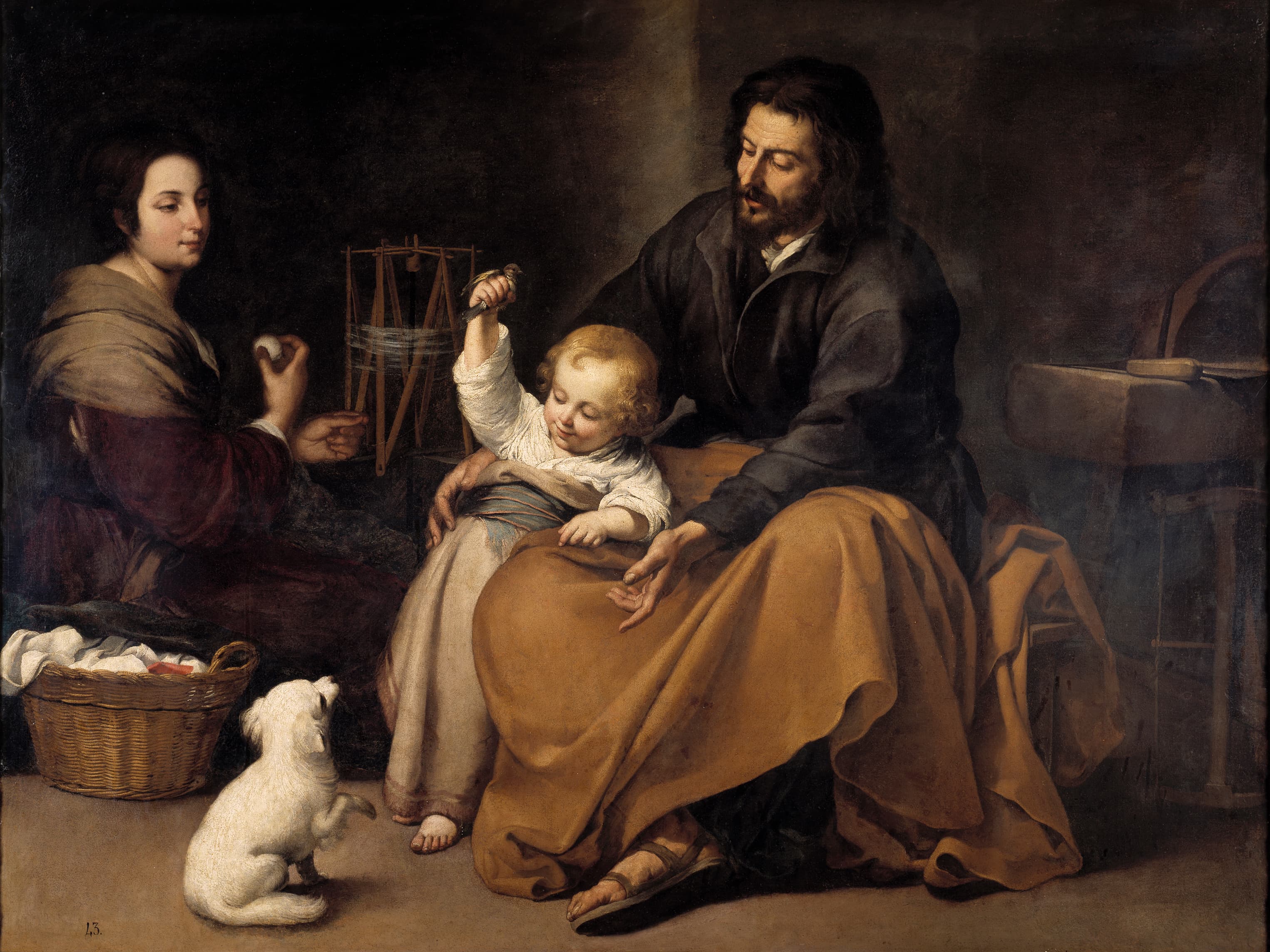
Then He went down to Nazareth with them and was obedient to them. But His mother treasured up all these things in her heart.Luke's note shows the Son of God keeping the command He would later defend.
Luke's word for obedient is a form of hypotassō, the verb Peter and Paul use for submission to rulers in 1 Peter 2:13 and Romans 13:1.
When Jesus saw His mother and the disciple whom He loved standing nearby, He said to His mother, “Woman, here is your son.” Then He said to the disciple, “Here is your mother.” So from that hour, this disciple took her into his home.Jesus' care for His mother at His death shows the command kept to the end of His life.
Children and Fathers in the Lord
Paul gave the command to children and a matching charge to fathers.
Children, obey your parents in the Lord, for this is right.Paul's command shows the duty carried into the church with a reason drawn from what is right.
Paul's verb for obey is hypakouō, to listen under, and for honour he quotes the commandment with timaō, both as present commands in the tagged Greek.
Fathers, do not provoke your children to wrath; instead, bring them up in the discipline and instruction of the Lord.The charge to fathers shows that the command binds the household in both directions.
Voices on Honouring Parents
A Reformer reads Paul's command to children.
1509 to 1564 · John Calvin
Calvin stands here for obedience to parents as the part that carries the whole of the commandment.
“Experience shews how rare this virtue is; for do we find one among a thousand that is obedient to his parents? By a figure of speech, a part is here put for the whole, but it is the most important part, and is necessarily accompanied by all the others.”
John Calvin · Commentaries · on Ephesians 6:1Reformed
The Promise and the Limit
Commentators have read the promise of long life in two ways and the words in the Lord in two ways.
The first question is how the promise of long life holds, since dutiful children have died young.
The promise holds as a rule for the obedient childMatthew Henry
Matthew Henry (1710) granted that “there are instances of such children who meet with much affliction in this life”. Yet he held that “ordinarily obedience is thus rewarded, and, where it is not, it is made up with something better.”
The objection: the promise in Exodus 20:12 and Deuteronomy 5:16 names the land the LORD was giving Israel.
The promise is chiefly spiritualJohn Wesley
The second question is what Paul's words “in the Lord” do to the command.
Children, obey your parents in everything, for this is pleasing to the Lord.Paul's other letter gives the same command with the words in everything.
In the Lord sets the limit of obedienceJerome; Adam Clarke
Jerome, in his Commentary on Ephesians, took the phrase both ways. Children submit to their parents, he wrote, “performing all their commands that are not contrary to the Lord's will”. Adam Clarke (1832) read it as “as far as the parents commands are according to the will and word of God”.
The objection: Colossians 3:20 asks for obedience “in everything”.
In the Lord names the sphere and the motiveJamieson, Fausset and Brown
For Jamieson, Fausset and Brown the phrase “expresses the element in which the obedience is to take place, and the motive to obedience.”
The objection: the reading leaves open what a child owes a parent who commands what the Lord forbids.
Honour That Lasts a Lifetime
A son's honour begins with listening.
Honour of father and mother is owed for as long as both generations live.
Listen, my son, to your father’s instruction, and do not forsake the teaching of your mother.The proverb gives the command its daily practice in the home.
Sources
Scripture is the Berean Standard Bible.
- STEP Bible, Translators Amalgamated Hebrew Old Testament and Greek New Testament (Tyndale House, Cambridge), CC BY 4.0.
- STEP Bible, Translators Brief lexicons of Extended Strongs for Hebrew and Greek (Tyndale House, Cambridge), CC BY 4.0.
- Albert Barnes, Notes, Explanatory and Practical, on the Old and New Testaments (1832 to 1869), on Leviticus 19:3.
- John Calvin, Commentaries, on Ephesians 6:1.
- Matthew Henry, Commentary on the Whole Bible (1710), on Ephesians 6:3.
- Robert Jamieson, A. R. Fausset and David Brown, Commentary Critical and Explanatory on the Whole Bible (1871), on Ephesians 6:1.
- John Wesley, Explanatory Notes upon the New Testament (1755), on Ephesians 6:3.
- Jerome, Commentary on Ephesians, on Ephesians 6:1.
- Adam Clarke, Commentary on the Bible (1832), on Ephesians 6:1.
Keep Studying
Studies6
People and groups11
Doctrines1