
Deuteronomy 4:44
in Deuteronomy 4This is the law that Moses set before the Israelites.
BSB
The same verse in ASV and KJV ▾
ASV
And this is the law which Moses set before the children of Israel:
KJV
And this is the law which Moses set before the children of Israel:
⋯
This verse in Deuteronomy 4
Commentary
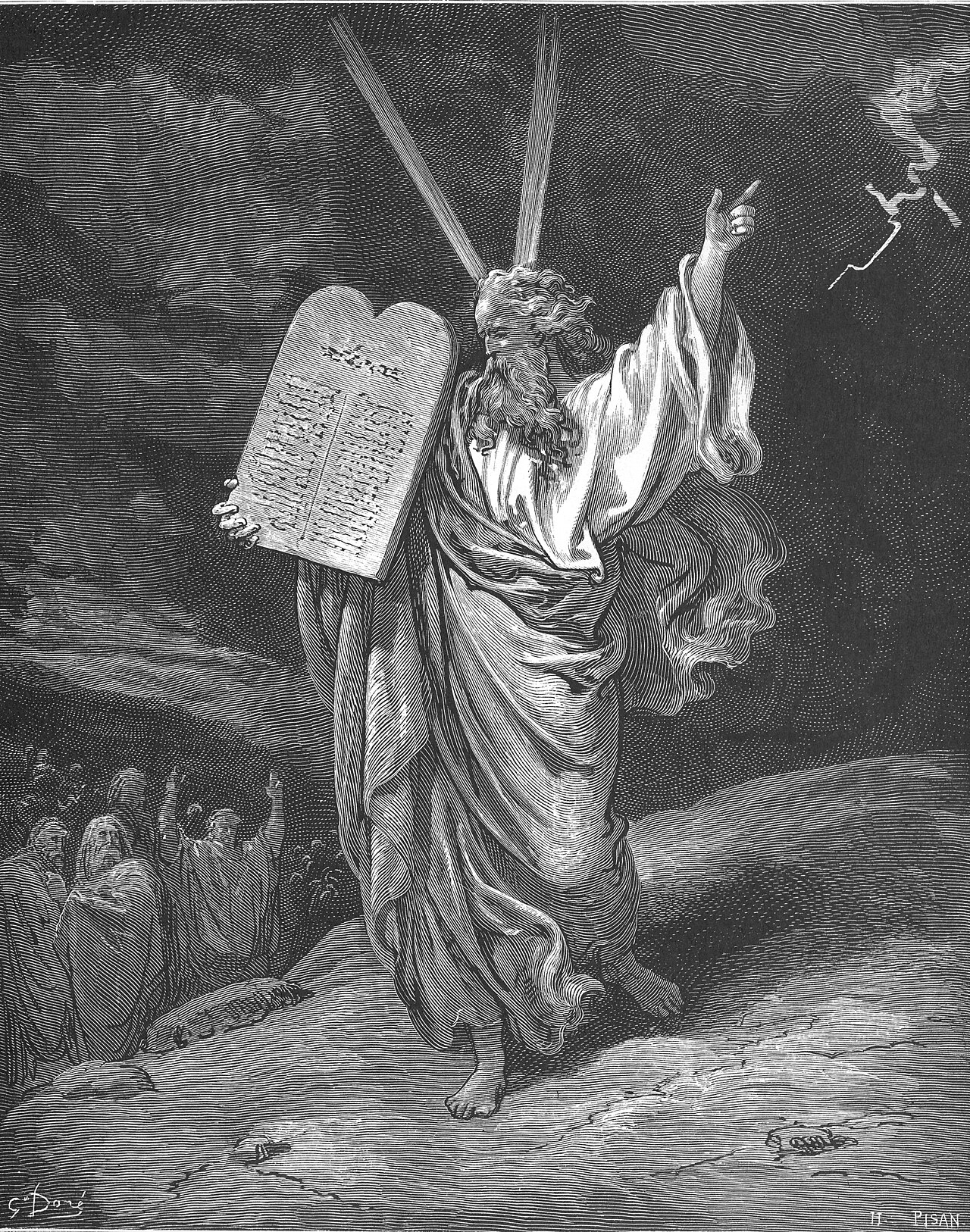
6 notes on this verseAnd this is the law which Moses set before the children of Israel. Not the law concerning the cities of refuge, but the law of the ten commands repeated in the following chapter; so Jarchi remarks,"this which he should set in order after this section;''as he does in the next chapter, where he repeats in order the ten precepts, and makes observations on the manner of the delivery of them, and urges obedience to them.
This site's exposition
And this is the law which Moses set before
on Deuteronomy 4:44-46
These verses are a heading rather than a speech, and they mark where the historical prologue ends and the stipulations begin. Testimonies, statutes and judgments is the threefold description the book keeps using of its own contents, and 6:20 puts the same words into a child's question. The place is given as the valley opposite Beth Peor, which is the ground of the plague named back at verse 3, so the law is delivered on the site of the last apostasy.
The record, by era
The Puritans and the Awakening2 voices
7 For what nation is there so great, who hath God so nigh unto them, as the L ORD our God is in all things that we call upon him for? 8 And what nation is there so great, that hath statutes and judgments so righteous as all this law, which I set before you this day?
quarantine:scripture (2026-07-29) — scripture-overlap:96%@v7-8
The place where Moses gave them these laws in charge is here particularly described. (1.) It was over-against Beth-peor, an idol-temple of the Moabites, which perhaps Moses sometimes looked towards, with a particular caution to them against the infection of that and other such like dangerous places.
The Nineteenth Century2 voices
A commentator
Jamieson, Fausset & Brown1802–1910
Commentary Critical and Explanatory on the Whole Bible (1871)
proposed
this is the law which Moses set before the children of Israel--This is a preface to the rehearsal of the law, which, with the addition of various explanatory circumstances, the following chapters contain.
quarantine:debris (2026-07-29) — starts-lowercase
A commentator
Albert Barnes1798–1870
Notes, Explanatory and Practical, on the Old and New Testaments (1832-1869)
proposed
These verses would be more properly assigned to the next chapter. They are intended to serve as the announcement and introduction of the address now to be commenced. Deu 4:44 gives a kind of general title to the whole of the weighty address, including in fact the central part and substance of the book, which now follows in 22 chapters, divided into two groups: (a) Deut. 5–11, (b) Deut. 12–
The words behind it
8 Hebrew wordsEvery Hebrew word of this verse in the order it stands, with what it means and the door to its own study. The last column counts the times a word stands in the whole Bible: the rarer the word, the more the places it appears belong together.
| Hebrew | Sound | Meaning | Word study | In the Bible |
|---|---|---|---|---|
| וְזֹ֖את | vezot | and this | H2063 → | 603 times |
| הַתּוֹרָ֑ה | hatorah | [is] the law | H8451 → | 219 times |
| אֲשֶׁר־ | ʾasher- | which | H834 → | 5497 times |
| שָׂ֣ם | sam | he set | H7760 → | 584 times |
| מֹשֶׁ֔ה | mosheh | Moses | H4872 → | 765 times |
| לִפְנֵ֖י | lifnei | <to> before | H6440 → | 2123 times |
| בְּנֵ֥י | benei | [the] people of | H1121 → | 4930 times |
| יִשְׂרָאֵֽל׃ | yisrael | Israel | H3478 → | 2507 times |
וְזֹ֖אתand this
vezotH2063 →603 times
הַתּוֹרָ֑ה[is] the law
hatorahH8451 →219 times
אֲשֶׁר־which
ʾasher-H834 →5497 times
שָׂ֣םhe set
samH7760 →584 times
מֹשֶׁ֔הMoses
moshehH4872 →765 times
לִפְנֵ֖י<to> before
lifneiH6440 →2123 times
בְּנֵ֥י[the] people of
beneiH1121 →4930 times
יִשְׂרָאֵֽל׃Israel
yisraelH3478 →2507 times
A shaded row is a word that stands 400 times or fewer in the Bible.
The walk
8 stopsEach card is a verse this one points to, and under it the verses that one points to in turn. Where several paths arrive at the same place, that place is listed first: the text keeps returning to it.
Through
John 1:17For the law was given through Moses; grace and truth came through Jesus Christ.
it leads to
- Romans 6:14
For sin shall not be your master, because you are not under law, but under grace.
- John 14:6
Jesus answered, “I am the way and the truth and the life. No one comes to the Father except through Me.
- Romans 5:20–21
The law came in so that the trespass would increase; but where sin increased, grace increased all the more,
- Romans 3:19–26
Now we know that whatever the law says, it says to those who are under the law, so that every mouth may be silenced and the whole world held accountable to God.
- John 1:14
The Word became flesh and made His dwelling among us. We have seen His glory, the glory of the one and only Son from the Father, full of grace and truth.
- Romans 6:14
Through
Deuteronomy 27:26‘Cursed is he who does not put the words of this law into practice.’ And let all the people say, ‘Amen!’
it leads to
- Galatians 3:10
All who rely on works of the law are under a curse. For it is written: “Cursed is everyone who does not continue to do everything written in the Book of the Law.”
- Deuteronomy 28:15–68
If, however, you do not obey the LORD your God by carefully following all His commandments and statutes I am giving you today, all these curses will come upon you and overtake you:
- Galatians 3:10
Through
Deuteronomy 27:3Write on them all the words of this law when you have crossed over to enter the land that the LORD your God is giving you, a land flowing with milk and honey, just…
it leads to
- Joshua 8:32
And there in the presence of the Israelites, Joshua inscribed on the stones a copy of the law of Moses, which he had written.
- Joshua 8:32
Where this verse is studied
On this page
About Deuteronomy
Who and where
1 name in this verse with a page on the site.
This page draws on Albert Barnes, Notes on the Old Testament; Albert Barnes, Notes, Explanatory and Practical, on the Old and New Testaments (1832-1869); Jamieson, Fausset & Brown, Commentary Critical and Explanatory on the Whole Bible; John Gill, Exposition of the Old Testament (1748-1763); Keil and Delitzsch, Biblical Commentary on the Old Testament: The Pentateuch and Matthew Henry, Commentary on the Whole Bible.