
1 Samuel 15:35
in 1 Samuel 15And to the day of his death, Samuel never again visited Saul. Samuel mourned for Saul, and the LORD regretted that He had made Saul king over Israel.
BSB
The same verse in ASV and KJV ▾
ASV
And Samuel came no more to see Saul until the day of his death; for Samuel mourned for Saul: and Jehovah repented that he had made Saul king over Israel.
KJV
And Samuel came no more to see Saul until the day of his death: nevertheless Samuel mourned for Saul: and the Lord repented that he had made Saul king over Israel.
⋯
This verse in 1 Samuel 15
Commentary
11 notes on this verseTo see Saul - That is, to visit him, in token of respect or friendship: or, to seek counsel from God for him. Otherwise he did see him chap. xix, 24. Though indeed it was not Samuel that came thither with design to see Saul, but Saul went thither to see Samuel, and that accidentally.
This site's exposition
Then Samuel went to Ramah
on 1 Samuel 15:34-35
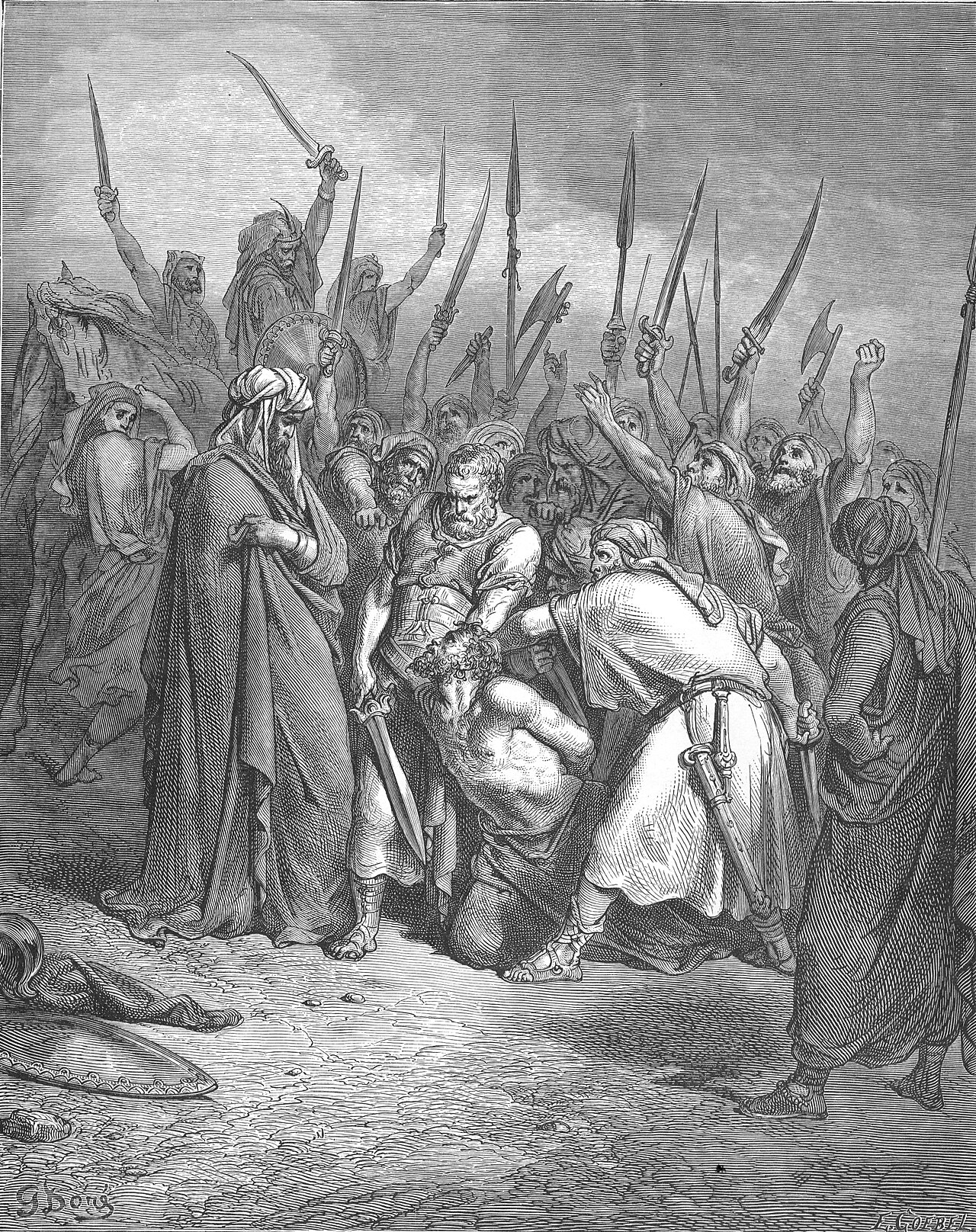
Samuel goes to Ramah and Saul to Gibeah, and "to the day of his death, Samuel never again visited Saul" after this parting. Samuel mourns for him, a grief the older writers read as sorrow over a king he had anointed, not a relenting of the sentence. The chapter’s third statement of regret closes the account, and the next chapter sends Samuel to anoint the neighbor of verse 28.
This site's exposition
Samuel never again visited Saul
John Wesley reads visited as a visit of honour to King Saul, or one to seek the LORD's counsel for him. Matthew Henry says Samuel mourned for Saul in prayer. The LORD had regretted making Saul king, and those prayers left His word standing.
The record, by era
The Church Fathers1 voice
Holy Scripture is often accustomed to attributing expressions to God such that seem quite like our own, for example, "The Lord was angry, and he was grieved because of their sins"; and again, "He repented that he had anointed Saul king" … and besides this, it makes mention of his sitting, and standing, and moving, and the like, which are not as a fact connected with God but are not without their use as an accommodation to those who are under teaching. For in the case of the too unbridled, a show of anger restrains them by fear. And to those who need the medicine of repentance, it says that the Lord repents along with them of the evil, and those who grow insolent through prosperity it warns, by God's repentance in respect to Saul, that their good fortune is no certain possession, though it seems to come from God.
The Medieval Church2 voices
And Samuel did not see Saul anymore, etc. It is better to imitate than to allegorize, that one whom he so detests due to the merit of sin, that he does not deign to see him even once, yet with the same consideration of brotherhood, …
A commentator
Gregory the DialogistCommentary on 1 Kings, Book 6, Chapter 2 · Written before 604.
proposed
41. What is the house of the transgressor, if not the habit of wicked work? For whoever is enclosed in a perverse habit dwells, as it were, in a house. Saul therefore ascended to his house, when any reprobate, after the rebuke of teachers, returns to the practice of evil work. For he descended, as it were, to the plains when he feigned humility in order to learn the commands of his superiors. But what does it mean that Samuel is said to have departed before Saul ascended to his house?
The Puritans and the Awakening2 voices
He mourned for his everlasting state, having no hopes of bringing him to repentance. When he wept for him, it is likely, he made supplication, but the Lord had repented that he had made Saul king, and resolved to undo that work of his, so that Samuel's prayers prevailed not for him. Observe, We must mourn for the rejection of sinners, 1.
8 And he took Agag the king of the Amalekites alive, and utterly destroyed all the people with the edge of the sword. 9 But Saul and the people spared Agag, and the best of the sheep, and of the oxen, and of the fatlings, and the lambs, and all that was good, and would not utterly destroy them: but every thing that was vile and refuse, that they destroyed utterly.
quarantine:scripture (2026-07-29) — verbatim-scripture
3 more voices on this verse
The Puritans and the Awakening1 voice
And Samuel came no more to see Saul until the day of his death,....
The Nineteenth Century2 voices
And Samuel came no more to see Saul - But we read, 1Sa 19:22-24, that Saul went to see Samuel at Naioth, but this does not affect what is said here. From this time Samuel had no connection with Saul; he never more acknowledged him as king; he mourned and prayed for him, and continued to perform his prophetic functions at Ramah, and at Naioth, superintending the school of the prophets in that place.
A commentator
Albert Barnes1798–1870
Notes, Explanatory and Practical, on the Old and New Testaments (1832-1869)
proposed
Samuel came no more ... - In the sense of visiting or conversing on public affairs.
The words behind it
22 Hebrew wordsEvery Hebrew word of this verse in the order it stands, with what it means and the door to its own study. The last column counts the times a word stands in the whole Bible: the rarer the word, the more the places it appears belong together.
| Hebrew | Sound | Meaning | Word study | In the Bible |
|---|---|---|---|---|
| וְלֹא־ | velo'- | and not | H3808 → | 5168 times |
| יָסַ֨ף | yasaf | he repeated | H3254 → | 212 times |
| שְׁמוּאֵ֜ל | shemuel | Samuel | H8050 → | 141 times |
| לִרְא֤וֹת | lirot | to see | H7200 → | 1300 times |
| אֶת־ | ʾet- | <obj.> | H853 → | 10935 times |
| שָׁאוּל֙ | shaul | Saul | H7586 → | 402 times |
| עַד־ | ʾad- | until | H5704 → | 1261 times |
| י֣וֹם | yom | [the] day of | H3117 → | 2304 times |
| מוֹת֔וֹ | moto | death his | H4194 → | 156 times |
| כִּֽי־ | ki- | for | H3588 → | 4482 times |
| הִתְאַבֵּ֥ל | hitabel | he mourned | H56 → | 39 times |
| שְׁמוּאֵ֖ל | shemuel | Samuel | H8050 → | 141 times |
| אֶל־ | ʾel- | concerning | H413 → | 5510 times |
| שָׁא֑וּל | shaul | Saul | H7586 → | 402 times |
| וַיהוָ֣ה | vayahweh | and Yahweh | H3068 → | 6520 times |
| נִחָ֔ם | nicham | he regretted | H5162 → | 108 times |
| כִּֽי־ | ki- | that | H3588 → | 4482 times |
| הִמְלִ֥יךְ | himlikh | he had made king | H4427 → | 348 times |
| אֶת־ | ʾet- | <obj.> | H853 → | 10935 times |
| שָׁא֖וּל | shaul | Saul | H7586 → | 402 times |
| עַל־ | ʾal- | over | H5921 → | 5755 times |
| יִשְׂרָאֵֽל׃ פ | yisrael | Israel | H3478 → | 2507 times |
וְלֹא־and not
velo'-H3808 →5168 times
יָסַ֨ףhe repeated
yasafH3254 →212 times
שְׁמוּאֵ֜לSamuel
shemuelH8050 →141 times
לִרְא֤וֹתto see
lirotH7200 →1300 times
אֶת־<obj.>
ʾet-H853 →10935 times
שָׁאוּל֙Saul
shaulH7586 →402 times
עַד־until
ʾad-H5704 →1261 times
י֣וֹם[the] day of
yomH3117 →2304 times
מוֹת֔וֹdeath his
motoH4194 →156 times
כִּֽי־for
ki-H3588 →4482 times
הִתְאַבֵּ֥לhe mourned
hitabelH56 →39 times
שְׁמוּאֵ֖לSamuel
shemuelH8050 →141 times
אֶל־concerning
ʾel-H413 →5510 times
שָׁא֑וּלSaul
shaulH7586 →402 times
וַיהוָ֣הand Yahweh
vayahwehH3068 →6520 times
נִחָ֔םhe regretted
nichamH5162 →108 times
כִּֽי־that
ki-H3588 →4482 times
הִמְלִ֥יךְhe had made king
himlikhH4427 →348 times
אֶת־<obj.>
ʾet-H853 →10935 times
שָׁא֖וּלSaul
shaulH7586 →402 times
עַל־over
ʾal-H5921 →5755 times
יִשְׂרָאֵֽל׃ פIsrael
yisraelH3478 →2507 times
A shaded row is a word that stands 400 times or fewer in the Bible.
The walk
8 stopsEach card is a verse this one points to, and under it the verses that one points to in turn. Where several paths arrive at the same place, that place is listed first: the text keeps returning to it.
Through
Genesis 6:6And the LORD regretted that He had made man on the earth, and He was grieved in His heart.
it leads to
- Isaiah 63:10
But they rebelled and grieved His Holy Spirit. So He turned and became their enemy, and He Himself fought against them.
- 1 Samuel 15:11
“I regret that I have made Saul king, for he has turned away from following Me and has not carried out My instructions.” And Samuel was distressed and cried out to the LORD all…
- Ephesians 4:30
And do not grieve the Holy Spirit of God, in whom you were sealed for the day of redemption.
- Hebrews 3:10
Therefore I was angry with that generation, and I said, ‘Their hearts are always going astray, and they have not known My ways.’
- 1 Samuel 15:29
Moreover, the Glory of Israel does not lie or change His mind, for He is not a man, that He should change His mind.”
- Isaiah 63:10
Through
1 Samuel 16:1Now the LORD said to Samuel, “How long are you going to mourn for Saul, since I have rejected him as king over Israel? Fill your horn with oil and go. I am sending…
it leads to
- 1 Samuel 15:23
For rebellion is like the sin of divination, and arrogance is like the wickedness of idolatry. Because you have rejected the word of the LORD, He has rejected you as king.”
- 2 Kings 9:1
Now Elisha the prophet summoned one of the sons of the prophets and said to him, “Tuck your cloak under your belt, take this flask of oil, and go to Ramoth-gilead.
- Psalms 78:68–71
But He chose the tribe of Judah, Mount Zion, which He loved.
- 1 Samuel 15:23
Where this verse is studied
About 1 Samuel
Who and where
2 names in this verse with a page on the site.
- PersonJudges to monarchySamuelAsked of God by Hannah and lent to the LORD at Shiloh; the last judge and first of the prophets after Moses, who anointed both Sau…
- PersonUnited monarchySaulIsrael's first king, head and shoulders above the people; began in humility, ended in rejection — sparing what God devoted, consul…
This page draws on 9 works. Open the list of works
This page draws on Adam Clarke, Commentary on the Bible; Albert Barnes, Notes, Explanatory and Practical, on the Old and New Testaments (1832-1869); Bede, Commentary on Samuel; Gregory of Nyssa, ANSWER TO EUNOMIUS'S SECOND BOOK; Gregory the Dialogist, Commentary on 1 Kings, Book 6, Chapter 2; John Gill, Exposition of the Old Testament (1748-1763); John Wesley, Explanatory Notes upon the Old Testament; Matthew Henry, Commentary on the Whole Bible and W. G. Blaikie, The First Book of Samuel (Expositor's Bible).