
Romanschapter 9
33 verses · Paul · AD 56 or 57 · Paul's letters
Yet before the twins were born or had done anything good or bad, in order that God’s plan of election might stand,
Introduction
Paul, Paul's letters, Romans Overview.
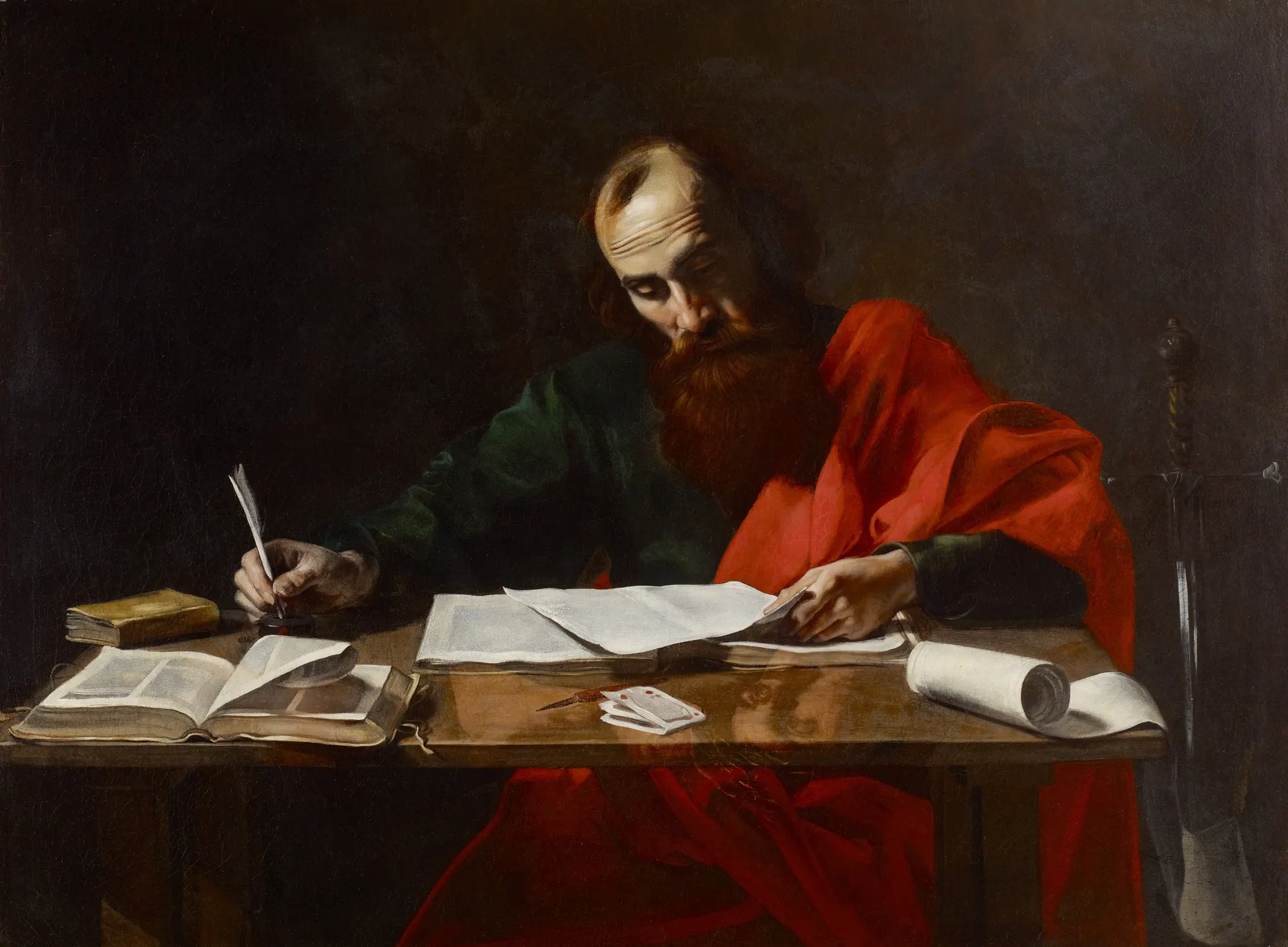
Paul wrote this letter from Corinth about AD 57 to house churches in Rome he had never visited, where Gentile believers now outnumbered Jewish ones. He was a Jew of the tribe of Benjamin whose own people had driven him from synagogue after synagogue, and he still grieved for them. This chapter opens a new section of the letter that runs through chapter 11. It asks whether God's promise to Israel has failed, and it answers from Israel's own Scriptures. Listen for the questions an objector raises, and for how often Paul answers with a written word. Hold the three chapters together before judging any one verse.
Context
- Who
- Roman house churches where Gentile believers now outnumbered Jewish ones and could easily conclude that God had simply moved on.
- What
- The opening of Paul's answer on Israel, from his grief for his people through God's choice of Isaac and Jacob, the potter and the clay, and the prophets on the remnant and the Gentiles.
- Where
- Written from Corinth to the house churches of Rome.
- When
- About AD 57, in the early years of Nero's reign.
- Why
- To show that God's word to Israel has not failed and that His mercy has always been His own to give.
Historical context
Paul lists Israel's privileges like an inventory: the adoption, the glory, the covenants, the giving of the Law, the temple service, the promises, the patriarchs, and the Messiah himself. Nothing in that list is withdrawn. It is the setup for the problem, not the answer to it.
Show the rest of the historical context, 3 more paragraphs
His examples, Isaac chosen over Ishmael, Jacob over Esau, are drawn from Genesis and were the standard family stories every Jewish hearer knew. In each case the younger and less likely was chosen, which was already the pattern of Israel's own origin.
The potter and clay image comes from Jeremiah and Isaiah, where it is applied to God's dealings with Israel as a nation rather than to individuals in isolation. Paul is using their prophets against a confidence built on descent.
The wound behind the chapter is real. This is a man saying he could wish himself cut off for the sake of his own people, written by someone whose synagogue visits had repeatedly ended in beatings.
Significance
For Gentile readers tempted to gloat, the chapter cut the ground away. The promise never ran on physical descent alone, so their inclusion was not Israel's replacement, it was the same sovereign freedom that made Israel in the first place.
Show the rest of the significance, 1 more paragraph
For Jewish believers, the sorrow at the top of the chapter said their kinsmen's unbelief was not being shrugged off. The word of God had not failed, and Paul intended to prove it before he was done.
The heads below are this chapter's scenes. The numbered points under each are its verses.
Paul's Unceasing Sorrow for His Kinsmen
Romans 9:1-3
I speak the truth in Christ: Paul opens with an oath, sworn in Christ, with his conscience in the Holy Spirit as the second witness to his sorrow for Israel. He could wish himself cursed and cut off from Christ if that would save them. Moses made the same offer at Exodus 32:32.
Romans 9:1
Paul, seeing that if, according to those things which he set forth above, he could be separated from the love of Christ by no power, whether heavenly or earthly, present or future, opposing him, it would seem contrary and incredible—what he was now proposing to say: that he wished to become anathema from that Christ whom he loved so inseparably, that is, to be made a stranger to him—lest he should seem to incur the mark of a lie, he sends ahead a satisfaction, so that his word may in no way be doubted, and he says: "I speak the…
Origen of Alexandria · written before 253 · Commentary on the Epistle to the Romanspatristic
1 more voice on this verseWhat preachers and commentators have said about this verse, in their own words.
Romans 9:1
“I say the truth - In what I am about to affirm respecting my attachment to the nation and people. In Christ - Most interpreters regard this as a form of an oath, as equivalent to calling Christ to witness. It is certainly to be regarded, in its obvious sense, as an appeal to Christ as the searcher of the heart, and as the judge of falsehood. Thus, the word translated “in” ἐν en is used in the form of an oath in Mat 5:34-36; Rev 10:6, Greek.”
deep sorrow and unceasing anguish: Theodoret notices that the sentence is left unfinished. Paul names the sorrow and anguish of his heart and leaves their cause unsaid, and verses 3 to 5 supply it, his own people Israel. Barnes reads unceasing as a sorrow that returned whenever Israel came to his heart.
Romans 9:2
Consider, however, the greatness of the apostolic breast. He cannot be separated from the love of God; what he speaks, he speaks in Christ; what he holds in his conscience is contained by the Holy Spirit. What heavens, I ask, what thrones, what most ample minds of the heavenly powers will be able to contain the whole Trinity in seats so ample? "For," he says, "I have great sadness and continual sorrow in my heart."
Origen of Alexandria · written before 253 · Commentary on the Epistle to the Romanspatristic
2 more voices on this verse
Romans 9:2
“Great heaviness - Great grief. Continual sorrow - The word rendered “continual” here must be taken in a popular sense. Not that he was literally all the time pressed down with this sorrow, but that whenever he thought on this subject, he had great grief; as we say of a painful subject, it is a source of constant pain. The cause of this grief, Paul does not expressly mention, though it is implied in what he immediately says. It was the fact that so large a part of the nation would be rejected, and cast off.”
Romans 9:2
“He would be willing to undergo the greatest misery to do them good. Love is apt to be thus bold, and venturous, and self-denying. Because the glory of God's grace in the salvation of many is to be preferred before the welfare and happiness of a single person, Paul, if they were put in competition, would be content to forego all his own happiness to purchase theirs.”
Matthew Henry · Commentary on the Whole Bible (1707-1721)puritan
cursed and cut off from Christ: Paul could wish himself cursed and cut off from Christ for his brothers, though chapter 8 said nothing could separate him from Christ. Chrysostom marvels at the wish.
Romans 9:3
“For I could wish ... - This passage has been greatly controverted. Some have proposed to translate it, “I did wish,” as referring to a former state, when he renounced Christ, and sought to advance the interests of the nation by opposing and defying him. But to this interpretation there are insuperable objections. (1) The object of the apostle is not to state his former feelings, but his present attachment to his countrymen, and willingness to suffer for them.”
1 more voice on this verse
Romans 9:3
“As if he had said, I could wish to suffer in their stead; yea, to be an anathema from Christ in their place. In how high a sense he wished this, who can tell, unless himself had been asked and had resolved the question? Certainly he did not then consider himself at all, but only others and the glory of God.”
John Wesley · Explanatory Notes upon the New Testament (1755)evangelical
Romans 9:4-5
the adoption as sons: Paul lists what belongs to Israel: the adoption as sons, the divine glory, the covenants, the law, the temple worship, the promises and the patriarchs. Every item is stated as still theirs. The list ends with Christ, descended from them by the flesh, who is God over all.
Romans 9:4
“God himself is "the glory of his people Israel." And the covenants, and the giving of the law - The covenant was given long before the law. It is termed covenants, in the plural, because it was so often and so variously repeated, and because there were two dispositions of it, Gal. iv, 24, frequently called two covenants; the one promising, the other exhibiting the promise.”
John Wesley · Explanatory Notes upon the New Testament (1755)evangelical
3 more voices on this verse
Romans 9:4
“But as for what he says, "the covenants and the giving of the law," it might perhaps seem that he is saying one and the same thing. For the law which was given is itself also called a covenant. But I think the distinction is this: that the giving of the law was indeed one, and took place once through Moses; whereas covenants were established frequently. For as often as they sinned and were cast off, so often do they appear to have been disinherited.”
Origen of Alexandria · written before 253 · Commentary on the Epistle to the Romanspatristic
Romans 9:4
“Who are Israelites - Descendants of Jacob, a man so highly favored of God, and from whom he received his name Israel - a prince of God, Gen 32:28; from which name his descendants were called Israelites, and separated unto God for his glory and praise. Their very name of Israelites implied their very high dignity; they were a royal nation; princes of the most high God.”
Adam Clarke · Commentary on the Bible (1810-1826)evangelical
Romans 9:4
“Israel is my son, Exod. iv. (2.) And the glory; the ark with the mercy-seat, over which God dwelt between the cherubim--this was the glory of Israel, 1 Sam. iv. The many symbols and tokens of the divine presence and guidance, the cloud, the Shechinah, the distinguishing favours conferred upon them--these were the glory.”
Matthew Henry · Commentary on the Whole Bible (1707-1721)puritan
who is God over all: Where the sentence stops decides whom it calls God. Jamieson, Fausset and Brown read a plain statement about Christ, who comes from Israel by the flesh and is God over all. Tertullian read it the same way long before them.
Romans 9:5
“To the preceding, St. Paul now adds two more prerogatives. Theirs are the fathers - The patriarchs and holy men of old, yea, the Messiah himself. Who is over all, God blessed forever - The original words imply the self-existent, independent Being, who was, is, and is to come.”
John Wesley · Explanatory Notes upon the New Testament (1755)evangelical
4 more voices on this verse
Romans 9:5
Paul, when writing to the Romans, has explained this very point: "Paul, an apostle of Jesus Christ, predestinated unto the Gospel of God, which He had promised by His prophets in the holy Scriptures, concerning His Son, who was made to Him of the seed of David according to the flesh, who was predestinated the Son of God with power through the Spirit of holiness, by the resurrection from the dead of our Lord Jesus Christ."
Irenaeus · written before 202 · Against Heresies Book IIIpatristic
Romans 9:5
“It remains then, that we have here no doxology at all, but a naked statement of fact, that while Christ is "of" the Israelitish nation "as concerning the flesh," He is, in another respect, "God over all, blessed for ever." (In 2Co 11:31 the very Greek phrase which is here rendered "who is," is used in the same sense; and compare Ro 1:25, Greek).”
Jamieson, Fausset & Brown · Commentary Critical and Explanatory on the Whole Bible (1871)reformed
Romans 9:5
“Mentioning Christ, he interposes a very great word concerning him, that he is over all, God blessed for ever. Lest the Jews should think meanly of him, because he was of their alliance, he here speaks thus honourably concerning him: and it is a very full proof of the Godhead of Christ; he is not only over all, as Mediator, but he is God blessed for ever.”
Matthew Henry · Commentary on the Whole Bible (1707-1721)puritan
Romans 9:5
“Whose are the fathers - Who have been honored with so illustrious an ancestry. Who are descended from Abraham, Isaac, etc. On this they highly valued themselves, and in a certain sense not unjustly; compare Mat 3:9. Of whom - Of whose nation. This is placed as the crowning and most exalted privilege, that their nation had given birth to the long-expected Messiah, the hope of the world. As concerning the flesh - So far as his human nature was concerned.”
Not All Israel Is Israel: Jacob Have I Loved
not all who are descended from Israel are Israel: Israel's unbelief raises one question, whether God's word has failed. Paul answers by narrowing the word Israel, since the Israel the promise names is smaller than the line of physical descent. The chapter then proves that from Abraham, Isaac and Jacob.
Romans 9:6
“Not as though the word of God hath taken none effect - A Jew might have objected, as in Rom 3:3: “Is not God bound by his faithfulness to continue the Jews as his peculiar Church and people, notwithstanding the infidelity of the major part of them? If they are brought to a level with the Gentiles, will it not follow that God hath failed in the performance of his promise to Abraham?”
Adam Clarke · Commentary on the Bible (1810-1826)evangelical
3 more voices on this verse
Romans 9:6
“The sum is, God accepts all believers, and them only; and this is no way contrary to his word. Nay, he hath declared in his word, both by types and by express testimonies, that believers are accepted as the "children of the promise," while unbelievers are rejected, though they are "children after the flesh." All are not Israel - Not in the favour of God.”
John Wesley · Explanatory Notes upon the New Testament (1755)evangelical
Romans 9:6
“Since he had said above that for his brethren, "who are his kinsmen according to the flesh, who are Israelites," he would wish even to become anathema, on the ground that theirs was both the adoption of sons, and the giving of the law, and the promises — concerning these he now says that the word of God has not failed, that is, the promise which was made to them has not come to nothing.”
Origen of Alexandria · written before 253 · Commentary on the Epistle to the Romanspatristic
Romans 9:6
“The promises and threatenings shall have their accomplishment; and, one way or other, he will magnify the law and make it honourable. This is to be understood especially of the promise of God, which by subsequent providences may be to a wavering faith very doubtful; but it is not, it cannot be, made of no effect; at the end it will speak and not lie.”
Matthew Henry · Commentary on the Whole Bible (1707-1721)puritan
Romans 9:7-9
Abraham had two sons, and only Isaac carried the promise, though Ishmael was also his own flesh. From this Paul draws the rule that the children of the promise are the offspring God reckons. The promise itself was a dated word, a son for Sarah at the appointed time.
Romans 9:7
“Neither because they are lineally the seed of Abraham, will it follow that they are all children of God - This did not hold even in Abraham's own family; and much less in his remote descendants. But God then said, In Isaac shall thy seed be called - That is, Isaac, not Ishmael, shall be called thy seed; that seed to which the promise is made.”
John Wesley · Explanatory Notes upon the New Testament (1755)evangelical
3 more voices on this verse
Romans 9:7
“Are they all children - Adopted into the true family of God. Many of the descendants of Abraham were rejected. But in Isaac - This was the promise; Gen 21:12. Shall thy seed ... - Thy true people. This implied a selection, or choice; and therefore the doctrine of election was illustrated in the very commencement of the history of the nation; and as God had then made such a distinction, he might still do it. As he had then rejected a part of the natural descendants of Abraham, so he might still do it.”
Romans 9:7
"Nor are all also sons because they are the seed of Abraham." This, evidently, was already being signified then in Abraham, when, though he had many sons — whom the Apostle calls sons of the flesh — the posterity of his seed was placed in Isaac alone, who was the son of the promise.
Origen of Alexandria · written before 253 · Commentary on the Epistle to the Romanspatristic
Romans 9:7
“Grace does not run in the blood; nor are saving benefits inseparably annexed to external church privileges, though it is common for people thus to stretch the meaning of God's promise, to bolster themselves up in a vain hope.”
Matthew Henry · Commentary on the Whole Bible (1707-1721)puritan
Cross references
Romans 9:7
- QuotingGenesis 21:12“But God said to Abraham, “Do not be distressed about the boy and your maidservant. Listen to everything that Sarah tells you, for through Isaac your offspring will be reckoned.”
'In Isaac shall thy seed be called' (election argument)
ConnectionsGenesis 21:12
the children of the promise: Wesley reads the rule as a type reaching past Abraham's household. In every later generation the children counted are those who believe the promise. Matthew Henry links it to Galatians 4:29, where Ishmael, born after the flesh, stands for those who seek righteousness by their own strength.
Romans 9:8
“That is, Not the children, &c. - As if he had said, This is a clear type of things to come; showing us, that in all succeeding generations, not the children of the flesh, the lineal descendants of Abraham, but the children of the promise, they to whom the promise is made, that is, believers, are the children of God.”
John Wesley · Explanatory Notes upon the New Testament (1755)evangelical
1 more voice on this verse
Romans 9:8
“There was nothing extraordinary or supernatural in his conception, as there was in Isaac's; he was born after the flesh ( Gal. iv. 29 ), representing those that expect justification and salvation by their own strength and righteousness. (2.) That the children of the promise are counted for the seed.”
Matthew Henry · Commentary on the Whole Bible (1707-1721)puritan
The promise is Genesis 18:10, given when Sarah was past bearing a son, and Clarke marks that she was ninety. Chrysostom draws the point. The promise of God formed Isaac, so a child of the promise is born of what God said.
Romans 9:9
“For this is the word of the promise - By the power of which Isaac was conceived, and not by the power of nature. Not, Whosoever is born of thee shall be blessed, but, At this time - Which I now appoint.”
John Wesley · Explanatory Notes upon the New Testament (1755)evangelical
2 more voices on this verse
Romans 9:9
“For this is the word of promise - This is the promise made to Abraham. The design of the apostle, in introducing this, is doubtless to show to whom the promise appertained; and by specifying this, he shows that it had not reference to Ishmael, but to Isaac. At this time - Greek, According to this time; see Gen 18:10, Gen 18:14. Probably it means at the exact time promised; I will fulfil the prediction at the very time; compare 2Ki 4:16.”
Romans 9:9
“It was through faith that Isaac was conceived, Heb. xi. Thus were the great mysteries of salvation taught under the Old Testament, not in express words, but by significant types and dispensations of providence, which to them then were not so clear as they are to us now, when the veil is taken away, and the types are expounded by the antitypes.”
Matthew Henry · Commentary on the Whole Bible (1707-1721)puritan
Cross references
Romans 9:9
- QuotingGenesis 18:10“Then the LORD said, “I will surely return to you at this time next year, and your wife Sarah will have a son!” Now Sarah was behind him, listening at the entrance to the tent.”
'At this time will I come, and Sara shall have a son' (word of promise)
Romans 9:10-13
Rebecca’s children were conceived by one man: Rebecca's twins had one father, and God spoke over them before either was born or had done good or bad. The older will serve the younger, so election rests on His call. Malachi 1:2 and 3, quoted in verse 13, speaks of two nations.
Romans 9:10
The history of Isaac, too, is not without a symbolical character. For in the Epistle to the Romans, the apostle declares: "Moreover, when Rebecca had conceived by one, even by our father Isaac," she received answer from the Word, "that the purpose of God according to election might stand, not of works, but of Him that calleth, it was said unto her, Two nations are in thy womb, and two manner of people are in thy body; and the one people shall overcome the other, and the elder shall serve the younger."
Irenaeus · written before 202 · Irenaeus Against Heresies Book 4patristic
3 more voices on this verse
Romans 9:10
“And not only this; but when Rebecca, &c.--It might be thought that there was a natural reason for preferring the child of Sarah, as being Abraham's true and first wife, both to the child of Hagar, Sarah's maid, and to the children of Keturah, his second wife.”
Jamieson, Fausset & Brown · Commentary Critical and Explanatory on the Whole Bible (1871)reformed
Romans 9:10
“As God chose Isaac and Jacob, and rejected Ishmael and Esau, so he might and did choose faith to be the condition of salvation and reject the works of the law. Thus Arminius understands it, De rejectis et assumptis talibus, certa qualitate notatis--Concerning such as are rejected and such as are chosen, being distinguished by appropriate qualities; so John Goodwin.”
Matthew Henry · Commentary on the Whole Bible (1707-1721)puritan
Romans 9:10
“The apostle mentions this to show, that neither were their ancestors accepted through any merit of their own. That the purpose of God according to election might stand - Whose purpose was, to elect or choose the promised seed.”
John Wesley · Explanatory Notes upon the New Testament (1755)evangelical
before the twins were born: Readers divide on what the election concerns. Adam Clarke reads it of two nations, Israel and Edom, and Ambrosiaster of God's foreknowledge of what each twin would become. Augustine, in To Simplician, holds that God's call comes first and the merits of faith follow it.
Romans 9:11
“For the children being not yet born - It was not, therefore, by any works of theirs. It was not because they had formed a character and manifested qualities which made this distinction proper. It was laid back of any such character, and therefore had its foundation in the purpose or plan of God. Neither having done any good or evil - That is, when the declaration Rom 9:12 was made to Rebecca. This is a very important passage in regard to the question about the purposes of God.”
1 more voice on this verse
Romans 9:11
“For the children being not yet born, So says (h) the Chaldee paraphrast, "the prophet said unto them, was it not said of Jacob, עד דלא אתיליד, "when he was not yet born", that he should be greater than his brother?'' the Syriac version supplies, "his children", that is, Isaac's; and the Arabic version, "his two children".”
The oracle is Genesis 25:23, given to Rebecca while the twins were still in the womb. Barnes notes the law of the firstborn favoured Esau. Augustine presses the reversal, for Jacob had no works to win God's favour before his birth.
Romans 9:12
“The elder shall serve the younger - These words, with those of Malachi, Jacob have I loved, and Esau have I hated, are cited by the apostle to prove, according to their typical signification, that the purpose of God, according to election, does and will stand, not of works, but of him that calleth; that is, that the purpose of God, which is the ground of that election which he makes among men, unto the honor of being Abraham’s seed, might appear to remain unchangeable in him; and to be even the same which he had declared unto Abraham.”
Adam Clarke · Commentary on the Bible (1810-1826)evangelical
1 more voice on this verse
Romans 9:12
“One was chosen and loved, and the other hated, so that everything might be the work of God and of His election and foreknowledge, and not from works, but from Him who calls.”
Theophylact of Ohrid · written before 1107 · Commentary on Romanspatristic
Cross references
Romans 9:12
- QuotingGenesis 25:23and He declared to her: “Two nations are in your womb, and two peoples from within you will be separated; one people will be stronger than the other, and the older will serve the younger.”
'The elder shall serve the younger' (Jacob and Esau)
The word hated has troubled readers in every age. Wesley holds that it concerns Jacob and Esau as two peoples in history and leaves their eternal state untouched.
Romans 9:13
“Nor does it relate to the eternal state either of them or their posterity. Thus far the apostle has been proving his proposition, namely, that the exclusion of a great part of the seed of Abraham, yea, and of Isaac, from the special promises of God, was so far from being impossible, that, according to the scriptures themselves, it had actually happened.”
John Wesley · Explanatory Notes upon the New Testament (1755)evangelical
Cross references
Romans 9:13
- QuotingMalachi 1:2“I have loved you,” says the LORD. But you ask, “How have You loved us?” “Was not Esau Jacob’s brother?” declares the LORD. “Yet Jacob I have loved,
'Jacob have I loved, but Esau have I hated' ('as it is written')
The Potter and the Clay
Romans 9:14-16
Is God unjust?: Paul raises the charge of injustice himself and refuses it. His answer is God's word to Moses at Exodus 33:19, that He will have mercy on whom He has mercy. The outcome rests on God who shows mercy, and no man's desire or effort decides it.
Romans 9:14
“It is fitting that the reader of these things should recall rather attentively that comparison which we set down in the earlier books concerning the manner in which the apostolic discourse is dispensed: that, as in a certain royal house which is laid out with manifold entrances and exits, one passes from one chamber into another in such a way that scarcely any signs appear of the one entering or of the one going out — so also Paul seems to open up the secrets of divine things a little, yet not to spread them out plainly and openly.”
Origen of Alexandria · written before 253 · Commentary on the Epistle to the Romanspatristic
2 more voices on this verse
Romans 9:14
“Is there unrighteousness with God? God forbid--This is the first of two objections to the foregoing doctrine, that God chooses one and rejects another, not on account of their works, but purely in the exercise of His own good pleasure: "This doctrine is inconsistent with the justice of God." The answer to this objection extends to Ro 9:19, where we have the second objection.”
Jamieson, Fausset & Brown · Commentary Critical and Explanatory on the Whole Bible (1871)reformed
Romans 9:14
“This is well consistent with justice; for he has a right to fix the terms on which he will show mercy, according to his declaration to Moses, petitioning for all the people, after they had committed idolatry with the golden calf. I will have mercy on whom I will have mercy - According to the terms I myself have fixed.”
John Wesley · Explanatory Notes upon the New Testament (1755)evangelical
Barnes sets the word in its scene at Exodus 33:19. God spoke it to Moses while His goodness passed before him, so mercy and compassion belong to the glory God showed. Henry draws the rule that every reason God has for mercy lies within Himself.
Romans 9:15
“For he saith to Moses - Exo 33:19. I will have mercy - This is said by God when he declared expressly that he would make all his goodness pass before Moses Exo 33:19, and when, therefore, it was regarded, not as a proof of stern and inexorable justice, but as “the very proof of his benevolence,” and the highest which he thought proper to exhibit.”
1 more voice on this verse
Romans 9:15
“DO NOT IMAGINE for an instant that I pretend to be able thoroughly to elucidate the great mysteries of predestination. There are some men who claim to know all about the matter. They twist it round their fingers as easily as if it were an everyday thing; but depend upon it, he who thinks he knows all about this mystery, knows but very little.”
Cross references
Romans 9:15
- QuotingExodus 33:19“I will cause all My goodness to pass before you,” the LORD replied, “and I will proclaim My name—the LORD—in your presence. I will have mercy on whom I have mercy, and I will have compassion on whom I have compassion.”
'I will have mercy on whom I will have mercy' ('he saith to Moses')
desire or effort: Desire and effort both remain, and God's mercy decides the outcome. Jamieson, Fausset and Brown call both necessary to being saved, with salvation owed to neither. Origen sets beside it Psalm 127, where the Lord builds the house.
Romans 9:16
“It is clear from this passage that the willing and running are ours, but the fulfillment of our willing and running belongs to the mercy of God. So it is that free will is preserved as far as our willing and running is concerned and that everything depends on the power of God as far as the fulfillment of our willing and running is concerned.”
Jerome · written before 420 · Against the Pelagians 1.5patristic
2 more voices on this verse
Romans 9:16
Both these are indispensable to salvation, yet salvation is owing to neither, but is purely "of God that showeth mercy." See on Php 2:12, 13, "Work out your own salvation with fear and trembling: for it is God which, out of His own good pleasure, worketh in you both to will and to do."
Jamieson, Fausset & Brown · Commentary Critical and Explanatory on the Whole Bible (1871)reformed
Romans 9:16
“Such is the method of God's grace towards all that partake of it, for he is found of those that sought him not ( Isa. lxv. 1 ); in this preventing, effectual, distinguishing grace, he acts as a benefactor, whose grace is his own. Our eye therefore must not be evil because his is good; but, of all the grace that we or others have, he must have the glory: Not unto us, Ps. cxv.”
Matthew Henry · Commentary on the Whole Bible (1707-1721)puritan
Romans 9:17-18
God raised him up to display His power, and verse 18 states that God hardens whom He wants to harden. Calvin reads the hardening as God's own act. Jamieson, Fausset and Brown set beside it the record of Exodus, where Pharaoh hardens his own heart before the LORD hardens it.
Romans 9:17
“But let us also see of what sort is this which is said to Pharaoh: "For this very purpose have I raised thee up, that I might show in thee my power." It is certain that God not only knows the purpose and will of each one, but even foreknows it. And knowing and foreknowing, as a good and just steward, he uses the impulses and purpose of each one for accomplishing those works which the mind and will of each one chooses.”
Origen of Alexandria · written before 253 · Commentary on the Epistle to the Romanspatristic
1 more voice on this verse
Romans 9:17
“For the Scripture saith - Exo 9:16. That is, God saith to Pharaoh in the Scriptures; Gal 3:8, Gal 3:22. This passage is designed to illustrate the doctrine that God shows mercy according to his sovereign pleasure by a reference to one of the most extraordinary cases of hardness of heart which has ever occurred.”
Cross references
Romans 9:17
- QuotingExodus 9:16“But I have raised you up for this very purpose, that I might display My power to you, and that My name might be proclaimed in all the earth.”
'For this same purpose have I raised thee up' ('the scripture saith unto Pharaoh')
He hardens whom He wants to harden: The second clause is Paul's own conclusion, as Barnes notes. Augustine holds that the one left to harden has deserved it, while mercy comes as a gift. Jamieson, Fausset and Brown describe the hardening as judicial, God giving a man over to the hardening power of his own sin.
Romans 9:18
“But as for what he says, "Therefore he has mercy on whom he wills, and whom he wills he hardens," he seems to take it from what is written in Exodus. For there he says: "I will harden Pharaoh's heart, that he may not let the people go." Now Pharaoh's heart was hardened in this way. God was unwilling to bring upon him a sudden and full vengeance.”
Origen of Alexandria · written before 253 · Commentary on the Epistle to the Romanspatristic
2 more voices on this verse
Romans 9:18
“Therefore hath he mercy on whom he will - This is the apostle’s conclusion from the facts already laid down: that God, according to his own will and wisdom, in perfect righteousness, bestows mercy; that is to say, his blessings upon one part of mankind, (the Jews of old, and the Gentiles of the present time), while he suffers another part (the Egyptians of old, and the Jews of the present day) to go on in the abuse of his goodness and forbearance, hardening themselves in sin, till he brings upon them a most just and exemplary punishment, unless this…”
Adam Clarke · Commentary on the Bible (1810-1826)evangelical
Romans 9:18
“Had he mercy on the Gentiles? It was because he would have mercy on them. It was because it was his own pleasure to deny them softening grace, and to give them up to their chosen affected unbelief.”
Matthew Henry · Commentary on the Whole Bible (1707-1721)puritan
Romans 9:19-21
why does God still find fault?: The objector asks why God still finds fault if no one can resist His will. Paul answers with the potter and the clay from Jeremiah 18:1 to 6. The potter holds the right over the same lump, and the thing formed does not question its maker.
Romans 9:19
“It is superfluous, then, what you say to the Apostle, O you who oppose: "Why then does he still find fault? For who resists his will?" It is certain indeed that no one withstands the will of God; but it is fitting that we know his will to be just and right. For that we should be good or evil is a matter of our own will; but to what sort of stripes the evil man is destined, and to what sort of glory the good man, is a matter of God's will.”
Origen of Alexandria · written before 253 · Commentary on the Epistle to the Romanspatristic
2 more voices on this verse
Romans 9:19
“Thou shalt say then unto me, Why--"Why then" is the true reading. doth he yet find fault? for who hath resisted--"Who resisteth" his will?--that is, "This doctrine is incompatible with human responsibility"; If God chooses and rejects, pardons and punishes, whom He pleases, why are those blamed who, if rejected by Him, cannot help sinning and perishing?”
Jamieson, Fausset & Brown · Commentary Critical and Explanatory on the Whole Bible (1871)reformed
Romans 9:19
“Had the apostle been arguing only for God's sovereignty in appointing and ordering the terms and conditions of acceptance and salvation, there had not been the least colour for this objection; for he might well find fault if people refused to come up to the terms on which such a salvation is offered; the salvation being so great, the terms could not be hard.”
Matthew Henry · Commentary on the Whole Bible (1707-1721)puritan
who are you, O man: Origen limits the rebuke. It falls on the man who accuses God of fault and leaves the faithful questioner alone.
Romans 9:20
“In the same way the potter, too, has it in his power, by tempering the blast of his fire, to modify his clayey material into a stiffer one, and to mould one form after another more beautiful than the original substance, and now possessing both a kind and name of its own. For although the Scripture says, "Shall the clay say to the potter? " that is, Shall man contend with God? although the apostle speaks of "earthen vessels" he refers to man, who was originally clay.”
Tertullian · written before 220 · On the Resurrection of the Fleshpatristic
3 more voices on this verse
Romans 9:20
“Nay but, O man, who art thou - As if he had said: Weak, ignorant man, darest thou retort on the infinitely good and righteous God? Reflect on thyself; and tell me, after thou hast abused the grace of God, and transgressed his laws, wilt thou cavil at his dispensations? God hath made, created, formed the Jewish nation; and shall the thing formed, when it hath corrupted itself, pretend to correct the wise and gracious Author of its being, and say, Why hast thou made me thus? Why hast thou constituted me in this manner?”
Adam Clarke · Commentary on the Bible (1810-1826)evangelical
Romans 9:20
“Nay, but O man, who art thou that repliest against God?.... Or "answerest again to God": some have been so weak and wicked as to suggest, that the apostle met with an objection he could not answer, or give a fair solution of, and therefore takes the method he does: but when the several things returned in answer by the apostle are considered, it will appear that he has taken the wisest method to silence such an audacious objector, and that he abundantly clears God from the charge of cruelty and unmercifulness.”
Romans 9:20
“God is our master, and we are his servants; and it does not become servants to answer again, Tit. ii. By resolving all into the divine sovereignty. We are the thing formed, and he is the former; and it does not become us to challenge or arraign his wisdom in ordering and disposing of us into this or that shape of figure.”
Matthew Henry · Commentary on the Whole Bible (1707-1721)puritan
the same lump of clay: The whole weight of the picture rests on the same lump. Augustine and Ambrosiaster read it as humanity fallen in Adam, so any vessel of honour is a work of mercy. Adam Clarke follows Jeremiah 18, where the potter's right is exercised over nations.
Romans 9:21
“All are sinners, and have forfeited every claim to His mercy; it is therefore perfectly competent to God to spare one and not another, to make one vessel to honor and another to dishonor. But it is to be borne in mind that Paul does not here speak of God's right over His creatures as creatures, but as sinful creatures: as he himself clearly intimates in the next verses.”
Jamieson, Fausset & Brown · Commentary Critical and Explanatory on the Whole Bible (1871)reformed
3 more voices on this verse
Romans 9:21
“The potter, out of the same lump, may make either a fashionable vessel, and a vessel fit for creditable and honourable uses, or a contemptible vessel, and a vessel in which is no pleasure; and herein he acts arbitrarily, as he might have chosen whether he would make any vessel of it at all, or whether he would leave it in the hole of the pit, out of which it was dug.”
Matthew Henry · Commentary on the Whole Bible (1707-1721)puritan
Romans 9:21
“I could not bear that it should be wholly at God's pleasure, to save or damn me, just as he would.”
David Brainerd · The Life and Diary of David Brainerd (ed. Jonathan Edwards), conviction narrative, Chapter I (1749)Colonial American Presbyterian
Romans 9:21
“He wills nothing but what is infinitely wise and good; and therefore his will is a most proper rule of judgment. He will show mercy, as he hath assured us, to none but true believers, nor harden any but such as obstinately refuse his mercy.”
John Wesley · Explanatory Notes upon the New Testament (1755)evangelical
Romans 9:22-24
the vessels of His wrath: God bore the vessels of His wrath with great patience and prepared the vessels of His mercy in advance for glory. The patience serves to make known the riches of His glory. Those called include Jews and Gentiles together, the company Paul is writing to.
Romans 9:22
“The spring of all the joy and glory of heaven is that mercy of God which endures for ever. Vessels of honour must to eternity own themselves vessels of mercy. Observe, First, What he designs in them: To make known the riches of his glory, that is, of his goodness; for God's goodness is his greatest glory, especially when it is communicated with the greatest sovereignty.”
Matthew Henry · Commentary on the Whole Bible (1707-1721)puritan
2 more voices on this verse
Romans 9:22
“What if God, willing to show his wrath - The apostle refers here to the case of Pharaoh and the Egyptians, and to which he applies Jeremiah’s parable of the potter, and, from them, to the then state of the Jews.”
Adam Clarke · Commentary on the Bible (1810-1826)evangelical
Romans 9:22
“What if God, willing to show his wrath,.... The apostle proceeds to clear God from any charge of cruelty and unmercifulness, by observing his conduct in time, both towards those he passes by, and towards those he chooses; for in this and the following verse, nothing is said relating to any act of God before time, everything of that kind being considered already.”
the riches of His glory: Augustine reads the verse as the display of grace itself. Giving to some what none deserved shows the gift is free, and withholding it shows what all deserved. Origen sees the riches of glory made known on those whom men despise.
Romans 9:23
“That he might make known - What if by showing such longsuffering even to "the vessels of wrath," he did the more abundantly show the greatness of his glorious goodness, wisdom, and power, on the vessels of mercy; on those whom he had himself, by his grace, prepared for glory.”
John Wesley · Explanatory Notes upon the New Testament (1755)evangelical
2 more voices on this verse
Romans 9:23
“And he also makes known "the riches of his glory upon vessels of mercy, which he prepared unto glory." The riches of God become known when his mercy is shown toward those who are despised among men and are lowly, who hope not in their own riches nor in their own power, but in the Lord.”
Origen of Alexandria · written before 253 · Commentary on the Epistle to the Romanspatristic
Romans 9:23
“God makes known his glory, this goodness of his, in the preservation and supply of all the creatures: the earth is full of his goodness, and the year crowned with it; but when he would demonstrate the riches of his goodness, unsearchable riches, he does it in the salvation of the saints, that will be to eternity glorious monuments of divine grace.”
Matthew Henry · Commentary on the Whole Bible (1707-1721)puritan
but also from the Gentiles?: Barnes sees a leading design of the whole letter gathered in this verse, Jew and Gentile called together. Augustine adds that God called some from each people out of one mass.
Romans 9:24
“Even us whom he hath called,.... From election the apostle proceeds to calling, the fruit and evidence of it, taking the same method he did in Rom 8:30, with a view to treat of the call of the Gentiles, of which he afterwards gives proof from prophecy; whence it appears to be according to divine predestination, upon which prophecy is founded; for God foretells that such a thing will be, because he has foreordained it shall be.”
1 more voice on this verse
Romans 9:24
“Even us - Here the apostle comes to the other proposition, of grace free for all, whether Jew or gentile. Of the Jews - This he treats of, ver. 25. Of the gentiles - Treated of in the same verse.”
John Wesley · Explanatory Notes upon the New Testament (1755)evangelical
A Stone of Stumbling Laid in Zion
Romans 9:25-26
As He says in Hosea: Paul takes Hosea's words over Israel after judgment, from Hosea 2:23 and 1:10, and applies them to the Gentiles. God names as His own a people once told they were none of His, and calls them sons of the living God.
Romans 9:25
“Former badness is no bar to God's present grace and mercy.-- And her beloved which was not beloved. Those whom God calls his people he calls beloved: he loves those that are his own.”
Matthew Henry · Commentary on the Whole Bible (1707-1721)puritan
2 more voices on this verse
Romans 9:25
“As he saith also - The doctrine which he had established, he proceeds now to confirm by quotations from the writings of Jews, that he might remove every objection. The doctrine was, (1) That God intended to call his people from the Gentiles as well as the Jews. (2) That he was bound by no promise and no principle of obligation to bestow salvation on all the Jews. (3) That, therefore, it was right for him to reject any or all of the Jews, if he chose, and cut them off from their privileges as a people and from salvation.”
Romans 9:25
For this reason did Hosea the prophet take "a wife of whoredoms," prophesying by means of the action, "that in committing fornication the earth should fornicate from the Lord," that is, the men who are upon the earth; and from men of this stamp it will be God's good pleasure to take out a Church which shall be sanctified by fellowship with His Son, just as that woman was sanctified by intercourse with the prophet. And for this reason, Paul declares that the "unbelieving wife is sanctified by the believing husband."
Irenaeus · written before 202 · Against Heresies Book IVpatristic
Cross references
Romans 9:25
- QuotingHosea 2:23And I will sow her as My own in the land, and I will have compassion on ‘No Compassion.’ I will say to those called ‘Not My People,’ ‘You are My people,’ and they will say, ‘You are my God.’”
'I will call them my people, which were not my people' ('as he saith also in Osee')
In Hosea 1:10 the promise comes right after God disowned the northern kingdom of Israel, and Clarke keeps that place in view. Chrysostom answers the objection that Hosea meant Israel alone. Either way, a people once told they were not God's people is called sons of the living God.
Romans 9:26
“And it shall come to pass, etc. - These quotations are taken out of Hosea, Hos 1:10, where (immediately after God had rejected the ten tribes, or kingdom of Israel, Hos 1:9, then saith God, Call his name Lo-ammi; for ye are not my people, and I will not be your God), he adds, yet the number of the children of Israel shall be as the sand of the sea, which cannot be measured nor numbered: and it shall come to pass, that in the place in which it was said unto them, Ye are not my people; there it…”
Adam Clarke · Commentary on the Bible (1810-1826)evangelical
Cross references
Romans 9:26
Romans 9:27-29
Isaiah cries out concerning Israel: Isaiah 10:22 and 23 says the nation may be like the sand of the sea, and only the remnant will be saved. Isaiah 1:9 gives the reason any remain. The Lord of Hosts left descendants, or Israel would have become like Sodom and Gomorrah.
Romans 9:27
“Esaias also crieth--"But Isaiah crieth"--an expression denoting a solemn testimony openly borne (Joh 1:15; 24:21). concerning Israel, Though the number of the children--"sons" of Israel be as the sand of the sea, a--"the" remnant--that is, the elect remnant only shall be saved.”
Jamieson, Fausset & Brown · Commentary Critical and Explanatory on the Whole Bible (1871)reformed
2 more voices on this verse
Romans 9:27
“But Isaiah testifies, that (as many gentiles will be accepted, so) many Jews will be rejected; that out of all the thousands of Israel, a remnant only shall be saved. This was spoken originally of the few that were saved from the ravage of Sennacherib's army.”
John Wesley · Explanatory Notes upon the New Testament (1755)evangelical
Romans 9:27
“Esaias - The Greek way of writing the word “Isaiah.” Crieth - Isa 10:22-23. Exclaims, or speaks aloud or openly: compare Joh 1:15. Isaiah brings forth the doctrine fully, and without any concealment or disguise. This doctrine related to the rejection of the Jews; a far more difficult point to establish than was that of the calling of the Gentiles. It was needful, therefore, to fortify it by some explicit passage of the Scriptures.”
Cross references
Romans 9:27
- QuotingIsaiah 10:22“Though your people, O Israel, be like the sand of the sea, only a remnant will return. Destruction has been decreed, overflowing with righteousness.”
'a remnant shall be saved' ('Esaias also crieth concerning Israel')
carry out His sentence on the earth: Clarke hears a court in Isaiah's words, a case tried and the sentence carried out on the earth without delay. Jamieson, Fausset and Brown render it a reckoning finished and cut short. Wesley reads the result as a small remnant saved.
Romans 9:28
“And this is what he says: "For he is completing and shortening the word in equity: because the Lord will make a shortened word upon the earth." The word is shortened where many are called but few are chosen.”
Origen of Alexandria · written before 253 · Commentary on the Epistle to the Romanspatristic
2 more voices on this verse
Romans 9:28
“For he will finish the work, and cut it short, etc. - These appear to be forensic terms, and refer to the conclusion of a judicial proceeding; the Lord has tried and found them guilty, and will immediately execute upon them the punishment due to their transgressions.”
Adam Clarke · Commentary on the Bible (1810-1826)evangelical
Romans 9:28
“So the fathers generally apply it. Some understand it of the evangelical law and covenant, which Christ has introduced and established in the world: he has in that finished the work, put an end to the types and ceremonies of the Old Testament. Christ said, It is finished, and then the veil was rent, echoing as it were to the word that Christ said upon the cross.”
Matthew Henry · Commentary on the Whole Bible (1707-1721)puritan
the Lord of Hosts: Wesley places Isaiah 1:9 in the siege of Jerusalem under Rezin and Pekah. The few descendants left then stood between Israel and the fate of Sodom and Gomorrah.
Romans 9:29
"And as Isaiah foretold," he says, "Unless the Lord of Sabaoth had left us a seed, we should have become as Sodom, and should have been made like unto Gomorrah." What seed does Isaiah say was left by the Lord? That, without doubt, which the same Apostle expounds elsewhere, when he says that it was said to Abraham: "To you will I give this land, and to your seed. He did not say: And to seeds, as in many; but, to your seed, as in one, which is Christ."
Origen of Alexandria · written before 253 · Commentary on the Epistle to the Romanspatristic
3 more voices on this verse
Romans 9:29
“As Isaiah had said before - Namely, Isaiah i, 9, concerning those who were besieged in Jerusalem by Rezin and Pekah. Unless the Lord had left us a seed - Which denotes, 1. We had been as Sodom - So that it is no unexampled thing for the main body of the Jewish nation to revolt from God, and perish in their sin.”
John Wesley · Explanatory Notes upon the New Testament (1755)evangelical
Romans 9:29
“And as Esaias said - Isa 1:9. Before - The apostle had just cited one prediction from the tenth chapter of Isaiah. He now says that Isaiah had affirmed the same thing in a previous part of his prophecy. Except the Lord of Sabaoth - In Isaiah, the Lord of Hosts. The word “Sabaoth” is the Hebrew word rendered “hosts” (armies). It properly denotes armies or military hosts organized for war.”
Romans 9:29
“It is so far from being an impeachment of the justice and righteousness of God that so many perish and are destroyed, that it is a wonder of divine power and mercy that all are not destroyed, that there are any saved; for even those that are left to be a seed, if God had dealt with them according to their sins, had perished with the rest.”
Matthew Henry · Commentary on the Whole Bible (1707-1721)puritan
Cross references
Romans 9:29
- QuotingIsaiah 1:9“Unless the LORD of Hosts had left us a few survivors, we would have become like Sodom, we would have resembled Gomorrah.”
'Except the Lord... had left us a seed' ('as Esaias said before')
Romans 9:30-33
a righteousness that is by faith: The chapter ends on a reversal. Gentiles who never pursued righteousness obtained it by faith, while Israel pursued a law of righteousness by works and failed. The stumbling stone is Christ, laid in Zion by God, from Isaiah 28:16 joined to Isaiah 8:14.
Romans 9:30
"What then shall we say? That the Gentiles, who were not pursuing righteousness, have laid hold of righteousness — that righteousness, however, which is of faith." Perhaps this may seem contrary either to those things we said above, that each one should cleanse and purge himself, that he may become a useful vessel and a vessel of mercy; or to those things we discussed earlier, that the Gentiles too make use of the natural law, in which without doubt righteousness also is contained.
Origen of Alexandria · written before 253 · Commentary on the Epistle to the Romanspatristic
2 more voices on this verse
Romans 9:30
“Even the righteousness which is by faith. This is the first conclusion we may draw from the preceding observations. The second is, that Israel - The Jews Although following after the law of righteousness - That law which, duly used, would have led them to faith, and thereby to righteousness.”
John Wesley · Explanatory Notes upon the New Testament (1755)evangelical
Romans 9:30
“In this paragraph the apostle explains the true meaning and intention of the promise. When we mistake the word, and misunderstand the promise, no marvel if we are ready to quarrel with God about the accomplishment; and therefore the sense of this must first be duly stated.”
Matthew Henry · Commentary on the Whole Bible (1707-1721)puritan
pursued a law of righteousness: Origen notes that law carries different senses within this one verse. Barnes limits the verdict to Israel as a nation that pursued righteousness by the law. Individual Jews had obtained mercy, and Paul was one of them.
Romans 9:31
"But Israel, pursuing the law of righteousness, has not attained to the law." This passage too, as we said above must be observed, names "law" in different senses within one and the same verse. For it is certain that Israel pursued the law of righteousness according to the letter, but did not attain to the law. What law? Without doubt, that of the spirit. For the Apostle would not say this, that they did not attain to the law which they pursued and held and possessed.
Origen of Alexandria · written before 253 · Commentary on the Epistle to the Romanspatristic
3 more voices on this verse
Romans 9:31
“But Israel, which followed after the law of righteousness,.... The Israelites, the far greater part of the Jews, who were not called by the grace of God, were all very zealous of the law, called "the law of righteousness"; because the matter of it was righteous, it was so in its own nature; and because perfect obedience to it is righteousness; as also because they sought for righteousness by the deeds of it.”
Romans 9:31
“But Israel - The Jews. The apostle does not mean to affirm that none of the Jews had obtained mercy, but that “as a people,” or acting according to the prevalent principles of the nation to work out their own righteousness, they had not obtained it. Which followed after the law of righteousness - The phrase, “the law of righteousness,” means the law of justice, or “the just law.” That Law demands perfect purity; and even its external observance demanded holiness. The Jews supposed that they rendered such obedience to that Law as to constitute “a meritorious” ground of justification.”
Romans 9:31
“Because they sought it not by faith, but as it were--rather simply, "as" by the works of the law--as if it were thus attainable, which justification is not: Since, therefore, it is attainable only by faith, they missed it. for--it is doubtful if this particle was originally in the text. they stumbled at that stumbling-stone--better, "against the stone of stumbling," meaning Christ.”
Jamieson, Fausset & Brown · Commentary Critical and Explanatory on the Whole Bible (1871)reformed
as if it were by works: Chrysostom calls this the plainest answer in the passage, held back until the questions had done their work. Ambrosiaster names the works Israel trusted, the Sabbath, the new moons and circumcision. The words as if mark a road that could never arrive.
Romans 9:32
“There is nothing like this to be met with but agreeable to his argument the apostle gives us this good reason for it, Because they sought it not by faith - Whereby alone it could be attained. But as it were - In effect, if not professsedly, by works. For they stumbled at that stumblingstone - Christ crucified.”
John Wesley · Explanatory Notes upon the New Testament (1755)evangelical
1 more voice on this verse
Romans 9:32
“And, of course, it had been meet that the mystery of the passion itself should be figuratively set forth in predictions; and the more incredible (that mystery), the more likely to be "a stumbling-stone," if it had been nakedly predicted; and the more magnificent, the more to be adumbrated, that the difficulty of its intelligence might seek (help from) the grace of God.”
Tertullian · written before 220 · An Answer to the Jewspatristic
a stone of stumbling: Theodoret explains the stumbling. A man stumbles when his eyes are elsewhere, and Israel, busy adding to the law, missed the stone God laid in Zion. Tertullian adds that the suffering of Christ was foretold in figures, and a crucified Christ was the very stone a hearer would stumble over.
Romans 9:33
“As it is written - Foretold by their own prophet. Behold, I lay in Zion - I exhibit in my church, what, though it is in truth the only sure foundation of happiness, yet will be in fact a stumblingstone and rock of offense - An occasion of ruin to many, through their obstinate unbelief.”
John Wesley · Explanatory Notes upon the New Testament (1755)evangelical
2 more voices on this verse
Romans 9:33
But it should be known that in the prophet Isaiah this testimony is written thus: "Behold, I send into the foundations of Sion a precious stone, chosen, a cornerstone, glorious, into its foundations; and whoever shall believe in him shall not be put to shame."
Origen of Alexandria · written before 253 · Commentary on the Epistle to the Romanspatristic
Romans 9:33
“As it is written,.... In Isa 8:14; for the beginning and end of this citation are out of the latter, and the middle of it out of the former.”
Cross references
Romans 9:33
- QuotingIsaiah 28:16“So this is what the Lord GOD says: “See, I lay a stone in Zion, a tested stone, a precious cornerstone, a sure foundation; the one who believes will never be shaken.”
'Behold, I lay in Sion a stumblingstone' (w/ Isa 8:14)
How this psalm is built
The form: An argument that the promises of God to Israel have not fallen away, although the people has been rejected through unbelief, as Alexandria classes it.
The patterns in this chapter
| Device | What it does | Where to see it |
|---|---|---|
| The chain of Scripture | Eleven times in thirty-three verses the Berean text opens a quotation of Scripture, drawn from Genesis, Exodus, Malachi, Hosea and Isaiah. Paul answers the question of the chapter almost wholly in Israel's own written words. Genesis leads, Exodus follows, and Hosea and Isaiah close the chapter. Origen reads the whole run as proof that the promises made to Israel have not fallen away.Origen of Alexandria, COMMENTARY ON THE EPISTLE TO THE ROMANS, 253, on Romans 9:9. | Romans 9:7, Romans 9:15, Romans 9:25, Romans 9:33 |
| What then shall we say? | Twice the chapter stops to ask what then shall be said, at verse 14 and at verse 30, and at verse 19 an objector speaks in his own voice. Each question states the charge a hearer would bring before Paul answers it. Chrysostom calls the answer after the second turn, at verse 30, the clearest answer in the passage.John Chrysostom, Homily on Romans 16, 407, on Romans 9:30. | Romans 9:14, Romans 9:19, Romans 9:30 |
| The potter and the clay | Verses 20 and 21 answer the objector with the potter's right over one lump of clay, the picture of Jeremiah 18. Barnes marks that Paul replies in two ways, first by asserting God's sovereign right in verses 20 and 21, then by showing in verses 22 to 24 that God used it in justice and mercy. Ambrosiaster puts the picture in one line: the substance of the clay is the same, and the will of the potter differs.Albert Barnes, Notes, Explanatory and Practical, on the Old and New Testaments (1832-1869), on Romans 9:20. | Romans 9:20, Romans 9:21, Romans 9:22 |
How this chapter is built
6 more paragraphs on the patterns
The chapter moves in four steps. Verses 1 to 5 are Paul's grief and Israel's privileges. Verses 6 to 13 prove from Isaac and from Jacob that the promise has always run through God's choice. Verses 14 to 29 meet two objections, that God is unjust and that He cannot then find fault, and answer them from Moses, the potter, Hosea and Isaiah. Verses 30 to 33 give the plain answer, that Gentiles obtained righteousness by faith and Israel stumbled over the stone.
Where it stands in the letter
Chapter 8 ended on the certainty that nothing can separate God's chosen from His love, and that certainty raises the question this chapter asks at verse 6, whether God's word to Israel has failed. The answer runs through chapters 9, 10 and 11 as one unit. Origen, in his Commentary on the Epistle to the Romans at 9:9, states the point Paul set out to prove, that the promises made to Israel have not fallen away. Augustine, in To Simplician on Various Questions 1.2.1, calls the passage from verse 9 to verse 29 rather obscure. This chapter hands to chapter 10 the stumbling stone of verses 32 and 33, and chapter 10 explains the stumble.
Where to go deeper
The choice of Jacob over Esau has its own page at /featured/jacob-have-i-loved, and the potter at /featured/the-potter-and-the-clay. The hardening of Pharaoh is set out verse by verse at /featured/the-ten-plagues. The wider question is at /featured/predestination-and-election, the remnant of verse 27 at /featured/the-remnant, the stone of verse 33 at /featured/the-stone, and the future of Israel at /featured/why-god-is-not-finished-with-israel.
Sources: Origen of Alexandria, COMMENTARY ON THE EPISTLE TO THE ROMANS, 253, on Romans 9:9. Augustine of Hippo, TO SIMPLICIAN ON VARIOUS QUESTIONS 1.2.1, 430, on Romans 9:9. John Chrysostom, Homily on Romans 16, 407, on Romans 9:30. Albert Barnes, Notes, Explanatory and Practical, on the Old and New Testaments (1832-1869), on Romans 9:20. Ambrosiaster, COMMENTARY ON PAUL'S EPISTLES, 384, on Romans 9:21.
Keep studying
Sources for this chapter
The summary
Jamieson, Fausset & Brown, Commentary Critical and Explanatory; John Calvin, Commentaries; John Wesley, Explanatory Notes Upon the New Testament and Matthew Henry, Complete Commentary.
The form and classifications
Origen of Alexandria, COMMENTARY ON THE EPISTLE TO THE ROMANS, 253, on Romans 9:9.
The exposition
Adam Clarke, Commentary on the Bible; Albert Barnes; Ambrosiaster, COMMENTARY ON PAUL'S EPISTLES; Augustine of Hippo; Charles Hodge, Commentary on the Epistle to the Romans; Charles Spurgeon, Metropolitan Tabernacle Pulpit, sermons on Romans 9; Frederic Godet, Commentary on St. Paul's Epistle to the Romans; Jamieson, Fausset & Brown, Commentary Critical and Explanatory on the Whole Bible; John Calvin, Commentary on the Epistle to the Romans; John Chrysostom; John Gill; John Wesley, Explanatory Notes upon the New Testament; Matthew Henry, Commentary on the Whole Bible; Origen of Alexandria; Robert Haldane, Exposition of the Epistle to the Romans; Tertullian and Theodoret of Cyrus, INTERPRETATION OF THE LETTER TO THE ROMANS.