
Romans 9:32
in Romans 9Why not? Because their pursuit was not by faith, but as if it were by works. They stumbled over the stumbling stone,
BSB
The same verse in ASV and KJV ▾
ASV
Wherefore? Because they sought it not by faith, but as it were by works. They stumbled at the stone of stumbling;
KJV
Wherefore? Because they sought it not by faith, but as it were by the works of the law. For they stumbled at that stumblingstone;
⋯
This verse in Romans 9
Commentary
17 notes on this verseAnd, of course, it had been meet that the mystery of the passion itself should be figuratively set forth in predictions; and the more incredible (that mystery), the more likely to be "a stumbling-stone," if it had been nakedly predicted; and the more magnificent, the more to be adumbrated, that the difficulty of its intelligence might seek (help from) the grace of God.
This site's exposition
a righteousness that is by faith
on Romans 9:30-33
The chapter ends on a reversal. Gentiles who never chased righteousness have obtained it by faith, and Israel pursued a law of righteousness and failed to reach it, having sought it as a matter of works. The stumbling stone is Christ, laid in Zion by God Himself, from Isaiah 28:16 joined to Isaiah 8:14.
This site's exposition
as if it were by works
Chrysostom calls this the plainest answer in the passage, held back until the questions had done their work. Ambrosiaster names the works Israel trusted, the Sabbath, the new moons and circumcision. The words as if mark a road that could never arrive.
The record, by era
The Church Fathers5 voices
The Jews rejected faith, which as I have said is the fulfillment of the law, and instead claimed that they were justified by works, that is, by the sabbath, the new moons, circumcision and so on. They forgot that Scripture says that "the just shall …
A commentator
Origen of AlexandriaCOMMENTARY ON THE EPISTLE TO THE ROMANS · Written before 253.
proposed
He gives, then, the reason why Israel could not attain to the law. "Because it was not of faith," he says, "but as it were of works." Concerning the faith of Christ and the works of the law we have discussed abundantly at the beginning of this Epistle; and therefore, lest we repeat the same things too often, let us explain the present passage with a few words of the Apostle himself, in which he says: "For being ignorant of the righteousness of God, and seeking to establish their own, they have not been subject to the righteousness of God. For Christ is the end of the law, unto righteousness for everyone who believes." Because, therefore, they pursued the law not according to the works of God's righteousness, but according to the works of their own righteousness, therefore "they stumbled at the stone of stumbling, of which it is written: Behold, I place in Sion a stone of stumbling and a rock of offense: and he who has believed in him shall not be put to shame."
A commentator
Theodore of MopsuestiaPAULINE COMMENTARY FROM THE GREEK CHURCH · Written before 428.
proposed
It is impossible to be justified by the works of the law because it would be necessary to keep the whole law, which is not possible. But anyone who sins (which is inevitable) lies under the judgment of the law.
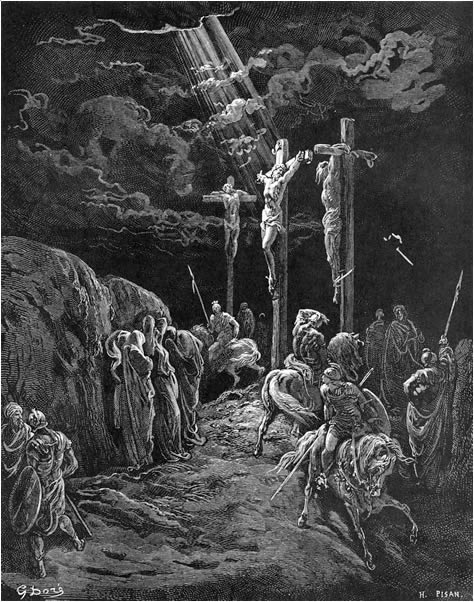
And we saw Him, and He had not attractiveness or grace; but His mien was unhonoured, deficient in comparison of the sons of men," "a man set in the plague, and knowing how to bear infirmity: "to wit as having been set by the Father "for a stone of offence," and "made a little lower" by Him "than angels," He pronounces Himself "a worm, and not a man, an ignominy of man, and the refuse of the People.
A commentator
Gennadius of ConstantinoplePAULINE COMMENTARY FROM THE GREEK CHURCH · Written before 471.
proposed
Paul calls the Lord Christ a stumbling stone because those who did not accept the new covenant in him stumbled over him and by their unbelief fell from the grace of justification which was given to men through him.
9 more voices on this verse
The Church Fathers1 voice
"Because they sought it not by faith, but as it were by the works of the Law." This is the clearest answer in the passage, which if he had said immediately upon starting he would not have gained so easy a hearing. But since it is after many perplexities, and preparations, and demonstrations that he sets it down, and after using countless preparatory steps, he has at last made it more intelligible, and also more easily admitted. For this he says is the cause of their destruction: "Because it was not by faith, but as it were by the works of the Law," that they wished to be justified. And he does not say, "by works," but, "as it were by the works of the Law," to show that they had not even this righteousness. "For they stumbled at that stumbling-stone."
The Medieval Church2 voices
Second, he assigns the cause, saying, why is it that although they observed the law, they did not fulfill the law? Because they did not observe the law in the proper way. And this is what he says: because they sought it not by faith, …
You ask: why did the Israelites not attain righteousness, even though they earnestly pursued it? Know that they sought justification not in faith, but as if in the works of the law.
The Puritans and the Awakening2 voices
There is nothing like this to be met with but agreeable to his argument the apostle gives us this good reason for it, Because they sought it not by faith - Whereby alone it could be attained. But as it were - In effect, if not professsedly, by works. For they stumbled at that stumblingstone - Christ crucified.
Wherefore? because they sought it not by faith,....
The Nineteenth Century4 voices
Wherefore? - And where lies their mistake? Being ignorant of God’s righteousness - of his method of saving sinners by faith in Christ, they went about to establish their own righteousness - their own method of obtaining everlasting salvation. They attend not to the Abrahamic covenant, which stands on the extensive principles of grace and faith; but they turn all their regards to the law of Moses. They imagine that their obedience to that law gives them a right to the blessings of the Messiah’s kingdom.
FOR several Sabbath mornings I have sought the comfort and edification of God's people, although I trust I have not, even in such discourses, overlooked the unconverted. How can we forget them while they are in such peril? At the same time, the main drift of the service has been for the people of God and it will not be wise to continue long in that line. We must not forget the lost sheep—it were better that we left the 99 than that we neglected the rambler. We must this morning, therefore, seek to go after that which is gone astray until we find it. Oh, that God the Holy Spirit would make every word to be full of His power! He can fill each sentence with a celestial dynamite, an irresistible energy which will blast the rocks of self-righteousness and make a way for the Gospel of the Grace of God through the impenetrable barriers of sin! For that end I am anxious that while I speak on God's behalf, the prayers of the faithful may bring down God's power and make the feeble voice of man to be the vehicle for the Omnipotence of God! It is very necessary to go over the elements often —the foundation Truths of the Gospel. Schools may rise to the classics, but they can never dispense with the spelling book. All over the country there must be the repetition of the alphabet and words of one syllable—or there will be no scholarship. I feel that it is necessary to give line upon line, precept upon precept, as to the first principles of the Gospel of our Lord Jesus Christ. Multitudes of persons are in bondage and will continue to be so until they hear a very clear and simple description of the way of salvation! This is the key of their liberty. You that know these first things must be willing to hear them often.
FOR several Sabbath mornings I have sought the comfort and edification of God's people, although I trust I have not, even in such discourses, overlooked the unconverted. How can we forget them while they are in such peril? At the same time, the main drift of the service has been for the people of God and it will not be wise to continue long in that line. We must not forget the lost sheep—it were better that we left the 99 than that we neglected the rambler.
A commentator
Albert Barnes1798–1870
Notes, Explanatory and Practical, on the Old and New Testaments (1832-1869)
proposed
Wherefore? - Why? The apostle proceeds to state the reason why so uniform and remarkable a result happened. “They sought it not by faith, etc.” They depended on their own righteousness, and not on the mercy of God to be obtained by faith. By the works of the law - By complying with all the demands of the Law so that they might merit salvation. Their attempted obedience included their prayers, fastings, sacrifices, etc., as well as compliance with the demands of the moral law. It may be asked here, perhaps, how the Jews could know any better than this? how should they know anything about justification by faith? To this I answer: (1) That the doctrine was stated in the Old Testament; see Hab 2:4; compare Rom 1:17; Psa 32:1-11; Psa 130:1-8; Psa 14:1-7; compare Rom. 3; Job 9:2. (2) The sacrifices had reference to a future state of things, and were doubt less so understood; see the Epistle to the Hebrews. (3) The “principle” of justification, and of living by faith, had been fully brought out in the lives and experience of the saints of old; see Rom. 4 and Heb. 11. They stumbled - They fell; or failed; or “this was the cause why they” did not obtain it. At that stumbling-stone - To wit, at what he specifies in the following verse. “A stumbling-stone” is a stone or impediment in the path over which people may fall. Here it means “that obstacle which prevented their attaining the righteousness of faith; and which was the occasion of their fall, rejection, and ruin.” That was the rejection and the crucifixion of their own Messiah; their unwillingness to be saved by him; their contempt of him and his message. For this God withheld from them the blessings of justification, and was about to cast them off as a people. This also the apostle proceeds to prove was foretold by the prophets.
The words behind it
15 Greek wordsEvery Greek word of this verse in the order it stands, with what it means and the door to its own study. The last column counts the times a word stands in the whole Bible: the rarer the word, the more the places it appears belong together.
| Greek | Sound | Meaning | Word study | In the Bible |
|---|---|---|---|---|
| διὰ | dia | Because of | G1223 → | 664 times |
| τί; | ti | why? | G5101 → | 563 times |
| ὅτι | hoti | Because [it was] | G3754 → | 1292 times |
| οὐκ | ouk | not | G3756 → | 1664 times |
| ἐκ | ek | by | G1537 → | 911 times |
| πίστεως | pisteos | faith | G4102 → | 242 times |
| ἀλλ᾽ | all᾽ | but | G235 → | 635 times |
| ὡς | hos | as | G5613 → | 500 times |
| ἐξ | ex | by | G1537 → | 911 times |
| ἔργων | ergon | works | G2041 → | 168 times |
| προσέκοψαν | prosekopsan | They stumbled | G4350 → | |
| τῷ | to | over the | G3588 → | 19766 times |
| λίθῳ | litho | stone | G3037 → | |
| τοῦ | tou | <the> | G3588 → | 19766 times |
| προσκόμματος | proskommatos | of stumbling | G4348 → | 6 times |
διὰBecause of
diaG1223 →664 times
τί;why?
tiG5101 →563 times
ὅτιBecause [it was]
hotiG3754 →1292 times
οὐκnot
oukG3756 →1664 times
ἐκby
ekG1537 →911 times
πίστεωςfaith
pisteosG4102 →242 times
ἀλλ᾽but
all᾽G235 →635 times
ὡςas
hosG5613 →500 times
ἐξby
exG1537 →911 times
ἔργωνworks
ergonG2041 →168 times
προσέκοψανThey stumbled
prosekopsanG4350 →
τῷover the
toG3588 →19766 times
λίθῳstone
lithoG3037 →
τοῦ<the>
touG3588 →19766 times
προσκόμματοςof stumbling
proskommatosG4348 →6 times
A shaded row is a word that stands 400 times or fewer in the Bible.
The walk
8 stopsEach card is a verse this one points to, and under it the verses that one points to in turn. Where several paths arrive at the same place, that place is listed first: the text keeps returning to it.
Through
1 Peter 2:8and, “A stone of stumbling and a rock of offense.” They stumble because they disobey the word—and to this they were appointed.
it leads to
- Isaiah 8:14
And He will be a sanctuary—but to both houses of Israel a stone of stumbling and a rock of offense, to the dwellers of Jerusalem a trap and a snare.
- Romans 9:32–33
Why not? Because their pursuit was not by faith, but as if it were by works. They stumbled over the stumbling stone,
Reached by 2 separate paths from here.
- 1 Corinthians 1:23
but we preach Christ crucified, a stumbling block to Jews and foolishness to Gentiles,
- Isaiah 8:14
Through
1 Corinthians 1:23but we preach Christ crucified, a stumbling block to Jews and foolishness to Gentiles,
it leads to
- Isaiah 8:14–15
And He will be a sanctuary—but to both houses of Israel a stone of stumbling and a rock of offense, to the dwellers of Jerusalem a trap and a snare.
Reached by 2 separate paths from here.
- 1 Corinthians 2:14
The natural man does not accept the things that come from the Spirit of God. For they are foolishness to him, and he cannot understand them, because they are spiritually discerned.
- 1 Peter 2:8
and, “A stone of stumbling and a rock of offense.” They stumble because they disobey the word—and to this they were appointed.
- Isaiah 8:14–15
Through
Romans 4:16Therefore, the promise comes by faith, so that it may rest on grace and may be guaranteed to all Abraham’s offspring—not only to those who are of the law, but also to those who…
it leads to
- Romans 3:24–26
and are justified freely by His grace through the redemption that is in Christ Jesus.
- Ephesians 2:8
For it is by grace you have been saved through faith, and this not from yourselves; it is the gift of God,
- Romans 3:24–26
Where this verse is studied
On this page
About Romans
This page draws on 15 works. Open the list of works
This page draws on Adam Clarke, Commentary on the Bible; Albert Barnes, Notes, Explanatory and Practical, on the Old and New Testaments (1832-1869); Ambrosiaster, COMMENTARY ON PAUL'S EPISTLES; Charles Spurgeon, The Metropolitan Tabernacle Pulpit, Sermon No. 1961: “S. S.—or, the Sinner Saved” (lightly modernized text, CCEL edition); Gennadius of Constantinople, PAULINE COMMENTARY FROM THE GREEK CHURCH; Jamieson, Fausset & Brown, Commentary Critical and Explanatory on the Whole Bible; John Calvin, Commentary on the Epistle to the Romans; John Chrysostom, Homily on Romans 16; John Gill, Exposition of the New Testament (1746-1748); John Wesley, Explanatory Notes upon the New Testament; Origen of Alexandria, COMMENTARY ON THE EPISTLE TO THE ROMANS; Tertullian, An Answer to the Jews; Theodore of Mopsuestia, PAULINE COMMENTARY FROM THE GREEK CHURCH; Theophylact of Ohrid, Commentary on Romans and Thomas Aquinas, Commentary on Romans.