
Judechapter 1
25 verses · Jude, by tradition · AD 50 to 65 · The general letters
Enoch, the seventh from Adam, also prophesied about them: “Behold, the Lord is coming with myriads of His holy ones
Introduction
Jude, by tradition, The general letters, Jude Overview.
Jude was a brother of James, and the church has long read him as one of the brothers of Jesus, and he names himself only by his brother James. He wrote to believers who knew the Scriptures of Israel well and also knew the Jewish writings read beside them. His letter was written in haste, because men who treated grace as an excuse for sin had found a place at the church's shared meals. Listen for the word these, set against the word beloved, and for the keeping that opens and closes the letter. Read it as a call to hold the faith and to reach those who waver.
Context
- Who
- Believers sharing meals with teachers who used grace as a license
- What
- A short letter of warning against false teachers inside the church, which calls believers to hold the faith, keep themselves in God's love and rescue those who waver.
- Where
- Sent to congregations left unnamed, most likely Jewish Christians who knew the Hebrew Scriptures and the Jewish writings read beside them.
- When
- It was written in the generation of the apostles, with dates proposed from about AD 50 to 80, read from its ties to 2 Peter and its appeal to the words of the apostles.
- Why
- To stir believers to defend the faith once given to them, after men who used grace as an excuse for sin had entered their fellowship unnoticed.
Historical context
The men Jude describes had slipped in unnoticed and were eating at the love feasts, the shared meals where the congregation ate together and celebrated the Lord's Supper. Bringing a full meal for everyone, hosted in a home, meant these teachers were being fed and honored by the very people they were exploiting.
Show the rest of the historical context, 3 more paragraphs
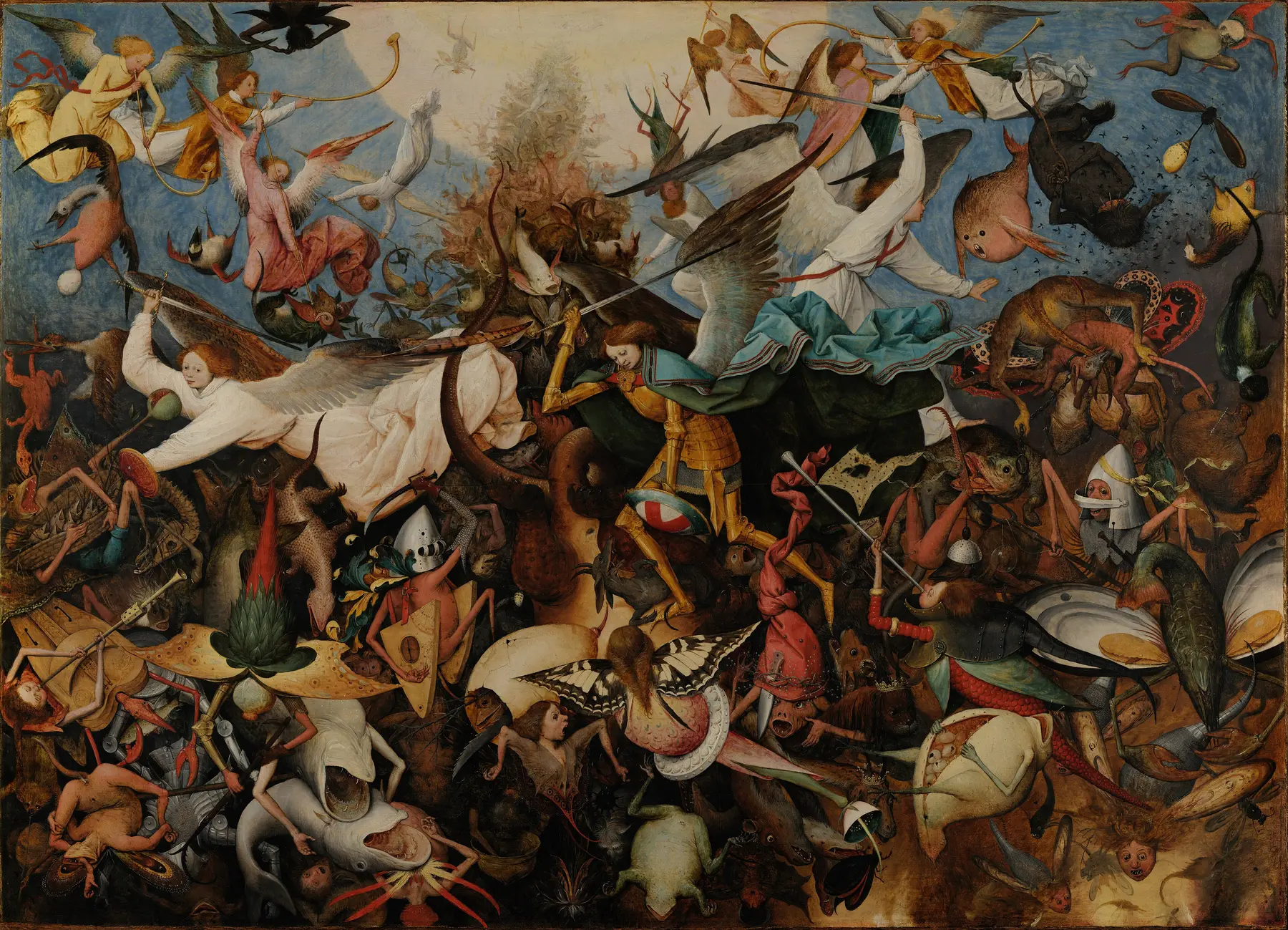
Jude reaches for angels who did not keep their proper dwelling but abandoned their own home, and says they are kept in chains under darkness. The house reading takes this as Genesis 6, the Watchers who left heaven, took human wives, and were imprisoned for it, and Jude's placement of Sodom immediately afterward, with its own pursuit of strange flesh, supports the parallel. The competing reading, that these are the angels who fell with Satan before creation, is named rather than dismissed.
Jude quotes 1 Enoch by name and alludes to a dispute between Michael and the devil over the body of Moses, which comes from another Jewish writing of the period. MannaFest treats both as labeled study resources rather than Scripture; Jude uses them the way Paul quotes a Greek poet, a true saying from a source that is not itself the Word of God.
The three villains named, Cain, Balaam, Korah, were shorthand every Jewish hearer could unpack: the man who killed his brother over worship, the prophet who sold his gift, and the man who challenged God's appointed leadership. The nature pictures that follow are all things that promise and fail: waterless clouds, fruitless autumn trees, wild waves, wandering stars.
Significance
The first hearers were being told that hospitality had let in the very thing that had destroyed earlier generations, and that the pattern is old, angels, Egypt's unbelieving generation, Sodom, all in three verses.
Show the rest of the significance, 1 more paragraph
But the letter does not end in fire. It ends with them building each other up, praying, keeping themselves in the love of God, and pulling some out of the fire, and then with the promise that God is able to keep them from stumbling and present them before his glory without fault.
The heads below are this chapter's scenes. The numbered points under each are its verses.
Contend for the Faith: Certain Men Crept In
Jude 1:1-2
brother of James: Jude calls himself a servant of Jesus Christ and a brother of James, which points to Judas of Matthew 13:55, a brother of the Lord. His readers are loved by God the Father, and kept in Jesus Christ, tetheremenois, a word the letter returns to at its close.
Jude 1:1
“Jude, the servant of Jesus Christ,.... The author of this epistle is the same who is elsewhere called Judas, Luk 6:16, who was one of the twelve apostles of Christ, whose name was also Lebbaeus, and whose surname was Thaddaeus, Mat 10:3, the name is the same with Judah, Gen 29:35, which comes from a word that signifies "to praise" or "confess"; and in the Rabbinical dialect is called יודא, "Juda" (e), as here.”
2 more voices on this verseWhat preachers and commentators have said about this verse, in their own words.
Jude 1:1
“Jude the brother of James, left a short epistle which is reckoned among the seven catholic epistles, and because in it he quotes from the apocryphal Book of Enoch it is rejected by many. Nevertheless by age and use it has gained authority and is reckoned among the Holy Scriptures.”
Jerome · written before 420 · De Viris Illustribus (On Illustrious Men), Section 4patristic
Jude 1:1
“Our Judas was quite another man. He was an apostle, so was Iscariot; but he was a sincere disciple and follower of Christ, so was not the other. He was a faithful servant of Jesus Christ, the other was his betrayer and murderer; therefore here the one is very carefully distinguished from the other.”
Matthew Henry · Commentary on the Whole Bible (1707-1721)puritan
Mercy, peace, and love be multiplied: Jude's greeting adds love to mercy and peace. Jamieson, Fausset and Brown note that the words return where verse 21 says keep yourselves in the love of God as you await the mercy.
Jude 1:2
“Mercy unto you - For even the best have no merit, and must receive every blessing and grace in the way of mercy. Peace - With God and your consciences, love both to God and man, be multiplied - be unboundedly increased.”
Adam Clarke · Commentary on the Bible (1810-1826)evangelical
1 more voice on this verse
Jude 1:2
“Mercy--in a time of wretchedness. Therefore mercy stands first; the mercy of Christ (Jude 21). peace--in the Holy Ghost (Jude 20). love--of God (Jude 21).”
Jamieson, Fausset & Brown · Commentary Critical and Explanatory on the Whole Bible (1871)reformed
Jude 1:3-4
contend earnestly for the faith: Jude meant to write about the salvation we share but urged them to contend earnestly for the faith, epagonizesthai, an athlete's struggle. That faith was entrusted once for all, hapax. The threat is that certain men have crept in among you unnoticed, pareisedusan, slipping in by a side door.
Jude 1:3
“Having intended to write generally of "the common salvation," he found it necessary from the existing evils in the Church, to write specially that they should contend for the faith against those evils. earnestly contend--Compare Php 1:27, "striving together for the faith of the Gospel." once, &c.--Greek, "once for all delivered." No other faith or revelation is to supersede it.”
Jamieson, Fausset & Brown · Commentary Critical and Explanatory on the Whole Bible (1871)reformed
1 more voice on this verse
Jude 1:3
“When I gave all diligence to write to you of the common salvation - Designed for all, and enjoyed by all believers. Here the design of the epistle is expressed; the end of which exactly answers the beginning. It was needful to exhort you to contend earnestly - Yet humbly, meekly, and lovingly; otherwise your contention will only hurt your cause, if not destroy your soul.”
John Wesley · Explanatory Notes upon the New Testament (1755)evangelical
The danger came from inside the church. Adam Clarke reads designated long ago as written down beforehand for this sentence, and Wesley traces that record as far back as Enoch. Jamieson, Fausset and Brown read both Master and Lord in this verse as titles of Jesus Christ.
Jude 1:4
“There are certain men crept in, who were of old described before - Even as early as Enoch; of whom it was foretold, that by their wilful sins they would incur this condemnation. Turning the grace of God - Revealed in the gospel.”
John Wesley · Explanatory Notes upon the New Testament (1755)evangelical
3 more voices on this verse
Jude 1:4
“For there are certain men crept in unawares - Παρεισεδυσαν· They had got into the Church under specious pretences; and, when in, began to sow their bad seed. Before of old ordained - Οἱ παλαι προγεγραμμενοι Such as were long ago proscribed, and condemned in the most public manner; this is the import of the word προγραφειν in this place, and there are many examples of this use of it in the Greek writers. See Kypke. To this condemnation - To a similar punishment to that immediately about to be mentioned.”
Adam Clarke · Commentary on the Bible (1810-1826)evangelical
Jude 1:4
“These words were written about those who, after attributing the glory of sonship only to the Word begotten of God the Father, say that another son of the seed of David and Jesse has been united with him and been given a share in the sonship and in the glory proper to God.”
Cyril of Alexandria · written before 444 · LETTERS 55.41patristic
Jude 1:4
“Translate as the Greek, "the only Master"; here used of Jesus Christ, who is at once Master and "Lord" (a different Greek word). By virtue of Christ's perfect oneness with the Father, He, as well as the Father, is termed "the ONLY" God and "MASTER." Greek, "Master," implies God's absolute ownership to dispose of His creatures as He likes.”
Jamieson, Fausset & Brown · Commentary Critical and Explanatory on the Whole Bible (1871)reformed
Egypt, Angels, Sodom: Three Judgments Remembered
delivered His people out of the land of Egypt: The first example is Israel: after Jesus had delivered His people out of the land of Egypt, He destroyed those who did not believe. Hebrews 3-4 and 1 Corinthians 10 draw the same warning. Some of the earliest witnesses read Jesus, as the Berean does; others read the Lord.
Jude 1:5
"For the Lord God," he says, "who once delivered a people out of Egypt, afterward destroyed them that believed not;" that is, that He might train them through punishment. For they were indeed punished, and they perished on account of those that are saved, until they turn to the Lord.
Clement of Alexandria · written before 215 · From the Latin Translation of Cassiodoruspatristic
3 more voices on this verse
Jude 1:5
“He afterwards destroyed - The far greater part of that very people whom he had once saved. Let none therefore presume upon past mercies, as if he was now out of danger.”
John Wesley · Explanatory Notes upon the New Testament (1755)evangelical
Jude 1:5
“I will therefore put you in remembrance - “To show you what must be the doom of such men, I will call certain facts to your recollection, with which you are familiar, respecting the Divine treatment of the wicked in times past.” Though ye once knew this - That is, you were formerly made acquainted with these things, though they may not be now fresh in your recollection. On the different significations affixed to the word “once” in this place, see Bloomfield, “Crit.”
Jude 1:5
“The first ten verses of that chapter (as the scripture is always the best commentary upon itself) are the best explication of the fifth verse of this epistle of Jude. None therefore ought to presume upon their privileges, since many who were brought out of Egypt by a series of amazing miracles, yet perished in the wilderness by reason of their unbelief.”
Matthew Henry · Commentary on the Whole Bible (1707-1721)puritan
Jude 1:6-7
did not stay within their own domain: The angels did not stay within their own domain, arche, but abandoned their proper dwelling, oiketerion. Verse 7 opens In like manner; many read both verses with 2 Peter 2:4-5 and Genesis 6:1-4, others as the first fall of Satan's host. Sodom is on display, deigma.
Jude 1:6
“Light and liberty concur, chains and darkness how well do they agree and suit each other! The devils, once angels in the best sense, are reserved, &c. Observe, There is, undoubtedly there is, a judgment to come; the fallen angels are reserved to the judgment of the great day; and shall fallen men escape it?”
Matthew Henry · Commentary on the Whole Bible (1707-1721)puritan
3 more voices on this verse
Jude 1:6
“Since the Son of God is always one and the same, He gives to those who believe on Him a well of water [springing up] to eternal life, but He causes the unfruitful fig-tree immediately to dry up; and in the days of Noah He justly brought on the deluge for the purpose of extinguishing that most infamous race of men then existent, who could not bring forth fruit to God, since the angels that sinned had commingled with them, and [acted as He did] in order that He might put a check upon the sins of these men, but…”
Irenaeus · written before 202 · Against Heresies Book IVpatristic
Jude 1:6
“But though Jude accords with it in some particulars, it does not follow that he accords with it in all. The Hebrews name the fallen angels Aza and Azael. left--on their own accord. their own--Greek, "their proper." habitation--heaven, all bright and glorious, as opposed to the "darkness" to which they now are doomed.”
Jamieson, Fausset & Brown · Commentary Critical and Explanatory on the Whole Bible (1871)reformed
Jude 1:6
“The angels which kept not their first estate - Την ἑαυτων αρχην Their own principality. The words may be understood of their having invaded the office or dignity of some others, or of their having by some means forfeited their own. This is spoken of those generally termed the fallen angels; but from what they fell, or from what cause or for what crime, we know not. It is generally thought to have been pride; but this is mere conjecture.”
Adam Clarke · Commentary on the Bible (1810-1826)evangelical
Sodom and Gomorrah and the cities around them: Sodom and Gomorrah are the third example, and their punishment is on display. Wesley reads the fire as a type of eternal fire, and Jamieson, Fausset and Brown note that Sodom's end as a nation was not eternal.
Jude 1:7
“BENGEL translates as the Greek will admit, "Suffering (the) punishment (which they endure) as an example or sample of eternal fire (namely, that which shall consume the wicked)." Eze 16:53-55 shows that Sodom's punishment, as a nation, is not eternal.”
Jamieson, Fausset & Brown · Commentary Critical and Explanatory on the Whole Bible (1871)reformed
3 more voices on this verse
Jude 1:7
“The cities which gave themselves over to fornication - The word here means, unnatural lusts. Are set forth as an example, suffering the vengeance of eternal fire - That is, the vengeance which they suffered is an example or a type of eternal fire.”
John Wesley · Explanatory Notes upon the New Testament (1755)evangelical
Jude 1:7
“Even as Sodom and Gomorrha - Notes, 2Pe 2:6. And the cities about them - Admah and Zeboim, Gen 14:2; Deu 29:23; Hos 11:8. There may have been other towns, also, that perished at the same time, but these are particularly mentioned. They seem to have partaken of the same general characteristics, as neighboring towns and cities generally do. In like manner - “In a manner like to these,” (τὸν ὅμοιον τούτοις τρόπον ton homoion toutois tropon.) The Greek word “these,” is in the plural number. There has been much diversity in interpreting this clause.”
Jude 1:7
“Even as Sodom and Gomorrha, and the cities about them,.... Admah and Zeboiim, for Zoar was spared.”
Jude 1:8-10
these dreamers defile their bodies: , reject authority, and slander glorious beings, doxas. Michael, in an account the fathers traced to the Assumption of Moses, answered the devil only with The Lord rebuke you, echoing Zechariah 3:2. These men, however, slander what they do not understand.
Jude 1:8
"Similarly to the same," he says, "also those dreamers,"—that is, who dream in their imagination lusts and wicked desires, regarding as good not that which is truly good, and superior to all good,—"defile the flesh, despise dominion, and speak evil of majesty," that is, the only Lord, who is truly our Lord, Jesus Christ, and alone worthy of praise. They "speak evil of majesty," that is, of the angels.
Clement of Alexandria · written before 215 · From the Latin Translation of Cassiodoruspatristic
2 more voices on this verse
Jude 1:8
“Likewise also these filthy dreamers - He means to say that these false teachers and their followers were as unbelieving and disobedient as the Israelites in the wilderness, as rebellious against the authority of God as the fallen angels, and as impure and unholy as the Sodomites; and that consequently they must expect similar punishment.”
Adam Clarke · Commentary on the Bible (1810-1826)evangelical
Jude 1:8
“In like manner these dreamers - Sleeping and dreaming all their lives. Despise authority - Those that are invested with it by Christ, and made by him the overseers of his flock.”
John Wesley · Explanatory Notes upon the New Testament (1755)evangelical
the archangel Michael: Michael would not bring a slanderous charge even against the devil. He left the verdict with God, in the words the LORD speaks to Satan in Zechariah 3:2. Jerome draws the rule for believers: if Michael would not curse the devil, no Christian should curse anyone.
Jude 1:9
“For he does not say to blaspheme no man: but absolutely no one: not an angel, nor any creature of God. Because everything that was made by God is very good. For when Michael the Archangel disputed with the devil over the body of Moses, he did not dare to bring a judgment of blasphemy, but said, "May God rebuke you" (Jud. 9). If Michael therefore did not have the audacity to bring judgement upon the devil, certainly deserving of a curse, for blasphemy: how much more should we be pure from every curse?”
Jerome · written before 420 · Commentary on Titus 3:1-2patristic
2 more voices on this verse
Jude 1:9
“Yet Michael the archangel ... - This verse has given more perplexity to expositors than any other part of the Epistle; and in fact the difficulties in regard to it have been so great that some have been led to regard the Epistle as spurious. The difficulty has arisen from these two circumstances: (1) Ignorance of the origin of what is said here of Michael the archangel, nothing of this kind being found in the Old Testament; and, (2) The improbability of the story itself, which looks like a mere Jewish fable.”
Jude 1:9
“Jude, as inspired, could distinguish how much of the tradition was true, how much false. We have no such means of distinguishing, and therefore can be sure of no tradition, save that which is in the written word. durst not--from reverence for Satan's former dignity (Jude 8). railing accusation--Greek, "judgment of blasphemy," or evil-speaking.”
Jamieson, Fausset & Brown · Commentary Critical and Explanatory on the Whole Bible (1871)reformed
These men, however, slander what they do not understand: Jude sets these men against Michael, who held back before a power he knew, while they slander what they do not understand. Jamieson, Fausset and Brown read the things they do instinctively as blind appetite, the one knowledge they share with irrational animals.
Jude 1:10
“Speak evil of those things which they know not - They do not understand the origin and utility of civil government; they revile that which ever protects their own persons and their property. This is true in most insurrections and seditions. But what they know naturally - They are destitute of reflection; their minds are uncultivated; they follow mere natural instinct, and are slaves to their animal propensities. As brute beasts - Ὡς τα αλογα ζωα· Like the irrational animals; but, in the indulgence of their animal propensities, they corrupt themselves, beyond the example of the brute beasts.”
Adam Clarke · Commentary on the Bible (1810-1826)evangelical
Jude 1:11-13
the path of Cain: The woe names three roads: the path of Cain, the error of Balaam, which 2 Peter 2:15 and Revelation 2:14 also name, and Korah’s rebellion. Then come clouds without water, fruitless trees, wild waves and wandering stars, planetai asteres, Enoch's image for disobedient lights.
Jude 1:11
“Woe--See on 2Pe 2:14, "cursed children." Cain--the murderer: the root of whose sin was hatred and envy of the godly, as it is the sin of these seducers. ran greedily--literally, "have been poured forth" like a torrent that has burst its banks.”
Jamieson, Fausset & Brown · Commentary Critical and Explanatory on the Whole Bible (1871)reformed
Clouds Without Water, and the Prophecy of Enoch
These men are hidden reefs in your love feasts: The love feasts were the church's shared meals, and these men sat at them as members, shepherding only themselves. Adam Clarke notes they still kept outward fellowship with the church.
Jude 1:12
"Clouds," he says, "without water; who do not possess in themselves the divine and fruitful word." Wherefore, he says, "men of this kind are carried about both by winds and violent blasts." "Trees," he says, "of autumn, without fruit,"— unbelievers, that is, who bear no fruit of fidelity. "Twice dead," he says: once, namely, when they sinned by transgressing, and a second time when delivered up to punishment, according to the predestined judgments of God; inasmuch as it is to be reckoned death, even when each one does not immediately deserve the inheritance.
Clement of Alexandria · written before 215 · From the Latin Translation of Cassiodoruspatristic
1 more voice on this verse
Jude 1:12
“Spots in your feasts of charity - It appears that these persons, unholy and impure as they were, still continued to have outward fellowship with the Church!”
Adam Clarke · Commentary on the Bible (1810-1826)evangelical
They are wild waves of the sea: The pictures of verse 13 come from the sea and the sky. Jamieson, Fausset and Brown hear Isaiah 57:20, where the waves of the wicked churn mire, and read wandering stars as meteors that fall into darkness.
Jude 1:13
"Waves," he says, "of a raging sea." By these words he signifies the life of the Gentiles, whose end is abominable ambition. "Wandering stars,"— that is, he means those who err and are apostates are of that kind of stars which fell from the seats of the angels— "to whom," for their apostasy, "the blackness of darkness is reserved forever.
Clement of Alexandria · written before 215 · From the Latin Translation of Cassiodoruspatristic
2 more voices on this verse
Jude 1:13
“Raging waves of the sea - Compare 2Pe 2:18. They are like the wild and restless waves of the ocean. The image here seems to be, that they were noisy and bold in their professions, and were as wild and ungovernable in their passions as the billows of the sea. Foaming out their own shame - The waves are lashed into foam, and break and dash on the shore. They seem to produce nothing but foam, and to proclaim their own shame, that after all their wild roaring and agitation they should effect no more.”
Jude 1:13
“Jude has in mind Isa 57:20. shame--plural in Greek, "shames" (compare Php 3:19). wandering stars--instead of moving on in a regular orbit, as lights to the world, bursting forth on the world like erratic comets, or rather, meteors of fire, with a strange glare, and then doomed to fall back again into the blackness of gloom.”
Jamieson, Fausset & Brown · Commentary Critical and Explanatory on the Whole Bible (1871)reformed
Jude 1:14-16
Enoch, the seventh from Adam: Jude quotes Enoch, the seventh from Adam, in words that stand nearly verbatim in 1 Enoch 1:9. The fathers held the citation warrants the prophecy, as Paul's quoting a Cretan poet canonized no poet; Tertullian's fuller claim for Enoch is the minority.
Jude 1:14
“Christ's coming to judgment was prophesied of as early as the middle of the patriarchal age, and was therefore even then a received and acknowledged truth.-- The Lord cometh with his holy myriads, including both angels and the spirits of just men made perfect. What a glorious time will that be, when Christ shall come with ten thousand of these!”
Matthew Henry · Commentary on the Whole Bible (1707-1721)puritan
3 more voices on this verse
Jude 1:14
“Since Enoch in the same book tells us of our Lord, we must not reject anything at all which genuinely pertains to us. Do we not read that every word of Scripture useful for edification is divinely inspired? As you very well know, Enoch was later rejected by the Jews for the same reason that prompted them to reject almost everything which prophesied about Christ. It is not at all surprising that they rejected certain Scriptures which spoke of him, considering that they were destined not to receive him when he spoke to them himself.”
Tertullian · written before 220 · On the Dress of Women 3.3patristic
Jude 1:14
“Enoch also, the seventh from Adam - He was the seventh patriarch, and is distinguished thus from Enoch, son of Cain, who was but the third from Adam; this appears plainly from the genealogy, 1Ch 1:1: Adams Seth, Enosh, Kenan, Mahalaleel, Jered, Henoch or Enoch, etc. Of the book of Enoch, from which this prophecy is thought to have been taken, much has been said; but as the work is apocryphal, and of no authority, I shall not burden my page with extracts. See the preface.”
Adam Clarke · Commentary on the Bible (1810-1826)evangelical
Jude 1:14
“There are reasons given by some for thinking the book of Enoch copied from Jude rather than vice versa. It is striking how, from the first, prophecy hastened towards its consummation. The earliest prophecies of the Redeemer dwell on His second coming in glory, rather than His first coming in lowliness (compare Ge 3:15 with Ro 16:20).”
Jamieson, Fausset & Brown · Commentary Critical and Explanatory on the Whole Bible (1871)reformed
to execute judgment on everyone: Enoch's prophecy names the ungodly three times in this verse. Barnes reads the coming as a judgment on all who dwell on the earth, good and bad. Jamieson, Fausset and Brown tie every harsh word spoken against Him to the slander of verses 8, 10 and 16.
Jude 1:15
“To execute judgment upon all - That is, he shall come to judge all the dwellers upon the earth, good and bad. And to convince all - The word “convince we now use commonly in a somewhat limited sense, as meaning “to satisfy” a man’s own mind” either of the truth of some proposition, or of the fact that he has done wrong, as being in this latter sense synonymous with the word “convict.” This “conviction” is commonly produced by argument or truth, and is not necessarily followed by any sentence of disapprobation, or by any judicial condemnation.”
These men are discontented grumblers: Verse 16 gives the last portrait before Jude turns to the church. Jamieson, Fausset and Brown tie the grumbling to following after their own lusts. Adam Clarke reads it as complaint against God's ordering of the world.
Jude 1:16
“The secret of their murmuring and complaining is the restless insatiability of their desires. great swelling words-- (2Pe 2:18). men's persons--their mere outward appearance and rank. because of advantage--for the sake of what they may gain from them. While they talk great swelling words, they are really mean and fawning towards those of wealth and rank.”
Jamieson, Fausset & Brown · Commentary Critical and Explanatory on the Whole Bible (1871)reformed
Build Yourselves Up; Snatch Others From the Fire
Jude 1:17-19
remember what was foretold by the apostles: But you, beloved, turns from the intruders to the church, and verse 18 gives the apostles' warning in 2 Peter 3:3 and 2 Timothy 3. Verse 19 marks the scoffers in three strokes: they cause divisions, they are worldly, psuchikoi, and they are devoid of the Spirit.
Jude 1:17
“But, beloved, remember ye ... - There is a striking similarity between these two verses and 2Pe 3:1-3. It occurs in the same connection, following the description of the false and dangerous teachers against whom the apostle would guard them, and couched almost in the same words. See it explained in the notes at the similar passage in Peter.”
1 more voice on this verse
Jude 1:17
“Jude does not exclude himself from the number of the apostles here, for in Jude 18, immediately after, he says, "they told You," not us (rather as Greek, "used to tell you" implying that Jude's readers were contemporaries of the apostles, who used to tell them).”
Jamieson, Fausset & Brown · Commentary Critical and Explanatory on the Whole Bible (1871)reformed
The warning Jude cites stands close to 2 Peter 3:3, where in the last days scoffers will come. Oecumenius takes the words as Peter's and Paul's, and reads verse 17 as a sign the letter was written after the apostles had died.
Jude 1:18
“Mockers in the last time - See the notes on 1Ti 4:1; 2Ti 3:1 (note), etc.; and particularly 2Pe 3:2 , 2Pe 3:3 (note), etc., to which Jude seems to refer. The last time. - The conclusion of the Jewish polity.”
Adam Clarke · Commentary on the Bible (1810-1826)evangelical
1 more voice on this verse
Jude 1:18
“Jude got this from Peter's second letter, where he talks about Paul's writings, for Paul has a lot to say about this.”
Andreas of Caesarea · written before 614 · CATENApatristic
These are the ones who cause divisions: Verse 19 closes the portrait with three plain marks. Jamieson, Fausset and Brown read worldly as the natural man of 1 Corinthians 2:14, led by the soul and not by the Spirit. Barnes reads the division as a separation from the brethren, and sends the reader to Romans 16:17.
Jude 1:19
“These be they who separate themselves - That is, from their brethren and from the work of benevolence and truth. Compare Rom 16:17; Jdg 5:16, Jdg 5:23. Sensual - Under the influence of gross passions and appetites. Having not the spirit - The Holy Spirit, or the spirit of true religion.”
1 more voice on this verse
Jude 1:19
“Arrogant setting up of themselves, as having greater sanctity and a wisdom and peculiar doctrine, distinct from others, is implied. sensual--literally, "animal-souled": as opposed to the spiritual, or "having the Spirit." It is translated, "the natural man," 1Co 2:14.”
Jamieson, Fausset & Brown · Commentary Critical and Explanatory on the Whole Bible (1871)reformed
Jude 1:20-23
praying in the Holy Spirit: Verses 20 and 21 give one command, keep yourselves in the love of God, carried out by building, praying and waiting. Verses 22 and 23 turn to rescue, snatching them from the fire as in Zechariah 3:2. The manuscripts give these two verses in two-clause and three-clause forms.
Jude 1:20
“But ye, beloved, not separating, but building yourselves up in your most holy faith - Than which none can be more holy in itself, or more conducive to the most refined and exalted holiness. Praying through the Holy Spirit - Who alone is able to build you up, as he alone laid the foundation.”
John Wesley · Explanatory Notes upon the New Testament (1755)evangelical
2 more voices on this verse
Jude 1:20
“Building up yourselves - Having the most holy faith - the Gospel of our Lord Jesus, and the writings of his apostles, for your foundation; founding all your expectations on these, and seeking from the Christ who is their sum and substance; all the grace and glory ye need. Praying in the Holy Ghost - Holding fast the Divine influence which ye have received, and under that influence making prayer and supplication to God. The prayer that is not sent up through the influence of the Holy Ghost is never likely to reach heaven.”
Adam Clarke · Commentary on the Bible (1810-1826)evangelical
Jude 1:20
THESE words occur in a passage where the Apostle is indicating the contrast between the ungodly and the godly. The ungodly are mocking, speaking great swelling words and walking after their ungodly lusts, while the righteous are building themselves up in their most holy faith, and keeping themselves in the love of God. The ungodly are showing the venom of their hearts by mourning and complaining, while the righteous are manifesting the new principle within them by "praying in the Holy Spirit."
keep yourselves in the love of God: Keep is the one command of verses 20 and 21, and building, praying and waiting are the ways it is done. Jamieson, Fausset and Brown hold that a believer must watch and yet cannot keep himself unless God keeps him. Verse 1 has already called them kept in Jesus Christ.
Jude 1:21
“By these means, through his grace, keep yourselves in the love of God, and in the confident expectation of that eternal life which is purchased for you, and conferred upon you, through the mere mercy of our Lord Jesus Christ.”
John Wesley · Explanatory Notes upon the New Testament (1755)evangelical
3 more voices on this verse
Jude 1:21
THIS exhortation is not addressed to all who are here present. It is only addressed to those who "are sanctified by God the Father, and preserved in Jesus Christ, and called." It is, in fact, addressed only to the true Christian who has passed from death unto life—who is a new creature in Christ Jesus—and in whom dwells the Holy Spirit. To such persons the Apostle Jude says in the text, "Keep yourselves in the love of God."
Charles Spurgeon · written before 1892 · The Metropolitan Tabernacle Pulpit, Sermon No. 3378: “God's Prison, Warden and Prisoner” (lightly modernized text, CCEL edition)Particular Baptist
Jude 1:21
“Man's need of watching is implied; at the same time he cannot keep himself, unless God in His love keep him. looking for--in hope. the mercy of our Lord Jesus Christ--to be fully manifested at His coming. Mercy is usually attributed to the Father: here to the Son; so entirely one are they.”
Jamieson, Fausset & Brown · Commentary Critical and Explanatory on the Whole Bible (1871)reformed
Jude 1:21
“Keep yourselves in the love of God - Still adverting to their own agency. On the duty here enjoined, see the notes at Joh 15:9. The phrase “the love of God” may mean either God’s love to us, or our love to him.”
have mercy on those who doubt: Verses 22 and 23 turn from guarding oneself to rescuing others. Wesley matches the help to the need, so that those wavering in judgment are taught the truth more deeply. Mercy toward a doubter is patience with a mind still unsettled.
Jude 1:22
“Meantime watch over others, as well as yourselves, and give them such help as their various needs require. Some, that are wavering in judgment, staggered by others or by their own evil reasoning, endeavour more deeply to convince of the whole truth as it is in Jesus. Some snatch, with a swift and strong hand, out of the fire of sin and temptation.”
John Wesley · Explanatory Notes upon the New Testament (1755)evangelical
save others by snatching them from the fire: Verses 22 and 23 name three groups. Wesley pictures the snatching as the work of a swift and strong hand, and the third group is shown mercy tempered with fear. Jamieson, Fausset and Brown read the stained clothing as a proverb for keeping clear of what sin has touched.
Jude 1:23
“And others - Another class; those who were of such a character, or in such circumstances, that a more bold, earnest, and determined manner would be better adapted to them. Save with fear - That is, by appeals adapted to produce fear. The idea seems to be that the arguments on which they relied were to be drawn from the dangers of the persons referred to, or from the dread of future wrath.”
1 more voice on this verse
Jude 1:23
“Sin is the only thing which God hates: so ought we. even the garment--a proverbial phrase: avoiding the most remote contact with sin, and hating that which borders on it. As garments of the apostles wrought miracles of good in healing, so the very garment of sinners metaphorically, that is, anything brought into contact with their pollution, is to be avoided.”
Jamieson, Fausset & Brown · Commentary Critical and Explanatory on the Whole Bible (1871)reformed
To Him Who Is Able to Keep You From Falling
Jude 1:24-25
able to keep you from stumbling: The letter ends on the God able to keep you from stumbling, aptaistous, the word for a sure-footed horse, and to present you unblemished. The command of verse 21 rests on this keeping, as verse 1 called the readers kept in Jesus Christ.
Jude 1:24
"Now to Him," he says, "who is able to keep you without stumbling, and present you faultless before the presence of His glory in joy." In the presence of His glory: he means in the presence of the angels, to be presented faultless, having become angels.
Clement of Alexandria · written before 215 · From the Latin Translation of Cassiodoruspatristic
4 more voices on this verse
Jude 1:24
“Now to him who alone is able to keep them from falling - Into any of these errors or sins. And to present them faultless in the presence of his glory - That is, in his own presence, when he shall be revealed in all his glory.”
John Wesley · Explanatory Notes upon the New Testament (1755)evangelical
Jude 1:24
“Now unto him that is able to keep you from falling - Who alone can preserve you from the contagion of sin, and preserve you from falling into any kind of error that might be prejudicial to the interests of your souls; and thus to present you faultless, or, as many others read, ασπιλους, without spot, alluding to the spotted garment mentioned above.”
Adam Clarke · Commentary on the Bible (1810-1826)evangelical
Jude 1:24
“Now unto him that is able to keep you from falling,.... The people of God are liable to falling into temptation, into sin, into errors and mistakes, from an exercise of grace, or from a degree of steadfastness in Gospel truths, and even into a final and total apostasy, were it not for divine power; and they are not able to keep themselves.”
Jude 1:24
“THE point and pith of what I may have to say will lie in the alteration of this text caused by the revision of the New Testament. The Revised Version runs thus, "Now unto Him that is able to guard you from stumbling.''" I am not going to speak at any length upon the rest of the text, but shall dwell mainly upon this remarkable alteration, which certainly gives the meaning of the original better than the rendering in the Authorized Version. To begin, then, here is a doxology. Jude is writing upon very practical subjects, indeed.”
Charles Spurgeon · written before 1892 · The Metropolitan Tabernacle Pulpit, Sermon No. 2296: “Saints Guarded From Stumbling” (lightly modernized text, CCEL edition)Particular Baptist
to the only God our Savior: The doxology gives glory to the only God our Savior through Jesus Christ our Lord. Jamieson, Fausset and Brown note the oldest manuscripts carry the words through Jesus Christ, and the praise runs from before all time to all eternity.
Jude 1:25
“God our Saviour--The oldest manuscripts add, "through Jesus Christ our Lord." The transcribers, fancying that "Saviour" applied to Christ alone, omitted the words. The sense is, To the only God (the Father) who is our Saviour through (that is, by the mediation of) Jesus Christ our Lord. dominion--Greek, "might." power--authority: legitimate power.”
Jamieson, Fausset & Brown · Commentary Critical and Explanatory on the Whole Bible (1871)reformed
1 more voice on this verse
Jude 1:25
“To the only wise God - See the Rom 16:27 note; 1Ti 1:17 note. Our Saviour - The word “Saviour” may be appropriately applied to God as such, because he is the great Author of salvation, though it is commonly applied to the Lord Jesus Christ.”
How this psalm is built
The form: A letter of warning whose close answers its opening, written to urge believers to contend for the faith, as Wesley classes it.
The patterns in this chapter
| Device | What it does | Where to see it |
|---|---|---|
| Kept at the start and kept at the close | In the Berean text the word kept stands in verses 1 and 6, and keep in verses 21 and 24. The readers are kept in Jesus Christ in the first verse, and the angels who sinned are kept in chains in verse 6. Verse 21 commands the readers to keep themselves in the love of God, and verse 24 praises the God who is able to keep them from stumbling. Spurgeon reads the command of verse 21 as spoken only to those whom the opening verse calls kept.Charles Spurgeon, The Metropolitan Tabernacle Pulpit, Sermon No. 3378, "God's Prison, Warden and Prisoner" (lightly modernized text, CCEL edition), on Jude 21. | Jude 1:1, Jude 1:6, Jude 1:21, Jude 1:24 |
| Examples in threes | Jude sets his evidence in threes. Verses 5 to 7 name three judgments: the people brought out of Egypt, the angels who left their dwelling, and Sodom and Gomorrah. Verse 11 names three men who went wrong: Cain, Balaam and Korah. Adam Clarke reads the false teachers of verse 8 against the first three, as unbelieving as the Israelites, as rebellious as the fallen angels and as impure as Sodom.Adam Clarke, Commentary on the Bible, on Jude 8. | Jude 1:5, Jude 1:6, Jude 1:7, Jude 1:8, Jude 1:11 |
| These men and you, beloved | In the Berean text the word these opens a description of the false teachers five times, in verses 8, 10, 12, 16 and 19. The word beloved addresses the readers three times, in verses 3, 17 and 20, and each time the letter turns from the intruders to the church. Spurgeon reads verse 20 as the point of that contrast: the ungodly mock and complain, while the righteous build themselves up and pray in the Holy Spirit.Charles Spurgeon, The Metropolitan Tabernacle Pulpit, Sermon No. 719, "Praying In The Holy Spirit" (lightly modernized text, CCEL edition), on Jude 20. | Jude 1:8, Jude 1:12, Jude 1:17, Jude 1:19, Jude 1:20 |
The structure
11 more paragraphs on the patterns
The letter runs in four movements. Verses 1 and 2 give the greeting. Verses 3 and 4 give the reason for writing: the readers must contend for the faith, because ungodly men have crept in. Verses 5 to 19 make the case against those men, setting examples from Scripture beside descriptions of the men themselves, each description opening with the word these. Verses 20 to 25 turn to the faithful, with the commands to build, pray, keep and wait, the work of rescue, and the doxology to the God who is able to keep them.
Jude and 2 Peter
Much of verses 4 to 18 runs close to 2 Peter 2 and 3, with the same false teachers, the same angels and Sodom, the same way of Balaam and the same scoffers of the last days. Albert Barnes notes the striking similarity of verses 17 and 18 to 2 Peter 3:1 to 3, placed in the same connection and couched almost in the same words (Notes, Explanatory and Practical, on Jude 17). Andreas of Caesarea holds that Jude took the warning of verse 18 from Peter's second letter (Catena, on Jude 18). Oecumenius reads the apostles of verse 17 as Peter and Paul, and holds from the verse that Jude wrote after the apostles had passed away (Commentary on Jude, on verses 17 and 18).
Enoch and the body of Moses
Verses 14 and 15 quote a prophecy of Enoch, and verse 9 tells of Michael's dispute with the devil over the body of Moses, a story found outside the Old Testament. Tertullian argues that the book of Enoch should be received, since it speaks of the Lord (On the Dress of Women 3.3). Jerome records that many rejected Jude's letter because it quotes Enoch, and that it gained authority by age and use (De Viris Illustribus, Section 4). Adam Clarke calls the book of Enoch apocryphal and of no authority (Commentary on the Bible, on Jude 14), and Jamieson, Fausset and Brown hold that Jude, being inspired, could tell which parts of a tradition were true (Commentary Critical and Explanatory, on Jude 9). Albert Barnes records that verse 9 has perplexed expositors more than any other part of the letter (Notes, Explanatory and Practical, on Jude 9).
The reading of verse 5
The Berean text reads that Jesus delivered His people out of Egypt, where the King James Version reads the Lord. Clement of Alexandria, quoting the verse, reads the Lord God (From the Latin Translation of Cassiodorus, on Jude 5). The difference turns on the manuscripts each translation follows, and the reading Jesus would name the Son as Israel's deliverer in the exodus.
Where it stands in the New Testament
Jude stands last among the general letters, after the three letters of John and before Revelation. Jerome counts it among the seven catholic epistles, the letters written to the church at large rather than to one city (De Viris Illustribus, Section 4). Its doxology stands beside Romans 16:25 to 27, which also gives glory to the God who is able to strengthen His people.
Where to go deeper
The book of Enoch has its own page at /featured/1-enoch, and the angels of verse 6 are at /featured/watchers-nephilim. The three rebels of verse 11 are at /featured/cain-and-abel, /featured/balaams-donkey and /featured/korahs-rebellion, and the judgment of verse 7 is at /featured/sodom-and-gomorrah. The first example of verse 5 is at /featured/the-wilderness-generation, the question of the canon is at /featured/who-decided-the-canon, and the keeping of verse 24 is at /featured/eternal-security.
Keep studying
Studies26
Show the next 6 titles
Words12
Sources for this chapter
The summary
Jamieson, Fausset & Brown, Commentary Critical and Explanatory; John Calvin, Commentaries; John Wesley, Explanatory Notes Upon the New Testament and Matthew Henry, Complete Commentary.
The context
John Wesley, Explanatory Notes upon the New Testament and Matthew Henry, Commentary on the Whole Bible.
The form and classifications
Charles Spurgeon, The Metropolitan Tabernacle Pulpit, Sermon No. 2296, "Saints Guarded From Stumbling" (lightly modernized text, CCEL edition), on Jude 24 and 25; Jerome, De Viris Illustribus (On Illustrious Men), Section 4 and John Wesley, Explanatory Notes upon the New Testament, on Jude 3.
The exposition
Adam Clarke, Commentary on the Bible; Albert Barnes; Bede, Commentary on the Catholic Epistles; Charles Spurgeon, The Metropolitan Tabernacle Pulpit, Sermon No. 3378; Clement of Alexandria, From the Latin Translation of Cassiodorus; Jamieson, Fausset & Brown, Commentary Critical and Explanatory on the Whole Bible; Jerome, Commentary on Titus 3:1-2; John Gill, Exposition of the New Testament; John Wesley, Explanatory Notes upon the New Testament; Matthew Henry, Commentary on the Whole Bible and Oecumenius, Commentary on Jude.