
Jude 1:9
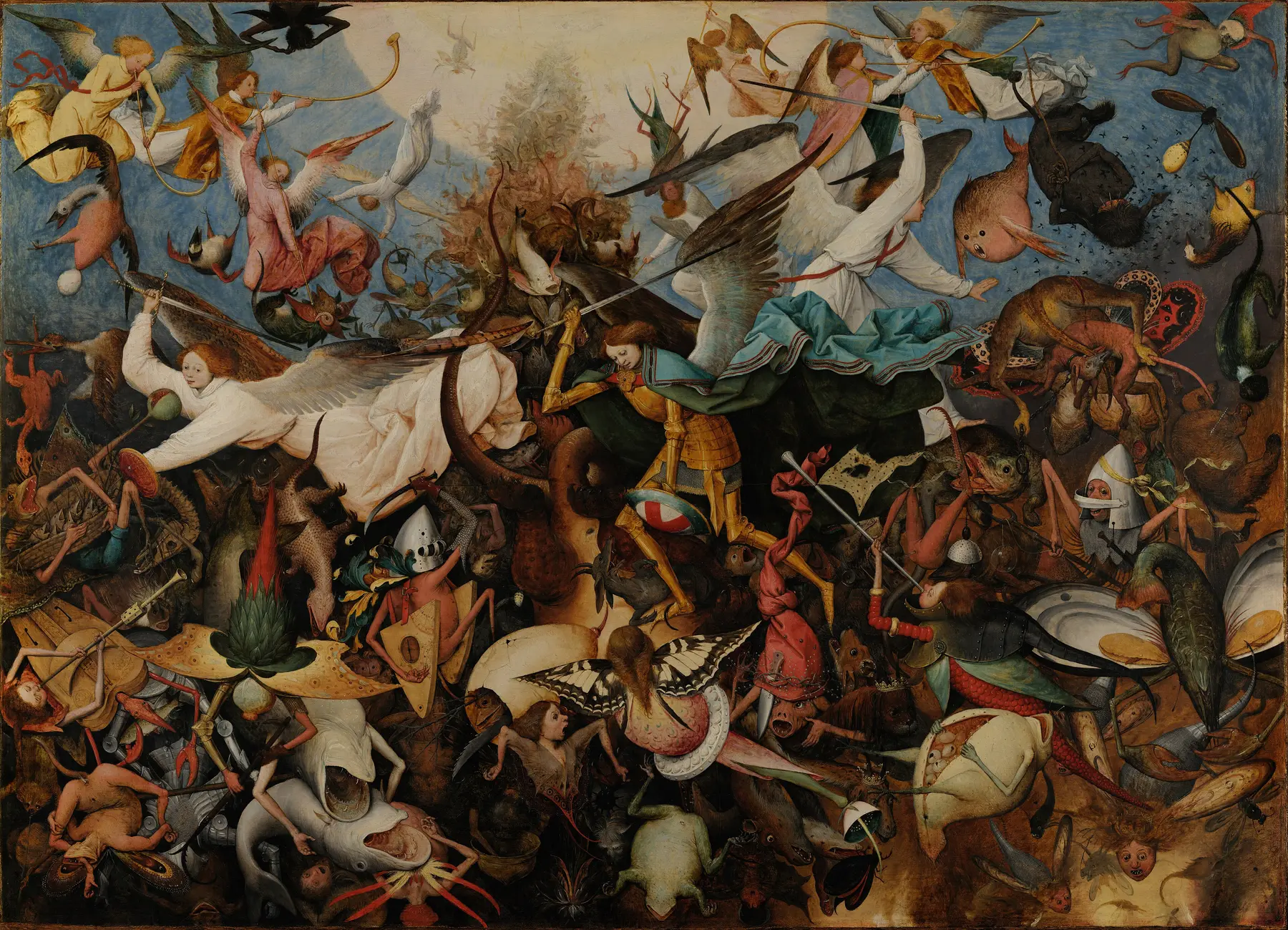
in Jude 1But even the archangel Michael, when he disputed with the devil over the body of Moses, did not presume to bring a slanderous charge against him, but said, “The Lord rebuke you!”
BSB
The same verse in ASV and KJV ▾
ASV
But Michael the archangel, when contending with the devil he disputed about the body of Moses, durst not bring against him a railing judgment, but said, The Lord rebuke thee.
KJV
Yet Michael the archangel, when contending with the devil he disputed about the body of Moses, durst not bring against him a railing accusation, but said, The Lord rebuke thee.
⋯
This verse in Jude 1
Commentary
15 notes on this verseFor he does not say to blaspheme no man: but absolutely no one: not an angel, nor any creature of God. Because everything that was made by God is very good. For when Michael the Archangel disputed with the devil over the body of Moses, he did not dare to bring a judgment of blasphemy, but said, "May God rebuke you" (Jud. 9). If Michael therefore did not have the audacity to bring judgement upon the devil, certainly deserving of a curse, for blasphemy: how much more should we be pure from every curse?
This site's exposition
these dreamers defile their bodies
on Jude 1:8-10
These dreamers defile their bodies, reject authority, and slander glorious beings, doxas. Michael, in an account the fathers traced to the Assumption of Moses, answered the devil only with The Lord rebuke you, echoing Zechariah 3:2. These men, however, slander what they do not understand.
This site's exposition
the archangel Michael
Michael would not bring a slanderous charge even against the devil. He left the verdict with God, in the words the LORD speaks to Satan in Zechariah 3:2. Jerome draws the rule for believers: if Michael would not curse the devil, no Christian should curse anyone.
The record, by era
The Church Fathers4 voices
Yet Michael the archangel, when he disputed with the Devil and argued about the body of Moses, did not think to pronounce a condemning judgment against him, but said, "The Lord rebuke you!" But these people blaspheme what they do not understand, and they are …
The angels were present at the death of Moses, and God himself took care of his burial.
A commentator
Clement of AlexandriaFrom the Latin Translation of Cassiodorus · Written before 215.
proposed
"When Michael, the archangel, disputing with the devil, debated about the body of Moses." Here he confirms the assumption of Moses. He is here called Michael, who through an angel near to us debated with the devil.
You can search them out for yourself from sacred Scripture without my help. And it will become clearly evident to you that this likely is the age of which it was said, "Believe not in friends and trust not in princes," and that the prophecy is now being fulfilled: "The leaders of my people have not known me; they are foolish and senseless children. They are wise to do evils, but to do good they have no knowledge." We should rather pity such people than hate them and should rather pray for them than revile them. For we were created to bless and not to revile. Thus also Michael, when he was arguing with the devil over the body of Moses, did not dare to bring an accusation of blasphemy against him even for such a serious offense but said, "May the Lord rebuke you." Even in Zechariah, we read something similar to this. "The Lord rebuke you, O Satan, and the Lord that chose Jerusalem rebuke you." And so we also pray that those who refuse to be rebuked by their friends with humility may be rebuked by the Lord.
The Medieval Church1 voice
Here Jude shows that the Old Testament agrees with the New and that they were both given by the same God. For the devil objected, claiming that the body was his because he is the lord of matter.… But Michael would not accept this and …
7 more voices on this verse
The Medieval Church2 voices
When Michael the archangel was disputing with the devil, etc. From which Scriptures Jude took this testimony is not easily clear. But it should be known that we find something similar to these things in the prophet Zechariah. For he says: Because the Lord showed …
Since the apostle mentioned evil speaking, he reproves not only the blasphemers, but also persuades all people not to defile their tongues with such evil, not to employ it even against those who deserve it, and says: "Michael the Archangel," and so on. He speaks …
The Puritans and the Awakening2 voices
Dr. Scott thinks that by the body of Moses we are to understand the Jewish church, whose destruction the devil strove and contended for, as the Christian church is called the body of Christ in the New-Testament style.
Yet Michael the archangel,....
The Nineteenth Century3 voices
A commentator
Albert Barnes1798–1870
Notes, Explanatory and Practical, on the Old and New Testaments (1832-1869)
Yet Michael the archangel ... - This verse has given more perplexity to expositors than any other part of the Epistle; and in fact the difficulties in regard to it have been so great that some have been led to regard the Epistle as spurious. The difficulty has arisen from these two circumstances: (1) Ignorance of the origin of what is said here of Michael the archangel, nothing of this kind being found in the Old Testament; and, (2) The improbability of the story itself, which looks like a mere Jewish fable.
A commentator
Jamieson, Fausset & Brown1802–1910
Commentary Critical and Explanatory on the Whole Bible (1871)
Jude, as inspired, could distinguish how much of the tradition was true, how much false. We have no such means of distinguishing, and therefore can be sure of no tradition, save that which is in the written word. durst not--from reverence for Satan's former dignity (Jude 8). railing accusation--Greek, "judgment of blasphemy," or evil-speaking.
Yet Michael the archangel - Of this personage many things are spoken in the Jewish writings “Rabbi Judah Hakkodesh says: Wherever Michael is said to appear, the glory of the Divine Majesty is always to be understood.” Shemoth Rabba, sec. ii., fol. 104, 3. So that it seems as if they considered Michael in some sort as we do the Messiah manifested in the flesh. Let it be observed that the word archangel is never found in the plural number in the sacred writings. There can be properly only one archangel, one chief or head of all the angelic host. Nor is the word devil, as applied to the great enemy of mankind, ever found in the plural; there can be but one monarch of all fallen spirits. Michael is this archangel, and head of all the angelic orders; the devil, great dragon, or Satan, is head of all the diabolic orders. When these two hosts are opposed to each other they are said to act under these two chiefs, as leaders; hence in Rev 12:7, it is said: Michael and his angels fought against the Dragon and his angels. The word Michael מיכאל, seems to be compounded of מי mi, who, כ ke, like, and אל El, God; he who is like God; hence by this personage, in the Apocalypse, many understand the Lord Jesus. Disputed about the body of Moses - What this means I cannot tell; or from what source St. Jude drew it, unless from some tradition among his countrymen. There is something very like it in Debarim Rabba, sec. ii., fol. 263, 1: “Samael, that wicked one, the prince of the satans, carefully kept the soul of Moses, saying: When the time comes in which Michael shall lament, I shall have my mouth filled with laughter. Michael said to him: Wretch, I weep, and thou laughest. Rejoice not against me, O mine enemy, because I have fallen; for I shall rise again: when I sit in darkness, the Lord is my light; Mic 7:8. […]
The words behind it
24 Greek wordsEvery Greek word of this verse in the order it stands, with what it means and the door to its own study. The last column counts the times a word stands in the whole Bible: the rarer the word, the more the places it appears belong together.
| Greek | Sound | Meaning | Word study | In the Bible |
|---|---|---|---|---|
| ὁ | ho | <the> | G3588 → | 19766 times |
| δὲ | de | But | G1161 → | 2765 times |
| Μιχαὴλ | michael | Michael | G3413 → | |
| ὁ | ho | the | G3588 → | 19766 times |
| ἀρχάγγελος, | archangelos | archangel, | G743 → | |
| ὅτε | hote | when | G3753 → | |
| τῷ | to | with the | G3588 → | 19766 times |
| διαβόλῳ | diabolo | devil | G1228 → | |
| διακρινόμενος | diakrinomenos | disputing | G1252 → | |
| διελέγετο | dielegeto | he was reasoning | G1256 → | |
| περὶ | peri | about | G4012 → | 332 times |
| τοῦ | tou | <the> | G3588 → | 19766 times |
| Μωϋσέως | mouseos | Moses’ | G3475 → | |
| σώματος, | somatos | body, | G4983 → | |
| οὐκ | ouk | not | G3756 → | |
| ἐτόλμησεν | etolmesen | did dare | G5111 → | |
| κρίσιν | krisin | a judgment | G2920 → | 47 times |
| ἐπενεγκεῖν | epenegkein | to bring against [him] | G2018 → | |
| βλασφημίας | blasphemias | blasphemy | G988 → | |
| ἀλλ᾽ | all᾽ | but | G235 → | |
| εἶπεν· | eipen | said; | G2036 → | |
| ἐπιτιμήσαι | epitimesai | Would [that] he rebuke | G2008 → | |
| σοι | soi | you | G4771 → | 2973 times |
| κύριος. | kurios | [the] Lord. | G2962 → | 711 times |
ὁ<the>
hoG3588 →19766 times
δὲBut
deG1161 →2765 times
ΜιχαὴλMichael
michaelG3413 →
ὁthe
hoG3588 →19766 times
ἀρχάγγελος,archangel,
archangelosG743 →
ὅτεwhen
hoteG3753 →
τῷwith the
toG3588 →19766 times
διαβόλῳdevil
diaboloG1228 →
διακρινόμενοςdisputing
diakrinomenosG1252 →
διελέγετοhe was reasoning
dielegetoG1256 →
περὶabout
periG4012 →332 times
τοῦ<the>
touG3588 →19766 times
ΜωϋσέωςMoses’
mouseosG3475 →
σώματος,body,
somatosG4983 →
οὐκnot
oukG3756 →
ἐτόλμησενdid dare
etolmesenG5111 →
κρίσινa judgment
krisinG2920 →47 times
ἐπενεγκεῖνto bring against [him]
epenegkeinG2018 →
βλασφημίαςblasphemy
blasphemiasG988 →
ἀλλ᾽but
all᾽G235 →
εἶπεν·said;
eipenG2036 →
ἐπιτιμήσαιWould [that] he rebuke
epitimesaiG2008 →
σοιyou
soiG4771 →2973 times
κύριος.[the] Lord.
kuriosG2962 →711 times
A shaded row is a word that stands 400 times or fewer in the Bible.
The walk
8 stopsEach card is a verse this one points to, and under it the verses that one points to in turn. Where several paths arrive at the same place, that place is listed first: the text keeps returning to it.
Through
Daniel 12:1“At that time Michael, the great prince who stands watch over your people, will rise up. There will be a time of distress, the likes of which will not have occurred from the beginning…
it leads to
- Matthew 24:21
For at that time there will be great tribulation, unmatched from the beginning of the world until now, and never to be seen again.
- Jeremiah 30:7
How awful that day will be! None will be like it! It is the time of Jacob’s distress, but he will be saved out of it.
- Mark 13:19
For those will be days of tribulation unmatched from the beginning of God’s creation until now, and never to be seen again.
- Matthew 24:21
Through
Revelation 12:7Then a war broke out in heaven: Michael and his angels fought against the dragon, and the dragon and his angels fought back.
it leads to
- Daniel 12:1
“At that time Michael, the great prince who stands watch over your people, will rise up. There will be a time of distress, the likes of which will not have occurred from the beginning…
- Ephesians 6:12
For our struggle is not against flesh and blood, but against the rulers, against the authorities, against the powers of this world’s darkness, and against the spiritual forces of evil in the heavenly realms.
- 2 Peter 2:4
For if God did not spare the angels when they sinned, but cast them deep into hell, placing them in chains of darkness to be held for judgment;
- Daniel 12:1
Through
Zechariah 3:2And the LORD said to Satan: “The LORD rebukes you, Satan! Indeed, the LORD, who has chosen Jerusalem, rebukes you! Is not this man a firebrand snatched from the fire?”
it leads to
- Amos 4:11
“Some of you I overthrew as I overthrew Sodom and Gomorrah, and you were like a firebrand snatched from a blaze, yet you did not return to Me,” declares the LORD.
- Jude 1:23
save others by snatching them from the fire; and to still others show mercy tempered with fear, hating even the clothing stained by the flesh.
- Amos 4:11
Where this verse is studied
On this page
Studies25
On this chapter
About Jude
Who and where
1 name in this verse with a page on the site.
This page draws on 13 works. Open the list of works
This page draws on Adam Clarke, Commentary on the Bible; Albert Barnes, Notes, Explanatory and Practical, on the Old and New Testaments (1832-1869); Andreas of Caesarea, CATENA; Bede, Commentary on the Catholic Epistles; Clement of Alexandria, From the Latin Translation of Cassiodorus; Jamieson, Fausset & Brown, Commentary Critical and Explanatory on the Whole Bible; Jerome, Commentary on Titus 3:1-2; John Gill, Exposition of the New Testament (1746-1748); Matthew Henry, Commentary on the Whole Bible; Oecumenius, Commentary on Jude; Peter Chrysologus, SERMONS 83; Theophylact of Ohrid, Commentary on Jude and Tyrannius Rufinus, Against Rufinus 2.18.