
John 13:7 · Story · Despair and Depression
William Cowper and the Mysterious Way
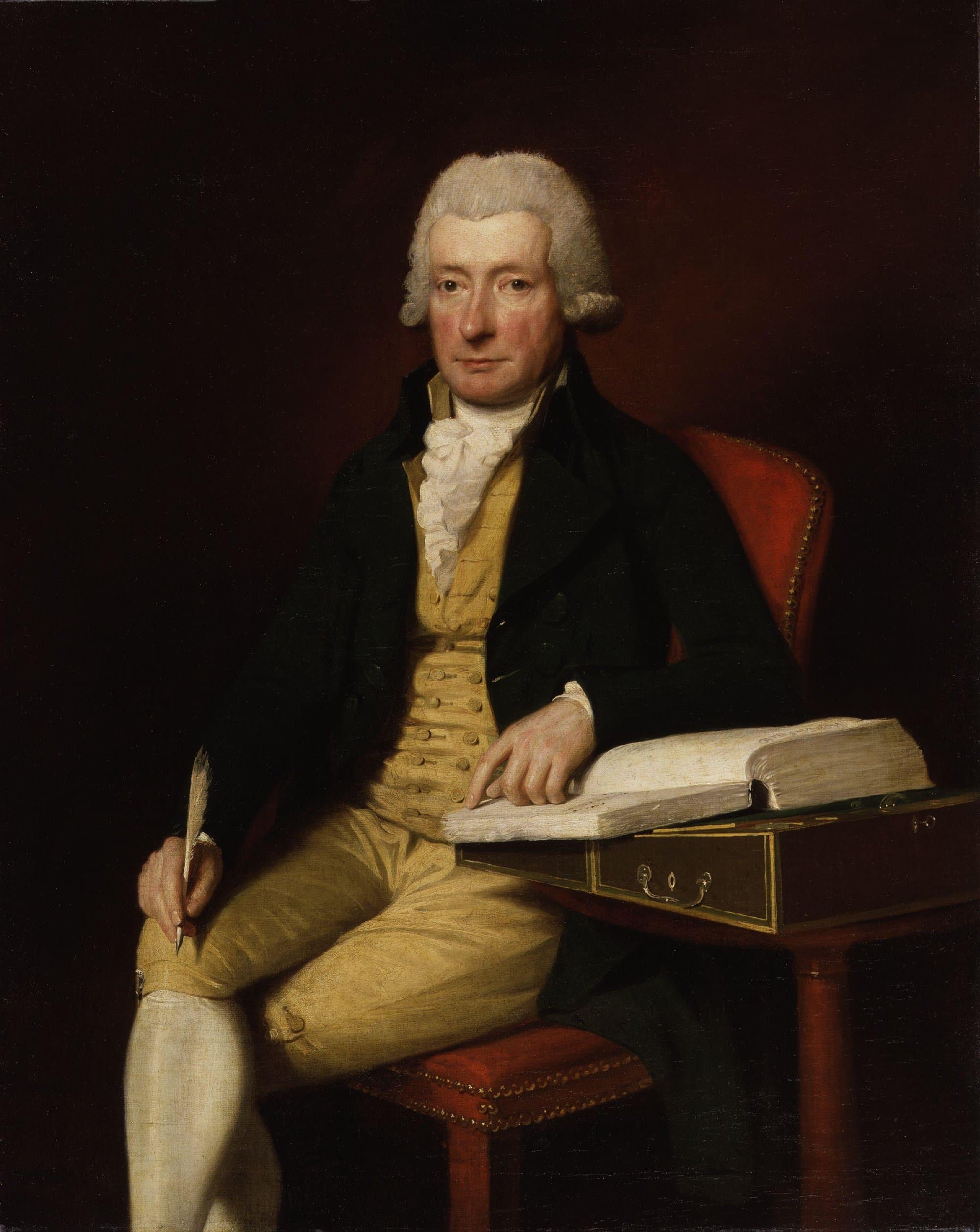
William Cowper, an English poet, wrote the hymn that begins God moves in a mysterious way.
John Newton printed the letter C beside each of his friend's hymns so that no reader would take them for his own.
Jesus replied, “You do not realize now what I am doing, but later you will understand.”
- When
- early 1773 (probable)
Summary
Cowper suffered from melancholy for most of his adult life, and it returned at intervals as attacks of madness. At Olney he wrote hymns at the request of the curate there. By Leslie Stephen's account, which rests on a funeral sermon for Cowper, he composed the hymn “when feeling the approach” of the attack of 1773.
- Cowper was born at Great Berkhampstead in 1731 and died at East Dereham in 1800.
- Sixty-seven of the hymns in the Olney Hymns of 1779 are Cowper's.
- From October 1773 Cowper believed that God had doomed him to eternal perdition, and Stephen judged that the belief was never quite removed from his mind.
The Hymn
The Olney Hymns print the hymn in their third book, under the heading Conflict.
The question this story answers is how Cowper's hymn of trust in God's hidden purpose stands beside the illness of mind he suffered, and what became of his own hope in his last years. It is one of the stories of the trial of despair and depression.
It gives his life in dated order, the madness of 1763 and the care he found at St. Albans, his years at Olney, the hymn and the verse it is set under, and the poem he wrote near the end of his life.
The hymn's first stanza reads, “God moves in a mysterious way, His wonders to perform; He plants his footsteps in the sea, And rides upon the storm.”
Its title in the Olney Hymns is “Light shining out of darkness”, and those words stand in 2 Corinthians 4:6, where Paul writes of God, who said, “Let light shine out of darkness.”
From Berkhampstead to East Dereham
Cowper moved from Olney to Weston in November 1786, and in July 1795 his cousin Johnson took him and Mrs. Unwin to the neighbourhood of East Dereham.
Stephen dates Cowper's attacks of madness to 1763, 1773 and 1787, the second of them in his years at Olney.
- 15 November 1731Cowper is born at his father's rectory at Great BerkhampsteadStephen
- 1752He takes chambers in the Middle Temple and is “seized with an ominous depression of spirits”Stephen
- 1763An attack of madness comes on as an examination at the House of Lords draws nearStephen
- December 1763He is taken to Dr. Nathaniel Cotton's house at St. AlbansStephen
- 17 June 1765He leaves St. Albans for lodgings at HuntingdonStephen
- 1767He moves with Mrs. Unwin to Olney, where John Newton is curateStephen
- January 1773A fresh attack of madnessStephen
- 1779Newton publishes the Olney HymnsStephen; the title page of 1779
- 1787An attack of madness lasting six monthsStephen
- 17 December 1796Mrs. Unwin dies at East DerehamStephen
- After March 1798He writes “The Castaway”, his last original poemStephen
- 25 April 1800Cowper dies at East DerehamStephen
A timeline of twelve dated events from Cowper's birth to his death, each from Leslie Stephen's article or the first edition of the Olney Hymns.
January 1773, 1779, 1787, 17 December 1796, After March 1798, 25 April 1800
The Madness of 1763
Stephen writes that Cowper's “earlier attack had been symptomatic” of the madness that came on in 1763.
Cowper had been told that he would have to prove his fitness for the clerkship at the bar of the House of Lords. The anxiety threw him into a nervous fever, and as the day drew near he made several attempts on his life.
If you are thinking of ending your life, call your local emergency number or a crisis line now, and tell someone near you.
His delusions took a religious colouring, and he became convinced that he was damned. Leslie Stephen judged that “Cowper's religious terrors were obviously the effect and not the cause of the madness”.
At St. Albans, Stephen writes, Cotton “treated him with great tenderness and skill”, and after five months of agony Cowper grew calmer.
Olney and Newton
John Newton had commanded a slave ship before he took orders and became curate of Olney.
Newton found a house at Olney for Cowper and Mrs. Unwin. Stephen writes that “Newton employed Cowper as a kind of lay-curate in his parish work”. Cowper took part in prayer meetings and visited the sick and dying, and Stephen judged that “The strain upon his nerves was great”.
In March 1773, as the fresh attack took hold, Cowper was persuaded to stay a night at Newton's house. By Stephen's account he then “could not be persuaded to leave for more than a year”.
In the preface to the Olney Hymns Newton wrote that his “dear friend was prevented, by a long and affecting indisposition, from affording me any farther assistance”.
Stephen weighed Newton's part with care. He wrote that “Facts are wanting to enable us to say positively whether Cowper's mind was healthily occupied or overwrought under Newton's direction”. He judged it unfair to argue that the gloom was caused by Newton because Cowper revealed it to him.
The Hymn and Its Verse
On page 328 the edition of 1779 sets a note naming John 13:7, the word Jesus spoke to Peter at the washing of the disciples' feet, on the line about blind unbelief.
The fourth stanza tells the believer to “trust him for his grace”, for “Behind a frowning providence, He hides a smiling face”.
The sixth and last reads, “Blind unbelief is sure to err, And scan his work in vain; God is his own interpreter, And he will make it plain.”
The Castaway
In his later years, by Stephen's account, Cowper's letters laid bare to Newton alone the gloomy despair he hid from his other correspondents.
“The Castaway” tells of a seaman of Anson's voyage washed overboard in a storm and left behind by his shipmates.
In its last stanza Cowper writes that “No voice divine the storm allay'd, No light propitious shone”, and that he himself perished “beneath a rougher sea, And whelm'd in deeper gulphs than he”.
Clouds Big with Mercy
The hymn's third stanza begins, “Ye fearful saints fresh courage take”.
It tells them that the clouds they so much dread “Are big with mercy, and shall break In blessings on your head”.
Whether a believer's sorrow like Cowper's is sin, suffering or illness is argued on its own page.
Sources
Scripture is the Berean Standard Bible.
- Leslie Stephen, “Cowper, William (1731-1800)”, Dictionary of National Biography, volume 12 (London, 1887)
- John Newton and William Cowper, Olney Hymns, in Three Books (London: W. Oliver, 1779), book 3, hymn 15, page 328, and the preface.
- William Cowper, “The Castaway”.
Keep Studying
Read it2
In this trial7