
2 Corinthians 1:3 to 4 · Story · Despair and Depression
Spurgeon's Fainting Fits
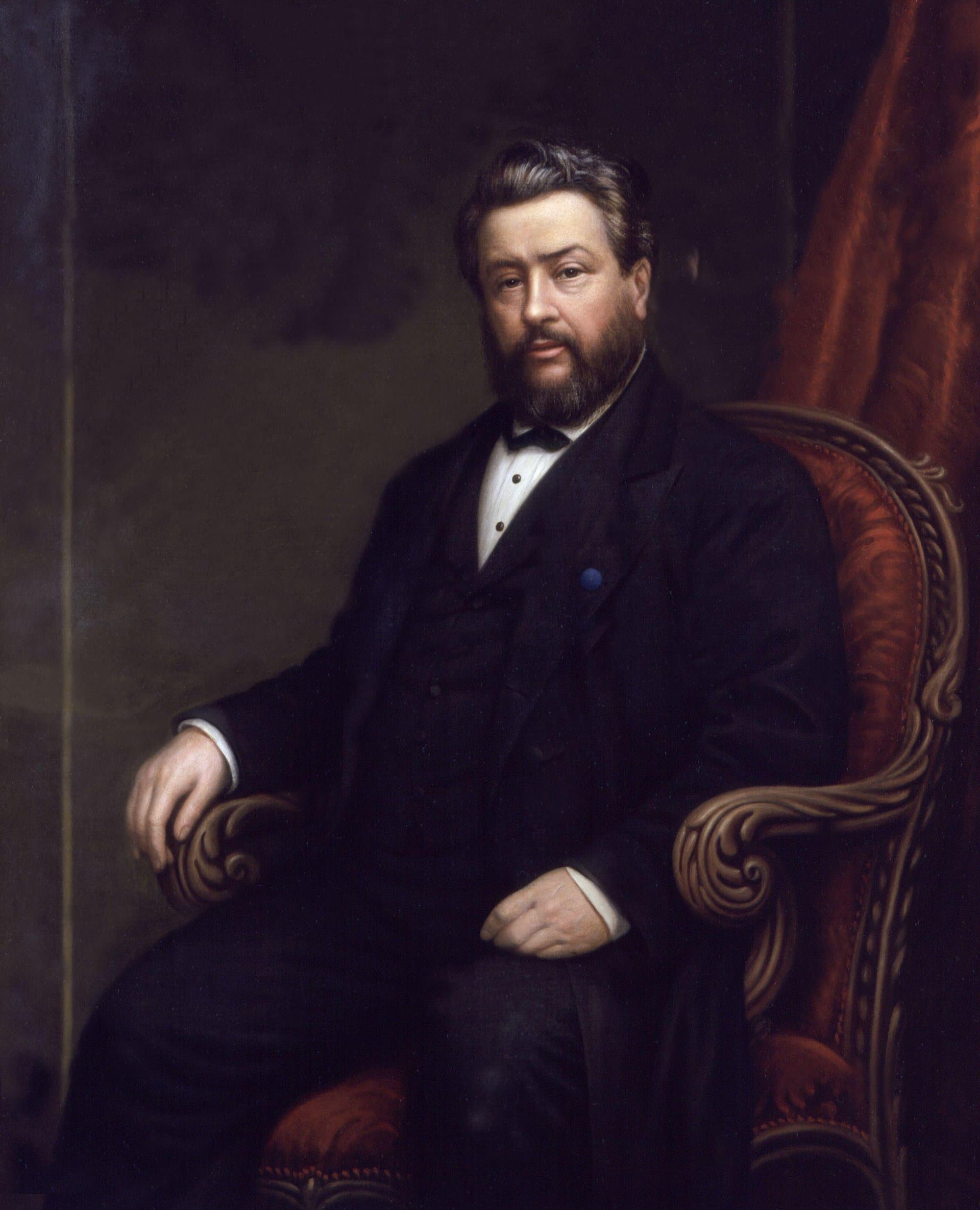
Charles Spurgeon told the students of his college that ministers are subject to fits of depression and that he knew them himself.
The most popular preacher of his day once thought of fleeing London for the backwoods of America.
Blessed be the God and Father of our Lord Jesus Christ, the Father of compassion and the God of all comfort, who comforts us in all our troubles, so that we can comfort those in any trouble with the comfort we ourselves have received from God.
- When
- 1875
Summary
Spurgeon traced a minister's depression to the frailty of body and mind, to the weight of caring for souls, to the loneliness of leading and to certain seasons of a working life. He held that God uses these seasons to keep His servants humble and to show that the power of their work is His. For the body he prescribed rest and fresh air.
- “The Minister's Fainting Fits” is the eleventh lecture of the first series of Lectures to My Students, published in 1875.
- A panic at the Surrey Gardens Music Hall on 19 October 1856 killed seven people during a service Spurgeon was leading.
- He held that depression often follows a great success and often comes before a great work.
- He told young ministers to expect such seasons and to trust God through them more than their own feelings.
The Lecture
The lecture opens with David, who grew faint in the heat of battle.
The question this story answers is what Charles Spurgeon taught about the depression of ministers and how he came to know it. It belongs to the trial of despair and depression, because it shows a servant of God naming his darkness plainly and still doing his work.
It gives the causes and the seasons the lecture names, in his own words, and one calamity of his own ministry. It adds the reason he gave for such darkness and the counsel he gave for enduring it.
Spurgeon said the same may be written of all the servants of the Lord, and went on, “Fits of depression come over the most of us.”
Spurgeon then gave his reason for speaking. He knew “by most painful experience what deep depression of spirit means”, and he hoped his thoughts “might be consolatory to some of my brethren”.
From Kelvedon to Mentone
The lecture of 1875 looked back on darkness that had come since his first years in London.
The college and the Surrey Gardens panic both came within three years of Spurgeon's call to London.
- 19 June 1834Spurgeon is born at Kelvedon in EssexDictionary of National Biography
- April 1854He is called to the pulpit of New Park Street, SouthwarkDictionary of National Biography
- 1856The Pastors' College is founded at CamberwellDictionary of National Biography
- 19 October 1856A false alarm of fire at the Surrey Gardens Music Hall causes a deadly panicDictionary of National Biography; the church book
- 2 November 1856He preaches again in his own chapelThe church book
- 1861The Metropolitan Tabernacle opens, and the college moves thereDictionary of National Biography
- 1875Lectures to My Students, First Series, is publishedDictionary of National Biography; the New York edition
- 31 January 1892Spurgeon dies at MentoneDictionary of National Biography
A timeline of eight dated events from Spurgeon's birth to his death, each with its date and the account it comes from.
1875, 31 January 1892
The Causes He Named
Spurgeon found the roots of a minister's depression in his body, his work and his place among his people.
His first cause was the body: “Certain bodily maladies, especially those connected with the digestive organs, the liver, and the spleen, are the fruitful fountains of despondency.”
His second was the work itself, and he asked, “Who can bear the weight of souls without sinking to the dust?”
His third was the minister's place. The man the Lord raises as a leader, he said, becomes “in the same degree in which he is a superior man, a solitary man.”
His fourth was the student's life of long sitting over books, for which he quoted Robert Burton's Anatomy of Melancholy. He prescribed the open air. “A mouthful of sea air, or a stiff walk in the wind's face, would not give grace to the soul, but it would yield oxygen to the body, which is next best.”
The Seasons He Named
The lecture gives a short list of the times most likely to bring a fit of depression.
First he named the hour of great success, and he gave Elijah as the example, who fled from Jezebel after the fire fell on Carmel and prayed that he might die.
Next came the time before a great work, and he told the story of his first pastorate in London. “My success appalled me; and the thought of the career which it seemed to open up, so far from elating me, cast me into the lowest depth.”
He added, “This depression comes over me whenever the Lord is preparing a larger blessing for my ministry.”
A long stretch of labour without rest was a third season, and he answered the zealot who would never stop with the words “Rest time is not waste time.”
He went on to a crushing stroke, such as the treachery of a trusted friend, and to troubles that follow one another like Job's messengers.
Last came the depression that has no cause he could find: “Causeless depression is not to be reasoned with, nor can David's harp charm it away by sweet discoursings.”
Of this darkness he wrote, “The physician and the divine may unite their skill in such cases, and both find their hands full, and more than full.”
The Surrey Gardens
The church book and the lecture both record what the panic at the Surrey Gardens did to Spurgeon.
The church book of New Park Street, printed in his Autobiography, records about seven thousand people at the service and twenty-eight taken to hospital.
The same entry says of its pastor, “He was entirely prostrated for some days, and compelled to relinquish his preaching engagements.”
He wrote, “To the lot of few does it fall to pass through such a horror of great darkness as that which fell upon me after the deplorable accident at the Surrey Music Hall.”
He was woken from that dream of horror in a moment, he wrote, by a text on God's exalting of Christ applied to his soul. The thought that Jesus is still great, however His servants suffer, brought him back “to calm reason and peace.”
Why God Permits It
Spurgeon found the reason in the way God chooses to work through weak servants.
So he said to me, “This is the word of the LORD to Zerubbabel: Not by might nor by power, but by My Spirit, says the LORD of Hosts.Spurgeon gave this word to Zerubbabel as the sum of the Lord's way of working, and so as the reason His servants are cast down.
He wrote, “Such humbling but salutary messages our depressions whisper in our ears; they tell us in a manner not to be mistaken that we are but men, frail, feeble, apt to faint.”
He named Timothy Rogers, the author of a treatise on melancholy, and the hymn writer Simon Browne as men who proved how little the help of man can do when the Lord withdraws the light.
The Counsel He Gave
The lecture ends by telling the young minister how to keep working through the dark.
Spurgeon told his students, “Count it no strange thing, but a part of ordinary ministerial experience”.
He urged them to “Care more for a grain of faith than a ton of excitement.”
Sources
Scripture is the Berean Standard Bible.
- C. H. Spurgeon, Lectures to My Students: A Selection from Addresses Delivered to the Students of the Pastors' College, Metropolitan Tabernacle, First Series (New York: Sheldon and Company, 1875), lecture 11, “The Minister's Fainting Fits”, pages 249 to 267.
- Augustus Robert Buckland, “Spurgeon, Charles Haddon”, Dictionary of National Biography, volume 53 (London, 1898)
- C. H. Spurgeon's Autobiography, compiled from his diary, letters and records by his wife and his private secretary, volume 2 (London: Passmore and Alabaster, four volumes, 1897 to 1900), chapter 50, pages 212 to 213.
Keep Studying
Read it1
Studies1
In this trial7
People and groups5