
Jonah 4:3
in Jonah 4And now, O LORD, please take my life from me, for it is better for me to die than to live.”
BSB
The same verse in ASV and KJV ▾
ASV
Therefore now, O Jehovah, take, I beseech thee, my life from me; for it is better for me to die than to live.
KJV
Therefore now, O Lord, take, I beseech thee, my life from me; for it is better for me to die than to live.
⋯
This verse in Jonah 4
Commentary
8 notes on this verseA commentator
Jamieson, Fausset & Brown1802–1910
Commentary Critical and Explanatory on the Whole Bible (1871)
Jonah's impatience of life under disappointed hopes of Israel's reformation through the destruction of Nineveh, is like that of Elijah at his plan for reforming Israel (1Ki 18:1-46) failing through Jezebel (1Ki 19:4).
This site's exposition
But it displeased Jonah exceedingly
on Jonah 4:1-3
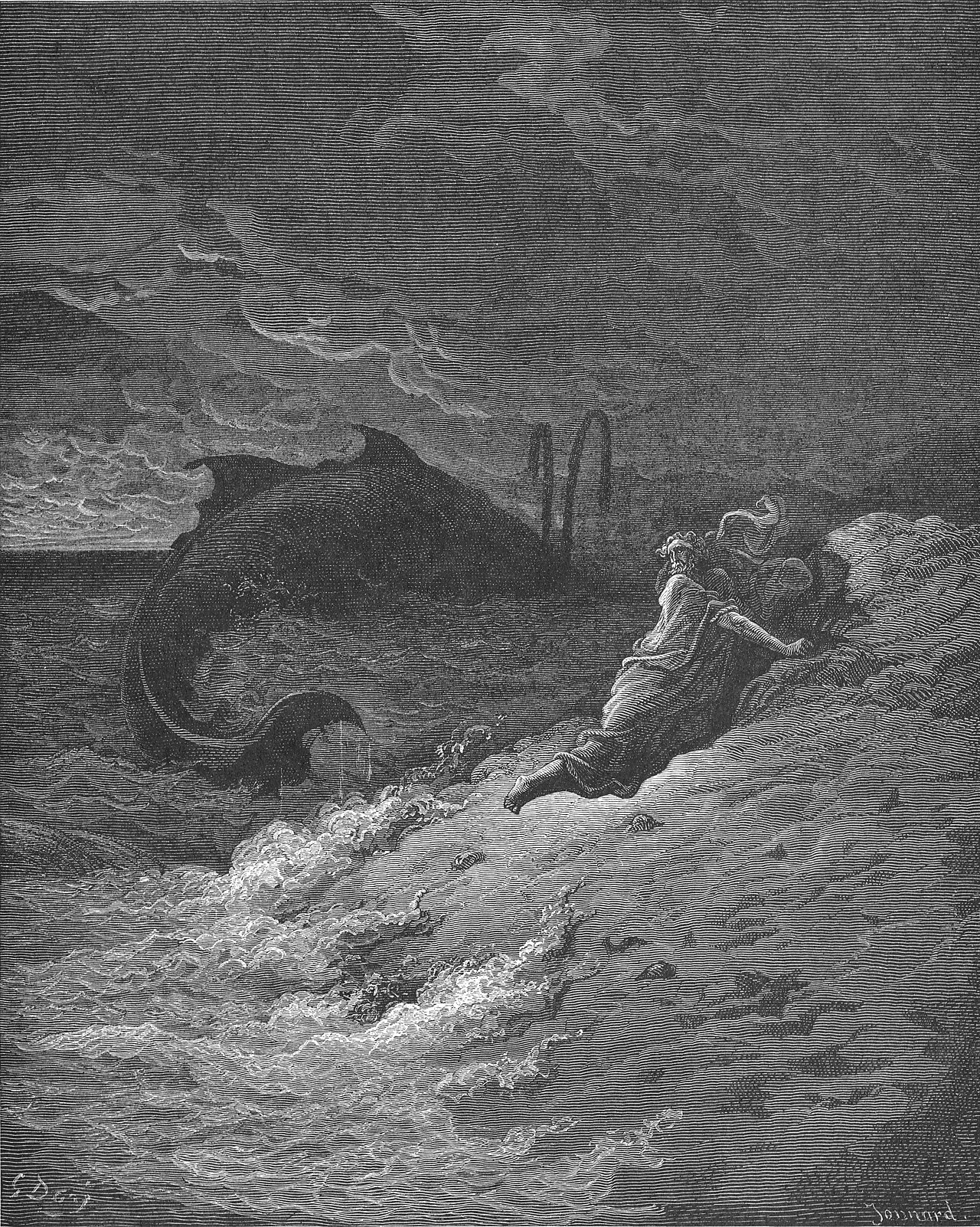
Jonah's anger erupts the moment mercy is confirmed: Nineveh spared displeases him exceedingly, and he asks the Lord to take his life rather than let him live to see it stand. His prayer names the reason he fled to Tarshish in the first place, quoting back to God his own self-description, a gracious God, and merciful, slow to anger, and of great kindness, and repentest thee of the evil, the same formula the Lord proclaimed of himself at Sinai. Jonah preached judgment and got mercy, and the prophet who ran from that mercy for Nineveh now begs to die rather than watch it stand. Calvin reads the prayer as Jonah's confession turned complaint, the truth about God's character used as an accusation against God's own kindness.
The record, by era
The Church Fathers1 voice
"[And he prayed unto the LORD, and said], I pray you, O LORD, was not this my saying, when I was yet in my country? Therefore I fled before unto Tarshish: for I knew that you are a gracious God, and merciful, slow to anger, and of great kindness, and you repent of the evil. Therefore now, O LORD, take, I beseech you, my life from me; for it is better for me to die than to live." LXX: 'O Lord, is this not what I said when I was still in my country?
The Puritans and the Awakening3 voices
Being in discontent, he applied to the duty of prayer, as he used to do in his troubles, but his corruptions got head of his graces, and, when he should have been praying for benefit by the mercy of God himself, he was complaining of the benefit others had by that mercy.
Such a word as this may be the language of grace, as it was in Paul, who desired to depart and be with Christ, which is far better; but here it was the language of folly, and passion, and strong corruption; and so much the worse, [1.] Jonah being now in the midst of his usefulness, and therefore fit to live.
Therefore now, O Lord, take, I beseech thee, my life from me,.... Or, "my soul" (x).
The Nineteenth Century1 voice
Take, I beseech thee, my life from me - קח נא את נפשי kach na eth naphshi, “Take, I beseech thee, even my Soul.” Do not let me survive this disgrace. Thou hast spared this city. I thought thou wouldst do so, because thou art merciful and gracious, and it was on this account that I refused to go at first, as I knew that thou mightest change thy purpose, though thou hadst commanded me to make an absolute denunciation of judgment. God has left this example on record to show that an inconsiderate man is not fit to be employed in his work; and he chose this one example that it might serve as an endless warning to his Church to employ no man in the work of the ministry that is not scripturally acquainted with God’s justice and mercy.
1 more voice on this verse
The Nineteenth Century1 voice
A commentator
Albert Barnes1798–1870
Notes, Explanatory and Practical, on the Old and New Testaments (1832-1869)
proposed
Therefore now, O Lord, take I beseech Thee my life from me - He had rather die, than see the evil which was to come upon his country. Impatient though he was, he still cast himself upon God.
How the passage was read
What the Jewish commentators add
Now, please, take my life: so that I do not see the harm to Israel, like Moses our Teacher of blessed memory said, "erase me from Your book," and "kill me, please."
1 more on this passage, in their own words ▾
was this not my contention —I know that, if they repent, You will not destroy them, and I will appear to them as a liar.
This section is reception history: how the passage was read and kept in the Jewish tradition. Where a reading parts from an essential of the Christian faith, the section says so at that point.
Texts and citation data: Sefaria; each excerpt follows its version’s licence. 2 further sources are cited on this chapter that carry no English text this site may quote or only restate the verse.
The words behind it
11 Hebrew wordsEvery Hebrew word of this verse in the order it stands, with what it means and the door to its own study. The last column counts the times a word stands in the whole Bible: the rarer the word, the more the places it appears belong together.
| Hebrew | Sound | Meaning | Word study | In the Bible |
|---|---|---|---|---|
| וְעַתָּ֣ה | veatah | and therefore | H6258 → | |
| יְהוָ֔ה | yahweh | O Yahweh | H3068 → | 6520 times |
| קַח־ | kach- | take | H3947 → | |
| נָ֥א | na' | please | H4994 → | 404 times |
| אֶת־ | ʾet- | <obj.> | H853 → | 10935 times |
| נַפְשִׁ֖י | nafshi | life my | H5315 → | 754 times |
| מִמֶּ֑נִּי | mimeni | from me | H4480 → | 1188 times |
| כִּ֛י | ki | for | H3588 → | 4482 times |
| ט֥וֹב | tov | [is] good | H2896 → | |
| מוֹתִ֖י | moti | death my | H4194 → | 156 times |
| מֵחַיָּֽי׃ ס | mechaiyai | more than life my | H2416 → | 498 times |
וְעַתָּ֣הand therefore
veatahH6258 →
יְהוָ֔הO Yahweh
yahwehH3068 →6520 times
קַח־take
kach-H3947 →
נָ֥אplease
na'H4994 →404 times
אֶת־<obj.>
ʾet-H853 →10935 times
נַפְשִׁ֖יlife my
nafshiH5315 →754 times
מִמֶּ֑נִּיfrom me
mimeniH4480 →1188 times
כִּ֛יfor
kiH3588 →4482 times
ט֥וֹב[is] good
tovH2896 →
מוֹתִ֖יdeath my
motiH4194 →156 times
מֵחַיָּֽי׃ סmore than life my
mechaiyaiH2416 →498 times
A shaded row is a word that stands 400 times or fewer in the Bible.
The walk
8 stopsEach card is a verse this one points to, and under it the verses that one points to in turn. Where several paths arrive at the same place, that place is listed first: the text keeps returning to it.
Through
Ecclesiastes 7:1A good name is better than fine perfume, and one’s day of death is better than his day of birth.
it leads to
- Revelation 14:13
And I heard a voice from heaven telling me to write, “Blessed are the dead—those who die in the Lord from this moment on.” “Yes,” says the Spirit, “they will rest from their labors,…
- Proverbs 22:1
A good name is more desirable than great riches; favor is better than silver and gold.
- Ecclesiastes 4:2
So I admired the dead, who had already died, above the living, who are still alive.
- 2 Corinthians 5:8
We are confident, then, and would prefer to be away from the body and at home with the Lord.
- Philippians 1:21–23
For to me, to live is Christ, and to die is gain.
- Revelation 14:13
Through
1 Kings 19:4while he himself traveled on a day’s journey into the wilderness. He sat down under a broom tree and prayed that he might die. “I have had enough, LORD,” he said. “Take my life,…
it leads to
- Numbers 11:15
If this is how You are going to treat me, please kill me right now—if I have found favor in Your eyes—and let me not see my own wretchedness.”
- Jonah 4:8
As the sun was rising, God appointed a scorching east wind, and the sun beat down on Jonah’s head so that he grew faint and wished to die, saying, “It is better for me…
- Numbers 11:15
Through
Jonah 4:8As the sun was rising, God appointed a scorching east wind, and the sun beat down on Jonah’s head so that he grew faint and wished to die, saying, “It is better for me…
it leads to
- Psalms 121:6
The sun will not strike you by day, nor the moon by night.
- Psalms 121:6
Where this verse is studied
About Jonah
This page draws on Adam Clarke, Commentary on the Bible; Albert Barnes, Notes, Explanatory and Practical, on the Old and New Testaments (1832-1869); Jamieson, Fausset & Brown, Commentary Critical and Explanatory on the Whole Bible; Jerome, Commentary on Jonah, Chapter 4; John Calvin, Commentaries on the Twelve Minor Prophets; John Gill, Exposition of the Old Testament (1748-1763) and Matthew Henry, Commentary on the Whole Bible.