

Matt 12:38–41 · Luke 11:29–32 · Jonah 1:17–2:10 · Featured Study
The Sign of Jonah
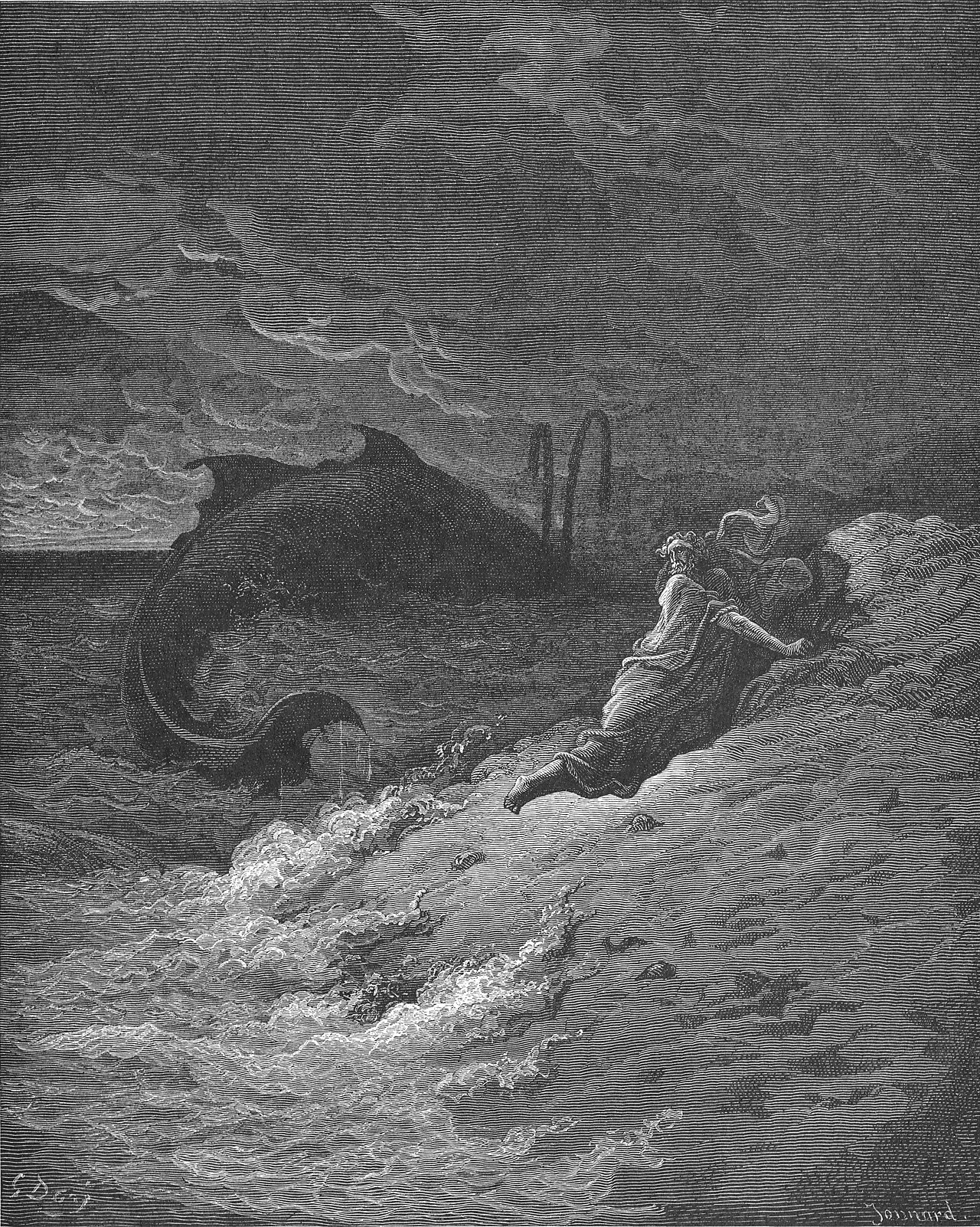
Scribes and Pharisees ask Jesus for a sign. He offers exactly one, not a miracle performed on demand, but a prophet's own three days in the deep. “As Jonah was three days and three nights in the belly of the whale, so shall the Son of man be three days and three nights in the heart of the earth” (Matt 12:40). And then a second edge no one asked for: this generation will not repent even at a far greater sign than Nineveh received.
Pieter Lastman, Jonah and the Whale (1621) — Public domain, via Wikimedia Commons
Summary
This page opens Matthew 12:39-41's sign of Jonah, works through the two harmonizations for three days and three nights, and closes on the wordplay between Jonah's salvation and the name Yeshua.
- Jesus points to Jonah's three days in the fish as the one sign given to His generation
- The Nineveh comparison is the indictment itself, and Luke adds the queen of the South
- Two harmonizations for three days and three nights are laid out side by side, favoring neither
- Jonah 2:9's "salvation" shares its root with the name Yeshua
The Sign Itself
Matt 12:39–40: the one sign given to that generation
“An evil and adulterous generation seeketh after a sign; and there shall no sign be given to it but the sign of Jonah the prophet” (12:39), repeated almost verbatim at 16:4. Every other sign is refused. This one is named, singular, and explained in the next verse: “as Jonah was three days and three nights in the belly of the whale; so shall the Son of man be three days and three nights in the heart of the earth” (12:40).
The warrant for reading this as a real typological pattern is as strong as the New Testament gives: Jesus Himself draws the line, in His own words, rather than an apostle reasoning backward from the resurrection to an Old Testament shadow. The escalation runs from a prophet's three-day preservation from death to the Son of Man's three-day conquest of it: Jonah survives the deep; Christ defeats it.
“He was cast into the midst of the seas--the heart of the seas (so the word is), and thence Christ borrows that Hebrew phrase, when he applies it to his own lying so long in the heart of the earth.”
Matthew Henry, Commentary on the Whole Bible (1710), on Jonah 2:3 — public domain
“A Greater Than Jonah Is Here”
Matt 12:41; Luke 11:29–32: the comparison is itself the indictment
“The men of Nineveh will stand at the judgment with this generation and condemn it; for they repented at the preaching of Jonah, and now One greater than Jonah is here.”
Nineveh repented at a reluctant, imperfect prophet's eight-word sermon: the shortest and least gracious-sounding oracle in the canon, with no offer of mercy even stated in it. Jesus' own generation would not repent at the willing, perfect Son, preaching with far greater authority and giving a far greater sign. Luke pairs the same argument with the queen of the South, who came from the ends of the earth to hear Solomon's wisdom (Luke 11:31–32), another figure Jesus treats as straightforwardly historical, in the same breath as Jonah. The comparison does not merely illustrate the indictment; it is the indictment.
Three Days and Three Nights
a live harmonization question, not a threat to the sign
A crucifixion on Friday afternoon to a resurrection before dawn Sunday spans parts of three calendar days but not a literal seventy-two hours. Both live harmonizations are presented here without adjudicating between them, the typology itself does not depend on which is correct, only on Jesus' own use of Jonah 1:17 as the pattern.
Laid in the tomb late on Friday afternoon, before the sabbath begins; raised before dawn on Sunday. Part of Friday, all of Saturday, part of Sunday: three calendar days touched, and by the ancient idiom, three days and three nights.
Laid in the tomb late on Wednesday, before a feast-day sabbath rather than the weekly one; raised as the weekly sabbath closes, with the empty tomb found early Sunday. Three full nights and three full days, counted end to end.
A Thursday crucifixion, held by some who take the same seventy-two-hour reading, shifts the lower track one day to the right and leaves its shape unchanged. Both tracks end at the same place: an empty tomb on the first day of the week.
Idiomatic reckoning: the majority position
Ancient Jewish reckoning counted any part of a day as a whole day-and-night unit (inclusive reckoning). Esther's “three days, night or day” fast (Esth 4:16) is broken on the third day (5:1); 1 Sam 30:12–13 calls a period that plainly includes partial end-days “three days and three nights.” On this reading, a Friday crucifixion to a before-dawn Sunday resurrection satisfies the Jewish idiom without requiring a literal 72 hours, the broadly held conservative-evangelical position, and the PD commentary tradition's own reading (Henry, JFB, Keil & Delitzsch).
A Wednesday or Thursday crucifixion: a minority position
Some teachers favor an earlier crucifixion to secure a more literal 72-hour span, reading “the sabbath” of the burial narratives as a feast-day sabbath (Nisan 15) rather than the weekly Saturday sabbath, with the weekly sabbath following.
Chuck Missler taught a Wednesday-crucifixion chronology in his Passion Week teaching (Koinonia House).
“It was customary with the eastern nations to reckon any part of a natural day of twenty-four hours, for the whole day. Accordingly they used to say a thing was done after three or seven days, if it was done on the third or seventh day, from that which was last mentioned.”
John Wesley, Explanatory Notes upon the Bible (1765), on Matthew 12:40 — public domain
Salvation Is of the LORD
Jonah 2:9: the name inside the sign
“But I, with the voice of thanksgiving, will sacrifice to You. I will fulfill what I have vowed. Salvation is from the LORD!””
Spoken from inside the fish, at the very bottom of the book's descent, yeshuʿah, “salvation,” shares its root with the name Yeshua. The theological center of chapter 2 names, in Hebrew, the very word that becomes the Savior's own name. Jonah's own descent-then-rise: “But You raised my life from the pit, O LORD my God!” (2:6), is a small enactment of the pattern Christ fulfills completely.
The seam between translations here is worth opening rather than smoothing over. Where the BSB reads “from the pit,” the KJV reads “from corruption,” both are translating one Hebrew word, shachath, which means the pit and the decay that happens in it. The Greek Old Testament carried that word over with the phthora family, “corruption”, and that is the very word standing in Psalm 16:10, “neither wilt thou suffer thy holy one to see corruption,” which Peter quotes at Pentecost as proof of the resurrection (Acts 2:27). Jonah is brought up out of the pit. The Holy One never sees its corruption at all.
Word studies
The Hebrew and Greek under this study, each word in its own room.
Keep studying
Read it2
By subject
Stories11 pages
On this page
Words1
Doctrines1
Go further1