
Subject
The divided kingdom
Israel and Judah, two thrones and the prophets between them.
Part of Where in the story
On this page, 7 sections
The one drawing
Across the canon
10 passages
Where Scripture speaks
The passages this subject stands on, in canon order.
Then the LORD said to Solomon, “Because you have done this and have not kept My covenant and My statutes, which I have commanded you, I will tear the kingdom away from you and give it to your servant.and said to Jeroboam, “Take ten pieces for yourself, for this is what the LORD, the God of Israel, says: ‘Behold, I will tear the kingdom out of the hand of Solomon, and I will give you ten tribes.When all Israel saw that the king had refused to listen to them, they answered the king: “What portion do we have in David, and what inheritance in the son of Jesse? To your tents, O Israel! Look now to your own house, O David!” So the Israelites went home,After seeking advice, the king made two golden calves and said to the people, “Going up to Jerusalem is too much for you. Here, O Israel, are your gods, who brought you up out of the land of Egypt.”So He will give Israel over on account of the sins Jeroboam has committed and has caused Israel to commit.”Then Elijah approached all the people and said, “How long will you waver between two opinions? If the LORD is God, follow Him. But if Baal is God, follow him.” But the people did not answer a word.When all the people saw this, they fell facedown and said, “The LORD, He is God! The LORD, He is God!”All this happened because the people of Israel had sinned against the LORD their God, who had brought them out of the land of Egypt from under the hand of Pharaoh king of Egypt. They had worshiped other godsFinally, the LORD removed Israel from His presence, as He had declared through all His servants the prophets. So Israel was exiled from their homeland into Assyria, where they are to this day.you are to tell them that this is what the Lord GOD says: ‘I will take the stick of Joseph, which is in the hand of Ephraim, and the tribes of Israel associated with him, and I will put them together with the stick of Judah. I will make them into a single stick, and they will become one in My hand.’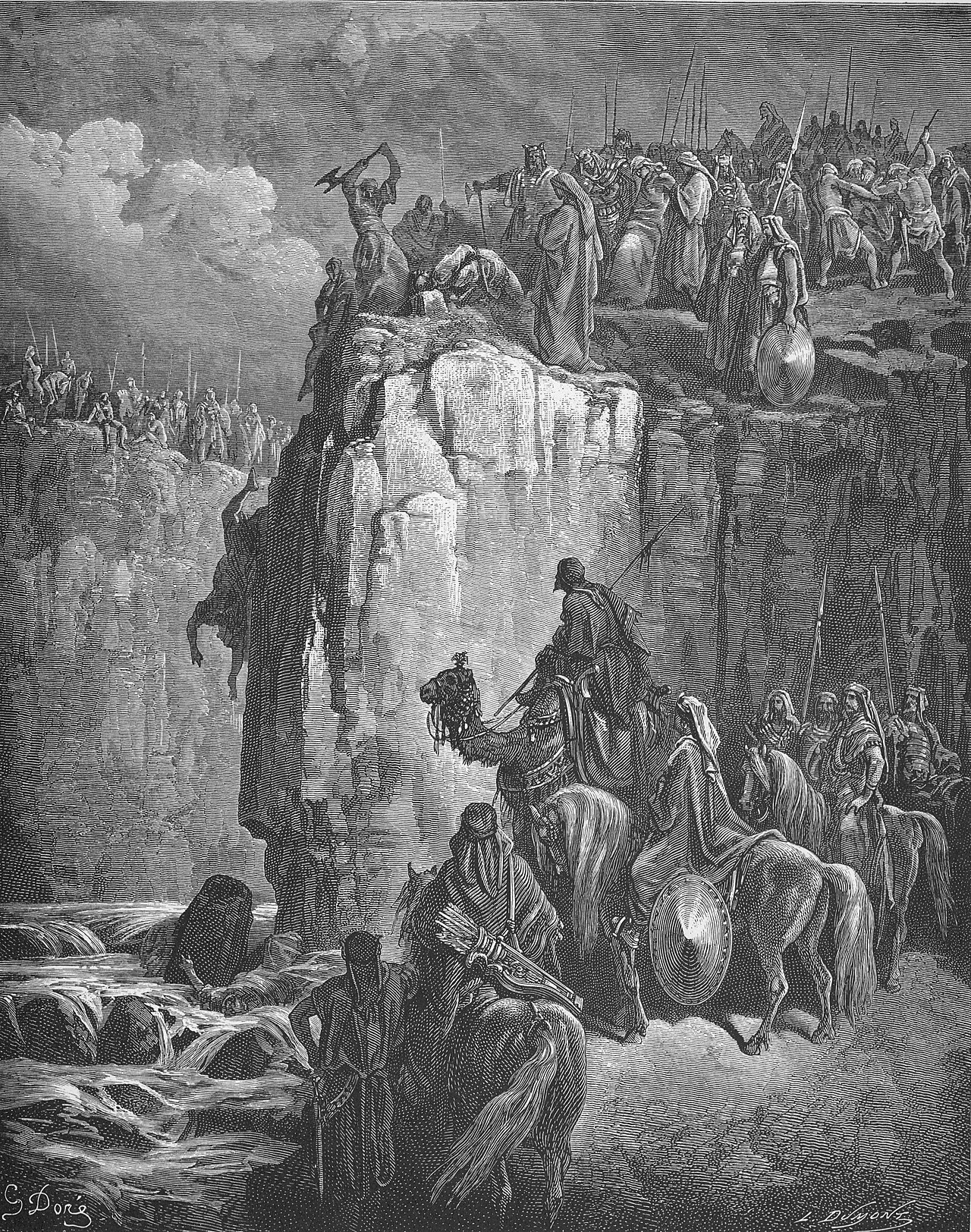
The divided kingdom in Scripture, in full
For about a century, Israel had one king at a time: Saul, then David, then Solomon. That unity broke apart in a single afternoon, over a single bad decision, and the split shaped the rest of the Old Testament's story.
When Solomon died, his son Rehoboam became king, and the northern tribes came to him with a request: lighten the heavy labor Solomon had placed on them (1 Kings 12:4). Rehoboam's older advisers told him to answer gently and win their loyalty. His younger friends told him to answer harder than his father had. He chose the harder answer (his father had chastised them with whips, but he would chastise them with scorpions (1 Kings 12:11)) and ten tribes walked away from his throne the same day.
Their new king was Jeroboam, a former official under Solomon who had already been told by the prophet Ahijah that God was tearing ten tribes away from David's house because of Solomon's idolatry (1 Kings 11:31). The prophecy came true, but Jeroboam did not trust the God who fulfilled it.
Afraid that pilgrimages to Jerusalem's temple would pull his new subjects back to Rehoboam, he built two golden calves, set one in Bethel and one in Dan, and told the people, "behold thy gods, O Israel, which brought thee up out of the land of Egypt" (1 Kings 12:28). It was the same lie Aaron had told at Sinai, dressed up as convenience.
Scripture never lets Jeroboam's name stand alone after that; kings for generations are measured by whether they walked in the way of Jeroboam and the sin with which he made Israel to sin (1 Kings 15:34).
From that point, two kingdoms run side by side under two very different report cards. Judah, in the south, kept David's line on the throne in Jerusalem and kept the temple, though the record still names most of her kings by whether they tore down or tolerated the high places. Israel, in the north, cycled through several different dynasties in about two hundred years, most of them born in assassination, none of them ever abandoning Jeroboam's calves.
Prophets were sent to both. Elijah and Elisha confronted Israel's kings directly, most dramatically on Mount Carmel, where Elijah challenged the prophets of Baal and the fire that fell answered the question the whole divided kingdom had been avoiding: "the LORD, he is the God; the LORD, he is the God" (1 Kings 18:39). Amos and Hosea preached judgment against Israel's idolatry and injustice from the north. Isaiah and Micah preached to Judah in the south. Neither kingdom listened long enough to reverse course.
Israel fell first. In the eighth century BC, Assyria conquered Samaria and scattered the northern tribes (2 Kings 17:6), a judgment the text ties directly back to fearing other gods and walking in the statutes of the nations around them (2 Kings 17:7-8). Judah lasted longer, but the same pattern eventually caught up with her too, ending in Babylon's conquest and the exile.
The prophets who watched the split also promised its undoing. Ezekiel is told to take two sticks, one labeled Judah and one labeled Israel, and join them into one stick in his hand: a picture of God reuniting what sin had split apart, under one king, forever (Ezekiel 37:16-22).
That promise finds its answer in Christ. He did not come only to the fragment called Judah or only to the fragment called Israel, but as the true and better Son of David gathering one people to Himself: reconciling all who trust Him into one body (Ephesians 2:16). The kingdom that split at Shechem is healed, finally, not by politics but by a King who cannot be divided.
3 voices
What teachers have said
Son of man, take thee one stick - The two sticks mentioned in this symbolical transaction represented, as the text declares the two kingdoms of Israel and Judah, which were formed in the days of Rehoboam, and continued distinct till the time of the captivity.
Adam Clarke · Commentary on the Bible
Written before 1832.
Sin is a bad way of building up a family. Rehoboam was the son of the wisest of men, yet did not inherit his father's wisdom, and then it stood him in little stead to inherit his father's throne. Neither wisdom nor grace runs in the blood.
Matthew Henry · Commentary on the Whole Bible, 1710
A moth - Moths leisurely eat up our clothes; so God was then, and had been, from Jeroboam's death, weakening the ten tribes. As rottenness - Secretly consuming them.
John Wesley · Explanatory Notes upon the Old Testament, 1765
Where it leads
Everything the site holds on the divided kingdom
On this page
Studies12
The words underneath
Each card is one Hebrew or Greek word behind the divided kingdom. It gives the sense, the count across the canon, and the number in Strong's 1890 concordance.
Yarobam: Jeroboam
Hebrew · H3379Strong's entry: Jarobam, the name of two Israelite kings
the king whose golden calves became "the sin of Israel"
104 times in the Old Testament · Yarobam, in full →
Nebat: Nebat
Hebrew · H5028Strong's entry: Nebat, the father of Jeroboam I
"Jeroboam son of Nebat" names the sin that outlived a dynasty
25 times in the Old Testament · Nebat, in full →
Rechabam: Rehoboam
Hebrew · H7346Strong's entry: Rechabam, an Israelite king
his harsh word to the tribes split the kingdom in two
50 times in the Old Testament · Rechabam, in full →
Where in the story
The subjects beside it
On this page