
Subject
The return
Back to the land: Ezra, Nehemiah, the rebuilt wall and temple.
Part of Where in the story
On this page, 7 sections
The one drawing
Across the canon
12 passages
Where Scripture speaks
The passages this subject stands on, in canon order.
In the first year of Cyrus king of Persia, to fulfill the word of the LORD spoken through Jeremiah, the LORD stirred the spirit of Cyrus king of Persia to send a proclamation throughout his kingdom and to put it in writing as follows:In the first year of Cyrus king of Persia, to fulfill the word of the LORD spoken through Jeremiah, the LORD stirred the spirit of Cyrus king of Persia to send a proclamation throughout his kingdom and to put it in writing as follows:And they sang responsively with praise and thanksgiving to the LORD: “For He is good; for His loving devotion to Israel endures forever.” Then all the people gave a great shout of praise to the LORD, because the foundation of the house of the LORD had been laid.And they told me, “The remnant who survived the exile are there in the province, in great trouble and disgrace. The wall of Jerusalem is broken down, and its gates are burned with fire.”Then I said to them, “You see the trouble we are in. Jerusalem lies in ruins, and its gates have been burned down. Come, let us rebuild the wall of Jerusalem, so that we will no longer be a disgrace.”So the wall was completed in fifty-two days, on the twenty-fifth of Elul.Then Nehemiah told them, “Go and eat what is rich, drink what is sweet, and send out portions to those who have nothing prepared, since today is holy to our Lord. Do not grieve, for the joy of the LORD is your strength.”When the LORD restored the captives of Zion, we were like dreamers.So the redeemed of the LORD will return and enter Zion with singing, crowned with everlasting joy. Gladness and joy will overtake them, and sorrow and sighing will flee.For this is what the LORD says: “When Babylon’s seventy years are complete, I will attend to you and confirm My promise to restore you to this place.For I will take you from among the nations and gather you out of all the countries, and I will bring you back into your own land.in the first year of his reign, I, Daniel, understood from the sacred books, according to the word of the LORD to Jeremiah the prophet, that the desolation of Jerusalem would last seventy years.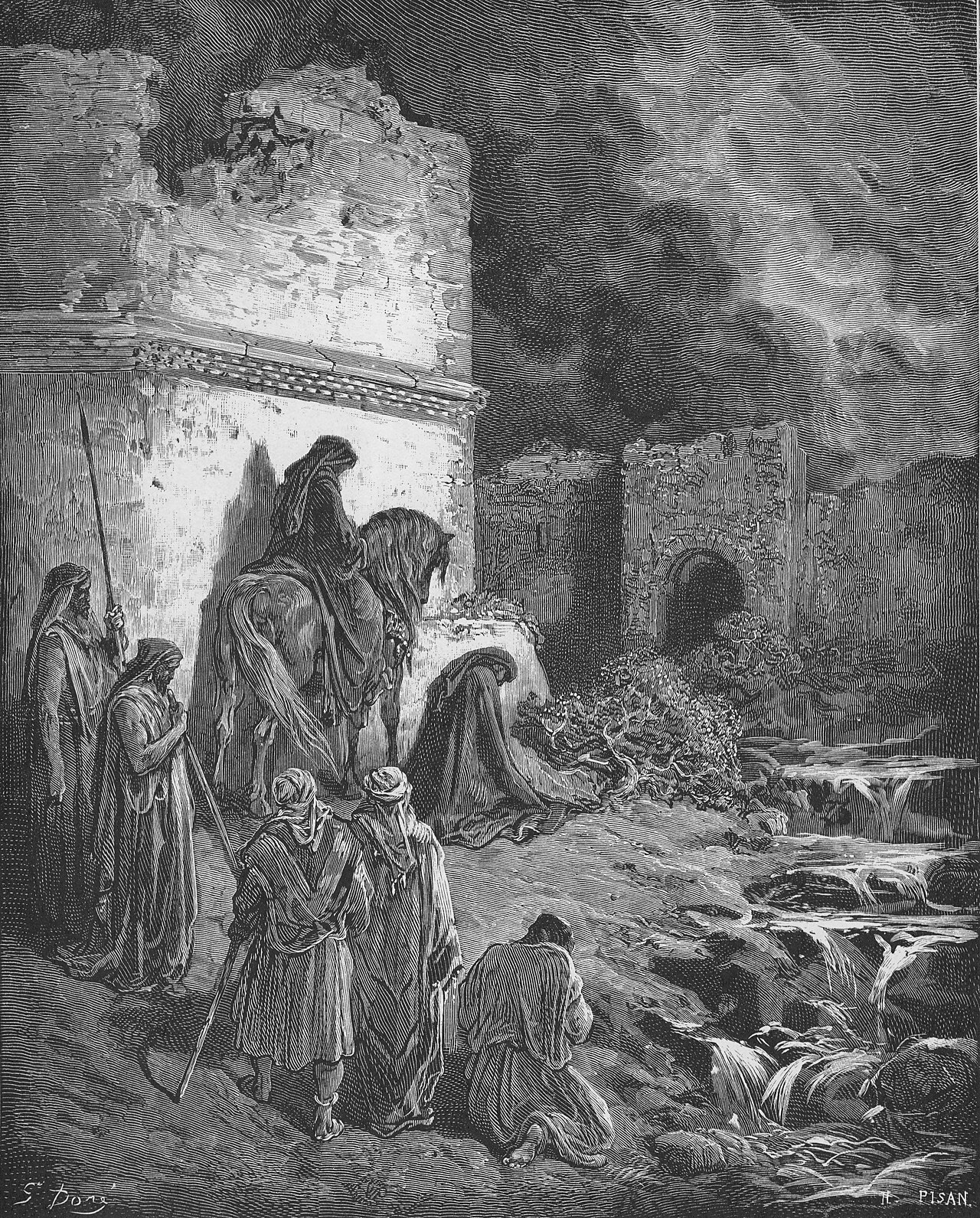
The return in Scripture, in full
For seventy years, Jerusalem sat in ruins. The temple Solomon had built was ash. The walls that once made the city safe were rubble. The people who had once worshiped there were living far away in Babylon, longing for home. That long absence is the backdrop for one of Scripture's most encouraging stories: the return.
God had promised it in advance. Through the prophet Jeremiah he said that after seventy years he would visit his people and bring them back to Jerusalem (Jeremiah 29:10). The promise was not vague. It had a number attached to it, and it came true on schedule. When the seventy years were up, God moved the heart of a pagan Persian king, Cyrus, to let the exiles go home and rebuild the temple of the LORD (2 Chronicles 36:22; Ezra 1:1). A king who did not worship Israel's God still became the instrument of Israel's return.
The return did not happen all at once. A first group came back under Zerubbabel to lay the temple's foundation. When that foundation was set, the people made a sound so loud it could be heard far off: the older generation weeping as they remembered the first temple, the younger generation shouting for joy at seeing the new one begin (Ezra 3:11-13). Joy and grief were tangled together in the same moment, and Scripture does not try to separate them.
Decades later, a second wave of concern reached a man named Nehemiah, serving far away as a king's cupbearer. He heard that the wall of Jerusalem still lay broken and the gates still lay burned (Nehemiah 1:3), and it undid him. He wept, fasted, and prayed for days. Then he asked the king for permission to go and rebuild it himself (Nehemiah 2:17). What followed was one of history's fastest building projects: a wall around an entire city, finished in fifty-two days, in the face of mockery and outright threats from Jerusalem's neighbors (Nehemiah 6:15).
Ezra the priest had already returned before Nehemiah, and once the wall stood, the two of them stood the people before the book of the Law and read it to them for hours. The people wept when they heard it; they had forgotten how far they had drifted. But Nehemiah and Ezra told them not to mourn. This was a day for joy, for the joy of the LORD was their strength (Nehemiah 8:10). Rebuilding the walls was only the outer work; rebuilding the people's relationship to God's word was the real return.
The return from Babylon was real, but it was also a shadow of something larger. The prophets who foresaw it also spoke of a further return still to come: the ransomed of the LORD coming home to Zion with everlasting joy (Isaiah 35:10), and a scattered people gathered out of every nation into their own land (Ezekiel 36:24). Israel's homecoming under Ezra and Nehemiah was real, but it did not exhaust the promise.
Every return in Scripture points toward the greater one Christ makes possible: a way home for anyone who was once far off, brought near by his blood (Ephesians 2:13). What Cyrus, Ezra, and Nehemiah did for Jerusalem's walls, Christ does for the wall between God and man; he tears it down and builds something new.
4 voices
What teachers have said
Nehemiah's vigilance anticipated every difficulty, his prudent measures defeated every obstruction, and with astonishing rapidity this Jerusalem was made again "a city fortified."
Jamieson, Fausset & Brown · Commentary Critical and Explanatory on the Whole Bible, 1871
The Israelites were not restored from their captivity all at once. A few returned with Zerubbabel; some more with Ezra and Nehemiah; but a great number still remained in Babylonia, Media, Assyria, Egypt, and other parts.
Adam Clarke · Commentary on the Bible
Written before 1832.
A type of these events previously occurred in Zerubbabel and Ezra, when the people returned and the city was begun to be built on its heights and religion observed in the temple, all of which are contained in Ezra's own book.
Jerome · Six Books on Jeremiah 6:9.3-6
Written before 420.
It was happy for them that they had such a man as Ezra to head them; they could not have done it well without his direction, yet he would not do it without their concurrence.
Matthew Henry · Commentary on the Whole Bible, 1710
Where it leads
Everything the site holds on the return
The words underneath
Each card is one Hebrew or Greek word behind the return. It gives the sense, the count across the canon, and the number in Strong's 1890 concordance.
anoikodomeo: to rebuild
Greek · G456Strong's entry: to rebuild
God's people restored to rebuild what was torn down
2 times in the New Testament · anoikodomeo, in full →
chadash: to renew
Hebrew · H2318Strong's entry: to be new; causatively, to rebuild
the word behind Israel's rebuilt walls and temple
10 times in the Old Testament · chadash, in full →
Where in the story
The subjects beside it
On this page