
Malachi 4:5
in Malachi 4Behold, I will send you Elijah the prophet before the coming of the great and awesome Day of the LORD.
BSB
The same verse in ASV and KJV ▾
ASV
Behold, I will send you Elijah the prophet before the great and terrible day of Jehovah come.
KJV
Behold, I will send you Elijah the prophet before the coming of the great and dreadful day of the Lord:
⋯
This verse in Malachi 4
Commentary
16 notes on this verseA commentator
Albert Barnes1798–1870
Notes, Explanatory and Practical, on the Old and New Testaments (1832-1869)
Behold I will send (I send, as a future, proximate in the prophet’s mind) you Elijah the prophet - The Archangel Gabriel interprets this for us, to include the sending of John the Immerser.
This site's exposition
I will send you Elijah the prophet
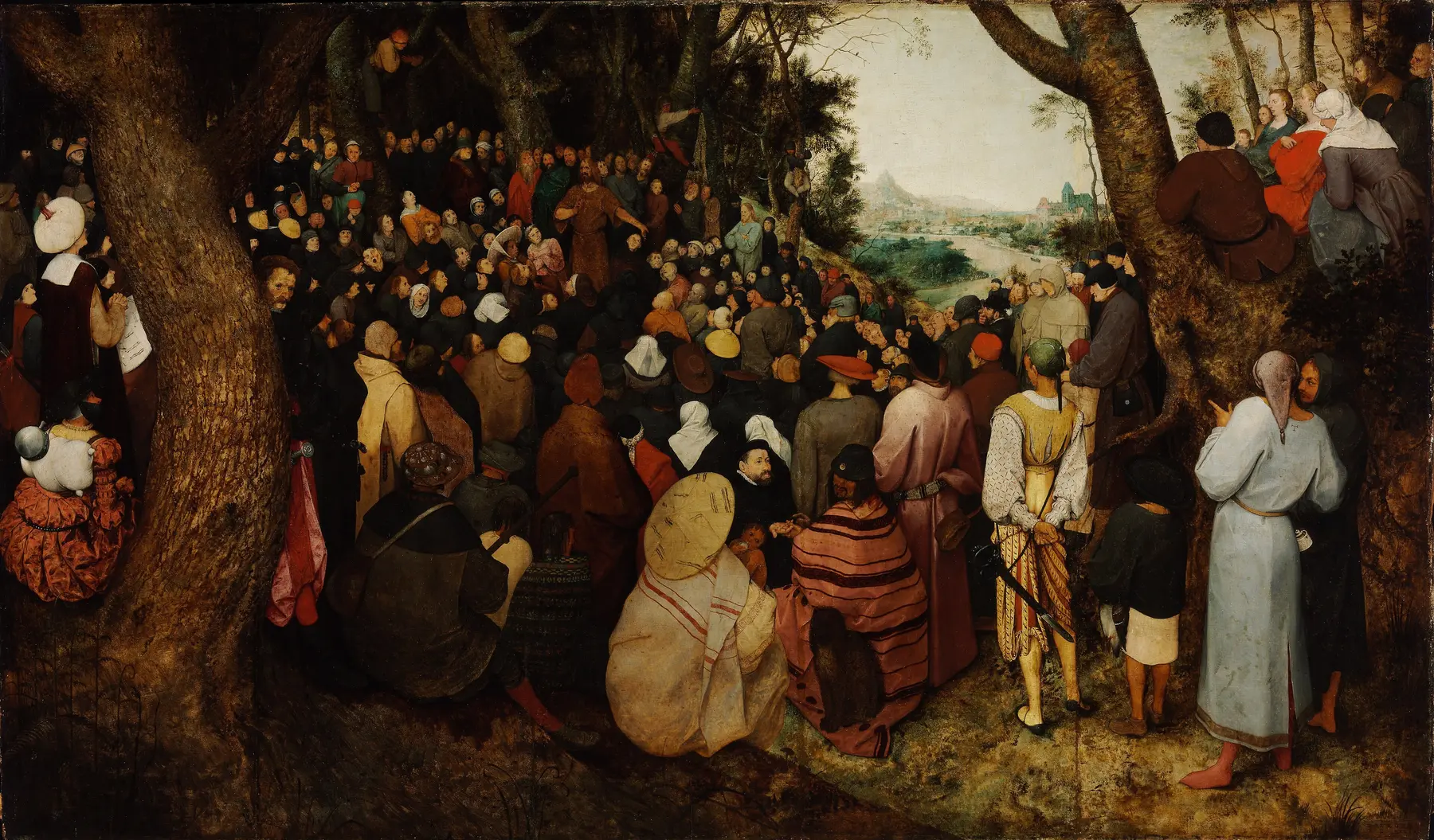
The book names the next prophet: "I will send you Elijah the prophet". Jesus identifies John the Baptist as this Elijah at Matthew 11:14 and 17:11 to 13. Jewish custom sets a cup and a chair for Elijah at Passover, and some Christian readers look for a forerunner to come.
The record, by era
The Church Fathers5 voices
But since the Savior was the beginning of the resurrection of all people, it was fitting that the Lord alone should rise from the dead, by whom too the judgment is to enter the whole world, that they who have wrestled worthily may be also crowned worthily by him, by the illustrious Arbiter. [That is, he] himself first accomplished the course, and was received into the heavens, and was set down on the right hand of God the Father, and is to be manifested again at the end of the world as judge. It is a matter of course that his forerunners must appear first, as he says by Malachi and the angel, "I will send to you Elijah the Tishbite before the Day of the Lord, the great and notable day, comes; and he shall turn the hearts of the fathers to the children, and the disobedient to the wisdom of the just, lest I come and smite the earth utterly." These, then, shall come and proclaim the manifestation of Christ that is to be from heaven; and they shall also perform signs and wonders; in order that people may be put to shame and turned to repentance for their surpassing wickedness and impiety.
A commentator
Victorinus of PettauVictorinus Commentary on the Apocalypse of the Blessed John · Written before 304.
proposed
"And I saw another angel ascending from the east, having the seal of the living God" He speaks of Elias the prophet, who is the precursor of the times of Antichrist, for the restoration and establishment of the churches from the great and intolerable persecution. We read that these things are predicted in the opening of the Old and New Testament; for He says by Malachi: "Lo, I will send to you Elias the Tishbite, to turn the hearts of the fathers to the children, according to the time of calling, to recall the Jews to the faith of the people that succeed them." And to that end He shows, as we have said, that the number of those that shall believe, of the Jews and of the nations, is a great multitude which no man was able to number. Moreover, we read in the Gospel that the prayers of the Church are sent from heaven by an angel, and that they are received against wrath, and that the kingdom of Antichrist is cast out and extinguished by holy angels; for He says: "Pray that ye enter not into temptation: for there shall be a great affliction, such as has not been from the beginning of the world; and except the Lord had shortened those days, no flesh should be saved." Therefore He shall send these seven great archangels to smite the kingdom of Antichrist; for He Himself also thus said: "Then the Son of man shall send His messengers; and they shall gather together His elect from the four corners of the wind, from the one end of heaven even to the other end thereof." For, moreover, He previously says by the prophet: "Then shall there be peace for our land, when there shall arise in it seven shepherds and eight attacks of men; and they shall encircle Assur," that is, Antichrist, "in the trench of Nimrod," that is, in the nation of the devil, by the spirit of the Church. Similarly when the keepers of the house shall be moved. […]
A commentator
Origen of AlexandriaCOMMENTARY ON THE GOSPEL OF JOHN 6:62 · Written before 253.
proposed
Who of those who hear Jesus say of John, "If you wish to receive it, he is Elijah who is to come," would not inquire how John says to those who ask, "Are you Elijah?" "I am not"? Will he not also inquire how one ought to consider John himself to be Elijah who is to come, according to Malachi's statement: … "And behold, I am sending you Elijah the Tishbite before the great and renewed Day of the Lord comes, who will restore the heart of the father to his son and the heart of a man to his neighbor, lest I come and smite the earth utterly"?
A commentator
Origen of AlexandriaCOMMENTARY ON THE GOSPEL OF JOHN 6:125 · Written before 253.
proposed
And what is the source of your belief that Elijah who is to come will baptize? He did not even baptize the wood on the altar in the times of Ahab, when it needed a bath that it might be burned up when the Lord appeared in the fire. He commanded the priests to do this, and not only once, for he says, "Do it a second time, when also they did it for a second time." And "Do it a third time, when also they did it a third time." How, then, will he who did not baptize at that time but gave the task to others, baptize when he has come in fulfillment of things said by Malachi? Christ therefore does not baptize in water but his disciples. He reserves for himself the act of baptizing with the Holy Spirit and fire.
I fully expect these heretics to seize upon the example of Elijah as reincarnated in John the Baptist, and thus they would have become our Lord espousing the doctrine of reincarnation. "Elijah indeed has come, and they knew him not." And again, "And if you are willing to receive it, here is Elijah who was to come." Was the question of the Jews to John, "Are you Elijah?" to be understood in a Pythagorean sense and not in reference to the divine pronouncement: "Behold, I send you Elijah, the Tishbite"? But their theory of transmigration refers to the recall of a soul that had died long before and to its insertion in some other body. Elijah, however, is to return not after leaving this life by death, not to be returned to his body, since he never left it, but he will come back to the world from which he has been removed. He will return not to take up a life he had left off but for the fulfillment of a prophecy. He will come back as Elijah, with the same name. How, then, could John be Elijah? The voice of the angel tells us: "And he shall go before the people in the spirit and power of Elijah," not in the soul or body of Elijah. These substances are the specific property of each man, while "spirit and power" are extrinsic gifts conferred by the grace of God, and so they may be transferred to another according to the will of God as happened long ago with respect to the spirit of Moses.
9 more voices on this verse
The Church Fathers3 voices
We must after all this turn our attention to those scriptures also which forbid our belief in such a resurrection as is held by your Animalists (for I will not call them Spiritualists), that it is either to be assumed as taking place now, as soon as men come to the knowledge of the truth, or else that it is accomplished immediately after their departure from this life... Who has yet beheld Jesus descending from heaven in like manner as the apostles saw Him ascend, according to the appointment of the two angels? [Acts 1:11] Up to the present moment they have not, tribe by tribe, smitten their breasts, looking on Him whom they pierced. [John 19:37; Zechariah 12:10] No one has as yet fallen in with Elias; [Malachi 4:5] no one has as yet escaped from Antichrist; [1 John 4:3] no one has as yet had to bewail the downfall of Babylon. [Revelation 18:2] And is there now anybody who has risen again, except the heretic? He, of course, has already quitted the grave of his own corpse — although he is even now liable to fevers and ulcers; he, too, has already trodden down his enemies — although he has even now to struggle with the powers of the world. And as a matter of course, he is already a king — although he even now owes to Cæsar the things which are Cæsar's. [Matthew 22:21]
And behold, I will send you Elijah the Tishbite before the great and notable day of the Lord.
(Ver. 5, 6.) Behold, I will send you Elijah the prophet, before the great and dreadful day of the Lord comes: and he will turn the hearts of the fathers to the children, and the hearts of the children to their fathers, lest I come and strike the earth with a curse. LXX: Behold, I will send you Elijah the Tishbite, before the great and glorious day of the Lord comes: he will turn the heart of the father to the son, and the heart of man to his neighbor; lest I come and strike the earth completely.
The Puritans and the Awakening4 voices
Elijah - Namely John the Baptist, who came in the spirit and power of Elijah, Luke i, 17, and therefore bears his name. Before - That is, immediately before; so he was born six months before Christ, and began his preaching a few years before Christ began to exercise his publick office.
When he shall be sent--before the appearing of the Messiah, which, because it was the judgment of this world, and introduced the ruin of the Jewish church and nation, is here called the coming of the great and dreadful day of the Lord.
The whole world shall then burn as an oven, and all the children of this world, that set their hearts upon it and choose their portion in it, shall take their ruin with it, and the fire then kindled shall never be quenched. In both Christ is a rejoicing light to those who serve him faithfully, to those who fear his name and give him the glory due to it (
quarantine:debris (2026-07-29) — unbalanced-parens
Behold, I will send you Elijah the prophet,....
The Nineteenth Century2 voices
A commentator
Jamieson, Fausset & Brown1802–1910
Commentary Critical and Explanatory on the Whole Bible (1871)
As Moses in Mal 4:4 represents the law, so Elijah represents the prophets. The Jews always understood it of the literal Elijah. Their saying is, "Messiah must be anointed by Elijah." As there is another consummating advent of Messiah Himself, so also of His forerunner Elijah; perhaps in person, as at the transfiguration (Mt 17:3; compare Mt 17:11).
Behold, I will send you Elijah the prophet - This is meant alone of John the Baptist, as we learn from Luk 1:17 (note), in whose spirit and power he came.
The words behind it
13 Hebrew wordsEvery Hebrew word of this verse in the order it stands, with what it means and the door to its own study. The last column counts the times a word stands in the whole Bible: the rarer the word, the more the places it appears belong together.
| Hebrew | Sound | Meaning | Word study | In the Bible |
|---|---|---|---|---|
| הִנֵּ֤ה | hineh | here! | H2009 → | 843 times |
| אָֽנֹכִי֙ | ʾanokhi | I | H595 → | |
| שֹׁלֵ֣חַ | sholeach | [am] about to send | H7971 → | 845 times |
| לָכֶ֔ם | lakhem | to you | ||
| אֵ֖ת | ʾet | <obj.> | H853 → | 10935 times |
| אֵלִיָּ֣ה | ʾeliyah | Elijah | H452 → | |
| הַנָּבִ֑יא | hanavi' | the prophet | H5030 → | |
| לִפְנֵ֗י | lifnei | <to> before | H6440 → | 2123 times |
| בּ֚וֹא | bo' | comes | H935 → | 2568 times |
| י֣וֹם | yom | [the] day of | H3117 → | 2304 times |
| יְהוָ֔ה | yahweh | Yahweh | H3068 → | 6520 times |
| הַגָּד֖וֹל | hagadol | <the> great | H1419 → | 526 times |
| וְהַנּוֹרָֽא׃ | vehanora' | and <the> awesome | H3372 → | 315 times |
הִנֵּ֤הhere!
hinehH2009 →843 times
אָֽנֹכִי֙I
ʾanokhiH595 →
שֹׁלֵ֣חַ[am] about to send
sholeachH7971 →845 times
לָכֶ֔םto you
lakhem
אֵ֖ת<obj.>
ʾetH853 →10935 times
אֵלִיָּ֣הElijah
ʾeliyahH452 →
הַנָּבִ֑יאthe prophet
hanavi'H5030 →
לִפְנֵ֗י<to> before
lifneiH6440 →2123 times
בּ֚וֹאcomes
bo'H935 →2568 times
י֣וֹם[the] day of
yomH3117 →2304 times
יְהוָ֔הYahweh
yahwehH3068 →6520 times
הַגָּד֖וֹל<the> great
hagadolH1419 →526 times
וְהַנּוֹרָֽא׃and <the> awesome
vehanora'H3372 →315 times
A shaded row is a word that stands 400 times or fewer in the Bible.
The walk
8 stopsEach card is a verse this one points to, and under it the verses that one points to in turn. Where several paths arrive at the same place, that place is listed first: the text keeps returning to it.
Through
Luke 1:17And he will go on before the Lord in the spirit and power of Elijah, to turn the hearts of the fathers to their children and the disobedient to the wisdom of the righteous—to…
it leads to
- Malachi 4:5–6
Behold, I will send you Elijah the prophet before the coming of the great and awesome Day of the LORD.
- Matthew 11:14
And if you are willing to accept it, he is the Elijah who was to come.
- Matthew 17:11–12
Jesus replied, “Elijah does indeed come, and he will restore all things.
- John 1:21–30
“Then who are you?” they inquired. “Are you Elijah?” He said, “I am not.” “Are you the Prophet?” He answered, “No.”
- Malachi 4:5–6
Through
Malachi 3:1“Behold, I will send My messenger, who will prepare the way before Me. Then the Lord whom you seek will suddenly come to His temple—the Messenger of the covenant, in whom you delight—see, He…
it leads to
- Luke 1:76
And you, child, will be called a prophet of the Most High; for you will go on before the Lord to prepare the way for Him,
Reached by 2 separate paths from here.
- Mark 1:2–3
As it is written in Isaiah the prophet: “Behold, I will send My messenger ahead of You, who will prepare Your way.”
- Matthew 11:10–11
This is the one about whom it is written: ‘Behold, I will send My messenger ahead of You, who will prepare Your way before You.’
- Luke 7:26–28
What then did you go out to see? A prophet? Yes, I tell you, and more than a prophet.
- Luke 1:76
Where this verse is studied
On this page
Studies11
On this verse
On this chapter
About Malachi
Who and where
1 name in this verse with a page on the site.
This page draws on 16 works. Open the list of works
This page draws on Adam Clarke, Commentary on the Bible; Albert Barnes, Notes, Explanatory and Practical, on the Old and New Testaments (1832-1869); Carl Friedrich Keil, The Twelve Minor Prophets; Cosmas Indicopleustes, The Christian Topography, Book 5; Edward Bouverie Pusey, The Minor Prophets: A Commentary; Hippolytus of Rome, ON THE ANTICHRIST 46; Jamieson, Fausset & Brown, Commentary Critical and Explanatory on the Whole Bible; Jerome, Commentary on Malachi; John Gill, Exposition of the Old Testament (1748-1763); John Wesley, Explanatory Notes upon the Old Testament; Matthew Henry, Commentary on the Whole Bible; Origen of Alexandria, COMMENTARY ON THE GOSPEL OF JOHN 6:62; Origen of Alexandria, COMMENTARY ON THE GOSPEL OF JOHN 6:125; Tertullian, ON THE SOUL 36:6; Tertullian, On the Resurrection of the Flesh, Chapter 22 and Victorinus of Pettau, Victorinus Commentary on the Apocalypse of the Blessed John.