
Mark 6:56
in Mark 6And wherever He went—villages and towns and countrysides—they laid the sick in the marketplaces and begged Him just to let them touch the fringe of His cloak. And all who touched Him were healed.
BSB
The same verse in ASV and KJV ▾
ASV
And wheresoever he entered, into villages, or into cities, or into the country, they laid the sick in the marketplaces, and besought him that they might touch if it were but the border of his garment: and as many as touched him were made whole.
KJV
And whithersoever he entered, into villages, or cities, or country, they laid the sick in the streets, and besought him that they might touch if it were but the border of his garment: and as many as touched him were made whole.
⋯
This verse in Mark 6
Commentary
13 notes on this verseThe Lord of hosts was not signaling weakness as he gave sight to the blind, made the crooked to stand upright, raised the dead to life, anticipated the effects of medicine at our prayers, and cured those who sought after him. Those who merely touched the fringe of his robe were healed. Surely you did not think it was some divine weakness, you speculators, when you saw him wounded. Indeed there were wounds that pierced his body, but they did not demonstrate weakness but strength.
This site's exposition
carry about in beds those that were sick
on Mark 6:55-56
The whole region runs to bring the sick on their beds wherever word comes that Jesus is present, laying them in the streets of villages, cities, and countryside alike, a scene of organized, urgent faith rather than random crowding. Touching but the border of his garment recalls the woman with the issue of blood earlier in the Gospel, and the chapter closes with the same principle proven at scale, as many as touched him were made whole. The bench reads the chapter's final verse as summary rather than single incident, months of ministry compressed into one sweeping sentence of healing.
The record, by era
The Medieval Church5 voices
Furthermore that which is said, And as many as touched him were made whole, shall be fulfilled, when grief and mourning shall fly away.
They did not yet invite Him into their homes, but themselves brought the sick, beseeching to touch even the hem of His garment. For the miracle performed on the woman with the issue of blood had come to the knowledge of all and produced in …
(ubi sup.) Again, in a mystical sense, do thou understand by the hem of His garment the slightest of His commandments, for whosoever shall transgress it shall be called the least in the kingdom of heaven, (Matt. 5:19) or else His assumption of our flesh, by which we have come to the Word of God, and afterwards, shall have the enjoyment of His majesty.
And wherever he entered into villages, cities, or the countryside, they laid the sick in the marketplaces and begged him to let them touch even the fringe of his garment. And all who touched him were healed. Those who are unwell should not touch the …
For they did not call Him to their houses that He might heal them, but rather the sick themselves were brought to Him. Wherefore it also follows, And whithersoever he entered into villages, or cities, or country, &c. For the miracle which had been wrought on the woman with an issue of blood, had reached the ears of many, and caused in them that great faith, by which they were healed. It goes on, And as many as touched him were made whole.
6 more voices on this verse
The Puritans and the Awakening2 voices
And whithersoever he entered, into villages, or cities, or country,....
Christ makes a visit to his own country, the place not of his birth, but of his education; that was Nazareth; where his relations were. He had been in danger of his life among them ( Luke iv. 29 ), and yet he came among them again; so strangely doth he wait to be gracious, and seek the salvation of his enemies.
The Nineteenth Century4 voices
Villages - Probably small towns near cities. Country - Villages at a distance from cities and large public towns. See the notes on Mat 14:34-36 (note). Christ went about doing good - he confined his ministry and miracles to no place - wherever he went, they stood in need of his help; and whenever they required his assistance, they had it granted immediately. Our Lord’s conduct, in these respects, is a perfect pattern for every preacher of his Gospel.
A commentator
J.C. Ryle1816–1900
Expository Thoughts on the Gospels: Mark (lightly modernized text, Grace Gems edition) (1857)
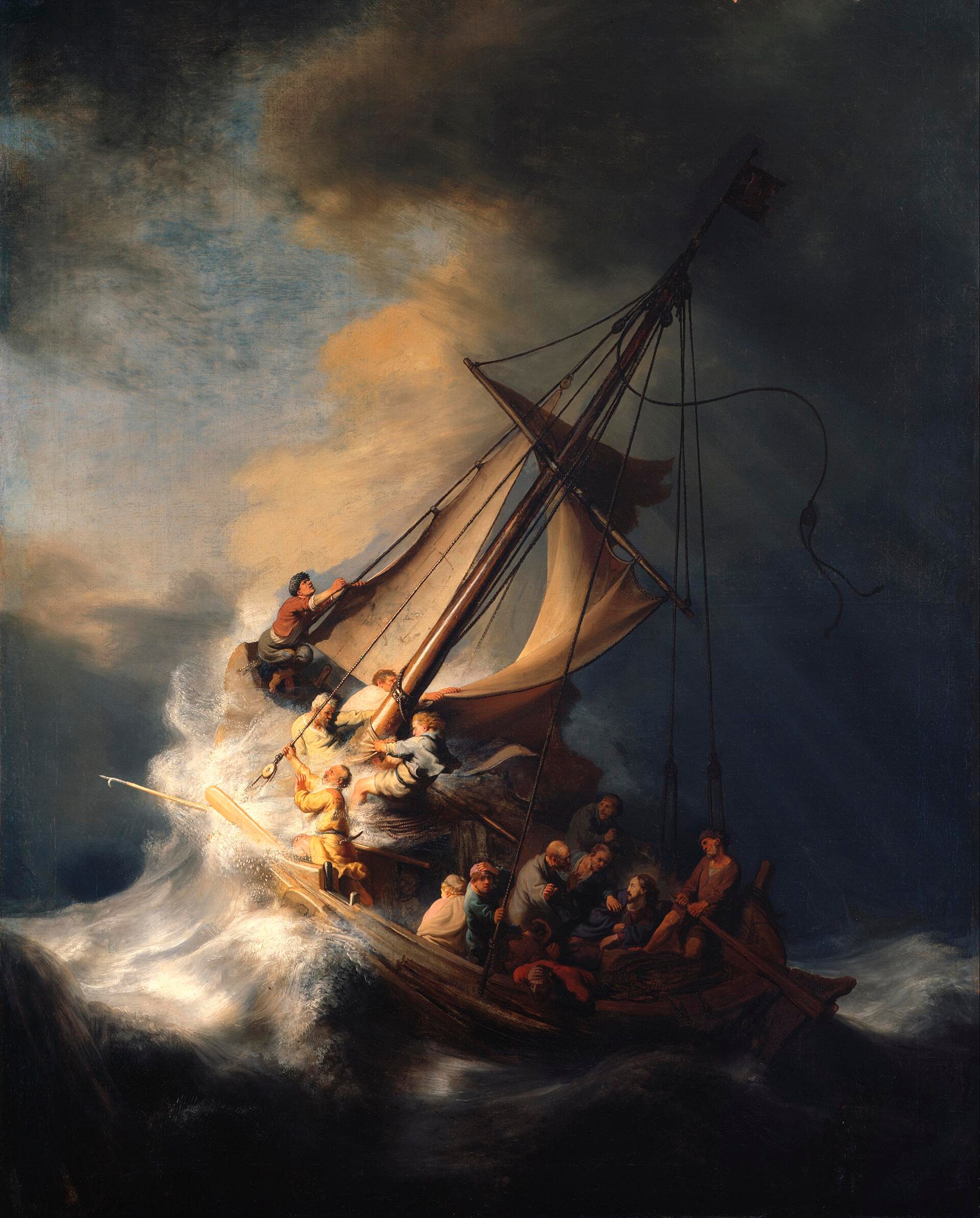
The event first recorded in these verses, is a beautiful emblem of the position of all believers, between the first and second advents of Jesus Christ. Like the disciples, we are now tossed to and fro by storms, and do not enjoy the visible presence of our Lord. Like the disciples, we shall see our Lord face to face again, though it may be a time of great extremity, when He returns. Like the disciples, we shall see all things changed for the better, when our Master comes to us. We shall no longer be buffeted by storms.
A commentator
Jamieson, Fausset & Brown1802–1910
Commentary Critical and Explanatory on the Whole Bible (1871)
The time corresponds to that mentioned (Joh 7:1), when He "walked in Galilee," instead of appearing in Jerusalem at the passover, "because the Jews," that is, the rulers, "sought to kill Him"--while the people sought to enthrone Him!
A commentator
J.C. Ryle1816–1900
Expository Thoughts on the Gospels: Mark (lightly modernized text, Grace Gems edition) (1857)
proposed
The event first recorded in these verses, is a beautiful emblem of the position of all believers, between the first and second advents of Jesus Christ. Like the disciples, we are now tossed to and fro by storms, and do not enjoy the visible presence of our Lord. Like the disciples, we shall see our Lord face to face again, though it may be a time of great extremity, when He returns. Like the disciples, we shall see all things changed for the better, when our Master comes to us. We shall no longer be buffeted by storms. There will be a great calm. There is nothing fanciful in such an application of the passage. We need not doubt that there is a deep meaning in every step of His life, who was "God manifest in the flesh." For the present, however, let us confine ourselves to the plain, practical lessons which these verses contain. Let us notice, in the first place, how our Lord sees the troubles of His believing people, and in due time will help them . We read that when "the ship was in the midst of the sea, and He alone on the land," He "saw His disciples toiling in rowing" came to them walking on the sea — cheered them with the gracious words, "It is I, be not afraid" and changed the storm into a calm. There are thoughts of comfort here for all true believers. Wherever they may be, or whatever their circumstances, the Lord Jesus sees them. Alone, or in company — in sickness or in health — by sea or by land — in perils in the city — in perils in the wilderness — the same eye which saw the disciples tossed on the lake, is ever looking at us. We are never beyond the reach of His care. Our way is never hidden from Him. He knows the path that we take, and is still able to help. He may not come to our aid at the time we like best, but He will never allow us utterly to fail. He who walked upon the water never changes.
The words behind it
35 Greek wordsEvery Greek word of this verse in the order it stands, with what it means and the door to its own study. The last column counts the times a word stands in the whole Bible: the rarer the word, the more the places it appears belong together.
| Greek | Sound | Meaning | Word study | In the Bible |
|---|---|---|---|---|
| καὶ | kai | And | G2532 → | 9120 times |
| ὅπου | hopou | wherever | G3699 → | 82 times |
| ἂν | an | maybe | G302 → | 165 times |
| εἰσεπορεύετο | eiseporeueto | He was entering | G1531 → | 18 times |
| εἰς | eis | into | G1519 → | 1755 times |
| κώμας | komas | villages | G2968 → | 27 times |
| ἢ | e | or | G2228 → | 342 times |
| εἰς | eis | into | G1519 → | 1755 times |
| πόλεις | poleis | cities | G4172 → | 163 times |
| ἢ | e | or | G2228 → | 342 times |
| εἰς | eis | into | G1519 → | 1755 times |
| ἀγροὺς | agrous | fields | G68 → | 35 times |
| ἐν | en | in | G1722 → | 2738 times |
| ταῖς | tais | the | G3588 → | 19766 times |
| ἀγοραῖς | agorais | marketplaces | G58 → | 11 times |
| ἐτίθεσαν | etithesan | they were laying | G5087 → | 100 times |
| τοὺς | tous | those | G3588 → | 19766 times |
| ἀσθενοῦντας | asthenountas | ailing | G770 → | |
| καὶ | kai | and | G2532 → | 9120 times |
| παρεκάλουν | parekaloun | were begging | G3870 → | 108 times |
| αὐτὸν | auton | Him | G846 → | 5565 times |
| ἵνα | ina | that | G2443 → | 668 times |
| κἂν | kan | only | G2532 →G1437 → | 352 times |
| τοῦ | tou | of the | G3588 → | 19766 times |
| κρασπέδου | kraspedou | fringe | G2899 → | |
| τοῦ | tou | the | G3588 → | 19766 times |
| ἱματίου | himatiou | clothing | G2440 → | 60 times |
| αὐτοῦ | autou | of Him | G846 → | 5565 times |
| ἅψωνται, | hapsontai | they shall touch, | G681 → | 39 times |
| καὶ | kai | and | G2532 → | 9120 times |
| ὅσοι | hosoi | as many as | G3745 → | 110 times |
| ἂν | an | maybe | G302 → | 165 times |
| ἥψαντο | hepsanto | touched | G681 → | 39 times |
| αὐτοῦ | autou | Him | G846 → | 5565 times |
| ἐσῴζοντο.¶ | esozonto | were being healed. | G4982 → | 105 times |
καὶAnd
kaiG2532 →9120 times
ὅπουwherever
hopouG3699 →82 times
ἂνmaybe
anG302 →165 times
εἰσεπορεύετοHe was entering
eiseporeuetoG1531 →18 times
εἰςinto
eisG1519 →1755 times
κώμαςvillages
komasG2968 →27 times
ἢor
eG2228 →342 times
εἰςinto
eisG1519 →1755 times
πόλειςcities
poleisG4172 →163 times
ἢor
eG2228 →342 times
εἰςinto
eisG1519 →1755 times
ἀγροὺςfields
agrousG68 →35 times
ἐνin
enG1722 →2738 times
ταῖςthe
taisG3588 →19766 times
ἀγοραῖςmarketplaces
agoraisG58 →11 times
ἐτίθεσανthey were laying
etithesanG5087 →100 times
τοὺςthose
tousG3588 →19766 times
ἀσθενοῦνταςailing
asthenountasG770 →
καὶand
kaiG2532 →9120 times
παρεκάλουνwere begging
parekalounG3870 →108 times
αὐτὸνHim
autonG846 →5565 times
ἵναthat
inaG2443 →668 times
κἂνonly
τοῦof the
touG3588 →19766 times
κρασπέδουfringe
kraspedouG2899 →
τοῦthe
touG3588 →19766 times
ἱματίουclothing
himatiouG2440 →60 times
αὐτοῦof Him
autouG846 →5565 times
ἅψωνται,they shall touch,
hapsontaiG681 →39 times
καὶand
kaiG2532 →9120 times
ὅσοιas many as
hosoiG3745 →110 times
ἂνmaybe
anG302 →165 times
ἥψαντοtouched
hepsantoG681 →39 times
αὐτοῦHim
autouG846 →5565 times
ἐσῴζοντο.¶were being healed.
esozontoG4982 →105 times
A shaded row is a word that stands 400 times or fewer in the Bible.
The walk
8 stopsEach card is a verse this one points to, and under it the verses that one points to in turn. Where several paths arrive at the same place, that place is listed first: the text keeps returning to it.
Through
Matthew 9:20Suddenly a woman who had suffered from bleeding for twelve years came up behind Him and touched the fringe of His cloak.
it leads to
- Matthew 14:36
and begged Him just to let them touch the fringe of His cloak. And all who touched Him were healed.
Reached by 3 separate paths from here.
- Luke 8:43–56
including a woman who had suffered from bleeding for twelve years. She had spent all her money on physicians, but no one was able to heal her.
- Acts 5:15
As a result, people brought the sick into the streets and laid them on cots and mats, so that at least Peter’s shadow might fall on some of them as he passed by.
Reached by 2 separate paths from here.
- Mark 5:25–43
And a woman was there who had suffered from bleeding for twelve years.
- Deuteronomy 22:12
You are to make tassels on the four corners of the cloak you wear.
- Matthew 14:36
Through
Luke 6:19The entire crowd was trying to touch Him, because power was coming from Him and healing them all.
it leads to
- Mark 3:10
For He had healed so many that all who had diseases were pressing forward to touch Him.
- Acts 5:15–16
As a result, people brought the sick into the streets and laid them on cots and mats, so that at least Peter’s shadow might fall on some of them as he passed by.
- Mark 5:30
At once Jesus was aware that power had gone out from Him. Turning to the crowd, He asked, “Who touched My garments?”
- Mark 3:10
Where this verse is studied
About Mark
This page draws on 13 works. Open the list of works
This page draws on Adam Clarke, Commentary on the Bible; Ambrose of Milan, Exposition of the Christian Faith 4.5.54-55; Bede, Catena Aurea by Aquinas; Bede, On the Gospel of Mark; J. C. Ryle, Expository Thoughts on the Gospels, Mark; J.C. Ryle, Expository Thoughts on the Gospels: Mark (lightly modernized text, Grace Gems edition); Jamieson, Fausset & Brown, Commentary Critical and Explanatory on the Whole Bible; John Gill, Exposition of the New Testament; John Gill, Exposition of the New Testament (1746-1748); Matthew Henry, Commentary on the Whole Bible; Pseudo-Jerome, Catena Aurea by Aquinas; Theophylact of Ohrid, Commentary on Mark and Theophylact of Ohrid, Catena Aurea by Aquinas.