
Genesis 2:18
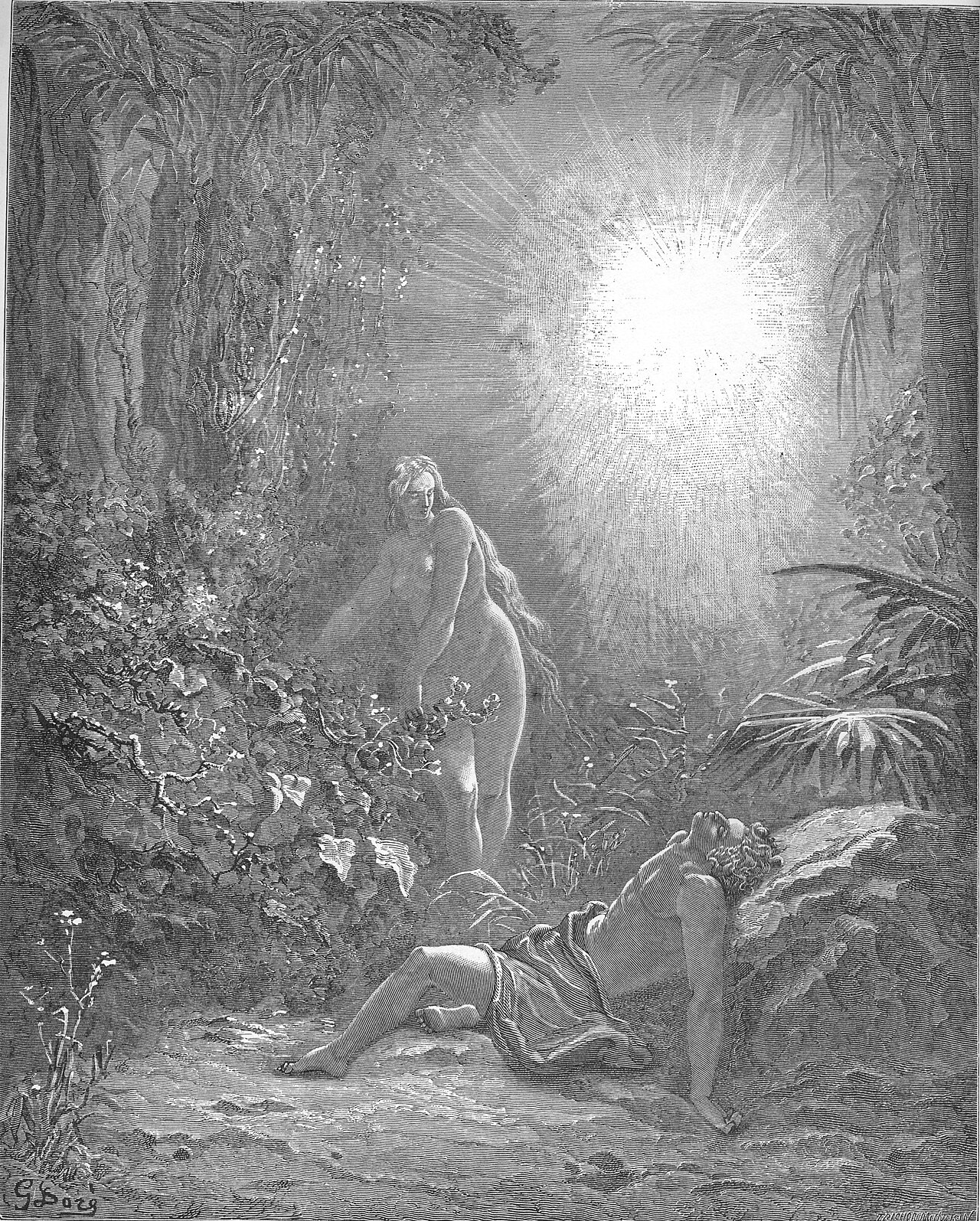
in Genesis 2The LORD God also said, “It is not good for the man to be alone. I will make for him a suitable helper.”
BSB
The same verse in ASV and KJV ▾
ASV
And Jehovah God said, It is not good that the man should be alone; I will make him a help meet for him.
KJV
And the Lord God said, It is not good that the man should be alone; I will make him an help meet for him.
⋯
This verse in Genesis 2
Commentary
16 notes on this verseStill another question arises, that concerning the saying of the Lord: 'It is not good for man to be alone.' [ Gen 2:18 ] Recognize the fact, first of all, that, when God created man from the slime of the earth, He did not add: 'God saw that it was good,' [ Gen 1:14 ] as He did in the case of each of His works.
This site's exposition
a suitable helper
The man being alone is the first thing in the account God calls not good. The Hebrew behind a suitable helper is ezer kenegdo, one answering to him, and ezer is the word most often used of God Himself coming to the aid of His people. Clarke reads it as a helper standing opposite the man.
The record, by era
The Church Fathers5 voices
[In goodness God] provided also a help meet for [the man] that there might not be anything in his lot that was not good. For God said that it is not good for the man to be alone. He knew full well what a blessing the gender of Mary would be to him and also to the church.
A commentator
John ChrysostomCommentary (church-history corpus) · Written in the 5th century.
proposed
The moment has arrived at long last, however, it would seem, for us to proceed with the theme of the reading. "The Lord God said," the text goes on, "'It is not good for the human being to be alone.'" [ Gen 2:18 ] See how once again it said in the same way as previously, "The Lord God," so that we should rivet the words on our minds and not think the fruit of our human reasoning to be superior to Sacred Scripture. "The Lord God said," it says, "'It is not good for the human being to be alone.'" Notice how the good God does not stop short, but adds kindness to kindness, and, in an abundance of riches, wants to clothe this rational being in every degree of esteem, and along with this esteem to regale him with a life of ease. The text says, remember, "The Lord God said, 'It is not good for the human being to be alone. Let us make him a helpmate like himself.'" Notice here again the expression, "'Let us make.'" In other words, just as he said at the beginning in the case of the formation of the human being, "'Let us make a human being in our image and likeness,'" so now, too, on the point of forming woman he employs the same expression, saying, "'Let us make.'" To whom does he address it? Not to any created power, but to the one begotten of him, Wonderful Counsellor, Figure of Authority, Prince of Peace, his only begotten Son. [ Isa 9:6 ] So that Adam may learn that the being in process of being formed is meant to enjoy equality of esteem with him, accordingly just as he said in the man's case, "'Let us make,'" so he now says also, "'Let us make him a helpmate like himself.'" Both expressions, helpmate and like himself have much significance.
Then, man was formed last, when the creation had been accomplished; now, on the contrary, the new man is formed before the new creation; he is born first, and then the world is fashioned a new. And as in the beginning He formed him entire, so He creates him entire now. Then He said, "Let us make for him a help," but here He said nothing of the kind. What other help shall he need, who has received the gift of the Spirit? What further need of assistance has he, who belongs to the Body of Christ? Then He made man in the image of God, now He hath united him with God Himself; then He bade him rule over the fishes and beasts, now He hath exalted our first-fruits above the heavens; then He gave him a garden for his abode, now He hath opened heaven to us; then man was formed on the sixth day, when the world was almost finished; but now on the first, at the very beginning, at the time when light was made before. From all which it is plain, that the things accomplished belonged to another and a better life, and to a condition having no end.
Inside the paradise, the woman was very diligent; she was also attentive to the sheep and cattle, the herds and droves that were in the fields.
Why was it that, while all the irrational animals were created by God, male and female at the same time, man alone was not created with the female, but remained quite solitary until the female was made later on?
9 more voices on this verse
The Church Fathers1 voice
A commentator
Philo of Alexandria-20–50
QUESTIONS AND ANSWERS ON GENESIS, I · Written before 50.
proposed
(17) Why God says, "It is not good for man to be alone; let us make him a help meet for him?" [Gen 2:18] By these words God intimates that there is to be a communion, not with all men, but with those who are …
The Medieval Church1 voice
The Lord God also said: It is not good for man to be alone, let us make a helper suitable for him. And this speech of God is to be believed to have been made not by a corporeal voice emitted externally into the air, …
The Puritans and the Awakening3 voices
(2.) The commencement of the kingdom of grace, in the sanctification of the sabbath day, ver. 3. He rested on that day, and took a complacency in his creatures, and then sanctified it, and appointed us on that day to rest and take a complacency in the Creator; and his rest is in the fourth commandment made a reason for ours after six days labour.
quarantine:anchor (2026-07-29) — cites-ver-3-anchored-18-25
2 And on the seventh day God ended his work which he had made; and he rested on the seventh day from all his work which he had made. 3 And God blessed the seventh day, and sanctified it: because that in it he had rested from all his work which God created and made. The settlement of the kingdom of nature, in God's resting from the work of creation,
quarantine:scripture (2026-07-29) — scripture-overlap:87%@v2-4
And the Lord God said,....
The Nineteenth Century3 voices
It is not good that the man should be alone - לבדו lebaddo; only himself. I will make him a help meet for him; עזר כנגדו ezer kenegdo, a help, a counterpart of himself, one formed from him, and a perfect resemblance of his person. If the word be rendered scrupulously literally, it signifies one like, or as himself, standing opposite to or before him. And this implies that the woman was to be a perfect resemblance of the man, possessing neither inferiority nor superiority, but being in all things like and equal to himself.
A commentator
Jamieson, Fausset & Brown1802–1910
Commentary Critical and Explanatory on the Whole Bible (1871)
proposed
it is not good for the man to be alone--In the midst of plenty and delights, he was conscious of feelings he could not gratify. To make him sensible of his wants,
quarantine:debris (2026-07-29) — starts-lowercase
A commentator
Albert Barnes1798–1870
Notes, Explanatory and Practical, on the Old and New Testaments (1832-1869)
proposed
- XIII. The Naming of the Animals Here man’s intellectual faculties proceed from the passive and receptive to the active and communicative stage. This advance is made in the review and designation of the various species of animals that frequent the land and skies. A new and final need of man is stated in Gen 2:18. The Creator himself, in whose image he was made, had revealed himself to him in language. This, among many other effects, awakened the social affection. This affection was the index of social capacity. The first step towards communication between kindred spirits was accomplished when Adam heard and understood spoken language. Beyond all this God knew what was in the man whom he had formed. And he expresses this in the words, “It is not good for the man to be alone.” He is formed to be social, to hold converse, not only with his superior, but also with his equal. As yet he is but a unit, an individual. He needs a mate, with whom he may take sweet counsel. And the benevolent Creator resolves to supply this want. “I will make him a helpmeet for him” - one who may not only reciprocate his feelings, but take an intelligent and appropriate part in his active pursuits.
Modern Voices1 voice
If we take any other doctrine that has been called old-fashioned we shall find the case the same. It is the same, for instance, in the deep matter of the Trinity.
The words behind it
12 Hebrew wordsEvery Hebrew word of this verse in the order it stands, with what it means and the door to its own study. The last column counts the times a word stands in the whole Bible: the rarer the word, the more the places it appears belong together.
| Hebrew | Sound | Meaning | Word study | In the Bible |
|---|---|---|---|---|
| וַיֹּ֙אמֶר֙ | vaiyomer | and he said | H559 → | 5305 times |
| יְהוָ֣ה | yahweh | Yahweh | H3068 → | 6520 times |
| אֱלֹהִ֔ים | ʾelohim | God | H430 → | 2601 times |
| לֹא־ | lo'- | not | H3808 → | 5168 times |
| ט֛וֹב | tov | [is] good | H2896 → | 538 times |
| הֱי֥וֹת | heyot | to be | H1961 → | 3559 times |
| הָֽאָדָ֖ם | haadam | the man | H120 → | 551 times |
| לְבַדּ֑וֹ | levado | to only him | H905 → | 200 times |
| אֶֽעֱשֶׂהּ־ | ʾeeseh- | I will make | H6213 → | 2628 times |
| לּ֥וֹ | lo | for <the> him | ||
| עֵ֖זֶר | ʾezer | a helper | H5828 → | |
| כְּנֶגְדּֽוֹ׃ | kenegdo | like before him | H5048 → | 151 times |
וַיֹּ֙אמֶר֙and he said
vaiyomerH559 →5305 times
יְהוָ֣הYahweh
yahwehH3068 →6520 times
אֱלֹהִ֔יםGod
ʾelohimH430 →2601 times
לֹא־not
lo'-H3808 →5168 times
ט֛וֹב[is] good
tovH2896 →538 times
הֱי֥וֹתto be
heyotH1961 →3559 times
הָֽאָדָ֖םthe man
haadamH120 →551 times
לְבַדּ֑וֹto only him
levadoH905 →200 times
אֶֽעֱשֶׂהּ־I will make
ʾeeseh-H6213 →2628 times
לּ֥וֹfor <the> him
lo
עֵ֖זֶרa helper
ʾezerH5828 →
כְּנֶגְדּֽוֹ׃like before him
kenegdoH5048 →151 times
A shaded row is a word that stands 400 times or fewer in the Bible.
The walk
8 stopsEach card is a verse this one points to, and under it the verses that one points to in turn. Where several paths arrive at the same place, that place is listed first: the text keeps returning to it.
Through
1 Peter 3:7Husbands, in the same way, treat your wives with consideration as a delicate vessel, and with honor as fellow heirs of the gracious gift of life, so that your prayers will not be hindered.
it leads to
- Colossians 3:19
Husbands, love your wives and do not be harsh with them.
- Genesis 2:23–24
And the man said: “This is now bone of my bones and flesh of my flesh; she shall be called ‘woman,’ for out of man she was taken.”
- Ephesians 5:25–28
Husbands, love your wives, just as Christ loved the church and gave Himself up for her
- Matthew 19:3–9
Then some Pharisees came and tested Him by asking, “Is it lawful for a man to divorce his wife for any reason?”
- Colossians 3:19
Through
Proverbs 18:22He who finds a wife finds a good thing and obtains favor from the LORD.
it leads to
- Proverbs 19:14
Houses and wealth are inherited from fathers, but a prudent wife is from the LORD.
- Proverbs 31:10–31
A wife of noble character, who can find? She is far more precious than rubies.
- Proverbs 12:4
A wife of noble character is her husband’s crown, but she who causes shame is like decay in his bones.
- Ecclesiastes 9:9
Enjoy life with your beloved wife all the days of the fleeting life that God has given you under the sun—all your fleeting days. For this is your portion in life and in your…
- Proverbs 19:14
Where this verse is studied
On this page
Studies16
On this chapter
About Genesis
This page draws on 15 works. Open the list of works
This page draws on Adam Clarke, Commentary on the Bible; Albert Barnes, Notes, Explanatory and Practical, on the Old and New Testaments (1832-1869); Ambrose of Milan, On Paradise; Bede, Commentary on Genesis (Hexaemeron); Cosmas Indicopleustes, The Christian Topography, Book 3; Ephrem the Syrian, COMMENTARY ON GENESIS 2.11; GK Chesterton, Orthodoxy, Ch. 8: The Romance of Orthodoxy (1908); Jamieson, Fausset & Brown, Commentary Critical and Explanatory on the Whole Bible; John Chrysostom, Commentary (church-history corpus); John Chrysostom, HOMILIES ON JOHN 25.2; John Gill, Exposition of the Old Testament (1748-1763); John Wesley, Explanatory Notes upon the Old Testament; Matthew Henry, Commentary on the Whole Bible; Philo of Alexandria, QUESTIONS AND ANSWERS ON GENESIS, I and Tertullian, AGAINST MARCION 2.4.