
Exodus 20:18
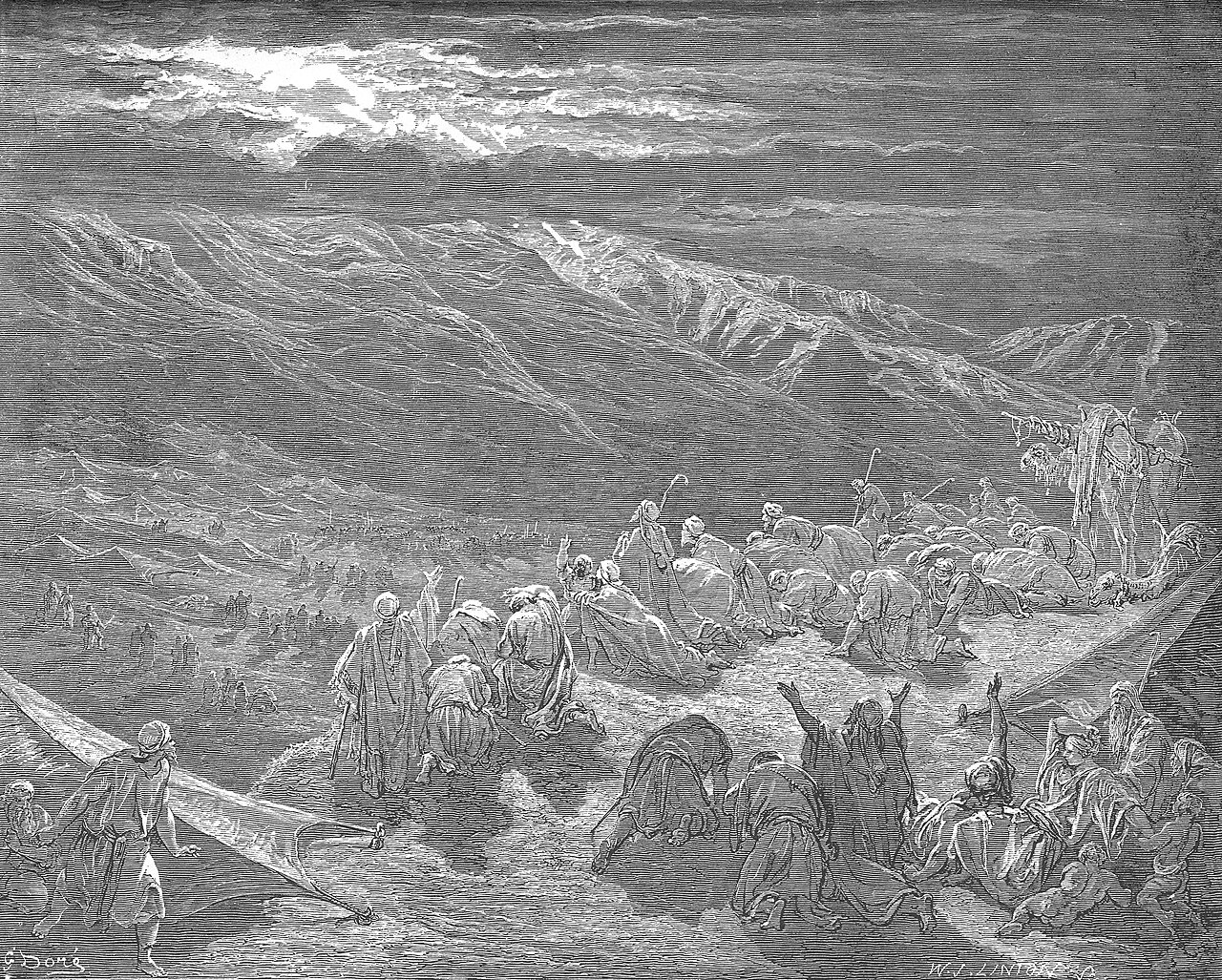
in Exodus 20When all the people witnessed the thunder and lightning, the sounding of the ram’s horn, and the mountain enveloped in smoke, they trembled and stood at a distance.
BSB
The same verse in ASV and KJV ▾
ASV
And all the people perceived the thunderings, and the lightnings, and the voice of the trumpet, and the mountain smoking: and when the people saw it, they trembled, and stood afar off.
KJV
And all the people saw the thunderings, and the lightnings, and the noise of the trumpet, and the mountain smoking: and when the people saw it, they removed, and stood afar off.
⋯
This verse in Exodus 20
Commentary
8 notes on this verseAnd all the people saw the thunderings, and the lightnings,.... That is, they heard the one, and saw the other; they heard the dreadful volleys of thunder, and saw the amazing flashes of lightning, which were like lamps and torches, as the word used signifies; by a communication of senses, one sense is put for another, and the sense of sight being the principal, as Ben Melech observes, it is put for the rest, and so in the following.
This site's exposition
all the people saw the thunderings
on Exodus 20:18-19
The people see the thunder and the trumpet and move back, and their request is that Moses stand between them and the voice. Deuteronomy 5:28 records God's answer, that they have well said all that they have spoken, and Deuteronomy 18:15 to 18:18 meets the request with the promise of a prophet like unto Moses from among their brethren. Peter applies that promise to Christ at Acts 3:22, so the New Testament reads this moment of fear as the origin of a promise.
The record, by era
The Puritans and the Awakening2 voices
It was an indication of the terror of those convictions which the law brings into conscience, to prepare the soul for the comforts of the gospel. Thus was the law given by Moses in such a way as might startle, affright, and humble men, that the grace and truth which came by Jesus Christ might be the more welcome.
It was an indication of the terror of those convictions which the law brings into conscience, to prepare the soul for the comforts of the gospel. Thus was the law given by Moses in such a way as might startle, affright, and humble men, that the grace and truth which came by Jesus Christ might be the more welcome.
The Nineteenth Century3 voices
And all the people saw the thunderings, etc. - They had witnessed all these awful things before, (see Exo 19:16), but here they seem to have been repeated; probably at the end of each command, there was a peal of thunder, a blast of the trumpet, and a gleam of lightning, to impress their hearts the more deeply with a due sense of the Divine Majesty, of the holiness of the law which was now delivered, and of the fearful consequences of disobedience.
And all the people saw the thunderings, and the lightnings, and the noise of the trumpet, and the mountain smoking: and when the people saw it, they removed, and stood afar off. And they said unto Moses, Speak thou with us, and we will hear: but let not God speak with us, lest we die. And Moses said unto the people, Fear not: for God is come to prove you, and that His fear may be before your faces, that ye sin not."’Exodus 20:18-20. THE GIVING of the law was glorious with pomp of power.
And all the people saw the thunderings, and the lightnings, and the noise of the trumpet, and the mountain smoking: and when the people saw it, they removed, and stood afar off. And they said unto Moses, Speak thou with us, and we will hear: but let not God speak with us, lest we die. And Moses said unto the people, Fear not: for God is come to prove you, and that His fear may be before your faces, that ye sin not."’Exodus 20:18-20. THE GIVING of the law was glorious with pomp of power. The blaze of splendor was intended to impress the people with it sense of the authority of the law, by letting them see the greatness of the Lawgiver. It was meet that with great solemnity the law of the Most High should be proclaimed, that Israel might have a holy reverence for its commands. This terrible grandeur may also have been intended to suggest to the people the condemning force of the law. Not with sweet sound of harp, nor with the song of angels, was the law given; but with an awful voice from amid a terrible burning. Not in itself is the law condemnatory; for if there could have been life by any law, it would have been by this law: but by reason of man's sinfulness, the law worketh wrath; and to indicate this, it was made public with accompaniments of fear and death: the battalions of Omnipotence marshaled upon the scene; the dread artillery of God, with awful salvos, adding emphasis to every syllable. The tremendous scene at Sinai was also in some respects a prophecy, if not a rehearsal, of the Day of Judgment. If the giving of the law, while it was yet unbroken, was attended with such a display of awe-inspiring power, what will that day be when the Lord shall, with flaming fire, take vengeance on those who have willfully broken His law? To us, that day at Horeb is a type of the action of the law in our nature: thus doth the law deal with our consciences and hearts.
1 more voice on this verse
The Nineteenth Century1 voice
A commentator
Albert Barnes1798–1870
Notes, Explanatory and Practical, on the Old and New Testaments (1832-1869)
proposed
Compare Deu 5:22-31. Aaron Exo 19:24 on this occasion accompanied Moses in drawing near to the thick darkness. Exo 20:22 to Exo 23:33 is a series of laws which we may identify with what was written by Moses in the book called the book of the covenant, and read by him in the audience of the people Exo 24:7. The document cannot be regarded as a strictly systematic whole. Portions of it were probably traditional rules handed down from the patriarchs, and retained by the Israelites in Egypt.
The words behind it
18 Hebrew wordsEvery Hebrew word of this verse in the order it stands, with what it means and the door to its own study. The last column counts the times a word stands in the whole Bible: the rarer the word, the more the places it appears belong together.
| Hebrew | Sound | Meaning | Word study | In the Bible |
|---|---|---|---|---|
| וְכָל־ | vekhol | and all | H3605 → | 5413 times |
| הָעָם֩ | haam | the people | H5971 → | 1873 times |
| רֹאִ֨ים | roim | [were] seeing | H7200 → | 1300 times |
| אֶת־ | ʾet- | <obj.> | H853 → | 10935 times |
| הַקּוֹלֹ֜ת | hakolot | the thunder claps | H6963 → | 506 times |
| וְאֶת־ | veet | and <obj.> | H853 → | 10935 times |
| הַלַּפִּידִ֗ם | halapidim | the lightning | H3940 → | |
| וְאֵת֙ | veet | and <obj.> | H853 → | 10935 times |
| ק֣וֹל | kol | [the] sound of | H6963 → | 506 times |
| הַשֹּׁפָ֔ר | hashofar | the ram's horn | H7782 → | 72 times |
| וְאֶת־ | veet | and <obj.> | H853 → | 10935 times |
| הָהָ֖ר | hahar | the mountain | H2022 → | 546 times |
| עָשֵׁ֑ן | ʾashen | smoking | H6226 → | |
| וַיַּ֤רְא | vaiyar' | and it saw | H7200 → | 1300 times |
| הָעָם֙ | haam | the people | H5971 → | 1873 times |
| וַיָּנֻ֔עוּ | vaiyanuu | and they trembled | H5128 → | |
| וַיַּֽעַמְד֖וּ | vaiyaamdu | and they stood | H5975 → | 521 times |
| מֵֽרָחֹֽק׃ | merachok | from a distance | H7350 → | 84 times |
וְכָל־and all
vekholH3605 →5413 times
הָעָם֩the people
haamH5971 →1873 times
רֹאִ֨ים[were] seeing
roimH7200 →1300 times
אֶת־<obj.>
ʾet-H853 →10935 times
הַקּוֹלֹ֜תthe thunder claps
hakolotH6963 →506 times
וְאֶת־and <obj.>
veetH853 →10935 times
הַלַּפִּידִ֗םthe lightning
halapidimH3940 →
וְאֵת֙and <obj.>
veetH853 →10935 times
ק֣וֹל[the] sound of
kolH6963 →506 times
הַשֹּׁפָ֔רthe ram's horn
hashofarH7782 →72 times
וְאֶת־and <obj.>
veetH853 →10935 times
הָהָ֖רthe mountain
haharH2022 →546 times
עָשֵׁ֑ןsmoking
ʾashenH6226 →
וַיַּ֤רְאand it saw
vaiyar'H7200 →1300 times
הָעָם֙the people
haamH5971 →1873 times
וַיָּנֻ֔עוּand they trembled
vaiyanuuH5128 →
וַיַּֽעַמְד֖וּand they stood
vaiyaamduH5975 →521 times
מֵֽרָחֹֽק׃from a distance
merachokH7350 →84 times
A shaded row is a word that stands 400 times or fewer in the Bible.
The walk
5 stopsEach card is a verse this one points to, and under it the verses that one points to in turn. Where several paths arrive at the same place, that place is listed first: the text keeps returning to it.
Through
Jeremiah 23:23“Am I only a God nearby,” declares the LORD, “and not a God far away?”
it leads to
- Psalms 139:1–10
O LORD, You have searched me and known me.
- 1 Kings 20:23
Meanwhile, the servants of the king of Aram said to him, “Their gods are gods of the hills. That is why they prevailed over us. Instead, we should fight them on the plains; surely…
- 1 Kings 20:28
Then the man of God approached the king of Israel and said, “This is what the LORD says: ‘Because the Arameans think the LORD is a god of the hills and not of the…
- Ezekiel 20:32–35
When you say, ‘Let us be like the nations, like the peoples of the lands, serving wood and stone,’ what you have in mind will never come to pass.
- Psalms 113:5
Who is like the LORD our God, the One enthroned on high?
- Psalms 139:1–10
Where this verse is studied
About Exodus
This page draws on Adam Clarke, Commentary on the Bible; Albert Barnes, Notes, Explanatory and Practical, on the Old and New Testaments (1832-1869); Charles Spurgeon, The Metropolitan Tabernacle Pulpit, Sermon No. 2097: “The Mediator’The Interpreter” (lightly modernized text, CCEL edition); John Gill, Exposition of the Old Testament (1748-1763); Keil and Delitzsch, Biblical Commentary on the Old Testament: The Pentateuch and Matthew Henry, Commentary on the Whole Bible.