
1 Corinthianschapter 10
33 verses · Paul · AD 54 or 55 · Paul's letters
I do not want you to be unaware, brothers, that our forefathers were all under the cloud, and that they all passed through the sea.
Introduction
Paul, Paul's letters, 1 Corinthians Overview.
Paul closes his long answer on food offered to idols in this chapter. Some in Corinth trusted that their baptism and the Lord's Supper made them safe, whatever meals they shared. He answers from the story of Israel in the wilderness, a people who all had the signs of God's favour and still fell. Then he turns to the Lord's table and the tables of idols, and last to the ordinary market and the dinner invitation. Listen for the shift from warning to practical counsel. Read it as the close of the argument that began in chapter 8.
Context
- Who
- Confident Corinthians who thought baptism and the Supper made them immune to any danger.
- What
- Paul draws warnings from Israel in the wilderness, forbids taking part in idol feasts, and gives rules for eating in the market and in homes.
- Where
- Written from Ephesus to Corinth, looking back to Israel's years in the wilderness of Sinai.
- When
- About AD 53 to 55, recalling events of the wilderness years after the exodus.
- Why
- To keep confident believers from falling into idolatry and to teach them to use their freedom for God's glory and their neighbour's good.
Historical context
The wilderness examples all come from Exodus and Numbers: the cloud, the sea, the manna, the golden calf, the plague. Paul's point is that the whole generation had the signs and still fell, so possessing sacraments is no guarantee of standing.
Show the rest of the historical context, 3 more paragraphs
The macellum was the covered meat market, and one has been identified at Corinth. Meat sold there had various origins, some of it temple surplus, and a buyer usually could not tell. Paul's rule is practical: buy what is sold and ask no questions for conscience' sake.
The same applies to a dinner invitation at an unbeliever's private home, eat what is set before you. The line is crossed only when someone points out that the food is sacrificial, because then the meal has been publicly defined as an act of worship and the issue is no longer the meat but the declaration.
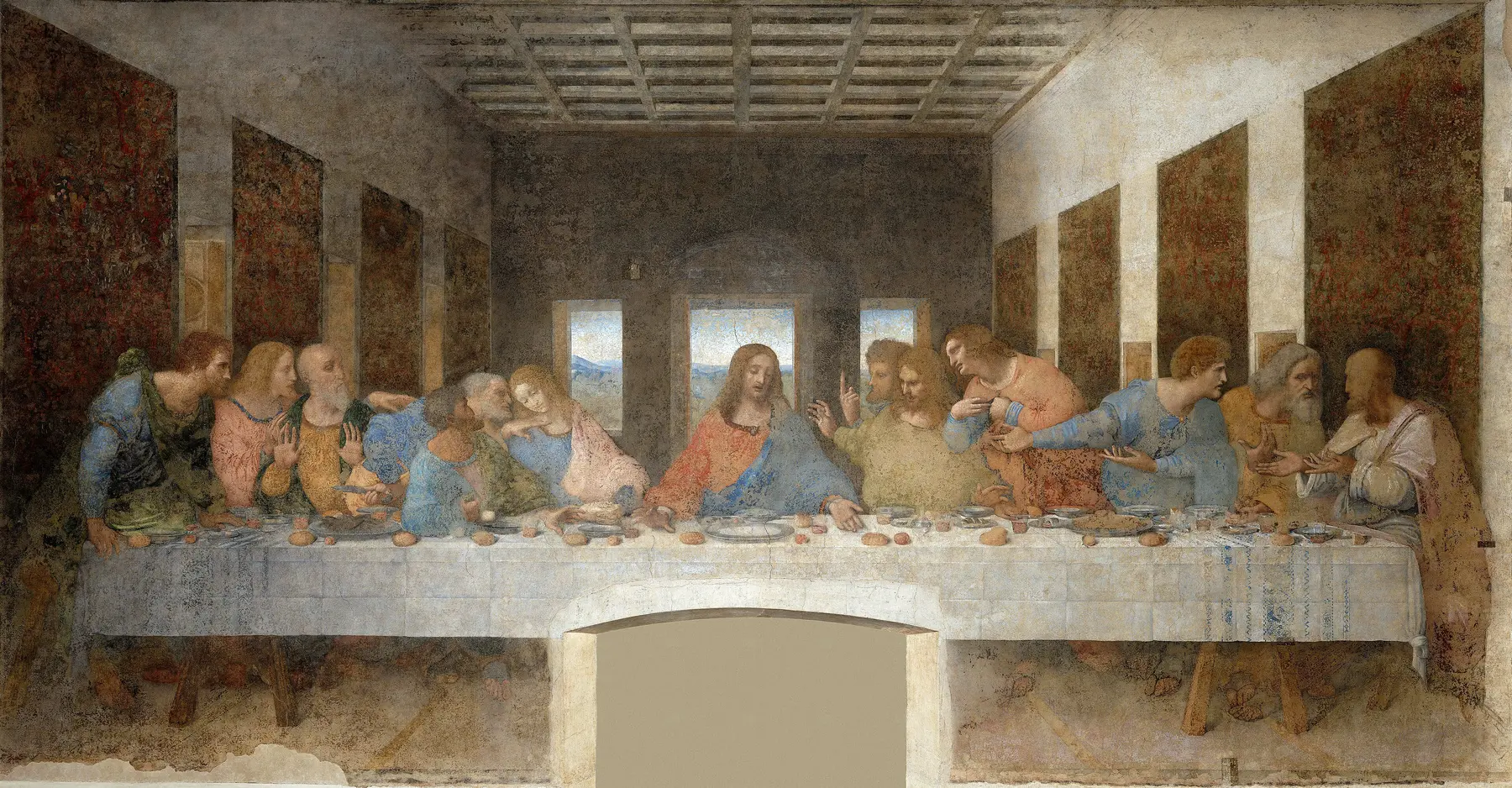
Behind the flexibility sits a hard limit. Sharing the cup and bread of the Lord is a real participation, and so is sharing a table dedicated to something else. You cannot drink the cup of the Lord and the cup of demons.
Significance
The first hearers got both halves of a difficult balance: enormous freedom about ordinary food, and an absolute boundary at organized idolatry.
Show the rest of the significance, 1 more paragraph
They were also given a promise for temptation, that God is faithful and will provide the way out, and a rule of thumb wide enough for anything: whether you eat or drink or whatever you do, do it all to the glory of God, giving no offence to Jews, Greeks, or the church.
The heads below are this chapter's scenes. The numbered points under each are its verses.
Israel in the Wilderness: A Warning Written for Us
1 Corinthians 10:1-2
our forefathers were all under: Israel's passage under the cloud and through the sea is a type of baptism, all baptized into Moses as believers are joined to Christ. The repeated all is deliberate: every one of that generation shared the same privileges before it fell.
1 Corinthians 10:1
“For the Israelites with all their privileges were most of them castaways through want of it. ignorant--with all your boasted "knowledge." our fathers--The Jewish Church stands in the relation of parent to the Christian Church. all--Arrange as the Greek, "Our fathers were all under the cloud"; giving the "all" its proper emphasis.”
Jamieson, Fausset & Brown · Commentary Critical and Explanatory on the Whole Bible (1871)reformed
2 more voices on this verseWhat preachers and commentators have said about this verse, in their own words.
1 Corinthians 10:1
“Thou wilt notice, too, that the transgressions of the common people have been described in like manner, not for the sake of those who did then transgress, but as a means of instruction unto us, and that we should understand that it is one and the same God against whom these men sinned, and against whom certain persons do now transgress from among those who profess to have believed in Him.”
Irenaeus · written before 202 · Against Heresies Book IVpatristic
1 Corinthians 10:1
“Moreover, brethren - But, or now (δε de). This verse, with the following illustrations 1Co 10:1-4, is properly connected in Paul’s argument with the statements which he had made in 1Co 8:8, etc., and is designed to show the danger which would result from their partaking of the feasts that were celebrated in honor of idols.”
baptized into Moses: Paul lists Israel's privileges before telling of their fall at 10:5. Theodore of Mopsuestia reads the sea as a figure of water baptism and the cloud of the Spirit's grace.
1 Corinthians 10:2
“And were all baptized unto Moses - Rather Into Moses - into the covenant of which Moses was the mediator; and by this typical baptism they were brought under the obligation of acting according to the Mosaic precepts, as Christians receiving Christian baptism are said to be baptized Into Christ, and are thereby brought under obligation to keep the precepts of the Gospel.”
Adam Clarke · Commentary on the Bible (1810-1826)evangelical
2 more voices on this verse
1 Corinthians 10:2
“The manna on which they fed was a type of Christ crucified, the bread which came down from heaven, which whoso eateth shall live forever. Their drink was a stream fetched from a rock which followed them in all their journeyings in the wilderness; and this rock was Christ, that is, in type and figure.”
Matthew Henry · Commentary on the Whole Bible (1707-1721)puritan
1 Corinthians 10:2
“Christ is the pillar cloud that screens us from the heat of God's wrath. Christ as "the light of the world" is our "pillar of fire" to guide us in the darkness of the world. As the rock when smitten sent forth the waters, so Christ, having been once for all smitten, sends forth the waters of the Spirit.”
Jamieson, Fausset & Brown · Commentary Critical and Explanatory on the Whole Bible (1871)reformed
1 Corinthians 10:3-4
They all ate the same: The manna of Exodus 16 and the water from the rock of Exodus 17 are spiritual food and drink because each pointed to Christ. Paul states the type outright: that rock was Christ.
1 Corinthians 10:3
“What we eat, what we drink, the Holy Spirit expresses to you elsewhere, saying; "Taste and see that the Lord is sweet. Blessed is the one who trusts in him." Christ is in that sacrament, because the body is Christ's. So the food is not corporeal but spiritual.”
Ambrose of Milan · written before 397 · On the Mysteries 56patristic
2 more voices on this verse
1 Corinthians 10:3
“And did all eat the same spiritual meat - That is, “manna.” Exo 16:15, Exo 16:35; Neh 9:15, Neh 9:20. The word meat here is used in the old English sense of the word, to denote “food” in general. They lived on “manna.” The word “spiritual” here is evidently used to denote that which was given by the Spirit, or by God; that which was the result of his miraculous gift, and which was not produced in the ordinary way, and which was not the gross food on which people are usually supported.”
1 Corinthians 10:3
“Not that the Israelites clearly understood the signification; but believers among them would feel that in the type something more was meant; and their implicit and reverent, though indistinct, faith was counted to them for justification, of which the manna was a kind of sacramental seal.”
Jamieson, Fausset & Brown · Commentary Critical and Explanatory on the Whole Bible (1871)reformed
that rock was Christ: Readers take the rock in more than one sense. Augustine calls it a symbol named for what it signified.
1 Corinthians 10:4
“Spiritual drink - By the βρωμα πνευματικον spiritual meat, and πομα πνευματικον, spiritual drink, the apostle certainly means both meat and drink, which were furnished to the Israelitish assembly miraculously, as well as typically: and he appears to borrow his expression from the Jews themselves, who expressly say הלחם הלז רוחני hallechem hallaz ruchani, that bread was spiritual, and מיים רוחניים היו meyim ruchainiyim haiu, the waters were spiritual. Alschech in legem. fol. 238, to which opinion the apostle seems particularly to refer. See Schoettgen. The spiritual rock that followed them - There is some difficulty in this verse.”
Adam Clarke · Commentary on the Bible (1810-1826)evangelical
1 more voice on this verse
1 Corinthians 10:4
“The sacred books acknowledge with regard to Christ, that as He is the Son of man, so is the same Being not a [mere] man; and as He is flesh, so is He also spirit, and the Word of God, and God.”
Irenaeus · written before 202 · Fragments from the Lost Writings of Irenaeuspatristic
1 Corinthians 10:5-6
God was not pleased with: A generation baptized, fed and given drink was struck down in the wilderness, short of the promised land. The word for examples, typoi, gives typology its name, setting that generation as a pattern for the church.
1 Corinthians 10:5
“God--whose judgment alone is valid. for--the event showed, they had not pleased God. overthrown--literally, "strewn in heaps." in the wilderness--far from the land of promise.”
Jamieson, Fausset & Brown · Commentary Critical and Explanatory on the Whole Bible (1871)reformed
1 more voice on this verse
1 Corinthians 10:5
“But with many of them ... - That is, with their conduct. They rebelled and sinned, and were destroyed. The design of the apostle here is, to remind them that although they enjoyed so many privileges, yet they were destroyed; and thus to admonish the Corinthians that their privileges did not constitute an absolute security from danger, and that they should be cautious against the indulgence of sin.”
These things took place as: Barnes gives the word behind took place as examples as types, patterns set out beforehand. As Israel's gifts foreshadowed baptism and the table of the Lord, their punishments foreshadow judgment on Corinthians who presume on those gifts.
1 Corinthians 10:6
“These things were our examples - The punishments which God inflicted on them furnish us with evidences of what God will inflict upon us, if we sin after the similitude of those transgressors. We should not lust after evil things - It is most evident that the apostle refers here to the history in Num 11:4, etc.: And the mixed multitude fell a lusting, and said, Who shall give us flesh to eat?”
Adam Clarke · Commentary on the Bible (1810-1826)evangelical
2 more voices on this verse
1 Corinthians 10:6
“The benefits are set down in the same order as by Moses in Exodus; the sins and punishments in a different order; evil desire first, as being the foundation of all; next, idolatry, ver. 7, 14; then fornication, which usually accompanied it, ver. 8; the tempting and murmuring against God, in the following verses.”
John Wesley · Explanatory Notes upon the New Testament (1755)evangelical
1 Corinthians 10:6
“A particular case of lust was that after flesh, when they pined for the fish, leeks, &c., of Egypt, which they had left (Nu 11:4, 33, 34). These are included in the "evil things," not that they are so in themselves, but they became so to the Israelites when they lusted after what God withheld, and were discontented with what God provided.”
Jamieson, Fausset & Brown · Commentary Critical and Explanatory on the Whole Bible (1871)reformed
Do not be idolaters, as: Paul cites Exodus 32:6, the feast Israel held before the golden calf. The verb for revelry is paizo, covering both revelry and the sexual license long read into the scene, so idolatry and immorality stand together.
1 Corinthians 10:7
“Neither be ye idolaters - This caution is evidently given in view of the danger to which they would be exposed if they partook of the feasts that were celebrated in honor of idols in their temples. The particular idolatry which is referred to here is, the worship of the golden calf that was made by Aaron Exo 32:1-5. As it is written - Exo 32:6. The people sat down to eat and to drink - To worship the golden calf. They partook of a feast in honor of that idol.”
3 more voices on this verse
1 Corinthians 10:7
“The sin of the golden calf is referred to, Exod. xxxii. They first sacrificed to their idol, then feasted on the sacrifices, and then danced before it. Though only eating and drinking are mentioned here, yet the sacrifice is supposed.”
Matthew Henry · Commentary on the Whole Bible (1707-1721)puritan
1 Corinthians 10:7
“Will his antagonist make me better disposed to him? Should I now commit the same sins as the people, shall I have to suffer the same penalties, or not? But if not the same, how vainly does he propose to me terrors which I shall not have to endure! From whom, again, shall I have to endure them? If from the Creator, What evils does it appertain to Him to inflict? And how will it happen that, jealous God as He is, He shall punish the man who offends His rival, instead of rather encouraging him.”
Tertullian · written before 220 · Against Marcion Book Vpatristic
1 Corinthians 10:7
“He passes here from the first to the second person, as they alone (not he also) were in danger of idolatry, &c. He resumes the first person appropriately at 1Co 10:16. some--The multitude follow the lead of some bad men. play--with lascivious dancing, singing, and drumming round the calf (compare "rejoiced," Ac 7:41).”
Jamieson, Fausset & Brown · Commentary Critical and Explanatory on the Whole Bible (1871)reformed
Cross references
1 Corinthians 10:7
- QuotingExodus 32:6“So the next day they arose, offered burnt offerings, and presented peace offerings. And the people sat down to eat and drink, and got up to indulge in revelry.”
'The people sat down to eat... and rose up to play' (golden-calf warning, 'as it is written')
We should not commit sexual: The event is Baal-peor in Numbers 25, where Israel's men joined Moabite women in idolatrous sexual rites. Numbers 25:9 counts twenty-four thousand dead in the plague, and Paul's twenty-three thousand in one day is the single day's count inside that total.
We should not test Christ: In Numbers 21 Israel's complaint against God and Moses met fiery serpents. By writing that we should not test Christ, Paul names Christ as the one tested, as with the rock in verse 4.
1 Corinthians 10:9
“The Jews were putting Christ to the test, because it was he who spoke to Moses. Paul is warning us here not to do the same as they did.”
Ambrosiaster · written before 384 · Commentary on Paul's Epistlespatristic
2 more voices on this verse
1 Corinthians 10:9
“Neither let us tempt Christ ... - The word “tempt,” when applied to man, means to present motives or inducements to sin; when used with reference to God, it means to try his patience, to provoke his anger, or to act in such a way as to see how much he will bear, and how long he will endure the wickedness and perverseness of people. The Israelites tempted him, or “tried his patience and forbearance,” by rebellion, complaining, impatience, and dissatisfaction with his dealings.”
1 Corinthians 10:9
“In speaking of the fifth benefit, he expressly mentions Christ; and in speaking of the fourth sin, he shows it was committed against Christ. As some of them tempted him - This sin of the people was peculiarly against Christ; for when they had so long drank of that rock, yet they murmured for want of water.”
John Wesley · Explanatory Notes upon the New Testament (1755)evangelical
And do not complain, as: The warning against complaining most likely gathers Korah's rebellion and the plague of Numbers 16. Behind the destroying angel stands ho olothreutes, which recalls the destroyer of the Passover night in Exodus 12.
1 Corinthians 10:10
“Their murmurs against Moses and Aaron were virtually murmurs against God (compare Ex 16:8, 10). Paul herein glances at the Corinthian murmurs against himself, the apostle of Christ. destroyed--fourteen thousand seven hundred perished. the destroyer--THE same destroying angel sent by God as in Ex 12:23, and 2Sa 24:16.”
Jamieson, Fausset & Brown · Commentary Critical and Explanatory on the Whole Bible (1871)reformed
2 more voices on this verse
1 Corinthians 10:10
“That is, from a certain striking force (Num. 14:37). By this he hints to them that in the midst of trial they did not have magnanimity, but grumbled and said: when will good fortune come? when will the calamities pass?”
Theophylact of Ohrid · written before 1107 · Commentary on 1 Corinthianspatristic
1 Corinthians 10:10
“Grumbling is an indictment against the goodness of God. Grumbling is an act of unbelief.”
Dr. Rob Reimer · Pursuing God (Renewal International blog) (2018)Christian and Missionary Alliance
ConnectionsNumbers 11:4
1 Corinthians 10:11-13
Now these things happened to: Paul gives the rule for reading the passage: these things were written down as warnings for us. Its target is the one who thinks he is standing firm, any Corinthian who counted his knowledge or freedom a guard against falling.
1 Corinthians 10:11
“On whom the ends of the ages are come - The expression has great force. All things meet together, and come to a crisis, under the last, the gospel, dispensation; both benefits and dangers, punishments and rewards. It remains, that Christ come as an avenger and judge.”
John Wesley · Explanatory Notes upon the New Testament (1755)evangelical
2 more voices on this verse
1 Corinthians 10:11
“The oldest manuscripts read, "by way of example." the ends of the world--literally, "of the ages"; the New Testament dispensation in its successive phases (plural, "ends") being the winding up of all former "ages." No new dispensation shall appear till Christ comes as Avenger and Judge; till then the "ends," being many, include various successive periods (compare Heb 9:26).”
Jamieson, Fausset & Brown · Commentary Critical and Explanatory on the Whole Bible (1871)reformed
1 Corinthians 10:11
“Not only the laws and ordinances of the Jews, but the providences of God towards them, were typical. Their sins against God, and backslidings from him, were typical of the infidelity of many under the gospel. God's judgments on them were types of spiritual judgments now.”
Matthew Henry · Commentary on the Whole Bible (1707-1721)puritan
thinks he is standing firm: The warning falls on the strong who trusted their knowledge. Chrysostom and Ambrosiaster read it against those proud of their freedom to eat, and Theophylact holds that such confidence already shows the footing is unsure. Israel stood with every privilege and still fell in the wilderness, as 10:5 records.
1 Corinthians 10:12
“Distrust of himself, putting him at once upon vigilance and dependence on God, is the Christian's best security against all sin. Note, He who thinks he stands is not likely to keep his footing, if he fears no fall, nor guards against it. God has not promised to keep us from falling, if we do not look to ourselves: his protection supposes our own care and caution.”
Matthew Henry · Commentary on the Whole Bible (1707-1721)puritan
2 more voices on this verse
1 Corinthians 10:12
“Let him that thinketh he standeth - Ὁ δοκων ἑσταναι· Let him who most confidently standeth - him who has the fullest conviction in his own conscience that his heart is right with God, and that his mind is right in the truth, take heed lest he fall from his faith, and from the state of holiness in which the grace of God has placed him.”
Adam Clarke · Commentary on the Bible (1810-1826)evangelical
1 Corinthians 10:12
“Wherefore let him that thinketh he standeth,.... Since the Jewish fathers, who enjoyed such peculiar favours and eminent privileges, had such various judgments inflicted on them; since they stood not, but many of them were visible instances of God's displeasure; they were overthrown and cast down, their carcasses fell in the wilderness, and entered not into the land of rest; therefore all such persons who think themselves safe and sure, trusting to themselves, or depending upon the knowledge and gifts they have, the favours and privileges they enjoy; everyone of these should take heed lest he fall.”
God is faithful: The warning of 10:12 is followed by comfort. Wesley reads common to man as a trial proportioned to human strength, and the escape as help God provides.
1 Corinthians 10:13
“Common to man - Or, as the Greek word imports, proportioned to human strength. God is faithful - In giving the help which he hath promised. And he will with the temptation - Provide for your deliverance.”
John Wesley · Explanatory Notes upon the New Testament (1755)evangelical
2 more voices on this verse
1 Corinthians 10:13
“THE children of God are all subject to temptation—some of them are tempted more than others, but I an persuaded that there is not one, except those who are too young to be conscious of evil, who will enter Heaven without having endured some temptation. If anyone could have escaped, surely it would have been "the First-Born among many brethren," but you will remember how He was led of the Spirit, straight from the waters of His Baptism, into the wilderness to be tempted of the devil.”
Charles Spurgeon · written before 1892 · The Metropolitan Tabernacle Pulpit, Sermon No. 2603: “Comfort for the Tempted” (lightly modernized text, CCEL edition)Particular Baptist
1 Corinthians 10:13
“There hath no temptation taken you - What temptation the apostle refers to here is not quite certain. It is probable, however, that he refers to such as would, in their circumstances, have a tendency to induce them to forsake their allegiance to their Lord, and to lead them into idolatry and sin. These might be either open persecutions, or afflictions on account of their religion; or they might be the various allurements which were spread around them from the prevalence of idolatry.”
You Cannot Drink the Lord's Cup and the Demons'
1 Corinthians 10:14-15
Therefore, my beloved, flee: The whole wilderness argument lands in one command, flee from idolatry. Paul uses the same verb elsewhere of sexual immorality, so idolatry is a danger to run from.
1 Corinthians 10:14
“Thus the crown also is made out to be an offering to idols; for with this ceremony, and dress, and pomp, it is presented in sacrifice to idols, its originators, to whom its use is specially given over, and chiefly on this account, that what has no place among the things of God may not be admitted into use with us as with others. Wherefore the apostle exclaims, "Flee idolatry: " certainly idolatry whole and entire he means.”
Tertullian · written before 220 · De Coronapatristic
1 more voice on this verse
1 Corinthians 10:14
“Resuming the argument, 1Co 10:7; 1Co 8:9, 10. flee--Do not tamper with it by doubtful acts, such as eating idol meats on the plea of Christian liberty. The only safety is in wholly shunning whatever borders on idolatry (2Co 6:16, 17).”
Jamieson, Fausset & Brown · Commentary Critical and Explanatory on the Whole Bible (1871)reformed
judge for yourselves: Paul has just named their conduct idolatry at 10:14. Chrysostom and Theophylact see him soften the charge by making the accused their own judges, a mark of confidence in his case. Clarke adds that the Corinthians prized their wisdom, and Paul turns that pride into an argument against them.
1 Corinthians 10:15
“I speak as to wise men ... - I speak to people qualified to understand the subject; and present reasons which will commend themselves to you. The reasons referred to are those which occupy the remainder of the chapter.”
2 more voices on this verse
1 Corinthians 10:15
“Is it not a token whereby we professedly hold communion with Christ, whose body was broken, and blood shed, to procure remission of our sins, and the favour of God? And can we be in alliance with Christ, or friendship with God, without being devoted to him? In short, the Lord's supper is a feast on the sacrificed body and blood of our Lord, epulum ex oblatis.”
Matthew Henry · Commentary on the Whole Bible (1707-1721)puritan
1 Corinthians 10:15
“Appeal to their own powers of judgment to weigh the force of the argument that follows: namely, that as the partaking of the Lord's Supper involves a partaking of the Lord Himself, and the partaking of the Jewish sacrificial meats involved a partaking of the altar of God, and, as the heathens sacrifice to devils, to partake of an idol feast is to have fellowship with devils.”
Jamieson, Fausset & Brown · Commentary Critical and Explanatory on the Whole Bible (1871)reformed
1 Corinthians 10:16-17
Is not the cup of: Participation renders koinonia, a real sharing in what the blood and body of Christ accomplished. Because there is one loaf, we who are many are one body, the figure that will govern discerning the body at 11:29.
1 Corinthians 10:16
“But vain in every respect are they who despise the entire dispensation of God, and disallow the salvation of the flesh, and treat with contempt its regeneration, maintaining that it is not capable of incorruption. But if this indeed do not attain salvation, then neither did the Lord redeem us with His blood, nor is the cup of the Eucharist the communion of His blood, nor the bread which we break the communion of His body.”
Irenaeus · written before 202 · Irenaeus Against Heresies Book 5patristic
3 more voices on this verse
1 Corinthians 10:16
"Is" in both cases in this verse is literal, not represents. He who with faith partakes of the cup and the bread, partakes really but spiritually of the blood and body of Christ (Eph 5:30, 32), and of the benefits of His sacrifice on the cross (compare 1Co 10:18). In contrast to this is to have "fellowship with devils" (1Co 10:20).
Jamieson, Fausset & Brown · Commentary Critical and Explanatory on the Whole Bible (1871)reformed
1 Corinthians 10:16
“The cup of blessing, which we bless,.... Meaning the cup of wine used in the Lord's supper, which being set apart for that service, is taken up, and the name of the Lord called upon over it; and he is blessed and praised for his wondrous love and grace, in the gift and mission of his Son, to shed his precious blood for us, for the remission of our sins; the whole church joining with the administrator, both in the act of blessing and praise over the cup, and in the participation of it.”
1 Corinthians 10:16
“The cup which we bless - By setting it apart to a sacred use, and solemnly invoking the blessing of God upon it. Is it not the communion of the blood of Christ - The means of our partaking of those invaluable benefits, which are the purchase of the blood of Christ.”
John Wesley · Explanatory Notes upon the New Testament (1755)evangelical
one loaf, we who are many: The shared loaf makes the sharers one body. Augustine likens them to many grains made into one bread.
1 Corinthians 10:17
“For we - We Christians. “Being many.” Greek “The many” (οἱ πολλοί hoi polloi). This idea is not, as our translation would seem to indicate, that Christians were numerous, but that “all” (for οἱ πολλοί hoi polloi is here evidently used in the sense of παντες pantes, “all”) were united, and constituted one society. Are one bread - One loaf; one cake. That is, we are united, or are one.”
1 more voice on this verse
1 Corinthians 10:17
“For it is this communion which makes us all one. We being many are yet, as it were, but different parts of one and the same broken bread, which we receive to unite us in one body.”
John Wesley · Explanatory Notes upon the New Testament (1755)evangelical
1 Corinthians 10:18-20
Consider the people of Israel: Under Israel's law those who eat the sacrifices are fellow partakers in the altar, joined to its meaning. The sacrifices of pagans are offered to demons, so sharing the feast is sharing with what stands behind it.
1 Corinthians 10:18
“Behold Israel after the flesh - The Jews not yet converted to Christianity: the latter being Israel after the Spirit. As the design of the apostle was to withdraw his converts at Corinth from all temptations to idolatry, he produces two examples to show the propriety of his endeavors. 1. All who join together in celebrating the Lord’s Supper, and are partakers of that one bread, give proof by this that they are Christians, and have fellowship with Christ.”
Adam Clarke · Commentary on the Bible (1810-1826)evangelical
1 more voice on this verse
1 Corinthians 10:18
“Those who were admitted to eat of the offerings were reckoned to partake of the sacrifice itself, as made for them, and to be sanctified thereby; and therefore surely to worship God, and be in alliance or covenant with him, even the God of Israel, to whom the sacrifice was made: this was a symbol or token of holding communion with him.”
Matthew Henry · Commentary on the Whole Bible (1707-1721)puritan
an idol is anything: Paul heads off a misreading of 10:18. Chrysostom and Theophylact see him guard against the thought that idols hold power to harm.
1 Corinthians 10:19
“What say I then - Do I in saying this allow that an idol is anything divine? I aver, on the contrary, that what the heathens sacrifice, they sacrifice to devils. Such in reality are the gods of the heathens; and with such only can you hold communion in those sacrifices.”
John Wesley · Explanatory Notes upon the New Testament (1755)evangelical
2 more voices on this verse
1 Corinthians 10:19
“What say I then? - This is in the present tense; τί οὖν φημι ti oun phēmi, what do I say? What is my meaning? What follows from this? Do I mean to say that an idol is anything; that it has a real existence? Does my reasoning lead to that conclusion; and am I to be understood as affirming that an idol is of itself of any consequence? It must be recollected that the Corinthian Christians are introduced by Paul 1Co 8:4 as saying that they knew that an idol was nothing in the world.”
1 Corinthians 10:19
“This verse guards against such an inference: "What would I say then? that a thing sacrificed to an idol is any real thing (in the sense that the heathen regard it), or that an idol is any real thing?" (The oldest manuscripts read the words in this order. Supply "Nay") "But [I say] that the things which the Gentiles sacrifice, they sacrifice to devils (demons)." Paul here introduces a new fact.”
Jamieson, Fausset & Brown · Commentary Critical and Explanatory on the Whole Bible (1871)reformed
No, but the sacrifices of: An idol is nothing, yet a sacrifice has a recipient, for the sacrifices of pagans are offered to demons. The Lord's meal is the parallel: its partakers share with Christ, as partakers of the pagan table share with demons.
1 Corinthians 10:20
“But - The negative here is omitted, but is understood. The ellipsis of a negative after an interrogative sentence is common in the Classical writers as well as in the Scriptures. Bloomfield. The sense is, “No; I do not say this, but I say that there are reasons why you should not partake of those sacrifices; and one of those reasons is, that they have been really offered to devils.” They sacrifice to devils - (δαιμονίοις daimoniois, “demons”). The pagans used the word demon either in a good or a bad sense.”
1 more voice on this verse
1 Corinthians 10:20
“For the truth shall be spoken; since of old these evil demons, effecting apparitions of themselves, both defiled women and corrupted boys, and showed such fearful sights to men, that those who did not use their reason in judging of the actions that were done, were struck with terror; and being carried away by fear, and not knowing that these were demons, they called them gods, and gave to each the name which each of the demons chose for himself.”
Justin Martyr · written before 165 · The First Apology, Chapter Vpatristic
1 Corinthians 10:21-22
You cannot drink the cup: of the Lord and the cup of demons too states a moral impossibility, since each table gives a real fellowship. A believer can attend both feasts yet belong to one.
1 Corinthians 10:21
“Ye cannot drink the cup of the Lord ... - This does not mean that they had no physical ability to do this, or that it was a natural impossibility; for they certainly had power to do it. But it must mean that they could not “consistently” do it. It was not fit, proper, decent. They were solemnly bound to serve and obey Christ, they had devoted themselves to him, and they could not, consistently with these obligations, join in the worship of demons.”
2 more voices on this verse
1 Corinthians 10:21
“Nor do we dislike the temples less than the monuments: we have nothing to do with either altar, we adore neither image; we do not offer sacrifices to the gods, and we make no funeral oblations to the departed; nay, we do not partake of what is offered either in the one case or the other, for we cannot partake of God's feast and the feast of devils.”
Tertullian · written before 220 · De Spectaculispatristic
1 Corinthians 10:21
“Our only altar is the cross, our only sacrifice that of Christ once for all. The Lord's Supper stands, however, in the same relation, analogically, to Christ's sacrifice, as the Jews' sacrificial feasts did to their sacrifices (compare Mal 1:7, "altar . . . table of the Lord"), and the heathen idol feasts to their idolatrous sacrifices (Isa 65:11).”
Jamieson, Fausset & Brown · Commentary Critical and Explanatory on the Whole Bible (1871)reformed
provoke the Lord to jealousy?: Jamieson, Fausset and Brown hear Deuteronomy 32:21 behind the question, and see the offence in dividing fellowship between the Lord and idols. Clarke calls idolatry a spiritual adultery, the heart given to another. Chrysostom hears the second question as a rebuke to their pride.
1 Corinthians 10:22
“Do we provoke the Lord to jealousy? - All idolatry is represented as a sort of spiritual adultery; it is giving that heart to Satan that should be devoted to God; and he is represented as being jealous, because of the infidelity of those who have covenanted to give their hearts to him. Are we stronger than he? - As he has threatened to punish such transgressors, and will infallibly do it, can we resist his omnipotence?”
Adam Clarke · Commentary on the Bible (1810-1826)evangelical
1 more voice on this verse
1 Corinthians 10:22
“Do we provoke the Lord to jealousy?--by dividing our fellowship between Him and idols (Eze 20:39). Is it our wish to provoke Him to assert His power? De 32:21 is before the apostle's mind [ALFORD], (Ex 20:5). are we stronger?--that we can risk a contest with Him.”
Jamieson, Fausset & Brown · Commentary Critical and Explanatory on the Whole Bible (1871)reformed
Buy What's in the Market, but Seek the Other Man's Good
1 Corinthians 10:23-24
Paul answers the slogan Everything is permissible, his own maxim of 6:12, with two better tests: not everything is beneficial and not everything is edifying. Verse 24 gives the rule: no one should seek his own good, but the good of others.
1 Corinthians 10:23
“All things are lawful for me, &c.--Recurring to the Corinthian plea (1Co 6:12), he repeats his qualification of it. The oldest manuscripts omit both times "for me." edify not--tend not to build up the spiritual temple, the Church, in faith and love.”
Jamieson, Fausset & Brown · Commentary Critical and Explanatory on the Whole Bible (1871)reformed
2 more voices on this verse
1 Corinthians 10:23
“All things are lawful for me,.... All sorts of food are lawful to be eaten, every creature of God is good, there is nothing common or unclean in itself, polluted or polluting; and so things offered to idols may be lawfully eaten, but not as such, or in an idol's temple, or before a weak brother; to do which is contrary to the honour of God, and the edification of the saints: and therefore all things are not expedient; to be done always, and in all places, and before all persons.”
1 Corinthians 10:23
“All things are lawful for me - See the note at 1Co 6:12. This is a repetition of what he had said before; and it is here applied to the subject of eating the meat that had been offered to idols.”
the good of others: Paul turns the slogan of 10:23 into a rule. Oecumenius and Theophylact say the question goes beyond a clear conscience to the benefit of the brother. Barnes holds that the rule, though general in form, first answered the dispute over idol food.
1 Corinthians 10:24
“Let no man seek his own,.... His carnal pleasure and private advantage in eating things sacrificed to "idols", to the hurt and disadvantage of his brethren; otherwise it is lawful for a man to seek his own good, temporal, spiritual, and eternal, to seek for the necessaries of life, his spiritual peace and comfort, and his everlasting welfare and happiness; but then he should not only seek his own, but every man another's wealth, or "that which is another's"; for the word "wealth" is not in the original text.”
1 more voice on this verse
1 Corinthians 10:24
“Let no man seek his own, etc. - Let none, for his private gratification or emolument, disturb the peace or injure the soul of another. Let every man live, not for himself, but for every part of the great human family with which he is surrounded.”
Adam Clarke · Commentary on the Bible (1810-1826)evangelical
1 Corinthians 10:25-27
Eat anything sold in the: Paul writes, Eat anything sold in the meat market, and grounds it in Psalm 24:1, The earth is the Lord’s, and the fullness thereof. Market meat is free of suspicion whatever its temple history, since creation belongs to God.
1 Corinthians 10:25
“Whatsoever is sold in the shambles - In the market. The meat of animals offered in sacrifice would be exposed there to sale as well as other meat. The apostle says that it might be purchased, since the mere fact that it had been offered in sacrifice could not change its quality, or render it unfit for use.”
1 more voice on this verse
1 Corinthians 10:25
“Whatsoever is sold in the shambles,.... the word μακελλον, rendered "shambles", here used, is a Latin word, and is made use of by Latin writers in the same sense as here, for a place where food was sold (i). The original of the name is said (k) to be this; one Macellus, a very wicked and profane man, being for his robberies and filthy life condemned to die, a place was built in his house by Aemylius and Fulvius, censors, for selling of provisions, and which from his name was called "Macellum".”
Paul grounds the freedom of 10:25 in a psalm. Chrysostom and Theophylact reason that if the earth and its fruits and beasts belong to the Lord, nothing is unclean by nature.
1 Corinthians 10:26
“And, "Let no one seek his own advantage, but also that of his neighbour," so as to be able at once to do and to teach, building and building up. For that "the earth is the Lord's, and the fulness thereof," is admitted; but the conscience of the weak is supported. "Conscience, I say, not his own, but that of the other; for why is my liberty judged of by another conscience? For if I by grace am partaker, why am I evil spoken of for that for which I give thanks?”
Clement of Alexandria · written before 215 · The Stromata Book 4patristic
1 more voice on this verse
1 Corinthians 10:26
“Every creature of God is good, and nothing to be refused, if it be received with thanksgiving; for it is sanctified by the word of God and prayer, 1 Tim. iv. To the pure all things are pure, Tit. i. Note, Though it is sinful to use any food in an idolatrous manner, it is no sin, after such abuse, to apply it, in a holy manner, to its common use.”
Matthew Henry · Commentary on the Whole Bible (1707-1721)puritan
Cross references
1 Corinthians 10:26
- QuotingPsalms 24:1“The earth is the LORD’s, and the fullness thereof, the world and all who dwell therein.”
'The earth is the Lord's, and the fulness thereof' (meat offered to idols)
eat anything set before you: Paul moves from the market to a private meal. Barnes, Clarke and Matthew Henry read the invitation as a meal at home, distinct from a feast in an idol's temple, which 10:21 forbids.
1 Corinthians 10:27
“Wherefore daintiness is to be shunned, and we are to partake of few and necessary things. "And if one of the unbelievers call us to a feast, and we determine to go" (for it is a good thing not to mix with the dissolute), the apostle bids us "eat what is set before us, asking no questions for conscience sake." Similarly he has enjoined to purchase "what is sold in the shambles," without curious questioning. We are not, then, to abstain wholly from various kinds of food, but only are not to be taken up about them.”
Clement of Alexandria · written before 215 · The Instructor Book 2patristic
2 more voices on this verse
1 Corinthians 10:27
“And why then should they scrupulously enquire whether what was set before them had been sacrificed? It is to be understood of civil feasting, not religious; for the latter among the heathens was feasting upon their sacrifices, which he had condemned before as a participation in their idolatrous worship.”
Matthew Henry · Commentary on the Whole Bible (1707-1721)puritan
1 Corinthians 10:27
“If any of them that believe not - That are not Christians; that are still pagans. Bid you to a feast - Evidently not a feast in the temple of an idol, but at his own house. If he asks you to partake of his hospitality. And ye be disposed to go - Greek, “And you will to go.” It is evidently implied here that it would be not improper to go.”
1 Corinthians 10:28-30
But if someone tells you: Once the meat's history is announced, Paul says do not eat it, for the sake of the one who told you. It is the weaker-brother rule of chapter 8 applied to a concrete case.
1 Corinthians 10:28
“This is offered in sacrifice unto idols - While they were not apprized of this circumstance they might lawfully eat; but when told that the flesh set before them had been offered to an idol, then they were not to eat, for the sake of his weak conscience who pointed out the circumstance. For the apostle still takes it for granted that even the flesh offered in sacrifice to an idol might be eaten innocently at any private table, as in that case they were no longer in danger of being partakers with devils, as this was no idol festival.”
Adam Clarke · Commentary on the Bible (1810-1826)evangelical
2 more voices on this verse
1 Corinthians 10:28
“They must not eat it out of religious respect to the idol, nor go into his temple, and hold a feast there, upon what they knew was an idol-sacrifice; nor perhaps out of the temple, if they knew it was a feast held upon a sacrifice, but there were cases wherein they might without sin eat what had been offered.”
Matthew Henry · Commentary on the Whole Bible (1707-1721)puritan
1 Corinthians 10:28
“If the creature is defiled by a mere word, as the apostle teaches, "But if any one say, This is offered in sacrifice to idols, you must not touch it," much more when it is polluted by the dress, and rites, and pomp of what is offered to the gods.”
Tertullian · written before 220 · De Coronapatristic
why should my freedom be determined: The conscience here belongs to the one who raised the matter. Theophylact takes him as a pagan who might think the Christian a glutton or a worshipper of idols.
1 Corinthians 10:29
“Conscience, I say, not thine own - I know that you may have no scruples on the subject. I do not mean that with you this need be a matter of conscience. I do not put it on that; ground, as if an idol were anything, or as if it were in itself wrong, or as if the quality of the meat so offered had been changed; but I put it on the ground of not wounding the feelings of those who are scrupulous, or of leading them into sin.”
2 more voices on this verse
1 Corinthians 10:29
"But the earth is the Lord's, and the fulness thereof." For conscience' sake, then, we are to abstain from what we ought to abstain. "Conscience, I say, not his own," for it is endued with knowledge, "but that of the other," lest he be trained badly, and by imitating in ignorance what he knows not, he become a despiser instead of a strong-minded man. "For why is my liberty judged of by another conscience? For if I by grace am a partaker, why am I evil spoken of for that for which I give thanks?
Clement of Alexandria · written before 215 · The Stromata Book 4patristic
1 Corinthians 10:29
“The Greek terms for "the other" and "another" are distinct. "The other" is the one with whom Paul's and his Corinthian converts' concern is; "another" is any other with whom he and they have no concern.”
Jamieson, Fausset & Brown · Commentary Critical and Explanatory on the Whole Bible (1871)reformed
partake in the meal with thankfulness: The eater gives thanks to God for the food, and the thanks marks it as a gift. Chrysostom asks of what the believer partakes by grace and answers, the gifts of God, so the thankful eater stands unstained. Barnes reads the verse as a reason to yield.
1 Corinthians 10:30
“For if I by grace be a partaker - Or rather, “If I partake by grace; if by the grace and mercy of God, I have a right to partake of this; yet why should I so conduct as to expose myself to the reproaches and evil surmises of others?”
1 Corinthians 10:31-33
So whether you eat or: One rule gathers the whole section, from market to private meal, and governs every ordinary act: do it all to the glory of God. Paul's own conduct is the pattern, I am not seeking my own good, but the good of many.
1 Corinthians 10:31
“Whether therefore ye eat or drink - This direction should be strictly and properly applied to the case in hand; that is, to the question about eating and drinking the things that had been offered in sacrifice to idols. Still, however, it contains a general direction that is applicable to eating and drinking at all times; and the phrase “whatsoever ye do” is evidently designed by the apostle to make the direction universal.”
Do not become a stumbling block: The three groups cover everyone the Corinthians meet. Chrysostom notes that one meal can wound a brother and harden the Jew at once.
1 Corinthians 10:32
“Give none offense, etc. - Scrupulously avoid giving any cause of offense either to the unconverted Jews or the unconverted Gentiles, so as to prejudice them against Christianity: nor to the Church of God, made up of converts from the above parties.”
Adam Clarke · Commentary on the Bible (1810-1826)evangelical
2 more voices on this verse
1 Corinthians 10:32
“Our own humour and appetite must not determine our practice, but the honour of God and the good and edification of the church. We should not so much consult our own pleasure and interest as the advancement of the kingdom of God among men. Note, A Christian should be a man devoted to God, and of a public spirit.”
Matthew Henry · Commentary on the Whole Bible (1707-1721)puritan
1 Corinthians 10:32
“Give none offence--in things indifferent (1Co 8:13; 2Co 6:3); for in all essential things affecting Christian doctrine and practice, even in the smallest detail, we must not swerve from principle, whatever offense may be the result (1Co 1:23). Giving offense is unnecessary, if our own spirit cause it; necessary, if it be caused by the truth.”
Jamieson, Fausset & Brown · Commentary Critical and Explanatory on the Whole Bible (1871)reformed
please everyone in all I do: Paul offers himself as the pattern. Augustine sets this beside Paul's refusal elsewhere to please men, and resolves the tension by the reason Paul gives, the salvation of many. Clarke and Barnes read the verse as the summary of his own example, a life spent for the welfare of others.
1 Corinthians 10:33
“Even as I ... - Paul here proposes his own example as their guide. The example which he refers to is that which he had exhibited as described in this and the preceding chapters.”
1 more voice on this verse
1 Corinthians 10:33
“And it is highly commendable in a minister to neglect his own advantage that he may promote the salvation of his hearers. This shows that he has a spirit suitable to his function. It is a station for public usefulness, and can never be faithfully discharged by a man of a narrow spirit and selfish principles.”
Matthew Henry · Commentary on the Whole Bible (1707-1721)puritan
How this psalm is built
The form: The close of the answer on food offered to idols, which resumes chapter 8 and shows that eating as an act of worship is fellowship with demons, as Henry classes it.
The patterns in this chapter
| Device | What it does | Where to see it |
|---|---|---|
| All of them, most of them | The word all falls four times in verses 1 to 3 of the Berean text, under the cloud, through the sea, baptized into Moses and eating the same food. Verse 5 then says God was not pleased with most of them. Adam Clarke sets out the whole list of privileges again beside the overthrow, to show that privilege gave no safety.Adam Clarke, Commentary on the Bible, 1832, on 1 Corinthians 10:5. | 1 Corinthians 10:1, 1 Corinthians 10:2, 1 Corinthians 10:3, 1 Corinthians 10:5 |
| As some of them did | The phrase as some of them falls four times, at verses 7, 8, 9 and 10, each time naming a sin of the wilderness, and three of the four name the deaths that followed. John Wesley observes that the warnings at verses 7 and 10 are in the second person and those at verses 8 and 9 in the first, and reads the change as Paul declining to count himself in danger of idolatry.John Wesley, Explanatory Notes upon the New Testament, 1755, on 1 Corinthians 10:7. | 1 Corinthians 10:7, 1 Corinthians 10:8, 1 Corinthians 10:9, 1 Corinthians 10:10 |
| Two cups and two tables | Verse 21 sets the cup of the Lord against the cup of demons and the table of the Lord against the table of demons, in two clauses of the same shape. Verse 16 prepares it with two questions on the cup of blessing and the bread. Ambrosiaster holds that to drink the one cup insults the other, and reads the table of the Lord as the altar.Ambrosiaster, Commentary on Paul's Epistles, 384, on 1 Corinthians 10:21. | 1 Corinthians 10:16, 1 Corinthians 10:21 |
| The saying answered again | Verse 23 quotes Everything is permissible twice, as 6:12 did, and answers it with beneficial and edifying. Verse 24 then gives the rule that follows from it. Clement of Alexandria quotes the two halves together with verse 24 and reads them as a call to build up others.Clement of Alexandria, The Stromata Book 4, 215, on 1 Corinthians 10:23. | 1 Corinthians 10:23, 1 Corinthians 10:24 |
Where the chapter stands
11 more paragraphs on the patterns
Chapter 10 closes the answer on food offered to idols that began at 8:1. Chapter 9 ended with Paul's fear of being disqualified, and chapter 10 answers it with a people who were all given the signs of God's favour and were struck down. Matthew Henry reads verses 1 to 14 as a return to the argument of chapter 8, and Albert Barnes joins the chapter to 8:8. Verse 23 takes up again the saying of 6:12, and verses 28 and 29 return to the conscience of the weak from chapter 8. The one loaf of verse 17 is the figure that governs the discerning of the body at 11:29, as the site's published exposition records.
Who speaks
Paul speaks throughout, moving between the second person and the first. The one who says This food was offered to idols at verse 28 is the only other voice heard.
The units
Verses 1 to 13 give the warnings from the wilderness and the promise of verse 13. Verses 14 to 22 forbid a share in idol feasts. Verses 23 to 33 give rules for the market and the host's table.
The Old Testament cited
Verse 7 quotes Exodus 32:6 on the golden calf, and verse 26 quotes Psalm 24:1. The site's published exposition traces the rest to Exodus and Numbers, the cloud of Exodus 13:21, the manna of Exodus 16, the water of Exodus 17 and Numbers 20, the serpents of Numbers 21, the destroyer of Numbers 16 and the sin at Peor in Numbers 25. Numbers 25:9 gives 24,000 dead where verse 8 gives 23,000. Adam Clarke offers a reconciliation, and Clement of Alexandria's own citation reads four and twenty thousand.
The debated readings
The rock that was Christ. Augustine of Hippo holds that the rock symbolized Christ. Tertullian presses the verse against Marcion, since the rock that was Christ belonged to the Creator. Jamieson, Fausset & Brown hold that Christ Himself accompanied Israel. Ambrose of Milan reads the stream as His flesh and blood.
The examples of verse 6. John Chrysostom holds that the punishments were figures for the church, as the gifts were. Albert Barnes reads the Greek word types as admonitions held up as a warning to the church.
The participation of verse 16. Augustine of Hippo teaches that the cup, consecrated by the word of God, is the blood of Christ. John Wesley reads it as the means of partaking the benefits His blood purchased.
Keep studying
Studies37
Show the next 6 titles
- Grace Before Meals
- Grumbling, the Opposite of Thanks
- Infant Baptism and Believers' Baptism
- Love Is Patient
- Manna
- Moses Strikes the Rock
Show the next 6 titles
- Passover
- The Covenant of Phinehas
- Redemption
- I Discipline My Body
- Joseph and Potiphar's Wife
- The blood rule after the cross
Show the next 6 titles
- The Burning Bush: the Name Revealed
- The Crossing of the Jordan
- The Exodus, Redemption's Master-Type
- The Lord's Supper
- The Nile
- The Pillar of Cloud and Fire
Show the next 6 titles
People and groups1
Words12
Subjects1
Sources for this chapter
The summary
Jamieson, Fausset & Brown, Commentary Critical and Explanatory; John Calvin, Commentaries; John Wesley, Explanatory Notes Upon the New Testament and Matthew Henry, Complete Commentary.
The form and classifications
Albert Barnes, Notes, Explanatory and Practical, on the Old and New Testaments, 1832 to 1869, on 1 Corinthians 10:1; John Chrysostom, Homily on 1 Corinthians 23, 407, on 1 Corinthians 10:1 and Matthew Henry, Commentary on the Whole Bible, 1710, on 1 Corinthians 10:1 to 14.
The exposition
Adam Clarke, Commentary on the Bible; Albert Barnes; Ambrose of Milan, On the Holy Spirit 1.2; Ambrosiaster, COMMENTARY ON PAUL'S EPISTLES; Apostolic Constitutions, Apostolic Constitutions (Book VII), Section 2, XXI; Augustine of Hippo; Caesarius of Arles, SERMON 117.2; Charles Hodge, An Exposition of the First Epistle to the Corinthians; Frederic Godet, Commentary on First Corinthians; Gennadius of Constantinople, PAULINE COMMENTARY FROM THE GREEK CHURCH; Jamieson, Fausset & Brown, Commentary Critical and Explanatory on the Whole Bible; John Calvin, Commentary on the Epistles of Paul the Apostle to the Corinthians; John Chrysostom; John Gill, Exposition of the New Testament; John Wesley, Explanatory Notes upon the New Testament; Matthew Henry, Commentary on the Whole Bible; Oecumenius, PAULINE COMMENTARY FROM THE GREEK CHURCH; Origen of Alexandria, ON FIRST PRINCIPLES 3.2.3; Theodore of Mopsuestia, PAULINE COMMENTARY FROM THE GREEK CHURCH; Theodoret of Cyrus, COMMENTARY ON THE FIRST EPISTLE TO THE CORINTHIANS 229 and Theophylact of Ohrid, Commentary on 1 Corinthians.