

Lamentations 3 · Value 11 of 41 · Featured Study
Faithfulness
Faithfulness belongs first to God, and Scripture asks it of everyone who holds a trust from Him.
In the ruins of Jerusalem, a poet found the faithfulness of God still standing.
Because of the loving devotion of the LORD we are not consumed, for His mercies never fail. They are new every morning; great is Your faithfulness!
- Anchor text
- Lamentations 3:22 to 23 “…every morning; great is Your…”
- Its opposite
- Unfaithfulness, the broken word
- Hold in memory
- Lamentations 3:22 to 23, 1 Corinthians 4:2
Summary
Faithfulness is steadiness that others can rely on. God keeps His covenant and His promises through every generation, and Christ finished the work His Father gave Him. Jesus taught it in parables of servants and a manager, and the church remembered it in its martyrs and its hymns. Believers are called to be faithful to Christ until death.
- God remains faithful when His people are faithless, because He cannot deny Himself.
- Scripture calls Jesus faithful as the Son over God's house, as high priest and as witness.
- Jesus taught that faithfulness in small trusts shows whether a person can be given great ones.
What Faithfulness Is
Four words of Hebrew and Greek carry what Scripture means by faithfulness.
Faithfulness is a theme of Lamentations, the Psalms, the parables of Jesus and the letters of Paul. It matters to every reader who keeps a promise or looks after something for someone else. The question it raises is what faithfulness is and how a person becomes faithful. Below stand the words Scripture uses, its key texts, where it is asked and its ground in God. Then come the faithfulness of Christ, the people Scripture calls faithful, its practice, its opposite, its stories, its teachers and the questions readers still debate.
Emunah, firmness and faithfulness
49 uses in the canon
The Hebrew noun emunah (Strong's H530) means literally firmness and morally fidelity. The lexicon counts 49 uses, among them the psalmist's song of God's faithfulness to all generations.
Aman, to be firm
106 uses in the canon
The verb aman (H539) means to build up or support, and figuratively to be firm or faithful. The lexicon counts 106 uses, and its participle names the faithful priest God promised to raise up.
Pistos, faithful
67 uses in the canon
The Greek adjective pistos (G4103) means trustworthy, and in some places trustful. The lexicon counts 67 uses, and Paul uses it to say that God is faithful.
Pistis, faith and faithfulness
242 uses in the canon
The Greek noun pistis (G4102) is usually faith, and Strong's dictionary also gives it the sense of constancy. The lexicon counts 242 uses, and in Matthew 23:23 the Berean text renders it faithfulness.
The lexicon in full
Emunah, firmness and faithfulness, Aman, to be firm, Pistos, faithful, Pistis, faith and faithfulness, The Words Emunah and Pistos, the study in brief
The Key Texts of Faithfulness
Faithfulness runs through every part of the canon, from the covenant of Deuteronomy to the letters to the churches.
Law
Know therefore that the LORD your God is God, the faithful God who keeps His covenant of loving devotion for a thousand generations of those who love Him and keep His commandments.
Moses names the LORD the faithful God as Israel stands ready to enter the land.
Wisdom
Your loving devotion, O LORD, reaches to the heavens, Your faithfulness to the clouds.
David sets God's faithfulness beside His loving devotion, both higher than the earth.
Psalm 36:5BSB
Wisdom
Your faithfulness continues through all generations; You established the earth, and it endures.
The psalmist points to the earth itself as the sign that God's faithfulness lasts.
Psalm 119:90BSB
Wisdom
Many a man proclaims his loving devotion, but who can find a trustworthy man?
The proverb sets the rare trustworthy man against the many who only claim loyalty.
Prophets
O LORD, You are my God! I will exalt You; I will praise Your name. For You have worked wonders—plans formed long ago—in perfect faithfulness.
Isaiah praises God for plans formed long ago and carried out in full.
Isaiah 25:1BSB
Epistles
Now it is required of stewards that they be found faithful.
Paul names the one thing asked of anyone who manages what belongs to another.
Epistles
Let us hold resolutely to the hope we profess, for He who promised is faithful.
Hebrews rests the believer's hope on the faithfulness of the One who promised.
Psalm 36:5, Psalm 119:90, Proverbs 20:6, Isaiah 25:1, 1 Corinthians 4:2, Hebrews 10:23
Where Scripture Asks for Faithfulness
Proverbs and Paul ask for faithfulness and give the reason for it.
Proverbs tells the young reader, "Never let loving devotion or faithfulness leave you; bind them around your neck, write them on the tablet of your heart" (Proverbs 3:3).
Paul handed on the gospel in the same way, telling Timothy to "entrust these to faithful men who will be qualified to teach others as well" (2 Timothy 2:2).
A faithful man will abound with blessings, but one eager to be rich will not go unpunished.The proverb sets the faithful man beside the one who is eager to be rich.
Beloved, you are faithful in what you are doing for the brothers, and especially since they are strangers to you.John praises a believer whose care for travelling brothers he calls faithful work.
Proverbs 28:20, 3 John 1:5
Faithfulness Rests on God Himself
Scripture grounds every call to faithfulness in God's own keeping of His covenant and His promises.
Psalm 100 says, "For the LORD is good, and His loving devotion endures forever; His faithfulness continues to all generations" (Psalm 100:5). In Psalm 89 God speaks of David's line and says, "I will not withdraw My loving devotion from him, nor ever betray My faithfulness" (Psalm 89:33).
In the New Testament the words "God is faithful" stand beside a promise. Each time the promise is about what God will do for His people.
No temptation has seized you except what is common to man. And God is faithful; He will not let you be tempted beyond what you can bear. But when you are tempted, He will also provide an escape, so that you can stand up under it.Paul gives God's faithfulness as the reason no temptation is beyond bearing.
The One who calls you is faithful, and He will do it.Paul ends his prayer for the Thessalonians by naming who will answer it.
1 Corinthians 10:13, 1 Thessalonians 5:24
Christ and Faithfulness
Hebrews, John, Matthew and Revelation speak of Christ's faithfulness to the Father, His teaching on it and His witness to His people.
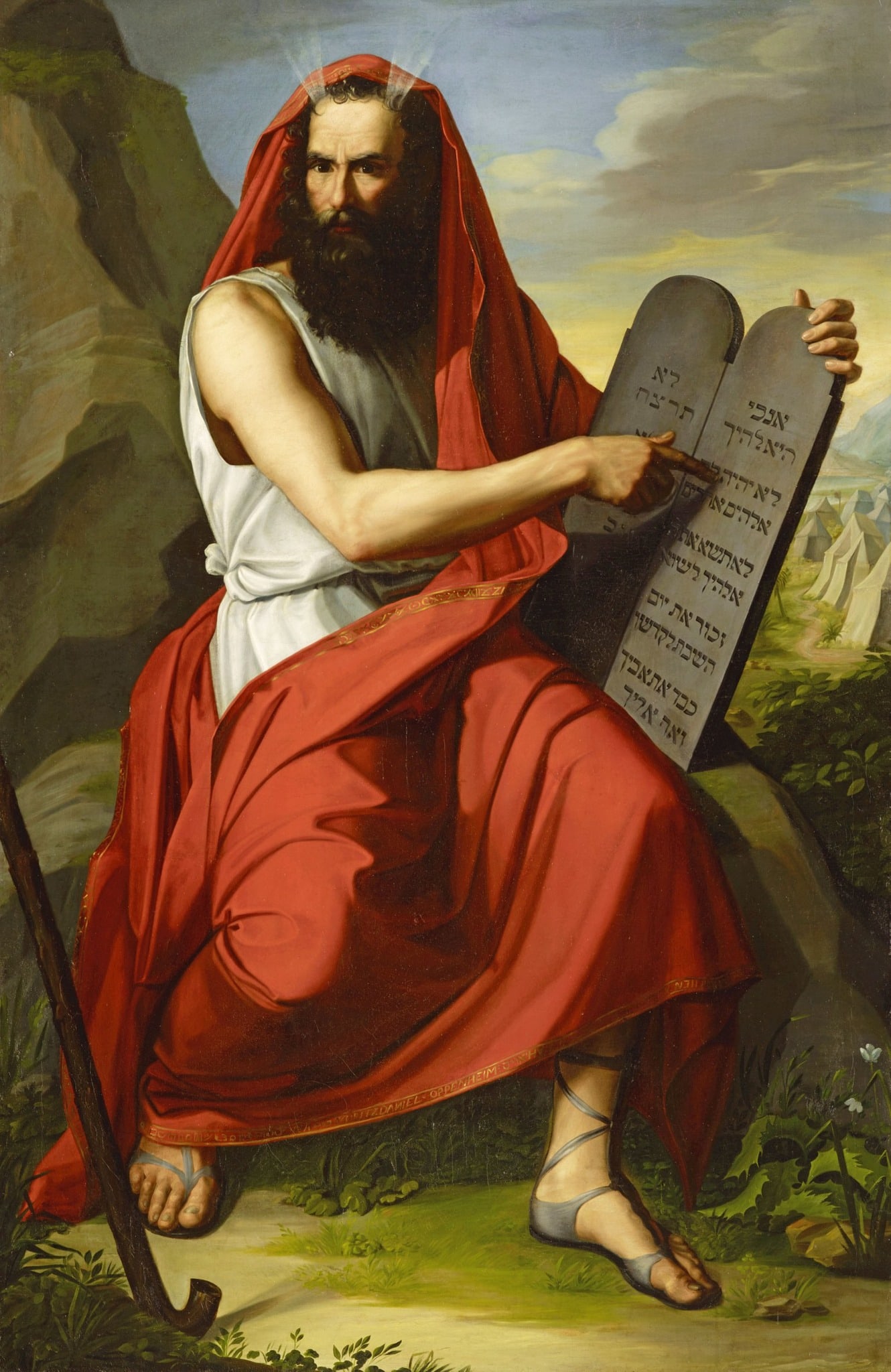
Faithful as the Son over God's houseHebrews 3
Hebrews calls Jesus "the apostle and high priest whom we confess" (Hebrews 3:1).
He was faithful to the One who appointed Him, just as Moses was faithful in all God’s house.
Hebrews 3:2BSB The writer names Jesus faithful to the One who appointed Him before he compares Him with Moses.
Read the page on Moses 13 sections, 11 verses set out
His teaching on the faithful servantMatthew 24
On the Mount of Olives Jesus taught His disciples to keep watch, "because you do not know the day on which your Lord will come" (Matthew 24:42).
Who then is the faithful and wise servant, whom the master has put in charge of his household, to give the others their food at the proper time?
Matthew 24:45BSB Jesus' question sets faithfulness inside the time of waiting for His return.
A merciful and faithful high priestHebrews 2
Hebrews says Jesus was made like His brothers in every way so that He could serve God for them as their priest.
For this reason He had to be made like His brothers in every way, so that He might become a merciful and faithful high priest in service to God, in order to make atonement for the sins of the people.
Hebrews 2:17BSB The verse joins His faithfulness to His work of atonement.
Read the page on How the Cross Saves 11 sections, 18 verses set out
The work finishedJohn 17 and 19
On the night before the cross Jesus prayed, "I have glorified You on earth by accomplishing the work You gave Me to do" (John 17:4).
When Jesus had received the sour wine, He said, “It is finished.” And bowing His head, He yielded up His spirit.
John 19:30BSB On the cross Jesus names the work the Father gave Him as finished.
Read the page on the Crucifixion 12 sections, 12 verses set out
The faithful witnessRevelation 1 and 19
John opens Revelation with greetings from Jesus Christ, "the faithful witness, the firstborn from the dead" (Revelation 1:5). In the last battle He rides out on a white horse.
Then I saw heaven standing open, and there before me was a white horse. And its rider is called Faithful and True. With righteousness He judges and wages war.
Revelation 19:11BSB John's vision gives the rider His name before it names His war.
His teaching on the faithful servant (Matthew 24), A merciful and faithful high priest (Hebrews 2), The work finished (John 17 and 19), The faithful witness (Revelation 1 and 19)
Hebrews 2:17, John 19:30, Revelation 19:11
Faithful Servants in Scripture
Five people Scripture calls faithful stand here, from a commander in Jerusalem to Paul and his fellow workers.
Hananiah
Nehemiah put him in charge of Jerusalem because he was a faithful man who feared God.
Nehemiah 7:2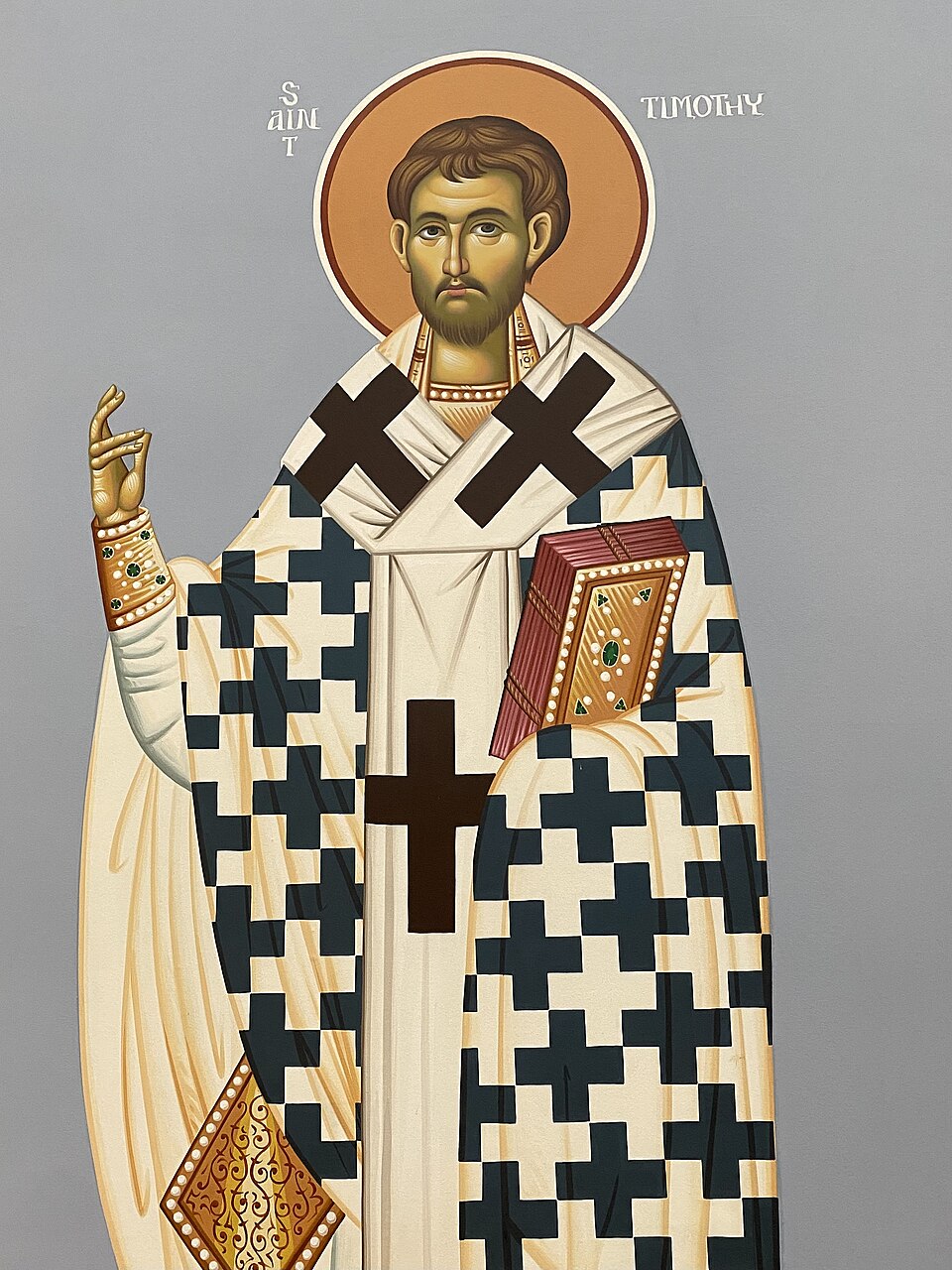

Epaphras, Tychicus, Paul
The Practice of Faithfulness
Scripture names seven practices of faithfulness, each with the verse that gives it.
- 1Keep your wordThe psalm describes the one who may dwell with God as a man who does not revise a costly oath.Psalm 15:4
- 2Do the small task wellIn the parable of the minas the master rewards the servant who was faithful in a very small matter.Luke 19:17
- 3Guard what is entrustedPaul tells Timothy to guard the treasure entrusted to him with the help of the Holy Spirit.2 Timothy 1:14
- 4Keep the faith to the endNear the end of his life Paul wrote that he had fought the good fight, finished the race and kept the faith.2 Timothy 4:7
- 5Be honest at workPaul asks slaves to steal nothing and to show all good faith, so that they adorn the teaching about God.Titus 2:10
- 6Refresh those who send youProverbs compares a trustworthy messenger to the cold of snow in the time of harvest.Proverbs 25:13
- 7Entrust yourself to GodPeter tells those who suffer by God's will to entrust their souls to their faithful Creator and keep doing good.1 Peter 4:19
Do the small task well, Guard what is entrusted, Keep the faith to the end, Be honest at work, Refresh those who send you, Entrust yourself to God
What Stands Against Faithfulness
Scripture names the faithless man, the deserter and the unbelief that cannot cancel God's word.
Proverbs says, "Like a broken tooth or a foot out of joint is confidence in a faithless man in time of trouble" (Proverbs 25:19). The faithless man fails at the moment he is leaned on.
What if some did not have faith? Will their lack of faith nullify God’s faithfulness?
Paul asks whether human unfaithfulness can cancel God's, and the next verse answers that it cannot.
Romans 3:3BSB
Romans 3:3, Demas
Faithfulness in the Stories of the Bible
Three accounts tell of faithfulness in a master's absence, in a manager's reckoning and in a foreign court.
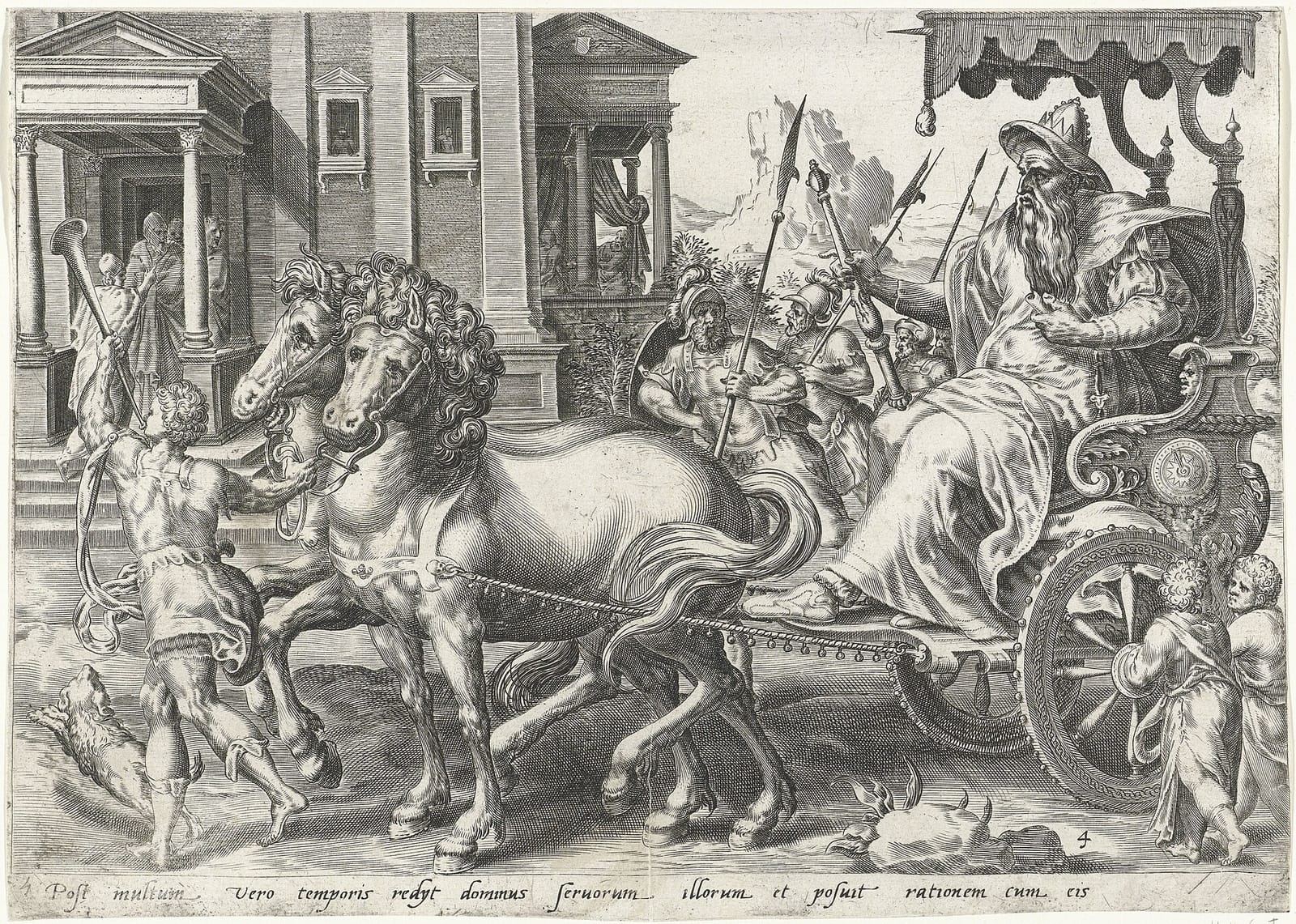
The faithful servantsMatthew 25
A man going on a journey entrusted his possessions to three servants, five talents to one, two to another and one to the third. Two traded and doubled what they held, and the third buried his talent. After a long time the master returned to settle accounts, praised the first two in the same words and took the talent from the third.
His master replied, ‘Well done, good and faithful servant! You have been faithful with a few things; I will put you in charge of many things. Enter into the joy of your master!’
Matthew 25:21BSB The master's praise names the quality he rewards.
Read the study of Well Done, Good and Faithful Servant 8 sections, 5 verses set out
The shrewd managerLuke 16
A rich man's manager was accused of wasting his possessions and told to turn in his accounts. Before he left he cut the bills of his master's debtors, so that they would welcome him later. Jesus drew from the story a lesson for His disciples about money and trust.
Whoever is faithful with very little will also be faithful with much, and whoever is dishonest with very little will also be dishonest with much.
Luke 16:10BSB Jesus states the rule that the story leads to.
Read the study of Faithful in Very Little 6 sections, 3 verses set out
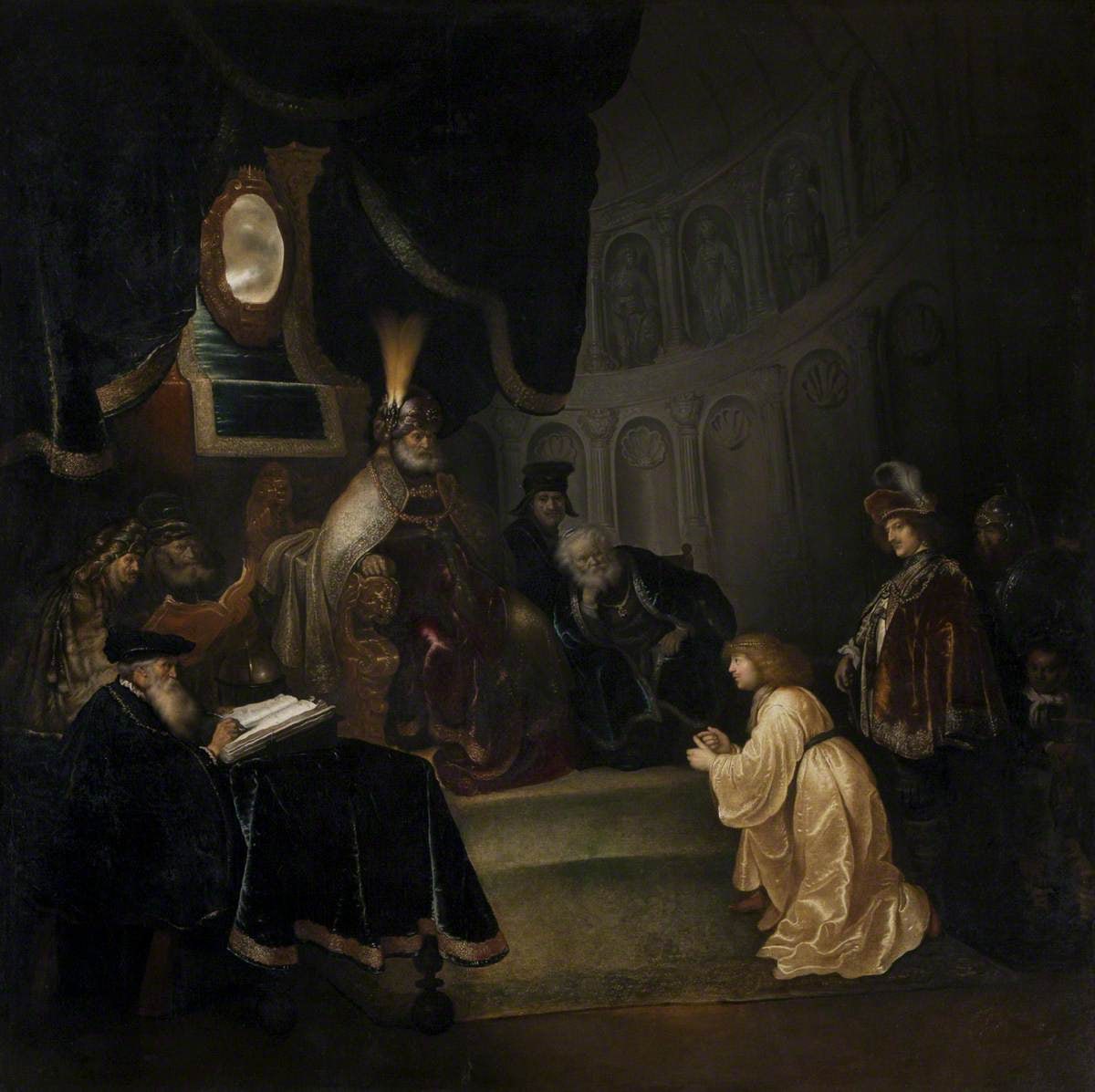
Daniel in BabylonDaniel 1 and 6
Daniel was carried to Babylon as a young man in the third year of Jehoiakim and served there until the first year of Cyrus (Daniel 1:1 and 1:21). Under Darius his rivals looked for a charge against him and found none. They then used his daily prayer against him, and he was thrown to the lions.
Thus the administrators and satraps sought a charge against Daniel concerning the kingdom, but they could find no charge or corruption, because he was trustworthy, and no negligence or corruption was found in him.
Daniel 6:4BSB The verse gives the reason his rivals could find no charge.
Read the story of Daniel in Babylon 7 sections, 6 verses set out
The shrewd manager (Luke 16), Daniel in Babylon (Daniel 1 and 6)
Faithfulness in the Church's History
Three accounts, a bishop in Smyrna, a young mother in prison and a hymn written in 1923, tell of faithfulness kept and sung.
Polycarp of Smyrna2nd century
Polycarp was bishop of Smyrna and, as Irenaeus wrote, had been taught by apostles. When he was old he was arrested and brought into the stadium, where the proconsul urged him to revile Christ. The letter of his church records his answer: "Eighty and six years have I served Him, and He never did me any injury: how then can I blaspheme my King and my Saviour?" (Martyrdom of Polycarp, chapter 9, translated by Roberts and Donaldson, 1885).
Do not fear what you are about to suffer. Look, the devil is about to throw some of you into prison to test you, and you will suffer tribulation for ten days. Be faithful even unto death, and I will give you the crown of life.
Revelation 2:10BSB The risen Christ gives this word to the church at Smyrna, Polycarp's city.
Read the story of Polycarp: Eighty-Six Years 8 sections, 3 verses set out
Perpetua3rd century
Vibia Perpetua, a married woman of about twenty-two with an infant son, was arrested with other catechumens. Her own prison account records her father pleading with her to turn from the faith. She pointed to a pitcher and told him, "Neither can I call myself anything else than what I am, a Christian" (The Passion of Perpetua and Felicity, chapter 1, translated by R. E. Wallis, 1885).
Therefore everyone who confesses Me before men, I will also confess him before My Father in heaven.
Matthew 10:32BSB Jesus promises to confess before His Father those who confess Him before men.
Great Is Thy Faithfulness1923
Thomas O. Chisholm wrote the hymn that begins "Great is Thy faithfulness, O God my Father" in 1923, and it is sung to William Runyan's tune FAITHFULNESS (Hymnary.org text record). Its title is the closing line of Lamentations 3:23.
Perpetua (3rd century), Great Is Thy Faithfulness (1923)
Voices on Faithfulness, by Century
Two voices, each quoted from a work in the public domain under the line that says what he teaches.
1662 to 1714 · Matthew Henry
Commentary on the Whole Bible
Eighteenth century. Even in ruins God's people still owned that He is kind and faithful.
The quotation1 quotation
“That great is his faithfulness. Though the covenant seemed to be broken, they owned that it still continued in full force; and, though Jerusalem be in ruins, the truth of the Lord endures for ever. Note, Whatever hard things we suffer, we must never entertain any hard thoughts of God, but must still be ready to own that he is both kind and faithful.”
Matthew Henry · Commentary on the Whole Bible · on Lamentations 3:22Puritan
1802 to 1910 · Jamieson, Fausset & Brown
Commentary Critical and Explanatory on the Whole Bible
Nineteenth century. God's faithfulness comforts believers and shakes those who fall away.
The quotation1 quotation
“This impossibility is not one of infirmity, but of infinite power and majesty. Also, indirectly, comfort is suggested to believers, that He is faithful to His promises to them; at the same time that apostates are shaken out of their self-deceiving fancy, that because they change, Christ similarly may change. A warning to Timothy to be steadfast in the faith.”
Jamieson, Fausset & Brown · Commentary Critical and Explanatory on the Whole Bible · on 2 Timothy 2:13Reformed
How Faithfulness Has Been Taught
Clement of Rome and John Calvin taught faithfulness from God's promises and from Christ's office.
Clement of Rome bound the soul to the God who is faithful in His promises1 paragraph
Clement wrote to the church at Corinth to end a quarrel among its members. He held up Abraham, who "was found faithful, inasmuch as he rendered obedience to the words of God" (First Epistle to the Corinthians, chapter 10, translated by John Keith, 1896). He then urged, "let our souls be bound to Him who is faithful in His promises, and just in His judgments. He who has commanded us not to lie, shall much more Himself not lie" (chapter 27).
Calvin taught that Christ is faithful in the office the Father gave Him1 paragraph
On Hebrews 3:2 John Calvin wrote that the verse commends Christ's apostleship "in order that the faithful may securely acquiesce in him". He gave two grounds for it. The Father "has set him to be over us as our teacher", and "Christ himself has faithfully performed the office committed to him" (Commentaries on the Epistle to the Hebrews).
The Studies of Faithfulness
Each study takes one part of faithfulness further, in groups for the texts, the stories and the words.
The texts
2 studies
- Passages and psalms · 3 verses set outFaithful in Very Little
In Luke 16 Jesus draws a rule about trust from a parable about a dishonest manager.
- Passages and psalms · 5 verses set outWell Done, Good and Faithful Servant
In the parable of the talents the master praises two servants as good and faithful and condemns the one who buried his talent.
- Passages and psalms · 3 verses set outFaithful in Very Little
The stories
2 studies
- Stories · 6 verses set outDaniel in Babylon
Daniel served the kings of Babylon and Persia from Nebuchadnezzar to Cyrus and kept the habits of his faith in their courts.
- Stories · 3 verses set outPolycarp: Eighty-Six Years
Polycarp, bishop of Smyrna, told the Roman proconsul that he had served Christ eighty-six years and would not deny Him, and he was put to death at Smyrna in the second century.
- Stories · 6 verses set outDaniel in Babylon
The words
2 studies
- Symbols and words · 2 verses set outThe Words Emunah and Pistos
Emunah in Hebrew and pistos in Greek name faithfulness, said first of God and then of His servants.
- Doctrines · 17 verses set outHesed, the LORD's Loving Devotion
A Hebrew noun found in 241 verses of twenty-eight books of the Old Testament, 127 of them in the Psalms.
- Symbols and words · 2 verses set outThe Words Emunah and Pistos



Well Done, Good and Faithful Servant, Daniel in Babylon, Polycarp: Eighty-Six Years, The Words Emunah and Pistos, Hesed, the LORD's Loving Devotion
Where Readers Disagree
Each reading names its holders, the work that argues it and the objection raised against it.
Galatians 5:22, pistis in the fruit of the Spirit
Read the page on the Fruit of the Spirit
| Reading | Held by | Work | Objection |
|---|---|---|---|
| Faith | Jerome; Irenaeus; the King James translators (Latin and Greek patristic; English Reformation) | Jerome, Commentary on Galatians, on Galatians 5:22; Irenaeus, Against Heresies, book 5; the King James Version (1611), which reads faith | Patience, kindness and goodness, the graces beside it, are shown toward other people, so the word may name trustworthiness toward them. |
| Faithfulness | Jamieson, Fausset and Brown, citing Bengel; the American Standard Version translators (Scottish and Anglican commentary; American revision) | Commentary Critical and Explanatory on the Whole Bible, on Galatians 5:22; the American Standard Version (1901), which reads faithfulness | Paul most often uses pistis for trust in God, as he does twice in Galatians 2:16. |
2 Timothy 2:13, if we are faithless
Read the study of the Words Emunah and Pistos 8 sections, 2 verses set out
| Reading | Held by | Work | Objection |
|---|---|---|---|
| A comfort to believers | Jamieson, Fausset and Brown, who read comfort and warning in the verse together (Scottish and Anglican commentary) | Commentary Critical and Explanatory on the Whole Bible, on 2 Timothy 2:13 | The verse before says that if we deny Him, He will also deny us (2 Timothy 2:12). |
| A warning that God keeps His threatenings | Matthew Henry; Albert Barnes (English Presbyterian; American Presbyterian) | Henry, Commentary on the Whole Bible (1710), on 2 Timothy 2:13; Barnes, Notes on the New Testament, on 2 Timothy 2:13 | Elsewhere in Paul the words God is faithful name God's keeping of His people (1 Corinthians 1:9; 1 Thessalonians 5:24). |
The year of Polycarp's death
Read the story of Polycarp: Eighty-Six Years 8 sections, 3 verses set out
| Reading | Held by | Work | Objection |
|---|---|---|---|
| Under Marcus Aurelius | Eusebius of Caesarea; Jerome, following him (The church historians of the fourth century) | Eusebius, Church History, book 4, chapters 14 and 15 (McGiffert, 1890) | The Martyrdom names Statius Quadratus as proconsul, and Waddington reckoned his term to the reign of Antoninus Pius. |
| About 155, under Antoninus Pius | W. H. Waddington; A. C. McGiffert, who names Lightfoot and Harnack with them (Nineteenth-century historical scholarship) | McGiffert's note on Eusebius, Church History 4.15.1 (1890), citing Waddington's memoir of 1867 | The year rests on a reckoning of the proconsul's term, since the Martyrdom itself gives the day and no year. |
Sources
Scripture is the Berean Standard Bible.
- The King James Version (1611) and the American Standard Version (1901)
- STEP Bible, Translators lexicon of Extended Strongs for Hebrew and for Greek (Tyndale House, Cambridge), CC BY 4.0, with the Greek lexicon based on Abbott-Smith (1922)
- James Strong, The Exhaustive Concordance of the Bible, with its dictionaries of the Hebrew and Greek words of the original (1890)
- The Martyrdom of Polycarp, translated by Alexander Roberts and James Donaldson, Ante-Nicene Fathers, volume 1 (Buffalo: Christian Literature Publishing, 1885)
- Irenaeus, Against Heresies, book 3, chapter 3, section 4, translated by Alexander Roberts and William Rambaut, Ante-Nicene Fathers, volume 1 (1885)
- Eusebius, Church History, book 4, chapters 14 and 15, translated by Arthur Cushman McGiffert, with his notes, Nicene and Post-Nicene Fathers, second series, volume 1 (1890)
- Clement of Rome, First Epistle to the Corinthians, chapters 10 and 27, translated by John Keith, Ante-Nicene Fathers, volume 9 (Buffalo: Christian Literature Publishing, 1896)
- The Passion of the Holy Martyrs Perpetua and Felicitas, translated by R. E. Wallis, Ante-Nicene Fathers, volume 3 (Buffalo: Christian Literature Publishing, 1885)
- Thomas O. Chisholm, "Great is Thy faithfulness, O God my Father" (1923), tune FAITHFULNESS by William M. Runyan.
- John Calvin, Commentaries on the Epistle of Paul the Apostle to the Hebrews, translated by John Owen (Calvin Translation Society, 1853), on Hebrews 3:2.
- Matthew Henry, Commentary on the Whole Bible (1710), on Lamentations 3:22 and 2 Timothy 2:13.
- Albert Barnes, Notes, Explanatory and Practical, on the New Testament, on 2 Timothy 2:13.
- Robert Jamieson, A. R. Fausset and David Brown, Commentary Critical and Explanatory on the Whole Bible, on Galatians 5:22 and 2 Timothy 2:13.
- Jerome, Commentary on Galatians, on Galatians 5:22.
- Irenaeus, Against Heresies, book 5, quoting Galatians 5:22.
Keep Studying
Studies4
In this value6
People and groups14