
An Ancient Empire · Babylon's Fall and Israel's Return
Persia
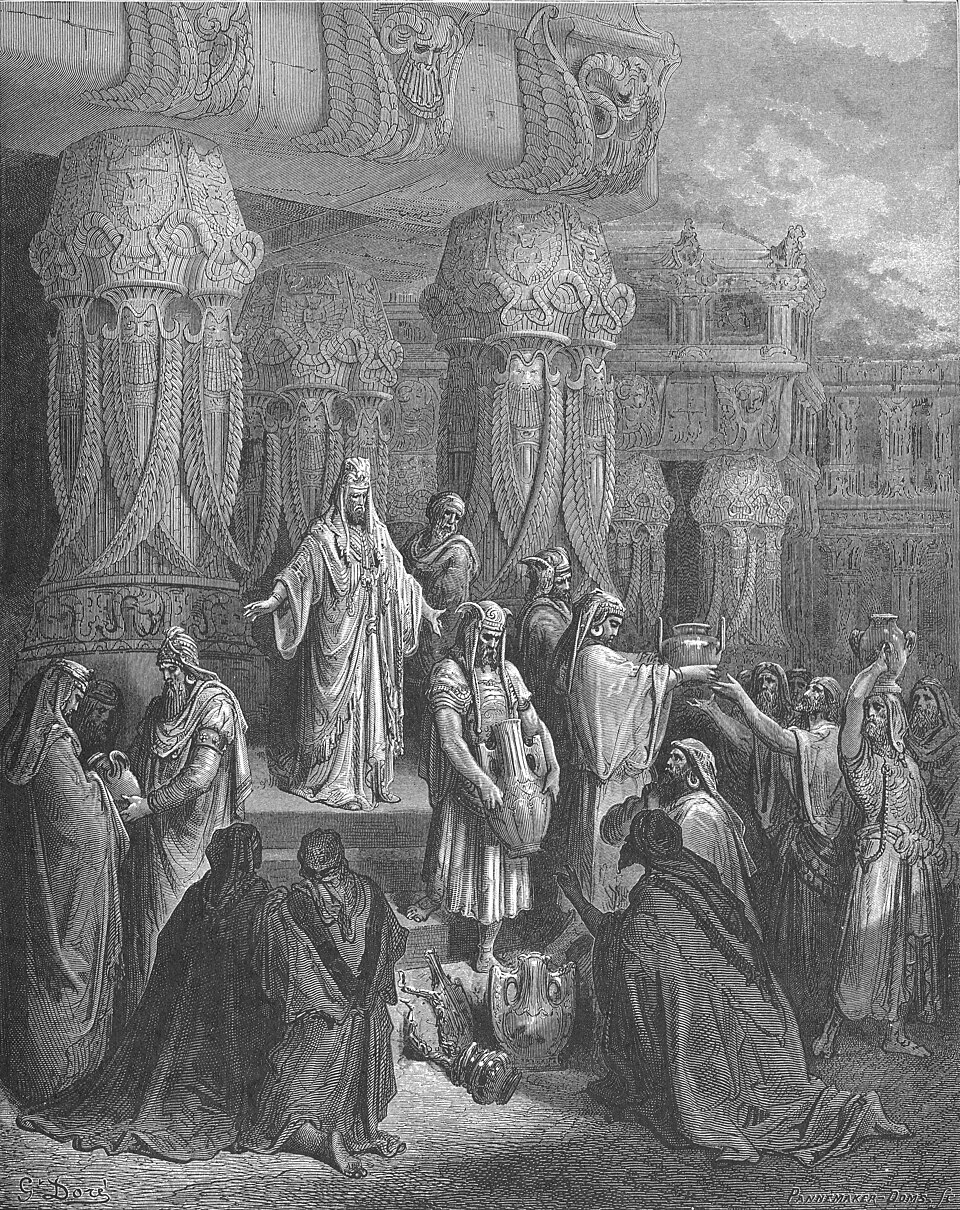
Babylon took Israel captive. Persia sent Israel home. Isaiah named the man who would do it, Cyrus, by name, roughly a century and a half before Cyrus was born, and Cyrus’ own decree, preserved in Scripture and echoed by his own imperial policy in stone, let a captive people rebuild their temple. This page follows Persia from the handwriting on Belshazzar’s wall through Cyrus’ decree, the prophecy that named him, the archaeology that confirms his policy, Daniel and Esther inside his court, and where the empire sits in the Bible’s own prophetic maps.
Summary
Persia rose under Cyrus, who took Babylon the night a hand wrote judgment on Belshazzar's wall, and in his first year issued a decree letting captive Judah return home and rebuild its temple. Isaiah had named Cyrus by name generations before his birth. Daniel served in the Persian court and survived the lions' den; Esther became queen of an empire stretching from India to Ethiopia; Ezra and Nehemiah rebuilt under later Persian kings. Daniel's own visions place Persia inside a larger prophetic map of empires.
- Belshazzar's fall came the same night the handwriting on the wall was read, ending Babylon and beginning Persian rule (Daniel 5)
- Cyrus' decree in his first year as king of Babylon let Judah return and rebuild the temple, fulfilling Jeremiah's word (Ezra 1:1)
- Isaiah 44:28-45:1 names Cyrus by name before his birth; this page presents the prophecy at full strength and names the critical dating question honestly
- The Cyrus Cylinder confirms his general policy of returning displaced peoples and their gods, without naming Judah specifically
- Daniel 8:20 and 11:2 place Persia inside the Bible's own larger map of empires, the ram with two horns and the kings still to come
Cyrus and the Fall of Babylon
Daniel 5: the handwriting on the wall, the hinge of an empire
“Later, King Belshazzar held a great feast for a thousand of his nobles, and he drank wine with them.” Daniel 5:1
Babylon’s last king was feasting inside his own capital while Cyrus’ combined Medo-Persian army stood outside its walls. Belshazzar sends for the golden and silver vessels Nebuchadnezzar had taken from the Jerusalem temple, and the court drinks from them in open mockery of the God whose worship they had emptied out of Judah two generations earlier. A hand appears and writes on the palace wall in front of everyone.
“Now this is the inscription that was written: MENE, MENE, TEKEL, PARSIN.” Daniel 5:25
“And this is the writing that was written,.... They are such and such letters, and so to be read, as follows: MENE, MENE, TEKEL, UPHARSIN; which are Chaldee words, and may be literally rendered, 'he hath numbered, he hath numbered'; that is, God hath certainly, perfectly, and exactly numbered; 'he hath weighed', God hath weighed thee, Belshazzar; 'and they divide the kingdom'; that is, the Medes and Persians, as appears from the following interpretation.”
John Gill · Exposition of the Old Testament, 1771Particular Baptist
Daniel 5:25
“Tekel - This word (תקל teqēl) is also, according to Gesenius, a passive participle (from תקל teqal - ‘to poise, to weigh’), and means ‘weighed.’ It would be used with reference to anything placed in a balance to ascertain its weight; and hence, like the word ‘measure,’ would denote that the extent, dimensions, true worth, or character of anything was ascertained. As by the use of scales the weight of anything is known, so the word is applied to any estimate of character or of actions, and a balance becomes the emblem of justice.”
Albert Barnes · Notes, Explanatory and Practical, on the Old and New Testaments, 1832-1869Evangelical
Daniel 5:27
“Peres--the explanation of 'dividers' (Da 5:25), the active participle plural there being used for the passive participle singular, 'dividers' for 'divided.' The word 'Peres' alludes to the similar word 'Persia.'”
Jamieson, Fausset & Brown · Commentary Critical and Explanatory on the Whole Bible, 1871Reformed
Daniel 5:28
“In that night Belshazzar the Chaldean king was slain. And Darius the Mede received the kingdom” (5:30-31). Cyrus led the assault in fact; ancient historians record that his forces diverted the Euphrates and marched into the city along the riverbed while the feast was still underway. Babylon fell without a prolonged siege, and Persian rule began that same night.
- 539 BCBabylon falls to Cyrus
- 70 yearsJeremiah's word, fulfilled at Cyrus' decree
- c. 550-330 BCthe Achaemenid Persian Empire's span
The Decree and the Return
Ezra 1: a captive people sent home to rebuild
“In the first year of Cyrus king of Persia, to fulfill the word of the LORD spoken through Jeremiah, the LORD stirred the spirit of Cyrus king of Persia to send a proclamation throughout his kingdom and to put it in writing.” Ezra 1:1
“This is what Cyrus king of Persia says: The LORD, the God of heaven, who has given me all the kingdoms of the earth, has appointed me to build a house for Him at Jerusalem in Judah. Whoever among you belongs to His people, may his God be with him, and may he go to Jerusalem in Judah.” Ezra 1:2-3
The scroll of Ezra opens on the very first year of Cyrus’ reign over Babylon, and the decree does more than permit departure. Cyrus returns the gold and silver vessels Belshazzar had drunk from at his feast, and orders the surrounding population to help fund the rebuilding with silver, gold, goods, and livestock. Not every exile chose to go.
“Thus saith Cyrus king of Persia,.... Of whom, and this edict of his, Isaiah prophesied two hundred years before he was born, Isa 44:28 the Lord God of heaven hath given me all the kingdoms of the earth; many he had conquered before he took Babylon, and then the whole Babylonian monarchy fell into his hands.”
John Gill · Exposition of the Old Testament, 1771Particular Baptist
Ezra 1:2
“Only a portion of the Israelites took advantage of the permission of Cyrus. Many remained in Babylon, since they were disinclined to relinquish their property. They who returned were persons whom God had especially stirred up to make sacrifices for His glory.”
Albert Barnes · Notes, Explanatory and Practical, on the Old and New Testaments, 1832-1869Evangelical
Ezra 1:5
Isaiah Named Cyrus by Name
Isaiah 44:28-45:1: a name given before a birth
“who says of Cyrus, My shepherd will fulfill all that I desire, who says of Jerusalem, She will be rebuilt, and of the temple, Let its foundation be laid.” Isaiah 44:28
“This is what the LORD says to Cyrus His anointed, whose right hand I have grasped to subdue nations before him.” Isaiah 45:1
On the traditional dating of Isaiah’s ministry, the eighth century BC, this text names a specific Persian king by his own name roughly a century and a half before that king was born, and states outright what he would do: free Judah’s captives and let Jerusalem’s temple be rebuilt, exactly what Ezra 1 records Cyrus doing.
“Thus saith the Lord to his anointed - This is a direct apostrophe to Cyrus, though it was uttered not less than one hundred and fifty years before Babylon was taken by him.”
Albert Barnes · Notes, Explanatory and Practical, on the Old and New Testaments, 1832-1869Evangelical
Isaiah 45:1
The critical dating question, named and answeredDeutero-Isaiah, and the manuscript evidence
A position held broadly across historical-critical scholarship, traced to Bernhard Duhm’s 1892 commentary and developed since, holds that Isaiah 40-66 was written later than the eighth-century prophet, during or after the Babylonian exile, and points to the naming of Cyrus as one of its central reasons: a text this specific, the argument runs, is more easily explained as history written after the fact than as prophecy spoken generations in advance.
Set against that reading, three lines of evidence favor the single-author, predictive reading this page presents at full strength. The Great Isaiah Scroll from Qumran (1QIsa-a, copied around 125 BC) runs continuously from chapter 39 into chapter 40 with no manuscript break, column division, or change of hand marking a second book. Ben Sira, writing around 180 BC, credits one prophet Isaiah with comforting “them that mourned in Zion,” language drawn from the later chapters, decades before any proposed late date for those chapters would allow. And the New Testament quotes both halves of the book under the single name “Isaiah the prophet,” without distinguishing an earlier and a later author. This site reads fulfilled, specific prophecy as real evidence that Scripture is what it claims to be, and reads Isaiah’s naming of Cyrus in that light.
“Cyrus is preferred that Israel may be released. He shall have a kingdom, only that God's people may have their liberty; for their kingdom is not of this world, it is yet to come. In all this Cyrus was a type of Christ, who was made victorious over principalities and powers, and entrusted with unsearchable riches, for the use and benefit of God's servants, his elect.”
Matthew Henry · Commentary on the Whole Bible, 1710Nonconformist
Isaiah 45:4
“I have raised him up - That is. Cyrus ... In righteousness ... He had raised him up to accomplish his own righteous plans. It does not necessarily mean that Cyrus was a righteous man ... And I will direct all his ways - Margin, ‘Make straight.’ This is the meaning of the Hebrew word ...”
Albert Barnes · Notes, Explanatory and Practical, on the Old and New Testaments, 1832-1869Evangelical
Isaiah 45:13
The Cyrus Cylinder
a policy in stone, described honestly
A clay barrel-shaped cylinder, inscribed in Akkadian cuneiform and now held by the British Museum, records Cyrus’ own account of his capture of Babylon in 539 BC. It presents Cyrus as the choice of the Babylonian god Marduk, credits him with restoring proper worship the previous king had neglected, and describes a broad policy: peoples who had been displaced and whose images had been carried off were returned to their own cities, and their gods were restored to their own temples.
The cylinder names several specific peoples and cities it treated this way. It does not name Judah, Jerusalem, or the Jews anywhere in its surviving text. What it establishes, honestly and without overreach, is that the kind of decree Ezra 1 records, letting a captive people return home and rebuild their own temple with royal support, matches a real, attested policy of this specific king toward displaced peoples in general. The cylinder confirms the shape of Cyrus’ rule; it is not a second copy of his decree for Judah.
Daniel in the Persian Court
Daniel 6: the lions' den under Darius
Daniel served under Babylonian and Persian rule alike, and his standing under Darius drew envy from officials who could find no fault in him to use against him.
“Then the presidents and the satraps sought to find occasion against Daniel as touching the kingdom; but they could find no occasion nor fault, forasmuch as he was faithful.” Daniel 6:4
They engineer a law forbidding prayer to anyone but the king for thirty days, aimed at Daniel’s own known habit.
“Now his windows were open in his chamber toward Jerusalem; and he kneeled upon his knees three times a day, and prayed, and gave thanks before his God, as he did aforetime.” Daniel 6:10
Daniel changes nothing. He is thrown into the den of lions, and Darius, who did not want this outcome, says to him directly, “May your God, whom you serve continually, deliver you!” (6:16).
“My God sent His angel and shut the mouths of the lions. They have not hurt me, for I was found innocent in His sight.” Daniel 6:22
The scene sits inside the same pattern as the fiery furnace under Nebuchadnezzar a chapter earlier: a captive people under a pagan empire, faithful in a small daily habit, delivered in a way the empire itself has to acknowledge.
Esther, Ezra, and Nehemiah
the empire's reach, and the later rebuilding
“Now it came to pass in the days of Ahasuerus (this is Ahasuerus who reigned from India even unto Ethiopia, over a hundred and seven and twenty provinces).” Esther 1:1
Esther’s story is set inside the sheer scale of the empire Cyrus founded: a hundred and twenty-seven provinces from India to Ethiopia, ruled by Ahasuerus, generally identified with Xerxes I. A Jewish orphan becomes queen inside that reach, and through her and Mordecai a plotted genocide against every Jew in the empire is turned back on the man who planned it, the events the feast of Purim still remembers.
The rebuilding Cyrus authorized did not finish in one generation. Ezra returns to Jerusalem under a later king, Artaxerxes, with a royal commission to teach the law and beautify the temple (Ezra 7:1, 6). Nehemiah, serving as Artaxerxes’ own cupbearer, is granted leave and material support to rebuild Jerusalem’s broken walls (Nehemiah 2:1, 8). Both men work inside Persian authority rather than against it, the same pattern Daniel and Esther live out in their own settings.
Persia in the Prophetic Frame
Daniel 8:20 and 11:2
“The two-horned ram that you saw represents the kings of Media and Persia.” Daniel 8:20
“Three more kings will arise in Persia, and then a fourth, who will be far richer than all the others. By the power of his wealth, he will stir up everyone against the kingdom of Greece.” Daniel 11:2
Daniel’s own visions place Persia inside a larger map of empires that rise and fall under God’s hand: the ram with two unequal horns in chapter 8, struck down by the goat of Greece; the named succession of Persian kings in chapter 11, ending in one whose wealth provokes the war that ends the empire. The same book that records Daniel serving faithfully inside Persia’s court also records that Persia itself is one empire among several under a sovereignty larger than any of them.
Where It Points
Cyrus as a type of Christ
Isaiah calls Cyrus “my anointed” (45:1), the same word rendered “Messiah” elsewhere, applied here to a pagan king who never knew the God who named him. Cyrus conquers nations, breaks down gates, and uses the wealth and power he is given for one stated purpose: to free a captive people and let God’s house be rebuilt, not for his own price or reward.
“Cyrus is preferred that Israel may be released. He shall have a kingdom, only that God's people may have their liberty; for their kingdom is not of this world, it is yet to come. In all this Cyrus was a type of Christ, who was made victorious over principalities and powers, and entrusted with unsearchable riches, for the use and benefit of God's servants, his elect.”
Matthew Henry · Commentary on the Whole Bible, 1710Nonconformist
Isaiah 45:4
A conqueror who uses his conquest to set captives free, not for payment but because he was raised up for exactly that purpose, is the shape the whole empire's story bends toward. Cyrus is not the substance; the substance is the greater freedom his own decree only pictures.
The Voices
with the work named
Exposition of the Old Testament (1748-1763) · public domain
Explains the words of the handwriting on the wall plainly, and names the Isaiah prophecy directly at Cyrus' own decree.
Notes, Explanatory and Practical (1832-1869) · public domain
States the prophecy's own timing plainly, roughly a century and a half before Cyrus was born, and notes that only a portion of Israel chose to return.
Commentary on the Whole Bible (1710) · public domain
Reads Cyrus as a type of Christ, conquering for the sake of a captive people's freedom rather than his own gain.
Commentary Critical and Explanatory on the Whole Bible (1871) · public domain
Draws out the wordplay between PERES and Persia itself inside the handwriting on the wall.
Marcus Brown's own commentary leads above all. No roster voice met the relevance gate for this historical portrait; none is used. The Cyrus Cylinder is described from its general public record (British Museum), named for content and not quoted as verbatim translation.
Keep Studying
On this page
Studies8