
Genesis 37:25
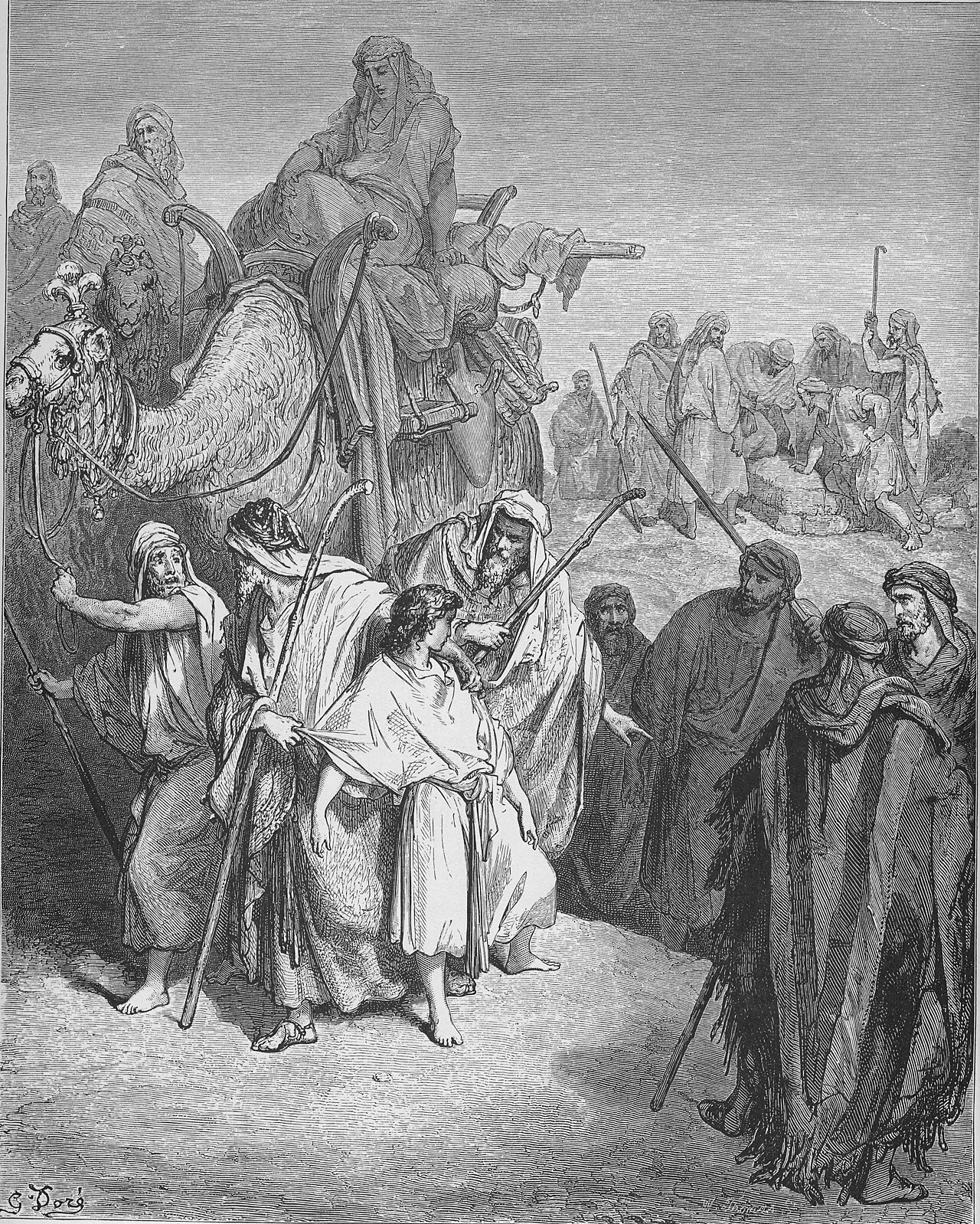
in Genesis 37And as they sat down to eat a meal, they looked up and saw a caravan of Ishmaelites coming from Gilead. Their camels were carrying spices, balm, and myrrh on their way down to Egypt.
BSB
The same verse in ASV and KJV ▾
ASV
And they sat down to eat bread: and they lifted up their eyes and looked, and, behold, a caravan of Ishmaelites was coming from Gilead, with their camels bearing spicery and balm and myrrh, going to carry it down to Egypt.
KJV
And they sat down to eat bread: and they lifted up their eyes and looked, and, behold, a company of Ishmeelites came from Gilead with their camels bearing spicery and balm and myrrh, going to carry it down to Egypt.
⋯
This verse in Genesis 37
Commentary
7 notes on this verseThey sat down to eat bread - Every act is perfectly in character, and describes forcibly the brutish and diabolic nature of their ruthless souls. A company of Ishmaelites - We may naturally suppose that this was a caravan, composed of different tribes that, for their greater safety, were traveling together, and of which Ishmaelites and Midianites made the chief. In the Chaldee they are called Arabians, which, from ערב arab, to mingle, was in all probability used by the Targumist as the word Arabians is used among us, which comprehends a vast number of clans, or tribes of people.
This site's exposition
they sat down to eat a meal
on Genesis 37:25-27
They sit down to a meal with their brother still in the pit, and Clarke says that one detail describes the men better than any adjective. The camels going past carry spices, balm and myrrh down to Egypt, the road Abram took in the famine at Genesis 12:10. Judah argues profit, and that the boy is their own flesh.
The record, by era
The Church Fathers2 voices
A commentator
Clement of RomeClement's First Letter to the Corinthians, Chapters 3-4 · Written before 99.
proposed
Every kind of honour and happiness was bestowed upon you, and then was fulfilled that which is written, "My beloved ate and drank, and was enlarged and became fat, and kicked." [Deuteronomy 32:15] Hence flowed emulation and envy, strife and sedition, persecution and disorder, war and captivity. So the worthless rose up against the honoured, those of no reputation against such as were renowned, the foolish against the wise, the young against those advanced in years.
Joseph was rejected by his brothers and was received by the Ishmaelites; in the same manner our Lord and Savior was rejected by the Jews and received by the pagans.
The Puritans and the Awakening2 voices
And they sat down to eat bread,.... Not at all concerned at what they had done, nor in the least grieved for the affliction of Joseph, and without any pity and compassion for him in his distress, but joyful and glad they had got him into their hands, and like to get rid of him for ever: and they lifted up their eyes, and looked, after they had eaten their food, or while they were eating it: and, behold, a company of Ishmaelites came from Gilead; a place of merchandise for spices and balm, and such like things after mentioned.
(1.) They felt no remorse of conscience for the sin; if they had, it would have spoiled their appetite for their meat, and the relish of it. Note, A great force put upon conscience commonly stupefies it, and for the time deprives it both of sense and speech. Daring sinners are secure ones.
The Nineteenth Century1 voice
A commentator
Jamieson, Fausset & Brown1802–1910
Commentary Critical and Explanatory on the Whole Bible (1871)
proposed
This was the true solution of the mystery, just as it was in the case of Cain (1Jo 3:12). they lifted up their eyes, . . . and, behold, a company of Ishmaelites--They are called Midianites (Ge 37:28), and Medanites, in Hebrew (Ge 37:36), being a travelling caravan composed of a mixed association of Arabians.
The words behind it
19 Hebrew wordsEvery Hebrew word of this verse in the order it stands, with what it means and the door to its own study. The last column counts the times a word stands in the whole Bible: the rarer the word, the more the places it appears belong together.
| Hebrew | Sound | Meaning | Word study | In the Bible |
|---|---|---|---|---|
| וַיֵּשְׁבוּ֮ | vaiyeshevu | and they sat down | H3427 → | 1079 times |
| לֶֽאֱכָל־ | leekhol- | to eat | H398 → | 810 times |
| לֶחֶם֒ | lechem | bread | H3899 → | 298 times |
| וַיִּשְׂא֤וּ | vaiyisu | and they lifted up | H5375 → | 656 times |
| עֵֽינֵיהֶם֙ | ʾeineihem | eyes their | H5869 → | 887 times |
| וַיִּרְא֔וּ | vaiyiru | and they saw | H7200 → | 1300 times |
| וְהִנֵּה֙ | vehineh | and there! | H2009 → | 843 times |
| אֹרְחַ֣ת | ʾorechat | a caravan of | H736 → | |
| יִשְׁמְעֵאלִ֔ים | yishmeelim | Ishmaelites | H3459 → | 8 times |
| בָּאָ֖ה | baah | [was] coming | H935 → | 2568 times |
| מִגִּלְעָ֑ד | migilad | from Gilead | H1568 → | 134 times |
| וּגְמַלֵּיהֶ֣ם | ugemaleihem | and camels their | H1581 → | 54 times |
| נֹֽשְׂאִ֗ים | noseim | [were] carrying | H5375 → | 656 times |
| נְכֹאת֙ | nekhot | spice | H5219 → | |
| וּצְרִ֣י | utzeri | and balm | H6875 → | |
| וָלֹ֔ט | valot | and myrrh | H3910 → | |
| הוֹלְכִ֖ים | holkhim | traveling | H1980 → | 1546 times |
| לְהוֹרִ֥יד | lehorid | to take [them] down | H3381 → | 381 times |
| מִצְרָֽיְמָה׃ | mitzrayemah | Egypt towards | H4714 → | 641 times |
וַיֵּשְׁבוּ֮and they sat down
vaiyeshevuH3427 →1079 times
לֶֽאֱכָל־to eat
leekhol-H398 →810 times
לֶחֶם֒bread
lechemH3899 →298 times
וַיִּשְׂא֤וּand they lifted up
vaiyisuH5375 →656 times
עֵֽינֵיהֶם֙eyes their
ʾeineihemH5869 →887 times
וַיִּרְא֔וּand they saw
vaiyiruH7200 →1300 times
וְהִנֵּה֙and there!
vehinehH2009 →843 times
אֹרְחַ֣תa caravan of
ʾorechatH736 →
יִשְׁמְעֵאלִ֔יםIshmaelites
yishmeelimH3459 →8 times
בָּאָ֖ה[was] coming
baahH935 →2568 times
מִגִּלְעָ֑דfrom Gilead
migiladH1568 →134 times
וּגְמַלֵּיהֶ֣םand camels their
ugemaleihemH1581 →54 times
נֹֽשְׂאִ֗ים[were] carrying
noseimH5375 →656 times
נְכֹאת֙spice
nekhotH5219 →
וּצְרִ֣יand balm
utzeriH6875 →
וָלֹ֔טand myrrh
valotH3910 →
הוֹלְכִ֖יםtraveling
holkhimH1980 →1546 times
לְהוֹרִ֥ידto take [them] down
lehoridH3381 →381 times
מִצְרָֽיְמָה׃Egypt towards
mitzrayemahH4714 →641 times
A shaded row is a word that stands 400 times or fewer in the Bible.
The walk
8 stopsEach card is a verse this one points to, and under it the verses that one points to in turn. Where several paths arrive at the same place, that place is listed first: the text keeps returning to it.
Through
Jeremiah 8:22Is there no balm in Gilead? Is no physician there? Why then has the health of the daughter of my people not been restored?
it leads to
- Jeremiah 46:11
Go up to Gilead for balm, O Virgin Daughter of Egypt! In vain you try many remedies, but for you there is no healing.
- Jeremiah 51:8
Suddenly Babylon has fallen and been shattered. Wail for her; get her balm for her pain; perhaps she can be healed.
- Jeremiah 30:12–17
For this is what the LORD says: “Your injury is incurable; your wound is grievous.
- Luke 8:43
including a woman who had suffered from bleeding for twelve years. She had spent all her money on physicians, but no one was able to heal her.
- Luke 5:31–32
Jesus answered, “It is not the healthy who need a doctor, but the sick.
- Jeremiah 46:11
Through
Jeremiah 46:11Go up to Gilead for balm, O Virgin Daughter of Egypt! In vain you try many remedies, but for you there is no healing.
it leads to
- Jeremiah 8:22
Is there no balm in Gilead? Is no physician there? Why then has the health of the daughter of my people not been restored?
Reached by 2 separate paths from here.
- Jeremiah 8:22
Through
Genesis 37:28So when the Midianite traders passed by, his brothers pulled Joseph out of the pit and sold him for twenty shekels of silver to the Ishmaelites, who took him to Egypt.
it leads to
- Acts 7:9
Because the patriarchs were jealous of Joseph, they sold him as a slave into Egypt. But God was with him
- Psalms 105:17
He sent a man before them— Joseph, sold as a slave.
- Acts 7:9
Where this verse is studied
On this page
Studies4
On this verse
About Genesis
Who and where
1 name in this verse with a page on the site.
This page draws on Adam Clarke, Commentary on the Bible; Chromatius of Aquileia, SERMON 24.3; Clement of Rome, Clement's First Letter to the Corinthians, Chapters 3-4; Jamieson, Fausset & Brown, Commentary Critical and Explanatory on the Whole Bible; John Gill, Exposition of the Old Testament (1748-1763) and Matthew Henry, Commentary on the Whole Bible.